Connect with us

Technology

FouAnalytics Releases Public MSA Boilerplate for Measurement-First Digital Media Governance

Published

on

New contractual framework gives advertisers directly observed evidence, billability controls, data access, and supply-chain transparency across digital-media investments

NEW YORK, Aug. 18, 2026 /PRNewswire/ — FouAnalytics, the independent analytics and verification platform for digital advertising, websites, and mobile apps, today released public Master Services Agreement boilerplate designed to help advertisers and procurement teams establish evidence-based governance of digital-media spending.

Important legal notice

This boilerplate is a sample business and contractual resource, not legal advice. Each advertiser should have qualified legal counsel review and adapt the document for its own business objectives, risk tolerance, applicable laws, jurisdiction, industry, privacy and consent requirements, media platforms, data-processing arrangements, agency model, supplier contracts, and commercial relationships. No template can account for all platform rules, local laws, measurement limitations, or negotiated agency arrangements.

The Digital Media Governance, Verification, Transparency, and Brand Safety MSA Boilerplate is available at https://api.fouanalytics.com/api/redirect-9971813cjbqej3x85yi8.html

The Digital Media Governance, Verification, Transparency, and Brand Safety MSA Boilerplate gives advertisers a practical contractual framework for requiring directly observed, placement-level analytical evidence to support media delivery, quality, and billability. The template is intended for advertiser-agency, advertiser-vendor, and related digital-media procurement agreements.

Under the template, platform dashboards, delivery reports, invoices, placement reports, log-level data, and legacy verification reports remain useful supplementary inputs. However, they do not alone establish that media actually rendered as represented, appeared in the actual environment, was viewable, reached human users, met the advertiser’s quality requirements, or is billable.

“Advertisers should not have to accept a dashboard, an invoice, or an aggregate score as proof of what happened to their media investment,” said Dr. Augustine Fou, CEO of FouAnalytics. “Not many remember the Uber fraud case from 2018 where vendors just fabricated placement reports, without actually running any ads. This boilerplate gives procurement and media teams a practical way to require directly observed and measured evidence that they can inspect, investigate, reconcile, and use to make decisions.”

The MSA establishes FouAnalytics as the advertiser’s required standard of measurement and analytical evidence. It requires agencies and vendors to maintain measurement in advertiser-controlled accounts, disclose known measurement limitations before purchase, provide access to underlying supporting details where available, and use FouAnalytics data to support optimization, billing validation, credits, refunds, make-goods, and audit.

Measurement-first billability

The boilerplate uses a measurement-first billing model. Under the template, a media placement is billable only when FouAnalytics provides the Required Measurement Fields and Sufficient Measurement Data identified in an advertiser-approved, campaign-specific Measurement Plan.

An impression, click, conversion, or other media placement for which FouAnalytics cannot provide Sufficient Measurement Data is non-billable unless the advertiser expressly approves a written billing exception before purchase. The framework requires agencies and vendors to identify known technical, platform, browser, device, CTV, publisher, privacy, and consent-related limitations before a campaign is activated.

The model is intended to give advertisers visibility and control before funds are committed, rather than discovering measurement gaps after delivery has occurred.

“Complete digital-media governance requires more than a summary report after the campaign is over,” Dr. Fou said. “Advertisers need to know what can be measured before they buy, what evidence will be available, what cannot be measured, and what their rights are when media is unsupported, non-viewable, invalid, or inconsistent with the agreed requirements.”

The document also distinguishes between a measurement gap and a measurement discrepancy. A variance greater than three percentage points between FouAnalytics and comparable third-party reporting triggers audit and technical investigation. It does not, by itself, make otherwise measured media non-billable. The billability standard remains whether the placement is supported by the Required Measurement Fields and Sufficient Measurement Data specified in the applicable Measurement Plan.

Directly collected or observed evidence

The template distinguishes between a vendor that provides a score, classification, or certification and a measurement approach that makes available underlying evidence about an actual media placement and its rendering.

Under the boilerplate, a source is not treated as directly measured simply because it is described as independent, third-party, accredited, certified, or verified. The template requires directly observed, placement-level evidence to the maximum extent technically available, including render-level data, screenshots, actual rendered environment evidence, placement and campaign attributes, device and time data, supply-source information, measurement results, and other analytical detail that allows the advertiser and authorized reviewers to understand and assess the basis for a measurement finding.

Platform and supply-chain data may be reviewed and used in investigations, but the boilerplate treats them as supplementary rather than conclusive evidence. A bid win, platform-reported impression, ad-server event, exchange record, publisher report, invoice, placement report, log-level data record, or legacy verification report does not alone establish actual rendering, viewability, the actual rendered environment, human delivery, or billability.

This approach is described in the following articles with screen shots and examples:

https://www.linkedin.com/pulse/what-proper-governance-looks-like-fouanalytics-aka-want-fou-etqcc/https://www.linkedin.com/pulse/don-say-youre-transparent-show-fouanalytics-dr-augustine-fou-4luaf/https://www.linkedin.com/pulse/fouanalytics-governance-your-digital-advertising-dr-augustine-fou-qisdc/

Complete media governance

The MSA boilerplate is designed to support governance across the full digital-media lifecycle, including display, video, mobile web, mobile apps, social, search, native, programmatic, CTV, OTT, audio, retail media, and other digital channels.

Key provisions include:

Advertiser authority and control. Advertisers retain authority over budgets, inventory sources, supply paths, approved platforms, verification standards, reporting requirements, billing rules, remediation decisions, inclusion lists, exclusion lists, and brand-safety requirements.

Advertiser-controlled access. FouAnalytics accounts, campaign configurations, data, reporting outputs, user permissions, and credentials are maintained in the advertiser’s name and under the advertiser’s administrative control. The advertiser receives continuous direct access during the campaign and for at least four years after campaign completion. Agencies and vendors may be given access to FouAnalytics dashboards at the discretion of the advertiser.

Campaign-level Measurement Plans. Before activation, agencies and vendors must document the applicable measurement method, anticipated coverage, Required Measurement Fields, known limitations, available reporting dimensions, exception inventory, and discrepancy-reconciliation process.

Rendered-delivery evidence. Where third-party in-ad measurement is technically supported, agencies and vendors must deploy FouAnalytics measurement to assess the distinction among bids won, platform-reported impressions, ads served, ads rendered, viewable ads, and ads delivered to verified human traffic.

Walled-garden click verification. Where in-ad measurement cannot be deployed, the MSA requires FouAnalytics ClickTrackers, where technically supported and permitted by the applicable platform, for outbound paid-media links to advertiser-controlled destinations. This enables advertisers to compare platform-reported clicks with directly observed clicks and post-click arrivals.

Post-click quality measurement. The template provides for FouAnalytics on-site measurement on advertiser-controlled properties, subject to applicable privacy, security, consent-management, legal, and technical requirements. This can help advertisers compare the relative quality and attentiveness of traffic across campaigns, channels, platforms, publishers, and other sources.

Evidence-based brand safety. The boilerplate requires page, URL, application, CTV application, or equivalent content-level evidence, including contextual text surrounding an advertiser-designated keyword or content indicator where technically available. The presence of a keyword alone does not conclusively establish a brand-safety violation.

Supply-chain transparency. Agencies and vendors must disclose gross and net CPMs, fees, commissions, rebates, credits, discounts, incentives, data charges, technology charges, platform fees, service fees, intermediary compensation, identity of the immediate seller, identity of the ultimate media owner where available, and whether media was purchased as agent or principal.

No undisclosed principal trading or margin. The template prohibits undisclosed arbitrage, resale, inventory markup, spread pricing, rebate retention, incentive retention, principal trading, and other non-transparent media-margin practices. Any such undisclosed practice is a material breach under the template.

Audit and remediation rights. Advertisers may audit relevant campaign, platform, billing, supply-path, and downstream-agreement records. Agencies and vendors must preserve documentation, identify affected spend, and take appropriate suppression, removal, credit, refund, make-good, and recurrence-prevention actions for non-billable inventory.

Continuous governance. The template requires continuous monitoring of measurement coverage and quarterly reviews of inclusion lists, supply paths, invalid-traffic exposure, viewability, content-level brand safety, post-click traffic quality, and related media-quality controls.

A public procurement resource

FouAnalytics is releasing the MSA boilerplate as a public resource for advertisers that want to strengthen digital-media procurement, agency-management, measurement, billing-validation, and audit provisions.

The template is intended to be adapted to the advertiser’s own commercial arrangements, measurement needs, campaign types, media environments, privacy requirements, platform rules, and risk tolerance.

“Transparency should mean that advertisers can “see Fou themselves,” understand what was bought, trace where funds went, validate what was delivered, and make corrective decisions based on facts,” Dr. Fou said. “This boilerplate is designed to help make that level of governance operational and enforceable.”

The Digital Media Governance, Verification, Transparency, and Brand Safety MSA Boilerplate is available at https://api.fouanalytics.com/api/redirect-9971813cjbqej3x85yi8.html

About FouAnalytics

Created by Dr. Augustine Fou, FouAnalytics is the most trusted, and the only truly independent analytics platform for digital ads, websites, and mobile apps. The platform provides detailed analytical data so practitioners can “see Fou themselves”™ why something is “high humanness,” and troubleshoot what is not good quality. Today FouAnalytics is used globally by advertisers like Microsoft, Beiersdorf and Georgia Pacific, independent agencies and every agency holding company, as well as more than 10,000 SMBs and site owners. More details at www.fouanalytics.com.

Media Contact

Dr. Augustine Fou, CEO, FouAnalytics

augustine.fou@fouanalytics.com | (212) 203-7239

View original content to download multimedia:https://www.prnewswire.com/news-releases/fouanalytics-releases-public-msa-boilerplate-for-measurement-first-digital-media-governance-302854430.html

SOURCE FouAnalytics

Continue Reading
Click to comment

Leave a Reply

Your email address will not be published. Required fields are marked *

Technology

Rapid Relief Team Volunteers Support Law Enforcement at National Night Out Events Across North America

Published

on

By

More than 100 RRT volunteers served thousands of meals, snacks and refreshments at National Night Out events helping strengthen community connections

JOPPA, Md., Aug. 18, 2026 /CNW/ — The Rapid Relief Team (RRT), the charitable arm of the Plymouth Brethren Christian Church, joined communities across North America to celebrate National Night Out, providing food, refreshments and volunteer support at local events designed to strengthen relationships between law enforcement officers and the communities they serve.

National Night Out is an annual community-building campaign that promotes police-community partnerships and neighborhood camaraderie. Held annually in communities across North America, the event brings neighbors and law enforcement together through block parties, festivals, cookouts, safety demonstrations, youth activities and other community events.

 “Whether we were serving a full meal or simply offering a drink and a friendly conversation, it was a privilege to support the officers and community members who make these neighborhoods stronger,” said Wes Macdonald, RRT North America Operations Manager. “Our volunteers, who live, work and worship in these communities, were honored to play a part in creating these moments of connection.”

In dozens of communities across the country–including Chicago, Stamford, San Francisco, Des Moines, Warren, New Jersey, Gahanna, Ohio, and Marple Township, Pennsylvania–RRT volunteers came alongside local law enforcement, community leaders and residents to help create welcoming environments where neighbors could connect with the officers who serve them.

More than 100 RRT volunteers supported National Night Out gatherings by providing thousands of snacks and drinks to preparing and serving more than 6,000 meals to community members and law enforcement officers.

About Rapid Relief Team (RRT): RRT is a global network of over 16,500 volunteers who assist emergency services during disasters and crises by providing meals and other forms of support. Established in 2013 by the Plymouth Brethren Christian Church (PBCC), RRT is dedicated to showing kindness through its actions, embodying the PBCC values of care, compassion, and community support in times of need. To contribute to RRT’s mission, visit their website.

View original content to download multimedia:https://www.prnewswire.com/news-releases/rapid-relief-team-volunteers-support-law-enforcement-at-national-night-out-events-across-north-america-302854443.html

SOURCE Rapid Relief Team

Continue Reading

Technology

University of Phoenix student survey points to responsible use, judgment and real-world practice as foundations of AI readiness

Published

on

By

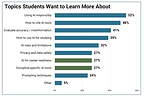
Among 5,419 respondents, responsible use was the top learning topic at 52%, while 59% want real examples from their field, priorities that align with the University’s existing academic AI framework for responsible, applied learning.

PHOENIX, Aug. 18, 2026 /PRNewswire/ — As artificial intelligence is increasingly integrated into learning and work, a new University of Phoenix survey of students suggests that AI readiness requires more than knowing how to access or operate a tool. The findings point to AI readiness that extends beyond tool use to responsible use, accuracy, citation, real-world application and human judgment.

The Spring 2026 AI Student Survey received 5,419 submitted surveys from students enrolled in selected course sections across the University’s colleges. Seventy-eight percent of respondents report using at least one AI tool, showing that AI is already part of many students’ lives. Their learning priorities, however, extend beyond tool familiarity: 52% want to learn more about using AI responsibly for coursework, 48% want to learn how to cite AI tools and 41% want to learn how to evaluate accuracy and avoid misinformation.

The findings indicate student priorities that align with University of Phoenix’s academic AI pillars, a three-part framework established earlier this year to embed practical AI knowledge and responsible-use habits across degree programs, learning experiences and academic practices.

“AI readiness isn’t measured by how quickly someone can get an answer from a tool. It is demonstrated by whether a learner can evaluate that answer, understand its limitations, use it responsibly and know when their own judgment must lead,” said John Woods, PhD, provost and chief academic officer at University of Phoenix. “Our students are prioritizing clear academic expectations, opportunities to practice and field-relevant examples — priorities that closely align with our academic AI pillars and the kind of AI literacy higher education needs to help learners build with AI now being part of both learning and work.”

What do students say AI readiness requires?

When students were asked what AI topics or skills they would like to learn more about, their priorities emphasized responsible decision-making alongside practical proficiency:

52% selected using AI responsibly for coursework48% selected how to cite AI tools41% selected how to evaluate accuracy and avoid misinformation32% selected AI risks and limitations27% selected AI for career readiness24% selected prompting techniques

The findings suggest students want more than tool proficiency or prompting; they also want a stronger understanding about responsible use, citation, accuracy and AI’s risks and limitations.

How can AI support learning without replacing student thinking?

Students’ open-ended responses add context to the responsible-use findings. Comments addressed the validity and accuracy of AI-generated information, ethical use, preserving authentic work and personal voice, and maintaining human skills such as critical thinking, learning and writing — reinforcing that effective AI use also requires knowing when human thinking remains essential. Examples of comments from the survey include:

“I have never really considered using AI tools before…However, I am open to learning and understanding how AI tools can be used responsibly, especially in an educational setting.””I would include a step-by-step guide.” “More interactive, hands-on learning tools such as simulations and real-world practice scenarios.””As a Business and Healthcare Administration student who also works in…business intelligence, I would benefit from real examples showing how to use AI ethically for research, data analysis, and professional documentation.”

Students want to see, practice and evaluate AI in real-world contexts

Students provided a clear picture of how applied AI learning can support readiness. When asked what would help them feel more prepared to use AI in their career field and program coursework:

59% selected real examples from their field51% selected step-by-step demonstrations43% selected tutorials on industry-specific AI tools40% selected hands-on assignments with workplace scenarios31% selected opportunities to practice prompting or evaluating AI output

Together, the findings point to an applied learning sequence: show learners how AI is used, model the process, provide opportunities to practice and build judgment by evaluating the result.

Student priorities align with University of Phoenix academic AI pillars

University of Phoenix established its academic AI pillars in February 2026 as a three-part framework for helping working adult learners develop practical AI knowledge and responsible-use habits that translate across academic and workplace contexts:

Pillar 1: Embed AI into programs and course content.Pillar 2: Leverage AI tools to enhance the learning experience.Pillar 3: Weave AI into processes, policies and workflows.

While the framework predates the Spring 2026 student survey, the new findings provide an additional student-informed lens on many of the dimensions the pillars are designed to address.

How does the Center for AI Resources support responsible AI readiness?

The Center for AI Resources serves as the student-facing component of the University’s broader AI academic approach, providing a central pathway to guidance on responsible, safe and effective AI use. Student responses show strong expectations for that kind of support. When asked what they would expect to find in the Center:

87% selected how to use AI responsibly in coursework80% selected what the University considers acceptable AI use, including policies, expectations and examples69% selected how to check AI output for accuracy and avoid misinformation56% selected career examples showing how AI is used in their field

The responses indicate that students are seeking responsible-use standards, academic clarity, accuracy verification and career relevance. The findings can inform continued planning for the Center, discipline- and field-specific examples and resources supporting students at different stages of AI readiness.

Together, the University’s academic framework and the new student evidence point toward an approach to AI readiness that pairs practical skill-building with responsible use, critical evaluation and human judgment.

About the University of Phoenix AI Student Survey

The Spring 2026 AI Student Survey was deployed in selected course sections across University of Phoenix colleges to understand how students are using AI and what they need to use it responsibly and effectively in academic and professional settings. The survey was designed to identify broad student patterns and inform student support, curriculum conversations, college-level planning and continued development of AI learning resources.

Survey links were embedded within selected courses and aligned to a small course-point value. Participation also included an opportunity to enter a drawing for one of five $100 Amazon e-gift cards. No individual survey question was required.

Among 9,315 students enrolled in the selected course sections, 5,419 submitted surveys, resulting in a 58% response rate. Because questions were optional, response totals and denominators vary by question. The survey generated 9,890 coded comments across its open-response areas.

About University of Phoenix

University of Phoenix is Built for Real Life. 50 Years Strong. The University innovates to help working adults enhance their careers and develop skills in a rapidly changing world through flexible online learning, relevant courses, academic AI pillars, and skills-mapped curriculum for associate, bachelor’s and master’s degree programs. Active students and alumni have access to Career Services for Life® resources including career guidance and tools. For more information, visit phoenix.edu. 

View original content to download multimedia:https://www.prnewswire.com/news-releases/university-of-phoenix-student-survey-points-to-responsible-use-judgment-and-real-world-practice-as-foundations-of-ai-readiness-302854406.html

SOURCE University of Phoenix

Continue Reading

Technology

Bernhard Capital-Backed Aventia Broadens Infrastructure Capabilities Through Bryant Hammett & Associates Acquisition

Published

on

By

BATON ROUGE, La., Aug. 18, 2026 /PRNewswire/ — Aventia, a nationally recognized environmental and infrastructure services firm and Bernhard Capital Partners (“Bernhard”) portfolio company, today announced the acquisition of Bryant Hammett & Associates (“BHA”), a civil engineering, land surveying and hazard mitigation firm based in Louisiana.

For more than four decades, BHA has served government agencies and private clients throughout Central and Gulf South Louisiana, operating offices in Ferriday, Harahan, Belle Chasse and Baton Rouge. With teams of engineers, surveyors and mitigation specialists, BHA delivers comprehensive infrastructure services across public works, community development and disaster resilience projects.

With this acquisition, Aventia — launched by Bernhard in July 2022 — continues to grow its nationwide footprint and to strengthen its engineering, environmental and infrastructure capabilities. The firm employs more than 400 professionals providing consulting, field services and technology solutions to public and private sector clients in over 40 states.

“Since 1984, BHA has established itself as a trusted partner for Louisiana’s infrastructure and disaster resilience work,” said Dirk Applegate, Chief Executive Officer of Aventia. “Their public sector relationships and technical experience complement our portfolio perfectly, and we’re thrilled to welcome their talented team to Aventia. Together, our clients across the country now have access to a more comprehensive suite of environmental and infrastructure solutions.”

“We’ve earned our reputation by delivering quality engineering, surveying and construction management work and staying committed to the communities we serve,” said Bryant Hammett Jr., sole proprietor and manager of BHA. “This partnership with Aventia expands what we’re able to do while preserving the personalized attention that’s always set us apart, and we’re looking forward to growing alongside the Aventia team.”

“We launched Aventia to be a nationwide environmental consulting leader, helping clients address critical mitigation and resilience work. BHA represents a strong strategic fit that expands this mission,” said Chris Dillon, Partner at Bernhard. “BHA’s regional reputation and technical depth create meaningful momentum as Aventia continues building its national platform, serving communities across the country.”

To learn more about Aventia’s work creating healthier, more sustainable communities, visit aventiaenv.com.

About Aventia

Aventia is a nationally recognized environmental firm delivering comprehensive consulting, field services and technology-driven solutions to public and private sector clients in more than 40 states. As a Bernhard Capital Partners portfolio company with over 400 team members, Aventia helps clients navigate complex environmental regulations, implement sustainable solutions and create healthier communities through collaborative partnerships. For more information, visit aventiaenv.com.

About Bernhard Capital Partners

Bernhard Capital Partners is a private markets investment firm focused on building market-leading infrastructure services and asset platforms across essential sectors. With more than $6 billion in assets under management, the firm invests in complex, expansive and often regulated markets characterized by durable demand. Bernhard applies a disciplined, thematic investment strategy, paired with deep sector expertise and operational experience, to enhance performance, scale platforms and support long-term growth. Bernhard’s specialized approach is designed to perform across market cycles, delivering consistent outcomes for investors, partners and communities served across the portfolio. For more information, visit bernhardcapital.com.

About Bryant Hammett & Associates

Bryant Hammett & Associates is a civil engineering and land surveying firm established in 1984 serving Central and Gulf South Louisiana. The company specializes in critical infrastructure and hazard mitigation services, working with government and private sector clients across four regional offices. For more information, visit bha-engineers.com.

Media Contact

Bernhard Capital Partners
Prosek Partners for Bernhard Capital Partners
pro-Bernhard@prosek.com

View original content:https://www.prnewswire.com/news-releases/bernhard-capital-backed-aventia-broadens-infrastructure-capabilities-through-bryant-hammett–associates-acquisition-302854468.html

SOURCE Bernhard Capital Partners

Continue Reading

Trending