Connect with us

Technology

Canadian Banking Regulator Urged to Rethink Climate Risk Guideline says Friends of Science; Keystone XL could REcarbonize Canada

Published

on

CALGARY, AB, Aug. 20, 2026 /PRNewswire/ — As talk of a potential rebirth of Keystone XL pipeline rises in Canada-US trade negotiations, a Friends of Science Society open letter urges the Office of the Superintendent of Financial Institutions (OSFI) to rethink their climate risk guideline, B-15, in order to REcarbonize Canada. 

In the August 19, 2026, letter to OSFI, Friends of Science Society says the economic and scientific justifications for climate risk reporting by financial institutions, which underly Guideline B-15, are no longer valid.

The Friends of Science Society letter was written before the surprise Keystone XL comment by President Trump in a Truth Social post.

Canada’s Business Futures Pathways group is in the process of defining a green taxonomy. In their letter to OSFI, Friends of Science Society references a new report critiquing the taxonomy group, titled, “Sustainable Finance Taxonomy: Out-of-date Science and Unsustainable Greenwashing.” The taxonomy is based on the out-dated science of the Intergovernmental Panel on Climate Change (IPCC) Special Report 1.5 of 2018. Much of that SR 1.5 report was predicated on the climate catastrophe scenario known as RCP 8.5 (SSP5-8.5). RCP 8.5 has been sidelined as “implausible” by the official climate modelling group of the IPCC. OSFI’s climate risk guidelines are also based on this implausible scenario.

As long-time climate policy analyst, Roger Pielke, Jr., explains, “No, RCP8.5 Did Not Become Implausible Because of Climate Policy“, it was not the Paris Agreement, climate policies nor the declining cost of renewables that made RCP 8.5 implausible; it was always implausible. 

Friends of Science Society argues that the recent dramatic shifts in global geopolitics and energy shocks are not reflected in the Sustainable Finance Taxonomy report, nor in OSFI’s Guideline B-15. It was finalized in February of 2025 to align with Canadian Sustainability Standards Board 2024 guidelines, thus all three are out-of-date.

Friends of Science Society says that without the RCP 8.5 climate catastrophe scenario, the claim of a climate emergency evaporates; markets should return to normal evaluation of energy companies without climate prejudice, particularly in a time of global energy deficits due to conflicts in the Strait of Hormuz and between Ukraine and Russia.

As Dr. Tammy Nemeth writes in the Financial Post of August 20, 2026, “Canada’s new green taxonomy distorts capital markets,” the purpose of the green taxonomy is to draw Foreign Direct Investment (FDI), but over half of Canada’s FDI comes from the USA, which is abandoning all climate obsessions. The US Securities and Exchange Commission has begun a formal process of rescission of all climate-related reporting requirements.

In the letter to OSFI, Friends of Science Society references comments from the National Association of Manufacturers’ submission to the SEC consultation, on the financial burden of such reporting. 

In 2022, Friends of Science Society published a post outlining the economic burden of mandatory Scope 1, 2, 3 emissions reporting, rejecting the “Integrity Matters” proposals of Catherine McKenna, and her UN High Level Expert Panel’s push for absolute GHG reductions (not just ‘net’ zero) as a risk to society – there is no material supply chain to support their ‘green’ dreams.

The Financial Times published a report on Aug. 20, 2026, titled “Donald Trump proposed reviving the Keystone XL pipeline. Does Canada still want it?” saying that “bilateral relationship has soured” since the project was first proposed. They showed an image of Tar Sands Campaign protestors but did not mention the global campaign to demarket Alberta oil, to sour domestic and international relations.

Canadian climate activists banded together with Indigenous groups to specifically block Keystone XL, as reported in the 2010, 9th Annual Report of the International Funders for Indigenous Peoples

Friends of Science Society has written “Fear and Loathing – The Alberta Oil Sands, from national pride to international pariah,” a detailed report on the Tar Sands Campaign, issued in December 2019. Alberta bitumen is ideally suited to the Gulf Coast refineries. In a world of energy deficits, if Keystone XL is revived, it could be an energy lifeline for many countries and would jumpstart the Canadian economy. 

Friends of Science Society says to REcarbonize Canada, the country must deregulate and revise OSFI’s Guideline B-15 to reflect the scientific, economic and global energy realities; only then can Canada become an energy superpower.

About
Friends of Science Society is an independent group of earth, atmospheric and solar scientists, engineers, and citizens that is celebrating its 24th year of offering climate science insights. After a thorough review of a broad spectrum of literature on climate change, Friends of Science Society has concluded that the sun is the main driver of climate change, not carbon dioxide (CO2).

Friends of Science Society
PO Box 61172 RPO Kensington
Calgary AB T2N 4S6
Canada
Toll-free Telephone: 1-888-789-9597
Web: friendsofscience.org
E-mail: contact@friendsofscience.org
Web: climatechange101.ca

View original content to download multimedia:https://www.prnewswire.com/news-releases/canadian-banking-regulator-urged-to-rethink-climate-risk-guideline-says-friends-of-science-keystone-xl-could-recarbonize-canada-302856866.html

SOURCE Friends of Science Society

Continue Reading
Click to comment

Leave a Reply

Your email address will not be published. Required fields are marked *

Technology

CNTE Supplies 50.94MW/101.592MWh Energy Storage Solution for BESS Krumpa I in Germany

Published

on

By

BRAUNSBEDRA, Germany, Aug. 22, 2026 /PRNewswire/ — CNTE has supplied a 50.94MW/101.592MWh battery energy storage system solution for the BESS Krumpa I project in Braunsbedra, Germany.

The system is designed to support photovoltaic integration. It can store electricity generated by the PV system and discharge when needed, helping improve solar energy utilization and enhance power system flexibility. The project was successfully connected to the grid in April 2026.

With a rated power of 50.94MW and a storage capacity of 101.592MWh, the system can provide flexible charging and discharging according to PV generation and grid requirements. CNTE’s energy storage solution integrates battery equipment, power conversion and intelligent energy management to support efficient system operation.

The project reflects the growing deployment of large-scale battery energy storage in Germany as solar power capacity continues to expand. BESS technology can help manage fluctuations in PV generation, improve solar energy utilization and provide greater flexibility to the electricity system.

The BESS Krumpa I project also adds to CNTE’s growing portfolio of large-scale energy storage projects in Europe, supporting the integration of solar power and the development of a more flexible energy system.

View original content:https://www.prnewswire.co.uk/news-releases/cnte-supplies-50-94mw101-592mwh-energy-storage-solution-for-bess-krumpa-i-in-germany-302857685.html

Continue Reading

Technology

Chandigarh University Hosts Global Architectural Voices to Deliberate on Technology, Heritage and Future of Architecture

Published

on

By

Leading Architects Deliberate Artificial Intelligence, Emerging Technologies & the Future of Architecture

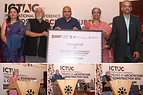
CHANDIGARH, India, Aug. 22, 2026 /PRNewswire/ — Aimed at transforming industry–academia engagement from dialogue into tangible collaboration, the 4th International Conference on Trends in Architecture and Construction (ICTAC 2026) was inaugurated today at Chandigarh University, bringing leading architects, academicians, researchers, industry professionals and scholars onto a single platform to deliberate on the future of architecture and construction.

The conference set the stage for new industry partnerships, architecture and research consultancy, professional knowledge exchange and stronger industry exposure for future architects. Organised by the University Institute of Architecture (UIA), Chandigarh University, the two-day hybrid conference is being held on August 20 and 21, 2026 at Chandigarh University.

The inaugural day brought together eminent voices from the field of architectural education, research and professional practice, including Prof. Jayshree Deshpande, Director of the Council of Architecture – Training & Research Centre (COA-TRC) as Chief Guest, Yatin Pandya, Founder & Principal Architect, Footprints EARTH, Ahmedabad, Manmohan Khanna, Founder & Principal Architect, KMA Architecture and Chairman-IIA, Chandigarh Chapter as Guest of Honours, Prof. (Dr.) Vikas Rai Bhatnagar, Group Vice Chancellor, Prof. Dr R Jagdeesh Kannan, Pro Vice Chancellor-Academic Affairs, Chandigarh University among other dignitaries.

Speaking on the occasion, Prof. Jayashree Deshpande, Director of the Council of Architecture – Training & Research Centre (COA-TRC) said, “AI and other emerging technologies are a blessing because they can help us to think and design better. Architecture today deals with projects which are immense in scale, and it is not possible for an architect to do everything single-handedly. We must therefore learn to collaborate with engineers, planners, policymakers, consultants and specialists and technology can enable us to work together more effectively.”

Deshpande added, “We are entering an extraordinary phase of technological change, with artificial intelligence, digital twins, generative design, robotics and data-driven planning transforming the way we conceive, design and construct our buildings and cities. But technology should remain a means and not become the mission. Technology must be used to improve the quality of human life, to create spaces, cities and communities that are stronger, more resilient, inclusive and connected. Technology is smart, but the human should be wiser. If we learn to use technology properly, we can create wise cities that are technologically advanced but emotionally connected. This is particularly important as we work towards the vision of Viksit Bharat. Our young professionals should engage with the various initiatives of the Government of India and utilize the opportunities available to contribute to the development of the country. Ultimately, our responsibility as architects is not simply to create iconic buildings, but to create places where people feel safe, included, inspired and at home. If technology can help us achieve that, then it has truly served society and contributed to the larger vision of a Viksit Bharat.”

Yatin Pandya, Founder & Principal Architect, Footprints EARTH, Ahmedabad said, “Architecture is not merely about buildings or forms; it is about the experience, emotion and impact we create. Trends may come and go, but what is truly appropriate and meaningful can remain timeless. As architects, we must observe, understand and foresee the implications of even the smallest design decisions, because our responsibility extends beyond an individual client to the larger community and the future of our planet.”

Manmohan Khanna, Founder & Principal Architect, KMA Architecture said, “Chandigarh University has the potential to become one of the leading institutions in the country and the world and the students here are fortunate to be part of that journey. Students are our future and together we must work towards building the finest professionals for the country.”

A key thrust of ICTAC 2026 is its emphasis on creating concrete mechanisms for sustained industry–academia engagement. The inaugural day also featured the opening of the Heritage Exhibition – ‘Pehchan 2.0’, placing India’s architectural heritage within the wider discourse on identity, conservation and contemporary architectural practice.

The programme further witnessed the unveiling of the ICTAC Inaugural Board and the release of the Abstract Book, followed by paper presentations. The research presentations provided scholars and participants with a platform to share emerging ideas, studies and perspectives in architecture and construction.

The second day of the conference will feature the Industry Colloquium, comprising plenary sessions and high-level panel discussions with distinguished experts from academia, government and industry. A major highlight will be the signing of an MoU between UIA and Walia Creative Architects, creating a formal avenue for closer engagement between academic and professional practice.

About Chandigarh University

Chandigarh University is a NAAC A+ Grade University and QS World Ranked University. This autonomous educational institution is approved by UGC and is located near Chandigarh in the state of Punjab. It is the youngest university in India and the only private university in Punjab to be honoured with A+ Grade by NAAC (National Assessment and Accreditation Council). CU offers more than 109 UG and PG programs in the field of engineering, management, pharmacy, law, architecture, journalism, animation, hotel management, commerce, and others. It has been awarded as The University with Best Placements by WCRC.

Website address: https://www.cuchd.in/

Photo: https://mmx.prnewswire.com/media/MS1973975/ICTAC_event_collage_group_top_speakers_below.jpg?id=OA2903341&token=eyJhbGciOiJkaXIiLCJlbmMiOiJBMjU2R0NNIn0..vyIt1-Qpobw4ZX4W.1QxGS5VNCjhZxaRW63yXMYGuyzRl3V5MN026BJrGy-idYn6FksvyBs_KeGyGGF7bW3cGTm1K5dNvwn7BjCyidmdcdgF5-3NcXTllKXG8B_gTzNjzLaZtpoAyvN48-dr5oIs.O8b-cgZp-R0v_7scTU0tvg

View original content to download multimedia:https://www.prnewswire.com/in/news-releases/chandigarh-university-hosts-global-architectural-voices-to-deliberate-on-technology-heritage-and-future-of-architecture-302857684.html

Continue Reading

Technology

OnTime Posts 140.7% Revenue Surge to RMB 4.035 Billion, Gross Profit Tops RMB 500 Million in H1 2026

Published

on

By

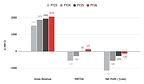
HONG KONG, GUANGZHOU and SHENZHEN, China, Aug. 22, 2026 /PRNewswire/ — Chinese mobility technology and service provider OnTime (9680.HK) announced its first-half 2026 financial results on August 19, achieving record highs in revenue, gross profit and order volume. The company posted a 156.3% jump in gross profit, topping RMB 500 million, with gross margin expanding to 12.4% and net losses narrowing 45.2% year-on-year. 

For the first half of 2026, OnTime generated revenue of RMB 4.035 billion, a 140.7% increase from the same period last year. Total orders rose 150.6% to 184 million, propelling daily orders past the one-million mark for the first time.

Beyond its core mobility services — which continued to deliver robust revenue growth — OnTime’s technology services segment saw revenue soar 274.4%, with a gross margin of 22.7%, reflecting strong momentum, improved profitability and a more favorable business mix. According to company disclosures, the tech services division expanded into embodied AI in the first half of 2026, a move expected to broaden the company’s prospects in AI and make the segment a key driver of future growth.

Revenue Doubles to RMB 4.035 Billion; Gross Profit Tops RMB 500 Million and Losses Narrow 45.2%

OnTime’s first-half revenue reached RMB 4.035 billion, with year-on-year growth accelerating sharply — up 79 percentage points from the same period in 2025.

The company said it has adopted AI tools and automation across its R&D and operational workflows to improve efficiency, with the benefits of operating leverage beginning to be reflected in its financial performance.

Gross profit surged 156.3% to RMB 501 million, outpacing revenue growth for the period. The company’s gross margin has improved consistently — climbing from 5.1% for full-year 2024 to 11.7% in the first half of 2025, and further to 12.4% in the first half of 2026. Meanwhile, net losses narrowed by 45.2% compared with a year earlier.

Mobility Services Orders Surge 150.6%; Robotaxi Expansion Accelerates

Mobility services and technology services are jointly driving the company’s revenue gains.

OnTime’s core mobility services — including both ride-hailing and Robotaxi — generated RMB 3.92 billion in first-half revenue, up 139.5% year-on-year. Growth was fueled by a 149.2% increase in gross transaction value to RMB 5.064 billion and a 150.6% jump in total orders to 184 million.

Daily orders reached 1.015 million, up 150.7% year-on-year — a critical industry milestone that places OnTime in the “million-daily-orders club,” a benchmark widely recognized as an indicator of scale in China’s ride-hailing market.

During the period, OnTime’s mobility services gross margin improved to 12.1%, driven primarily by greater scale and operational efficiencies that lowered per-order costs.

Robotaxi, a strategic priority for OnTime, has seen significant growth since the start of 2026. The company now operates more than 550 Robotaxi vehicles across key areas including Guangzhou’s Nansha and Science City districts, Shenzhen’s Bao’an and Nanshan districts, and the Hengqin Guangdong-Macao In-Depth Cooperation Zone.

OnTime’s “Robotaxi+” industrial ecosystem continues to expand. In March, autonomous driving developer Pony.ai deployed its next-generation Robotaxi vehicles into OnTime’s fleet. In April, OnTime partnered with chipmaker Black Sesame Technologies to co-develop production-ready Robotaxi solutions alongside other ecosystem partners. Most recently in August, OnTime’s Robotaxi services were integrated into Alipay and Tencent’s mobility platforms, accelerating the development of a Robotaxi service network combining its own platform with third-party platforms.

AI-Powered Tech Services Revenue Tops RMB 100 Million; Gross Margin Hits 22.7%

OnTime’s technology services segment — which generates revenue primarily from AI-driven data solutions — surpassed RMB 100 million in first-half revenue for the first time, up 274.4% year-on-year, making it the company’s fastest-growing business line. The segment delivered a gross margin of 22.7%.

According to previously disclosed results, technology services revenue grew 175.8% year-on-year in H1 2024, 207.0% in H1 2025 and 274.4% in H1 2026, demonstrating a clear acceleration in the segment’s growth.

OnTime began building its AI data services business in 2023, leveraging real-world mobility scenarios captured from its ride-hailing platform to develop autonomous driving data solutions. The company offers end-to-end data services — from raw data collection to standardized dataset delivery — with data assets spanning perception data, behavioral data, synthetic data and multimodal training datasets.

According to company filings, OnTime is accelerating the commercialization of its technology services business. The filings also note that its AI data capabilities currently serve autonomous driving data needs and are now extending into emerging fields such as embodied AI and large model training.

In June 2026, OnTime launched a dedicated embodied AI data platform, formally expanding its service scope into this high-growth segment. A month later, the company listed its data assets on the Automotive Industry Trusted Data Space — a China-based data-sharing initiative — further establishing compliant, standardized channels for the exchange of data assets.


View original content:https://www.prnewswire.com/apac/news-releases/ontime-posts-140-7-revenue-surge-to-rmb-4-035-billion-gross-profit-tops-rmb-500-million-in-h1-2026–302857659.html

SOURCE Ontime

Continue Reading

Trending