Connect with us

Technology

Singlewire Software Report Finds K-12 Emergency Readiness Is Built in the Daily Routine

Published

on

An analysis of more than 19.5 million notifications from approximately 16,000 schools shows that 92% of K-12 communication is routine — and that the systems schools trust in a crisis are the ones they rely on every day.

Key Facts:

Not a survey: Drawn from actual usage across approximately 16,000 K-12 schools during the 2025–26 school year.Routine builds readiness: Operational messages account for 92% of K-12 notifications, so the systems used in a crisis are already familiar before one arises.Email outpaces app alerts: 76.7% of schools used email: more than mobile app push (56.5%) or text (53.1%).Threats don’t watch the clock: More than 52,000 emergency messages went out on weekends, with a rise in overnight activity between 11 p.m. and 2 a.m.

MADISON, Wis., Aug. 26, 2026 /PRNewswire/ — The best time to prepare a school for an emergency is every day before it. New data from Singlewire Software shows that routine communication makes up the vast majority of activity across K-12 schools, and that this everyday use forms the foundation for a confident emergency response.

Singlewire Software’s The State of K-12 Critical Communications: 2025–26 School Year report analyzes actual notification activity from approximately 16,000 K-12 schools that use the Singlewire InformaCast critical communication and incident management platform. The analysis covers more than 19.5 million notifications and more than 343 million device activations across the full 2025–26 school year.

Unlike a survey, the report offers a system-of-record view of how schools genuinely used their communication systems, message by message, throughout the year.

“Emergency readiness is built long before an emergency happens,” said Terry Swanson, president and CEO of Singlewire Software. “When staff use their communication systems every day, those systems become familiar infrastructure instead of something to figure out under pressure. This data shows that everyday reliability is the foundation of emergency readiness.”

The Numbers Tell a Clear Story

Across the K-12 schools analyzed:

92% of notifications were operational communications; only 8% were emergency alerts.Automated bell schedules accounted for 60% of messaging and live paging for another 28% — together, roughly 88% of everything schools sent.80% of emergency communications occurred during the school day, peaking between 8 and 9 a.m. as students arrived and moved between classes.Emergency communication ran about 23% higher on Wednesdays and Thursdays than on Mondays, the quietest weekday.85.9% of schools used in-building devices such as speakers, phones, and displays, while 76.7% used email: more than mobile app push (56.5%) or text (53.1%).Smaller districts sent roughly three times more messages per student than large districts (a median of about 6.5 versus 2.0), because communication scales with the number of buildings rather than total enrollment.

Lockdown Dominates Real-World Emergency Communication, Drills Show a Different Mix

The “I Love U Guys” Foundation’s five standard response protocols are Hold, Secure, Lockdown, Evacuate, and Shelter, and they are used by tens of thousands of schools across the country. Of those five actions, Lockdown accounted for approximately 72% of real-world emergency message volume, nearly 10 times the combined volume of the other four. Singlewire Software is a proud mission partner of The “I Love U Guys” Foundation.

“A shared response vocabulary works best when schools exercise it consistently,” Swanson said. “Seeing how much communication each action generates, in both real activity and drills, gives school leaders a starting point to ask whether their communication patterns line up with their training.”

Emergency Communication Doesn’t Stop at Dismissal

The data also shows why districts should plan beyond the traditional school day. Schools sent about 52,000 emergency notifications on weekends, and overnight activity rose between 11 p.m. and 2 a.m. — a window that can signal after-hours issues waiting to affect the next school day.

Because messaging volume scales by building rather than by district size, smaller districts see a much higher concentration of communication per student. That makes building-by-building coverage a key consideration for leaders managing campuses of any size.

What School Leaders Can Take From the Data

The findings point to several practical steps for K-12 leaders:

Use your communication systems every day. Daily use builds the familiarity that pays off in a crisis.Drill for real-world risks. Compare your drill communication with your real-world activity so the two patterns stay aligned.Layer your channels. In-building systems, mobile alerts, email, and text each reach people the others may miss.Plan for after-hours incidents. Safety communication needs continue during evenings, weekends, and overnight.Check coverage building by building. As districts grow, per-student reach thins, so confirm every facility and every person is covered regardless of enrollment.

The full report, The State of K-12 Critical Communications: 2025–26 School Year, is available at https://www.singlewire.com/ebooks/state-of-k12-critical-communications.

About Singlewire Software

Singlewire Software, based in Madison, Wis., is a trusted partner in safety and communication, dedicated to shaping a future where every organization can protect its people with confidence. The company delivers innovative solutions like InformaCast critical communication and incident management software, the InformaCast Wearable Alert Badge, and Visitor Aware visitor and safety management software. By enabling instant alerts, comprehensive reach, and rapid response, Singlewire Software empowers K-12, healthcare, manufacturing, higher education, and enterprise organizations to proactively manage critical events and foster secure environments. To learn more, visit: www.singlewire.com.

chris.swietllik@singlewire.com

View original content to download multimedia:https://www.prnewswire.com/news-releases/singlewire-software-report-finds-k-12-emergency-readiness-is-built-in-the-daily-routine-302859557.html

SOURCE Singlewire Software

Continue Reading
Click to comment

Leave a Reply

Your email address will not be published. Required fields are marked *

Technology

Vetter Senior Living scales purpose and connection for residents with LifeLoop Wellness Navigator

Published

on

By

Expanded technology partnership elevates social wellness as a core pillar of resident well-being across 28 communities through data-driven insights and intervention

DENVER, Aug. 26, 2026 /PRNewswire/ — LifeLoop, the leading proactive engagement and whole-person wellness platform for senior living, today announced that Vetter Senior Living (Vetter) has expanded its partnership with the portfolio-wide launch of the Wellness Navigator, LifeLoop’s innovative new solution that provides a research-based framework to operationalize resident social wellness at scale. The solution is now available across 28 Vetter communities in Nebraska, Missouri, and Wyoming.

Senior living providers have long recognized the critical role life enrichment professionals play in resident quality of life, yet the impact of that work has historically been difficult to quantify. This lack of standardized measurement has limited the industry’s ability to evaluate and deliver social wellness with the same rigor applied to clinical and physical dimensions of resident health. Vetter’s implementation of the LifeLoop Wellness Navigator introduces a consistent method to translate resident engagement data into actionable insights, reflecting the organization’s broader strategy to elevate life enrichment as a core pillar of resident well-being.

“Cultivating purpose and connection is central to who we are and the experiences we create for our residents at Vetter Senior Living,” said Mark Iverson, chief operating officer at Vetter Senior Living. “LifeLoop’s Wellness Navigator enables us to now operationalize that belief across every community—it’s transformative for our organization, our community teams, and our residents. Our partnership with LifeLoop is helping us advance a model of senior living in which social wellness is intentionally supported as an essential element of overall resident health.”

Vetter has launched the Wellness Navigator portfolio-wide to standardize how communities measure and improve social well-being. The solution gives community staff greater visibility into residents at risk of loneliness or disengagement, empowering life enrichment professionals to intervene with personalized support before isolation impacts resident health and well-being. Using the solution’s wellness intelligence system—including the Social Engagement Index (SEI) and UCLA 3 Loneliness Scale as validated measurement frameworks—staff can confidently and consistently evaluate engagement trends over time, at both the resident and community levels.

“The potential impact of the Wellness Navigator for our life enrichment teams and residents cannot be overstated. In my 15 years in this field, we have never had an industry-standard framework to quantify how life enrichment positively impacts resident wellness,” said Courtney Schmitz, director of purposeful living at Vetter Senior Living. “With LifeLoop, we’re moving beyond program planning and activity tracking into data-driven, whole-person wellness.”

Vetter has leveraged LifeLoop solutions for resident engagement, community operations, and family connections for over 15 years. This expansion builds on Vetter’s longstanding commitment to creating community experiences that are centered in dignity and purpose for all residents.

“Vetter is demonstrating what it looks like to treat life enrichment as an essential component of resident well-being,” said Rob Fisher, chief executive officer at LifeLoop. “As senior living continues to evolve, recognizing that purpose and connection matter is important, but having the infrastructure to seamlessly understand, support, and improve them is paramount. Vetter is one of the organizations leading that shift, and we’re proud to partner with them to put that vision into practice for the staff, residents, and families they care for.”

About Vetter Senior Living

Vetter Senior Living is a nonprofit organization providing services and living options including rehabilitation, independent living, assisted living, skilled nursing, home health care, and hospice. The company has locations in Nebraska and Missouri, and manages care communities in Lander, Wyoming and Grand Island, Nebraska. With a mission of “Dignity in Life,” Vetter Senior Living is well known for quality care. More than 4,000 team members continuously strive for improvement in all areas of service.

About LifeLoop

LifeLoop is powering a new era of aging. Trusted by more than 4,700 communities across North America, LifeLoop embeds proactive engagement and whole-person wellness into the daily life of senior living communities. With LifeLoop, senior living providers deliver personalized experiences that foster purpose and connection—helping older adults live not just longer, but better. Learn more at lifeloop.com.

Media contact

Natalie Jones

Sr. Director of Marketing

LifeLoop

natalie.jones@lifeloop.com

View original content to download multimedia:https://www.prnewswire.com/news-releases/vetter-senior-living-scales-purpose-and-connection-for-residents-with-lifeloop-wellness-navigator-302859545.html

SOURCE LifeLoop

Continue Reading

Technology

Ontario International Airport receives its largest-ever VALE grant to expand clean-energy infrastructure

Published

on

By

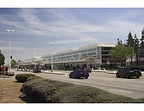
ONTARIO, Calif., Aug. 26, 2026 /PRNewswire/ — Ontario International Airport (ONT) has been awarded nearly $4.15 million from the Federal Aviation Administration (FAA) to expand its clean-energy infrastructure, the airport’s third – and largest – federal Voluntary Airport Low Emissions (VALE) grant in as many years.

The $4,147,752 grant will cover 75% of the $5.53 million cost of installing electric ground support equipment (eGSE) charging infrastructure at Terminals 2 and 4. The project will support electric-powered equipment used to service aircraft on the ground, reducing reliance on conventional fuel-powered equipment and associated emissions.

“This latest investment by the FAA is a tremendous vote of confidence in the work we are doing to build a more sustainable Ontario International Airport,” said Atif Elkadi, chief executive officer of the Ontario International Airport Authority. “Three VALE grants in three years represents meaningful progress, and this latest award will allow us and our airline partners to continue reducing emissions while investing in the infrastructure ONT will need for the future.”

The VALE program helps commercial airports meet their air-quality responsibilities by funding eligible projects that reduce emissions. ONT’s latest award follows previous VALE grants supporting the airport’s ground power unit (GPU) and pre-conditioned air (PCAir) projects. These investments reduce the need for aircraft and ground equipment to burn fuel while parked at the terminal, supporting cleaner and more efficient airport operations.

The latest grant represents the federal government’s full 75% eligible share of the eGSE charger project. A competitive procurement process resulted in a successful bid significantly below the airport’s original project estimate, further reducing the local financial commitment required to complete the improvements.

“This is exactly the kind of strategic partnership that allows us to make significant infrastructure improvements while being responsible stewards of airport resources,” Elkadi said.

About Ontario International Airport

Ranked as the second most popular mid-sized airport by J.D. Power, Ontario International Airport (ONT) serves more than 7 million passengers per year and offers nonstop service to two dozen major airports in the U.S., Mexico, Central America and Taiwan. ONT is owned and operated by the Ontario International Airport Authority, a Joint Powers Agreement between the City of Ontario and the San Bernardino County. More information is available at flyOntario.com. Follow @flyONT on FacebookX and Instagram

Media Contact: Steve Lambert (909) 841-7527 slambert@flyontario.com

View original content to download multimedia:https://www.prnewswire.com/news-releases/ontario-international-airport-receives-its-largest-ever-vale-grant-to-expand-clean-energy-infrastructure-302857762.html

SOURCE Ontario International Airport

Continue Reading

Technology

Solace Announces Appointment of Mike Capone to Board of Directors

Published

on

By

Appointment follows Solace’s closing of a single-asset continuation vehicle with US$790 million (C$1.1 billion) in commitments, in partnership with majority investor Bridge Growth PartnersCapone brings over 30 years of experience scaling global technology businesses and helping the world’s largest enterprises transform how they use dataCapone served as CEO of Qlik for more than eight years and currently serves on the boards of Dynatrace and Suvoda

OTTAWA, ON, Aug. 26, 2026 /PRNewswire/ — Solace, the real-time data platform for the enterprise, today announced the appointment of Mike Capone, former CEO of Qlik, to its Board of Directors. Capone brings more than three decades of experience building and scaling global technology businesses with deep expertise in data, AI, and enterprise infrastructure software.

His appointment comes as enterprises increase investment in operationalizing AI, making real-time data infrastructure increasingly mission-critical. Solace sits at the center of this shift, enabling the world’s largest organizations to move trusted data continuously across applications, AI agents and cloud environments.

The appointment follows Solace and majority investor Bridge Growth Partners’ announcement in May 2026 of the successful closing of a single-asset continuation vehicle with US$790 million (C$1.1 billion) in commitments. The transaction was co-led by Apogem Capital, Golub Capital, HSBC Asset Management, and Schroders Capital, with meaningful participation from Bridge Growth Partners III, Bridge Growth’s latest flagship fund, which made its inaugural investment through the transaction.

Capone most recently served for more than eight years as CEO of Qlik, where he led the company through significant growth and transformation, expanding its capabilities across data integration, analytics and AI and strengthening its position as a strategic technology partner to some of the world’s largest enterprises. Capone currently serves on the boards of Dynatrace and Suvoda. Earlier in his career, he served as Chief Operating Officer of Medidata Solutions and held multiple senior leadership positions at ADP.

“Mike and I developed a strong relationship during his tenure as CEO of Qlik, and I have seen firsthand his rare combination of technology expertise, enterprise perspective, and operating leadership,” said Denis King, President and CEO of Solace. “His experience scaling a global technology business will be highly valuable as Solace enters its next phase of growth and as real-time data becomes increasingly critical to enterprise applications and AI agents.”

“I’m delighted to join Solace’s outstanding Board, which brings together some of the technology industry’s most accomplished leaders,” said Mike Capone. “I look forward to working closely with Denis, the management team, and my fellow Board members as we continue to build and scale a highly differentiated global technology business.”

“We are pleased to welcome Mike to the Solace Board,” said Tom Manley, Chairman of Solace and Partner of Bridge Growth Partners. “Mike has an exceptional track record of scaling technology companies and working with global enterprises at the center of major shifts in data and infrastructure. His appointment, following the successful closing of the continuation vehicle, reflects Bridge Growth’s continued focus on supporting Solace with the leadership, governance and resources to build an enduring global technology company.”

About Solace:

Solace is the real-time data platform for the enterprise. The Solace Platform combines an event mesh, stream data processing, agentic processing and democratized access in one experience, connecting every application, cloud, partner, and edge, turning raw events into real-time context, powering AI agents in production, and putting it all in the hands of every team. RBC Capital MarketsBoschHeinekenPSA Singapore, United Airlines, Schwarz Group and hundreds more enterprises rely on Solace to operate in real-time. Independent, focused, and purpose-built for the enterprise, Solace is headquartered in Ottawa, Canada, with offices around the world. Learn more at solace.com.

About Bridge Growth Partners:

Bridge Growth Partners, LLC is a private equity firm that targets investments in the technology and technology-enabled services sectors. Bridge Growth Partners brings together in one team premier investment, financial, strategic, and operating business-building talent. The firm is committed to relationship-based investing, with a focus on supporting growth, operational excellence, and world-class governance at its portfolio companies to create value for investors. For more information about Bridge Growth Partners, please visit www.bridgegrowthpartners.com.

Press Contacts:

David DeRosa, Solace
david.derosa@solace.com
(343) 996-1630

Jamie Kightley, IBA International
Jkightley@iba-international.com
+44 (0) 1572 757932

Trixie Wong, Rice, a FINN Partners Company
trixie.wong@finnpartners.com
+65 9757 7531

View original content to download multimedia:https://www.prnewswire.co.uk/news-releases/solace-announces-appointment-of-mike-capone-to-board-of-directors-302859609.html

Continue Reading

Trending