Connect with us

Technology

USTA Coaching Tops 17,000 Community Members in First Year as Tennis Boom Drives Demand for More Coaches

Published

on

With more than 25 million Americans playing tennis, USTA Coaching expands education nationwide and builds new pathways for women and emerging coaches

The Online Learning Hub launched in November and now offers 1,500+ hours of education across 31 badges, 83 modules and 250+ on-demand videos.Intro to Coaching, Empowering Girls and Coaching High School are among the most-earned badges in USTA Coaching’s first year.More than 1,500 coaches attended 135 workshops, many hosted at 44+ Coaching Education Centers throughout the U.S. and Puerto Rico.Women represent 34 percent and coaches under 30 represent 24 percent of the USTA Coaching community, reflecting efforts to expand and diversify the coaching pipeline.

ORLANDO, Fla., Aug. 27, 2026 /PRNewswire-HISPANIC PR WIRE/ — Tennis participation has reached its highest level in decades, with more than 25 million Americans playing, yet USTA research found that only 2 in 10 receive any formal coaching. When USTA Coaching launched on Aug. 13, 2025, to help close that gap, the response was immediate. On launch day alone, more than one person per minute joined. One year in, the platform has grown into a national community of more than 17,000 coaches, parents, volunteers, educators and industry professionals.

In its first year, USTA Coaching built the infrastructure to expand the coaching pipeline. Through flexible education, in-person training, research and partnerships, the organization has worked to make coaching easier to enter and more sustainable as a career.

“Our goal from the start was to make coaching more accessible, more rewarding and more impactful at every level of the game,” said Craig Morris, CEO of USTA Coaching. “The first year showed us the demand was real. But tennis is growing faster than the coaching workforce behind it, and that is the work ahead. Our ambition is to make sure that every person who picks up a racquet has a qualified coach to learn from, and that means building this pipeline as fast as the sport is growing.”

EXPANDING ACCESS TO COACH EDUCATION

USTA Coaching built its education model around the realities of coaching: People enter the profession from different places, learn in different ways and need support that fits their goals. Coaches can begin with focused badges, pursue certifications and combine online learning with hands-on workshops. Topics range from introductory coaching and group lesson delivery to junior and adult development, wheelchair tennis, cardio tennis and athlete-centered coaching.

The Online Learning Hub, which launched in November, now includes 31 badges, 83 modules, more than 250 on-demand videos, 1,500 hours of instructional content and AI role-play scenarios. It also recognizes multiple equivalency levels for Professional Tennis Registry and Racquet Sports Professionals Association certifications, allowing coaches to receive credit for credentials they already hold.

Education also extended to courts nationwide. More than 1,500 coaches attended 135 workshops led by professional coach developers, many held at 44+ Coaching Education Centers across the U.S. and Puerto Rico. That regional model gives USTA Sections, facilities and coach developers a direct role in strengthening their local coaching communities and supports the USTA’s goal of reaching 35 million players by 2035.

TURNING RESEARCH INTO OPPORTUNITY FOR WOMEN

Just 16 days after launch, USTA Coaching hosted Women in Coaching: A Cross-Sport Collaboration summit during the 2025 US Open. Billie Jean King, Dr. Nicole LaVoi of the Tucker Center for Research on Girls & Women in Sport, and leaders from across professional sports examined the structural barriers that keep women from entering and remaining in coaching.

Those conversations helped shape a national report released in March with the Tucker Center. Among its findings: insufficient pay and lack of caregiving support are among the leading reasons women collegiate coaches decline job offers.

“The numbers tell an important story, but recruitment without retention is not progress,” said Megan Rose, Managing Director and Head of Business Development and Operations for USTA Coaching. “What we heard from coaches across sports was that the barriers are structural. If we want more women leading on the court, we have to change how these roles are built and supported, not just how many women we invite in.”

USTA Coaching put that research into practice. Its inaugural Women in Coaching Cohort brought 25 established women coaches to the USTA National Campus in Lake Nona, Florida, for a three-day experience followed by continued development throughout the year. In April, USTA Coaching became a Mission Partner of WeCOACH, a national nonprofit dedicated to recruiting, advancing and retaining women coaches across all sports.

The organizations also launched Serving All: Aspiring Coaches powered by WeCOACH for collegiate women tennis players considering coaching careers. Thirty participants from 18 states are taking part in education, mentorship and leadership development, and each received a complimentary WeCOACH membership. Together, the programs support women already coaching while building the next generation of leaders. Women now represent 34 percent of the USTA Coaching community.

BUILDING THE NEXT GENERATION

Building the coaching pipeline also means reaching future coaches earlier and creating more pathways into the profession. Coaches under 30 now make up 24 percent of the USTA Coaching community, including 835 coaches ages 13-17, driven in part by high school engagement and incentives. USTA Coaching is also reaching emerging coaches through Spring Break Tennis, National Junior Tennis and Learning chapters and Community Impact Hubs.

That pipeline extends to higher education. In May, USTA Coaching established collaborations with Ferris State University, Hope College and Methodist University, giving students in professional tennis management and racquet sports management programs access to the ustacoaching.com platform as they prepare to enter the workforce. USTA Coaching has also delivered education at Historically Black Colleges and Universities through the USTA David N. Dinkins HBCU Coaching Grant, expanding access to coaching education and creating more entry points into the profession.

A CAPSTONE MOMENT IN NEW YORK

USTA Coaching marked its first anniversary August 25-27, with the inaugural Coaches Open in New York City bringing together 500 coaches from across the country for three days of education, connection and professional development.

Billie Jean King headlined a cross-sport speaker lineup that included USTA CEO Craig Tiley, USTA Coaching CEO Craig Morris, Grand Slam-winning coaches Darren Cahill and Paul Annacone, University of South Carolina women’s basketball head coach Dawn Staley, U.S. Women’s National Hockey Team head coach John Wroblewski, Olympic gold medalist Aerin Frankel and author Will Guidara.

“When I look out at a room full of coaches, I see the future of tennis,” said King. “Every champion started with someone who believed in them first. Giving coaches the education, the tools and the recognition they deserve is how this sport keeps growing, and it is long overdue.”

In Louis Armstrong Stadium, coaches took part in on-court sessions focused on movement, decision-making and player development, while additional programming explored leadership and culture, inclusive and adaptive coaching, women in coaching, and technology and performance. In addition, 21 coaches will have completed the first phase of specialty courses, while a tradeshow and innovation showcase featured 30 companies serving the profession. Free on-site childcare helped make the event more accessible to attendees.

ABOUT USTA Coaching

USTA Coaching’s national platform offers tiered benefits for coaches at every level – from professional instructors and high school coaches to parents, teachers and volunteers. With a modern approach to certification, flexible education pathways and access to exclusive tools and benefits, USTA Coaching is redefining who gets to lead on the court. By empowering more people to coach, USTA Coaching ensures that as demand for tennis grows, so does the community of skilled, diverse and well-equipped leaders guiding the game forward. To learn more, visit USTACoaching.com.

SOURCE USTA Coaching

Continue Reading
Click to comment

Leave a Reply

Your email address will not be published. Required fields are marked *

Technology

Hilco Global Seeks Offers to Acquire Autonomous Navigation Patents

Published

on

By

NEW YORK, Aug. 27, 2026 /PRNewswire/ — Hilco Global’s Intellectual Property Services group (www.hilcoglobal.com), a leading intellectual property advisory firm specializing in intangible asset valuation, advisory, and monetization services, announced that it is seeking offers to acquire the patent portfolio and related assets of Canyon Navigation, which developed self-describing fiducial (SDF) technology for use in navigation of autonomous machines such as drones, industrial robots, and self-driving cars in GPS-degraded environments.

Non-binding indications of interest are due September 17, 2026. Interested parties should contact Hilco Global directly at ehurwitz@hilcoglobal.com or ssilverstein@hilcoglobal.com to learn more.

Canyon Navigation’s SDF-based landmarks optically transmit their own position, enabling precise localization without satellite signals – making them immune to jamming and multipath errors – to augment or completely replace GPS. GPS can become limited, denied, or degraded in many common, real-world situations such as urban canyons in metropolitan areas, inside tunnels or buildings, and intentional jamming of signals.

The SDF solution is low-cost, including just the measurement device (the camera) and the measurement targets (the SDFs). Along with the ease of producing the latter, SDFs are scalable across systems from a single warehouse to a city-wide positioning service.

Hilco IP Services Senior Director Eric Hurwitz notes of this portfolio, “Position information is key to the operations in a wide range of industries: automotive, aircraft, maritime, construction, and agriculture, and many more.” Hurwitz continued, “It is even more critical in emerging autonomous-forward markets including warehouse automation, self-driving cars, construction inspection, eVTOL aircraft, drone delivery and other drone applications. SDFs are a low-cost, scalable solution to GPS degradation in those and other large, rapidly expanding markets where fiducial-based positioning is already being adopted.”

For more information, click here or please contact the Hilco Global IP Services team and ehurwitz@hilcoglobal.com or ssilverstein@hilcoglobal.com.

About Hilco Global: Hilco Global, a subsidiary of ORIX Corporation USA, is a diversified financial services company that delivers integrated professional services and capital solutions that help clients maximize value and drive performance across the retail, commercial industrial, real estate, manufacturing, brand and intellectual property sectors, and more. Hilco Global provides a range of customized solutions to healthy, stressed, and distressed companies to resolve complex situations and enhance long-term enterprise value. Hilco Global works to deliver the best possible result by aligning interests with clients and providing strategic advice and, in many instances, the capital required to complete the deal. Hilco Global is based in Northbrook, Illinois and has more than 810 professionals operating on four continents. Visit www.hilcoglobal.com.

View original content to download multimedia:https://www.prnewswire.com/news-releases/hilco-global-seeks-offers-to-acquire-autonomous-navigation-patents-302861477.html

SOURCE Hilco Trading, LLC

Continue Reading

Technology

Redwood Software Orchestrates the Enterprise, From Hybrid Cloud to Agentic AI — Named a Leader for the Third Consecutive Year in the 2026 Gartner® Magic Quadrant™ for Service Orchestration and Automation Platforms

Published

on

By

Key facts

Redwood Software has been named a Leader three years in a row in the 2026 Gartner® Magic Quadrant™ for Service Orchestration and Automation Platforms (SOAP), positioned furthest in Completeness of Vision.Redwood has been ranked #1 in four out of five Use Cases and tied for #1 in one Use Case in the 2026 Gartner Critical Capabilities for SOAP report.Redwood’s Model Context Protocol (MCP) server has reached general availability, offering 50+ production-ready tools across nine global AWS regions.New native AWS connectivity — spanning S3, EventBridge and AWS Glue — extends RunMyJobs across the hybrid estate without re-architecting existing systems.Three additional AI capabilities — Operations Agent, Workflow Builder and Agent Studio — extend RunMyJobs toward autonomous, agentic enterprise operations, validated with Microsoft Copilot, SAP’s Joule and Claude Code.

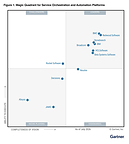
VIENNA, Va., Aug. 27, 2026 /PRNewswire/ — Redwood Software, the leading orchestration platform for the autonomous enterprise, today announced its recognition as a Leader in the 2026 Gartner® Magic Quadrant™ for Service Orchestration and Automation Platforms (SOAP) and its #1 ranking in four of five Use Cases and tie for #1 in the fifth Use Case in the Critical Capabilities report. Alongside this, Redwood released RunMyJobs 2026.3, bringing native AWS connectivity and its Model Context Protocol (MCP) server to general availability while introducing new AI capabilities to accelerate autonomous operations.

Orchestrating the enterprise, from hybrid cloud to agentic AI

Enterprises with AI mandates face the challenge of turning AI from experimentation into operations. RunMyJobs 2026.3 helps close the gap between AI reasoning and enterprise action by unifying execution across hybrid systems and removing the infrastructure constraints that slow innovation on legacy workload automation tools. The latest release delivers:

MCP server & native AWS connectivity: Redwood’s MCP server, validated with Microsoft Copilot, SAP’s Joule and Claude Code, provides AI models governed access to 50+ tools across nine global AWS regions with full auditability, instantly agentifying decades of business logic. Native AWS integration (S3, EventBridge, Glue) allows real-time orchestration across the hybrid estate without re-architecting systems.

Bi-directional agentic AI governance & Agent Studio*: Support for MCP and Agent2Agent (A2A) protocols enables AI agents to trigger workflows and lets teams build agents that enhance orchestrations under the same governance model as the entire business process chain. Agent Studio embeds LLM-powered reasoning as native job types within existing workflows.

Workflow Builder & Operations Agent*: Workflow Builder generates auditable workflows from plain English descriptions or documentation. Operations Agent detects failures and SLA risks in real time, delivering enriched context to operators for faster autonomous responses.

“AI agents can reason about a problem, but they can’t fix it unless they’re connected to the systems that run the business,” said Charles Crouchman, Chief Product Officer at Redwood Software. “We believe our recognition as a Leader and the availability of our MCP server and AWS connectivity validate that the market is shifting toward governed, agentic orchestration that operates within the enterprise’s existing trust model.”

Gartner recognition

The Gartner Magic Quadrant™ for SOAP evaluates vendors on Ability to Execute and Completeness of Vision. Redwood Software was positioned furthest in Completeness of Vision for the third year in a row. Redwood attributes this placement to its 2026 intelligent automation expansions, including native support for MCP and A2A protocols, the new Redwood RangerAI assistant portfolio and Redwood Insights Premium.

The Critical Capabilities report “provides deeper insight into providers’ product and service offerings by extending the Magic Quadrant™ analysis.”** Redwood attributes this positioning to its commitment to customer success and driving efficient business transformation.

View a complimentary copy of the Magic Quadrant™ report to learn more about why Redwood Software was positioned as a Leader: https://www.redwood.com/resource/gartner-soaps-mq/ 

View a complimentary copy of the Critical Capabilities report to learn more about why Redwood Software ranked first in four SOAP Use Cases and tied for first in one Use Case: https://www.redwood.com/resource/gartner-critical-capabilities-soaps/ 

*Workflow Builder, Operations Agent and Agent Studio are currently in tech preview.

**Source: Gartner Critical Capabilities Research Methodology

Report citations: Gartner, Inc., Magic Quadrant for Service Orchestration and Automation Platforms, Hassan Ennaciri, Daniel Betts, Chris Saunderson, 5 August 2026. Gartner, Inc. Critical Capabilities for Service Orchestration and Automation Platforms. Chris Saunderson, Hassan Ennaciri, Daniel Betts, etl. 24 Aug 2026.

Gartner disclaimer: GARTNER is a registered trademark and service mark of Gartner, Inc. and/or its affiliates in the U.S. and internationally. MAGIC QUADRANT is a registered trademark of Gartner, Inc. and/or its affiliates and is used herein with permission. All rights reserved. Gartner does not endorse any vendor, product or service depicted in its research publications, and does not advise technology users to select only those vendors with the highest ratings or other designation. Gartner research publications consist of the opinions of Gartner’s research organization and should not be construed as statements of fact. Gartner disclaims all warranties, expressed or implied, with respect to this research, including any warranties of merchantability or fitness for a particular purpose.

About Redwood Software

Redwood Software is the leading orchestration platform for the autonomous enterprise, driving business transformation at the lowest total cost of ownership. Redwood empowers organizations to intelligently automate and orchestrate mission-critical business and IT processes across complex ERP, hybrid cloud, data and emerging agentic AI systems. Through its SaaS-first automation fabric — with AI embedded across the automation lifecycle — Redwood accelerates the path to autonomous operations. Backed by 30 years of experience and trusted by more than 50% of the Fortune 50, Redwood helps organizations unlock human potential to focus on innovation, growth and what’s next.

Media Contact: 

redwood@nextpr.com

View original content to download multimedia:https://www.prnewswire.com/news-releases/redwood-software-orchestrates-the-enterprise-from-hybrid-cloud-to-agentic-ai–named-a-leader-for-the-third-consecutive-year-in-the-2026-gartner-magic-quadrant-for-service-orchestration-and-automation-platforms-302861943.html

SOURCE Redwood Software

Continue Reading

Technology

Harness Launches Code Repository With AI Code Review for Agent-Ready Development

Published

on

By

Built for the volume of AI-generated code, with permissions for AI agents, reviews that keep pace, an enterprise free plan, and one-click migration from existing Git providers

SAN FRANCISCO, Aug. 27, 2026 /PRNewswire/ — Harness, the platform for the autonomous SDLC, today launched Agent-Ready Harness Code Repository and AI Code Review, built for teams increasing their adoption of AI coding agents. The capabilities are designed to work as one experience: code lands in a repository built for the volume now generated by agents, and is reviewed by a system that understands what a change puts at risk.

Coding stopped being the hard part

Generating code is no longer the constraint. With agents in the loop, teams produce far more code, far faster, than they could alone, and the work has shifted to what happens next: storing, reviewing, approving, and shipping all of it without anything breaking.

The tools underneath were not built for that. Legacy source code management tools in wide use today, GitHub included, assume a human writes code and opens a pull request before a few colleagues look at it over the next few hours or days. When agents are doing the writing, the cracks show up in ordinary places: search and file history get slower as indexing falls behind, pull requests pile up faster than anyone can read them, and a permission system designed around a list of developers has no good answer for an agent that might merge code on its own. Harness has now rebuilt that layer.

“Software delivery is going through its biggest shift since the move to the cloud, and the systems we all built our workflows around were designed for a different scale and a different kind of user,” said Jyoti Bansal, CEO and co-founder of Harness. “You do not solve that by adding AI features to a repository designed fifteen years ago. The entire SDLC has to become autonomous, which means the repository, the review, the pipeline, and the governance must all work as one system.”

Inside Agent-Ready Harness Code Repository

Harness Code Repository is what source control looks like when agents are part of the team.

Keeps up as commit and pull request volume increases: Harness Code Repository is scale-tested to handle thousands of pull requests and commits opened at once, which is roughly what a team running agents looks like on an ordinary day. Search, history, and diffs keep working at that volume, across repositories of varying sizes and with branches in the tens of thousands.Agents get their own permissions: Agents inherit permissions from humans that trigger them. Developers can further define what an agent may touch, merge, or deploy, just as they would scope a new engineer, down to a specific repository, branch, or environment. RBAC and Open Policy Agent (OPA) policies put that boundary in writing rather than leaving it to convention, so it holds before the merge instead of turning up in an audit afterward.Tailored to be used by humans and agents via MCP and CLI: Harness Code Repository and AI Code Review are both reachable from the command line through the Harness MCP and CLI, which covers the full pull request lifecycle, allowing users to find a review by the author’s email instead of an internal ID, see every open pull request across every repository in one place, and create, reply to, or resolve comment threads without opening a browser. AI agents can leverage Harness CLI commands to execute Harness Code and Review operations more deterministically and in headless mode.Free to start, simple to migrate: Any team can start using Harness Code Repository for free, with 50 GB storage. Migration takes a few clicks, regardless of whether organizations are migrating one repository or an entire GitHub organization, GitLab group, Bitbucket workspace, or Azure DevOps project, and the Harness CLI brings pull requests, labels, webhooks, and branch rules along with it.

AI Code Review

A repository that can withstand a flood of code does not help if a human still has to review all of it. AI Code Review reads a pull request the way a tech lead would.

Checks that gate the merge. Teams decide which AI Checks are mandatory, setting them once for an account or tuning them by project, and a change that fails a required check cannot be merged.Diff grouping by risk. The diff is grouped by risk rather than by file, so the few high-risk changes that alter how the software behaves are not buried under mass renames and dependency bumps.One-click remediation. Feedback describes what a change puts at stake rather than noting that a line moved, and suggested reviewers and labels arrive before anyone opens the pull request. If the feedback is valid, changes can be merged with a single click.

Agents can write code, but someone still has to decide what ships. AI Code Review is built so that the decision is an informed one instead of a rushed one.

One platform, from commit to production

Committing, reviewing, building, testing, securing, and deploying code already follow a single sequence inside Harness, which is why the repository and the review layer could ship together. Both are now part of the outer loop that the Harness Software Delivery Agent runs end-to-end, from commit to production, under one policy engine.

That sequence is also what makes the review useful. Harness already knows how a team releases software, which policies they enforce, and what has failed in their production before. All of that is mapped in the Harness SDLC Knowledge Graph, providing enterprise context for every review to reference.

By dogfooding these capabilities over the past several months, Harness engineering teams have saved more than 10,000 hours of manual review time per month.

Availability

Agent-Ready Harness Code Repository and AI Code Review are available today – book a demo to learn more.

About Harness

Harness is the AI Software Delivery Platform™ company, enabling engineering teams to build, test, and deliver software faster and more securely. Powered by Harness AI and the Software Delivery Knowledge Graph, the platform brings intelligent automation to every stage of the software delivery lifecycle after code — removing toil and freeing developers from manual, repetitive work. Companies like United Airlines, Morningstar, and Choice Hotels use Harness to accelerate releases by up to 75%, cut cloud costs by 60%, and achieve 10x efficiency across DevOps. Based in San Francisco, Harness is backed by Goldman Sachs, Menlo Ventures, IVP, Unusual Ventures, and Citi Ventures.

View original content to download multimedia:https://www.prnewswire.com/news-releases/harness-launches-code-repository-with-ai-code-review-for-agent-ready-development-302861964.html

SOURCE Harness

Continue Reading

Trending