Connect with us

Technology

Nutrient Data Extraction API launches for source-grounded, production-ready document AI

Published

on

Nutrient Data Extraction transforms PDFs, scans, images, and Office files into structured document data — parsing content into spatial JSON or Markdown, and extracting schema-defined fields with per-field confidence signals and citations back to the source, helping enterprises operationalize agentic document workflows with reliable structured data.

RALEIGH, N.C., Sept. 9, 2026 /PRNewswire/ — Nutrient Data Extraction API, a document parsing and structured data extraction service, is now generally available for enterprises building AI agents, RAG systems, large corpus document query, and enterprise automation. Nutrient Data Extraction helps organizations operationalize AI by transforming complex documents into reliable structured data for production-ready agentic workflows. 

Nutrient Data Extraction parses PDFs, scans, images, and Office files into spatial JSON or Markdown, and extracts schema-defined fields with per-field confidence signals and source citations, giving enterprises accurate structured data from documents enabling production-capable agentic workflows. 

Nutrient Data Extraction at a glance:

Inputs: PDFs, scans, images, and Office files

Parse outputs: spatial JSON or Markdown

Modes: text, structure, understand, and agentic

Structured extraction: customer-defined JSON Schema

Extraction grounding: page references, bounding boxes, source blocks, match labels, and confidence signals

Routing: fuzzy_match and not_found can go to human review

Access: REST API, free tier, Studio, and getting-started guide

Languages: 100+ for OCR

Security: HTTPS/TLS encryption in transit, SOC 2 Type 2 audited infrastructure 

The reliability gap in agentic document workflows

AI has made document intelligence possible at enterprise scale. Documents can now be read, summarized, classified, extracted, and acted on in seconds. 

But generic LLM extraction is inherently probabilistic: the same document can produce different outputs under different conditions, lose structure, and return values with no traceable link back to the page they came from. Teams either accept the risk of unverified data flowing into ERPs, claims systems, and approval workflows, or they revert to manual review. 

Organizations heavily need data that is reliable, explainable, and traceable back to its source for agentic workflows to be trustworthy and ready for production. 

That’s the reliability gap Nutrient Data Extraction was built to close. Most LLMs can extract data from documents. Far fewer systems can extract it accurately, consistently, and explain where it came from at a quality level that stands up in an audit.

That’s the difference between model output alone and source-grounded document infrastructure built for production-ready agents. It’s the difference between AI that’s impressive in a demo and AI that can be relied upon by the human signing off on the business outcome.

And because Nutrient Data Extraction is a foundational part of Nutrient’s broader document platform, teams can move from parsing and extraction to unlocking routing, governance, human review, and execution all without downstream workflow automation losing the auditable link back to the source document.

Built for multiple levels of understanding.

Teams, including Nutrient’s implementation teams, are able to customize the output format per request based on the type and complexity of the document and the system requirements whether that’s spatial JSON for layout-aware elements with reading order, bounding boxes, tables, and key-value regions, or Markdown for RAG, search indexing, and general document Q&A. Nutrient Data Extraction detects tables, forms, formulas, charts, handwriting, checkboxes, and headings, and supports more than 100 different OCR languages.

Not every document requires the same level of analysis and reasoning to get to accurate structured data. Nutrient Data Extraction lets teams optimize for speed, cost, or depth through four processing modes: text, structure, understand, and agentic, allowing processing to scale only when additional understanding is required.

Every extracted value traces back to the source

The extract endpoint maps a document to a customer-defined or intelligently generated JSON Schema and returns each requested field with a bounding box, page reference, the source blocks it was drawn from, a confidence signal, and a label describing how the value was grounded. Source grounding can drive workflow decisions automatically. Fields labeled “fuzzy_match” or “not_found” can be routed to human review, while high-confidence matches continue directly into downstream workflows.

Unlike tools that present confidence as a probability, Nutrient Data Extraction treats confidence as a relative signal. That distinction helps organizations structure and make better workflow decisions instead of over-interpreting a single score.

“Most agents can pull data out of a document. Almost none of them can prove where the data came from,” said Jonathan Rhyne, co-founder and CEO of Nutrient. “Every field we return points back to the exact spot in the source, and when we can’t find something, we say so instead of guessing. In production, ‘Trust us’ isn’t an answer enterprises can take to their auditors or something accountable parties will rely on.”

Published accuracy benchmarks

Nutrient publishes open accuracy benchmarks and updates the published results as new versions ship. In our latest test run, understand mode scored 0.932 overall accuracy on the publicly available 200-document opendataloader-bench corpus, across reading order, table structure, and heading hierarchy. Text and structure modes are scored on the public leaderboard, while understand and agentic modes were evaluated internally against the same corpus. The original open-source comparison was run on July 6, 2026 and the current results and methodology are maintained at nutrient.io/api/data-extraction-api/benchmarks. 

Separately, Nutrient has published two open grounding artifacts on Hugging Face: grounding-en, a model that scores whether an extracted value is supported by evidence in the source document, released under Apache-2.0; and the grounding benchmark dataset it is evaluated against, released under CC-BY-SA-4.0.

What it handles in practice

Nutrient publishes interactive extraction demos with no signup or API key required, where hovering an extracted field highlights the exact region of the source document it came from:

Healthcare: Table-row extraction from a CMS-1500 claim form, including the dropout-red ink grid that defeats most scanners.

Government and vital records: Signature block detection on a mixed handwritten and printed birth record, separating a printed name from the adjacent cursive signature.

Mortgage and financial services: Value isolation in a dense three-column financial table where Monthly Income, Total Assets, and Total Expenses sit side by side under near-identical labels.

Legal and contracts: Full multi-sentence narrative extraction from a free-text field in a small claims filing, plus cross-page extraction across three pages.

AI, search, and RAG: An appraisal report decomposed into semantic blocks with spatial coordinates, so a retrieval pipeline can cite its exact source.

Availability

Nutrient Data Extraction is generally available via a REST API or can be built into custom solutions by our implementation teams. New accounts receive 5,000 Data Extraction API credits per month at no cost, with no credit card required. Signup is agent-compatible. 

Developers and agents can send a first request in minutes using the getting-started guide, or open the interactive demos in a browser with no account. Nutrient Data Extraction Studio provides a visual testing environment for evaluating documents before writing any code. 

All API communication uses HTTPS/TLS encryption, and the platform is SOC 2 Type 2 audited, with reports available under NDA. Processing-run retention varies by plan. Customers can delete runs and runs expire after the plan-specific retention period. On plans without internal data retention, documents are explicitly not retained for service improvement or model training. 

To view documentation, review the published benchmarks, or get a free API key, visit nutrient.io/api/data-extraction-api.

About Nutrient

Nutrient is the deterministic document platform organizations rely on to operationalize production capable agentic systems for document centric workflows. It combines reliable document processing infrastructure for agents, intelligent routing and governance, and interfaces for the human in the loop. Built on a decade of enterprise document expertise, Nutrient provides agentic document workflow solutions for thousands of organizations worldwide, including more than 15 percent of the Global 500, thousands of commercial businesses across 80 countries, and more than 130 public sector organizations in 24 countries. Backed by Insight Partners, Nutrient is headquartered in Raleigh, North Carolina, with offices in England, France, and Austria. Learn more at nutrient.io.

View original content to download multimedia:https://www.prnewswire.com/news-releases/nutrient-data-extraction-api-launches-for-source-grounded-production-ready-document-ai-302873992.html

SOURCE Nutrient

Continue Reading

Technology

Biel Crystal Stands as a Primary UTG Supplier for iPhone Duo

Published

on

By

HONG KONG, Nov. 16, 2026 /PRNewswire/ — The launch of Apple’s first foldable iPhone, the iPhone Duo, has brought ultra-thin flexible glass (UTG) into the industry spotlight. Leveraging extensive expertise in back-end precision finishing and large-scale delivery capabilities, Biel Crystal has become a core UTG supplier for the model. Its dedicated UTG production lines in Huizhou and Vietnam began volume shipments at the end of the second quarter this year and have been running at full capacity for several months, providing stable support for UTG supply.

According to the company, UTG must be thinned to around 30 microns, and a single micro-crack can render an entire finished sheet unusable. Through core technologies such as edge chamfering to redistribute stress, slot-die coating for sub-micron precision, and ion-exchange strengthening to form a surface compressive stress layer, Biel Crystal has enabled UTG to achieve a 0.4 mm bending radius and withstand 500,000 dynamic folding cycles without creasing.

As a core UTG supplier to Apple, Biel Crystal has been actively developing and laying out next-generation UTG technologies. The company will leverage stable yields, large-scale delivery, and materials innovation to help drive the revolution in smartphone form factors.

About BIEL Crystal

As a global leader in exterior structure and module solutions for smart devices, BIEL Crystal serves a wide range of industries. Its advanced components are essential to consumer electronics, smart wearables, AR/VR glasses, and next-generation automotive applications. This trust is reflected in its long-standing partnerships with industry pioneers such as Apple, Samsung, Meta, and Tesla.

With more than 30 years of technological innovation and excellent management, BIEL Crystal has become a large technology innovation group with 9 advanced production bases worldwide, with a total investment of over RMB 50 billion, covering a total area of about 5 million square meters, employing more than 100,000 people and with an annual production capacity of 2.5 billion pieces.

View original content to download multimedia:https://www.prnewswire.com/news-releases/biel-crystal-stands-as-a-primary-utg-supplier-for-iphone-duo-302940005.html

SOURCE BIEL Crystal

Continue Reading

Technology

Turning Climate Warnings into Energy Action: Tuya Smart Showcases Its AI Energy Solutions at COP31

Published

on

By

ANTALYA, Türkiye, Nov. 16, 2026 /PRNewswire/ — During the 31st United Nations Climate Change Conference (COP31), Tuya Smart (NYSE: TUYA; HKEX: 2391), a global AI cloud platform service provider, was invited to participate in the COP31 Blue Zone side event titled “From Early Warning to Action: Global Climate Diplomacy and Cooperation.”

Organized by the United Nations Institute for Training and Research (UNITAR) and CMA Public Meteorological Service Centre (National Early Warning Release Centre), with support from China Energy News and the Committee on International Cooperation and Liaison, China Energy Research Society (CERS), the event aimed to provide an open platform for international dialogue, explore equitable and effective pathways for global climate cooperation, and promote deeper integration between climate early warning and energy response actions. The event brought together a number of distinguished guests, including Leslie Wang, Head of Enterprise and Strategic Accounts, Europe, at Tuya Smart.

Wang delivered a keynote speech titled “From Early Warning to Action: Aligning Climate and Energy,” outlining how digital innovation, AI-powered energy management, and connected technologies can support climate resilience and sustainable development. He also shared Tuya’s innovative practices in climate resilience during a panel discussion.

Turning Climate Warnings into Actionable Energy Responses

As global warming intensifies, extreme weather events such as heatwaves and cold waves are becoming increasingly common, placing growing pressure on the entire electricity value chain, from generation and transmission to distribution and consumption. These events bring multiple challenges, including imbalances between energy supply and demand, surging grid loads, and increased risks of power outages.

The United Nations’ Early Warnings for All initiative aims to protect everyone on Earth with early warning systems by 2027. Yet the value of early warnings lies not simply in making risks visible but in enabling action. Only by translating warnings into proactive, preventive energy responses can energy security be more effectively safeguarded.

In his presentation, Wang shared how Tuya is bringing climate forecasting, AI-powered energy management, and energy storage capabilities closer to households to address residential energy challenges under extreme weather conditions.

Wang introduced Conow, a global AI energy ecosystem brand whose Conow AIX platform is built on Tuya’s global AIoT infrastructure. By integrating AI capabilities such as forecasting, optimization, and intelligent dispatch into energy products and systems spanning solar PV, energy storage, new energy vehicles, and heating, Conow AIX connects multiple data sources, including weather forecasts, dynamic electricity prices, device status, and energy demand. The platform delivers two core capabilities—weather forecasting and disaster preparedness—that help turn climate warnings into tangible energy actions.

“First, its weather forecasting capability enables Conow AIX to prepare energy reserves in advance based on weather conditions. Combined with energy-saving measures such as AI-powered energy dispatch, it helps address the timing mismatch between solar power generation and household electricity consumption, reducing energy consumption and household electricity bills.

“Second, its Storm Guard mode can be activated with a single tap in the Conow App. The system automatically monitors local extreme weather alerts and guides batteries to reserve power before severe weather strikes, helping households mitigate the risk of disaster-related power outages. Once adverse weather conditions have passed, the system automatically resumes its regular energy management strategy. Its backup power package can also operate independently, supporting a wider range of household disaster preparedness scenarios.”

Conow has established a comprehensive product portfolio covering a variety of household energy needs. Its offerings include the lightweight, plug-in Lyra series of home energy batteries, the CBE 2000 Pro all-in-one micro ESS, and the newly launched Atlas 6000 AC plug-in home battery.

Meanwhile, Conow AIX has integrated with more than 1,000 dynamic electricity tariff providers worldwide and is compatible with over 3,000 categories of smart devices. By applying tailored strategies based on specific user scenarios and dynamic electricity pricing, it can achieve up to 76.3% energy cost optimization. Through real-time energy responses to grid demand, it can also generate additional flexibility revenue averaging €3 to €5 per day for every 10 kW.

Exploring New Opportunities for Climate and Energy Collaboration

At the panel discussion titled “From Early Warning to Action,” Leslie Wang joined the WMO, International Centre for Integrated Mountain Development (ICIMOD), IRENA, Trina Solar and LONGi to discuss how climate early warnings can drive tangible action, from informing energy system decisions and infrastructure investment to scaling climate resilience solutions in high-risk regions.

Wang further elaborated on Tuya’s approach to AI-powered energy management. Drawing on its AI+IoT platform, Tuya can identify meteorological warning signals and classify them by severity and implement differentiated load management strategies based on disaster levels, grid conditions, and users’ energy storage capacity. Before extreme weather events occur, the system can centrally dispatch distributed solar and energy storage resources to reduce the risk of widespread power outages and equipment failures.

Wang also emphasized: “The energy transition depends on collaboration. Looking ahead, Tuya will continue to deepen its collaboration with global meteorological agencies, grid operators, and local partners, while continuously advancing its solutions for climate early warning, AI-powered energy management, and disaster preparedness. Through these efforts, we aim to turn climate warnings into accessible, automated, and replicable preventive energy actions, helping build a more resilient digital energy ecosystem worldwide.”

Tuya and Conow Joins Climate Leadership Impact

During the side event, participating guests jointly launched the Climate Leadership Impact (CLI) initiative. The initiative seeks to build global consensus on climate governance and encourage businesses to deepen their climate action. Focusing on four key areas—ESG, AI applications, energy transition, and international talent development—it aims to establish a closed-loop mechanism encompassing “early warning, response action, collaboration, and evaluation” to enable coordinated action among multiple stakeholders.

Tuya’s AI Energy ecosystem practices were featured as one of the case studies. Focusing on energy applications across both residential and industrial scenarios, the solution leverages Conow AIX to transform household energy from something that passively generates electricity bills into an active, intelligent, distributed energy asset, benefiting households.

Already deployed across multiple European countries, the solution is lightweight, cost-effective, and replicable, offering a practical reference and solution for the global green energy transition and meteorological risk management.


View original content to download multimedia:https://www.prnewswire.com/news-releases/turning-climate-warnings-into-energy-action-tuya-smart-showcases-its-ai-energy-solutions-at-cop31-302940006.html

SOURCE Tuya Smart

Continue Reading

Technology

Phoenix Contact Training Team Sets New Guinness World Record in Wiring

Published

on

By

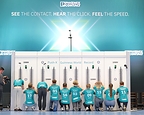
BLOMBERG, Germany, Nov. 16, 2026 /PRNewswire/ — Ten first-year dual-track students at Phoenix Contact set a new Guinness World Record on November 4, 2026. As the sponsor day at HSG Blomberg-Lippe, the team used Push-X 500 terminal block connection technology to wire 500 terminal blocks in 2 minutes and 20 seconds, setting a new official record in the category ‘Fastest time to connect 500 terminal blocks’.

With great dedication and enthusiasm for the shared task, the apprentice team took the stage in front of 1,200 spectators in the sold-out Synflex Arena. Wiring the 1,000 conductors required precise hand movements and seamless teamwork. The Push-X connection technology made the task easier for them. Guinness World Records documented the time achieved and confirmed the new record during the official verification.

“With this world record attempt, our dual-track students set themselves a challenging goal together and achieved it. Tasks like these give them the opportunity to apply their skills beyond their everyday training and to exceed their own expectations as a team. That makes us very proud,” said Bastian Bröckling, Head of Young Talents Development at Phoenix Contact.

Team Spirit Meets Innovative Connection Technology

The world record attempt also highlighted the capabilities of the connection technology. With Push-X, the conductor is inserted with virtually no force and automatically made contact. This simplifies wiring and makes work easier even in everyday industrial settings, where many connections are made daily. The training team wanted to beat the existing Guinness World Record, which had been set in Lippe in the summer of 2026. The new record also demonstrates just how much innovative potential there is in Lippe’s companies.

“Anyone competing in a sports arena wants to set a new record. Our training team took on this challenge and demonstrated what they—and our connection technology—are capable of. A competition like this inspires us to try new things and further develop technology. And this momentum comes from our region,” says Ulrich Leidecker, Spokesman of the Group Executive Board of Phoenix Contact.

Commitment to the Region

The world record attempt was part of the Phoenix Contact Sponsors’ Day at HSG Blomberg-Lippe and served to combine technology, education, and social engagement in a unique way. As part of the “Lipper für Lipper” campaign, support was also gathered for people in the region. This initiative also helped draw attention to regional engagement.


View original content to download multimedia:https://www.prnewswire.co.uk/news-releases/phoenix-contact-training-team-sets-new-guinness-world-record-in-wiring-302936364.html

Continue Reading

Trending