Connect with us

Technology

Bettingbladet releases H1 2026 report on the Swedish online gambling market

Published

on

New report maps operator GGR, game supplier market shares, sportsbook technology, payment methods, RTP levels and bonus trends across Sweden’s regulated online gambling market in H1 2026.

STOCKHOLM, Sept. 14, 2026 /PRNewswire/ — Bettingbladet has released its Swedish Online Gambling Market Report H1 2026 (the report can be downloaded via this link in English and Swedish), providing a data-driven overview of the companies, suppliers and trends shaping Sweden’s regulated online gambling industry.

One of the report’s central features is an operator-by-operator analysis of Gross Gaming Revenue (GGR). Beyond operator performance, the report examines slot and live casino supplier market shares, Sweden’s most-played games, sportsbook technology providers, RTP levels, payment methods and welcome bonuses.

The report combines public data with Bettingbladet’s own research, operator and supplier data and analysis of the Swedish market. Where complete data is unavailable, market shares and certain other figures are estimates and should be interpreted as indicative rather than exact.

Operator GGR reveals major differences in H1 performance

Bettingbladet’s GGR analysis reveals significant differences in performance across Sweden’s licensed operators during the first half of 2026.

Nordplay Group was among the strongest growers, with Klirr increasing its monthly GGR by approximately 31% between January and June. Newer sister brands Onerush and Jubla increased their GGR by approximately 80% and 16% respectively over the same period.

LeoVegas Group also recorded growth, moving from €16.51 million in GGR in January to €19.42 million in June.

Cherry recorded a stronger second quarter, with 24% higher GGR during April–June compared with the first quarter. Meanwhile, Unibet finished the half strongly, with GGR in June 41% higher than in January, although the report notes that the FIFA World Cup and stronger sports margins likely contributed to the June result.

Pragmatic Play and Play’n GO dominate Swedish slots

The report estimates Pragmatic Play to be Sweden’s largest slot supplier with 21.9% of total online slot turnover, narrowly ahead of Swedish-founded Play’n GO at 21.1%.

Hacksaw Gaming has also established a significant position, accounting for an estimated 10.9% of Swedish slot turnover.

At game level, Book of Dead topped Bettingbladet’s H1 dataset, while classics such as Starburst, Legacy of Dead and Fire Joker remained among the ten most-played titles alongside newer releases including Pirots 4 and Gates of Olympus 1000.

Evolution controls an estimated 77% of live casino

The live casino market is considerably more concentrated.

Bettingbladet estimates that Evolution accounts for approximately 77% of Swedish live casino turnover, while Pragmatic Play holds an estimated 12.5% market share. Other live casino suppliers combined account for approximately 10.5%.

Evolution’s Crazy Time stands out as the clear market leader and is estimated to generate around 10% of Evolution’s Swedish live casino turnover on its own.

RTP varies between Swedish operators

Bettingbladet also compared the RTP settings offered by Swedish operators for selected popular games from five major suppliers.

Across the sample, average RTP ranged from approximately 93.8% to 96.3% depending on the operator, meaning that the same underlying slot can offer different theoretical returns depending on where it is played.

Coolbet recorded the highest average in the study at 96.26%, while ATG, bet365 and PAF all averaged above 95% across the selected games.

The findings indicate that RTP remains another way for operators to differentiate themselves in a Swedish market where promotional opportunities are heavily restricted.

Kambi and Altenar lead sportsbook technology

Bettingbladet found that 51.85% of Swedish operators use either Kambi or Altenar, making the two suppliers the clear leaders by operator count.

However, the picture changes when looking at betting turnover. Kambi remains the dominant supplier by volume, powering sportsbooks for several of Sweden’s largest operators, including ATG, Svenska Spel, Unibet and PAF.

Swish and Trustly dominate Swedish gambling payments

The report analysed payment methods across 85 active licensed operators, finding an exceptionally concentrated market for bank-based payments.

Swish was available at 82 of 85 brands (96.5%), while Trustly was offered by 77 (90.6%). Visa was available at 47% of operators, Mastercard at 42%, Zimpler at 28% and Apple Pay at approximately 25%.

A third of the operators analysed offered only two of the 11 payment methods included in the study – typically Swish and Trustly – while just ten brands offered seven or more.

Swedish channelisation remains a challenge

The latest figures cited in the report put overall channelisation at 84%, compared with 86% in 2023 and 85% in 2024. The difference between gambling verticals is particularly notable, with channelisation estimated at 96% for sports betting but only 81% for online casino.

Sweden’s regulated online gambling market is estimated to be worth approximately €2.5 billion annually, with operators paying 22% tax on GGR.

About Bettingbladet

Bettingbladet is a gambling industry news site covering online casino, sports betting and developments across the Nordic gambling markets, with Sweden as its primary focus.

Its editorial coverage includes industry news, market analysis, operator and game comparisons, regulatory developments and original studies based on data collected from the Swedish and wider Nordic online gambling markets.

Contact:
***@bettingbladet.se

Photos:
https://www.prlog.org/13170475

Press release distributed by PRLog

View original content:https://www.prnewswire.com/news-releases/bettingbladet-releases-h1-2026-report-on-the-swedish-online-gambling-market-302877909.html

SOURCE Bettingbladet

Continue Reading

Technology

S/4HANA Migration Risk Rises When Strategic Decisions Are Left to Implementation Partners, Info-Tech Research Group Finds
Published

on

By

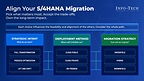
With SAP’s end of mainstream maintenance for ECC approaching in 2027, organizations are under pressure to define their migration plan. New insights from Info-Tech Research Group show that relying too heavily on implementation partners to make strategic migration decisions can increase the risk of cost overruns, project delays, and outcomes that fail to reflect business priorities. The firm’s Build Your S/4HANA Migration Plan blueprint helps SAP migration teams evaluate migration options and trade-offs, lead critical decisions, and establish direction before engaging technical partners.

ARLINGTON, Va., Sept. 15, 2026 /PRNewswire/ — SAP users preparing to migrate from ECC to S/4HANA face one of the largest technology transformations many organizations will undertake. While these initiatives often require outsourced technical expertise, the most critical migration decisions remain the organization’s responsibility. According to recent insights published in Info-Tech Research Group’s Build Your S/4HANA Migration Plan blueprint, many teams enter implementation without fully understanding how strategic migration decisions affect long-term business outcomes.

Info-Tech’s research recognizes the important role that implementation partners play in S/4HANA migrations. However, it also emphasizes that strategic decisions must remain with the organization. While partners provide essential technical expertise, they may not have the full business context needed to determine priorities, transformation goals, or acceptable trade-offs. These decisions shape every stage of migration, from deployment and migration strategies to governance and organizational change. Without a clear understanding of their long-term implications, organizations risk cost overruns, delays, and reduced business value.

“Most organizations do not run ERP transformations often enough to build deep internal experience,” says Mia Scherba, research analyst at Info-Tech Research Group. “Implementation partners are critical to execution, but they cannot determine what the business should prioritize or which trade-offs it can accept. Those choices need to be owned internally because they shape cost, complexity, and long-term value well beyond the migration.”

Key Factors That Increase S/4HANA Migration Risk

Info-Tech’s research highlights several planning challenges that consistently affect S/4HANA migration outcomes:

Migration complexity is underestimated. Treating S/4HANA as a technical upgrade rather than a full ERP transformation leads organizations to overlook the effort required on customizations and integrations.Critical decisions are made independently. Migration strategy, deployment method, technical complexity, and organizational readiness influence one another. Optimizing one decision without evaluating the others can introduce unintended constraints and trade-offs.Implementation partners are expected to define business direction. While external partners provide essential technical expertise, they cannot determine organizational priorities and acceptable trade-offs.Change management receives insufficient attention. Successful migrations depend not only on technical execution but also on organizational readiness and user adoption.

Info-Tech’s Three-Phase Methodology for Building an S/4HANA Migration Plan

To help organizations establish direction before technical work begins, Info-Tech’s Build Your S/4HANA Migration Plan blueprint guides SAP migration teams through three planning phases.

Discover the Current SAP Landscape. Assess internal capabilities, strategic intent, organizational readiness, and technical complexity to establish a realistic starting point.Define the Migration Plan. Evaluate deployment methods, migration strategies, and the trade-offs associated with each option to identify a combination that aligns with organizational capacity and priorities.Prepare for Migration. Formalize governance, define rollout expectations, and document the decisions that implementation partners will use to execute the migration.

The blueprint also includes a S/4HANA Project Management Worksheet, S/4HANA Complexity Assessment, S/4HANA Decision Guide, and S/4HANA Migration Readiness Brief. These resources help organizations assess their current environment, evaluate migration scenarios, document planning decisions, and communicate a clear implementation strategy before engaging technical delivery partners.

For exclusive and timely commentary from Info-Tech’s experts, including Mia Scherba, and access to the complete Build Your S/4HANA Migration Plan blueprint, please contact pr@infotech.com.

About Info-Tech Research Group

Info-Tech Research Group is the “get things done” partner for over 30,000 IT, HR, and marketing leaders worldwide. The fastest growing research and advisory firm, Info-Tech enables leaders to make well-informed decisions and transform their organizations through AI, strategic foresight, step-by-step methodologies, practical tools, industry-leading advisory, and training programs. For nearly 30 years, tens of thousands of private and public organizations have trusted Info-Tech to lead their most important initiatives through periods of change and deliver outcomes that truly matter.

To learn more about Info-Tech’s HR research and advisory services, visit McLean & Company, and for data-driven software buying insights and vendor evaluations, visit the firm’s SoftwareReviews platform.

Media professionals can register for unrestricted access to research across IT, HR, and software, and hundreds of industry analysts through the firm’s Media Insiders program. To gain access, contact pr@infotech.com.

For information about Info-Tech Research Group or to access the latest research, visit infotech.com and connect via LinkedIn and X.

View original content to download multimedia:https://www.prnewswire.com/news-releases/s4hana-migration-risk-rises-when-strategic-decisions-are-left-to-implementation-partners-info-tech-research-group-finds-302879284.html

SOURCE Info-Tech Research Group

Continue Reading

Technology

Skincare Myths Are Going Viral but Avène Is Empowering Dermatologists to Lead the Narrative

Published

on

By

SECAUCUS, N.J., Sept. 15, 2026 /PRNewswire/ — As consumers increasingly turn to social media and AI-powered search for answers about sensitive skin, Laboratoires Pierre Fabre — the world’s second-largest dermo-cosmetics company and one of Europe’s leading pharmaceutical laboratories — is elevating Avène as the platform for a necessary kind of influence: dermatologist-led education.

Now in its third year, Dermfluencer University is hosted at the Science of Skin Summit, an annual educational event founded by Dr. Patricia Farris and Dr. Ted Lain dedicated to the science, clinical research and emerging innovations behind dermatology and skincare. The program equips board-certified dermatologists with insights, tools and training to create engaging, science-backed content for today’s digital-first skincare consumer.

As a clinically proven brand, Avène recognizes that today’s patients aren’t just in the dermatologist’s office, they’re online, searching for answers before they ever book an appointment. By equipping dermatologists to meet them there, Avène is working to reach more patients and help them navigate their skin concerns with credible, engaging, science-backed guidance.

“Consumers are now turning to AI and social platforms with the same questions they once reserved for their dermatologist,” said Romina Laraia, VP of Consumer, Patient and Professional Activation. “As a dermocosmetics brand, we have a responsibility to prioritize consumers both online and in the dermatologist office. Dermfluencer University was created to help ensure the answers they find are rooted in clinical expertise and not misinformation or viral trends.”

With a combined social following of over 6.5 million, this year’s Dermfluencer University participants represent some of the most trusted voices in skincare education today, including, Mimi Banks, founder of MB Social; Ian Michael Crumm, founder of Boys in Beauty; Leslie Ann Hall, founder of Iced Media; Britt Fallon, Director of Beauty at NewBeauty; Dr. Jenny Liu (@derm.talk); Dr. Maren Locke (@thebudgetdermatologist); Dr. Kunal Malik (@dermdocmalik); Dr. Neera Nathan (@dermatologysurgeon); Dr. Dustin Portela (@drdustinportela); Vivian Sullivan, Sr. Partner Lead at Google; and Dr. Lindsey Zubritsky (@dermguru). Attendance is expected to be the strongest yet.

“Every day, I see skincare advice go viral with no clinical basis,” said Dr. Lindsey Zubritsky. “Dermfluencer University gives dermatologists the tools to compete in the same feed with content that’s engaging, accurate and grounded in science.”

“Patients are making skincare decisions based on short-form videos, sometimes before they ever see a dermatologist,” said Dr. Jenny Liu. “We need more dermfluencers to meet them where they are, with information they can trust.”

With dermatologist and HCP partners at the core of their strategy, Avène continues to expand these partnerships across three key pillars: online, in-office and at retail. Together, these efforts bring science-backed education and Avène’s sensitive skin solutions closer to patients wherever they are.

For more information about Avène sensitive skincare, dermatologist-recommended skincare and Dermfluencer University, follow @aveneusa on Instagram and TikTok or visit www.aveneusa.com.

Note: High-resolution images, interviews, and product samples are available upon request.

ABOUT EAU THERMALE AVÈNE
With more than 275 years of expertise rooted in dermatology and hydrotherapy, Eau Thermale Avène by Pierre Fabre is dedicated to caring for sensitive skin and is recommended by dermatologists worldwide. Formulated with dermatologist-grade ingredients and Avène Thermal Spring Water, the brand offers clinically proven solutions designed to soothe, soften and calm even the most sensitive skin. Dermatologists are involved from product concept and development through testing to help create safe, high-tolerance formulas, and Avène products are non-comedogenic.

ABOUT LABORATOIRES PIERRE FABRE
Laboratoires Pierre Fabre is the world’s second-largest dermo-cosmetics company and one of Europe’s leading pharmaceutical Laboratoires. Its Dermo-cosmetics & Personal Care portfolio brings together major international brands such as Eau Thermale Avène, Dexeryl, Ducray, Klorane, A-Derma, René Furterer, Même Cosmetics, Darrow, and Elgydium. The Pharma activity covers 5 main therapeutic fields: oncology, dermatology, rare diseases, primary care and family health care.

In 2025, Laboratoires Pierre Fabre generated €3.2 billion euros in revenue, 71% of which came from international sales across 130 territories. Based in southwest France since its creation and manufacturing nearly 90% of its products in France, Laboratoires Pierre Fabre employs 10,000 people worldwide. R&D investments increased by 14% compared with the previous year, reaching €250 million, 67% of which is dedicated to targeted therapies in oncology.

The majority shareholder of Laboratoires Pierre Fabre is the Pierre Fabre Foundation (holding 86.3% of the capital), a humanitarian foundation recognized as being of public utility. The company’s employees are its second-largest shareholder (nearly 10%). This shareholding structure guarantees the company’s independence, its long-term vision and its sustainable contribution to the common good. Dividends paid to the Pierre Fabre Foundation contribute to 35 healthcare-access programs deployed in 22 of the least developed countries in the world.

Since 2023, Laboratoires Pierre Fabre’ CSR policy has been assessed by AFNOR Certification and has been awarded the “Exemplary” level of its CSR label (ISO 26 000 standard for sustainable development). For more information, visit www.pierre-fabre.com

Media Contact:
Beach House PR
avene@beachhousepr.com

View original content to download multimedia:https://www.prnewswire.com/news-releases/skincare-myths-are-going-viral-but-avene-is-empowering-dermatologists-to-lead-the-narrative-302879437.html

SOURCE Laboratoires Pierre Fabre

Continue Reading

Technology

Canada and Alberta are expanding high-speed Internet access in the province

Published

on

By

Investment from federal and provincial governments will bring high-speed Internet access to 1,833 homes across Alberta

OTTAWA, ON, Sept. 15, 2026 /CNW/ — Reliable and affordable high-speed Internet is essential for all Canadians. It enables access to important online resources, connects friends and families, and drives economic growth and innovation. This is why the governments of Canada and Alberta are bringing high-speed Internet access to underserved communities in Alberta.

Today, the Honourable Buckley Belanger, Secretary of State for Rural Development, together with the Honourable Nate Glubish, Alberta’s Minister of Technology and Innovation, announced $24.8 million in joint federal and provincial funding for two projects to bring high-speed Internet access to 1,833 households in rural and remote communities across Alberta.

This funding is part of an existing agreement between the governments of Canada and Alberta. On March 9, 2022, both governments announced a historic broadband partnership to invest up to $780 million to provide high-speed Internet access to Albertans in rural, remote and Indigenous communities.

The federal government remains on track to meet its goal of providing high-speed Internet access to 98% of Canadian households by the end of 2026, and 100% by 2030. With these investments, the government is helping to create new opportunities for rural and remote communities–ensuring that all Canadians, no matter where they live, have full access to high–speed Internet, enabling them to participate in the digital economy and benefit from everything Canada has to offer.

Quotes

“In today’s world, high-speed Internet is essential infrastructure. For rural households like the 1,833 across Alberta being connected by this funding, it helps level the playing field–connecting people to health care, education and business. This project brings us another step closer to our goal of connecting every Canadian to high-speed Internet by 2030 and is another great example of what we can accomplish when Canada and Alberta work together.”
– The Honourable Buckley Belanger, Secretary of State for Rural Development

“No matter where Albertans live, they should have access to reliable, high-speed Internet. This investment will help connect more rural and remote communities, support local businesses, create new opportunities and improve access to the services people rely on every day. Together with the Government of Canada, we are building the infrastructure needed to keep Alberta communities connected.”
– The Honourable Nate Glubish, Alberta’s Minister of Technology and Innovation

Quick facts

Canada’s Connectivity Strategy aims to provide all Canadians with access to Internet speeds of at least 50 megabits per second (Mbps) download / 10 Mbps upload.The Universal Broadband Fund is a $3.225 billion investment by the Government of Canada designed to help provide high-speed Internet access to 98% of Canadian households by the end of 2026 and achieve the national target of 100% access by 2030.Today, 97.4% of Canadian households have access to high-speed Internet, compared to just 79% in 2014.In Alberta, 98.1% of households currently have access to high-speed Internet.Since 2015, the Government of Canada has invested $554 million in connectivity projects in Alberta.Indigenous women, girls, Two-Spirit individuals and gender diverse people are more likely to go missing or be murdered than non-Indigenous women. Better connectivity means more tools in moments of danger, enabling victims of violence to access critical online resources and get help when they need it most.

Associated links

Rural economic developmentHigh-Speed Internet Access DashboardUniversal Broadband FundBackgrounder: Universal Broadband Fund and Telesat low Earth orbit capacity agreementHigh-Speed Access for All: Canada’s Connectivity StrategyNational Broadband MapFederal Pathway to Address Missing and Murdered Indigenous Women, Girls and 2SLGBTQQIA+ PeopleBackgrounder: Governments of Canada and Alberta to help bring high-speed Internet access to communities across the province – Canada.ca

Stay connected

Follow Innovation, Science and Economic Development Canada on social media.
X (Twitter): @ISED_CA | Facebook: Canadian Innovation | Instagram: @cdninnovation | LinkedIn: Innovation, Science and Economic Development Canada

For easy access to government programs for businesses, download the Canada Business app.

SOURCE Innovation, Science and Economic Development Canada

Continue Reading

Trending