Connect with us

Technology

JA’s P-HJT Modules Successfully Reach Orbit

Published

on

BEIJING, Sept. 20, 2026 /PRNewswire/ — JA announced that its independently developed and packaged P-type heterojunction (P-HJT) modules were successfully launched aboard a Kuaizhou-11 rocket from the Jiuquan Satellite Launch Center on September 17 and entered their planned orbit.

The mission marks JA’s first in-orbit test of P-HJT modules, with future large-scale commercial applications as a long-term goal.

“Energy innovation has long been a driving force behind human progress,” said Dr. Ouyang Zi, Chief Technology Officer of JA. “As satellite deployment accelerates and the space economy expands, solar power is expected to play an increasingly important role in future space infrastructure. Developing more cost-competitive solar solutions for space is therefore an important strategic priority.

“JA has spent years building expertise in photovoltaic technology, with the reliability and long-term performance of its products proven through large-scale manufacturing and deployment across a wide range of terrestrial applications. This in-orbit test extends those capabilities into the space environment and marks an important step in JA’s exploration of future space energy solutions.

“Through real-world testing in orbit, we aim to assess the reliability and degradation of crystalline silicon technology in low-Earth orbit and explore more cost-competitive options for future space energy systems. The technology will require long-term validation, but we believe it is a direction worth pursuing.”

In orbit, the JA modules will be exposed to harsh conditions, including intense radiation, high-energy particles and extreme temperature swings. By comparing in-orbit performance data with results from ground-based simulations, JA will assess the long-term reliability and degradation of P-HJT technology in low-Earth orbit.

If the validation targets are achieved, the program could help accelerate the adoption of mature crystalline silicon technologies as an alternative to gallium arsenide in low-Earth-orbit applications, potentially lowering the cost of satellite power systems. It could also support the development of satellite internet, remote sensing, space communications, space-based computing and other low-Earth-orbit applications.

JA will use the mission as a starting point to further strengthen its module R&D and manufacturing capabilities and advance scalable energy solutions for space exploration and commercial space applications.

Space PV remains at an early stage of exploration and validation, and large-scale commercialization remains highly uncertain. JA currently has no orders related to space PV, and the program has no material impact on its current operating performance.

View original content to download multimedia:https://www.prnewswire.com/news-releases/jas-p-hjt-modules-successfully-reach-orbit-302883923.html

SOURCE JA

Continue Reading

Technology

Huawei Digital Power Showcases Multi-Scenario Solutions Featuring Grid Forming and AI at IDEE 2026

Published

on

By

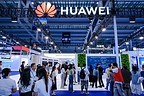
SHANGHAI, Sept. 20, 2026 /PRNewswire/ — The 4th International Digital Energy Expo (IDEE 2026) was held from September 15 to 17. At IDEE 2026, Huawei Digital Power showcased its latest practices of “grid forming + AI” in renewable energy applications with the theme of “Making the Most of Every Ray, Powering the Unpowered.” The company presented its solutions for utility, grid-forming energy storage system (ESS), smart microgrids, commercial and industrial (C&I) green power, ultra-fast charging, and grid-interactive AI data center (AIDC).

Utility: Grid-Forming Stability Meets Full-Lifecycle AI

Huawei’s FusionSolar9.0 Utility PV Solution unveiled the industry’s first 1000VAC solution, the industry’s first grid-forming string inverter, and the industry’s largest 11MW smart transformer station. This solution further enhances the capabilities of large renewable plants in terms of performance ratio, grid friendliness, and smart operation and maintenance (O&M).

The innovative smart string inverter features grid awareness and oscillation damping. In terms of AI, the FusionSolar Agent, based on the device-edge-cloud collaboration foundation. This helps customers address challenges in electricity marketization and achieve higher overall benefits. On September 10, 2026, Huawei’s Smart I-V Curve Diagnosis solution successfully passed the L5 test, the highest level of certification, from China General Certification Center, becoming the industry’s first solution to achieve this certification.

Grid-Forming ESS: Stabilizing Grids and Enhancing Smart Operation Capabilities

Huawei has developed six plant-level grid-forming capabilities, including short-circuit capacity support, inertia response, wideband oscillation damping, primary frequency regulation, black start, and seamless on/off-grid switching. These capabilities ensure stable grid forming for the entire plant, under all working conditions and at all times.

Huawei showcased its new-generation Smart String Grid Forming ESS Solution. The solution features the industry’s first 1000 VAC smart string architecture, through-busbar architecture, and plant-level grid forming technology. It supports 1000 VAC voltage and the industry’s optimal 12.5 MW/50 MWh array, improving performance ratio and delivery efficiency while further unleashing the revenue potential throughout the lifecycle. Additionally, the solution provides more accurate digital support for electricity trading based on the digital twin platform, and builds a cell-to-grid, full-lifecycle safety assurance system.

Smart Microgrid: Balancing Stable Power Supply and Economical Energy Use

Huawei’s Smart Microgrid Solution features high quality and efficiency, stable grid forming, and lower levelized cost of electricity (LCOE), and has been implemented in many areas worldwide with no or insufficient electricity.

It supports strong and weak grid adaptation, PQ/VSG switching, and full VSG mode operation. The on/off-grid switching time at medium voltage is 40 ms. It also supports a grid-forming SOC range of 5% to 98% and parallel operation of multiple voltage sources with the ESS and gensets. This further improves the system configuration flexibility and energy efficiency while ensuring stable power supply.

C&I Green Power: Grid Forming Unleashes the Value of Generation-Grid-Load-Storage Synergy

The C&I One-Fits-All Solution is designed for various scenarios, including PV-only, ESS-only, PV+ESS, charger+ESS, and virtual power plant (VPP). Huawei also shared its global rollout practices of this solution.

As for energy storage, Huawei introduced its 241 kWh series C&I Hybrid Cooling Grid Forming ESS Solution. This product upgrades the traditional single cooling mode to a smart hybrid cooling mode through an innovative thermal management architecture. It also introduces the innovative “pack-level optimization 2.0” technology. The product achieves a round-trip efficiency (RTE) of 91.8% and a depth of discharge (DOD) of 100%, exceeding the industry average.

Huawei FusionCharge: AI-Powered PV+ESS+Charger for All-Scenario Ultra-fast Charging Networks

Huawei FusionCharge integrates PV, ESS, and chargers into a smart microgrid for passenger and commercial vehicles. Its self-developed system features dual grid-device protection, air-liquid cooling, and AI scheduling that boosts station revenue by over 15%. Collaborating with partners across logistics, urban, and highway scenarios, Huawei aims to build an efficient, grid-friendly, and user-friendly ultra-fast charging network.

Grid-Interactive AIDC: “3+1” Redefining Compute Infrastructure

By leveraging “3+1” innovations, Huawei builds the grid-interactive AIDC that is reliable, energy-efficient, fast to deliver, and grid-friendly to maximize tokens per watt.

Huawei redefines AIDC power supply and thermal management by combining MIMO power architecture—featuring grid-friendly UPS and ESS—with an AI-enabled megawatt-level liquid cooling system. Additionally, AI empowers data centers across their entire lifecycle, ensuring full-link visibility, reliability, and efficient O&M.

Huawei Digital Power prioritizes full-link quality through rigorous R&D, supply, manufacturing, and service processes. Proven globally across extreme environments like extreme cold and high altitudes, Huawei products consistently deliver performance that exceeds expectations.

Huawei Digital Power will drive innovation through high quality, deliver long-term reliable value for customers, and partner with the industry to raise quality standards and achieve excellence.

View original content to download multimedia:https://www.prnewswire.com/apac/news-releases/huawei-digital-power-showcases-multi-scenario-solutions-featuring-grid-forming-and-ai-at-idee-2026-302883933.html

SOURCE Huawei Digital Power

Continue Reading

Technology

JA’s Space PV Products Reach Orbit, Starting Space Validation

Published

on

By

BEIJING, Sept. 20, 2026 /PRNewswire/ — JA announced that its independently developed and packaged P-type heterojunction (P-HJT) modules were successfully launched on September 17 and entered their planned orbit.

The mission marks JA’s first in-orbit test of P-HJT modules, with future large-scale commercial applications as a long-term goal.

“Energy innovation has long been a driving force behind human progress,” said Dr. Ouyang Zi, Chief Technology Officer of JA. “As satellite deployment accelerates and the space economy expands, solar power is expected to play an increasingly important role in future space infrastructure. Developing more cost-competitive solar solutions for space is therefore an important strategic priority.

“JA has spent years building expertise in photovoltaic technology, with the reliability and long-term performance of its products proven through large-scale manufacturing and deployment across a wide range of terrestrial applications. This in-orbit test extends those capabilities into the space environment and marks an important step in JA’s exploration of future space energy solutions.

“Through real-world testing in orbit, we aim to assess the reliability and degradation of crystalline silicon technology in low-Earth orbit and explore more cost-competitive options for future space energy systems. The technology will require long-term validation, but we believe it is a direction worth pursuing.”

In orbit, the JA modules will be exposed to harsh conditions, including intense radiation, high-energy particles and extreme temperature swings. By comparing in-orbit performance data with results from ground-based simulations, JA will assess the long-term reliability and degradation of P-HJT technology in low-Earth orbit.

If the validation targets are achieved, the program could help accelerate the adoption of mature crystalline silicon technologies as an alternative to gallium arsenide in low-Earth-orbit applications, potentially lowering the cost of satellite power systems. It could also support the development of satellite internet, remote sensing, space communications, space-based computing and other low-Earth-orbit applications.

JA will use the mission as a starting point to further strengthen its module R&D and manufacturing capabilities and advance scalable energy solutions for space exploration and commercial space applications.

Space PV remains at an early stage of exploration and validation, and large-scale commercialization remains highly uncertain. JA currently has no orders related to space PV, and the program has no material impact on its current operating performance.

SOURCE JA

Continue Reading

Technology

Huawei Grid-Interactive AIDC Solution: Shaping the New Paradigm of AI Infrastructure

Published

on

By

SHANGHAI, Sept. 20, 2026 /PRNewswire/ — HUAWEI CONNECT 2026 kicked off in Shanghai, The HUAWEI AIDC Facility Summit was held alongside the event. Huawei unveiled its grid-interactive AIDC solution, setting a new paradigm for AI infrastructure to maximize tokens per watt.

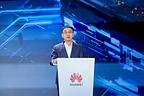
Hou Jinlong, Director of the Board of Huawei and President of Huawei Digital Power, delivered the opening speech at the summit. He shared four insights on architectural innovation and systematic design to address AIDC construction challenges such as power acquisition, power quality, rack power supply and heat dissipation, and engineering delivery.

First, innovative power architecture and liquid cooling ensure stable power supply and efficient heat dissipation, delivering comprehensive reliability and efficiency. Second, a multi-layer hybrid energy storage system absorbs local power fluctuations, enhancing AIDC power quality and grid-friendliness. Third, electricity-compute synergy and supply-consumption interaction enable AIDCs to transform from rigid loads to an integral part of the new power system. Fourth, construction mode innovation and modular, prefabricated, and product-based delivery significantly shorten the lead time.

Mr. Hou emphasized that maximizing tokens per watt and minimizing costs per token will be the core competitiveness of compute factories.

Huawei Grid-Interactive AIDC Solution Unveiled

Bob He, Vice President of Huawei Digital Power, stated that as the share of renewable energy grows, the power grid exhibits stronger features of power electronics. Coupled with the rapid and severe power fluctuations of AI workloads, compute and energy infrastructure are no longer decoupled but deeply coordinated. By leveraging “3+1” innovations, Huawei builds a grid-interactive AIDC solution that is highly reliable, energy-efficient, fast to deliver, and grid-friendly to maximize tokens per watt.

In the watt domain, Huawei proposes a future-oriented MIMO power supply architecture. To address industry challenges, Huawei has launched the grid-interactive AIDC 1.0 solution. By integrating grid-friendly UPS, intelligent lithium batteries, and grid-forming energy storage systems, the solution enables AIDC to adapt to and support the power grid while smoothing AI workload fluctuations. In the heat field, Huawei launched an AI-powered liquid cooling system, predict the health of working fluids, and facilitate predictive maintenance.

According to Mr. He, Huawei’s unique advantage lies in its end-to-end energy and full-stack AI capabilities.

Compute-Electricity Synergy: Establishing a Solid Foundation for the AI Era

Booming AI has brought about a sharp increase in tokens, posing higher requirements on AI infrastructure. Xia Qin, Chief Expert in Huawei Computing Strategy Planning, noted that AIDC is evolving toward an integrated, coordinated compute-network-storage architecture, and energy is fundamental to infrastructure. An energy system that is highly reliable, energy-efficient, and rapidly deployable allows hyperscale AI compute clusters to operate reliably, establishing a solid foundation for large-scale training and inference in the agentic era.

Traditional data centers have limited interaction with the power grid. However, AI workloads are prone to high-frequency changes, which can easily cause grid operation issues such as grid disconnection and unstable wideband oscillation. Josh Chen, Founder & Chairman of VNET Group, stated that power sources, campuses, and buildings can be redefined to enable mutual support among power sources, scheduling within campuses, and DC power supply for buildings. This will create a new power system centered on direct green power connection and active microgrids, ensuring reliable and stable power supply for GW-level AIDC.

Lin Hai, General Manager of Intelligent Computing Center, SenseCore Business Group at SenseTime, elaborated on the efficiency evolution of SenseTime intelligent computing from PUE to TPW at the summit. SenseCore is driving the transformation of IDC from energy efficiency management centered on power usage effectiveness (PUE) to end-to-end efficiency management centered on tokens per watt, which directly connects power consumption with token output, covering the entire chain from power plants and grids to IDC rack services, computing cloud services, and model services. It’s a metric that reflects the essence of AI production. Through end-to-end optimization, SenseCore has improved the TPW by 80%.

At HUAWEI CONNECT 2026, Huawei showcased its grid-interactive AIDC solution and one-stop AI inference solution, to build a computing foundation that is highly reliable, energy-efficient, and fast to deliver for AI cluster infrastructure.

View original content to download multimedia:https://www.prnewswire.com/apac/news-releases/huawei-grid-interactive-aidc-solution-shaping-the-new-paradigm-of-ai-infrastructure-302883908.html

SOURCE Huawei

Continue Reading

Trending