Connect with us

Technology

Global Times: Xi stresses sustained efforts to expand, strengthen advanced manufacturing

Published

on

BEIJING, Sept. 20, 2026 /PRNewswire/ — Chinese President Xi Jinping has urged sustained efforts to expand and strengthen advanced manufacturing to provide strong support for advancing Chinese modernization. Xi, also general secretary of the Communist Party of China (CPC) Central Committee and chairman of the Central Military Commission, made the remarks in a recent instruction, which was conveyed at a national conference on advanced manufacturing held in Beijing on Wednesday and Thursday, according to the Xinhua News Agency.

Efforts should be made to ensure both high-quality development and greater security, pursue smart, green and integrated development, and make the country’s industrial chains more self-supporting and risk-resilient, Xi stressed, Xinhua reported.

The remarks come as advanced manufacturing is taking on a larger role in underpinning China’s industrial growth and driving structural upgrading. In the first eight months of the year, value-added industrial output of major enterprises increased 5.3 percent year-on-year, while that of high-tech manufacturing rose 14.2 percent.

Experts said that smart, green and integrated developments together chart the key direction for China’s manufacturing upgrade, with intelligent technologies providing the foundation, green development shaping long-term competitiveness, and deeper integration helping traditional industries accelerate transformation.

They added that the push will also help strengthen China’s indigenous capabilities in key technologies and make industrial and supply chains more independent and resilient, while maintaining openness to global industrial cooperation.

Key directions for upgrading

Xi emphasized the need to accelerate the development of a modernized industrial system with advanced manufacturing as the backbone, and reinforce the foundations of the real economy.

Premier Li Qiang, also a member of the Standing Committee of the Political Bureau of the CPC Central Committee, delivered a speech at the conference, Xinhua reported.

Xi’s important instructions provide essential guidance for developing advanced manufacturing, Li said, noting that China must treat developing advanced manufacturing as a major strategic task, and press steadily to boost its strength in manufacturing.

Bian Yongzu, executive deputy editor-in-chief of Modernization of Management magazine, told the Global Times that smart development provides the technological foundation, with AI, big data, intelligent equipment and robotics increasingly embedded in production to improve efficiency, precision and automation. Green development points to the long-term direction, as lower-carbon and more resource-efficient production becomes an increasingly important part of industrial competitiveness, he explained.

Integrated development, Bian said, is especially relevant to China’s vast manufacturing base. China has both advanced factories and a large number of traditional industries that remain essential to the economy. The key is not simply to replace traditional manufacturing, but to upgrade it by bringing intelligent and green technologies into existing production systems.

Chen Jing, vice president of the Technology and Strategy Research Institute, told the Global Times that the different dimensions of manufacturing upgrading reinforce each other. Intelligent technologies can serve as a common lever, supporting both technological upgrading and emissions reduction, while green development creates new demand for higher-end technologies. Stronger technological capabilities and higher value-added production can in turn support further investment in intelligent and green transformation.

Chen also said competition in advanced manufacturing will go beyond production capacity and prices. Innovation capability, industrial security, product quality and branding, as well as low-carbon capabilities, will become crucial measures of competitiveness.

The broader shift, he said, is from factor-driven growth toward innovation-driven development, and from advantages in individual products toward stronger industrial ecosystems and a higher position in global value chains.

He added that moving in these directions will also help strengthen China’s technological self-reliance, reduce excessive reliance on external sources in key areas, and improve its ability to make breakthroughs in critical technologies.

China’s advantages include its vast domestic market, complete industrial system, strong engineering workforce and rich application scenarios, Chen said. The large market gives companies room to test and improve new products quickly, while dense supply chains and a broad manufacturing base help shorten the path from R&D to mass production.

Self-reliance, however, does not mean cutting China off from global industrial cooperation, Chen said. A more realistic path is to strengthen the substitutability of key technologies and improve supply-chain resilience, while continuing to participate in international cooperation and global markets.

Breakthroughs across advanced manufacturing

Smart, green and integrated upgrading is already taking shape across China’s manufacturing sector, as emerging technologies move faster into industrial application.

The Global Times learned from AGIBOT that its Genie G2 humanoid robot has been deployed on a tablet production line in Nanchang, East China’s Jiangxi Province, where it performs precision loading and unloading tasks with a reported success rate of 99 percent.

Yao Maoqing, co-founder of AGIBOT and chairman and CEO of Maniformer Technology, told the Global Times that embodied intelligence is a typical example of the deep integration of AI and advanced manufacturing. China’s rich manufacturing scenarios, complete industrial system and growing innovation capacity could accelerate the transition of embodied intelligence from technological breakthroughs to large-scale applications, he said.

The expansion of robotics into real production is not confined to factory assembly lines. DEEP Robotics told the Global Times that it is integrating AI with motion control, environmental perception and autonomous navigation, while deploying robots in energy, power inspection, emergency response and other complex environments.

As Chinese robotic technologies enter a wider range of industrial scenarios, the company said it is also adapting its products and services to overseas markets and building local partnerships.

Behind the expanding applications is an increasingly complete industrial ecosystem. Shenzhen’s “Robot Valley,” covering about 28 square kilometers, has gathered more than 200 robotics-related companies, including more than 25 humanoid robot manufacturers. Its industrial chain stretches from AI models, tactile sensors and lidar to servo motors, joint modules, robotic arms and dexterous hands, with the localization rate of key components exceeding 90 percent.

The momentum seen in robotics is part of a broader acceleration across China’s advanced manufacturing sector. In August, value-added output of equipment manufacturing rose 12.1 percent year-on-year, while high-tech manufacturing expanded 16.7 percent. New growth drivers, led by high-tech manufacturing and digital product manufacturing, contributed more than 60 percent of the growth in industrial output that month. Industrial robot output jumped 34.6 percent year-on-year.

Besides robotics, recent advances have also extended in other fields. The CR450 high-speed train has completed whole-vehicle testing; the Zhuque-3 Y2 reusable carrier rocket achieved a land recovery of its first stage; and China’s second domestically built large cruise ship, Adora Flora City, is scheduled for delivery in November.

The transformation is also becoming greener. During the 15th Five-Year Plan period (2026-30), China plans to cultivate 500 zero-carbon factories and develop replicable models, while pushing traditional industries including steel, nonferrous metals and petrochemicals to adopt cleaner raw materials and fuels, optimize product structures and integrate low-carbon technologies.

China will also improve standards for green factories, green supply chains and green industrial parks. By 2030, output from green factories at all levels is targeted to account for 45 percent of the total output of major manufacturing enterprises.

Bian Yongzu told the Global Times that China’s expanding advanced manufacturing capacity is increasingly translating into stronger global competitiveness.

As Chinese manufacturers improve technological capabilities, efficiency and product quality, they are not only meeting increasingly diversified domestic demand, but also supplying more high-tech and cost-effective products to overseas markets, he said.

He said this reflects a broader shift in Chinese manufacturing from scale expansion toward higher technological content and stronger competitiveness, while creating more opportunities for industrial cooperation with other countries.

View original content:https://www.prnewswire.com/news-releases/global-times-xi-stresses-sustained-efforts-to-expand-strengthen-advanced-manufacturing-302884003.html

SOURCE Global Times

Continue Reading

Technology

Xinhua Silk Road: Smart farming helps Zaozhuang chrysanthemums bloom into a lucrative industry

Published

on

By

BEIJING, Sept. 20, 2026 /PRNewswire/ — In well-arranged rows of standardized greenhouses at a smart agriculture park in Shuiguo Township, Shizhong District of Zaozhuang City, Shandong Province, ornamental chrysanthemums are entering their peak harvesting season, ready to be picked, packed and shipped to overseas markets.

Traditional cultivation methods often resulted in inconsistent quality and poor adaptability to market demand. With smart agriculture playing a greater role, the Shuimu Fengnian Smart Agriculture Park in Shuiguo Township has adopted a highly efficient production mode of two-crop rotation system each year, which has not only diversified the product range but also enhanced the flowers’ adaptability to different markets.

During this year’s harvesting season, a total of 130,000 freshly cut chrysanthemums were exported to the Republic of Korea, 200,000 were sold to major Chinese cities including Beijing and Shanghai, and another 110,000 were supplied to the local market, creating a coordinated pattern of domestic and overseas sales.

The park is now preparing to plant one million chrysanthemums for the next crop. While expanding production and introducing new varieties, it also provides nearby farmers with a full range of services, including seedlings, technical support, cold-chain logistics and diversified sales channels. These efforts have helped create jobs and increase incomes for local farmers, and further boost the local economy.

Advanced cultivation technologies have enabled the ornamental chrysanthemums in the park to form a prominent market advantage in terms of growth cycles and product quality, steadily boosting the economic returns of the specialty flower industry. 

By taking into account the different needs in flowers between domestic and overseas markets, the park precisely matches varieties and harvesting standards to specific markets and relies on refined management to achieve stable yields and higher incomes.

Powered by technological advances and mode innovation, Shuiguo Township has blazed a new path toward green, efficient and export-oriented modern agriculture. The little chrysanthemums have contributed to higher agricultural efficiency and incomes for farmers, offering a replicable model for the transformation and upgrading of specialty agriculture in Shizhong District.

Original link: https://en.imsilkroad.com/p/352277.html

View original content:https://www.prnewswire.com/apac/news-releases/xinhua-silk-road-smart-farming-helps-zaozhuang-chrysanthemums-bloom-into-a-lucrative-industry-302883983.html

SOURCE Xinhua Silk Road

Continue Reading

Technology

Insurance Expert Ben Buenzow Explains Small Business Insurance Priorities in HelloNation

Published

on

By

The article outlines how small businesses in the Des Moines metro can prioritize insurance coverage to manage operational and financial risks.

URBANDALE, Iowa, Sept. 20, 2026 /PRNewswire/ — What insurance coverage should a small business in the Des Moines metro secure first to protect its operations and finances? That question is answered in a HelloNation article featuring insights from Insurance Expert Ben Buenzow of Buenzow Insurance Group in Urbandale, Iowa.

The HelloNation article explains that selecting the right small business insurance coverage requires understanding the most common risks companies face. Accidents, property damage, employee injuries, and service-related disputes can all disrupt operations or create financial strain. By prioritizing key protections first, business owners can build a business insurance policy that addresses immediate risks while allowing room to expand coverage as the company grows.

According to the article, general liability insurance is often the starting point for many small businesses. This coverage protects companies against claims of bodily injury or property damage caused by business operations. The article notes that accidents involving customers, vendors, or visitors can occur at any time, and the legal costs or settlements that follow may be significant. General liability insurance helps businesses respond to these claims while maintaining financial stability.

Property coverage is typically the next priority once general liability insurance is in place. The HelloNation article explains that property coverage protects buildings, equipment, inventory, and other physical assets from events such as fire, theft, vandalism, or severe weather. Businesses operating in the Des Moines metro may face seasonal storms and wind damage, making property protection especially important for companies with storefronts, offices, or warehouses.

The article emphasizes that accurate documentation and valuation of business assets play a critical role in the claims process. Keeping updated records of inventory, equipment, and building improvements helps ensure that property coverage reflects the true value of business assets. Insurance Expert Ben Buenzow is featured in the article as a source of insights about how organized records and updated policies can reduce complications during a claim.

Workers’ compensation insurance is another key component of small business insurance for companies with employees. The article explains that workers’ compensation provides medical care and wage replacement benefits for employees who are injured or become ill due to job-related incidents. This coverage also protects employers from many lawsuits related to workplace injuries.

The HelloNation article notes that workers’ compensation premiums are influenced by factors such as industry classification, payroll levels, and prior claims history. Businesses that implement strong workplace safety practices and proper employee training can help reduce accidents and manage insurance costs more effectively.

For companies that provide services or professional advice, professional liability coverage may also be necessary. Often referred to as errors and omissions insurance, this policy protects businesses from claims related to mistakes, negligence, or failure to deliver services as promised. The article explains that professional liability coverage can help prevent legal disputes from disrupting business operations or financial stability. The article places this coverage alongside other liability protections that address internal and operational risks.

The HelloNation article also introduces employment practices liability insurance as an important consideration for businesses with employees. This coverage protects against claims related to hiring practices, workplace discrimination, and harassment. The article explains that adding this protection helps businesses manage legal risks tied to employee and client interactions while strengthening an overall small business insurance strategy.

Industry-specific risks are another factor discussed in the article. Different businesses may require specialized policies depending on their operations. Restaurants, contractors, and retailers each face unique exposures that may require additional protection. Insurance Expert Ben Buenzow is again referenced in the article as part of the discussion about aligning insurance coverage with the specific risks faced by businesses in the Des Moines metro.

Optional policies may further strengthen a company’s protection plan. The article explains that business interruption insurance can help replace lost income if operations are temporarily halted due to a covered event. Cyber liability coverage may also be important for businesses that store customer data or rely on digital systems, as it provides financial protection against data breaches and cyber incidents.

The article concludes by emphasizing that business insurance policies should be reviewed regularly. As companies grow, add employees, purchase equipment, or relocate, their coverage needs may change. Reviewing insurance policies annually helps ensure that coverage limits, deductibles, and protections remain aligned with current business risks.

What Insurance Does a Small Business in the Des Moines Metro Usually Need First, and How to Prioritize It features insights from Ben Buenzow, Insurance Expert of Urbandale, Iowa, in HelloNation.

About HelloNation
HelloNation is America’s Good News Network, a premier media platform built on the idea that good news travels faster when real people tell real stories. Through its community-focused publications and innovative “edvertising” approach, HelloNation delivers content that informs, inspires, and spotlights the leaders making a meaningful impact in their communities.

View original content to download multimedia:https://www.prnewswire.com/news-releases/insurance-expert-ben-buenzow-explains-small-business-insurance-priorities-in-hellonation-302883689.html

SOURCE HelloNation

Continue Reading

Technology

MSITEK Participates in New York Fashion Week Retail Innovation Lab

Published

on

By

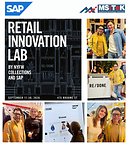
NEW YORK, Sept. 20, 2026 /PRNewswire/ — MSITEK , Global SAP partner and digital transformation company, participated in the Retail Innovation Lab by NYFW Collections and SAP in New York during New York Fashion Week (NYFW).

As an innovative SAP partner invited to participate, MSITEK brought its perspective on enterprise innovation, digital transformation and the evolving role of AI in shaping future of fashion retail. The Retail Innovation Lab is a fashion-first experience that shows how connected customer journeys and retail operations work together. The lab demonstrates how AI, customer intent, and real-time store signals can deliver relevant, personalized experiences across fashion journey.

SAP, MSITEK and a network of partners are contributing to the future of connected fashion retail through the Retail Innovation Lab.

MSITEK at the Intersection of Technology, Fashion Retail and Innovation

NYFW provides a unique backdrop for bringing together leaders from technology, retail, fashion and business to explore how innovation is reshaping customer experiences, operations and the way organizations compete.

As part of its participation, MSITEK provided an early look at its Smart Retail AI application, which was demoed during NYFW events.

Designed for retail leaders, the solution brings AI-powered intelligence to store data, helping businesses spot losses, forecast demand and turn store data into action — enabling smarter inventory decisions, leaner operations and stronger store performance.

“We are excited to be part of the Retail Innovation Lab at New York Fashion Week” said Ashoo Tuli, Co-Founder and CEO, MSITEK. “New York Fashion Week is an extraordinary platform for bringing together creativity, technology and business leadership. For MSITEK, it is an opportunity to exchange ideas, showcase our innovation and explore how AI can create tangible business outcomes for fashion retail.”

About MSITEK LLC

MSITEK is a global SAP partner with 10+ years of experience turning enterprise technology into innovation, agility and measurable business impact.

Powered by expertise in SAP Business AI platform, Business Data Cloud, S/4HANA, cloud transformation and intelligent automation, MSITEK helps organizations across North America, Europe and global markets modernize, innovate and accelerate growth. An Advanced-level partner in Business AI Platform and BDC competencies, MSITEK continues to collaborate with SAP to deliver next-generation enterprise innovation.

View original content to download multimedia:https://www.prnewswire.com/news-releases/msitek-participates-in-new-york-fashion-week-retail-innovation-lab-302883861.html

SOURCE MSITEK Global

Continue Reading

Trending