Connect with us

Technology

UN Private Sector Forum calls for faster public-private action to deliver a clean, just and secure energy future

Published

on

CEOs, Heads of State and Government and United Nations leaders identify investment, infrastructure and policy priorities needed to accelerate the global energy transition

NEW YORK, Sept. 20, 2026 /CNW/ — Business, Government and UN leaders today called for stronger public-private cooperation to accelerate investment in clean energy, strengthen energy security and expand access to affordable power, as the 2026 United Nations Private Sector Forum concluded at UN Headquarters in New York.

Hosted by the UN Global Compact on behalf of UN Secretary-General António Guterres, the invitation-only Forum brought together more than 100 Chief Executive Officers, Heads of State and Government, United Nations leaders and other senior decision-makers for a focused discussion on what is needed to deliver a clean, just and secure energy transition at greater speed and scale.

Participants underscored that growing private-sector demand for clean power and rapidly falling technology costs are creating significant investment opportunities. But they also highlighted persistent barriers to deployment, including insufficient grid infrastructure, policy and regulatory uncertainty, financing constraints and limited energy access in many emerging and developing markets.

The discussions focused on how Governments and business can work together to overcome these barriers and create the conditions for greater private investment in clean energy generation, transmission and supporting infrastructure.

Opening the Forum, Guterres addressed the urgency of accelerating the global energy transition and closing the gap between existing commitments and the pace of change required to keep the 1.5°C goal within reach.

“The companies in this room have the capital, technology, supply chains, consumer base and expertise to supercharge the renewables revolution: By investing in clean power and energy efficiency; Using your purchasing power to create markets for clean technologies; And continuing to build the infrastructure of the future,” said UN Secretary-General António Guterres.

Sanda Ojiambo, CEO and Executive Director of the United Nations Global Compact, said: “Business has an essential role to play in delivering the energy transition, and companies are increasingly ready to invest. But ambition and capital alone are not enough. We need the grids, policy frameworks, financing structures and partnerships that allow investment to move from the balance sheet into the real economy. The opportunity is to bring Governments and business together around a common objective: build the clean, affordable and resilient energy systems that companies and communities increasingly need. That is good climate policy, good energy policy and good economic policy.”

The Forum took place as geopolitical uncertainty and disruption to global supply chains have increased the strategic importance of secure and diversified energy systems. Participants discussed how accelerating clean energy deployment can support not only climate goals, but also economic resilience, competitiveness and energy security.

A central theme was the need to translate growing demand for clean energy into investment at scale.

Chief Executives and public-sector leaders examined practical approaches to financing clean energy projects, including how blended finance, public investment and risk-sharing mechanisms can help mobilize private capital, particularly in markets where perceived or actual investment risks remain high.

Participants also highlighted grid infrastructure as a critical constraint on the next phase of the energy transition. Rapid growth in renewable generation, electrification and new sources of electricity demand requires investment not only in clean generation, but in the transmission, distribution and storage infrastructure needed to connect new capacity to businesses and consumers.

Discussions also focused on the importance of consistent and predictable policy signals. Participants emphasized that Governments can help unlock greater private investment by creating stable regulatory frameworks, accelerating permitting and infrastructure development, and providing greater long-term visibility for businesses making major capital allocation decisions.

At the same time, leaders stressed that the energy transition must expand opportunity rather than deepen existing inequalities.

In many emerging and developing economies, access to affordable and reliable energy remains a fundamental constraint on economic growth. Participants explored how public and private capital can work together to expand energy access in underserved markets while supporting local economic development, job creation and more resilient energy systems.

The discussions formed part of a collective business response to the UN Secretary-General’s call for accelerated action on the clean energy transition, bringing private-sector perspectives directly into dialogue with Governments and the United Nations.

About the United Nations Global Compact
As a special initiative of the United Nations Secretary-General, the UN Global Compact is a call to companies worldwide to align their operations and strategies with Ten Principles in the areas of human rights, labour, environment and anti-corruption. Our vision is clear: to mobilize business to transform sustainability ambition into action at the scale the world demands. With more than 25,000 participants and a presence in over 100 countries through 5 Regional Hubs and more than 70 Country Networks and expansion territories, the UN Global Compact is the world’s largest corporate sustainability initiative.

For more information, follow @globalcompact on social media and visit the UN Global Compact website.

View original content to download multimedia:https://www.prnewswire.com/news-releases/un-private-sector-forum-calls-for-faster-public-private-action-to-deliver-a-clean-just-and-secure-energy-future-302884132.html

SOURCE United Nations Global Compact

Continue Reading

Technology

Guidepoint Relocates Shanghai Office to Strengthen Regional Presence

Published

on

By

SHANGHAI, Sept. 21, 2026 /PRNewswire/ — Guidepoint, a global pioneer in access to expert insight, today announced the relocation of its Shanghai office to the Bund Center on East Yan’an Road.

Building on more than a decade of sustained growth in China, the relocation positions Guidepoint in the heart of Shanghai’s business district, bringing the firm closer to the clients and partners it serves while providing a modern, collaborative workspace for its growing team.

“Research today has evolved beyond standalone expert calls to more connected, AI-enabled workflows,” said Michael Wang, Guidepoint’s Director and Head of China. “The new Shanghai office brings together capabilities across research, product innovation, compliance, and operations, reinforcing Guidepoint’s commitment to delivering source-backed insight through rigorous standards, transparency, and integrity.”

“Shanghai remains one of the world’s most influential centers for business and finance, connecting decision-makers across industries and markets,” said Chris Bonsi, Head of APAC. “This relocation reinforces our long-term commitment to the region and strengthens our ability to serve clients and attract top talent.”

As demand for expert-led, source-backed insight continues to grow, Guidepoint is focused on expanding its research capabilities by combining expert knowledge, proprietary content, and technology-enabled workflows to help clients move from uncertainty to conviction with greater speed and confidence.

About Guidepoint
Guidepoint provides real-time access to expert insights, combining human expertise with AI-powered research tools to deliver knowledge at scale. Backed by a global network of more than 2M+ subject-matter experts, Guidepoint equips institutional investors, consulting firms, and corporations with the context they need across companies, markets, and trends. Through live, asynchronous, and agentic workflows, Guidepoint embeds expert knowledge directly into decision-making, turning answers into action when timing matters most.

More on Guidepoint

View original content:https://www.prnewswire.com/apac/news-releases/guidepoint-relocates-shanghai-office-to-strengthen-regional-presence-302880268.html

SOURCE Guidepoint

Continue Reading

Technology

Reap Launches First Ever Managed Fraud and Risk Service for Card Programs

Published

on

By

Reap Sentry configures and manages fraud controls for clients’ card programs, eliminating the need for additional monitoring tools or in-house fraud specialists.

HONG KONG, Sept. 21, 2026 /PRNewswire/ — Reap, a global financial technology company that enables financial connectivity and access for businesses worldwide through stablecoin-enabled infrastructure, today announced the launch of Reap Sentry, a managed card fraud and risk service. Through Sentry, Reap manages a client’s end-to-end transaction risk management – from configuring fraud rules and screening authorisations in real time to investigating alerts, processing chargebacks, and reporting confirmed fraud to Visa. Clients do not need to build or license additional fraud-monitoring tools, or hire a dedicated fraud team.

Payment card fraud losses worldwide totalled USD 33.41 billion in 2024 (The Nilson Report, January 2026), tied to global card volume of USD 51.920 trillion (The Nilson Report, January 2026). Every card in circulation is a live payment instrument, with authorisation decisions made in milliseconds. Fraud must be stopped at the point of authorisation, not afterwards, as the knock-on costs of fraud can often exceed the value of the fraud itself. Meanwhile, evolving attack patterns make fraud management an ongoing operational function.

Built on the technology within Reap’s issuing portfolio, Sentry combines the fraud policy, tooling, and day-to-day operations required to manage transaction risk effectively. Having issued millions of cards over eight years of card issuance, Reap brings to Sentry controls informed by fraud patterns observed across its entire issuing portfolio. These controls are tailored to each client’s business profile, including its cardholder segments, geographic footprint, and stated risk appetite.

Sentry conducts ongoing screening and declines suspected fraud in real time at authorisation; triages and investigates alerts; and continuously updates controls as new threats emerge, including BIN attacks and merchant breaches. The service also processes and represents chargebacks submitted by clients, reports confirmed fraud, and provides program performance reporting on an agreed cadence. Controls are reviewed and refined as each program evolves, without requiring client intervention. Clients can integrate with Sentry through a single Reap API.

Reap protects the authorisation layer it operates and observes, while clients retain responsibility for the cardholder relationship and key first-party fraud entry points, including onboarding, identity verification and account access.

“Most companies launching a card programme have to build a fraud function from day one. Doing so requires specialist tooling, dedicated expertise and several months of preparation before they can safely issue a single card, by which point the threat landscape may already have shifted. That is rarely how a team wants its first months to go.” said Harris Leow, Head of Product, Reap. “Sentry takes on that entire card fraud function: our controls, data and specialists, tailored to each card programme.”

Sentry is available to new Reap card issuing clients and to existing clients at contract renewal, on Reap’s own API.

To find out more about Sentry, visit our website: https://reap.global/products/sentry-fraud-risk-management

About Reap
Reap is a global financial technology company that enables financial connectivity and access for businesses worldwide through stablecoin-enabled infrastructure. We transform the financial landscape through more efficient money movement by merging traditional finance with digital assets, bridging disparate economies and connecting key financial markets.

Reap was an early leader in Asia to incorporate stablecoins into our solutions. In 2025, Reap processed billions in stablecoin-funded transaction flows. From stablecoin-enabled corporate cards to cross-border payments, we streamline financial operations and empower companies to scale with our integrated business accounts and embedded finance solutions.

Founded and headquartered in Hong Kong, Reap employs 300 people worldwide. More information about Reap can be found at reap.global.

View original content to download multimedia:https://www.prnewswire.com/apac/news-releases/reap-launches-first-ever-managed-fraud-and-risk-service-for-card-programs-302883396.html

SOURCE Reap

Continue Reading

Technology

Envision Energy Powers Morocco’s First Large-Scale Battery Storage System at OCP’s Benguerir Mining Site

Published

on

By

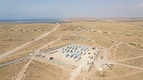
BENGUERIR, Morocco, Sept. 21, 2026 /PRNewswire/ — Envision Energy, a global leader in green technology, today announced the successful energisation of Morocco’s first large-scale lithium iron phosphate (LFP) battery energy storage system at OCP Green Energy’s Benguerir mining site. The 25 MW / 125 MWh system was supplied and commissioned by Envision Energy under a contract signed in late 2025, and is now undergoing testing before entering commercial operation.

Envision Energy provided the full storage system and led the commissioning work, integrating the BESS with the site’s solar generation, grid conditions and industrial load profile. The system is designed to shift surplus solar power from daytime generation to peak consumption hours, reducing the site’s peak-hour electricity bill by approximately 25%.

With five hours of storage capacity, the BESS functions as an industrial energy management tool rather than a short-duration grid asset. It is supported by USD 20 million from the Clean Technology Fund, managed through the African Development Bank Group, and is designed for a 25-year lifetime with daily charge-discharge cycles. For OCP, the value lies not in battery capacity, but in the system’s ability to reduce peak-hour costs over a 25-year operating life.

“The successful energisation of Morocco’s first large-scale battery storage project demonstrates the reliability, flexibility and cost-effectiveness of integrated renewable-plus-storage solutions in industrial applications,” said John Lee, General Manager of Envision Energy for the Middle East and Africa. “Envision is proud to be part of this landmark project and to contribute green technology to Morocco’s energy transition.”

As highlighted in OCP Group’s official press release announcing the milestone, Omar Kadir, CEO of OCP Green Energy, said: Storage is the natural extension of our energy strategy. It allows us to reconcile the variable output of renewable energy with the continuous needs of our industrial platforms, while strengthening the reliability of our energy supply. Beyond OCP Group’s own needs, this technology paves the way for a more harmonious integration of renewable energy into the national power system. By bringing greater flexibility and resilience to the grid, it will help accelerate the deployment of renewable capacity.”

The project marks a significant milestone for battery storage and industrial decarbonisation in Morocco. It supports the country’s target of achieving 52% of installed electricity capacity from renewable sources by 2030 and serves as a benchmark for industrial decarbonisation across Africa.

View original content to download multimedia:https://www.prnewswire.co.uk/news-releases/envision-energy-powers-moroccos-first-large-scale-battery-storage-system-at-ocps-benguerir-mining-site-302884224.html

Continue Reading

Trending