Connect with us

Technology

New IBM CHRO Study: AI Puts Critical Thinking at the Center of Workforce Priorities

Published

on

60% of employees worry AI is eroding their skills, with critical thinking cited most often as decliningNearly half of organizations do not involve the CHRO when AI strategy is being defined

ARMONK, N.Y., Sept. 21, 2026 /PRNewswire/ — A new global study from the IBM (NYSE: IBM) Institute for Business Value points to a disconnect between the skills Chief Human Resource Officers (CHROs) say AI requires and those employees prioritize. While 71% of CHROs identify the ability to supervise, validate and override AI outputs as the workforce’s most essential skill, only 29% of employees rank judgment as important.

The study,* which surveyed 1,500 CHROs and 8,800 employees globally, finds that 60% of employees worry about skills erosion, with critical thinking cited most often as declining. At the same time, CHROs identify critical thinking (57%) and human judgment (48%) as among the workforce’s most important capabilities.

The findings also show that organizations creating the greatest value from AI are redesigning work, decision-making and workforce capabilities around people and technology. Organizations that clearly define workflows as human-led, AI-assisted or AI-executed report achieving 18% risk reduction and 20% quality improvement. Yet, nearly half (46%) of organizations do not involve the CHRO when AI strategy is being defined.

“AI is changing not only how work gets done, but where people can contribute the greatest value,” said Nickle LaMoreaux, Senior Vice President and Chief Human Resources Officer, IBM. “As AI takes on more routine and process-driven tasks, uniquely human capabilities become even more important. CHROs have a critical role to play in redesigning the workplace of the future so people can focus on the areas where they can have the greatest impact.”

Other key findings from the study include:

Concerns about skills erosion reinforce the importance of judgment and critical thinking   

Among employees who worry about skills erosion, three out of four say AI has already begun to erode at least some of their skills.Skills erosion ranks among CHROs’ top concerns, cited by 46% of respondents. 49% of employees and 57% of CHROs say critical thinking and problem framing are among the skills that matter most in the AI era.  Where judgment is built into how work is done, 62% of CHROs report growing employee confidence in AI-enabled decisions; where it is not, 57% report confidence declining. 

AI accountability gaps are impacting employees 

43% of employees report that when something goes wrong with AI, the blame falls on them, while 41% of CHROs believe employees may not feel safe challenging or overriding AI outputs.36% of CHROs say unclear accountability complicates AI deployment.Only 28% of CHROs report a joint roadmap with IT backed by a shared operating cadence, and 73% say they struggle to coordinate consistently across the C-suite. Where the CHRO at least shares responsibility for which decisions remain human-led, 76% of employees feel safe to question or override AI recommendations, compared with 43% where HR is merely advisory.

AI gains are creating new pressure on the workforce 

80% of CHROs believe AI adoption creates “invisible” work for employees, including validating recommendations, fixing mistakes, providing context and managing exceptions. 42% of employees say AI increases their work or their work goes unrecognized. 42% of CHROs say AI productivity gains are primarily reinvested for innovation or reskilling.

HR is expected to lead AI transformation, but its own adoption lags 

72% of organizations make limited or no use of AI inside the HR function. CHROs rate HR’s capabilities particularly low in AI literacy across the team (13%), AI performance measurement (16%) and change management for AI adoption (20%). Organizations with mature HR AI capability, including governance, architecture and measurement, are nearly twice as likely to report a higher number of positive business KPIs. 

To view the full study, visit: https://www.ibm.com/thought-leadership/institute-business-value/en-us/c-suite-study/chro

The study also features perspectives from CHROs and people leaders on how organizations are responding to AI-driven changes in the workforce. A selection of these firsthand views is available in the addendum below.

*Study Methodology:
The IBM Institute for Business Value, in collaboration with Oxford Economics, conducted two complementary surveys from April to June 2026. The first survey gathered insights from 1,500 CHROs and equivalent senior executives responsible for workforce strategy on how they design work, culture and the workforce for an AI-enabled enterprise across 21 geographies and 23 industries. Executive respondents represented organizations of varying sizes and sectors, from $250 million USD to $123.7 billion USD in annual revenue or budget and from 200 to more than 880,000 employees. The second survey polled 8,800 full-time employees spanning 28 countries to capture their experience with AI at work. Additional analysis was conducted to identify organizations converting AI into growth versus those converting it into savings, segmenting organizations by strategic maturity based on capabilities and culture readiness.

The IBM Institute for Business Value, IBM’s thought leadership think tank, combines global research and performance data with expertise from industry thinkers and leading academics to deliver insights that help business leaders make informed decisions. For more information, visit www.ibm.com/ibv. To receive more insights, subscribe to the IdeaWatch newsletter: https://ibm.co/ibv-ideawatch.

About IBM
IBM is a leading provider of global hybrid cloud and AI, and consulting expertise. We help clients in more than 175 countries capitalize on insights from their data, streamline business processes, reduce costs and gain the competitive edge in their industries. Thousands of governments and corporate entities in critical infrastructure areas such as financial services, telecommunications and healthcare rely on IBM’s hybrid cloud platform and Red Hat OpenShift to affect their digital transformations quickly, efficiently and securely. IBM’s breakthrough innovations in AI, quantum computing, industry-specific cloud solutions and consulting deliver open and flexible options to our clients. All of this is backed by IBM’s long-standing commitment to trust, transparency, responsibility, inclusivity and service. Visit www.ibm.com for more information.

Media contact:

Marisa Conway
IBM Corporate Communications
conwaym@us.ibm.com

Estefania Sanchez
IBM Corporate Communications
estefania.sanchez@ibm.com 

Executive perspectives:

“Fluency without judgment simply helps an organization make mistakes faster.” – Dr. Amit Das, Director and CHRO, Bennett Coleman & Co. Ltd. (The Times of India) 

“Rather than asking how much work was completed, we’re asking whether AI helped improve decision quality, speed, employee experience, guest satisfaction and business performance.” – Kristin Oliver, Chief Human Resources Officer, Hyatt Hotels Corporation 

“An AI-enabled culture that is grounded in the principle that humans are any company’s secret sauce will differentiate you versus competitors. AI is a tool for humans to perform their best work.” – Cecilia McKenney, Senior Vice President & CHRO, Quest Diagnostics 

“Offering an organization a design framework for transformation is HR work. It’s actually the HR work everyone aspires to.” – geneviève bich, Vice President – Human Resources (CHRO) and Board member, Metro

“We think of the CHRO and CTO as the power couple because they are bringing talent strategy and technology strategy into one conversation. Together, we’re co-architects of the work.” Ali Peek Bebo, CHRO, Pearson

SOURCE IBM

Continue Reading

Technology

UK digital pathology provider Source BioScience chooses Sectra to enable seamless pathology collaboration across the NHS

Published

on

By

LINKÖPING, Sweden, Sept. 21, 2026 /PRNewswire/ — International medical imaging IT and cybersecurity company Sectra (STO: SECT B) has signed an agreement with Source BioScience UK Ltd (Source BioScience) in the UK to deliver its service for advanced share and collaborate workflows. As the first Sectra customer in this domain, Source BioScience will now be able to support NHS organisations that need to send pathology cases to external specialists. This lays the foundation for national telepathology networks in the UK, and for improved access to specialist pathologists.

The service, Sectra Image Exchange Portal (Sectra IEP), is a cloud-based, vendor-neutral platform for exchanging and collaborating around medical images. It is already used by more than 500 institutions, mainly within radiology. Recently, the service has undergone substantial modernisation which now makes it possible for healthcare providers to benefit from new advanced workflow functionality, for the service to be used by specialties other than radiology and for customers to move beyond image sharing to managing workflows between organisations.

“This milestone integration will give the NHS a seamless digital pathway to external specialists, with diagnoses delivered straight back into its own records – reducing turnaround times, easing consultant shortages and tackling reporting backlogs,” says Nick Bills, Healthcare Director at Source BioScience.

Source BioScience is a UK laboratory services provider specialising in histopathology and genomics. Its pathology business supports more than 85 NHS trusts alongside a network of private healthcare clinics, with histopathology delivered from laboratories in Nottingham, Chichester and Cambridge.

NHS pathology services are handling growing case volumes with a limited number of reporting consultants, and increasing subspecialisation means the pathologist best suited to a case is often at another organisation. Sending work to external capacity providers today typically relies on bespoke arrangements between individual laboratories, including the transportation of physical glass slides. This slows reporting times and creates administrative overhead for both the sending and receiving laboratories. With Sectra’s service, a case can be created as a job directly from a laboratory’s worklist, delegated to a receiving organisation, and the completed report returned to the referring organisation’s own records.

“IEP is the backbone of image sharing across the NHS. With our modernised platform, we are introducing advanced workflows between healthcare organisations, and extending that trusted national network into pathology. Connecting trusts directly with external specialists like Source BioScience means cases and completed reports move seamlessly across organisational boundaries. It is a step towards an NHS where expertise is always within reach, and where work moves between organisations as easily as it moves within them,” says Jane Rendall, Managing Director for Sectra UK and Ireland.

The three-year contract was signed in the second quarter of Sectra’s 2026/2027 fiscal year. Up to 60,000 cases are expected during the first year, scaling up in subsequent years.

Source BioScience Media Contact:
Klaudyna Johnstone, Commercial Director, klaudyna.johnstone@sourcebioscience.com 

CONTACT:

For further information, please contact: Dr. Torbjörn Kronander, CEO and President Sectra  AB, 46 (0) 705 23 52 27
Marie Ekström Trägårdh, Executive Vice President Sectra AB and President Sectra Imaging IT Solutions, 46 (0)708 23 56 10

This information was brought to you by Cision http://news.cision.com

https://news.cision.com/sectra/r/uk-digital-pathology-provider-source-bioscience-chooses-sectra-to-enable-seamless-pathology-collabor,c4398521

The following files are available for download:


View original content:https://www.prnewswire.co.uk/news-releases/uk-digital-pathology-provider-source-bioscience-chooses-sectra-to-enable-seamless-pathology-collaboration-across-the-nhs-302884440.html

Continue Reading

Technology

askelie® opens its Operational AI Platform to customers and partners

Published

on

By

New platform makes proven AI capabilities available for MSPs, software vendors and business users to configure and compose

LONDON, Sept. 21, 2026 /PRNewswire/ — askelie® today announced the launch of its Operational AI Platform, opening the proven technology behind its enterprise AI solutions to MSPs, software vendors and business users.

The platform enables customers and partners to configure and compose AI-powered solutions using proven, reusable askelie capabilities. Rather than building an AI foundation from scratch, organisations can combine existing capabilities to address real business needs — providing a practical route from AI ambition to business value, with faster time to value, lower cost and less risk.

“We’ve spent years using askelie to rapidly deliver enterprise-grade AI solutions. What we’re doing now is opening that capability up,” said Derek Kilroe, CEO and Founder, askelie. “For the first time, MSPs, software vendors and business users can take proven AI capabilities and configure and compose their own solutions for real business operations — without having to build the underlying AI platform themselves.”

Built around Understand • Decide • Act • Control, the platform brings together AI intelligence, data, knowledge, workflows, enterprise integrations, security and governance.

At launch, customers and partners can configure and compose existing capabilities to create and adapt AI-powered Assistants and Automations around specific business needs. The platform provides the foundation for increasingly sophisticated AI applications, including Digital Workers and Autonomous Applications.

“Customers shouldn’t have to assemble an AI technology stack before they can solve a business problem,” said Ian Halliday-Pegg, Chief Product Officer, askelie. “askelie brings the capabilities needed for operational AI together in a platform that can be combined and reused for different needs.”

The platform is designed to be practical, affordable and trusted. Proven, reusable capabilities reduce the need to build enterprise AI from scratch; model choice and consumption-based pricing help control costs; and security, governance, human oversight and auditability are built into the platform.

The platform also enables MSPs to configure and reuse AI-powered services across customers, while software vendors can extend existing products, enhance them with external data and context, and configure new AI-powered capabilities.

The askelie Operational AI Platform is available from 21 September 2026.

For more information, visit www.askelie.io

View original content to download multimedia:https://www.prnewswire.com/news-releases/askelie-opens-its-operational-ai-platform-to-customers-and-partners-302884442.html

SOURCE AskELIE Limited

Continue Reading

Technology

Huawei Upgrades Stellar AI WAN Solution to Drive All Intelligence Across Industries

Published

on

By

SHANGHAI, Sept. 21, 2026 /PRNewswire/ — At HUAWEI CONNECT 2026, Huawei unveiled its upgraded Stellar AI WAN Solution. Centered on ultimate computing efficiency and multi-dimensional security, this solution addresses cross-region computing challenges in efficiency, cost, and security, driving all intelligence across industries in the AI era.

Stellar AI WAN for Intelligent Connectivity

Amid the rapid expansion of AI computing power, deploying new compute infrastructure in the West has made remote invocation the new norm. However, traditional networks face three critical issues relating to cross-region computing.

Severe efficiency loss: Invoking computing power across 1,000 km can incur a 37% efficiency loss from a mere 0.073% packet loss.High on-premise costs: Local compute deployment costs from 1 million RMB per branch.Expensive private lines: Enterprises spend around 1.2 million RMB annually on 10G private lines.

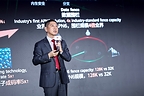
To address this, Leon Wang, President of Huawei’s Data Communication Product Line, introduced the Stellar AI WAN Solution, enabling lossless delivery of computing power over 1,000 km for a local-like remote computing experience. The XH computing-network appliance uses a unique layerwise model partitioning algorithm to run the initial and final layers of inference locally while offloading intermediate layers to remote infrastructure. With the network transmitting only high-dimensional vectors, raw data remains on-premises. The appliance requires just two xPUs to match a traditional 8-xPU setup, slashing xPU costs by 75%. The updated Starnet lossless algorithm cuts bandwidth idle time by over 80% and reduces required bandwidth fivefold, further lowering cross-region computing costs.

Stellar AI WAN for Security

As global security threats intensify, novel vectors like APTs and HNDL attacks continue to emerge. To address these, Huawei provides a three-layer defense for WANs.

Device layer: Intrinsic security boards detect and block intrusions in real time, tracing threats within minutes at over 95% accuracy.Link layer: Built-in QKD delivers robust quantum security without extra devices or fibers, slashing costs by over 60%. An adaptive noise suppression algorithm extends QKD transmission past 80 km.Network layer: APN6-based data fencing enables network-wide control over traffic paths, ensuring data travels exclusively within secure networks with intrinsic security and quantum encryption deployed.

Looking ahead, Huawei will continually upgrade the Stellar AI WAN Solution, deepening its computing-network synergy and multi-dimensional security. Together with partners, Huawei aims to reinforce the intelligent network foundation and accelerate all intelligence across enterprises.

View original content to download multimedia:https://www.prnewswire.com/apac/news-releases/huawei-upgrades-stellar-ai-wan-solution-to-drive-all-intelligence-across-industries-302884354.html

SOURCE Huawei

Continue Reading

Trending