Connect with us

Technology

Customer-Centric “Huawei + Partners” Collaboration System Launched to Scale AI Across Industries

Published

on

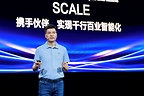
SHANGHAI, Sept. 21, 2026 /PRNewswire/ — At HUAWEI CONNECT 2026, Leo Chen, Huawei’s Senior Vice President and President of Enterprise Sales, announced the new SCALE partner support system during his “Scaling All Intelligence for Industry Success” keynote address. Huawei intends to use this new system to equip partners with the capabilities they need to help customers move intelligent transformation from individual pilots to large-scale adoption. Chen also shared new insights and practices Huawei has developed on intelligent industry benchmarks.

Chen stated, “The intelligent era is approaching fast. Huawei works with partners to provide products and solutions that solve real business problems. We want to share our own capabilities with partners. By empowering partners, they can bring their unique strengths to bear, and help customers move from compute construction to intelligent application. Huawei is fully committed to helping our customer-centric ‘Huawei + Partners’ collaboration system thrive. We want to help partners solve customer issues more efficiently and help customers achieve large-scale AI adoption.”

Partners face five challenges when scaling intelligent industry projects: solution development, integration verification, solution delivery, O&M, and system collaboration. To help partners overcome these challenges, the SCALE partner support system offers five types of support: Scenario-based Solutions, Co-innovation, Aligned Marketing, Local Services, Consistent Quality, and Efficient Collaboration. These enhanced support offerings provide partners with systematic support from solution development, verification, launch, delivery, and operations, helping them move from benchmark intelligent projects to large-scale AI adoption.

Scenario-based Solutions: Huawei provides open, easy-to-integrate AI foundation products that partners can use to rapidly develop new solutions. These products cover compute, storage, networks, security, and data protection, and include the new SMECE and the DCS AI Solution that help partners more efficiently convert their industry know-how into feasible intelligent solutions. Huawei’s partners have used these products to develop more than 100 scenario-based solutions for eight industries that accelerate AI adoption.

Co-innovation: To help partners replicate benchmark experience and validate solution integration more efficiently, Huawei has opened up its reference architectures and verification environments. This includes the reference architectures for 48 high-value scenarios that partners can refer when designing solutions, setting up test environments, developing applications, and performing debugging and verification. Besides, Huawei provides unified interfaces and development and verification tools through its cloud-based OpenLab to make solution more efficient.

Aligned Marketing: Huawei is committed to helping its partners identify customer needs, launch new solutions, and make standout solutions more visible, verifiable, and replicable so customers can quickly find the solutions they want. Huawei has opened up its Market-to-Lead (MTL) process capabilities to partners and worked together to effectively bring customer-facing solutions to market. Huawei has launched solutions alongside partners, showcased standout solutions at Huawei’s booths and exhibition halls, and built industry showcases with customers. These efforts have enabled customers to better understand the value of solutions and actual validation results. Huawei has worked with partners to build more than 130 showcases with customers globally.

Local Service, Consistent Quality: Huawei is expanding and localizing its partner services, so that partners can offer customers the same high-quality service as Huawei. Partners can access the knowledge, tools, expertise, and service experience through Huawei’s O3 Partner Service Enablement Platform. Huawei offers talent development and certification programs for various service roles, which have been used to cultivate more than 50,000 AI professionals over the past 3 years.

Efficient Collaboration: Huawei provides two one-stop intelligent platforms for partners that simplify the way they work with Huawei. These platforms (HUAWEI eFly and HUAWEI ePartner) serve as unified portals that help partners navigate Huawei’s processes, and provide partners with the data they need to carry out one-stop marketing, transaction, and service operations. Partners gain access to the documentation, tools, IT interfaces, and AI-assisted configuration and intelligent Q&A tools, that help make serving customers more efficiently.

Chen said, “In the era of true intelligence, scaling proven practices across industries will allow more companies to thrive. Industrial intelligence is creating unprecedented opportunities, and Huawei wants to work with our customers and partners to deploy successful benchmarks at scale, and bring the benefits of AI to more industries, organizations, and people.”

SOURCE HUAWEI

Continue Reading

Technology

Green Security Partners with CLEAR®; Expanding Trusted Identity Network to Healthcare Vendor Credentialing

Published

on

By

Bringing trusted identity assurance to healthcare facilities by linking vendor identities directly to their access credentials

CLEARWATER, Fla., Sept. 21, 2026 /PRNewswire-PRWeb/ — Green Security, a leader in healthcare vendor operations and intelligence, today announced a partnership with CLEAR1, CLEAR’s secure identity platform, to strengthen identity verification for vendors entering healthcare facilities. Together, CLEAR and Green Security will help organizations elevate security across the entire workplace ecosystem. By addressing the entirety of stakeholders entering and operating within a facility, the partnership enables a more comprehensive, end-to-end approach to identity, access, and trust.

The solution is designed to elevate healthcare safety and trust by authenticating credentialed vendors with advanced biometric technology, helping protect healthcare staff and patients while prioritizing privacy and security.

Green Security supports more than 8 million healthcare vendor interactions annually, making trusted identity verification a growing priority for hospitals seeking stronger access controls. CLEAR1 and Green Security have entered into a preferred partnership to extend proven identity measures to health systems designed to strengthen their physical security. Traditional printed badges can be copied, borrowed or transferred, creating a potential gap between the person wearing a badge, the identity recorded in a credentialing system and the facility access associated with that identity. Green Security’s new identity-verified Smart Badge experience will be built with CLEAR1, and is designed to address that gap by connecting a vendor’s verified identity with their Green Security mobile app, Smart Badge and credentials. Vendors simply upload a selfie to verify their identity with CLEAR in seconds to complete Green Security registration. CLEAR1 analyzes hundreds of signals—from biometrics, documents, and devices—and cross-checks them against verified data sources to confirm identity.

“Vendors are checking in roughly every 14 seconds around the clock, and hospitals shouldn’t have to wonder whether the person wearing a badge is the person who completed credentialing,” said Mickey Meehan, CEO, Green Security. “Our exclusive partnership with CLEAR sets a newer, higher standard for healthcare vendor access. It’s a simple experience for vendors, but a major leap forward in trust and accountability for the healthcare user.”

The partnership is expected to give health systems stronger assurance that:

The person entering the facility is the same individual who completed credentialing requirementsVendor badges cannot be casually shared, transferred, or re-used by unauthorized individualsIdentity verification occurs during check-in process and before a smart badge is activated, creating stronger accountability

“For more than a decade, CLEAR has helped people prove who they are in moments that matter,” said David Bardan, SVP, GM, Head of Healthcare and Govtech at CLEAR. “We’re bringing that same trusted identity experience to healthcare. Together with Green Security, we will be helping hospitals move beyond credentials alone to gain greater confidence that the right person is accessing the right place.”

The companies see this integration as a further step toward a broader identity-first approach to healthcare facility access, where verified identity can help support compliance, security, and operational efficiency across the vendor ecosystem.

The partnership is expected to enhance security and support compliance without adding unnecessary friction for supplier representatives. Hospitals will gain greater confidence in vendor access, while representatives will benefit from a streamlined activation process designed around their mobile devices. The integration is expected to be live later this year.

Additional resources:

Learn more about Green Security’s Smart Badge platformExplore additional insights on the Green Security blogFollow Green Security on LinkedIn

About Green Security

Green Security is the leading provider of healthcare vendor operations and intelligence solutions, trusted by more than 330,000 vendors at 2,000 facilities across 275+ health systems. The platform streamlines and secures every stage of vendor engagement, from onboarding and credentialing to value analysis, to OR case readiness and visitor management. By combining credentialing, access management, and real-time vendor intelligence, Green Security helps healthcare organizations verify requirements, manage facility access, and make more informed decisions about vendor engagement. Learn more at gogreensecurity.com.

Media Contact

Jennifer Usher, PR for Green Security, 1 4154120181, jennifer@usherconsultancy.com

View original content to download multimedia:https://www.prweb.com/releases/green-security-partners-with-clear-expanding-trusted-identity-network-to-healthcare-vendor-credentialing-302883771.html

SOURCE PR for Green Security

Continue Reading

Technology

China Daily: Chinese farming model offers practical lessons for Global South

Published

on

By

QUZHOU, China, Sept. 21, 2026 /PRNewswire/ — In the sun-drenched fields of Quzhou county, Hebei province, African students are learning about farming not from a classroom, but with their hands in the soil.

They drive tractors, take soil samples, test planting techniques and work alongside Chinese researchers and local farmers. The experience is part of the Science and Technology Backyard (STB) program, a model pioneered by China Agricultural University that is now being adapted to agricultural challenges across the Global South.

Established in Quzhou in 2009, the STB model brings university researchers and graduate students into farming communities to conduct research, test technologies and provide services directly to farmers. Since 2019, the university has established 14 STBs in 10 countries, including Malawi and Kenya, working with farmers in more than a dozen villages.

The overseas expansion reflects a shift from simply transferring agricultural technologies to building local capacity, said Zhang Fusuo, an academician of the Chinese Academy of Engineering and initiator of the STB program.

“Our core strategy for the next decade is to take the Science and Technology Backyards overseas,” Zhang said.

Rather than replicating Chinese farming practices, the model emphasizes adapting technologies to local soil, climate, crops and economic conditions.

In Malawi, for example, STBs focus on maize, a staple crop and major source of rural livelihoods. Malawian agricultural expert Samson Mofolo, who studied at China Agricultural University, is now working with farmers on techniques including cereal-legume intercropping, improved varieties and more targeted fertilizer use.

The approach has brought tangible changes for farmers. In Kasungu, central Malawi, farmer Esnart Mwera said her family began producing more maize from a small plot after adopting improved planting practices.

“We don’t have hunger in our family,” she said, adding that higher harvests have also helped the family pay school fees and buy livestock.

Jiao Xiaoqiang, head of the China-Africa STB program, said young agricultural professionals are trained to become a bridge between scientific research and farmers. “Technology is very important for smallholder farmers, but technology alone is not enough. If we want farmers to adopt new technologies, education must come first,” he said.

Students from Ethiopia and Kenya say the training has given them ideas they can adapt at home, from safer pesticide use and mechanization to soil testing and organic fertilizer.

View original content to download multimedia:https://www.prnewswire.co.uk/news-releases/china-daily-chinese-farming-model-offers-practical-lessons-for-global-south-302884573.html

Continue Reading

Technology

Rainmaker Raises $100M Series B to Scale Low-Cost Water Production and Weather Modification

Published

on

By

Funding will expand the research organization behind the first validated proof of manmade precipitation.

EL SEGUNDO, Calif., Sept. 21, 2026 /PRNewswire/ — Today, Rainmaker Technology Corporation announces a $100 million Series B fundraise to grow its atmospheric research organization and drive down the cost of producing new freshwater via cloud seeding. The round includes investments from NOA VC, Upfront Ventures, DCVC, Lowercarbon Capital and Dream Ventures. Rainmaker Founder and CEO Augustus Doricko issued the following statement:

“The future of water is the future of everything. With this historic investment in weather modification technology, Rainmaker will continue to conduct frontier atmospheric research, cloud seed to end drought in the American west, and develop the tech stack that will make the earth more habitable for generations to come.”

Background

Rainmaker Technology Corporation is a next-generation cloud seeding company based in El Segundo, Calif. The company flies weather-resistant drones into winter storm clouds and releases a small amount of silver iodide, a particle that ice crystals form around. Those crystals grow heavy enough to fall as rain or snow. Rainmaker’s own radar and validation systems then measures how much additional precipitation each operation produced — the step that has historically been missing from cloud seeding.

Earlier this year, Rainmaker became the first private company in history to physically validate the results of cloud seeding operations. Over four months, the company recorded 82 unambiguous seeding signatures, distinct radar patterns that tie precipitation directly to a seeding flight. Together they account for more than 145 million verified gallons of freshwater, nearly the annual water use of 1,800 American households. In August, Rainmaker produced 19 million gallons in about three hours near Homer, Alaska, marking a significant improvement in the efficiency of the technology.

This new round of funding will support a rapid expansion of Rainmaker’s research team, which today includes atmospheric scientists, radar and satellite specialists, and material scientists. Their work is aimed at answering the questions that determine how much water an operation yields: which clouds to seed and when, how much material to release, and where precipitation should fall to do a watershed the most good for farms, ecosystems, and industry. Rainmaker will also support research at national laboratories and fund weather modification research at American universities.

Rainmaker’s cost per acre-foot of water falls sharply as the company produces more of it, and additional drone teams can operate in parallel to increase production. By the November 2026–April 2027 season, Rainmaker expects its water to cost less than most other sources of new supply, including desalination and paying farmers to leave fields unplanted. 

Water is Rainmaker’s first focus, not its last. The company intends to apply the same approach to other limits on productive land, including hail damage, and poor soil.

This announcement comes as major drought in the American west continues to dominate front page news. Snowpack after the winter of 2025-2026 was the lowest on record, and reservoirs along the Colorado River are hitting historic lows. Cloud seeding provides the most cost-effective method of delivering net new water to the interior of the United States. 

Rainmaker currently operates in Utah, Idaho, Oregon, California and Colorado and is working to expand operations throughout the American West and globally.

To learn more, visit rainmaker.com

View original content to download multimedia:https://www.prnewswire.com/news-releases/rainmaker-raises-100m-series-b-to-scale-low-cost-water-production-and-weather-modification-302884251.html

SOURCE Rainmaker Technology Corporation

Continue Reading

Trending