Connect with us

Technology

GREEN FUEL FORWARD EXPANDS INDUSTRY ALLIANCE TO SUPPORT SUSTAINABLE AVIATION FUEL ADOPTION IN ASIA

Published

on

Center for Green Market Activation (GMA) and Singapore Sustainable Aviation Fuel Company (SAFCo), join GenZero on the Steering Committee, while Amazon, Bain & Company, and Temasek Trust join the growing industry alliance to support credible demand for sustainable aviation fuel (SAF) and SAF certificates in Asia.

SINGAPORE and NEW YORK, Sept. 23, 2026 /PRNewswire/ — Green Fuel Forward (GFF), launched by GenZero and the World Economic Forum (WEF) in May 2025 to scale demand for sustainable aviation fuel (SAF), today announced an expanded partnership structure and new members as it enters its next phase of market activation.

Announced during Green Markets Day at New York Climate Week, the expansion marks GFF’s shift from building market awareness and procurement readiness to facilitating greater corporate action and participation in SAF and SAF certificates (SAFc) transactions across Asia.

GFF welcomed the Center for Green Market Activation (GMA) and the Singapore Sustainable Aviation Fuel Company (SAFCo) to its Steering Committee (SteerCo), alongside founding SteerCo member GenZero. The expanded SteerCo combines investment, demand-aggregation, procurement and market-development expertise as GFF works to translate growing corporate interest in SAF into credible and scalable demand.

Building this demand is particularly important for aviation decarbonisation in Asia, where much of the sector’s future growth is expected. SAF supply remains constrained by its premium over conventional jet fuel and production capacity that is still developing. Stronger and clearer demand signals can encourage investment in new supply and help lower the cost of SAF adoption.

SAFc can provide these demand signals at scale by enabling companies to support the use of SAF and claim the associated emission reductions towards their climate targets, even where direct access to physical SAF is limited or impossible. To support the development of a robust SAFc market in Asia-Pacific, GFF will work with industry, policymakers and standards bodies to establish a trusted framework for corporate engagement.

Frederick Teo, Chief Executive Officer, GenZero, said: “Given the growth of aviation in the Asia-Pacific, the region has a critical role in decarbonising aviation globally. There is tremendous potential to develop technologies in SAF, source feedstock, build production capacity and drive adoption. Corporate ambition to address air travel emissions can direct financing into scaling SAF adoption through the purchase of SAF certificates. Green Fuel Forward aggregates corporate participation into credible, collective demand large enough to meaningfully support production growth across the region. The expertise that GMA and SAFCo bring in demand aggregation, procurement, and market development strengthens Green Fuel Forward’s broad membership base to translate corporate readiness into concerted market action.”

Kim Carnahan, Chief Executive Officer, Center for Green Market Activation, said: “We know that book and claim and demand aggregation can drive new investment and grow the supply of high-integrity SAF. We are thrilled to be joining the Green Fuel Forward SteerCo to bring this model to Asia, ensure it complements existing global initiatives like the Sustainable Aviation Buyers Alliance, and steer it toward real-world contracting that scales SAF uptake in one of the fastest growing aviation markets in the world.”

Seow Hui Tan, Chief Executive Officer, SAFCo, said: “As Asia-Pacific’s aviation sector continues to grow, the region has a unique opportunity to lead the next phase of sustainable aviation growth. Singapore’s early leadership in advancing SAF policy demonstrates how practical regulations, trusted governance, and market-based mechanisms can accelerate SAF adoption while maintaining environmental integrity. Beyond supporting Singapore’s national SAF ambitions, SAFCo’s expertise, processes, systems, and market infrastructure being developed through the SAF policy can help lay the foundations for a credible and scalable voluntary SAF and SAF certificate market across Asia-Pacific. Through Green Fuel Forward, we look forward to working with partners to strengthen corporate participation, build market confidence, and accelerate the development of a trusted regional SAF ecosystem.”

With added institutional expertise and a broader corporate buyer base, GFF is better positioned to help companies move from learning about SAFc to evaluating and participating in procurement opportunities. By aggregating demand and strengthening connections among buyers, market intermediaries and suppliers, GFF aims to create a stronger commercial foundation for SAF growth in Asia.

As GFF moves from capacity-building towards supporting more pragmatic action, WEF will hand over the secretariat function of the initiative to the SteerCo. WEF played an important role in the initiative’s formative year, helping to shape the platform, convene stakeholders, build momentum, and strengthen the understanding of the SAF market.

Pedro Gomez, Head, Industry Agenda, Member of the Executive Committee, World Economic Forum, said: “With GenZero and dozens of private sector companies, we launched Green Fuel Forward to spark interest in SAF in the Asia-Pacific region. One and a half years later, this collective effort has shown that the local SAF market is maturing fast, and more corporates are planning to take pragmatic action and invest in the sector. The World Economic Forum looks forward to seeing this momentum transform into credible demand as GenZero and the new SteerCo take over the strategic leadership of the campaign, bringing experience from transactions that can really scale the impact of Green Fuel Forward in the coming years.”

New members broaden the alliance

Alongside the expanded SteerCo, GFF has recently welcomed Amazon, Bain & Company, and Temasek Trust as new members, broadening the group of companies seeking to accelerate the shift towards lower-carbon aviation. Temasek Trust also joins as a catalytic contributor, providing funding to offset procurement costs and help SAF adoption. GFF’s total membership now stands at 48.

GFF’s members span three key groups: companies with significant business-travel footprints; companies with substantial logistics and air-cargo operations; and international corporations looking to decarbonise their value chains in Asia.

Corporate interest in SAF is growing, but buyers continue to face practical barriers to procurement. Questions remain around how SAF certificate purchases can be reported under the Greenhouse Gas Protocol, while buyers may also have limited visibility of credible regional supply and lack dedicated in-house procurement capabilities.

Through GFF, participating companies can better understand the SAF market, explore credible procurement pathways, and stay updated on accounting and reporting for SAFc. Catalytic funding, including cost offsets and co-matching for select first-time buyers, can also help lower cost barriers and support early participation.

Sam Israelit, Chief Sustainability Officer, Bain & Company, said: “Business travel is the largest share of Bain’s carbon footprint, and sustainable aviation fuel is central to our science-based path to net zero. Having been among the first corporate buyers of SAF certificates through the Sustainable Aviation Buyers Alliance and the First Movers Coalition, joining Green Fuel Forward is a natural next step: it brings that commitment to Asia-Pacific, where aviation’s growth – and the opportunity to decarbonise it – is greatest. We look forward to helping build the credible, aggregated demand that will catalyse new SAF supply across the region.”

Ryan Tan, Head, Planet Collaborative, Temasek Trust, said: “Aviation is a carbon-intensive sector that is an integral part of the carbon footprint of many companies, such as through business travel and value chains. This makes SAF certificates an important entry point for collective action. Through Green Fuel Forward, Temasek Trust is participating as both a member and catalytic funder to lower barriers for other companies and facilitate demand for SAF. This reflects our commitment to catalysing practical, scalable solutions for tangible climate impact.”

About Green Fuel Forward
Founded by GenZero and the World Economic Forum in 2025, Green Fuel Forward (GFF) is an initiative designed to scale corporate demand for sustainable aviation fuel (SAF) in the Asia-Pacific region. While continuing to build capacity and increase awareness of SAF certificates, in its second year, GFF will explore more structured procurement of sustainable aviation fuel certificates (SAFc), enabling corporate buyers to participate in SAF markets and address their aviation-related Scope 3 emissions. The initiative complements ongoing work by international standards bodies to advance the use of book-and-claim mechanisms, while contributing to global aviation decarbonisation. Through demand aggregation, capacity building and policy engagement, GFF aims to provide clear demand signals required to lower barriers to SAF adoption, strengthen market confidence and ultimately, catalyse new investments into SAF production across Asia-Pacific.

For more information, visit https://genzero.co/initiatives/green-fuel-forward.

About GenZero
GenZero is an investment platform company focused on accelerating decarbonisation globally. Founded by Temasek, it seeks to deliver positive climate impact alongside long-term sustainable financial returns by investing in opportunities with the potential to be nurtured into impactful and scalable solutions.

Driven by a common purpose to decarbonise for future generations, GenZero recognises the need for a holistic and integrated approach to achieve a net zero world. It adopts a flexible investment approach across three focus areas to drive climate impact: (i) nature-based solutions that help protect and restore natural ecosystems while benefiting local communities and biodiversity; (ii) technology-based solutions that deliver deep decarbonisation impact; and (iii) climate ecosystem enablers that support the scaling of carbon markets and enable broader industry decarbonisation.

For more information on GenZero, visit www.genzero.co.

About the Center for Green Market Activation
The Center for Green Market Activation (GMA) is a U.S.-based nonprofit working to catalyze markets for low- and zero-carbon goods and services in hard-to-abate sectors. GMA develops and deploys demand aggregation, collective procurement and book-and-claim approaches that enable companies to send stronger demand signals for emerging climate solutions. GMA manages buyers alliances across aviation, maritime shipping, heavy duty trucking, cement and concrete, chemicals, agriculture and other sectors, including serving as the Secretariat for the Sustainable Aviation Buyers Alliance (SABA).

About Singapore Sustainable Aviation Fuel Company Ltd (SAFCo)
Established by the Civil Aviation Authority of Singapore, SAFCo builds a transparent, integrated SAF demand market connecting airlines, corporate buyers, fuel producers, registry providers, carbon market platforms and aviation fuel chain stakeholders in Singapore. Its mission is to enable a scalable, credible and efficient SAF ecosystem that supports the decarbonisation of Singapore’s air hub and catalyses regional SAF adoption. For more information, visit https://safco.com.sg.

About Temasek Trust
Temasek Trust is the philanthropic arm of Temasek Holdings, with community stewardship goals of protecting the planet, uplifting communities, connecting people, and advancing capabilities. By forging new pathways in philanthropy and impact investing with like-minded partners, Temasek Trust advances catalytic philanthropy as a force for good. Through the Temasek Trust Collective, an ecosystem of organisations united by a shared purpose of building better for every generation, Temasek Trust builds capacity, convenes partnerships, mobilises capital, and catalyses solutions innovation to drive positive impact. For more information, visit www.temasektrust.org.sg. Follow us on LinkedIn, Instagram, Facebook, and YouTube.

For media queries, please contact:

Michelle Tan

Joey Wong

Director

Vice President

Corporate Affairs & Communications

Corporate Affairs & Communications

GenZero

GenZero

michelletan@genzero.co

joeywong@genzero.co

Tan Shu Ning

Senior Associate

Corporate Affairs & Communications

GenZero

tanshuning@genzero.co

SOURCE Center for Green Market Activation

Continue Reading

Technology

Global Zero Trust Security Heads for USD 162.08 Billion by 2034 as New Maximize Market Research Analysis Tracks 16.4% Growth

Published

on

By

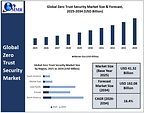
CHICAGO, Sept. 23, 2026 /PRNewswire/ — The Global Zero Trust Security Market was valued at USD 41.32 Billion in 2025 and is projected to expand at a strong 16.4% CAGR from 2026 to 2034, reaching approximately USD 162.08 Billion by 2034, according to a new analysis by Maximize Market Research.

Global Zero Trust Security Market

The Global Zero Trust Security Market Report 2025 provides a detailed analysis of market trends, growth, and forecasts through 2034. The market is gaining strong momentum as businesses move away from traditional perimeter-based security and adopt a “never trust, always verify” approach to protect users, devices, applications, networks, and data. Growing cloud adoption, remote and hybrid work, rising cyber threats, and the need for stronger identity and access controls are encouraging organizations to strengthen their Zero Trust security frameworks.

The shift toward multi-factor authentication, endpoint security, network security, API protection, security analytics, and automated security controls is further supporting market growth. At the same time, enterprises are investing in cloud-based security solutions that can provide continuous monitoring and access verification across increasingly distributed IT environments. As organizations face more complex digital risks, Zero Trust is becoming an important part of modern cybersecurity strategies across financial services, healthcare, IT, manufacturing, retail, and other industries.

Get Full PDF Sample Copy of Report: (Including Full TOC, List of Tables & Figures, Chart) @ https://www.maximizemarketresearch.com/request-sample/83776/ 

Global Zero Trust Security Market gains momentum as businesses strengthen digital defenses with identity-first and cloud-based security: Maximize Market Research unveils key insights.

Global Zero Trust Security Market Size & Forecast:

Parameter

Value

Market Size (Base Year 2025)

USD 41.32 Billion

Forecast Market Size (2034)

USD 162.08 Billion

CAGR (2026-2034)

16.4 %

Base Year

2025

Forecast Period

2026-2034

Historical Period

2020-2025

Zero Trust Security Market Trends & Insights:

North America remains a major regional market, supported by strong cybersecurity spending, advanced IT infrastructure, cloud adoption, and growing demand for Zero Trust security, identity and access management, network security, and endpoint protection.Asia-Pacific is emerging as a key growth region, driven by rapid digital transformation, expanding cloud infrastructure, remote and hybrid work, rising cyber threats, and increasing investments in Zero Trust Architecture, multi-factor authentication, cloud security, and access control.Cloud-based Zero Trust security is gaining strong adoption as organizations move applications, workloads, and sensitive data to cloud environments. Businesses are increasingly using continuous authentication, device verification, identity-based access, network segmentation, and cloud security controls.Security automation and real-time monitoring are becoming important market trends, with enterprises adopting security analytics, threat intelligence, AI-driven security, endpoint security, API security, SOAR, and automated incident response to improve threat detection and protect digital assets.

Cloud Adoption, Rising Cyber Threats, and Identity Security Drive Global Zero Trust Security Market Growth Opportunities

The Global Zero Trust Security Market is gaining strong momentum as organizations move toward cloud-based infrastructure, remote and hybrid work environments, and distributed IT networks. Rising cyberattacks, data breaches, unauthorized access, and identity-based threats are increasing demand for Zero Trust Architecture, identity and access management, multi-factor authentication, network security, endpoint security, and data security. Growing enterprise focus on continuous user verification and least-privilege access is creating new Zero Trust Security Market Growth Opportunities across industries.

Implementation Complexity, Legacy Systems, and Integration Challenges Restrain Global Zero Trust Security Market Growth

The Zero Trust Security Market faces challenges related to the complexity of implementing Zero Trust frameworks across existing IT infrastructure. Organizations using legacy applications, traditional network security systems, and multiple security platforms may require significant integration, configuration, and security policy management. The need for continuous authentication, device verification, network segmentation, endpoint monitoring, and access control can also increase operational requirements, creating challenges for organizations with limited cybersecurity resources and technical expertise.

Cloud Security, AI Analytics, and Automated Threat Detection Unlock Global Zero Trust Security Market Opportunities

Zero Trust security is moving toward a more technology-driven approach as organizations adopt cloud security, AI-driven security analytics, behavioral monitoring, threat intelligence, automated incident response, API security, endpoint protection, and Security Orchestration, Automation and Response (SOAR). Growing use of cloud applications, connected devices, APIs, and distributed workloads is creating demand for continuous monitoring and identity-based security. At the same time, increasing focus on data protection and secure remote access is creating Zero Trust Security Market Growth Opportunities for cybersecurity providers offering integrated and scalable solutions.

Get Insightful Data on Regions, Market Segments, Customer Landscape, and Top Companies (Charts, Tables, Figures and More) https://www.maximizemarketresearch.com/request-sample/83776/ 

Cloud Security, Identity Protection, and Automation Transform Global Zero Trust Security Market

The Global Zero Trust Security Market is evolving as organizations strengthen cloud security, identity protection, endpoint security, network security, data security, and access management across distributed digital environments. Growing adoption of Zero Trust Architecture, multi-factor authentication, continuous verification, least-privilege access, security analytics, AI-driven threat detection, API security, and automated incident response is helping businesses improve visibility and protect critical applications, devices, users, workloads, and data. The increasing use of cloud platforms, remote access, connected devices, and digital applications is further creating demand for scalable Zero Trust security solutions that provide continuous monitoring, adaptive access control, threat detection, and faster response to emerging cyber risks.

Cloud Security and Identity Protection Shape Global Zero Trust Security Market Segmentation Insights

Global Zero Trust Security Market by Authentication Type, Deployment Model, Solution Type, and Industry Vertical is shaped by the growing need to protect users, devices, applications, networks, workloads, and data from unauthorized access and cyber threats. Increasing cloud adoption, remote and hybrid work, identity-based attacks, and complex digital environments are strengthening demand for multi-factor authentication, cloud-based security, network security, endpoint security, data security, API security, security analytics, and security policy management. Organizations are also adopting Zero Trust solutions to support continuous authentication, least-privilege access, device verification, threat monitoring, and real-time security controls across distributed IT infrastructure.

By Authentication Type

Single-Factor AuthenticationMulti-Factor Authentication

By Deployment Model

On-PremisesCloud-Based

By Solution Type

Network SecurityData SecurityEndpoint SecuritySecurity Orchestration Automation & ResponseAPI SecuritySecurity AnalyticsSecurity Policy ManagementOthers

By Industry Vertical

IT & ITESFinancial & InsuranceRetail & TradeUtilitiesManufacturingHealthcare & Social AssistanceOthers

Immediate Delivery Available | Buy this Research Report (Insights, Charts, Tables, Figures and More) https://www.maximizemarketresearch.com/checkout/83776/ 

North America Leads While Asia-Pacific Accelerates: Key Regional Insights Shaping the Global Zero Trust Security Market

North America remains a major region in the Global Zero Trust Security Market, supported by strong cybersecurity spending, advanced digital infrastructure, high cloud adoption, and the presence of major cybersecurity and technology companies. Organizations across the U.S. and Canada are increasingly adopting Zero Trust Architecture, identity and access management, multi-factor authentication, endpoint security, network security, cloud security, and security analytics to protect critical data and digital infrastructure. Growing cyber threats, remote and hybrid work, and the need for continuous user and device verification are further strengthening demand for Zero Trust security solutions across government, financial services, healthcare, IT, and other industries.

Asia-Pacific is emerging as an important growth region in the Global Zero Trust Security Market, supported by rapid digital transformation, expanding cloud infrastructure, increasing internet and connected-device usage, and rising cybersecurity investments. China, India, Japan, South Korea, Singapore, and Australia are contributing to regional adoption as enterprises strengthen identity security, access control, endpoint protection, network segmentation, API security, data security, and threat detection. Growing use of cloud applications, remote access, digital services, and AI-driven security is creating significant Zero Trust Security Market Growth Opportunities across the region.

Cisco, Palo Alto Networks & Microsoft Drive Global Zero Trust Security Market with Identity, Cloud and AI Security Innovations

Cisco Systems Inc. is strengthening its Zero Trust security capabilities through identity-based access controls, network security, endpoint protection, secure access, and continuous monitoring. Its security portfolio supports organizations in protecting users, devices, applications, and network environments across distributed and cloud-based infrastructure.

Palo Alto Networks is expanding its Zero Trust security capabilities through network security, cloud security, identity protection, endpoint security, and threat prevention solutions. Its approach focuses on continuous verification, least-privilege access, real-time threat detection, and secure access across enterprise digital environments.

Microsoft is strengthening Zero Trust adoption through identity and access management, multi-factor authentication, endpoint security, cloud security, security analytics, and automated threat detection. Its integrated security ecosystem helps organizations apply Zero Trust principles across users, devices, applications, data, and cloud workloads.

Global Zero Trust Security Market Competitive Landscape: Identity Protection, Cloud Security and Continuous Verification Shape Industry Leaders

The Competitive Landscape of the Global Zero Trust Security Market is intensifying as leading companies such as Cisco Systems Inc., Palo Alto Networks, Microsoft, Google, Okta, Zscaler, Cloudflare, Fortinet, Check Point Software Technologies, Akamai Technologies, CrowdStrike, Trend Micro, Proofpoint, Rapid7, F5 Networks, SonicWall, Varonis Systems, and Sophos strengthen their Zero Trust security portfolios. Competition is increasingly shaped by identity and access management, multi-factor authentication, network security, endpoint security, cloud security, API security, data security, security analytics, and security policy management. The growing use of AI-driven threat detection, continuous authentication, device verification, least-privilege access, security automation, real-time monitoring, and automated incident response is further helping vendors improve Zero Trust Architecture and protect distributed users, devices, applications, workloads, and sensitive data.

Zero Trust Security Market Key Players:

North America:

Cisco Systems Inc.Akamai TechnologiesPalo Alto NetworksOkta Inc.Check Point Software TechnologiesTrend Micro Inc.Symantec CorporationFireEye Inc.McAfee CorporationForcepointRSA SecurityCentrifyCyxtera TechnologiesSophos Group PLCQNext CorporationGoogle LLCMicrosoft CorporationVMWare Inc.FortinetCloudflare Inc.SonicWallVaronis SystemsPulse SecureCrowdStrike Inc.Proofpoint Inc.Rapid7F5 Networks Inc.Zscaler Inc.

Europe:

Palo Alto NetworksTrend Micro Inc.Symantec CorporationForcepointRSA SecuritySophos Group PLCCentrifyVaronis SystemsKaspersky LabESETCheckmarxDarktraceMimecastBitdefender

Asia Pacific:

Trend Micro Inc.Sophos Group PLCQNext CorporationGoogle LLCMicrosoft CorporationVMWare Inc.FortinetCloudflare Inc.SonicWallVaronis SystemsKaspersky LabESETNTT SecurityTrend Micro Inc.AhnLabKingsoft Corporation

Middle East:

Symantec CorporationForcepointRSA SecurityCentrifySophos Group PLCVaronis SystemsKaspersky LabDarktraceMimecastBitdefenderF5 Networks Inc.Zscaler Inc.Fortinet

Access Full Summary: https://www.maximizemarketresearch.com/market-report/global-zero-trust-security-market/83776/ 

FAQs:

1. What is the Zero Trust Security market?
Ans: The Zero Trust Security market refers to the industry focused on cybersecurity solutions that assume no inherent trust, requiring strict verification for every user and device accessing networks and data.

2. What factors are driving the growth of the Zero Trust Security market?
Ans: The market is propelled by rising concerns for data security, increased remote workforce, and the need to address evolving cyber threats and multi-vector attacks.

3. How does Zero Trust Security mitigate the risks associated with remote work?
Ans: Zero Trust Security ensures that every user and device, regardless of location, undergoes strict authentication and authorization, reducing the risk of unauthorized access and data breaches in remote work scenarios.

4. What challenges does the Zero Trust Security market face?
Ans: The integration of new solutions, particularly during the market’s early stages, faces challenges due to budgetary constraints, especially among small and medium-sized enterprises.

5. How does Zero Trust Security cater to different industry verticals?
Ans: Zero Trust Security offers tailored solutions for various industry verticals, including IT, finance, retail, utilities, manufacturing, healthcare, and others, addressing specific security needs and challenges in each sector.

Analyst Perspective:

Analysts say the Global Zero Trust Security Market is growing as organizations face rising cyber threats, cloud adoption, remote and hybrid work, and increasingly distributed IT environments. The growing need to protect users, devices, applications, networks, and sensitive data is pushing businesses to adopt Zero Trust Architecture, multi-factor authentication, identity and access management, endpoint security, network security, and cloud security. At the same time, security analytics, AI-driven threat detection, continuous monitoring, device verification, and automated security controls are helping organizations identify risks and respond faster. The shift from traditional perimeter-based security toward continuous authentication, least-privilege access, and identity-based security is further creating opportunities for Zero Trust security providers across IT, financial services, healthcare, manufacturing, retail, and other industries.

Related Reports:

Health IT Security Market

Healthcare Security Systems Market

Medical Device Security Market

Healthcare IT Market

Connected Healthcare Market

About Maximize Market Research – Zero Trust Security Market

Maximize Market Research is a leading global market research and business consulting firm delivering actionable insights across the Information Technology & Cybersecurity sector, including the Zero Trust Security Market. Our data-driven, growth-focused research helps businesses understand changing cybersecurity landscapes, strengthen digital security strategies, and identify opportunities across identity security, cloud security, network security, endpoint protection, and Zero Trust Architecture.

Expertise in Zero Trust Security & Cybersecurity Solutions

With strong expertise in cybersecurity, Zero Trust security, identity and access management, and cloud security, Maximize Market Research helps industry leaders understand market trends, competitive developments, and evolving security requirements. Our insights support better decisions around multi-factor authentication, continuous verification, least-privilege access, endpoint security, network security, data security, API security, security analytics, and security automation, helping organizations strengthen protection across users, devices, applications, workloads, and sensitive data worldwide.

Contact:
Lumawant Godage
MAXIMIZE MARKET RESEARCH PVT. LTD.
+91 96073 65656
Email: sales@maximizemarketresearch.com   
Content Source: https://www.maximizemarketresearch.com/market-report/global-zero-trust-security-market/83776/
Visit Our Web Site: https://www.maximizemarketresearch.com/   
LinkedIn.com: https://www.linkedin.com/company/maxmize-market-research-pvt-ltd/
Instagram: https://www.instagram.com/maximizemarketresearch/
Facebook: https://www.facebook.com/maximizemarketresearch/   
X (Twitter): https://x.com/MMRAnalytics


View original content to download multimedia:https://www.prnewswire.com/news-releases/global-zero-trust-security-heads-for-usd-162-08-billion-by-2034-as-new-maximize-market-research-analysis-tracks-16-4-growth-302887765.html

SOURCE Maximize Market Research Pvt. Ltd.

Continue Reading

Technology

JINGDONG Logistics Details Global Network Build-Out and the Expansion of JoyLogistics Operations

Published

on

By

BEIJING, Sept. 23, 2026 /PRNewswire/ — JINGDONG Logistics (HKEX: 2618), also known as JD Logistics, today released a comprehensive operational overview of its international supply chain infrastructure, detailing the strategic expansion of its multimodal capacity and overseas fulfillment networks. The initiative focuses on scaling a warehouse-centred third-party logistics (3PL) model designed to integrate international transportation with localized storage, fulfillment, and delivery through its specialized international brands, JoyLogistics and JoyExpress.

JoyLogistics: A Warehouse-Centred 3PL Infrastructure

JoyLogistics serves as the international supply chain solutions and 3PL brand of JINGDONG Logistics. The division provides businesses with integrated logistics services encompassing cross-border transportation, bonded and overseas warehousing, inventory management, order fulfillment, last-mile delivery, large-item installation, reverse logistics, and specialized supply chain technology solutions.

The operational model is structured to serve retailers, manufacturers, brands, and e-commerce enterprises that require multi-market inventory management and order fulfillment. By utilizing a warehouse-centred approach, JoyLogistics connects international transportation networks with local storage, fulfillment, delivery, and returns processes. The objective of this methodology is to position goods closer to demand, targeting shortened delivery timelines and improved inventory efficiency without presenting absolute guarantees of delivery speeds. In contrast to JoyExpress, which operates primarily within the express and last-mile delivery sectors, JoyLogistics is built to manage broader, end-to-end supply chain operations for business-to-business (B2B) and business-to-consumer (B2C) customers.

Structurally, JoyLogistics operates beyond the traditional confines of a liner operator, terminal operator, or standard freight forwarder. It functions as a 3PL that purchases and manages capacity across ocean, air, rail, and road networks, subsequently pairing that capacity with an expansive warehouse footprint positioned at the destination end of the container journey. This positions the network as a combined beneficial cargo owner (BCO) and logistics operator, framing the infrastructure build-out as a significant development in global container demand.

Parent Company Operations and Domestic Scale

Founded in 2017, JINGDONG Logistics builds upon JD.com’s internal logistics operations initially established in 2007. The corporate group operates six synergized logistics networks: warehousing, line-haul transportation, last-mile delivery, bulky items, cold chain, and cross-border logistics.

Within the domestic market, the company’s scale is substantial. According to its disclosures for the six months ended June 30, 2026, JINGDONG Logistics manages over 1,800 self-operated warehouses alongside more than 2,000 third-party operated cloud warehouses. Total managed floor space exceeds 36 million square meters, supported by 46 highly automated Asia No.1 industrial parks. In China, the company reports that approximately 90% of its first-party retail orders achieve same-day or next-day delivery targets. JoyLogistics serves as the international extension of this infrastructure, while JoyExpress functions as the dedicated express and last-mile delivery arm.

Multimodal Capacity and the Global Air Network Plan

JoyLogistics manages an international transportation portfolio spanning sea, air, land, and rail, deployed as end-to-end services featuring full-chain visibility. Overseas operations integrate ocean freight, air freight, trucking, and towing services to feed its proprietary warehouse network. These capabilities operate alongside China–Europe rail logistics, cross-border trucking products, and air capacity secured through strategic partnerships with six major international airlines.

In the aviation sector, JD Airlines operated a fleet of 13 freighters as of June 30, 2026. The company is actively executing its “11668” global air network plan, which targets the establishment of a global air hub at Wuhu, a main base at Nantong, six regional air hubs, and 68 freighter stations. The core arcs of this network focus on routes spanning Europe and North America. The strategic direction indicates an intent to control a larger portion of mainline lift rather than relying exclusively on purchased belly and charter capacity. While the company does not publish specific TEU volumes, the scale of the operations is visible through the rapid expansion of the destination-side warehouse network that these cargo flows supply.

The Warehouse-Centred Model in Container Operations

The JoyLogistics model relies heavily on international transportation feeding directly into local storage, fulfillment, delivery, and returns centers, allowing goods to be positioned prior to consumer orders being placed. This methodology impacts container trade through three specific operational behaviors.

The first is bulk replenishment replacing parcel-by-parcel shipping. By moving inventory into destination-market warehouses, continuous B2C air and express volumes are converted into consolidated, containerized B2B flows directed into regional hubs.

The second is a focus on bonded and free-zone positioning. Following the 2020 opening of its first self-operated warehouse in Dubai’s Jebel Ali Free Zone (JAFZA), JINGDONG Logistics has developed multiple Middle East facilities. In October 2025, JoyLogistics launched the XPeng Middle East Regional Auto Parts Warehouse in JAFZA, an operation handling over 1,000 SKUs. This facility functions as XPeng’s largest parts center in the region, managing the full chain from container reception, customs clearance, and quality inspection through to order processing, packing, and outbound dispatch.

The third behavior focuses on inland node density. In Poland, the company operates a customized 15,000-square-meter warehouse serving Biedronka, the nation’s largest grocery chain, targeting 24-hour delivery capabilities and a reported SKU-level inventory accuracy target of 99.5%. In the Netherlands, a goods-to-person automated warehouse processes apparel orders across four countries for Hunkemöller.

As of June 30, 2026, the international network supporting these operations spanned 26 countries and regions, utilizing more than 200 bonded, direct-mail, and overseas warehouses. Total overseas floor space exceeded 2 million square meters, a figure the company doubled through 2025 under its global network plan. In core markets—including the United States, the United Kingdom, Germany, France, Poland, the United Arab Emirates, Japan, South Korea, and Australia—warehouse-based delivery generally operates within a two-to-three-day target window.

Service Architecture: JoyExpress and Market Impact

JoyExpress operates as the self-owned express and last-mile delivery brand of JINGDONG Logistics. It provides domestic and cross-border parcel delivery services for businesses and consumers in selected international markets. Its service offerings include targeted same-day and next-day delivery, doorstep delivery, scheduled delivery, reverse pickups, and localized delivery solutions tailored to specific regional markets.

In Europe, JoyExpress facilitates last-mile delivery services for Joybuy, JD.com’s European online retail business. It targets expedited delivery in major cities across the UK, Germany, the Netherlands, and France, supported by local warehouses, dedicated delivery teams, and fleets consisting of trucks, vans, and electric bicycles. The European network extends to more than 60 warehouses and depots, with plans for continued expansion. JoyExpress also maintains operations in Saudi Arabia, providing targeted delivery services in key cities alongside offerings such as cash on delivery.

The division of labor between the two brands maintains clear operational lanes: JoyLogistics executes end-to-end supply chain and 3PL solutions, while JoyExpress specializes in the final stage of the customer journey.

The continued expansion of these networks actively shifts broader market demand patterns. Cross-border e-commerce replenishment is increasingly containerized, as sellers transition from direct-mail models to pre-positioned overseas inventory. Overseas warehousing operations function effectively as inland terminal estates, driving consistent, recurring containerized import volumes. Multimodal competition further impacts the sector, as China–Europe rail and cross-border trucking provide viable alternatives on Asia–Europe lanes, supported by a growing owned air fleet.

Financial Performance and Industry Standing

In its interim results for the six months ended June 30, 2026, JINGDONG Logistics reported total revenue of RMB 124.7 billion, representing a 26.5% year-over-year increase. Revenue derived from external customers reached RMB 85.4 billion, marking a 29.3% increase. Integrated supply chain revenue stood at RMB 59.4 billion, up 18.5%, with the company serving approximately 79,300 external integrated supply chain customers. Additionally, in the Brand Finance Logistics 25 2025 ranking, JINGDONG Logistics was placed 14th among the most valuable logistics brands with an estimated value of US$4.06 billion, alongside a brand strength index rating of 90.6.

Media contact

Company: JINGDONG Logistics
Email: JDL_US@JD.COM
Website: https://www.jingdonglogistics.com

View original content to download multimedia:https://www.prnewswire.co.uk/news-releases/jingdong-logistics-details-global-network-build-out-and-the-expansion-of-joylogistics-operations-302888332.html

Continue Reading

Technology

Moon Five Wins Scale Catalyst Award for Dedicated EV Charging Solution for Renters

Published

on

By

Electric Innovation Initiative recognizes Moon Five’s modular approach to deploying EV charging at multifamily properties without costly electrical upgrades.

BERKELEY, Calif., Sept. 23, 2026 /PRNewswire-PRWeb/ — Moon Five, a clean energy startup building the first renter-driven electric vehicle (EV) charging solution, today announced it has received the 2026 Scale Catalyst Award from the Electric Innovation Initiative for its approach to expanding renters’ access to electric vehicle charging, combining innovative design and financing with the potential to accelerate EV adoption at scale. Presented during Climate Week NYC, the award recognizes Moon Five’s scalable approach to overcoming one of the largest remaining barriers to widespread EV adoption: the lack of affordable and convenient EV charging options for renters.

Moon Five has won the 2026 Scale Catalyst Award from the Electric Innovation Initiative for its approach to expanding renters’ access to electric vehicle charging, combining innovative design and financing with the potential to accelerate EV adoption at scale.

While electric vehicles are becoming more mainstream, convenient home charging is not. Single family homeowners can often install a charger in their garage, but millions of multifamily residents remain dependent on public stations or property-wide infrastructure projects that can be costly and slow to deploy. Moon Five addresses these overlooked barriers through its renter-led charging solution, allowing tenants to initiate the process, demonstrate demand, and pre-qualify their building without the need for external help. Essentially, Moon Five has functionally modernized electrical infrastructure installation by streamlining the process for the tenant, building owner, and electrician, making EV ownership more practical for renters while opening a scalable path to electrify multifamily housing.

“Renters represent an enormous part of the country, but EV charging infrastructure has largely been designed around single family homes and public charging stations,” said Stephan Ng, CEO of Moon Five Technologies. “This award validates our belief that expanding EV access does not always require rebuilding infrastructure from the ground up. By making better use of the power already available in apartment buildings, we give renters a practical way to charge where they live and create a model that can be replicated across communities.”

Moon Five combines modular charging hardware with a proprietary energy management system that monitors power use within an apartment building and directs available capacity to the vehicle. Designed to be easily repaired, upgraded, and replaced , the system extends the useful life of each charger and reduces the cost and waste associated with replacing an entire unit. The charging platform’s apartment-level load balancing also optimizes energy by making better use of existing electrical capacity without the need for costly building upgrades. For $50 per month plus the cost of electricity used, tenants receive a dedicated home charger with no setup fees or ongoing maintenance fees, making EV charging more affordable and accessible without requiring property owners to undertake costly building upgrades.

“Moon Five is addressing a critical gap in the transition to electric transportation with a practical, scalable approach to bringing home charging to apartment residents,” said Alisa Ahmadian, Director of Electric Innovation Initiative. “By combining modular technology, intelligent energy management, and a model that removes cost and complexity for renters and property owners, Moon Five demonstrates how innovation can extend the benefits of electrification to communities that have too often been left behind.”

The recognition comes as Moon Five deploys more than 400 charging units at multifamily properties in the San Francisco Bay Area and Los Angeles through a $3.4 million California Energy Commission REACH 3.0 grant. More than 90% of the deployment will serve low-income and disadvantaged communities that have historically been left out of the clean energy transition. Through the grant-funded program, participating properties will receive Moon Five charging systems with no upfront capital investment or subscription fees, while residents pay no installation costs or markup on the electricity used. A limited number of openings remain for eligible multifamily properties interested in participating in the deployment.

Looking ahead, Moon Five will complete its grant-supported California deployments by March 2027 while preparing its second-generation charging and energy management platform for commercial-scale production. After eight months of field testing, Moon Five’s Gen 2 charging system is advancing through the Underwriters Laboratories certification process. The fully industrialized system integrates apartment-level charging and energy management with building-wide energy managing capabilities, and is designed for modularity, manufacturability, and scalability. With more than 600 potential charging systems in its pipeline and a waitlist of over 900 renters, Moon Five intends to use the California rollout to establish a repeatable model for expansion into additional markets. Through future-looking features like bidirectional charging, Moon Five plans to help renters lower electricity costs, power their apartments during outages, and earn revenue from grid services. Its longer-term vision connects vehicles with homes, other vehicles, and local energy networks, unlocking even more value from cars that spend roughly 95% of their lifetime parked.

To learn more, visit www.moonfive.tech

About Moon Five

Moon Five is a California-based clean energy company making reliable and affordable home EV charging accessible to renters. Its renter-driven solution combines modular charging hardware with intelligent energy management technology that uses a property’s available electrical capacity – without requiring costly and time-consuming infrastructure upgrades. Designed to be repaired, upgraded, and replaced at the component level, Moon Five’s system reduces waste while creating a more scalable path to electrifying multifamily housing. With a mission rooted in accessibility, resilience and long-term sustainability, Moon Five is helping more renters participate in the transition to electric transportation. Learn more at www.moonfive.tech.

Media Contact

Shayna Zeigen, Moon Five, 1 6196084300, shayna@pointblankpr.com, https://www.moonfive.tech/

View original content to download multimedia:https://www.prweb.com/releases/moon-five-wins-scale-catalyst-award-for-dedicated-ev-charging-solution-for-renters-302888265.html

SOURCE Moon Five

Continue Reading

Trending