Harris Poll survey of 755 U.S. HR leaders finds 64% are very confident they know the skills employees need, but only 43% are very confident employees possess them.
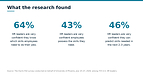
PHOENIX, Sept. 25, 2026 /PRNewswire/ — University of Phoenix today announced findings from its Future of Skills Development report, new research conducted online by The Harris Poll examining how HR leaders are navigating skills development, workforce readiness and rapidly changing workforce demands. The findings reveal a significant skills visibility gap. Nearly two-thirds of HR leaders (64%) are very confident they know which specific skills employees need to do their jobs, yet only 43% are very confident employees actually possess those skills.
As AI, automation and emerging technologies reshape roles and workflows, the findings suggest that organizations face a dual challenge: understanding how skill requirements are changing and gaining clearer visibility into the capabilities employees already have.
“AI is accelerating how quickly work and skill requirements evolve, but this is not a choice between technical expertise and human capabilities,” said Nathan Jones, vice president of Product Management, Workforce Solutions Group at University of Phoenix. “Organizations need a clearer view of the skills they have, the skills they need and where gaps are emerging. Employees need that visibility as well — clearer signals about what to develop next and credible ways to demonstrate what they can do. The opportunity is to make skills more visible, measurable and connected to the work that actually needs to get done.”
AI is increasing uncertainty about future workforce skills
Keeping pace with technological advances, including AI and other emerging technologies, is the single greatest source of uncertainty when HR leaders plan for future workforce skills needs, cited by 27% of respondents. Only 46% are very confident they can predict the skills employees will need two to three years from now.
At the same time, organizations are prioritizing a mix of capabilities. Nearly 3 in 5 HR leaders (59%) say soft or durable skills such as communication, collaboration and problem-solving are their organization’s primary talent development focus, compared with 37% who identify technical skills as the primary focus.
“AI can change the tools people use and the tasks within a role, but technology does not eliminate the need for judgment, communication, problem-solving and adaptability,” Jones said. “The workforce conversation needs to move beyond technical skills versus durable skills. Increasingly, people need both.”
Employers face challenges seeing and verifying skills
The survey indicates that skills visibility challenges extend from employee development into hiring. HR leaders most commonly assess the skills employees currently have or need through managers’ direct knowledge of employees’ skills (51%) and performance reviews (51%). Less than half (49%) say managers at their organizations are very prepared to identify, assess and discuss skill gaps and development needs with employees.
Verification can be difficult for job candidates as well. Soft or durable skills are the type of candidate capability HR leaders most often identify as difficult to verify or assess (20%), followed closely by emerging or specialized skills such as AI and cloud computing (18%). The largest share of respondents, 38%, say they feel confident an applicant’s skills and ability to perform the role have been properly verified only after a skills evaluation, assessment or technical test.
Digital credentials are also becoming part of that evidence ecosystem. More than 7 in 10 HR leaders (71%) say their departments use microcredentials, digital badges, digital wallets or other digital methods of verifying skills when evaluating at least some applicants.
What the skills visibility gap means for workers and employers
For employees, the findings underscore the value of making skill development an ongoing conversation with managers rather than waiting until a performance review or job search. Workers can ask:
What skills are becoming more important in my role?Where am I demonstrating those capabilities today, and where should I continue developing?What project, assessment or experience could help me demonstrate that skill?
For organizations, the research points to opportunities to improve visibility through more consistent skills-gap analysis, clearer communication about future skill requirements, more personalized development and credible methods for assessing skill growth. Only 44% of HR leaders say their organizations regularly conduct formal skills-gap analyses, while 51% say their organizations very clearly communicate to employees which skills they need to develop for future roles.
Workforce skills challenges vary by industry
The research also found different patterns among the industries studied:
Manufacturing: 32% identify keeping pace with technological change as their greatest source of uncertainty when planning future workforce skills needs, and 56% place greater emphasis on technical skills development than soft or durable skills.Financial services: 64% identify durable skills as their primary talent development focus, while 35% are very confident employees possess the skills needed to do their jobs.Healthcare: 82% are very confident they know which skills employees need, 70% are very confident employees possess those skills and 71% say future skills expectations are communicated very clearly to employees.
Because these findings represent industry subsets of the overall survey, they provide directional insight into how workforce skills challenges can differ across sectors.
Explore the Future of Skills Development research
Jones leads business-to-business product strategy for University of Phoenix Workforce Solutions focused on skills intelligence, employer-aligned learning and workforce transformation. His work includes AI-enabled approaches designed to help organizations understand evolving skills needs and align learning with employer demand. Jones will be leading a virtual media tour with interviews conducted across the country about the survey findings on Friday, September 25.
The complete Future of Skills Development report, key findings and research methodology are available from University of Phoenix Workforce Solutions. Explore the Future of Skills Development report here.
About the survey
The survey was conducted online within the United States by The Harris Poll on behalf of University of Phoenix from July 14–27, 2026, among 755 employed adults ages 25 and older who hold a job title of manager/supervisor or higher, work in a human resources or learning and development function and engage in at least one talent acquisition, talent development and/or workforce planning activity as part of their role (“HR leaders”).
Data are weighted where necessary by employee size to bring them in line with their actual proportions in the population.
Respondents for this survey were selected from among those who have agreed to participate in The Harris Poll surveys. The sampling precision of Harris online polls is measured by using a Bayesian credible interval. For this study, the sample data is accurate to within +/- 4.6 percentage points using a 95% confidence level. This credible interval will be wider among subsets of the surveyed population of interest.
About University of Phoenix
University of Phoenix is Built for Real Life. 50 Years Strong. The University innovates to help working adults enhance their careers and develop skills in a rapidly changing world through flexible online learning, relevant courses, academic AI pillars, and skills-mapped curriculum for associate, bachelor’s and master’s degree programs. Active students and alumni have access to Career Services for Life® resources including career guidance and tools. For more information, visit phoenix.edu.
About University of Phoenix Workforce Solutions
University of Phoenix Workforce Solutions helps companies align employee development to business strategy through skills-based solutions designed to address evolving workforce needs. Its Adaptable Skills Solutions brings together professional development, education savings and AI skills intelligence provided through Skillmore, a University of Phoenix affiliate, to support workforce planning, retention and talent mobility. By combining data, tools and education resources, Workforce Solutions offers practical ways to identify skills gaps, inform workforce decisions and prepare employees for long-term adaptability in a rapidly changing workplace. Learn more at https://www.phoenix.edu/workforce-solutions.html.
View original content to download multimedia:https://www.prnewswire.com/news-releases/university-of-phoenix-future-of-skills-development-report-identifies-workforce-skills-visibility-gap-as-ai-reshapes-work-302890442.html
SOURCE University of Phoenix









 Technology3 days ago
 Technology5 days ago
 Technology3 days ago
 Technology5 days ago
 Technology3 days ago
 Technology5 days ago
 Technology4 days ago
 Technology2 days ago