Connect with us

Technology

AI Memory & Storage: The 5th GMIF2026 Innovation Summit Successfully Concludes in Shenzhen

Published

on

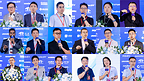
SHENZHEN, China, Sept. 26, 2026 /PRNewswire/ — On September 23, the 5th GMIF2026 Innovation Summit successfully concluded at the Renaissance Shenzhen Bay Hotel. Co-hosted by the Shenzhen Memory Industry Association (SMIA) and School of Integrated Circuits at Peking University, the summit, themed “The Future Built on AI Memory and Storage,” has brought together industry forces from IDMs, controllers, and memory solution providers to OSATs, equipment and material suppliers, server and AI infrastructure vendors, automotive electronics companies, AI applications developers, academic institutions, and investors. In-depth discussions explored the evolution of memory and storage technologies, industry trends, and application innovations in the AI era.

As AI training and inference workloads continue to scale, the boundaries of memory and storage technology and its applications keep expanding — from storage media and controllers to system architecture and AI applications themselves. GMIF 2026 approached the industry through the lens of the token economy, spotlighting inference efficiency, enterprise-grade storage, cloud-edge-device coordination, industrial capital, and the shifting global competitive landscape.

Five Years of GMIF: A Platform Built Around the Memory & Storage Industry

The summit officially kicked off with an opening remarks from Rixin Sun, President of the Shenzhen Memory Industry Association (SMIA). He looked back on GMIF’s growth since its founding in 2019. Now in its fifth consecutive year, the summit has steadily expanded in scale, industry reach, and influence, with its agenda consistently tracking the pulse of the storage sector.

President Sun said GMIF will continue to pursue a more specialized and differentiated approach going forward — staying close to frontier industry trends and supply-chain coordination, while connecting storage companies with adjacent players in AI compute and end-user applications to drive technical exchange, supply-demand matching, and ecosystem collaboration.

As AI Inference Accelerates, Memory & Storage’s Value Climbs

Daniel Yen, Executive Director at Morgan Stanley, opened the technical discussion with a look at how generative and agentic AI are reshaping infrastructure demands. As model weight loading, KV cache management, and data read/write scheduling grow more complex, Daniel noted that AI capital expenditure keeps rising — and memory and storage’s share of that investment, and its strategic value, are rising with it. He pointed to the “memory wall” as a defining challenge now driving fresh innovation in storage architecture, advanced packaging, and related technologies.

Yimao Cai, Dean of School of Integrated Circuits at Peking University, addressed the topic from the angle of AI inference architecture, discussing the growing role of high-bandwidth storage and multi-media integration. As large model inference drives up demand for capacity, bandwidth, and cost efficiency, Prof. Cai suggested that high-bandwidth flash (HBF) and heterogeneous multi-media storage architectures stand to play a larger role — combining HBM, NAND, and RRAM to strike a better balance between performance, capacity, and cost for AI inference.

Global IDMs Race to Meet the Demands of Agentic AI

Kevin Yoon, CVP & CTO of Samsung Memory China at Samsung Electronics, discussed memory architecture in the age of agentic AI. As agentic AI drives token generation and KV cache volumes to new heights, AI systems are placing greater demands on capacity, bandwidth, and energy efficiency. He outlined Samsung’s progress on Z-NAND, PCIe Gen6 SSDs, and ultra-high-capacity data center SSDs, and discussed how tiering across different storage media can more efficiently support KV cache and model weight storage.

Maya Zhang, Senior Director of Product Marketing at Sandisk, focused on data storage needs in the age of AI inference. As multimodal models, long-context processing, and increasingly sophisticated agents continue to grow KV cache demands, she noted, NAND flash is becoming ever more central to AI infrastructure. She added that more flexible data tiering and reuse across SSDs can improve efficiency for different AI workloads, and that high-density technologies like QLC are set to see broader adoption in AI use cases.

Benny Ni, GAR Sales VP at Solidigm, addressed enterprise SSDs’ role in AI infrastructure amid growing data volumes and operational demands. As model size, token counts, and inference complexity all continue to climb, he said, memory offloading and data tiering are becoming core components of AI system architecture — with high-capacity QLC SSDs paired with high-performance storage offering a more efficient, cost-effective data foundation for inference.

Cloud, Edge, and Device: AI Opens New Ground for Memory & Storage

John Xavier Lionel, Head of Global Storage Business at Arm, spoke on system-level coordination in AI inference, noting that inference spans compute, memory, storage, and data movement — all of which require holistic architectural optimization. As small models, quantization, and heterogeneous NPUs continue to advance, he said, AI deployment will increasingly span cloud, edge, and device, with local storage taking on a larger role in hosting model weights, knowledge bases, and application data.

Stanley Huang, AVP at Silicon Motion, focused on storage requirements in multi-agent, concurrent-use scenarios, where differing tasks demand tailored QoS, latency, and resource allocation. He described how Silicon Motion’s controller and resource-scheduling technologies improve storage efficiency under complex workloads, spanning enterprise SSDs, server storage, mobile UFS, autonomous driving, and robotics applications.

Sam Sun, Chairman at BIWIN, discussed how AI is simultaneously driving storage demand across data centers, edge, and endpoint devices — each with distinct requirements. In data centers, he noted, AI training and inference are pushing up demand for enterprise SSDs and server memory; at the edge and endpoint, applications like AI/AR glasses, AI PCs, smart vehicles, and industrial equipment are pushing storage toward smaller form factors, lower power consumption, higher reliability, and tighter system integration. Sam Sun said BIWIN continues to leverage its integrated solutions and manufacturing capability across enterprise, embedded, PC and mobile, industrial, and automotive product lines — with innovations like Mini SSDs, ultra-compact embedded storage, and wide-temperature industrial SSDs opening new ground in the AI era.

From Compute Infrastructure to Token Production, Deeper System-Level Integration

Tao Zhou, General Manager of the Server Division at Lenovo ISG China, discussed the concept of the “token factory.” As enterprise AI moves from proof-of-concept to large-scale deployment, he said, improving the efficiency of AI infrastructure and sustaining stable token output have become critical industry priorities. He also described how top-level design, data governance, compute optimization, and security management — combined with pooled training/inference resources and hardware-software coordination — are helping enterprise AI infrastructure evolve from simple compute buildout into systematic operations.

Fan Zhang, Chief Computing Architect at NEXWISE, discussed integrated management and scheduling across cloud, compute, and storage resources from an operations standpoint, showing how coordination across compute, storage, and software platforms can improve overall infrastructure efficiency.

Wei Xiong, CTO of Infplane, focused on storage tiering in large model inference, explaining how hot/cold data tiering and intelligent scheduling can shift more inference workload onto SSDs — reducing memory footprint and improving token output efficiency.

Across servers, AI computing centers, and storage systems, deeper coordination among compute, memory, storage, networking, and software scheduling is emerging as a defining trend in AI infrastructure.

From Core Technology to Real-World Application, AI Memory & Storage Ecosystem is Converging Fast

As AI continues to move into automotive, robotics, and enterprise applications, the connection between the storage industry and AI use cases keeps deepening.

Junjia Chen, AI Product Director at SYNCORE, discussed the application of agent architecture in automotive scenarios, focused on smart cockpits and vehicle-wide intelligence.

Lusha Chen, General Manager for APAC at Dify, introduced a “workflow plus agent” model for enterprise AI, connecting large models, corporate knowledge bases, business systems, and end-user applications to embed AI more deeply into enterprise workflows.

Gongjie Liu, Regional Director for Central & Southern China & General Manager of Branch Office at Paratera, discussed multi-model access, unified management, and enterprise AI services built around a MaaS platform.

Zhen Li, VP of Genstoraige, spoke to the concept of “storage-powered compute,” covering data hosting, high-speed interconnects, and intelligent scheduling within AI systems.

Yunjie Ye, Chairman of Numbers Law, presented the company’s work on next-generation mechanical storage architectures for large-capacity data storage.

Ming Zhao, General Manager of OKN Technology, addressed testing requirements for the AI era, describing how test equipment is evolving to support higher speeds, more complex scenarios, and real-world workload simulation for PCIe 6.0 SSDs, memory, and increasingly demanding AI applications — laying the groundwork for the development and large-scale deployment of next-generation storage products.

The Future Built on AI Memory & Storage

From AI inference to agentic AI, from emerging storage media to enterprise SSDs, from data centers to edge and endpoint devices, and from controllers, packaging, and testing equipment to servers, AI computing platforms, and applications, GMIF 2026 highlighted the technological innovation and industry transformation taking place across the memory and storage ecosystem in response to AI.

The massive volumes of data that AI generates, retrieves, and moves are steadily elevating memory and storage’s role within the broader computing stack. Demand for high-capacity, high-bandwidth, and high-reliability storage in data centers continues to climb, while emerging endpoints — AI PCs, smart vehicles, AI/AR glasses, robotics — keep opening new application space. Together, cloud, edge, and device are shaping a richer and more complex set of storage requirements for the AI era.

Meanwhile, the technology itself keeps moving — HBM, HBF, NAND flash, enterprise SSDs, and a handful of newer media all advancing in parallel, with controllers, packaging, testing, and software scheduling evolving alongside them into tighter, more coordinated systems.

Now in its fifth successful year, GMIF has established itself as a leading platform for exchange across the global memory and storage industry. Looking ahead, GMIF will continue to focus on technological innovation, industry trends, and supply-chain collaboration — bringing together key players from across the global industry, pursuing an increasingly specialized and differentiated event model, and fostering deeper exchange and cooperation across the storage value chain.

Media Contact:

Carina Gu
wenjing.gu@gmif.com.cn 

View original content to download multimedia:https://www.prnewswire.com/news-releases/ai-memory–storage-the-5th-gmif2026-innovation-summit-successfully-concludes-in-shenzhen-302890873.html

SOURCE Shenzhen Memory Industry Association (SMIA)

Continue Reading

Technology

MobileX Unveils Black Friday Bargain: 10GB for Just $10 a Month

Published

on

By

New Customers Get Unlimited Talk and Text, Plus 10GB of High-Speed Data, with Six Months of Service for $60 Upfront

IRVINE, Calif., Nov. 17, 2026 /PRNewswire/ — MobileX, the most customizable wireless service designed to save consumers money, today announced its Black Friday promotion offering new customers 10GB of high-speed data, plus unlimited talk and text, for just $10 a month when they purchase six months of service upfront for $60*.

“Black Friday is about getting more of what you want for less. That’s exactly what we’re delivering,” said Peter Adderton, Founder and CEO of MobileX. “10GB of high-speed data, unlimited talk and text, all for 10 bucks a month. No gimmicks. Just great wireless at a great price.”

The Black Friday offer includes:

10GB of high-speed data per month on the nationwide 5G Ultra Wideband networkUnlimited talk and text, plus Wi-Fi callingSix months of service for $60 upfront, equivalent to $10 per monthAdditional high-speed data available for $1.90 per GBOptional international calling from the U.S., including to Mexico and Canada, for $2 per month

The Black Friday promotion coincides with the launch of MobileX’s redesigned website and updated app, making it easier for customers to explore plans, sign up, and activate service. New customers can take advantage of the limited-time offer through November 30 at mobilex.com or in the MobileX app.

* Prices do not include applicable taxes and government surcharges. Additional terms and conditions apply. Visit mobilex.com for full offer details.

About MobileX
Headquartered in Orange County, California, MobileX is the world’s most customizable mobile carrier, delivering the ultimate in choice and cost control. MobileX is a unique service that uses artificial intelligence to predict how much data customers need, delivering a dramatic reduction in cost while ensuring reliable speed and service. MobileX was founded by Peter Adderton, who also founded both Boost Mobile and Digital Turbine. For more information, please visit mobilex.com.

Press contact:
Illume PR for MobileX
mobilex@illumepr.com

View original content to download multimedia:https://www.prnewswire.com/news-releases/mobilex-unveils-black-friday-bargain-10gb-for-just-10-a-month-302942814.html

SOURCE Mobile X Global, Inc.

Continue Reading

Technology

LAFC and AccelerAI Partner to Pioneer Co-Development AI Tools to Drive Enterprise Business Value in Professional Sports

Published

on

By

Partnership champions an agile pilot-to-product framework that transforms proprietary machine learning into cross-functional revenue and operational efficiency

SAN JOSE, Calif., Nov. 17, 2026 /PRNewswire/ — Los Angeles Football Club (LAFC) today announced a major paradigm shift in how professional sports franchises leverage artificial intelligence, highlighting an innovative co-development framework designed to solve complex business problems. Rejecting off-the-shelf tools, LAFC has partnered with AccelerAI to build a proprietary agentic AI system powered by machine learning (ML) and large language model (LLM) technology that unlock massive downstream value across the entire enterprise ecosystem.

LAFC and AccelerAI launch a co-developed agentic AI system, delivering double-digit growth in enterprise business value.

While many organizations deploy AI as isolated IT infrastructure, LAFC’s approach focuses entirely on measurable corporate impact. By identifying and solving operational friction points, the club’s proprietary AI tools generate cascading financial benefits across multiple business units.

“Our strategy is built on shifting AI from a speculative tech expense into a core operational multiplier,” said Vanessa Montes-Gubin, Chief Marketing Officer of LAFC. “Instead of deploying isolated technical solutions, we are focused on co-developing tools that drive cross-functional enterprise value while simultaneously elevating how our fans engage with the club. When predictive intelligence operates smoothly across marketing, operations, and commercial teams, it allows us to build a more responsive business and deliver highly synchronized, meaningful connection points for our entire global community.”

The strength of this co-development model was recently validated through an inaugural matchday attendance pilot. To execute the framework’s initial attendance preservation workflows, LAFC and AccelerAI connected advanced predictive engines featuring over 100 contextual data points and partnered with Ticketmaster to validate each seat. By accurately forecasting attendance gaps before kickoff, the system prompted attendance confirmation and organic peer-to-peer ticket transfers through native mobile channels. This single application successfully unlocked double-digit show-rate growth, particularly during volatile weekday windows, while maintaining total ticket price integrity.

“We’ve always approached technology at LAFC with the expectation that it deliver meaningful business outcomes, and AI is no different,” said Christian Lau, Chief Technology Officer of LAFC. “Our work with AccelerAI is focused on bringing together our data, operational expertise and predictive intelligence to address real business challenges. We’re moving beyond experimentation by validating these capabilities in a live operating environment and establishing a foundation to scale successful applications across the enterprise. The opportunity isn’t simply to deploy more AI; it’s to make our entire organization smarter, more efficient and better connected.”

“Sports teams have already invested in specialized systems that support every part of the business, but gaps in data visibility and coordination between teams limit their potential,” said Albert Shih, Chief Product Officer of AccelerAI. “We see the next opportunity in AI agents that work across those systems to surface insights, coordinate workflows and take action, helping teams move from information to execution. We’re bringing our enterprise AI experience to our first partnership in professional sports, and we’re grateful to build alongside LAFC. Their deep operational knowledge and commitment to co-development are essential to turning that vision into measurable results.”

With its first attendance preservation pilot locked, the collaboration is moving to automate the architecture into a standalone platform, available to other professional sports organizations. LAFC and AccelerAI are already mapping out the next phase of their co-development roadmap, targeting a diverse portfolio of future specialized AI agents designed to drive back-office efficiency, maximize asset utilization, create touchpoints for the LAFC to engage seamlessly with fans and to elevate enterprise revenue opportunities across all lines of club operations. 

ABOUT ACCELERAI

AccelerAI (d.b.a. MoBagel) helps enterprises accelerate AI to impact: a measurable AI workforce with safety, speed, and sovereignty, at predictable cost and with complete governance. Its system-agnostic platform connects existing data, from ticketing and CRM to marketing, and deploys specialized AI agents that turn it into action. More than 10,000 global brand clients, including Deloitte, BD, and LAFC, rely on AccelerAI, which has deployed over 200,000 AI agents worldwide. AccelerAI partners with technology leaders including Qualcomm, Fujitsu, and Ticketmaster. Recognized by Gartner as a representative AI-native startup in AI Apps and Solutions, AccelerAI continues to build agentic AI solutions for enterprises everywhere. Headquartered in San Jose, California, AccelerAI has offices in Los Angeles, Tokyo, Taipei, Taichung, Singapore, and Hong Kong. Learn more about at www.acceler.ai.

ABOUT LOS ANGELES FOOTBALL CLUB (LAFC)

The 2022 MLS Cup Champion Los Angeles Football Club has represented the greater Los Angeles area in Major League Soccer since 2018. The two-time Supporters’ Shield Champions (2019, 2022) and 2024 U.S. Open Cup Champions, LAFC is dedicated to building a world-class soccer club that represents the diversity of Los Angeles and is committed to delivering an unrivaled experience for fans. LAFC’s ownership group is comprised of local leaders and innovators of industry with intellectual capital, financial prowess, operation expertise, and success in the fields of entertainment, sports, technology, and media. LAFC is invested in the world’s game and Los Angeles, constructing and developing the 22,000-seat BMO Stadium and a top-flight training center on the campus of Cal State Los Angeles.

Contact:
Sarina Chen
Chief of Staff
AccelerAI
press@acceler.ai

View original content to download multimedia:https://www.prnewswire.com/news-releases/lafc-and-accelerai-partner-to-pioneer-co-development-ai-tools-to-drive-enterprise-business-value-in-professional-sports-302942903.html

SOURCE AccelerAI

Continue Reading

Technology

ELEGOO Showcases New Solutions Across Resin Printing, FDM Printing and 3D Scanning at Formnext 2026

Published

on

By

FRANKFURT, Germany, Nov. 17, 2026 /PRNewswire/ — ELEGOO, a rapidly developing brand in the global smart manufacturing industry, kicked off its participation at Formnext 2026 today, showcasing its latest product developments and offering visitors an exclusive first look at upcoming innovations. At booth 12.0-C02, ELEGOO brought together live product demonstrations, new innovation previews, and creator-led sessions, highlighting its continued exploration of resin printing, multi-material FDM printing, and connected creative workflows.

Kevin Wang, Co-founder and Vice President of ELEGOO, said, “We’re continuously exploring new possibilities across different technologies to bring more versatile tools and solutions to creators. At Formnext this year, we’re excited to share a preview of our upcoming developments in resin and FDM printing, alongside our latest 3D scanning solutions. The show also gives us a great opportunity to connect with creators and industry partners, exchange ideas, and be part of the conversations shaping the industry.”

A First Look at What’s Next in Resin and FDM Printing

Among the highlights, ELEGOO presented the Saturn 5 Ultra, its upcoming resin 3D printer. Designed as an all-round desktop resin printer, it combines high-precision performance and improved durability with enhanced productivity and ease of use. Its intelligent resin management system automates resin monitoring and replenishment, while design improvements simplify setup, maintenance, and operation. The Saturn 5 Ultra is currently planned for an early Q1 2027 launch.

ELEGOO also gave visitors an exclusive first look at the Centauri X Ultra, marking a significant milestone in the evolution of the Centauri series with its move into multi-printhead technology. Featuring four independent printheads, this upcoming FDM 3D printer explores new possibilities in multi-color and multi-material printing. Quick printhead switching helps minimize material waste during color changes, while compatibility with rigid and flexible materials enables a wider range of functional and creative applications. Its unexpected debut at Formnext drew visitors to the ELEGOO booth, sparking curiosity about the new addition to the Centauri series.

Experiencing the 3D Scanning Workflow with M1 Ultra

Another key highlight at the booth is the M1 Ultra, ELEGOO’s first all-in-one smart 3D scanner. Through live demonstrations, visitors can experience its scanning capabilities and explore a complete workflow, from capturing physical objects to processing digital models with ELEGOOSCAN software. With metrology-grade accuracy of up to 0.02 mm and multiple scanning modes for different object sizes, surfaces, and levels of detail, the M1 Ultra supports applications ranging from reverse engineering and product development to digital archiving and 3D printing.

Connecting with Creators and the Global 3D Printing Community

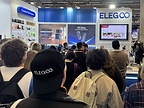
Beyond product demonstrations, ELEGOO is hosting daily creator workshops at around 4:00 p.m., featuring experienced 3D printing creators who share practical insights, creative applications, and firsthand experiences with ELEGOO products. The sessions have attracted groups of visitors gathering around the booth to watch live demonstrations and interact with the creators, adding an engaging, community-driven dimension to the exhibition. ELEGOO is also holding daily prize draws, offering visitors the chance to win 3D printers and ELEGOO-branded gifts and accessories.

ELEGOO will continue showcasing its products and innovations at Formnext 2026 through November 20 at booth 12.0-C02, Messe Frankfurt, Germany. Visitors are welcome to stop by to experience live demonstrations and explore ELEGOO’s latest developments firsthand.

About ELEGOO

Founded in 2015, ELEGOO is a rapidly developing brand in the global smart manufacturing industry, specializing in R&D, manufacturing, and sales of consumer-grade 3D printers, laser engravers, STEM kits, and other smart technology products. Located in Shenzhen, the Silicon Valley of China, the company has sold millions of products across more than 150 countries and regions. In 2025, the company’s total sales revenue surpassed 300 million USD, with more than 1000 employees and over 430,000 square meters of office and manufacturing area. With a focus on programming and 3D printing technology, ELEGOO provides unique and smart creation spaces for diverse consumers to enhance personalized experiences.

View original content to download multimedia:https://www.prnewswire.com/news-releases/elegoo-showcases-new-solutions-across-resin-printing-fdm-printing-and-3d-scanning-at-formnext-2026-302942916.html

SOURCE Elegoo

Continue Reading

Trending