Connect with us

Technology

BIDU Stockholders Have Rights – If You Lost Money Investing in Baidu, Inc. Contact Robbins LLP for Information About Recovering Your Losses


Published

on

SAN DIEGO, Oct. 1, 2026 /PRNewswire/ — Shareholder rights law firm Robbins LLP reminds investors that a class action was filed on behalf of persons and entities who purchased or otherwise acquired Baidu, Inc. (NASDAQ: BIDU) securities, including call options, between November 18, 2025 and August 17, 2026, inclusive (the “Class Period”). Baidu is a Chinese technology company that operates the most popular internet search engine in China.

The complaint alleges that Baidu, Inc. overstated the ability of its AI business to mitigate rapid declines in its legacy online marketing business.

Investors who suffered significant losses during the Class Period may be eligible to participate in the lawsuit and should contact Robbins LLP before the November 13, 2026, lead plaintiff deadline.

Listen to our podcast.

Why Was Baidu Sued?

According to the complaint, online Marketing Services is Baidu’s core legacy business, which represented approximately 53.1% of total revenues for the third quarter of 2025. However, Online Marketing Services revenue for the third quarter of 2025 fell 17.6% compared to the third quarter of 2024. Despite this, Baidu assured investors that its new Core AI-powered Business growth had, and would continue to, meaningfully mitigate Baidu’s Online Marketing Services decline.

The complaint alleges that, during the Class Period, defendants failed to disclose to investors:

(1) that the Company had overstated the ability of its AI business to mitigate rapid declines in its legacy online marketing business;

(2) that, as a result, the Company’s revenue was reasonably likely to decline; and

(3) that, as a result, defendants’ positive statements about the Company’s business, operations, and prospects were materially misleading and/or lacked a reasonable basis.

Why Did BIDU Stock Drop?

The complaint alleges that on February 26, 2026, Baidu reported fourth quarter and full year 2025 financial results, revealing that total revenue fell more than 4% year over year for the fourth quarter to RMB32.74 billion (or $4.68 billion) and fell more than 3% year over year for the full year to RMB129.079 billion (or $18.458 billion). However, Baidu management assured investors its “AI-Powered Business” grew 48% year over year to RMB40 billion for fiscal year 2025, mitigating this transition. On this news, the price of Baidu American Depositary Shares (“ADS”) fell $7.50 per share or 5.65%, to close at $125.15 per share on February 26, 2026.

Then, on August 18, 2026, Baidu reported second quarter 2026 financial results, revealing that Baidu General Business revenue fell 4% year over year to RMB25.2 billion (or $3.71 billion), with Legacy Business revenue falling 23% year over year to RMB10.4 billion and total Online Marketing Services revenue falling 19% year over year to RMB13.1 billion. Critically, the Baidu Core AI-powered business fell 8% quarter over quarter to RMB12.5 billion (or $1.86 billion), its year-over-year growth having decelerated from 49% in the first quarter of 2026 to 25%, and its largest component, AI Cloud Infra, having fallen 17% quarter over quarter from RMB8.8 billion to RMB7.3 billion. On this news, the price of Baidu ADS fell $13.25 per share, or 12.73%, to close at $90.87 on August 18, 2026.

Who May Be Eligible to Participate in the Baidu Class Action?

The lawsuit seeks to represent investors who purchased or otherwise acquired Baidu, Inc. securities between November 18, 2025 and August 17, 2026. Investors who suffered losses during that period may have legal rights under the federal securities laws.

What Is a Lead Plaintiff?

The lead plaintiff is a court-appointed investor who represents the interests of all class members throughout the litigation. Stockholders who wish to lead the class action should contact Robbins LLP for information before the November 13, 2026, lead plaintiff deadline.

Serving as lead plaintiff is not required to share in any potential recovery. Investors who do not seek appointment may remain absent class members if the case proceeds and later resolves successfully.

Does It Cost Anything to Participate?

No. Robbins LLP represents investors on a contingency fee basis.

Why Robbins LLP?

A recognized leader in shareholder rights litigation, Robbins LLP represents investors in securities fraud and shareholder derivative litigation. We have helped restore more than $2 billion in value to shareholders and secured some of the largest recoveries in shareholder derivative litigation history. 

“Companies have an obligation to provide investors with complete and accurate information so that markets can function fairly and efficiently,” said Brian J. Robbins, Founding Partner of Robbins LLP.

To be notified if a class action against Baidu, Inc. settles or to receive free alerts when corporate executives engage in wrongdoing, sign up for Stock Watch today.

Contact Robbins LLP

Investors seeking additional information about the Baidu, Inc. securities class action may contact Robbins LLP by submitting an inquiry, emailing attorney Aaron Dumas, Jr., or calling (800) 350-6003.

Attorney Advertising.Past results do not guarantee a similar outcome.

View original content to download multimedia:https://www.prnewswire.com/news-releases/bidu-stockholders-have-rights–if-you-lost-money-investing-in-baidu-inc-contact-robbins-llp-for-information-about-recovering-your-losses-302896498.html

SOURCE Robbins LLP

Continue Reading

Technology

GMP Labeling Celebrates 40 Years of US Manufacturing for Regulated Industries

Published

on

By

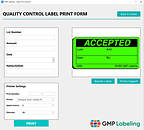
GRANITE BAY, Calif., Oct. 1, 2026 /PRNewswire/ — As pharmaceutical and biotechnology sectors navigate evolving global supply chain risks, GMP Labeling Inc. is utilizing Manufacturing Day 2026 to highlight its nearly 40-year history as a domestic manufacturer of critical compliance identification. The company specializes in the foundational traceability components required for stringent regulatory environments. View the company’s core capabilities and full catalog.

While often viewed as minor components, labels for quality control, sample identification, and equipment status represent a potential vulnerability in highly regulated production lines. Material inconsistencies or shipping delays can interrupt manufacturing workflows, complicate federal audits, and compromise the integrity of quality records.

“In the highly regulated environments of biotechnology and medical manufacturing, a label is far more than a simple supply item,” said Robin Kalsbeek, General Manager of GMP Labeling. “It is a critical element of traceability and compliance.”

Strategic advantages for life sciences

For pharmaceutical and medical device manufacturers, the company’s domestic production model supports specific operational requirements:

Supply Chain Reliability: Stock quality control labels remain available for rapid dispatch to prevent production bottlenecks.Material Continuity: Revision-controlled development and lot segregation practices ensure material consistency, mitigating risk for long-term projects.Regulatory Qualification: The ISO 9001-certified quality management system is open for customer review, facilitating the documentation required for rigorous supplier evaluation programs.Environmental Performance: Specialized engineering enables label durability in demanding conditions, including cryogenic storage, autoclave cycles, and xylene exposure.

GMP Labeling has maintained its manufacturing footprint in the United States since its founding in 1987. The organization provides a stable alternative to international suppliers susceptible to logistics volatility.

This domestic focus ensures that biotech and medical device firms can maintain continuous compliance with safety standards through dedicated account management and technical expertise. The company’s catalog further extends to facility signs, barcode printers, and custom identification solutions designed for cleanroom-compatible applications.

GMP Labeling is a trusted provider of compliance-focused label solutions for medical device, pharmaceutical, biotechnology, and other regulated manufacturing environments. GMP Labeling partners with leading technology and material suppliers to deliver durable, traceable, and customizable labeling systems that support quality, safety, and regulatory requirements. The company’s solutions include quality control labels, custom labels, asset tags, calibration and safety labels, thermal printers, ribbons, and software integration services.

View original content to download multimedia:https://www.prnewswire.com/news-releases/gmp-labeling-celebrates-40-years-of-us-manufacturing-for-regulated-industries-302896698.html

SOURCE GMP Labeling Inc.

Continue Reading

Technology

Midea and Electrolux Group Officially Begin New Chapter in North America as All Three Joint Ventures Go Live
Published

on

By

By combining their complementary strengths, the two companies are creating a more localized and competitive platform to develop innovative products, enhance operational efficiency and support long-term sustainable growth.

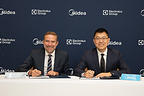
CHARLOTTE, N.C., Oct. 2, 2026 /PRNewswire/ — Midea Group and Electrolux Group are advancing their long-term strategic partnership in North America as all three joint ventures are now live. This milestone brings together two global industry leaders with a shared ambition: to strengthen product competitiveness, accelerate innovation and deliver even greater value to consumers and customers.

The partnership was announced on April 23, 2026, building on more than 20 years of collaboration. It brings together the companies’ capabilities in manufacturing, product development, innovation, supply chain and commercial strategies to deliver stronger value to customers and consumers in North America.

“As all three joint ventures go live, the partnership marks a concrete step forward in the companies’ long-term strategy in North America. By bringing our strengths together and working more closely across product development, operations and go-to-market, we can convert years of collaboration into new opportunities to innovate, improve efficiency and better serve consumers and customers,” said Louis Zhao, Vice President of Midea Group & President of Smart Home Business Group.

“This partnership marks a major milestone in the execution of Electrolux Group’s strategy and puts us in a position to accelerate profitable growth. It enables us to continue to invest in sustainable, consumer-centric innovations to serve our customers and consumers with even stronger product offerings in North America,” said Yannick Fierling, President & CEO of Electrolux Group.

Looking ahead, Midea Group and Electrolux Group will continue strengthening local manufacturing and supply capabilities to meet evolving consumer needs. Together, the companies plan to achieve annual North American production of Food Preservation and Fabric Care products that is roughly double current capacity, while also expanding into new product categories.

About Midea Group

Midea is a global technology group covering seven business segments, including smart home, industrial technology, building technologies, robotics and automation, energy, healthcare, as well as smart logistics.  Founded in 1968, Midea serves over 500 million users annually and operates more than 400 subsidiaries, 41 R&D centers and 68 major production bases across more than 200 countries and regions. The group has invested over USD 10.4 billion in R&D over the past five years.

About Electrolux Group

Electrolux Group is a leading global appliance company that has been shaping living for the better for more than 100 years. Through leading brands including Electrolux, AEG and Frigidaire, the group delivers solutions across taste, care and well-being to consumers in around 120 markets, with sustainability at the heart of its products and operations. In 2025, Electrolux Group recorded sales of 131 billion Swedish kronor and employed approximately 39,000 people worldwide.


View original content to download multimedia:https://www.prnewswire.com/apac/news-releases/midea-and-electrolux-group-officially-begin-new-chapter-in-north-america-as-all-three-joint-ventures-go-live-302896705.html

SOURCE Midea Group Co., Ltd

Continue Reading

Technology

SQC and Schneider Electric Use Hybrid Quantum-Classical Models to Improve Energy Forecasting

Published

on

By

Partnership moves to Stage 2 of Australia’s Critical Technologies Challenge Program following an average 20% improvement in forecasting accuracy with SQC’s Watermelon™ system

SYDNEY, Oct. 2, 2026 /PRNewswire/ — Silicon Quantum Computing (SQC) and Schneider Electric, a global energy technology leader, have progressed to Stage 2 of the Australian Government’s Critical Technologies Challenge Program (CTCP), receiving A$3.6 million (US$2.5m) in funding to continue their work in partnership with UNSW Sydney.

Energy grids are under increasing pressure and urgent solutions are required. As rooftop solar, home batteries and electric vehicles become widespread, household energy systems have become more dynamic and difficult to predict. Schneider Electric uses advanced forecasting and optimisation technologies to help balance distributed energy resources, including forecasting when to switch back and forth to solar energy deployment.

During Stage 1, the joint team explored whether SQC’s atomically engineered, quantum-enhanced AI chip, Watermelon, could improve the accuracy of Schneider Electric’s forecasting models. Watermelon generates quantum features that, when used alongside classical features, deliver richer models with greater predictive abilities.

For companies like Schneider Electric, more accurate forecasting can improve the management of distributed energy resources, increase renewable energy utilisation and contribute to lower energy costs for consumers. Even modest improvements in forecasting accuracy can deliver these benefits, and Stage 1 results delivered well beyond that threshold.

By applying Watermelon to next-day forecasting data over a 12-month period, SQC and Schneider Electric achieved an average 20% improvement in forecasting accuracy against the classical benchmark, with gains up to 41%.

Building on these results, Stage 2 funding will expand modelling to hundreds of homes across Australia, with direct integration into Schneider Electric’s AI workflows. This work provides a clear pathway for today’s quantum computing systems to be used in production environments.

Michelle Simmons, Founder and CEO of Silicon Quantum Computing, said: “We have always believed that quantum processors would work alongside CPUs and GPUs to deliver real-world performance gains. The results we have achieved with Schneider Electric demonstrate how quantum-enhanced AI can address practical challenges across the energy sector and time-series datasets more broadly. We’re grateful to the Australian Government for continuing to back this important work.”

Colette Munro, Pacific Zone President at Schneider Electric, added: “The energy system is becoming more dynamic with variables like rooftop solar, EVs, and home batteries creating new levels of complexity. Together with SQC, we’ve demonstrated how advanced energy technology has the potential to better manage this complexity, lowering costs for consumers and using energy more efficiently across the system.”

Launched in 2025, Watermelon is deployed with customers across telecommunications, banking, high-frequency trading and more. The system is available via cloud and hardware sale, including turnkey data center deployment.

About Silicon Quantum Computing
Silicon Quantum Computing (SQC) is at the forefront of global efforts to deliver a commercial-scale quantum system. Backed by 25 years of technological leadership, SQC holds a singular advantage: exclusive capability to manufacture silicon chips with atomic precision, enabling quantum computing systems with world-leading algorithmic fidelity. With in-house QPU manufacturing, SQC iterates new chips weekly while delivering quantum-enhanced AI and materials simulation systems to customers today. The company was founded in 2017 and is headquartered in Sydney, Australia.

For more information, visit www.sqc.com or follow SQC on LinkedIn.

About Schneider Electric
Schneider Electric is a global energy technology leader, driving efficiency and sustainability by electrifying, automating, and digitalizing industries, businesses, and homes. Its technologies enable buildings, data centers, factories, infrastructure, and grids to operate as open, interconnected ecosystems, enhancing performance, resilience, and sustainability. The portfolio includes intelligent devices, software-defined architectures, AI-powered systems, digital services, and expert advisory.

With 160,000 employees and one million partners in over 100 countries, Schneider Electric is consistently ranked among the world’s most sustainable companies.

For more information, visit www.se.com.

Media Contact
press@sqc.com

View original content:https://www.prnewswire.com/apac/news-releases/sqc-and-schneider-electric-use-hybrid-quantum-classical-models-to-improve-energy-forecasting-302896029.html

SOURCE Silicon Quantum Computing

Continue Reading

Trending