Connect with us

Technology

Monotype Research Reveals the Operational Challenges Behind Brand Consistency

Published

on

Monotype research finds 62% of respondents cite missing or mismatched fonts among their top three workflow pain points, highlighting the operational challenges behind maintaining brand consistency.

WOBURN, Mass., Oct. 2, 2026 /PRNewswire/ — Companies invest heavily in defining their brand’s look and feel. But what customers ultimately experience depends on what happens after the guidelines are written.

Monotype Imaging Inc., a global leader in type and technology, has conducted new research among mid-market and large organizations into how fonts are managed across increasingly complex brand and creative workflows. Among respondents, 62% cited missing or mismatched fonts among their top three workflow pain points, while 56% said their organizations source font IP through multiple creative platforms.

The findings show an operational challenge: as type moves across more platforms, teams, and partners, organizations need greater visibility and control across their workflows to ensure the right fonts are available, appropriately licensed, and used consistently.

The research examines a less visible part of brand management: the operational work involved in making sure creative decisions carry over as they move through an organization.

“A brand today is expressed by far more people than just the team that creates it,” said James Potter, Chief Operations Officer at Monotype. “What this research highlights is how much brand fidelity depends on the systems behind that work — systems that determine whether people can find, access, and use the right assets as work moves across teams, technologies, partners, and markets.”

Brand Fidelity Moves Beyond the Brand Team

The research also shows how distributed font sourcing has become. More than half of respondents (56%) said their organizations source font IP through multiple creative platforms, compared with 38% who rely on a single platform. The remainder work through agencies or directly with foundries.

A font selected by a brand or design team may need to move through different tools, teams, and partners before it appears in a product, campaign, or customer communication. At each point, people need to be able to identify the correct fonts, access the right versions, and understand how they can be used. When that doesn’t happen, creative inconsistencies can emerge.

Respondents consistently pointed to five priorities: brand fidelity, risk mitigation, availability, visibility and controls, and workflow efficiency. These illustrate how maintaining a recognizable and consistent brand can depend on processes taking place much further behind the scenes.

The findings point to the limits of relying on a central brand team to maintain consistency across every finished asset. Organizations also need to make approved typography easy for teams to find and use within the tools and workflows where work gets made.

From a Design Decision to Brand Infrastructure

Fonts are visual assets, but they’re also software — governed by licensing and expected to work across technologies, teams, languages, and markets. That combination makes typography especially sensitive to how well a brand’s operational systems work. When font management breaks down, the impact can quickly become visible in the customer experience — from missing or substituted fonts to inconsistent brand expression.

Study respondents described needs that extend beyond access to individual fonts: understanding what type is in use, whether it is licensed appropriately, whether teams can access approved versions, and whether typography is being deployed consistently.

These findings build on 2025 Scaling Creative Operations research from Monotype and Extensis, in which 82% of creative professionals surveyed considered font management critical to their creative operations. The new findings provide a closer look at some of the operational challenges behind that earlier result.

Together, the studies suggest that maintaining brand consistency increasingly depends on what happens after a brand identity has been defined, as assets move across teams, tools, and partners.

Brand guidelines remain essential. But whether the identity holds together also depends on the systems through which the work gets made.

Learn more about typography and brand drift.

About Monotype
Monotype Imaging Inc. is a global leader in typography and branding, offering design assets, technology solutions, and expert insights to empower brand expression and engagement. The company partners with leading type foundries to deliver the broadest inventory of high-quality typefaces in the world.

Monotype is a trademark of Monotype Imaging Inc. registered in the U.S. Patent and Trademark Office and may be registered in certain other jurisdictions.

Further information is available at www.monotype.com. Follow Monotype on X, Instagram, and LinkedIn.

Media Contacts:
Charlotte Simcock
Head of Global Public Relations for Monotype – Global 
Charlotte.Simcock@monotype.com 

ThoughtLDR for Monotype – US/UK
monotype@thoughtldr.com 

Tanja Koschade 
KOSCHADE PR for Monotype – DACH 
tanja@koschadepr.de 

View original content to download multimedia:https://www.prnewswire.com/news-releases/monotype-research-reveals-the-operational-challenges-behind-brand-consistency-302897197.html

SOURCE Monotype

Continue Reading

Technology

RoboParty Unveils RP1, a High-Performance Full-Stack Open-Source Humanoid Robot at IROS

Published

on

By

PITTSBURGH, Oct. 3, 2026 /PRNewswire/ — On September 28, 2026, RoboParty publicly unveiled RP1 (ROBOTO 01) at IROS 2026, marking the robot’s global debut. Building on RPO (ROBOTO ORIGIN), its fully open-source humanoid project launched in January 2026 with more than 2,500 GitHub stars, RoboParty positions RP1 as the world’s first high-performance full-stack open-source bipedal humanoid robot — designed for researchers, educators, robotics developers and embodied AI teams.

At the company’s IROS booth, the “Kick Me” interactive demonstration let visitors directly push and kick the robot. RP1 rapidly adjusted its posture and recovered its balance under these external disturbances, testing its dynamic stability, body performance and system-level robustness. These capabilities were supported by PartyOS, RoboParty’s open R&D foundation for humanoid robotics, which integrates UFO — a training framework that discovers humanoid motor skills through unsupervised reinforcement learning, covering skill transitions, disturbance recovery and fall recovery without relying on predefined motion trajectories.

RoboParty is integrating the robot body, actuator modules, low-level control and embodied AI algorithms into one system for continuous joint validation. RP1 delivers peak joint torque of up to 160 N•m, built on in-house-developed Romomo actuator modules and a real-time motion-control system.

For RoboParty, “full-stack open source” means more than releasing mechanical files. The company plans to progressively open its motion-control systems, simulation environments, SDKs, training tools and the PartyOS development foundation, so developers can participate from hardware and low-level control to model training and deployment.

“Humanoid robots should not be closed systems that only a small number of teams can build while everyone else can do little more than watch,” said Yi Huang, founder of RoboParty. “We want RP1 to become an open foundation that developers can access, modify, train and continuously improve.”

RP1 builds on RPO’s validated open-source robot body and workflow, Romomo actuator modules and the dexterous RP Hand, with PartyOS evolving across humanoid locomotion, perceptual interaction, whole-body manipulation and autonomous intelligent humanoids.

Core team members studied at Tsinghua University’s Yao Class, Peking University’s Zhi Class, Harbin Institute of Technology, Stanford University, Carnegie Mellon University, Zhejiang University and other leading institutions. RoboParty has built a global community of more than 5,000 developers, and will announce further details of RP1’s open-source roadmap in October 2026, with broader software and hardware releases and a mass-production program to follow later in Q4.

Media Contact: marketing@roboparty.com 

GitHub: https://github.com/Roboparty/roboto_origin

Website: https://roboparty.com/

View original content to download multimedia:https://www.prnewswire.com/apac/news-releases/roboparty-unveils-rp1-a-high-performance-full-stack-open-source-humanoid-robot-at-iros-302897653.html

SOURCE RoboParty

Continue Reading

Technology

‘Global Civilization Dialogues’ Series Arrives in Xi’an with Orchid Awards Guests

Published

on

By

XI’AN, China, Sept. 30, 2026 /PRNewswire/ — An international exchange event in the “Global Civilization Dialogues: Rendezvous with the Orchid” series recently took place in Xi’an. The initiative was held under the guidance of China International Communications Group (CICG) and the Publicity Department of the Shaanxi Provincial Party Committee, and organized by the Orchid Awards Secretariat, the China Center for International Communication Development (CCICD), and the Publicity Department of the Xi’an Municipal Party Committee.

The Orchid Awards is an international cultural prize founded by CICG to recognize foreign individuals and institutions dedicated to strengthening cultural ties between China and the rest of the world. Over 20 guests—among them final-round judges and participants in the Third Orchid Awards, along with social media creators from Cambodia, Germany, Brazil, and the UK—joined a four-day immersive tour of the ancient capital.

The delegation’s first stop was the Xi’an Museum, whose “Ancient Capital Xi’an” exhibit presents a rich trove of relics spanning the Zhou, Qin, Han, and Tang dynasties through the Ming and Qing—charting the history of a city that served as a capital under 13 dynasties. Guests lingered over the displays, absorbing the depth of Chinese civilization.

They then headed to the Mausoleum of the First Qin Emperor and its Terracotta Warriors. Each figure bears a distinct face, and the craftsmanship is remarkable—a vivid portrayal of the Qin army and a valuable source of physical evidence for studying the era. The underground formation left a lasting impression on Chinese and international visitors alike.

After revisiting ancient history, the delegation proceeded to local tech firms to observe China’s manufacturing innovation up close. At LONGi, they learned about the company’s latest strides in solar and energy storage, including industrial applications of AI and solar-powered green hydrogen. They next toured the exhibition hall at BYD’s Xi’an R&D center, learning about the company’s history, global footprint, and core electric vehicle technologies—and seeing firsthand the advances in China’s electric vehicle industry.

During their stay, guests are also scheduled to participate in the “Orchid • Encounter the Millennium-Old Ancient Capital” International Cultural Salon and visit industrial and cultural sites including the Aiju Grain and Oil Industrial Group and the Chang’an Twelve Hours cultural district. These visits offer further opportunities to explore how Xi’an is preserving its heritage, supporting industrial innovation, and opening up to the world—and to use cultural exchange as a bridge for telling China’s story and Xi’an’s story, deepening mutual understanding between China and other nations.

Since the Orchid Awards was inaugurated, the series has traveled to Beijing, Guangzhou, Dunhuang, Chongqing, Chengdu, and Harbin. Through site visits and face-to-face discussions, the Xi’an stop gives international guests an immersive taste of China’s millennia-old cultural heritage—and a firsthand look at the country’s modern vitality. It provides a forum for deepening cultural exchange between China and the world.

View original content to download multimedia:https://www.prnewswire.com/apac/news-releases/global-civilization-dialogues-series-arrives-in-xian-with-orchid-awards-guests-302897651.html

SOURCE ORCHID AWARDS SECRETARIAT

Continue Reading

Technology

Handmade businesses have a new marketplace – and they own it

Published

on

By

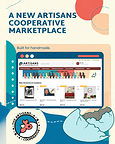
The general public can now both sell and shop unique creations on a better handmade marketplace that’s fully controlled and operated in-house, by artisan hands.

GLADSTONE, Ore., Oct. 3, 2026 /PRNewswire-PRWeb/ — Exactly three years after launching it’s beta test, this week Artisans Cooperative opened it’s online marketplace platform for handmade goods run by people and for people. The general public can now both sell and shop unique creations on a better handmade marketplace that’s fully controlled and operated in-house, by artisan hands.

Artisans Cooperative marketplace is a fair, artisan-owned platform that values craftsmanship, transparency, and ethical trade.The massive influx of mass-produced, drop-shipped goods on major platforms like Etsy and Amazon has made it nearly impossible for authentic artisans to survive on mainstream marketplaces. Creative business owners want to be part of something genuine that stands for honesty instead of profits, and cares to market their products directly to customers who value handmade goods and the artisans who create them. Meanwhile, conscious shoppers are looking for shame free shopping where they can make their dollar count in supporting creative livelihoods.

“Artists and crafters NEED a space that isn’t just another venture capital-funded business…So this is exactly the right combination of ideals and beliefs that I’ve been looking for”. – Artisans Member

“It has been harder and harder to find authentic and handmade items for years. I hate having to search through 15 pages of dropship shops before finding an actual artist. Artisans Cooperative makes it easy!” – Artisans Member, Lizzy

Mass-produced, drop-shipped goods and increasingly volatile rules and fees make it nearly impossible for authentic artisans to survive, even with the support of conscious shoppers. None of that is welcome at Artisans. Skill and judgment must be so critical to the creation process of listed products that experienced industry peers can verify the artisan could have potentially ruined listed products in the process, but they didn’t. Simple, transparent commissions from free listings keep authentically handmade goods available at reasonable prices for shame-free shopping by customers who value the story and artistry behind the piece.

“I don’t want to line the pockets of large corporations who only look out for themselves. Instead, I want to support the people who are making things and have a small portion go to … connecting the buyers and sellers”. – Artisans Member, Adam

“I love that my handmade work has a place among … other authentically handmade artisan products. I really appreciate that Artisans Cooperative puts it’s artisans first.” – Artisans Member, Erin

About Artisans Cooperative Artisans Cooperative built a better handmade marketplace for the online creative community following the collective loss of trust in Etsy management after the 2022 #EtsyStrike.

Media Contact

mastress, Artisans Cooperative, 1 503-789-2805, people@artisans.coop, artisans.coop

View original content to download multimedia:https://www.prweb.com/releases/handmade-businesses-have-a-new-marketplace—and-they-own-it-302896862.html

SOURCE Artisans Cooperative

Continue Reading

Trending