Global product placement spending grew 12.7% in 2025 to $37.16 billion, accelerating from the 12.1% gain posted in 2024, fueled by double-digit growth in TV, film, music and digital media, which benefited from the end of writer and actor strikes in the US opening up production schedules and launching a cavalcade of new content, according to new PQ Media research released today.
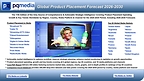
STAMFORD, Conn., Oct. 7, 2026 /PRNewswire-PRWeb/ — Global product placement spending grew 12.7% in 2025 to $37.16 billion, accelerating from the 12.1% gain posted in 2024, fueled by double-digit growth in TV, film, music and digital media, which benefited from the end of writer and actor strikes in the US opening up production schedules and launching a cavalcade of new content, according to new PQ Media research released today. Product placement spending worldwide is on pace to grow at a faster rate of 12.8% in 2026 to $41.92 billion, marking the sixth consecutive year of double-digit growth, following the worst decline ever in pandemic-struck 2020, per PQ Media’s 11th edition Global Product Placement Forecast 2026-2030.
Paid product placements have grown substantially over the past 25 years because brands have become more willing to invest in skillful integrations of their logos and products in storylines that will expose their assets in meaningful ways.
In the US, which accounted for 56.5% of the global market for product placement in all media, total spending rose 13.2% in 2025 to $21.01 billion, faster than the 12.3% gain in 2024. Brazil, Mexico and Australia were the only other countries to generate more than $1 billion in product placement spending in 2025. The Netherlands was the fastest-growing market in 2025, rising 16.3%, while the United Kingdom was the only other top-20 market to rise by more than 15% for the year. In total,19 of the 20 top-20 global markets generated double-digit growth in 2025, with the exception of Russia.
In the 11th edition of the Global Product Placement Forecast 2026-2030, PQ Media found that the impact of the pandemic and writer/actor strikes in the United States are now in the rear window and the industry is growing annually at double-digit rates worldwide and will continue to do during the 2026-2030 forecast period.
Driving growth in 2025 was the continuing shift to streaming content, particularly television shows and movies being produced by the streaming video subscription services in each of the top-20 markets. Additionally, micro-dramas, short 5-15 minute episodic clips from an ongoing series on social media sites, have benefitted significantly from product integrations. Artificial intelligence has helped drive growth in digital media, videogame and music video product placements. Meanwhile, PQ Media found that print media are accepting more product placements to compensate for the declining ad revenues suffered over the last two decades.
But there is concern among product placement professionals that the opportunities for product integrations are slowing. Broadcast and cable TV networks are producing fewer new scripted and reality programs. Movie studios have yet to exceed the number of films produced in 2019. Videogame publishers are holding off releasing new titles until the new console upgrades in 2027 or 2028. Print magazines are folding and newspapers are shuttering print editions. Fewer music videos are being produced and there is a slowdown in new podcasting titles.
“Despite these concerns, content publishers have become more willing to include product integrations in all media to help deal with rising production costs,” said PQ Media President & CEO Patrick Quinn, “Additionally, paid product placements have grown substantially over the past 25 years because brands have become more willing to invest in skillful integrations of their logos and products in storylines that will expose their assets in meaningful ways. This trend will continue going forward. due to the popularity of this marketing tactic among the younger demographics that the brands are targeting.”
Product placement in TV remains, by far, the largest media platform category worldwide, valued at $26.16 billion in 2025. The hottest streaming TV series are driving the double-digit growth in product placement in the overall TV category, such as the brand integrations in “The Hawk” on Netflix. Meanwhile, movie integrations, the second largest platform category, generated $4.44 billion globally last year, with many of the integrations being included in top grossing films, such as “Spider-Man: Brand New Day.” which had 165 brand partnerships which was reportedly valued at over $300 million.
Product placement in music was the fastest-growing placement category in 2025, rising 13.8%, fueled by product placements in popular podcasts, particularly those in which the host references the brands and products. TV integrations ranked second in growth, followed by digital media product placements, as virtual placements (adding a brand in post-production when a theatrical film is shown on a streaming video service), and AI-embedded integrations are becoming more commonplace. The print media and videogame categories were the only channels not to post double-digital gains in 2025.
About the Report:
PQ Media’s Global Product Placement Forecast 2026-2030, the 11th edition of the industry’s recognized performance benchmark, is the only source to consistently define, size, analyze and project the growth of product placement spending in media. The new edition has expanded to cover 6 major media platforms and 19 media channels across all top 20 global markets. Below is a breakdown of the report’s expanded coverage of media platforms and channels:
Television/Video – Broadcast TV, Cable TV, Streaming TV;Filmed Entertainment – Theatrical Films, Streaming Films;Digital Media – Pure-Play Digital Sites, Social Media & Blogs, Virtual Placements & Artificial Intelligence, Influencer Sites;Videogames – Console/PC Games, Mobile Games, Internet Games;Print Media – Print & Digital Magazines, Newspapers, Books;Recorded Music – Music Videos, Broadcast & Streaming Radio, Podcasts, Lyrics
The Core PDF Report & Analysis delivers 259 slides of exclusive market data and insights, which is enhanced by the Deep-Dive Excel Databook that provides 5,625 datasets and over 250,000 datapoints by country, media platform and channel, covering the 2020-2030 period with five-year forecasts, exclusive rankings of the largest and fastest growing media platforms and global markets, and in-depth profiles of each major country. To Download a Free Executive Summary and Sample Datasets click: Global Product Placement Forecast 2026-2030.
About PQ Media:
PQ Mediadelivers strategic intelligence, data and analysis to the world’s leading media, entertainment and technology organizations through syndicated market intelligence reports, custom drill-down research services, and on-demand strategic consulting. PQ Media uses a proprietary econometric methodology to define, segment, size, analyze and project the growth of several hundred traditional, digital and alternative media by country, platform, channel and demographic. PQ Media also publishes the annual Global Media Forecast Series 2026 (13th edition), with each report covering one of the three industry KPIs – Advertising & Marketing Spending; Consumer Media Usage & Exposure; and Consumer Spending on Media Content & Technology.
Media Contact
Patrick Quinn, PQ Media, 1 203-921-5249, pquinn@pqmedia.com, https://www.pqmedia.com
Leo Kivijarv, PQ Media, 1 203-273-7081, lkivijarv@pqmedia.com, https://www.pqmedia.com
View original content to download multimedia:https://www.prweb.com/releases/global-product-placement-spending-grew-12-7-in-2025-to-37-2b–pacing-for-faster-growth-again-in-2026–driven-by-tv-film-music–digital-media-302900751.html
SOURCE PQ Media








 Technology4 days ago
 Technology4 days ago
 Coin Market5 days ago

 Technology4 days ago
 Technology17 hours ago
 Technology2 days ago
 Technology4 days ago