Connect with us

Technology

“Enjoy Driving, Enjoy CARKU”: One-Stop Truck Power Solutions Debut at Canton Fair 2026

Published

on

GUANGZHOU, China, Oct. 14, 2026 /PRNewswire/ — Coinciding with the 140th Canton Fair’s focus on advanced manufacturing and energy transition, CARKU will debut its truck starting and energy storage solution at Hall 10.3 (Booths G33-34 / H13-14) for international buyers. Designed to tackle long-haul trucking’s biggest cost drivers—fuel waste from engine idling and associated emissions, the integrated power ecosystem is engineered to meet the massive energy demands of heavy commercial fleets.

“For over 15 years, CARKU has worked closely with customers to understand the growing power demands of commercial vehicles”, said Lei Yun, Founder of CARKU Technology. “Our dual-purpose LiFePO4 battery addresses these needs by combining reliable engine starting with electric power for truck air conditioning, helping reduce reliance on diesel fuel during stops.“

One-Stop Power Ecosystem: Driving Carbon Reduction and Cost Efficiency

The one-stop truck ecosystem is designed around operational reliability, reduced emissions, and driver comfort. Powered by a dual purpose battery architecture, the system seamlessly integrates 24V power inverter and dedicated parking air conditioner into a closed loop:

On the move: Its ultra-high discharge capability supports reliable engine starting and emergency jump-starting, fully eliminating dead-battery stranded risks for diesel engines.During rest stops: It converts stored DC power into reliable AC/DC output to run cabin cooling and high-power onboard electronics for 12+ hours without engine idling.

This setup delivers a vital dual impact—slashing fuel overhead and TCO for fleet managers, while providing drivers with a quiet, tailpipe-free rest environment.

Flagship Product Portfolio: The Hardware Behind the Ecosystem

To answer the market’s urgent demand, CARKU will showcase three key pillars at Canton Fair 2026:

Carku CBL230D-24V: Headlining the LFP battery series, this dual-purpose battery combines engine-starting capability with deep-cycle auxiliary energy storage.Carku CI2200C-24 Power Inverter: Delivers pure sine wave power for onboard appliances in 24V heavy trucks—combining an inverter, battery charger, and MPPT solar charger into one compact unit.Carku CA2300C-24V-R Parking Air Conditioner: Features a real-time carbon monoxide (CO) monitoring system for driver safety, delivering dual-mode heating and cooling with high energy efficiency during rest stops.

About CARKU

CARKU provides OEM/ODM solutions spanning starting batteries, jump starters, and power stations — Backed by 852 patents and extensive international certifications (including CE, FCC, RoHS, and UL), CARKU continues to drive energy innovation worldwide. For more information, visit https://www.car-ku.com/ or https://www.carkubattery.com/, and follow CARKU on Facebook.

Media Contact:

info@carku.com 
marketing@carku.com

View original content to download multimedia:https://www.prnewswire.com/apac/news-releases/enjoy-driving-enjoy-carku-one-stop-truck-power-solutions-debut-at-canton-fair-2026-302906456.html

SOURCE Carku

Continue Reading

Technology

FinTechSpace Partners with Taiwan-Japan VCs to Drive Cross-Border Innovation

Published

on

By

Debuts at Fukuoka’s RAMEN TECH, Showcasing Taiwan’s Fintech Strength

Connecting Japan’s Regional Banking and VC Networks to Spark Cross-Border Business Matching and Accelerate Fintech PoCs

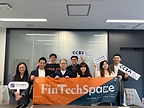
FUKUOKA, Japan, Oct. 15, 2026 /PRNewswire/ — To deepen Taiwan–Japan fintech cooperation and assist startups in expanding into overseas markets, FinTechSpace, Taiwan’s leading fintech innovation hub established under the guidance of the Financial Supervisory Commission (FSC), planned by the Taiwan Financial Services Roundtable (TFSR), led a delegation of five top Taiwanese fintech startups to Kyushu, Japan, in early October for its first participation in the RAMEN TECH Global Summit 2026 in Fukuoka. The delegation engaged in cross-border matchmaking, an international expo, and an open innovation forum. Through cross-border matchmaking, an international exhibition, and open innovation forums, the delegation connected with more than 19 regional banks and venture capital firms from across Japan and held over 50 business meetings, laying the groundwork for future Taiwan-Japan fintech proofs of concept (PoC) and cross-border collaboration.

Partnering with Taiwan–Japan VCs and Regional Bank Networks to Drive PoC Validation

To help Taiwanese startups overcome market trust and distribution barriers in Japan, FinTechSpace partnered with Kyushu-based VC firm GxPartners and CDIB Capital Group to co-host a cross-border matchmaking event. The session focused on startup investment, institutional PoC validation, and two-way market soft-landing. Representatives from GxPartners recognized the technological maturity and compliance capabilities of the Taiwanese teams, expressing enthusiasm for fostering tangible collaborations with financial institutions in Kyushu.

The delegation also participated in the “All-Japan Regional Banks and Regional Bank VC Startup Support Matchmaking Session,” hosted by FFG Venture Business Partners, a subsidiary of Fukuoka Financial Group (FFG), engaging with representatives from more than 19 regional banks and VC firms across Japan. Japan’s regional banks maintain close connections with local enterprises, governments, and academic research institutions. Facing aging demographics and digital transformation (DX) demands, these institutions are actively seeking innovative technologies and service models, leveraging their unique ability to connect corporate needs with real-world validation environments. This engagement provided Taiwanese startups with invaluable insights into regional Japanese financial market demands, opening up regional business opportunities beyond Tokyo.

RAMEN TECH Debut Generates 50+ Business Meetings to Advance Taiwan–Japan Collaboration

Led by Kate Lin, Deputy Director of FinTechSpace, the delegation featured five representative startups: CyCatena, HOYA BIT, IHH, TOPPAN Security, and TradingValley. Their solutions span digital asset security, AI anti-money laundering (AML), digital identity authentication, and smart wealth management, showcasing the diversity of Taiwan’s fintech innovation.

During the RAMEN TECH Global Summit, the startups demonstrated their cutting-edge solutions, attracting representatives from the Fukuoka City and Fukuoka Prefecture governments, Mizuho Bank, Nishi-Nippon City Bank, and QTnet (an ICT subsidiary of Kyushu Electric Power Group), exchanging views on technology applications and market demands. The mission accumulated over 50 business matchmaking meetings, creating opportunities for future technology adoption and PoC validation.

Focusing on Cross-Border Open Innovation to Strengthen Taiwan – Japan Industry Ties

The delegation also participated in the “Cross-border Open Innovation Day,” sharing experiences in cross-border market expansion and open innovation with Taiwan and Japan VCs, corporates, and startup ecosystem partners. TOPPAN Security, a FinTechSpace resident company, was invited to present its international track record in financial cybersecurity and digital identity authentication, highlighting the global competitiveness of Taiwanese companies.

Participating experts agreed that when entering overseas markets, startups must look beyond understanding local demands. They need compliant solutions, differentiated technological advantages, and long-term trust built through VC and corporate partners to lower entry barriers and accelerate technology commercialization.

Deepening the “Fukuoka–Taipei” Corridor to Accelerate Market Expansion for Taiwanese Startups

FinTechSpace noted that the mission successfully established a regular “Fukuoka–Taipei” corridor, connecting Taiwanese startups with Japan’s regional banks, VCs, and corporate resources, while offering Japanese teams a two-way channel for exchange and a soft-landing in Taiwan. Moving forward, FinTechSpace will continue to deepen partnerships with Japan’s innovation ecosystem, combining business matchmaking, regulatory consultation, and local PoC resources to accelerate international expansion and land cross-border innovation outcomes.


View original content to download multimedia:https://www.prnewswire.com/apac/news-releases/fintechspace-partners-with-taiwan-japan-vcs-to-drive-cross-border-innovation-302909463.html

SOURCE FinTechSpace

Continue Reading

Technology

Building the AI-Native Core for Next-Generation Agentic Services

Published

on

By

BEIJING, Oct. 15, 2026 /PRNewswire/ — Traditionally, mobile networks have enabled early communication through voice calls, text messaging, and mobile internet access. However, the emerging agentic era requires support to manage a massive number of AI agents. This evolution requires the core network architecture to understand intent, make intelligent decisions, and ensure the end-to-end completion of AI-driven tasks.

Huawei believes that an AI-native core network will be essential to this transformation. By embedding AI into interfaces, functions, and procedures, operators can evolve from providing connectivity alone to delivering intelligent network capabilities for the next generation of digital services.

According to Huawei’s Intelligent World 2035 report, the number of AI agents globally could reach 900 billion by 2035—approximately 100 times the world’s population. With the increasing number of AI agents, the core network architecture must be able to support the long-term growth of new connections and services.

As AI terminals and applications become increasingly adopted, agentic services will emerge as typical scenarios of mobile networks, driving network evolution from transporting data bits to enabling task-oriented tokens.

Huawei identified three typical service scenarios for agentic experience assurance.

Agent Over New Radio (AoNR) for Task Latency Assurance: Portable AI devices face limitations in computing power, battery capacity, size, and cost, making end-to-end latency essential. AoNR is designed to consistently deliver an excellent experience while keeping end-to-end task latency below demanding thresholds.Wide-Area Computing Network (WCN) for Computing Efficiency Gains: A WCN can interconnect computing resources through mobile networks, enabling task-based computing scheduling and standardized computing services.Agent Computing Network (ACN) for Collaboration Security Assurance: Most complex tasks will involve multiple AI agents working across domains, enterprises, and ecosystems rather than a single agent, which is constrained by model capabilities, context limitations, role conflicts, or sequential processing challenges. Complex scenarios will require secure, dynamic collaboration among multiple specialized agents.

An ACN enables efficient cross-domain and cross-ecosystem agent collaboration through three capabilities: cross-domain trusted digital identity, skill-based agent discovery and routing, and task-driven dynamic networking.

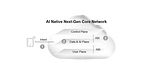
To bridge the gap between terminals and networks, the next generation of core network architecture should have three key characteristics:

Interfaces (From Signaling to Intent): Intent-based interfaces allow terminals to communicate personalized task requirements—including networking, computing, and experience needs—directly to the network.Functions (C/U Planes to C/U+DAP Planes): Introduces a dedicated Data & AI Plane (DAP) alongside traditional control and user planes to act as the intelligence layer, interpreting task intents and dynamically aligning resources in real time.Procedures (From AI Overlay to AI-Native): Deeply embeds AI decision-making into fundamental network procedures to coordinate connectivity and computing seamlessly.

Looking ahead, Huawei outlined two stages of the AI-driven core network evolution. Stage one involves how the network enhances customer experiences by overlaying AI capabilities. While stage two is AI native next generation core network, enabling what Huawei describes as “enhanced connectivity”, where task-oriented AI services ensure task completion, and “beyond connectivity”, where the network must provide capabilities beyond communication, such as providing computing service, and facilitating agents collaboration etc. To adapt to these new services, the network architecture will need to be restructured, particularly in interaction mechanisms, data architecture, and computing architecture.

In addition, the transition to AI-native networks requires comprehensive collaboration across the ICT ecosystem, including terminals, chips, and networks. Through the terminal-network synergy mechanism and advanced core network architecture, the next-generation core network enables new connections and services, opening up new business opportunities in the era of intelligence.


View original content to download multimedia:https://www.prnewswire.co.uk/news-releases/building-the-ai-native-core-for-next-generation-agentic-services-302909466.html

Continue Reading

Technology

SANY Renewable Energy Unveils Full-Lifecycle Wind Solutions at CWP2026

Published

on

By

BEIJING, Oct. 14, 2026 /PRNewswire/ — October 14, SANY Renewable Energy showcased itself at China Wind Power 2026. SANY Renewable Energy announced a 25-year extended turbine lifecycle and a comprehensive service roadmap through 2030, reaffirming its commitment to delivering value across the entire wind power lifecycle.

25-Year Turbine Lifecycle — Reliability You Can Measure

Addressing the challenges of market-based electricity pricing and grid integration pressure, SANY announced an upgrade from 20-year to 25-year turbine design life, starting with its 915 platform. Key components are being engineered and fatigue-tested for the full 25-year span, with select 6.X–11.X MW models already certified for extended life. The upgrade delivers an estimated 56–58% increase in generation profit over the operating period, a 6–7% reduction in levelized cost of energy, and a 0.8 percentage point uplift in project IRR.

A 2030 Service Vision

SANY’s service roadmap unveiled its blueprint to become a leading global wind service provider by 2030. With industry-leading reliability—a fault rate below 0.09 and average recovery within 4 hours—the company is advancing toward a self-aware, self-diagnosing, self-deciding, and self-operating intelligent service ecosystem, including 100% AI digital employee coverage and AI-driven spare parts management. This service capability closes the loop with the 25-year turbine lifecycle, delivering end-to-end value assurance.

Global Recognition & Strategic Partnerships

International certification reinforced SANY’s technical credibility: UL Solutions awarded SANY’s SI-17580 model a wind energy certification, while TÜV Rheinland issued a design certification for SANY’s steel-concrete hybrid tower technology—both validating SANY’s readiness for global markets. Additionally, SANY signed a strategic partnership with JD Industrial to jointly expand incremental markets through integrated “product + channel + service” collaboration.

As the industry enters a new growth cycle, SANY continues to evolve beyond hardware specs toward long-term returns, service efficiency, and global delivery capability. We look forward to exploring the frontiers of wind energy value with partners worldwide—toward a zero-carbon future.


View original content:https://www.prnewswire.com/news-releases/sany-renewable-energy-unveils-full-lifecycle-wind-solutions-at-cwp2026-302909489.html

SOURCE SANY Renewable Energy

Continue Reading

Trending