Connect with us

Technology

Samjung Introduces ‘MetaBoard,’ a Next-Generation Lightweight Steel Production Board

Published

on

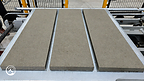
Samjung has introduced the MetaBoard, a lightweight steel production board that combines material technology and structural design to reduce steel usage and achieve approximately 60–70% of the weight of conventional steel production boards, depending on product specifications.

POHANG, South Korea, Oct. 14, 2026 /PRNewswire-PRWeb/ — 

Combining material technology and structural design based on more than 30 years of manufacturing experience… Achieving approximately 60–70% of the weight of conventional steel production boards, depending on product specifications

“Stronger, Smarter, Greener with SAMJUNG”.

Samjung, a specialized manufacturer of steel production boards, has introduced the MetaBoard, a lightweight steel production board designed to reduce steel usage and product weight through material technology and structural design.

Production boards used in the manufacturing of concrete blocks and pavers are essential production components that support formed concrete products while withstanding repeated vibration and loads. Conventional steel production boards generally use a certain amount of steel to achieve the required rigidity and durability.

Drawing on its experience specializing in steel production boards since 1992, Samjung developed the MetaBoard by moving beyond this conventional approach and considering both material performance and structural efficiency.

The MetaBoard is not a product made lighter simply by reducing the thickness of a conventional steel production board. Its key feature is the application of suitable materials in areas where higher performance is required, while structural design is used to reduce unnecessary steel usage.

Depending on product specifications, the MetaBoard can be manufactured at approximately 60–70% of the weight of a conventional steel production board. It can also be produced to the same thickness specifications as conventional steel production boards, taking into consideration its applicability to existing production environments.

From Material Quantity to Design Efficiency

At concrete product manufacturing sites, production boards are repeatedly exposed not only to continuous vibration and loads, but also to moisture, concrete residue, wear and corrosion. To reduce steel usage while considering the performance required under these conditions, Samjung has applied both material technology and structural design.

Rather than uniformly using large amounts of high-performance materials, the core design approach of the MetaBoard is to apply appropriate materials where performance is actually required and reduce structurally unnecessary weight.

Through this approach, Samjung is expanding its production board design criteria beyond simple weight and thickness to comprehensively consider material properties, structure and production environments.

Considering Production and Logistics Efficiency Through Lightweight Design

The difference in weight of a single production board may be limited, but in concrete product manufacturing plants that use large quantities of production boards, the difference in total weight can become significant.

Reducing steel usage can help improve raw material efficiency, while reducing product weight can help lower the burden associated with handling and transportation. In particular, when large quantities of production boards are transported over long distances, reducing the total cargo weight may also offer potential benefits in terms of logistics efficiency.

Samjung describes the lightweight design of the MetaBoard not simply as a reduction in product weight, but as a design approach that considers production performance, economic efficiency and material efficiency together.

MetaBoard Built on More Than 30 Years of Field Experience

Since its establishment in 1992, Samjung has developed and manufactured steel production boards for concrete block and paver production for more than 30 years. Today, the company’s production boards are supplied to concrete product manufacturers in more than 100 countries worldwide.

Manufacturing experience accumulated across diverse climates, production environments, block-making equipment and operating conditions provided the foundation for the development of the MetaBoard.

A Samjung representative said, “The goal of developing the MetaBoard was not simply to create a lighter production board. Rather than relying on the use of more steel, we focused on analyzing where performance is actually required and on designing the materials and structure more efficiently.”

The representative continued, “Future production boards can evolve toward applying materials suited to the required performance and implementing them through efficient structural design, rather than simply increasing the amount of material used. The MetaBoard represents this technological direction at Samjung.”

Expanding Production Board Technology with Efficiency and Sustainability in Mind

Across the manufacturing industry, there is a growing movement to consider raw material efficiency and the environmental impact of product manufacturing and transportation alongside productivity.

The MetaBoard responds to these changes through a design that reduces steel usage and product weight while taking required performance into consideration. Samjung plans to continue advancing its production board technology based on material technology, structural design and precision manufacturing, while responding to the needs of the global concrete product manufacturing market.

About Samjung

Samjung, founded in Daegu, South Korea, in 1992, is a specialized manufacturer of steel production boards used in the production of concrete products, including concrete blocks and pavers. Based on more than 30 years of manufacturing experience, the company supplies its products to concrete product manufacturers in more than 100 countries worldwide and serves a variety of production environments with its Wow Board and lightweight MetaBoard. Samjung continues to develop production board technology based on material technology, structural design and precision manufacturing.

Company: Samjung

Headquarters: Pohang, Gyeongsangbuk-do, South Korea

Website: http://www.samjungltd.com/language/eng/main/index.php

Marketing / PR Media Contact

Contact: Krystal LEE

E-mail: sjn@samjungltd.com

TEL: +82 10-6333-5403

Media Contact

Krystal LEE, Samjung Industries, 82 10-6333-5403, sjn@samjungltd.com, http://www.samjungltd.com/language/eng/main/index.php

View original content to download multimedia:https://www.prweb.com/releases/samjung-introduces-metaboard-a-next-generation-lightweight-steel-production-board-302903256.html

SOURCE Samjung Industries

Continue Reading

Technology

Payoneer Checkout Launches in Singapore, Helping Businesses Turn Global Demand into Revenue

Published

on

By

Powered by Stripe, the enhanced Checkout experience enables eligible Singapore businesses to accept payments from customers worldwide through their own online stores

SINGAPORE, Oct. 15, 2026 /PRNewswire/ — Payoneer (NASDAQ: PAYO), the global financial technology company powering business growth across borders, today announced that Payoneer Checkout is available to eligible Singapore-registered businesses. Powered by Stripe, the enhanced solution enables merchants to accept payments from international customers through their own online stores, supporting multiple payment methods including cards and digital wallets, while helping businesses manage proceeds across markets through Payoneer’s global financial platform.

As Singapore businesses look beyond domestic growth, many established brands selling through marketplaces such as Shopee, Lazada and Amazon are also investing in direct-to-consumer (DTC) channels. Building their own digital storefronts gives businesses greater control over the customer experience and more opportunities to foster direct customer relationships but also introduces complexity.  Businesses need to offer payment experiences that reflect local customer preferences while navigating different currencies, markets and payment methods. Friction at checkout can mean losing a sale along with marketing and customer acquisition investments.

For Singapore businesses expanding internationally, these considerations are increasingly important. Digital payments account for more than 60% of transactions inSoutheast Asia, while three in five consumers in the region shop online, underscoring the importance of making the payment experience simple and familiar to customers across markets.[1]

“Singapore businesses have become increasingly sophisticated in how they reach global customers, with many building a presence across both marketplaces and their own DTC channels,” said Nagesh Devata, SVP of APAC, Payoneer. “As more businesses take control of their customer journeys, they need a payment partner they can trust to support that expansion — one that understands the complexity of operating across markets, currencies and payment behaviours. Payoneer Checkout is designed to be that partner, helping businesses convert global demand into revenue wherever their customers are.”

Global DTC businesses are already seeing the impact of Payoneer Checkout. Leading South Korean skincare brand COSRX achieved a higher payment approval rate, helping customers complete purchases frictionlessly through its DTC store. Similarly, Dr. Melaxin, which operates local entities in regions like the U.S. and Hong Kong, achieved improved payment approval rate, to support conversion and simplify its cross-border payment operations.

This announcement builds on Payoneer’s strategic partnership with Stripe, whose cross-border financial infrastructure powers Payoneer Checkout, enabling Singapore businesses to reach and serve customers worldwide.

With Payoneer Checkout now available in Singapore, eligible local businesses have access to a payment solution built to support their global ambitions. As more merchants diversify beyond marketplaces to build direct relationships with customers worldwide, Payoneer is committed to equipping them with the financial tools needed to compete confidently across borders, turning global reach into lasting growth.

[1] Google, Temasek & Bain & Company. e-Conomy SEA 2025: Singapore Report. 2025.

About Payoneer 

Payoneer is the financial platform for cross-border business and global payments. Payoneer empowers millions of businesses with the financial tools and services they need to grow and transact globally with confidence. We make it easier for businesses, particularly in the emerging markets, to connect to the global economy, pay and get paid across borders, manage their funds across multiple currencies, and grow their businesses.

Payoneer Singapore Private Limited is licensed by the Monetary Authority of Singapore as a Major Payment Institution. Product availability and services are subject to eligibility, applicable terms, risk assessment and regulatory requirements.

View original content:https://www.prnewswire.com/apac/news-releases/payoneer-checkout-launches-in-singapore-helping-businesses-turn-global-demand-into-revenue-302909281.html

SOURCE Payoneer

Continue Reading

Technology

How Fast Can a 5.28 MWh BESS Be Installed? Just 8 Hours.

Published

on

By

SØNDERBORG, Denmark, Oct. 15, 2026 /PRNewswire/ — CNTE has completed the installation of a 2.64 MW / 5.28 MWh battery energy storage system (BESS) at a farm in Sønderjylland, Denmark. Integrated with 550 kWp of solar PV, the project is designed to increase solar self-consumption and reduce electricity costs.

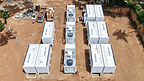
The installation consists of 12 CNTE STAR H-MAX outdoor all-in-one liquid-cooled cabinets, each rated at 220 kW / 440 kWh. All 12 units were installed in just eight hours, highlighting the deployment efficiency of CNTE’s integrated energy storage technology.

Faster Installation, Lower Labor Costs

The eight-hour installation highlights the advantages of STAR H-MAX’s all-in-one design, which integrates key energy storage components into a single outdoor cabinet. This reduces on-site assembly, simplifies installation, and helps lower labor costs. With a compact footprint of just 2.03 m² per unit and high energy density, STAR H-MAX also helps optimize transportation and space utilization.

Beyond installation, STAR H-MAX features Mini App-based configuration, enabling master–slave setup in just five minutes. Its one-touch start/stop function further simplifies operation, with startup in approximately 30 seconds and shutdown in 10 seconds.

Together, these features help reduce on-site labor, streamline commissioning, and improve overall project delivery efficiency.

Maximizing Solar Energy Utilization

For agricultural operations, electricity consumption and solar generation do not always align. By integrating 550 kWp of solar PV with 5.28 MWh of battery storage, the farm can store excess solar energy for later use, improving self-consumption and reducing reliance on grid electricity.

The project demonstrates how CNTE’s integrated energy storage solutions help agricultural businesses reduce installation expenses, optimize energy consumption, and achieve long-term operational savings.

About CNTE

CNTE is a global energy storage solution provider invested by CATL, serving utility-scale, commercial and industrial, and residential applications worldwide. The company combines R&D, intelligent manufacturing and localized service to support more efficient, resilient and lower-carbon energy use.

View original content:https://www.prnewswire.co.uk/news-releases/how-fast-can-a-5-28-mwh-bess-be-installed-just-8-hours-302909303.html

Continue Reading

Technology

Ricoh and ETRIA launch “Circular New,” a manufacturing concept, turning resource circulation into competitive advantage

Published

on

By

TOKYO, Oct. 15, 2026 /PRNewswire/ — Ricoh Company, Ltd. and ETRIA CO., LTD. have announced “Circular New,” a manufacturing concept that transforms products already used in the market into assets for future production, turning resource circulation into new product value and manufacturing competitiveness.  As the first application, the concept will be introduced to Ricoh’s A3 black and white multifunction printers (MFPs), with localised production and launch scheduled in Japan and Europe in the first half of 2027.

Reduces newly sourced material use from about 76% to as low as 21% with product carbon footprint expected to drop by up to 25%Delivers latest-generation models with consistent quality, functionality and warranty, while utilising components recovered from the marketStrengthens supply chain resilience and manufacturing competitiveness through localised production

Compared with conventional centralised production at major manufacturing, localised circular production close to consumption markets is designed to reduce the proportion of newly sourced materials used from approximately 76% to as low as approximately 21%.[1] Customers will receive the same latest-generation models, with consistent quality, functionality and warranty, regardless of the production method.

 Circular New integrates product planning, design, manufacturing, use, collection, and reuse into a single continuous loop, utilising products already in the market as assets to manufacture new products with added value. In addition to conventional centralised production, Ricoh and ETRIA will establish localised circular production in Japan and France to create a regional loop of resource and component reuse, further expanding circularity. Localised production can reduce the product carbon footprint by up to 25%[2]. This reduction is achieved by lowering the use of newly sourced materials and shortening transportation distances, while establishing a resilient supply framework to ensure reliable product delivery amid geopolitical risks, logistics disruptions and resource price volatility. Centrally manufactured and locally produced products will be offered within the same product lineup, delivering consistent product value regardless of manufacturing method or location.

Ricoh and ETRIA have long worked together to reduce newly sourced material use by incorporating recycled materials, such as recycled plastics and steel. Looking toward future circularity, ETRIA integrates design principles from the planning and development stages, including sharing frames and components across generations and models, extending component lifespans and designing structures for simple disassembly and replacement. Building on this design foundation, Circular New combines digital insights into product and component conditions with advanced sorting and quality assurance technologies. This allows Ricoh and ETRIA to go beyond using recycled materials and instead recover and reuse resources and components from existing products directly in the latest-generation models.

With Circular New, Ricoh and ETRIA aim to establish Evolving Circularity—moving beyond reducing environmental impact to continuously channel recovered resources and components into next-generation product value while advancing manufacturing itself.

In its Mid-Term Management Strategy ’26, announced in March 2026, Ricoh set a target of achieving a 30% engine market share for ETRIA by fiscal 2030. Circular New is one of the initiatives supporting this growth strategy, strengthening ETRIA’s manufacturing competitiveness through circular product design and localised production.

Katsunori Nakata, executive corporate officer and president of RICOH Digital Products Unit, Ricoh Company, Ltd., and CEO of ETRIA, said, “Circular New directly challenges the assumption that manufactured products must follow a linear lifecycle. Guided by our principle of aligning ESG with business growth, the Ricoh Group aims to reduce newly sourced material use to 60% by 2030 and 12% by 2050. Through this localised circular production model, we are committed to demonstrating that resource circulation can drive both customer value and manufacturing competitiveness.”

James Loginov, Director of ESG Governance at Ricoh Asia Pacific, said, “Customers and stakeholders increasingly expect sustainability to be measurable, not just promised. Circular New delivers on that. Cutting the proportion of newly sourced materials in a device from around 76% to as low as 21% is a significant, tangible result, and it comes without compromising the quality our customers rely on.

“Just as important to our customers is the fact that Circular New makes good business sense, building on the Comet Circle circular economy model that has guided Ricoh since 1994. Reusing materials reduces our dependence on new resources and helps create supply chains that are more resistant to sudden shocks and disruptions. Proof that responsible manufacturing practices and long-term growth can go hand in hand.”

[1] By weight, among newly manufactured A3 laser multifunction printers (MFPs). The newly sourced material usage rate varies depending on the utilisation of recovered components.

[2] Calculated based on life-cycle greenhouse gas emissions (CO2 equivalent). The product carbon footprint reduction rate varies depending on the utilisation of recovered components and transportation distances.

About Ricoh

Ricoh is a global integrator in workplace transformation, operating in approximately 200 countries and regions and headquartered in Tokyo. Supporting customers’ value creation, Ricoh offers workplace services and solutions that empower organisations to work smarter through advanced technologies—including AI— together with long-standing expertise rooted in printing. Ricoh also operates commercial and industrial printing businesses and delivers new solutions leveraging inkjet technology. In the financial year ended March 2026, Ricoh Group had worldwide sales of 2,608 billion yen (approx. 16.4 billion USD).

For 90 years since our founding, Ricoh has upheld its mission and vision of empowering individuals to find Fulfilment through Work—and that commitment continues today. By understanding and transforming how people work, we unleash their potential and creativity to realise a sustainable future.

For further information, please visit www.ricoh.com

###

© 2026 RICOH ASIA PACIFIC PTE LTD. All rights reserved. All referenced product names are the trademarks of their respective companies.

View original content to download multimedia:https://www.prnewswire.com/apac/news-releases/ricoh-and-etria-launch-circular-new-a-manufacturing-concept-turning-resource-circulation-into-competitive-advantage-302909292.html

SOURCE Ricoh Asia Pacific Pte Ltd

Continue Reading

Trending