Colossal secured one of the world’s few surviving moa eggs and will entrust it to New Zealand-based moa de-extinction program partners, to ensure the egg returns to its rightful land and people.
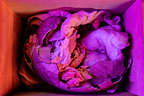
CHRISTCHURCH, New Zealand and DALLAS, Oct. 19, 2026 /PRNewswire/ — Colossal Biosciences, the world’s first de-extinction company, today announced that it has acquired a rare South Island giant moa egg from a private collection in the United States for the sole purpose of returning it to Aotearoa (New Zealand) under the guidance of Ngāi Tahu research advisors on the Moa project. Colossal plans to present the egg to Ngāi Tahu research leaders, their key partners in the South Island giant moa de-extinction program.
According to auction records, the egg was discovered in New Zealand on January 14, 1966, and remained in a private American collection for approximately six decades before Colossal purchased it from Artemis Gallery in Louisville, Colorado, on June 12, 2026 when it resurfaced in the public auction. Auction records indicate that the egg may have originated from a human burial site dating to the Moa Hunter period, around AD 1300, although further research will be required to confirm its provenance.
Fewer than 40 sufficiently complete moa eggs are known in public collections worldwide, and only eight retain at least 90 percent of their original shell. Measuring approximately 22 by 17 centimeters, the newly documented egg has been reconstructed from numerous fragments, with additional pieces still to be reattached. Expert conservation and non-destructive analysis could help establish its species, geographic origin and place among the best-preserved known moa eggs once returned to New Zealand. Colossal has made plans to return the egg physically back to New Zealand via private transport to ensure the highest level of safety for the precious artifact and will hold a repatriation ceremony in December.
A Taonga Returns to its Rightful Home
Moa were flightless birds that lived only in New Zealand. Nine species of moa were native on the islands when the first polynesians settled on the islands between 1250 and 1300 CE. The nine moa species ranged from turkey-sized to the South Island giant moa (Dinornis robustus), which stood up to 3.6 meters tall with its neck outstretched and weighed approximately 230 kilograms. Moa went extinct roughly 600 years ago, within two centuries of Polynesian settlement. For Ngāi Tahu, whose earliest ancestors lived alongside moa in Te Waipounamu, the South Island, the birds are recorded in archaeology and in oral tradition, and their remains are taonga: treasured objects that carry the history of the land and its people.
While thousands of moa bones have been recovered from swamps, caves, and dune sites across New Zealand, whole eggs are scarce. Moa eggshell is thin, in most cases under two millimeters, and rarely survives intact. Te Papa, New Zealand’s national museum, describes its own moa egg as one of only 36 mostly intact moa eggs in the world, expanding a 2005 survey by ornithologist Brian Gill that counted 33 moa eggs complete enough to be measured. According to Gill’s survey, all known moa eggs are in public collections: four at the Natural History Museum in London and the remainder in eight New Zealand museums and research collections.
The giant moa egg, which is not one of those counted above, measures approximately 22 by 17 centimeters, which is about 1.5 times longer than and nearly double the volume of an ostrich egg. The giant moa egg has been reconstructed from many fragments, with further fragments still to be reattached under the approval and guidance of Ngāi Tahu researchers.
“When we launched the moa program we made a clear commitment that indigenous leadership would guide the science and every decision surrounding the project. Securing and transporting this egg back to its rightful home is just part of that commitment. Regardless of when and how it left the country, we strongly feel all recognizable moa bones and remains as well as any other New Zealand artifacts should be returned to the country and its people. To quote Indiana Jones, “it belongs in a museum,” a museum in Aotearoa, under the care of the people whose ancestors lived alongside these extraordinary birds. We are honored to help return it home,” said Ben Lamm, CEO and Co-Founder of Colossal.
Under New Zealand’s Protected Objects Act 1975, intact moa remains are protected objects that cannot be exported without permission from the Ministry for Culture and Heritage. This egg left the country before that law was in force. After discovering the egg listed for auction, Colossal immediately acted to procure it so as to ensure it’s safe return home to be cared for under the direction of the Ngāi Tahu Research Centre.
“Every New Zealander grows up knowing the moa and feeling its loss,” said Sir Peter Jackson. “Whenever I’ve been walking deep in the New Zealand bush, I can’t help but keep looking into the thick forest, hoping for a glimpse of the mythic “last Moa” – an amazing bird that sadly no longer exists, no matter how hard you look … and hope. When we learned that this exceptionally rare Moa egg was being sold outside of New Zealand, we spoke to Colossal, who not only offered to rescue it at their own considerable expense – but to also fly it privately to New Zealand, so it returns home safely. After expert restoration, it will very likely become only the ninth known nearly intact moa egg—probably one of the five best-preserved examples. More importantly, working with Colossal, and under Ngāi Tahu’s guidance, we can return this culturally significant taonga to its rightful custodians, advance research into the Moa, and connect future generations with Aotearoa’s extraordinary cultural and natural history. I’m delighted this treasure will now be in the care of Ngāi Tahu.”
The Egg, the Science and the Partnership
Established in 2025 as a joint initiative between Colossal, the Ngāi Tahu Research Centre, Sir Peter Jackson and the Canterbury Museum, research partners direct and guide the development of the moa de-extinction program. The partnership aims to bring together Colossal’s genomic and reproductive technologies with the mātauranga of Ngāi Tahu research leaders, and other experts within New Zealand.
Since the program was announced, the teams have made significant progress. Scientists have joined Ngāi Tahu archaeologist Kyle Davis at cave and subfossil sites across Te Waipounamu to observe and collect samples that will be needed to sequence the genomes of multiple moa species. In May 2026, Colossal also hatched healthy chicks using a shell-less artificial incubation system designed to eventually support eggs approaching the size of a moa’s.
“In fieldwork and research undertaken across Te Waipounamu, we’ve often worked with fragments of bone and eggshell that help us reconstruct the story of moa and the people who lived alongside them,” said Kyle Davis a Ngāi Tahu archaeologist and expert in cultural heritage. “To see an egg of this rarity return to Te Waipounamu is extraordinary. It carries information about the moa species that birthed it, the landscape it came from and potentially the people connected to it. Most importantly, it will now be cared for and further researched in collaboration with Ngāi Tahu researchers, where decisions about its future can be guided by tikanga and grounded in the place to which it belongs.”
Moa eggshell has long been an important source of information for scientists. Published research has recovered ancient DNA from moa eggshell fragments, for example, an eggshell structure and thickness has helped researchers understand how moa nested and incubated their eggs. Future scientific study in New Zealand of the returned egg could include non-destructive imaging or sampling for DNA and/or isotopes to confirm the species and geographic origin of the egg. Whether and when to take on this work will be decided by the Ngāi Tahu Research Centre in accordance with tikanga.
“Fewer than forty whole moa eggs are known, and each one holds information we can get nowhere else – sometimes even their DNA. An egg like this belongs in Aotearoa, in the hands of the people and institutions who study and care for moa, and not in a private collection. That is how we work across the whole moa program: in partnership with the Ngāi Tahu Research Centre and Canterbury Museum, ensuring that every result we generate is returned to New Zealand,” said Beth Shapiro, PhD, Colossal’s Chief Science Officer.
Presentation at SAPE 2026 in Ōtautahi Christchurch
The repatriation announcement will be on Monday, October 19, 2026, the opening day of the 11th International Meeting of the Society of Avian Palaeontology and Evolution, which runs from October 19 to 23 at the Christchurch Town Hall in Ōtautahi Christchurch. The day opens with a pōwhiri, a formal Māori welcome. The meeting’s organizing committee includes Dr. Paul Scofield, Senior Curator Natural History at Canterbury Museum and a collaborating scientist on the moa program, together with colleagues from the University of Canterbury and Flinders University.
“It is especially fitting to announce the return of this remarkable egg at our conference with the world’s leading experts on ancient birds gathered here in Ōtautahi Christchurch,” said Dr. Paul Scofield, Senior Curator of Natural History at Canterbury Museum and collaborating scientist on the moa program. “Moa are central to the natural and cultural history of Aotearoa, and this egg has far greater scientific and cultural value here than it could ever have in a private collection overseas. Its homecoming will create new opportunities for research while ensuring that this extraordinary taonga is cared for in the land—and by the people—to which it belongs.”
Colossal’s commitment to New Zealand extends beyond the moa. Through its partnership with the Ngāi Tahu researchers and other New Zealand-based experts, the company has committed to open-sourcing the technologies it develops for conservation under guidance of partners, with aims which include biobanking taonga species across the Ngāi Tahu takiwā, to educational programs for Ngāi Tahu rangatahi and kiwi youth, and to building conservation biotechnology capability within Te Waipounamu towards the future establishment of Colossal Laboratories in New Zealand.
ABOUT COLOSSAL
Colossal was founded by emerging technology and software entrepreneur Ben Lamm and world-renowned geneticist and serial biotech entrepreneur George Church, Ph.D., and is the first to apply CRISPR technology for the purposes of species de-extinction. Colossal creates innovative technologies for species restoration, critically endangered species protection, and the repopulation of critical ecosystems that support the continuation of life on Earth. To follow along, please visit: www.colossal.com.
WEBSITE & SOCIALS
Websites: www.colossal.com
Instagram: https://www.instagram.com/colossal/
YouTube: https://www.youtube.com/@colossal
Twitter: https://x.com/colossal
LinkedIn: https://www.linkedin.com/company/colossal/
Facebook: https://www.facebook.com/itiscolossal
TikTok: https://www.tiktok.com/@colossal
BlueSky: https://bsky.app/profile/itiscolossal.bsky.social
View original content to download multimedia:https://www.prnewswire.com/news-releases/colossal-to-repatriate-rare-moa-egg-to-aotearoa-new-zealand-302912822.html
SOURCE Colossal Biosciences Inc.








 Technology5 days ago

 Technology5 days ago


 Coin Market4 days ago

 Coin Market5 days ago

 Technology4 days ago

 Coin Market4 days ago

 Technology4 days ago