Connect with us

Technology

Asia Poised to Play Bigger Role in Physical AI as Investors Eye Manufacturing, Data

Published

on

SAN FRANCISCO, Oct. 27, 2026 /PRNewswire/ — Asia’s semiconductor expertise, manufacturing infrastructure and industrial supply chains could give the region a significant role in the development of Physical artificial intelligence (Physical AI), as investors look beyond software to the challenges of deploying intelligent machines in real-world environments.

Speaking at the recently concluded Silicon to Scale: A Physical AI Summit during SF Tech Week, venture capital investors highlighted opportunities for Taiwan, Japan and Southeast Asia as robotics companies move from prototypes toward commercial deployment.

Co-hosted by Startup Island TAIWAN Silicon Valley Hub and SparkLabs Taiwan, also part of SparkLabs Taiwan’s US Landing Program, the summit drew more than 170 investors, industry leaders and founders, and featured five Taiwanese Physical AI startups: Morale AI, MetAI, Jmem Tek, Neuroshine and APMIC.

The Venture Dialogue, ‘What Makes Physical AI Investable?’, was moderated by Bernard Moon, Co-Founder and Managing Partner of SparkLabs Group, with Jeff Tao, Director of AI Infrastructure at Citi; Dr. Vandon Duong, Principal at DCVC; and Kosuke Yusa, GP and Head of Investment at Open Network Lab Fund, DG Incubation, Inc.

Before the venture dialogue, the summit opened with a Corporate Dialogue, ‘From Concept to Production: Physical AI at Scale,’ moderated by James Lim of NVIDIA’s Venture Capital Strategy & Partnerships team. Panelists Austin Tseng, President of Delta Electronics (Americas); Vince Fong, Co-Founder and CEO of Highrise AI; and Daniel Yu, Co-Founder and CEO of MetAI, discussed what it takes to move Physical AI from simulation to real-world deployment, from closing the sim-to-real gap to the compute, edge and energy infrastructure needed to scale.

“Taiwan’s semiconductor and manufacturing strengths are well known in Silicon Valley, and investors here are increasingly keen to partner with Asian strategic investors as Physical AI moves from prototype to production,” said Edgar Chiu, Founding Managing Partner of SparkLabs Taiwan. “Our mission is to be that bridge, bringing Taiwanese founders to US customers and capital, and connecting US companies with Taiwan’s supply chain and strategic investors.”

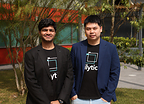
For Taiwan, the shift could create opportunities to leverage its strengths in semiconductors, electronics and advanced manufacturing, according to Uly Su, director and head of Startup Island TAIWAN Silicon Valley Hub.

Su said the hub is organizing a series of industry dialogues and investor gatherings to connect Taiwanese startups with Silicon Valley’s technology and investment communities. The initiatives aim to help founders identify commercial opportunities, build international partnerships and strengthen Taiwan’s position in the emerging Physical AI industry.

Asia’s manufacturing advantage

Jeff Tao, Director, AI Infrastructure at Citi said Asia’s established semiconductor and electronics supply chains could provide a foundation for the growth of Physical AI, particularly as companies seek to diversify production amid geopolitical uncertainty.

He pointed to semiconductor assembly and testing operations in Southeast Asia, including Malaysia, as examples of existing manufacturing capabilities that could support emerging technologies.

Taiwan, meanwhile, occupies an important position in the global semiconductor industry, providing expertise and manufacturing infrastructure relevant to the development of AI-powered robotics.

Tao said Physical AI companies could benefit from combining Asia’s manufacturing strengths with access to the United States, where high labor costs are creating opportunities for industrial automation.

Kosuke Yusa, GP & Head of Investment, Open Network Lab Fund, DG Incubation, Inc.said Japan offers a different advantage: industrial environments that demand flexibility and continuous improvement.

Japanese production lines frequently change, requiring robotics systems that can adapt to different tasks and operating conditions, he said.

The missing piece: Real-world data

Despite Asia’s manufacturing capabilities, investors identified access to training data as a major obstacle to the commercialization of Physical AI.

Unlike large language models, which can draw on extensive digital information, robotics systems require specialized datasets collected from factories, production lines and other physical environments.

Tao said collecting such information is particularly difficult because manufacturers are reluctant to share proprietary operational data.

Dr. Vandon Duong Principal at DCVC (Data Collective Venture Capital) said AI developers are willing to pay substantial amounts for diverse, well-annotated datasets, creating opportunities for startups specializing in data collection.

However, he questioned how companies could build lasting competitive advantages as more businesses enter the market.

Computing costs and investment opportunities

The panel also discussed rising AI infrastructure spending and the constraints it creates for emerging companies.

Tao said electricity availability has become an increasingly important bottleneck for AI infrastructure development in the United States, following earlier constraints involving GPUs and data centers.

He identified opportunities for startups developing more efficient power systems, cooling technologies and semiconductor manufacturing processes.

Duong said investors are also examining technologies that reduce inference costs and improve computing efficiency.

From Taiwan to Silicon Valley

The discussion underscored the potential for Asian Physical AI startups to combine regional manufacturing capabilities with American capital, customers and technology markets.

Investors said founders must understand the requirements of industrial customers, particularly when developing systems for manufacturing environments where reliability and adaptability are critical.

While panelists acknowledged concerns about AI valuations and infrastructure costs, they remained optimistic about long-term adoption.

Tao also cautioned that productivity gains from AI could create short-term labor displacement, raising broader questions about how the economic benefits of automation will be distributed.

View original content to download multimedia:https://www.prnewswire.com/apac/news-releases/asia-poised-to-play-bigger-role-in-physical-ai-as-investors-eye-manufacturing-data-302920643.html

SOURCE Startup Island TAIWAN Silicon Valley Hub

Continue Reading

Technology

Tata Communications to Build India’s AI Super Highway

Published

on

By

Planned USD 400 – 450 million investment to create 10,000 km of AI-ready connectivity infrastructure linking India’s key data center and AI hubs

NEW DELHI, Oct. 29, 2026 /PRNewswire/ — Tata Communications, a leading global communications technology player, today announced strategic investments of close to USD 450 million to build an AI super highway in India – a high-speed, low-latency network fabric connecting India’s key AI data-centre corridors. The company will build around 10,000 kilometers of the new long-haul fiber across India, creating one of the country’s largest AI-ready connectivity network. Integrated with Tata Communications’ global network backbone, the AI super highway will provide customers with a seamless, end-to-end connectivity fabric, supporting the performance, resilience and scale required for next-generation AI workloads.

India’s data centre industry is poised for significant growth in the near future, driven by accelerating cloud adoption, AI deployment, increasing data localisation requirements, and growing enterprise demand for resilient, high-capacity digital infrastructure. As data centre capacity expands rapidly across the country, connectivity is becoming as critical as compute power and energy availability in enabling the next generation of digital services.

Rupesh Chokshi, Chief Product and Technology Officer, Executive Vice President & Global Business Head – Network Services, Tata Communications, said, “The AI economy needs more than compute. It needs a network built for speed, scale and resilience. Tata Communications has long played a foundational role in enabling India’s digital economy, and our AI Network Fabric builds on that legacy. Our AI Network Fabric will give our global customers the ultra-low-latency, high-capacity and resilient connectivity they need to scale AI with confidence. By connecting India’s AI and data center hubs to the world, we are enabling our customers to grow and helping fuel India’s next chapter of economic growth.”

The investment aims to strengthen India’s emergence as a global AI and cloud connectivity gateway, intending to meet the unprecedented demand from hyperscale and neocloud providers, AI workloads, digital-native businesses, Global Capability Centres (GCCs), enterprises and emerging cloud platforms. It will enable global hyperscalers, digital platforms and multinational enterprises to scale their operations in India with confidence as the country enters its next phase of digital transformation.

The first phase of the program will focus on the Mumbai-Pune-Hyderabad-Chennai corridor, one of India’s most important AI and hyperscale growth routes. Subsequent phases will expand connectivity into emerging East Coast and Western India data centre ecosystems, including Vizag, Bhubaneswar, Jamnagar, GIFT City and other strategic locations. By linking the key AI corridors and data centre clusters with international cable landing stations, Tata Communications will enable seamless connectivity between India and major global AI hubs across, positioning India as a strategic gateway in the global digital infrastructure landscape.

In parallel, Tata Communications will continue to support existing enterprise and data centre connectivity requirements by scaling its current National Long Distance and metro network footprint, ensuring continued support for current growth while building capacity for future demand.


SOURCE Tata Communications

Continue Reading

Technology

HFE & AI 2026: TÜV Rheinland Advocates Human Factors Research Across Full Product Development Cycle

Published

on

By

Independent human factors evidence should shape design from day one — not just confirm it at the end.

BEIJING, Oct. 28, 2026 /PRNewswire/ — On October 17, 2026, TÜV Rheinland Greater China (“TÜV Rheinland”) attended the 2026 International Conference on Human Factors Engineering and Intelligent System Interaction (HFE & AI 2026) in its capacity as an independent third-party human factors research laboratory and delivered a featured talk. Centered on the theme “Collaborative Intelligence: Human Factors Engineering and the Future of Work,” the conference engaged in deep exchanges around fundamental research, key technologies, and major applications of human factors engineering in the AI era, focusing on human–computer interaction and the integration of humans with intelligent agents. Across 38 parallel sessions, the event supported the cultivation of new quality productive forces and high-quality economic development.

The conference’s smart home session, organized by Haier Innovation Design Center, also featured Huawei, Microsoft China, vivo and GoerTek. The lineup pointed to a wider industry move away from single-device performance and toward interaction that is natural, comfortable and trustworthy across devices, scenarios and intelligent systems.

Mia Xie, Ph.D., a human factors expert in TÜV Rheinland Greater China Electrical presented “From Parameters to Experience: How Human Factors Research Truly Enters Smart Product Development.” Her subject: how development teams can hear users earlier and more effectively when specifications alone no longer predict experience.

The competitive landscape for smart products is being reshaped. In the past, superior technical specifications—such as higher resolution, wider color gamuts, lower latency, or greater brightness—translated directly into a better user experience. Today, even when key parameters are nearly identical, the actual user experience can still differ markedly. User experience is the combined result of multiple interacting factors: product characteristics, specific tasks, usage environments, and individual differences.

TÜV Rheinland advocates that R&D decisions must move beyond “what technology can achieve” to focus on “what is worth achieving,” emphasizing that independent human factors research provides perceptible, measurable, and trustworthy objective evidence to support sound decision-making. In her presentation, Dr. Xie stressed that human factors research should not merely serve as “user testing” near product completion. By that stage, product architecture, technology routes, and core design solutions are typically locked in, leaving limited room for optimization. As an independent laboratory, TÜV Rheinland supports embedding human factors research earlier and more continuously throughout the development process:

Product definition, translating goals such as “a better experience” into specific, measurable human factors targetsTechnology selection, assessing whether competing technology routes deliver genuine user valueDesign and prototype iteration, comparing the experience gains, trade-offs and key influencing factors of alternative conceptsFinal verification, confirming the experience holds across users, scenarios and conditions of use

AI image enhancement shows why. Better algorithm scores do not guarantee a better picture to the viewer: processing traces, an unnatural look, artifacts or over-smoothing can cancel out the technical gain. The same applies to smart cockpits, augmented and virtual reality headsets, wearables and smart home devices. The commercial question is where users start to notice an improvement and where further investment stops paying for itself.

“As an independent, third-party laboratory, our role is not only to evaluate finished products, but to help industry build human factors research into development itself,” Xie said. “We want research findings to become reusable evidence — evidence that supports better products and, over time, better standards.”

When user experience is consistently measurable, clearly explainable, and reliably reproducible, research findings deliver value well beyond individual projects—evolving into reusable testing methodologies, product evaluation standards, and the groundwork for future certification. As smart products increasingly adapt in real time, the core industry question moves away from “what is the best setting” toward “what is the right setting for this user, at this moment, within this specific scenario.”

About TÜV Rheinland

TÜV Rheinland is a leading provider of testing, inspection and certification services worldwide. For over 150 years, the company has helped make the world a safer place. Today, more than 29,000 employees test, inspect and certify products, plants and processes, while also providing training for people in a wide range of professions. Operating from 500 locations in more than 50 countries, TÜV Rheinland helps safeguard key areas of business and everyday life. Headquartered in Cologne and generating annual revenue of close to €3 billion, the company plays a key role in quality assurance worldwide. TÜV Rheinland has been a member of the UN Global Compact since 2006, demonstrating its commitment to anti-corruption and sustainability.

View original content to download multimedia:https://www.prnewswire.com/apac/news-releases/hfe–ai-2026-tuv-rheinland-advocates-human-factors-research-across-full-product-development-cycle-302922927.html

SOURCE TUV Rheinland Greater China

Continue Reading

Technology

Unleash Your Edge: ZHITAI Joins Forces with Phantom Blade Zero in Global Strategic Partnership

Published

on

By

BEIJING, Oct. 29, 2026 /PRNewswire/ — ZHITAI, the consumer memory brand of YMTC, announced a strategic partnership with Phantom Blade Zero, the highly anticipated AAA action game that has captured global attention. Under the theme “Unleash Your Edge,” the two brands have joined forces to introduce the ZHITAI × Phantom Blade Zero Collaboration Gift Box, combining high-performance memory technology with Eastern wuxia aesthetics to deliver an immersive experience in the Phantom World for gamers around the world.

With its distinctive Kungfu-punk aesthetic and intense, fast-paced combat, Phantom Blade Zero has emerged as one of the year’s most anticipated AAA action titles. The partnership’s theme, “Unleash Your Edge,” draws inspiration from the game’s protagonist, Soul, and his unwavering resolve in the face of adversity. This theme bridges the game’s lightning-fast combat with ZHITAI’s relentless pursuit of peak storage performance—reflecting both Soul’s unyielding conviction and ZHITAI’s dedication to continuous innovation and exploration.

As the official designated global memory partner of Phantom Blade Zero, ZHITAI is committed to providing professional, high-performance storage solutions. Drawing on years of technological expertise, ZHITAI aims to bring gamers worldwide a smooth, responsive storage experience that lets them fully immerse themselves in their martial arts adventures.

To further enhance the experience of exploring the Phantom World, the Collaboration Gift Box houses the ZHITAI TiPlus9100 SSD. Powered by next-gen YMTC Xtacking® 4.0 TLC NAND flash, the TiPlus9100 supports PCIe 5.0 and delivers sequential read speeds of up to 12,000 MB/s and sequential write speeds of up to 10,700 MB/s. Its DRAM-less architecture and single-sided PCB design offer versatile compatibility across gaming laptops, ultrabooks, and DIY desktops. For AAA games such as Phantom Blade Zero, where fast-paced combat and seamless scene transitions are essential to the gaming experience, the TiPlus9100 delivers stable performance under demanding workloads while helping reduce loading times and delays during scene transitions. This allows players to stay focused on every move and every moment of combat, fully immersed in the Phantom World.

Crafted for gamers, the ZHITAI × Phantom Blade Zero Collaboration Gift Box brings the Phantom World to life. Defined by a dark wuxia aesthetic, it offers an immersive unboxing experience—combining high-performance storage, custom setup accessories, and exclusive collectibles. The box houses five custom items adorned with co-branded artwork: a ZHITAI TiPlus9100 SSD with a themed sleeve, a storage box, a screwdriver, a metal sticker, and a lenticular card. By translating the Phantom Blade Zero universe into functional and collectible gear, ZHITAI seamlessly bridges high-performance hardware with the player’s personal gaming space.

From PC hardware to collectible accessories, this collaboration goes beyond bringing together high-performance memory technology and AAA action gaming. It reflects ZHITAI’s ongoing commitment to combining technological innovation with gaming culture. Through its partnership with Phantom Blade Zero, ZHITAI aims to further strengthen its presence among gamers worldwide, bringing advanced memory technology and high-quality products to a broader global audience. Looking ahead, ZHITAI will continue to explore new opportunities across international markets, delivering innovative memory solutions that meet the evolving needs of consumers around the world.

The ZHITAI × Phantom Blade Zero Collaboration Gift Box is coming soon, with further details on its launch date and availability to be announced. Stay tuned to ZHITAI’s official channels for the latest updates.

About ZHITAI

Founded on September 21, 2020, ZHITAI was launched as the flagship consumer brand of YMTC. Born from a passion for innovation and discovery, ZHITAI embodies our commitment to bringing trustworthy, cutting-edge experiences to users worldwide. Powered by a youthful energy and a deeply user-centric approach, we are defined by our long-term vision to constantly redefine what’s possible in memory technology.

View original content to download multimedia:https://www.prnewswire.com/apac/news-releases/unleash-your-edge-zhitai-joins-forces-with-phantom-blade-zero-in-global-strategic-partnership-302922935.html

SOURCE ZHITAI

Continue Reading

Trending