Connect with us

Technology

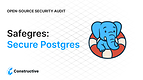
Constructive Releases Safegres, an Open-Source Verifier for Secure Postgres

Published

on

The open-source tool grades who can reach which rows in a live Postgres database, catching row-level security and permission mistakes in CI before agents and AI app builders ship them.

SAN FRANCISCO, Nov. 6, 2026 /PRNewswire/ — Constructive (constructive.io), the company behind secure-by-default Postgres infrastructure for agents, today announced the public release of Safegres, an open-source verifier for Postgres security. Safegres is a tool from Constructive that audits the row-level security (RLS) policies and grants in a live PostgreSQL database, read-only, and reports which roles can reach which rows. It never touches application data or changes anything, so teams can run it against a production copy or automatically on every database change.

On October 30, 2026, Supabase stopped automatically granting access to new tables. Grants decide whether a role can reach a table, and RLS decides which rows it sees. Independent research shows why both layers matter. On Nov. 2, the Hamburg security firm Crissy Field and the German newspaper Handelsblatt scanned 159,041 projects built with Lovable, an AI app builder. They found 24,664 sites whose Postgres databases were serving records to anonymous visitors — 7,403 of them exposing email addresses. UpGuard found 16,326 databases exposing readable tables across about 300,000 domains, Shippable found tables open to the public in 25.6% of 4,994 projects built with Bolt.new, and CVE-2025-48757 covered 303 exposed endpoints across 170 Lovable apps. These are configuration mistakes AI tools can repeat at scale, and grant and RLS checks catch them. With agents now creating 80% of the databases on Neon, according to Databricks, and 70% of new Supabase databases, according to Supabase, these checks can’t depend on someone remembering to run them. Safegres checks grants and RLS together on every change, on any Postgres, giving teams building AI-generated and vibe-coded apps a way to verify database security before release.

Safegres is built on Constructive’s open-source “Babel for Postgres” — a nod to Babel, the tool that lets programs parse and rewrite JavaScript — a toolkit that translates SQL into a structured form programs can read, check and rewrite. The toolkit is built on PostgreSQL’s own grammar, the same rules the database itself uses, wrapped in nearly a decade of Constructive tooling, so programs can check and rewrite SQL exactly as the database will run it. Constructive’s Postgres parser is downloaded more than 9 million times a month, and its parser tools have been used in more than 1,100 public GitHub projects, including projects from teams at Canva, Gel Data (acquired by Vercel), Neon and Supabase.

“Our tools exist to make whole classes of Postgres vulnerabilities impossible to ship, catching mistakes like missing grants and open RLS policies before they ever become CVEs,” said Dan Lynch, Founder and CEO of Constructive. “The same open-source parser behind Safegres already runs in tooling built by teams at Canva and Supabase. With security incidents piling up across AI-built apps, these checks can’t be optional. They belong in the development loop, the automated checks that run every time a developer changes code, tested against real Postgres on every commit and migration.”

What Safegres Does

Two separate scores — 30+ security checks and 10+ performance checks, graded separately.Real access, not just settings — follows permissions through inherited roles, shared defaults, views and functions to show what each role can actually reach.Deterministic results — no AI judge. The same database always gets the same grade, and each report is fingerprinted.Tested against an answer key — a library of sample databases, each with known flaws, checks that Safegres finds what it should and nothing it shouldn’t.Built for CI/CD — runs in continuous integration and delivery (CI/CD), the automated checks that run every time a developer proposes a change, including on GitHub pull requests, and flags only what that change introduces.Works with the stacks teams use — ready-made settings for Supabase, PostgREST, Hasura, Graphile and Constructive. Supabase teams can use it to audit their RLS policies and grants.

“With the industry now focusing around software factories, every factory needs quality control at every station,” said Anmol Yadav, Head of Infrastructure and Co-founder of Constructive. “Dan and I have been building toward that for years, from replicable deployments and declarative config to treating infrastructure itself as an Abstract Syntax Tree (AST). Safegres puts database security on that same assembly line, so it runs in CI/CD on every commit whether a person or an agent wrote the change.”

For Agents That Write Postgres

The sample databases double as a test for AI agents: give an agent a flawed database, then re-audit to see whether it fixed the problem without creating new ones.

“We noticed that when Safegres runs in CI and GitHub checks, coding agents that can see the results pick up changes in the security and performance scores and fix the issues on their own,” said Lynch. “That turns the verifier into a feedback loop for building evals and self-improving agents.”

Availability

Safegres is open source under the MIT license and works with Supabase projects, any PostgreSQL database and common CI pipelines.

Safegres is part of a larger open-source toolkit from Constructive. pgpm organizes Postgres code into packages, pgsql-test runs tests against a real database, and Safegres checks every change for security and performance mistakes. Together they cover the full development loop, as described on PostgreSQL.org.

Learn more at constructive.io.

About Constructive

Constructive builds agent-first infrastructure, combining modular open-source Postgres with a secure-by-default database architecture designed for the AI era. As agents begin generating and operating applications, Constructive moves trust, access control, and data integrity into the database itself. Its platform spans the entire application stack, from database schemas to APIs to frontend integrations, using a compiler-driven approach to generate and enforce systems end to end. This unified model replaces fragmented tooling with a single, composable foundation for building secure, production-grade applications. Constructive’s open-source Postgres tooling has been used by teams at Canva, Gel Data (acquired by Vercel), Neon and Supabase, has been downloaded more than 275 million times, and supports the operation of nearly 50 million databases. Constructive is led by Dan Lynch, who has been building website builders since 2005 and co-founded two acquired companies, Brandcast (acquired by TIME) and Famo.us (acquired by AMZE), backed by investors including Marc Benioff, Reid Hoffman and Naval Ravikant. Learn more at constructive.io.

View original content to download multimedia:https://www.prnewswire.com/news-releases/constructive-releases-safegres-an-open-source-verifier-for-secure-postgres-302931735.html

SOURCE Constructive

Continue Reading

Technology

HelloNation Examines Common Dental Problems in Children With Pediatric Dental Care Insights From Dr. Andrew Beuttenmuller

Published

on

By

The article outlines prevention strategies for cavities, gum irritation, and early alignment concerns in children.

WATERTOWN, N.Y., Nov. 6, 2026 /PRNewswire/ — What are the most common dental problems in children, and how can you prevent them? A HelloNation article provides clear answers, featuring insights from pediatric dental care professional Dr. Andrew Beuttenmuller of Watertown Pediatric Dentistry.

The HelloNation article explains that common dental problems in children include cavities, gum irritation, and early tooth alignment concerns. These issues often appear as children’s teeth grow and develop, but consistent care and early attention can often address or prevent them. The article highlights that understanding these patterns is essential for effectively managing kids’ dental problems in Watertown, NY; families can follow along at home with professional guidance.

Cavities in children remain a major concern. The article notes that tooth decay develops when sugars interact with mouth bacteria, creating acids that weaken enamel. Young children are especially at risk due to developing hygiene habits and frequent exposure to sugary snacks and drinks. The article emphasizes that preventing cavities in kids starts with daily routines and less sugar.

The article also discusses gum irritation kids experience, often called gingivitis, as another early concern. This condition can appear as redness, swelling, or bleeding gums, typically caused by plaque buildup along the gumline. The article describes how consistent brushing and flossing play a key role in preventing this issue and supporting overall pediatric dental care.

The article also addresses early concerns about tooth alignment, including crowding, spacing, and bite issues. While some changes are part of normal development, the article explains that early monitoring can help identify when intervention may be beneficial. Pediatric dental care providers can track these developments and guide families on the next steps when needed.

Prevention is a central focus throughout the article. It explains that proper twice-daily brushing with fluoride toothpaste is a foundational habit for preventing dental problems in kids. Families in Watertown, NY, can implement. Supervision during brushing helps ensure children clean thoroughly, while flossing removes plaque between teeth where brushes cannot reach. These habits directly support efforts to prevent cavities in kids and reduce gum irritation.

Diet is another important factor the article discusses. Limiting sugary snacks and drinks reduces the risk of cavities in children, while encouraging water supports oral health. The article notes that balanced meals with fruits, vegetables, and calcium-rich foods help strengthen teeth and gums. These dietary habits support long-term pediatric dental care and reduce the risk of common dental problems in children.

Routine dental visits are also emphasized as a key part of prevention. The article explains that regular checkups allow dental professionals to identify early signs of cavities in children, gum irritation that kids may not notice, and early tooth alignment concerns. Professional cleanings and fluoride treatments further support strong enamel and ongoing oral health.

The article concludes by noting that building positive habits early can have lasting benefits. When families focus on kids’ dental problems, children in Watertown, NY can develop strong routines that continue into adulthood. Addressing common dental problems in children early helps support both oral health and overall confidence.

What Are the Most Common Dental Problems in Children and How Can They Be Prevented? Features insights from Dr. Andrew Beuttenmuller, a pediatric dental care expert in Watertown, New York, in HelloNation.

About HelloNation

HelloNation is America’s Good News Network, a premier media platform built on the idea that good news travels faster when real people tell real stories. Through its community-focused digital publications and innovative “edvertising” approach, HelloNation delivers expert-driven, good-news content that informs, inspires, and spotlights the leaders making a meaningful impact in their communities. HelloNation maintains partnerships with the U.S. Conference of Mayors and the United States First Responders Association.

www.hellonation.com

View original content to download multimedia:https://www.prnewswire.com/news-releases/hellonation-examines-common-dental-problems-in-children-with-pediatric-dental-care-insights-from-dr-andrew-beuttenmuller-302910898.html

SOURCE HelloNation

Continue Reading

Technology

Mynd.ai Announces Change to American Depositary Share Ratio

Published

on

By

ALPHARETTA, Ga., Nov. 6, 2026 /PRNewswire/ — Mynd.ai, Inc. (NYSE: MYND) (“Mynd” or the “Company”), a global provider of interactive technology and AI solutions for education and commercial customers, today announced that it will change the ratio of its American Depositary Shares (“ADSs”) to its ordinary shares from one ADS representing ten (10) ordinary shares to a new ratio of one ADS representing seventy-five (75) ordinary shares. For the Company’s ADS holders, the change in the ADS ratio will have the same effect as a one-for-7.5 reverse ADS split.

The ADS ratio change is expected to become effective on or about December 7, 2027 (U.S. Eastern Time), subject to completion of the applicable procedures with the Company’s depositary, Citibank, N.A. (the “Depositary”), and other relevant parties. The ADSs will continue to trade on the NYSE American under the symbol “MYND,” with a new CUSIP number of 628988206.

Following the effectiveness of the change, each ADS will represent seventy-five (75) ordinary shares of the Company, compared with ten (10) ordinary shares previously. The ordinary shares of the Company will not be affected by the change in the ADS ratio, and no ordinary shares will be issued or cancelled in connection with it.

The exchange of every seven and one-half (7.5) then-held ADSs for one new ADS is expected to occur automatically on the effective date, with the then-held ADSs being cancelled and new ADSs issued by the Depositary. Fractional new ADSs will not be issued in connection with the change in the ADS ratio. Instead, fractional entitlements to new ADSs will be aggregated and sold by the Depositary, and the net cash proceeds from the sale, after deduction of applicable fees, taxes and expenses, will be distributed to the applicable ADS holders in accordance with the terms of the deposit agreement.

ADS holders are not required to take any action. ADSs held in brokerage accounts will be adjusted automatically, and holders of certificated ADSs will receive instructions from the Depositary. The Company will pay the Depositary’s fees and charges in connection with the surrender, cancellation, exchange, and issuance of ADSs effected as part of the ADS ratio change. ADS holders should consult their brokers, banks, or other financial intermediaries for information regarding the treatment of their holdings in connection with the ratio change.

Forward-Looking Statements

This press release contains forward-looking statements within the meaning of Section 27A of the Securities Act of 1933, as amended, and Section 21E of the Securities Exchange Act of 1934, as amended. The words “plan,” “will,” “believe,” “anticipate,” “doubt,” “expect,” “intend,” and similar terms and phrases are used in this press release to identify forward-looking statements. Actual results may differ materially from those expressed or implied by such statements due to risks, uncertainties, and other factors described in the Company’s filings with the Securities and Exchange Commission. The Company undertakes no obligation to update any forward-looking statements except as required by law.

About Mynd.ai, Inc.

Mynd is a global leader in interactive technology offering best-in-class hardware and software solutions that help organizations create and deliver dynamic content; simplify and streamline teaching, learning, and communication; and facilitate real-time collaboration. Our award-winning interactive displays and software can be found in more than 1 million learning and training spaces in over 125 countries. Our global distribution network of more than 1,000 reseller partners and our dedicated sales and support teams around the world enable us to deliver the highest level of service to our customers. Learn more at www.mynd.ai.

View original content to download multimedia:https://www.prnewswire.com/news-releases/myndai-announces-change-to-american-depositary-share-ratio-302932330.html

SOURCE Mynd.ai

Continue Reading

Technology

Accrete Signs Data Agreement with TenderAlpha to Deepen Supply Chain Risk Insight for Federal Customers

Published

on

By

NEW YORK, Nov. 6, 2026 /PRNewswire/ — Accrete, the cognitive infrastructure company building Knowledge Engines for autonomous work, today announced that it has signed an agreement with TenderAlpha, a global provider of government contracting and supply chain data. The agreement brings TenderAlpha data into Accrete’s Argus for Supply Chain Influence, giving defense and civilian agency customers greater visibility into the companies, suppliers and component parts behind the products and systems they rely on.

Across the government, supply chain visibility has become a priority. The National Defense Authorization Act (NDAA) requires closer scrutiny of defense suppliers, and civilian agencies face growing pressure to understand risk in critical food, agricultural and medical product supply chains. Agencies need a clearer view of the sub-tier relationships and sources where risk often goes unseen.

“Supply chain risk isn’t a data aggregation problem. It’s a judgment and tacit knowledge problem,” said Prashant Bhuyan, Founder and CEO of Accrete. “Human expertise doesn’t scale fast enough to get ahead of foreign influence threats, and burying analysts under mountains of disconnected data only makes it worse. Accrete’s Knowledge Engine captures and scales the tacit knowledge of individual analysts and the organization itself. It grounds reasoning models in that judgment so they become trusted agents. With TenderAlpha’s data in Argus, those agents can do in minutes what would ordinarily take teams of exceptional analysts months or years.”

“Our customers need to understand supply chain risk faster and at a deeper level than ever before,” said Bill Wall, CEO of Accrete AI Government. “Adding TenderAlpha data gives us greater insight into the obscured vulnerabilities and threats inherent in complex global supply chains. It gives defense and civilian agency teams a robust picture of who is really behind the products and components they depend on, so they can act before a vulnerability becomes a problem.”

By combining TenderAlpha data with Argus for Supply Chain Influence, powered by the Accrete Knowledge Engine and its supply chain expert agent, Accrete customers will be able to:

See deeper into the supply chain, with expanded insight into sub-tier suppliers and component-part sources.Identify risks earlier, including foreign ownership, influence and concentration concerns, before they disrupt operations or missions.Support compliance efforts tied to federal sourcing and supply chain requirements, including the NDAA.Make faster, better-informed decisions on sourcing, vendor vetting and mitigation.

“Exposing complex supply chain risk requires connecting the dots across disparate layers that are very rarely combined,” said Martin Tsanov, CEO and co-founder of TenderAlpha. “The fusion of TenderAlpha’s global B2B relationship and trade data with government contracting and subcontracting data within Argus’ cutting-edge multi-tier graph architecture equips national security agencies with the comprehensiveness and visibility needed to proactively identify hidden dependencies and secure critical supply chains.”

The TenderAlpha agreement is part of Accrete’s ongoing investment in the data and analytics that federal customers need to protect the Defense Industrial Base and the critical supply chains Americans depend on. Customers using Argus for Supply Chain Influence will gain access to these expanded insights in early 2027.

About Accrete

Accrete builds cognitive infrastructure for government and enterprise customers. Founded in 2017, Accrete’s Knowledge Engine platform unifies fragmented systems, siloed data, tacit knowledge, and decision-making into a continuously learning universal system of intelligence. Knowledge Engines give agents the shared context to reason, collaborate, decide, and act across the full complexity of an organization. As AI makes intelligence abundant, judgment is the scarce resource, and Accrete’s Knowledge Engines encode the expert judgment organizations accumulate over decades so agents can be trusted with consequential decisions. Accrete’s customers span Fortune 500 enterprises as well as U.S. defense and national security agencies. From commercial operations to national security missions, Accrete’s platform enables expert agents that deliver superintelligence designed for high-stakes environments. Accrete AI Government LLC, based in Alexandria, VA, is the federal subsidiary of New York-based Accrete, Inc.

About TenderAlpha

Founded in 2014, TenderAlpha delivers high-quality, structured data products designed to support investment analysis, risk assessment, and market intelligence. TenderAlpha serves financial institutions, asset managers, and risk-rating and research professionals, offering deep insights into global G2B and B2B transactional trends. For more information, visit www.tenderalpha.com.

Media Contact:
Megan Thatford
megan.thatford@accrete.ai

View original content to download multimedia:https://www.prnewswire.com/news-releases/accrete-signs-data-agreement-with-tenderalpha-to-deepen-supply-chain-risk-insight-for-federal-customers-302932440.html

SOURCE Accrete

Continue Reading

Trending