Connect with us

Technology

DeepL unveils Aure, its most lifelike Voice AI translation model yet

Published

on

Now available in DeepL Voice, the new model mirrors the nuances of human expression across languages, adapting in real time to changes in a speaker’s tone, emotion and delivery

COLOGNE, Germany, Nov. 11, 2026 /PRNewswire/ — DeepL, a global leader in Language AI, today unveiled Aure, its most dynamic and lifelike Voice AI model yet – introducing a major advancement in how human expression is translated across languages in real time. Powering DeepL Voice, the company’s real-time AI voice translation product, Aure continuously adapts translated speech to reflect changes in how someone is speaking, from shifts in tone and emotion to changes in emphasis and pace. The result is voice translation that captures more than words being spoken, preserving more of the personality, nuance and expression that make human conversation natural and impactful.

“Our voice is fundamental to who we are and how we express emotion, collaborate and connect with others. And it’s never static. We’re constantly adjusting our tone, pace, and expression in ways that can completely change how our words are understood,” said Jarek Kutylowski, CEO and Founder, DeepL. “For too long communicating across languages has meant compromising how we express ourselves. With DeepL Voice we are completely reversing that dynamic, adapting to the way people naturally speak rather than asking them to change. And now with Aure, we can capture even the subtlest shifts in expression as they happen and carry them into another language, in someone’s own voice and in real time. This is a major step toward a world where language changes, but the person behind it doesn’t.”

Aure builds on DeepL’s recent launch of voice preservation technology, which enables people to communicate across languages in their own recognizable voice rather than a generic synthetic one. While that advancement preserved the identity of a speaker’s voice, Aure takes the next step: capturing how that voice changes and responds throughout a conversation, bringing more of the spontaneity and true expression of human speech into real-time translation.

A new approach to real-time speech translation

Achieving this requires a fundamentally different approach to how DeepL’s Voice AI models process speech. Previously, DeepL Voice could generate a natural, expressive voice from a static sample, but this relied on the opening moments of a conversation to determine how a persons’ translated voice should sound. That captured who was speaking, but not how – a fixed snapshot can’t follow a change in emotion, emphasis or pace, or convey delivery that contradicts the words, such as sarcasm.

Aure moves beyond this approach, analyzing incoming speech continuously using both the translated words and source audio to shape how a sentence is delivered. This allows the translated voice to reflect not just what someone says, but how they say it.

This presented several technical challenges. Real conversations are noisy, so Aure needs to isolate the speaker’s voice identity and prosody, while filtering out background noise, echo and audio distortions. Carrying a voice across languages is also far more complex than within a single language, particularly without exaggerating accents or distorting how someone sounds.

DeepL Voice also has limited real-world data of the same speaker talking across languages to learn from – the technology does not permanently store meeting transcripts or translations, and deletes this data from memory when a session ends. Aure must therefore adapt to each speaker in real time, before they have even finished a sentence; recognizing the characteristics that make someone’s voice unique while accounting for how it naturally changes from one conversation to the next. Someone might sound tired one day, enthusiastic the next, or speak differently under stress. Aure can distinguish these variations and adapt the translated speech to how they sound in the moment.

To address these challenges, DeepL combined several training techniques that separate a speakers’ voice identity, prosody and spoken content, allowing each to be carried into a new language independently. Reinforcement learning further refines the output, preserving translation accuracy and speech quality while producing natural-sounding speech, free of accent. Solving all three challenges together is what sets Aure apart.

Bringing more meaning to multilingual conversations

Voice is more than just a way to communicate words. It’s how we express our personality, convey confidence and authority, build trust and connect with other people. In conversations that matter, how something is said can be just as important as the words themselves.

For DeepL Voice users, Aure makes it possible to carry more of that expression across languages. Someone might pause before making an important announcement, speak with emphasis and urgency during a critical negotiation, or shift from serious to enthusiastic when sharing good news with a global team. With Aure, these changes are reflected in the translated speech in real time, allowing people to communicate across languages with more of the spontaneity, personality and nuance they bring to conversations in their own language.

For global businesses, the implications extend beyond more natural-sounding translation. The ability to communicate with confidence, credibility and personality matters in everything from building customer relationships and navigating complex negotiations, to building international teams. By preserving more of what makes each person’s voice their own, Aure brings us closer to a world where people can participate fully in any conversation, in any language.

Try Aure in DeepL Voice today

Learn more about Aure and try it out yourself here.

Aure’s new capabilities are applied automatically, with no additional configuration required, across DeepL Voice for Online Meetings, DeepL Voice for In-Person Conversations and the DeepL API for Voice. The model initially supports English, German, Spanish, French, Italian, Japanese, Portuguese, Korean, with more languages to follow. DeepL Voice will continue to support other languages through its existing voice models.

Aure is the latest in a series of advancements to DeepL Voice as the technology gains traction among global enterprises, with leaders including Pioneer Corporation, Aramark and Avendra International, and Inetum are already using DeepL Voice to support multilingual communication and collaboration. DeepL Voice was also recently recognized in Fast Company’s 2026 Next Big Things in Tech list in the Applied AI category.

About DeepL
DeepL is a global AI company building the language infrastructure that powers global business. More than 200,000 business teams and millions of individuals use DeepL’s Language AI platform to communicate globally, collaborate and operate across languages in real time. By combining breakthrough AI models with enterprise-grade security and privacy, DeepL enables organizations to work seamlessly across markets and cultures. Founded in 2017 by CEO Jarek Kutylowski, DeepL now has more than 900 employees and is backed by leading investors including Benchmark, IVP and Index Ventures. Learn more at www.deepl.com.

View original content:https://www.prnewswire.com/apac/news-releases/deepl-unveils-aure-its-most-lifelike-voice-ai-translation-model-yet-302935720.html

SOURCE DeepL

Continue Reading

Technology

FURIA crowned back-to-back BLAST Premier Rivals Hong Kong champions as 30,000 fans celebrate world-class Counter-Strike

Published

on

By

FURIA defeat Team Spirit 3-0 to claim another BLAST Premier trophy, as Hong Kong celebrates a spectacular weekend of esports and confirms the tournament’s return in 2027.

HONG KONG, Nov. 15, 2026 /PRNewswire/ — BLAST Premier Rivals Hong Kong came to a thrilling conclusion on Sunday, 15 November, as FURIA were crowned back-to-back champions following a dominant 3-0 victory over Team Spirit at AsiaWorld-Arena.

The Grand Final capped off an incredible weekend of world-class Counter-Strike, with more than 30,000 passionate fans attending across three days of playoff action in Hong Kong.

Sunday’s high-octane showdown saw the Brazilian side overcome Team Spirit in commanding fashion, with Kaike ‘KSCERATO’ Cerato delivering another outstanding performance to cement his status as the tournament’s Most Valuable Player (MVP).

The victory marks FURIA’s third trophy in their last four tournaments, continuing an incredible late-season run of form as the team builds momentum ahead of the upcoming Singapore Major.

For legendary captain Gabriel ‘FalleN’ Toledo, the victory carries extra significance, adding another prestigious BLAST trophy to his collection as he prepares to retire at the end of the year. With just the Singapore Major remaining, the Brazilian icon now has one final opportunity to cap off his remarkable career with another major title.

Hong Kong celebrates as BLAST confirms 2027 return

Sunday’s Grand Final also marked the conclusion of the 2026 BLAST Premier Counter-Strike season, bringing another spectacular year of international competition to a close.

The weekend was made even more memorable by the announcement that BLAST Premier Rivals will return to Hong Kong for a third consecutive year, from 8–14 November 2027.

Following two successful editions in 2025 and 2026, both awarded prestigious “M” Mark status, the announcement reinforces Hong Kong’s position as a leading destination for international esports and competitive entertainment.

With more than 30,000 fans celebrating across the weekend, another champion crowned and a third Hong Kong event confirmed, BLAST Premier Rivals 2026 delivered a fitting finale to the Counter-Strike season.

All eyes now turn to 2027 as BLAST prepares for another exciting year of world-class Counter-Strike around the globe.

The BLAST Premier Rivals Hong Kong 2026 is proud of being an “M” Mark event that helps enhance the image of Hong Kong as Asia’s sports event capital. The “M” Mark awarded by the Major Sports Events Committee, symbolising intense, spectacular and signature event in the territory’s sports calendar.

ENDS

About BLAST

BLAST is a global competitive entertainment company with a mission to bring mega entertainment to the world, taking esports, gaming and other new competitive formats to the next level.

BLAST is famous for pioneering the esports category through stunning high-production quality, big creative ideas and game-changing fan-first moments, bringing together the biggest teams and brightest superstars to fight it out for glory and multi-million-dollar prize pools in the world’s biggest arenas, from London and Singapore to Austin and Rio.

BLAST has offices in Copenhagen (HQ), London, Berlin, Mumbai, Malta and New York City. The company is currently working with world-leading game publishers Epic Games, Valve, Supercell and Ubisoft to produce, market and deliver esports for popular titles including Rocket League, Fortnite, Rainbow Six, Brawl Stars, Dota 2 and Counter-Strike 2.

About Esports Association of Hong Kong, China

Esports Association of Hong Kong, China (ESAHK) was established in 2015 by a group of experienced stakeholders in the esports industry and is now the most influential non-profit organisation in Hong Kong’s esports sector. Since its inception, the association has seen continuous growth in membership and rapid development of its activities, supported by esports companies, internet cafes, esports product agents, retail stores, game and software developers, and individuals across Hong Kong society.

Since 2021, ESAHK has been a member of the Sports Federation & Olympic Committee of Hong Kong, China (SF&OC), and is the only recognised entity responsible for selecting esports athletes to represent Hong Kong in international competitions.

View original content to download multimedia:https://www.prnewswire.com/apac/news-releases/furia-crowned-back-to-back-blast-premier-rivals-hong-kong-champions-as-30-000-fans-celebrate-world-class-counter-strike-302939729.html

SOURCE BLAST

Continue Reading

Technology

Cambodia Takes Bakong Global, Connecting ASEAN with Japan and Africa

Published

on

By

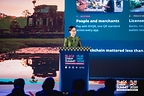
PHNOM PENH, Cambodia, Nov. 15, 2026 /PRNewswire/ — Cambodia is taking its national digital payment system, Bakong, onto the global stage, unveiling initiatives spanning international card payments, stablecoin and bond tokenisation pilots with Japan, and a remittance corridor with Rwanda.

The announcements were made at the inaugural Black Swan Summit Cambodia, co-hosted by the National Bank of Cambodia (NBC) and the Singapore-headquartered Global Finance & Technology Network (GFTN), in collaboration with three Cambodian ministries: the Ministry of Post and Telecommunications, the Ministry of Commerce, and the Ministry of Industry, Science, Technology and Innovation.

Held alongside the Sommet de la Francophonie, the two-day summit has attracted over 5,000 registered participants from 60 countries, including policymakers, central bankers, investors and technology leaders, to advance financial connectivity between ASEAN, Africa and other international markets.

From National Payment System to Global Network

Cambodia has built a digital payments infrastructure that has transformed domestic financial access. It is now extending that infrastructure internationally through three initiatives:

Bakong to the World: Bakong users will be able to create Visa or Mastercard virtual cards through the app, enabling contactless payments overseas.

Japan–Cambodia stablecoin remittances: NBC and SBI Group will explore stablecoin-based cross-border transfers, with funds received through Bakong wallets.

Government bond tokenisation: NBC and SBI Bank will pilot the tokenisation of Cambodian government bonds on the Canton Network, exploring new approaches to trading and settlement.

Bakong has also contributed to the growing use of Cambodia’s national currency. The riel’s share of transactions on the platform increased from 17% in 2020 to 58% in 2025.

A Model for Emerging Economies

Cambodia’s financial transformation is rooted in an extraordinary history. Following the destruction of its banking system and the abolition of its currency between 1975 and 1979, the riel was reintroduced on 20 March 1980.

Rather than replicate conventional financial infrastructure, Cambodia has built a digital-first payments ecosystem. Today, Bakong connects approximately 38 million accounts in a country of 17 million people. In 2025, it processed 1.3 billion transactions worth US$241.84 billion, equivalent to approximately 4.5 times Cambodia’s GDP.

For emerging economies seeking to expand financial inclusion, strengthen domestic currencies and connect to global markets, Cambodia offers an example of how public digital infrastructure can accelerate financial development.

Bridging ASEAN and the Francophone World

The summit also marks a step towards connecting Southeast Asia with Francophone economies, particularly in Africa.

Two initiatives signal this ambition:

Cambodia–Rwanda remittance corridor: The National Bank of Cambodia and the National Bank of Rwanda are working to connect Bakong with Rwanda’s RSwitch payment infrastructure, initially facilitating remittances from Cambodia to Rwanda.

Francophone Africa payment connectivity: H.E. Dr. Chea Serey, Governor of the National Bank of Cambodia, underscored the shared vision of exploring cross-border payment connectivity with Francophone African payment systems, with potential initial use cases focusing on remittances and small-value trade.

These initiatives advance South–South cooperation, demonstrating how emerging economies can collaborate directly on interoperable financial infrastructure without relying exclusively on traditional international payment networks.

The summit continues on 16 November, with discussions on economic corridors, payment interoperability, financial resilience and regulatory cooperation.

Leadership Perspectives

H.E. Dr. Chea Serey, Governor of the National Bank of Cambodia, said: “Cambodia knows what it means to lose a financial system and rebuild trust in money. Bakong has expanded access and the use of the riel. Now we are connecting it to the world. Sovereignty and openness are not opposites. Inclusion must be measured not just by whether people can pay, but by whether they can withstand shocks.”

Sopnendu Mohanty, Group CEO, Global Finance & Technology Network (GFTN), said: “Cambodia shows that emerging economies can build financial infrastructure around their own needs rather than inherit systems designed elsewhere. The next challenge is connecting these platforms internationally. From African payment links to Japanese fintech pilots, Black Swan Summit Cambodia demonstrates how emerging markets can open new channels for trade, investment and financial inclusion.”

For more information: www.cambodia.blackswansummit.com

View original content to download multimedia:https://www.prnewswire.com/apac/news-releases/cambodia-takes-bakong-global-connecting-asean-with-japan-and-africa-302939651.html

SOURCE Global Finance & Technology Network (GFTN)

Continue Reading

Technology

APEC 2026 Host City Promotional Video Shenzhen: Where the Future Takes Shape Released Worldwide

Published

on

By

SHENZHEN, China, Nov. 14, 2026 /CNW/ — Shenzhen: Where the Future Takes Shape, the official promotional video for the host city of the 2026 Asia-Pacific Economic Cooperation (APEC) Economic Leaders’ Meeting, was released worldwide on November 15, as APEC Economic Leaders’ Week got underway in Shenzhen.

Presented by the Publicity Department of the CPC Shenzhen Municipal Committee and produced by Shenzhen Media Group, the video takes “Where the Future Takes Shape” as its central theme.

It brings together Shenzhen’s pioneering reforms, its achievements in building a modern, people-centered city, and the theme of 2026 APEC “China Year,” “Building an Asia-Pacific Community to Prosper Together.” Through the story of Shenzhen, the video offers international audiences a vivid look at Chinese modernization in practice, while extending a warm welcome to guests from across the Asia-Pacific and beyond. It also reflects the host city’s commitment to openness and its vision of working with regional partners to create a better future.

Shenzhen itself takes center stage in the video. Through six dimensions — innovative, livable, beautiful, resilient, culturally advanced, and smart — the production captures the city’s character during this landmark year and showcases its vitality and appeal to audiences worldwide.

The Chinese- and English-language versions premiered simultaneously across Shenzhen Media Group’s platforms, including Shenzhen TV’s 4K Ultra HD channel, its international channel, and the international social media network of “Shenzhen Channel”.

Featuring more than 260 shots, 99% of them newly filmed in 2026, this six-minute film brings Shenzhen to life–from cutting-edge innovation and vibrant urban spaces to stunning natural landscapes and cultural diversity.

Discover a city where the future is already taking shape, and where people from across the Asia-Pacific are invited to come together, share opportunities, and build a brighter, more prosperous future.

At this moment, Shenzhen is at its best.

As the video’s closing narration declares:

In 2026, the world gathers in Shenzhen to write a new chapter in building an Asia-Pacific Community to prosper together.

Gather in Shenzhen.

Witness miracles.

Together, let’s create a brighter future!

View original content to download multimedia:https://www.prnewswire.com/news-releases/apec-2026-host-city-promotional-video-shenzhen-where-the-future-takes-shape-released-worldwide-302939610.html

SOURCE Shenzhen Media Group

Continue Reading

Trending