Connect with us

Technology

Sub-Millisecond Battery Converter Gives 800 VDC AI Data Centers More Compute from the Same Grid Connection

Published

on

Rack-Mountable 80 kW Units Scale to Any Power Level and Let Battery Storage Absorb GPU Demand Swings

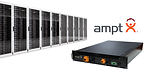
FORT COLLINS, Colo., Nov. 11, 2026 /PRNewswire/ — Ampt’s new Battery Converter helps AI data centers run more compute per megawatt of grid capacity as they transition to 800 VDC architectures. The converter delivers regulated 800 VDC from a DC bus shared by battery storage and grid or on-site power, providing active power conditioning that responds to GPU load changes in less than 1 millisecond. With the battery handling short peaks, GPUs can run without power capping and the grid connection can be sized for average load rather than peak load. Each 2U rack-mountable unit delivers 80 kW (100 A), and units can be paralleled from a single rack to a full row or an entire GPU cluster. The Battery Converter is currently in partner pilots for data centers, with general availability in Q3 2027.

Why Does Millisecond Response Matter?

Data centers are moving to 800 VDC power architectures for rack-scale AI systems, which are projected to support 1 MW IT racks and improve end-to-end power efficiency by up to 5% compared with 54 V systems, according to NVIDIA. AI workloads can swing a rack’s power draw between 30% and 100% within milliseconds. The grid needs a steady, predictable load, while the GPUs need a highly dynamic source. NVIDIA’s white paper says energy storage “needs to fill the gap between these two conflicting requirements.”

How Does the Battery Converter Work?

In Ampt’s design, the battery, the grid and any on-site generation all feed a common DC bus. The Battery Converter steps that bus down to a regulated 800 VDC supply for the GPU racks. When GPU load changes, the Ampt converter responds in less than 1 millisecond, enabling the battery to supply or absorb the difference while the grid or on-site generation sees steadier demand. Smoothing these peaks lets operators size upstream power equipment closer to average demand, reducing equipment costs, while presenting a steadier load that can help sites secure timely grid access.

The grid connects to the DC bus through a medium-voltage transformer and power conversion system, and feeds batteries that operate up to 1500 VDC. With a grid-forming power conversion system, the battery that absorbs GPU swings can also actively support grid voltage and frequency. These are the same transformers, power conversion systems and batteries used in utility-scale storage today, so data center operators can build on established supply chains and on the nearly two decades Ampt has spent deploying DC power conversion for utility-scale solar and energy storage systems.

How Does the Design Improve Efficiency?

In a power-limited AI factory, every kilowatt lost in conversion and distribution is capacity that cannot run GPUs, and operators pay for it twice, once as electricity and again as cooling. To keep more of that power for compute, Ampt’s design reduces losses in the converter, in storage and in distribution. The Ampt Battery Converter reaches up to 99.2% peak efficiency. Stored energy stays DC, avoiding the costly DC-to-AC-to-DC conversions of AC-coupled storage. And the DC bus feeding the converters runs at 1100 to 1500 VDC, depending on the battery’s state of charge, with the converters delivering a stable 800 VDC to the GPU racks. Higher voltage carries the same power at lower current, which reduces conductor losses or allows smaller conductors. Ampt’s Battery Converter is built for the first generation of 800 VDC racks while delivering the benefits of higher distribution voltages that appear only on future roadmaps. 

How Does the Converter Scale?

Ampt Battery Converter units can be paralleled to any power level, allowing the same 2U, 80 kW (100 A) building block to serve a single GPU rack, a full row or an entire data hall. Adding one unit provides N+1 redundancy, maintaining full power if a unit goes offline. Sites with existing or planned solar can also connect PV systems to the same battery DC bus through Ampt String Optimizers, with no additional inverter or transformer.

“In AI factories, GPU loads swing in milliseconds, so storage has to work every minute of the day. With the Ampt Battery Converter, the same battery gives the grid a steady load and the GPUs the fast-responding power they need. For operators, that means reliable compute and a faster path to bringing new AI capacity online. For the communities around them, it means data centers that are easier on the grid,” said Aaron Gomolak, CEO of Ampt.

For specifications or to arrange a pilot, visit Ampt’s website or contact info@ampt.com.

About Ampt 
Ampt delivers power conversion and communication technologies that are used to lower the cost and improve the performance of new PV systems, repower existing systems, enable lower-cost DC-coupled storage, and supply 800 VDC power to AI data centers. With installations and experience serving markets around the world, Ampt is the number one DC optimizer company for large-scale systems. The company is headquartered in Fort Collins, Colorado, U.S.A., and has sales and support locations in North America, Europe, Japan, and Australia as well as representation in Asia and the Middle East. For more information, visit www.ampt.com and follow Ampt on LinkedIn.

NVIDIA is a trademark and/or registered trademark of NVIDIA Corporation in the United States and other countries. 

View original content to download multimedia:https://www.prnewswire.com/news-releases/sub-millisecond-battery-converter-gives-800-vdc-ai-data-centers-more-compute-from-the-same-grid-connection-302935719.html

SOURCE Ampt

Continue Reading

Technology

Routific connects delivery route planning to 9,000+ apps through Zapier

Published

on

By

New Routific integration on Zapier sends orders from QuickBooks, WooCommerce, Google Sheets, and other apps straight into Routific to plan optimized delivery routes

VANCOUVER, BC, Nov. 12, 2026 /PRNewswire-PRWeb/ — Weeks after launching its Shopify app, Routific, the smart route optimization and delivery management platform for growing delivery businesses, is now available on Zapier. Delivery businesses can connect Routific to more than 9,000 apps, from online stores and order forms to spreadsheets and databases, and stop retyping orders before they can plan a single route.

Previously, we relied on manually downloading and uploading spreadsheets… By connecting Knack, Zapier, and Routific, we’ve automated that process.

“Every delivery business runs on a different mix of tools. One takes orders in WooCommerce, another in Airtable, another in a form they built themselves,” said Marc Kuo, Founder and CEO of Routific. “We can’t build a native integration for every one of them, so we built one that reaches all of them. Orders get into Routific on their own, and dispatchers spend their time on routes drivers trust, not on copying addresses.”

With Zapier, businesses can create, update, complete, and delete orders in Routific, create routes, and publish a day’s routes to drivers. They can also pull route details, route timelines, and proof-of-delivery photos back out to other apps. Common setups include sending new QuickBooks invoices to Routific as delivery orders, adding new WooCommerce orders to Routific as they come in, turning rows in Google Sheets or Airtable into delivery orders, and publishing routes to drivers at the same time every morning.

Diaper Stork is a Seattle-area diaper service that delivers premium cloth diapers to families each week while picking up their used diapers for laundering and reuse.

“With hundreds of weekly deliveries, managing our routes and keeping customer information up to date is a big part of our operation,” said Carrie Pollak, CEO of Diaper Stork.

“Previously, we relied on manually downloading and uploading spreadsheets between our customer management system and our routing software. By connecting Knack, Zapier, and Routific, we’ve automated that process. New delivery orders now flow directly into our routing system, and delivery updates and tracking information are automatically shared back with our customer service team. This saves us time, reduces manual work, and gives our team better visibility into every delivery. Most importantly, it allows us to spend less time managing systems and more time taking care of our customers.”

Routific is the highest-rated route planning software on Capterra, with 4.9 stars from 144 reviews as of November 2026. The Zapier integration is available now to all Routific customers. Businesses can get started from Routific’s Zapier page or learn more about Routific’s Zapier integration. Watch how it works: https://www.youtube.com/watch?v=5I0Xm_nmVVw

About Routific

Founded in Vancouver in 2012, Routific is smart route optimization and delivery management software for growing delivery businesses, from food and grocery brands to florists, furniture retailers, and couriers. Its optimization algorithm, inspired by how honeybees find the shortest path to food, builds routes drivers trust. Routific is the highest-rated route planning software on Capterra. It connects with Shopify, Zapier, and thousands of other apps.

Media Contact

Suzanne Ma, Routific, 1 888-907-6884, press@routific.com, www.routific.com

View original content to download multimedia:https://www.prweb.com/releases/routific-connects-delivery-route-planning-to-9-000-apps-through-zapier-302936354.html

SOURCE Routific

Continue Reading

Technology

Build, Partner or Hybrid: Trigent Helps Mid-Market Leaders Choose a Global Capability Center Based on Evidence


Published

on

By

Trigent Xperience Zone (TXZ) lets US, UK, and European mid-market companies test-drive an India capability and innovation center.

BOSTON, Nov. 12, 2026 /PRNewswire/ — Trigent, a global technology and AI solutions company, today launched the Trigent Xperience Zone (TXZ) and a Global Capability Center (GCC) Fit Assessment. These services give mid-market companies in the US, UK, and Europe a working view of an India Global Capability Center, and a recommended setup, before they commit capital.

A new kind of buyer

Captive centers and dedicated offshore development centers are no longer a Fortune 500 story alone. Out of India’s 2,117 GCCs, nearly half belong to mid-market and smaller companies, according to Nasscom’s FY2026 report.

The work is changing too. The same report finds 96% of GCCs opened since FY2021 launched with a product, R&D or engineering mandate. So, the business case now rests on capability and innovation, not just cost.

See it, test it, then scale it

TXZ lets leaders explore nine working areas of Trigent’s India operations, from interview rooms and delivery floors to the legal and accounts teams. With the Fit Assessment, they get a starting model built on their goals, timeline, and readiness.

According to Trigent, this 360-degree view is critical because mid-market Global Capability Centers typically struggle one year down the line when hiring and governance gaps start to show.

Pick the right starting point

The GCC Fit Assessment is built for the CEO, CFO, CTO, and CHRO, who sign off on a GCC but often judge readiness differently. Whether the answer is a fully owned captive center, a partner-led model, or a hybrid, the assessment weighs the trade-offs that stall boardroom discussions: speed versus control, cost versus capability, internal readiness versus growth.

“India’s next wave of Global Capability Centers will be built by mid-market companies, from founder-led businesses to PE-backed portfolio firms,” said Rohail Qadri, President, GCC & Professional Services at Trigent. “For them, a GCC isn’t just a cost play anymore. It’s a bet on growth and innovation, and a choice about how much control to keep. We’ve spent three decades working alongside similar companies, so we know where they stretch and where they stall. We help them get those calls right before capital is committed.”

Leaders can take the virtual tour and the GCC Fit Assessment at Trigent Xperience Zone.

About Trigent

Trigent is a data-first, AI-driven global technology solutions provider helping organizations modernize operations and build next-generation Global Capability Centers that deliver measurable business outcomes and bespoke experiences. We enable customers to lead the shift in their industries with trusted, scalable solutions that help them maximize their IT investments. With decades of experience, deep domain expertise, and strong technology capabilities, Trigent has been delivering end-to-end solutions for ISVs, enterprises, and SMBs since 1995. To learn more, visit trigent.com.

Media Contact:

Shamini Martin
Trigent Software, Inc.
info@trigent.com
+1 (508) 490 6000
trigent.com 

View original content to download multimedia:https://www.prnewswire.com/news-releases/build-partner-or-hybrid-trigent-helps-mid-market-leaders-choose-a-global-capability-center-based-on-evidence-302937866.html

SOURCE Trigent Software

Continue Reading

Trending