Connect with us

Technology

Same Prompt, More Complete Prints: Meshy.ai Publishes Printability Benchmark for AI-Generated 3D Models

Published

on

In an FDM print test, Meshy.ai’s Make Printable feature cut prints with major missing features or holes from 44% (11 of 25) to 8% (2 of 25).

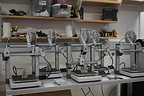
SILICON VALLEY, Calif., Nov. 13, 2026 /PRNewswire/ — Meshy.ai today published the results of a printability benchmark for AI-generated 3D models, carried out in collaboration with the Advanced Digital Design and Fabrication facility (ADDFab) at the University of Massachusetts Amherst. Meshy.ai commissioned and funded the study and supplied six Bambu Lab A1 printers and consumables. Facility participation does not constitute endorsement of Meshy.ai products.

AI-generated 3D models are usually judged by how they look on screen. Once they reach a printer, many fall short: thin wings, fins and panels fail to form or snap off when supports are removed. Meshy.ai built its Make Printable feature to close that gap. Make Printable is Meshy.ai’s print-preparation feature. It repairs mesh defects and reinforces thin features for the selected size and process, and it works on models generated in Meshy.ai and on uploaded models alike.

To see how that holds up on real hardware, Meshy.ai generated models for 25 hard-to-print prompts, and the lab sliced and printed 125 parts on brand-new Bambu Lab A1 printers: the same 25 prompts from five workflows (Meshy 7, Meshy 7 with Make Printable and three other AI 3D generators), using the same settings and filament for every workflow. Engine identities were concealed throughout file preparation, printing and grading. Three experienced 3D printing users scored each part against the lab’s five-criterion rubric, and 17 volunteers ranked the anonymous prints.

“Many AI platforms can generate 3D models that appear impressive on screen, but producing a printable part requires more than just visual fidelity. The next consideration is design for additive manufacturing, which cannot be reliably assessed from a rendered image alone. The purpose of this study was to evaluate these platforms in practice — by actually 3D printing each part on a consumer FDM printer — and to determine whether they can produce real parts that are both visually convincing and manufacturable,” said Dave Follette, Director, ADDFab, UMass Amherst.

With Meshy 7 alone, 11 of 25 prints (44%) had major missing features or holes. With Meshy 7 with Make Printable, that dropped to 2 of 25 (8%). In the same test, 23 of 25 Meshy 7 with Make Printable prints (92%) had no major missing features or holes, compared with 21 of 25 (84%), 15 of 25 (60%) and 14 of 25 (56%) for three other AI 3D generators. Other defects may remain.

Meshy.ai also ran a larger software assessment of model geometry across 100 prompts. Models with complete, connected surfaces rose from 33.4% for raw Meshy 7 output to 98.8% after Make Printable, averaged across the 100 prompts. This surface check measures detected openings and invalid connections, not physical print success.

“People use Meshy because they want to bring an idea to life, not spend hours repairing a model before they can print it,” said Jessie Bergau, 3D Printing Product and Partnerships Manager at Meshy.ai. “Make Printable helps close that gap. Working with UMass Amherst’s ADDFab Lab gave us a way to test the results beyond the screen, with physical prints evaluated without knowing which tool produced them.”

The study has several limitations. The 25 prompts were deliberately selected to challenge the models’ ability to reproduce delicate features, with priority given to prompts for which competing models were predicted to be too thin to print. The findings therefore should not be interpreted as representative of performance across all prompts. Two Meshy 7 with Make Printable prints, a six-legged insect and a long-finned tropical fish, still had major missing features or holes. The physical test covered FDM printing only. Future testing could extend to SLA, SLS and Full-Color printing.

The full printability study, including methodology, limitations and photos of the misses, is available on the Meshy.ai blog, where readers can also download the complete whitepaper. Make Printable is available now as part of Print Check in Meshy.ai.

Frequently asked questions

How does Meshy 7 with Make Printable change the geometry?

Meshy 7 with Make Printable repairs surface errors and reinforces selected thin regions for the intended print size, rather than enlarging the whole model. Inspect the prepared result before exporting.

Does it guarantee a successful print?

Geometry preparation addresses only part of the process. Material, orientation, support strategy, printer calibration and settings still matter.

Which printing processes can I prepare for?

FDM, SLA and Full-Color presets guide geometry preparation. The benchmark’s physical tests used FDM.

Can I repair a model made in another tool?

Yes. Upload it to Meshy.ai, choose the intended size and printing process, and use Meshy 7 with Make Printable before exporting to your slicer.

Can I use Meshy 7 with Make Printable through the API?

Yes. The Repair Printability API repairs model topology and can reinforce thin walls for a specified size and printing process. It accepts external model files as well as supported Meshy.ai task outputs.

About the study

Meshy.ai commissioned and funded the study and supplied six Bambu Lab A1 printers and consumables. The Advanced Digital Design and Fabrication facility (ADDFab) at the University of Massachusetts Amherst performed file preparation and slicing, printing, support removal and objective grading. Facility participation does not constitute endorsement of Meshy.ai products or an audit of Meshy.ai’s software.

About Meshy.ai

Meshy.ai is an AI 3D multimodal model company. Founded by Ethan Hu, who holds a Ph.D. from MIT, Meshy.ai builds foundation models for AI-powered 3D generation, turning text and images into 3D models for everything from games and film to 3D printing. Meshy.ai serves more than 15 million registered users and over 3,000 companies and educational institutions worldwide. In July 2026, the company raised nearly $400 million in a Series B round at a $1.5 billion valuation, the largest round to date in AI 3D. In September 2026, Meshy.ai became the first AI 3D company to surpass $100 million in annual recurring revenue (ARR). In October 2026, it was the only AI 3D company in a16z’s first ranking of the top 50 consumer AI apps by monthly revenue. Learn more at meshy.ai.

View original content to download multimedia:https://www.prnewswire.com/news-releases/same-prompt-more-complete-prints-meshyai-publishes-printability-benchmark-for-ai-generated-3d-models-302938840.html

SOURCE Meshy.ai

Continue Reading

Technology

Minister Joly highlights Government of Canada investments from Budget 2026: Masters of our destiny to support industries


Published

on

By

WOODBRIDGE, ON, Nov. 13, 2026 /CNW/ — In a world reshaped by geopolitical competition, protectionism and rapidly evolving technologies, Canada stands apart. Our abundant natural resources, clean and reliable energy, world-class talent, strong public finances, and access to global markets give us a clear competitive advantage.

We have the strength to build and the discipline to deliver.

These foundations are already translating into results: investment is growing, major projects are being built, and businesses are reaching new markets at home and abroad. Budget 2026 keeps Canada on a path to meet both fiscal anchors: balancing day-to-day operating spending with revenues by 2027–2028, a full year ahead of schedule, and keeping the deficit-to-GDP ratio on a declining path.

Today, the Honourable Mélanie Joly, Minister of Industry and Minister responsible for Canada Economic Development for Quebec Regions, met with Martinrea in Woodbrige, Ontario to highlight key investments from Budget 2026: Masters of our destiny to support Canada’s industries.

It is an ambitious plan to meet this moment and shape Canada’s economic future: building on our strengths, driving investment, boosting productivity, diversifying our trade, creating good jobs and making life more affordable for Canadians.

Budget 2026 is helping small businesses and key sectors navigate immediate pressures while strengthening their ability to adapt, diversify, grow, and compete over the long term by:

expanding the Strategic Response Fund, including $1 billion over six years, to support innovation, capital investment and R&D in areas like AI, agri-food, defence and aerospace, biomanufacturing and clean technologies, helping Canadian businesses innovate, pivot, scale up and compete globallyinvesting an additional $300 million over three years, starting in 2028–2029, and $200 million in future years, to leverage the Strategic Response Fund to expand industrial capacity and accelerate the adoption of modern methods of construction to build homes and help lower construction costsintroducing measures to improve competitiveness and leveraging the Canada Growth Incentive to mobilize more Canadian capital behind Canadian companiesinvesting in nuclear energy and critical minerals to help create high-paying jobs for Canadians, grow exports and strengthen Canada’s position as a global energy superpower

As global markets shift, the government is responding decisively through Budget 2026 to help Canadians and industry navigate this period of profound change and come out of it with a stronger, more diversified economy and become the masters of our destiny.

Quotes

“Being masters of our destiny is about having the confidence to build on our strengths and shape our own future. Canada has the resources, talent and ambition to succeed. Budget 2026 builds on those strengths by unlocking investment, building more at home, strengthening our energy and natural resource advantage, and helping Canadian businesses grow and compete on the world stage. That’s how we will create good jobs, make life more affordable, and build a stronger, more resilient and more united Canada for generations to come.”
– The Honourable François-Philippe Champagne, Minister of Finance and National Revenue

“Budget 2026 is about ensuring Canadian industry has the tools necessary to build, grow and compete in an increasingly unpredictable global economy. Through expanded support for research and commercialization, strategic investments in key sectors, and new support through the Strategic Response Fund, we are helping Canadian companies accelerate major projects, strengthen domestic supply chains, attract investment and create good jobs. These measures will reinforce Canada’s industrial competitiveness and ensure that the industries of the future are built here in Ontario and across Canada by Canadian workers and businesses.”
– The Honourable Mélanie Joly, Minister of Industry and Minister responsible for Canada Economic Development for Quebec Regions

Quick facts

Despite a challenging global environment, the Canadian economy has shown resilience:

Canada’s economy grew by 3.3% in the second quarter, the fastest pace in the G7.The International Monetary Fund expects Canada to be the second-fastest growing economy in the G7 in 2027.Canada is expected to maintain one of the lowest deficit-to-GDP ratios in the G7, signalling fiscal strength and the capacity to invest in the future.More Canadians are benefiting from labour market strength. Over the past year, Canada’s economy has added 214,000 jobs in private employment, while the unemployment rate has fallen to 6.5%, near its lowest level in two years.Since the end of 2024, Canada has created nearly twice as many jobs per capita as the United States.Rising productivity is helping lay the foundation for stronger wage growth and higher living standards, with productivity increasing by 1.2% over the last year, compared with average growth of just 0.1% following the pandemic.Foreign direct investment in Canada is at its highest level in nearly two decades. Canada attracted $98 billion in foreign investment in 2025 and has led the G7 in direct investment inflows per capita since early 2025.Canada has the lowest tax burden on new investment in the G7, encouraging businesses to invest, innovate and grow in Canada.Nominal goods and services exports to countries other than the United States increased by $33 billion in 2025 and are on pace to rise by a further $57 billion in 2026, as more Canadian businesses reach new markets.Canada is the only G7 country with free trade agreements with every other G7 member. Through 15 agreements in force covering 51 countries, Canadian businesses already have preferential access to 1.5 billion consumers and economies representing two thirds of global GDP.

Associated links

Budget 2026: Masters of our destinySpring Economic Update 2026: Canada Strong For AllTechnical Backgrounder: Canada Strong Fundhttps://www.canada.ca/en/department-finance/news/2026/11/mortgage-insurance-rule-changes-to-support-missing-middle-housing.html Powering Canada Strong: From Strategy to Action

SOURCE Innovation, Science and Economic Development Canada

Continue Reading

Technology

Monotype Expands Inkwell with Four New Styles Inspired by the Freedom of Handwriting

Published

on

By

Inkwell Antique, Formal, Chancery, and Ornaments add new voices to the connected family.Designers can shift tone from formal to playful without leaving one coherent type family.

WOBURN, Mass., Nov. 13, 2026 /PRNewswire/ — Monotype Imaging Inc., a global leader in type and technology, today announced the expansion of Inkwell®, an expressive type family inspired by the natural shifts, gestures, and imperfections of handwriting. Four new additions, Inkwell Antique, Formal, Chancery, and Ornaments, broaden the family’s creative range while retaining its distinctive handwritten character.

Designed by Jonathan Hoefler beginning in 2004, Inkwell was one of the first type families to interpret a broad range of typographic styles through the aesthetic of handwriting. Jordan Bell joined the project in 2015, helping develop the family for its 2017 release by Hoefler&Co. Its seven original styles — Serif, Sans, Script, Blackletter, Tuscan, Open, and Condensed — each span six weights. The expanded Inkwell family is now available in Monotype Fonts, Monotype Connect, and MyFonts.

Bell, now Senior Type Designer at Monotype, led the latest expansion, completing three additions that extend Inkwell into new historical, formal, and graphic territory, and adding an original set of Ornaments of his own design.

“Inkwell has always been a passion project — one built around the joy of making and using type,” said Jordan Bell, Senior Type Designer at Monotype. “With this expansion, our little universe of hand-drawn styles has expanded further, giving people more ways to create hierarchy, shift between typographic voices, and bring an expressive, human quality to their work.”

The designs reflect the physical behavior of writing through overlapping strokes, varied structures, simplified forms, and irregular transitions. These shared details allow the styles to be used independently or combined to introduce hierarchy, contrast, and personality while maintaining visual continuity.

Inkwell is already at work on restaurant menus, wine lists, museum copy, and maps. Together, the additions give designers more ways to use Inkwell across branding, publishing, packaging, signage, hospitality, cultural work, and identity systems, as well as playful applications including badges, labels, and illustration.

A Typeface That Speaks in Many Voices
The idea behind Inkwell began with a map. While designing materials for his wedding at the Brooklyn Botanic Garden, Jonathan Hoefler wanted lettering that could sit naturally alongside casual illustration. Conventional type made the map feel too official, while formal calligraphy felt overly elaborate. The goal was something informal but considered, expressive without appearing immature — and the answer was handwriting.

Hoefler developed Inkwell as a comprehensive family of pen-drawn alphabets, giving designers the tools to establish hierarchy and shift tone while maintaining a consistent visual identity. Working together, Hoefler and Bell extended the concept across six weights, from the fine lines of a technical pen to the expressive force of a permanent marker. The latest expansion adds four new voices across 24 styles.

“Inkwell began with my desire to give typography the flexibility and expressiveness of handwriting beyond just the usual modes of cursive and block print,” said Jonathan Hoefler. “Jordan’s incredible facility with the pen made him a wonderful partner for not only developing Inkwell’s original styles, but exploring the beginnings of new styles together, and now introducing his own creations to the Inkwell family.”

Expanding Inkwell’s Creative Range
Each new addition gives designers a different way to create emphasis, atmosphere, and personality:

Inkwell Antique, inspired by ornamented lettering from the Victorian era, adds historic character for branding, packaging, posters, hospitality, and editorial design.Inkwell Formal offers a new twist on the classic engraver’s script, using contextual and position-specific characters to preserve natural handwritten variation for hospitality, events, wine labels, and luxury branding.Inkwell Chancery draws on Renaissance writing traditions, with swash capitals and contextual alternates, creating a useful contemporary family for publishing, museums, cultural institutions, and ceremonial work.Inkwell Ornaments extends the family beyond letterforms with charming emoji and illustrations, along with arrows, pointing hands, musical symbols, weather devices, and cartographic elements — bringing Inkwell back to its origins in mapmaking.

Inkwell Antique, Formal, Chancery, and Ornaments are now available through Monotype Fonts, Monotype Connect, and MyFonts.

Explore the complete Inkwell family.

About Monotype
Monotype Imaging Inc. is a global leader in typography and branding, offering design assets, technology solutions, and expert insights to empower brand expression and engagement. The company partners with leading type foundries to deliver the broadest inventory of high-quality typefaces in the world.

Further information is available at www.monotype.com. Follow Monotype on X, Instagram, and LinkedIn.

Monotype and MyFonts are trademarks of Monotype Imaging Inc. registered in the U.S. Patent and Trademark Office and may be registered in certain other jurisdictions. Monotype Fonts and Monotype Connect are trademarks of Monotype Imaging Inc. and may be registered in certain other jurisdictions. Inkwell is a registered trademark of The Hoefler Type Foundry, Inc. All other trademarks belong to their respective owners.

Media Contacts:
Charlotte Simcock
Head of Global Public Relations for Monotype – Global
Charlotte.Simcock@monotype.com

ThoughtLDR for Monotype – US/UK
monotype@thoughtldr.com

Tanja Koschade
KOSCHADE PR for Monotype – DACH
tanja@koschadepr.de

View original content to download multimedia:https://www.prnewswire.com/news-releases/monotype-expands-inkwell-with-four-new-styles-inspired-by-the-freedom-of-handwriting-302939069.html

SOURCE Monotype

Continue Reading

Technology

Internet2 Announces 2026 Board of Trustees Elections, Appointments, and New Officers

Published

on

By

WASHINGTON, Nov. 13, 2026 /PRNewswire/ — Internet2, the advanced technology nonprofit powering U.S. research and higher education (R&E), today announced the 2026 election results and appointments for its Board of Trustees, including new board officers, three new trustees, and three trustees returning for second terms. Composed of university presidents, chief information officers, researchers, and other R&E executives, the board provides strategic direction, leadership, and oversight for Internet2.

Cynthia Larive, chancellor of the University of California, Santa Cruz, was elected board chair, and M. Brian Blake, president of Georgia State University, was elected vice chair. Both began their terms in November 2026. Larive previously served as vice chair, and Blake joined the board in 2025.

The announcement comes as Internet2 marks its 30th anniversary with a community of 520 member organizations, spanning universities, federal agencies, nonprofit organizations, regional R&E networks, and industry. Led by Tripti Sinha, president and CEO, Internet2 provides the high-performance national network, integrated cloud solutions, secure trust fabric, and collaborative forums that enable its members to drive the next generation of scientific and academic discovery.

Newly Elected and Appointed Trustees

The board held its annual election this fall, electing one new trustee, Marc Parlange, president of the University of Rhode Island. He is serving a three-year term from November 2026 through October 2029.

Earlier this year, the board filled two mid-term vacancies by appointment:

Louis Fox, president and CEO of CENIC, the Corporation for Education Network Initiatives in CaliforniaEllen Granberg, president of George Washington University

Fox and Granberg’s appointed terms end in October 2027.

Trustees Returning for Second Terms

Three trustees are serving second terms, each running from November 2026 through October 2029:

Ewa Deelman, research professor of computer science and principal scientist at the University of Southern California Information Sciences InstituteAimee Heeter, senior vice chancellor for finance and administration at the University of Illinois Urbana-ChampaignMichele Norin, senior vice president and chief information officer at Rutgers, the State University of New Jersey

Acknowledging the Service of Outgoing Trustees

Internet2 extends its sincere appreciation to outgoing trustees Gregory Washington, president of George Mason University, and Jennifer Cowley, former president of the University of Texas at Arlington, for their leadership, dedication, and service to the R&E community.

During his tenure as chair of the Internet2 Board of Trustees, Washington provided valuable leadership and guidance, helping advance Internet2’s mission and strategic priorities during an important period for the organization. Cowley, who served as a trustee, contributed her time, perspective, and commitment to the board’s work. Internet2 is grateful to both for their dedication to the organization and the broader R&E community.

Learn more about the Internet2 Board of Trustees.

About Internet2
Internet2® is a nonprofit, member-driven advanced technology community founded by the nation’s leading higher education institutions in 1996. Internet2 serves 353 U.S. universities, 57 government agencies, 46 regional and state education networks and through them supports more than 80,000 community anchor institutions, over 1,000 InCommon participants, 64 leading corporations working with our community, and 70 national research and education network operators that represent more than 100 countries.

Internet2 delivers a diverse portfolio of technology solutions that leverages, integrates, and amplifies the strengths of its members and helps support their educational, research, and community service missions. Internet2’s core infrastructure components include the nation’s largest and fastest research and education network that was built to deliver advanced, customized services that are accessed and secured by the community-developed trust and identity framework. For more information, visit https://internet2.edu.

View original content to download multimedia:https://www.prnewswire.com/news-releases/internet2-announces-2026-board-of-trustees-elections-appointments-and-new-officers-302938522.html

SOURCE Internet2

Continue Reading

Trending