Connect with us

Technology

StreamWork Launches on the Adobe Marketplace, Connecting Adobe Premiere, Photoshop, and InDesign to Enterprise Creative Approvals

Published

on

New plugins connect creative production to StreamWork’s approval infrastructure

SAN FRANCISCO, Nov. 17, 2026 /PRNewswire/ — StreamWork, the creative approval infrastructure platform for enterprise teams, announced that StreamWork for Adobe Premiere, Photoshop, and InDesign are now available on the Adobe Marketplace. Editors, designers, and marketing teams can upload work to StreamWork straight from Adobe Creative Cloud for review and approval, and see reviewer feedback right in Premiere, Photoshop, and InDesign.

For many creative teams, the bottleneck isn’t making the work. It’s getting it approved. In StreamWork’s 2025 Approval Research Study of 500 marketing and creative professionals, 74% said the approval process takes more effort than the creative work itself.

What’s now available

StreamWork + Adobe Premiere: Video teams upload sequences as new media or new versions, choosing the entire sequence or in/out points. Reviewer comments sync back to the Premiere timeline as markers, and Premiere markers become StreamWork comments. Every version stacks automatically, and side-by-side comparison shows what changed between cuts.StreamWork + Adobe Photoshop and InDesign: Designers share files directly into StreamWork with no manual export, then read, reply to, and resolve feedback in the plugin. Reviewers pin feedback to the exact element, and every version stacks for side-by-side comparison.Enterprise approval workflows: With StreamWork, every file can be routed through AI-enabled, multi-stage review across creative, legal, brand, and leadership, with deadlines, automated reminders, and an audit trail. Work also connects to Asana, monday.com, Slack, Figma, and leading file storage tools.

“Many of the creative teams we talk to make their work in Adobe Creative Cloud, but approving it is a different job, and it deserves a platform built for it,” said Meredith Bailey, Founder and CEO of StreamWork. “StreamWork is that platform. We connect the tools creatives already use, and the rest of the stack, to a real approval workflow, so nothing ships without the right sign-off.”

Reviewers, including clients, agencies, and legal teams, approve from a single proofing link with no Adobe or StreamWork account required.

Availability

StreamWork for Adobe Premiere, Photoshop, and InDesign are available today as free downloads on the Adobe Marketplace for StreamWork customers on Team plans and above. Once a workspace admin activates the integration in StreamWork, team members can download the plugins and get started in minutes. Learn more at streamwork.com/adobe-creative-cloud

About StreamWork

StreamWork is creative approval infrastructure for the enterprise. Founded in 2020, StreamWork helps creative, marketing, and agency teams review and approve every asset in one structured workflow. Leading creative teams, including The Channel Company, MegaFood, and Arizona State University, use StreamWork. StreamWork is a 2026 Webby Award Honoree, earned G2 badges for Best Estimated ROI, Fastest Implementation, and Highest User Adoption, and is SOC 2 Type II certified. Learn more at streamwork.com.

Media contact:
David Pondell
426920@email4pr.com
(415) 991-8528

View original content to download multimedia:https://www.prnewswire.com/news-releases/streamwork-launches-on-the-adobe-marketplace-connecting-adobe-premiere-photoshop-and-indesign-to-enterprise-creative-approvals-302941946.html

SOURCE StreamWork

Continue Reading

Technology

Label Free Detection Market worth $0.85 billion by 2031 – Exclusive Report by MarketsandMarkets™

Published

on

By

DELRAY BEACH, Fla., Nov. 20, 2026 /PRNewswire/ — According to MarketsandMarkets™, the Label Free Detection Market is projected to reach USD 0.85 billion by 2031 from USD 0.58 billion in 2026, at a CAGR of 8.1% during the forecast period.

Browse 488 market data Tables and 58 Figures spread through 426 Pages and in-depth TOC on ‘Label Free Detection Market – Global Forecast to 2031’

Label Free Detection Market Size & Forecast:

Market Size Available for Years: 2026–20312026 Market Size: USD 0.58 billion2031 Projected Market Size: USD 0.85 billionCAGR (2026–2031): 8.1%

Label Free Detection Market Trends & Insights:

North America accounted for the largest share, 41.7%, of the label free detection market in 2025.By offering, instruments accounted for the largest share of 60.1% of the label free detection market in 2025.By application, binding kinetics & affinity analysis accounted for the largest share of the label free detection market in 2025.

Download PDF Brochure: https://www.marketsandmarkets.com/pdfdownloadNew.asp?id=32435593

The label free detection market is expanding as pharmaceutical and biotechnology companies increasingly adopt advanced analytical platforms to accelerate biologics development, improve molecular characterization, and optimize research workflows. Label free detection technologies are widely used to measure binding kinetics, evaluate molecular affinity, monitor cellular responses, and assess protein stability. Rising demand for high-throughput analytical solutions is accelerating the adoption of surface plasmon resonance (SPR), bio-layer interferometry (BLI), grating-coupled interferometry (GCI), and cellular impedance systems. In addition, ongoing advancements in biosensor surface chemistry, microfluidic integration, and automated data analysis are improving detection sensitivity, assay reproducibility, and operational efficiency. The growing complexity of therapeutic modalities such as bispecific antibodies and antibody-drug conjugates, along with greater emphasis on real-time analytical monitoring in bioprocess development, further supports market expansion.

By offering, the instruments segment held the largest share of the label free detection market in 2025.

By offering, the label free detection market is segmented into instruments, consumables, and software & services. In 2025, instruments accounted for the largest market share. This is mainly because advanced analytical platforms such as surface plasmon resonance (SPR), bio-layer interferometry (BLI), grating-coupled interferometry (GCI), and cellular impedance systems require high capital investment. These instruments are widely used by pharmaceutical and biotechnology companies as well as academic and research institutes for binding kinetics analysis, affinity measurement, antibody characterization, and drug discovery. The growing demand for high-throughput screening and real-time biomolecular interaction analysis further supports instrument adoption. Continuous advances in detection sensitivity, assay throughput, automation, and integrated analytical capabilities also strengthen the instruments segment’s leading position.

By consumables, the biosensors & sensor chips segment held the largest share of the label free detection market in 2025.

By consumables, the label free detection market is segmented into biosensors & sensor chips, microplates, coupling kits & reagents, capture kits & reagents, and other consumables. In 2025, biosensors & sensor chips accounted for the largest market share. Their leading position is supported by their extensive use in surface plasmon resonance (SPR), bio-layer interferometry (BLI), and other optical biosensing workflows. These consumables provide functionalized sensing surfaces for real-time monitoring of molecular interactions, binding kinetics, and affinity measurements. Their widespread use in antibody characterization, drug discovery, and protein interaction studies drives recurring demand among pharmaceutical and biotechnology companies, as well as academic and research institutes.

Inquiry Before Buying: https://www.marketsandmarkets.com/Enquiry_Before_BuyingNew.asp?id=32435593

By region, North America accounted for the largest market share in 2025.

In 2025, North America held the largest share of the label free detection market. This is supported by strong pharmaceutical and biotechnology research activity, high investment in drug discovery, and well-established life sciences infrastructure. The US leads the region in biomolecular interaction analysis, antibody characterization, high-throughput screening, and biopharmaceutical development. Leading label free detection technology providers, contract research organizations (CROs), and academic research institutes drive strong demand for advanced analytical instruments and consumables. Growing adoption of surface plasmon resonance (SPR), bio-layer interferometry (BLI), and cellular impedance technologies further supports market growth in North America.

Key Players

Leading players in the Label Free Detection companies include Danaher Corporation (US), Sartorius AG (Germany), Agilent Technologies, Inc. (US), Waters Corporation (US), Corning Incorporated (US), AddLife AB (Sweden), AMETEK, Inc. (US), HORIBA (Japan), Spectris (UK), Shimadzu Corporation (Japan), Hitachi High-Tech Corporation (Japan), Attana AB (Sweden), Bruker (US), Applied BioPhysics, Inc. (US), and Refeyn Ltd. (UK), among others.

Get 10% Free Customization on this Report: https://www.marketsandmarkets.com/requestCustomizationNew.asp?id=32435593

Label Free Detection Market – Investment and Funding Scenario

Investment and Funding Context

The label free detection market is seeing growing investment and funding, driven by rising demand for real-time biomolecular interaction analysis, advances in biosensor technologies, and expanding applications in drug discovery and biopharmaceutical development. Investment activity is increasingly focused on developing high-throughput detection platforms, improving sensor sensitivity, and integrating automated analytical workflows. Emerging technologies such as nanoplasmonic biosensing and optical biosensors are also attracting funding to support product innovation and commercialization. For instance, in April 2026, ArgusEye (Sweden) secured USD 3.7 million in funding to scale its real-time bioprocess monitoring platform based on localized surface plasmon resonance technology. The investment supports commercializing advanced label free sensing solutions for continuous monitoring of biopharmaceutical manufacturing processes. Such funding initiatives accelerate technological innovation, expand commercial capabilities, and strengthen adoption of label free detection platforms across pharmaceutical research and bioprocessing applications.

Revenue Shift Context

The label free detection market is gradually shifting revenue from conventional surface plasmon resonance (SPR) instruments and basic biosensor consumables to higher-growth categories such as biolayer interferometry (BLI), grating-coupled interferometry (GCI), high-throughput screening platforms, cellular impedance systems, and specialized analytical services. The global label free detection market is projected to grow from USD 0.58 billion in 2026 to USD 0.85 billion by 2031, at a CAGR of 8.1%, with incremental revenue expected to come increasingly from advanced biosensor platforms, application-specific sensor chips, automated screening solutions, assay development, and binding kinetics profiling services. Meanwhile, established SPR systems remain an important revenue base, but newer label free technologies and integrated analytical solutions are gaining adoption across pharmaceutical & biotechnology companies, contract research organizations (CROs), contract development and manufacturing organizations (CDMOs), and academic & research institutes.

Mergers and Acquisitions

Mergers and acquisitions in the label free detection market are driven by the need to strengthen biosensor portfolios, gain access to proprietary detection technologies, and expand capabilities in real-time biomolecular interaction analysis. Companies are increasingly targeting specialized technology providers to integrate surface plasmon resonance (SPR), advanced biophysical characterization, and microfluidic analytical platforms.

LABEL FREE DETECTION MARKET: MERGERS AND ACQUISITIONS, JANUARY 2023–SEPTEMBER 2026

Month & Year

Deal Type

Company 1

Company 2

Description

September 2025

Acquisition

Fluidic Sciences Ltd. (UK)

Sphere Bio Ltd. (UK)

Fluidic Sciences acquired the business and assets of Sphere Bio to integrate microfluidic diffusional sizing with single-cell screening technologies. The acquisition expanded its capabilities in protein interaction analysis and biotherapeutic discovery.

June 2025

Acquisition

Nicoya Lifesciences Inc. (Canada)

Applied Photophysics Ltd. (UK)

Nicoya acquired Applied Photophysics to combine its SPR-based label free interaction analysis platforms with protein structure and stability characterization technologies. The acquisition strengthened Nicoya’s biopharmaceutical analytical portfolio and expanded its European presence.

Company Revenue Share Details

The top five players collectively account for about 65–70% of the global label free detection market, indicating a competitive landscape with established life sciences companies and specialized biosensor technology providers. Key market participants include Danaher Corporation (US), Sartorius AG (Germany), Agilent Technologies, Inc. (US), Waters Corporation (US), Corning Incorporated (US), AddLife AB (Sweden), AMETEK, Inc. (US), HORIBA (Japan), Spectris (UK), Shimadzu Corporation (Japan), and Hitachi High-Tech Corporation (Japan). These companies compete across instruments, consumables, analytical software, and services. Continued innovation in high-throughput interaction screening, real-time binding kinetics analysis, advanced sensor technologies, and automated analytical workflows is further intensifying competition across the market.

Browse Adjacent Market: Biotechnology Market Research Reports &Consulting

See More Latest Biotechnology Reports:

Laser Capture Microdissection Market by Product (Instruments, Consumables, Software, Services), System Type (Ultraviolet, Infrared, Immunofluorescence), Application (R&D (Molecular Biology, Cell Biology, Forensics), Diagnostics) & Region – Global Forecast to 2029

Proteomics Market by Instrumentation (Mass Spectrometry, HPLC, Electrophoresis, Protein Microarray), Reagents, Services (Core, Bioinformatics), Software, Workflow (Sample Prep, Separation), Applications, End User, Competition – Global Forecast to 2031

About MarketsandMarkets™

MarketsandMarkets™ has been recognized as one of America’s Best Management Consulting Firms by Forbes, as per their recent report.

MarketsandMarkets™ is a blue ocean alternative in growth consulting and program management, leveraging a man-machine offering to drive supernormal growth for progressive organizations in the B2B space. With the widest lens on emerging technologies, we are proficient in co-creating supernormal growth for clients across the globe.

Today, 80% of Fortune 2000 companies rely on MarketsandMarkets, and 90 of the top 100 companies in each sector trust us to accelerate their revenue growth. With a global clientele of over 13,000 organizations, we help businesses thrive in a disruptive ecosystem.

The B2B economy is witnessing the emergence of $25 trillion in new revenue streams that are replacing existing ones within this decade. We work with clients on growth programs, helping them monetize this $25 trillion opportunity through our service lines – TAM Expansion, Go-to-Market (GTM) Strategy to Execution, Market Share Gain, Account Enablement, and Thought Leadership Marketing.

Built on the ‘GIVE Growth’ principle, we collaborate with several Forbes Global 2000 B2B companies to keep them future-ready. Our insights and strategies are powered by industry experts, cutting-edge AI, and our Market Intelligence Cloud, KnowledgeStore™, which integrates research and provides ecosystem-wide visibility into revenue shifts.

MarketsandMarkets™ SalesPlay is an AI-driven Revenue Intelligence Co-Pilot designed to help revenue teams prioritize the right accounts, identify critical changes early, and surface opportunities ahead of demand, so pipeline builds naturally and deals close with greater consistency.

To find out more, visit www.MarketsandMarkets™.com or follow us on Twitter, LinkedIn and Facebook.

Contact:
Mr. Rohan Salgarkar
MarketsandMarkets™ INC.
1615 South Congress Ave.
Suite 103, Delray Beach, FL 33445
USA: +1-888-600-6441
Email: sales@marketsandmarkets.com
Visit Our Website: https://www.marketsandmarkets.com/
Research Insight: https://www.marketsandmarkets.com/ResearchInsight/label-free-detection-market.asp
Content Source: https://www.marketsandmarkets.com/PressReleases/label-free-detection.asp


View original content to download multimedia:https://www.prnewswire.com/news-releases/label-free-detection-market-worth-0-85-billion-by-2031—exclusive-report-by-marketsandmarkets-302946549.html

SOURCE MarketsandMarkets

Continue Reading

Technology

COFE+ 7th-Generation Robotic Barista Outperforms Award-Winning Barista in 2026 Yiwu International Coffee Masters Live Competition

Published

on

By

A head-to-head challenge at the 7th LD International Coffee Masters Competition highlights advances in robotic beverage preparation, speed, and consistency.

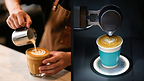
SHANGHAI, Nov. 20, 2026 /PRNewswire/ — At 11:30 a.m. on November 14, 2026, COFE+, the seventh-generation robotic barista developed by Shanghai Hi-Dolphin Robot Technology Co., Ltd., outperformed an award-winning barista in a live head-to-head competition at the 7th LD International Coffee Masters Competition, held as part of The 2026 China Yiwu Imported Commodities Fair.

The publicly witnessed and recorded challenge compared human and robotic coffee preparation across five beverage categories, evaluating end-to-end serving time and the consistency of measured beverage weights. COFE+ recorded shorter serving times across all five tested drinks and demonstrated substantially lower variation in the weight of five prepared lattes.

Shanghai Hi-Dolphin positions the result as a world-first milestone for robotic coffee technology in the context of a formal international coffee masters competition, highlighting the growing capabilities of AI-powered robotics in performing tasks traditionally associated with professional baristas.

A Measurable Advantage in Serving Speed

The competition applied a consistent end-to-end timing standard. The clock started when an order was placed and stopped when the finished beverage was handed to the judges. The measurement covered the complete service process, including order placement, cup collection, preparation, completion, and handover, rather than just the time spent making the coffee.

All results were recorded to the nearest second.

The five beverages were timed as follows:

Beverage

COFE+ Robotic Barista

Award-Winning Barista

Espresso

30 seconds

32 seconds

Cappuccino

36 seconds

40 seconds

Classic latte

43 seconds

48 seconds

Swan-design latte art

70 seconds

88 seconds

Audrey Hepburn portrait latte, produced using 3D printing

68 seconds

78 seconds

COFE+ completed all five beverages in less time than its human counterpart. Its average serving time was 49.4 seconds per drink, compared with 57.2 seconds for the award-winning barista. In other words, the human barista took approximately 1.16 times as long as COFE+ across the five tested beverages.

The difference was particularly noticeable in the more intricate latte-art preparation. For the swan-design latte art, COFE+ completed the drink in 70 seconds, compared with 88 seconds for the human barista. The result demonstrated the robotic system’s ability to combine efficient beverage preparation with more elaborate presentation techniques.

These results highlight the potential of AI-driven algorithms and precision robotic control to support efficient and repeatable beverage preparation across different drink types.

Weight Consistency and Repeatability: A Measurable Advantage in Robotic Preparation

Beyond serving speed, the competition also examined beverage preparation consistency. Each side prepared five lattes of the same type, which were weighed on site.

The five drinks prepared by the COFE+ seventh-generation robotic barista weighed 232.5 g, 232.2 g, 233.3 g, 234.7 g, and 230.0 g, respectively. Their average weight was 232.54 g, with a sample standard deviation of 1.72 g.

The five drinks prepared by the award-winning barista weighed 233.7 g, 232.1 g, 230.2 g, 246.2 g, and 225.9 g, respectively. Their average weight was 233.62 g, with a sample standard deviation of 7.61 g.

The human barista’s sample standard deviation was approximately 4.43 times that of COFE+. Despite having similar average serving weights, the two sets of drinks showed substantially different levels of variation.

COFE+ demonstrated a tighter distribution of measured weights, highlighting the potential of robotic automation to deliver more repeatable beverage preparation. The results illustrate an important advantage of intelligent coffee robotics: the ability to maintain greater consistency in measurable preparation parameters, supporting standardized beverage production across commercial operating environments.

Beyond the Competition: The Evolution of Coffee Retail

The implications of the competition extend beyond the performance of a robotic barista. As coffee retailers navigate changing labor costs, operating expenses, and consumer expectations, technology-enabled service models are attracting growing attention.

Traditional cafés depend heavily on skilled personnel to manage beverage preparation, customer service, and daily operations. While professional baristas remain central to the craft and customer experience of specialty coffee, staffing, training, workforce scheduling, and service availability can present operational challenges, particularly for businesses serving high-traffic environments or managing multiple locations.

AI-powered robotics offer an alternative approach. By integrating automated beverage preparation, precision robotic control, and intelligent operations management, robotic cafés can help standardize service processes, improve space utilization, and support more flexible operating hours.

For COFE+, this approach is reflected in its Light-Store Business Model, which combines compact robotic cafés, automated beverage production, and centralized remote operations. Its systems are designed for deployment in airports, hospitals, universities, shopping centers, office buildings, transportation hubs, and other commercial environments where space efficiency and extended service availability are important.

The COFE+ Smart Store Brain connects beverage production with intelligent retail management. Operators can remotely monitor equipment status, sales performance, and inventory levels, supporting centralized oversight across multiple locations. According to the company, one operator can remotely manage five to ten robotic café units, depending on operating conditions and management requirements.

Designed for 24-hour operation, COFE+ can provide beverage service beyond the conventional operating hours of many staffed cafés. Its automated workflow reduces the need for continuous on-site beverage preparation by specialist personnel, while routine replenishment, cleaning, and maintenance remain part of normal operations.

According to company estimates, the COFE+ operating model can reduce operating costs by up to 90% and electricity consumption by up to 80% compared with conventional café formats. These potential savings are associated with its compact footprint, automated workflow, and remote management capabilities, with actual results depending on location, operating conditions, and the cost assumptions used for comparison.

Rather than simply replacing traditional cafés, this model expands the possibilities of coffee retail by enabling more flexible, standardized, and technology-driven service points across a wider range of commercial and public environments.

COFE+ 7th Generation: Eight Years of Innovation Behind Intelligent Coffee Robotics

The performance demonstrated in Yiwu reflects eight years of research and development and seven generations of technological evolution by Shanghai Hi-Dolphin Robot Technology Co., Ltd.

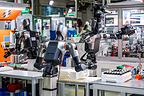
The seventh-generation COFE+ Robotic Café integrates robotics, artificial intelligence, automated beverage preparation, and intelligent retail management into a commercial robotic beverage platform.

Its technical capabilities include a six-axis robotic arm, freshly ground coffee preparation, automated extraction, milk steaming, beverage assembly, and robotic latte art. The system supports more than 300 beverages across eight major categories, covering coffee, tea, chocolate, dairy-based and plant-based drinks, as well as other hot and cold beverage options.

Its integrated edible 3D foam printing technology enables customized images, logos, and text on beverage surfaces. AI-driven process control helps manage key preparation variables and ingredient ratios for different beverage recipes and consumer preferences.

The technology platform is backed by the company’s accumulated R&D capabilities. Shanghai Hi-Dolphin has developed a portfolio of 120 patents and more than 1,200 proprietary process technologies. These capabilities underpin its ongoing development of robotic control, beverage preparation, and intelligent store management systems.

Designed for commercial environments, the COFE+ robotic coffee kiosk occupies approximately 2.35 square meters. The system is engineered for a rated service life of more than 10 years, with a single-unit design capacity of up to 500,000 cups and maximum daily throughput of up to 1,000 beverages, subject to operating conditions and maintenance requirements.

These capabilities are designed to support a range of commercial applications, from compact coffee points to larger robotic beverage service installations.

Expanding Across International Markets

COFE+ has continued to expand its international presence. According to the company’s September 2026 announcement, its robotic café solutions had reached 75 countries across five continents, alongside deployments in more than 200 Chinese cities across 27 provincial-level regions.

The company’s global business spans commercial, institutional, transportation, healthcare, educational, and public-service environments. Its international expansion reflects growing interest in automated beverage service solutions that combine freshly prepared drinks with compact deployment and centralized management.

According to company figures, COFE+ has served more than 500 million cups worldwide, reflecting the scale of its accumulated commercial activity. The company continues to expand its international deployment network and develop its robotic beverage technology for diverse operating environments.

Redefining the Possibilities of Coffee Retail

The live competition at The 2026 China Yiwu Imported Commodities Fair brought the capabilities of commercial robotic coffee technology into a public, measurable setting. By demonstrating faster serving times across five tested beverages and lower variation in measured beverage weights, COFE+ showcased the progress achieved through years of research, engineering, and product iteration.

From freshly ground coffee and automated latte art to intelligent remote management and compact retail deployment, COFE+ is advancing a new approach to beverage service.

As AI and robotics continue to reshape the possibilities of automated retail, Shanghai Hi-Dolphin remains committed to advancing the next generation of intelligent robotic cafés and expanding their applications worldwide.

About Shanghai Hi-Dolphin Robot Technology Co., Ltd.

Founded in January 2018 and headquartered in Shanghai, China, Shanghai Hi-Dolphin Robot Technology Co., Ltd. is an AI and robotics company specializing in the research, development, and commercial operation of intelligent robotic cafés. Through its flagship brand COFE+, the company integrates robotics, artificial intelligence, automated beverage preparation, and intelligent retail management to deliver robotic coffee and beverage solutions for commercial environments worldwide.


View original content to download multimedia:https://www.prnewswire.com/news-releases/cofe-7th-generation-robotic-barista-outperforms-award-winning-barista-in-2026-yiwu-international-coffee-masters-live-competition-302945622.html

SOURCE Hi-Dolphin Robot Technology

Continue Reading

Technology

NCPG Convenes Major Sports Leagues for Summit on Youth Gambling Prevention

Published

on

By

Representatives from the NFL, MLB, NBA and PGA Tour gathered to discuss shared challenges and opportunities to better protect young people from gambling-related harm.

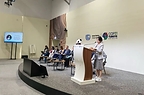
WASHINGTON, Nov. 20, 2026 /PRNewswire/ — Representatives from the National Football League (NFL), Major League Baseball (MLB), National Basketball Association (NBA) and PGA Tour gathered on Tuesday, November 10 for a youth gambling prevention summit hosted by the National Council on Problem Gambling (NCPG), demonstrating a shared commitment to addressing the risks of underage gambling and protecting young sports fans.

Hosted at the NFL’s offices in New York City, the summit brought together four of the nation’s leading professional sports organizations to exchange ideas, share experiences and explore opportunities to collaborate on youth gambling prevention. The gathering highlighted the important role professional sports organizations can play in educating young audiences, promoting responsible messaging and supporting efforts to reduce gambling-related harm.

As sports betting and other forms of gambling become increasingly visible across digital platforms, social media and sports entertainment, the leagues recognize the importance of helping young people understand the risks associated with gambling. Their participation in the summit reflects a proactive approach to addressing an evolving public health challenge and a commitment to working collectively on solutions.

“These organizations have an extraordinary ability to reach and influence young people, and their willingness to come together around youth gambling prevention sends an important message,” said Charles H. Jeffers II, Interim Executive Director of NCPG. “The NFL, MLB, NBA and PGA Tour recognize that protecting young fans is a shared responsibility. By bringing their perspectives and experiences to the table, they are helping advance a more coordinated approach to prevention.”

“Helping young people understand the risks associated with gambling is an important part of our broader societal efforts,” said Anna Isaacson, NFL Senior Vice President of Social Responsibility. “Through our longstanding work with NCPG, including our support of community-based Agility Grants, we’ve helped provide impactful education and prevention tools to those who need it most. We thank NCPG for bringing the sports community together around this critical issue.”

Discussions focused on opportunities to strengthen public education, increase awareness of youth gambling risks and identify ways sports organizations can support prevention efforts. Participants also explored shared challenges and opportunities to build on existing initiatives, recognizing that collaboration across leagues can help extend the reach and impact of these efforts.

The summit comes as recent research underscores the need for greater youth gambling education. According to a 2026 survey commissioned by NCPG and conducted by The Harris Poll, 64% of parents with children under 18 are concerned about underage gambling. Yet, only 51% of parents with children ages 6–17 have talked with their children about gambling.

“Sports bring families and communities together, and these leagues are uniquely positioned to help ensure young fans develop a healthy understanding of gambling risks,” Jeffers added. “We appreciate their leadership, their engagement and their recognition that protecting young people is an important part of the broader conversation about sports and gambling.”

The summit builds on NCPG’s longstanding collaboration with professional sports organizations to advance gambling harm prevention. With support from the NFL Foundation, NCPG’s Agility Grants program has invested more than $2 million in community-based problem gambling prevention initiatives across the country, helping organizations expand education and outreach to populations at risk. NCPG’s Too Young to Bet campaign further supports these efforts by providing parents, educators and other trusted adults with information and tools to recognize youth gambling risks and start age-appropriate conversations.

For information and resources to help parents and other trusted adults recognize and address youth gambling risks, visit TooYoungToBet.org. To learn more about NCPG’s Agility Grants program and its support for community-based problem gambling prevention initiatives, visit NCPGambling.org/Agility.

About the National Council on Problem Gambling 

The National Council on Problem Gambling (NCPG), founded in 1972 in Washington, DC, is the only national nonprofit organization that seeks to mitigate gambling-related harm through advocacy and awareness programs. Neutral on legalized gambling, NCPG is supported by donors, members, and partners who help advance its mission through investments in public awareness, education, research, and organizational sustainability. If you or someone you know may have a gambling problem, contact the National Problem Gambling Helpline™ that offers hope and help without stigma or shame. Call or text 1-800-MY-RESET or visit http://www.1800myreset.org. Free and confidential help is available 24/7. 

Contact: 

National Council on Problem Gambling 

Cait Huble 

CaitH@NCPGambling.org 

202-470-1815

View original content to download multimedia:https://www.prnewswire.com/news-releases/ncpg-convenes-major-sports-leagues-for-summit-on-youth-gambling-prevention-302947120.html

SOURCE NCPG

Continue Reading

Trending