Connect with us

Technology

EC-Council launches industry’s first hands-on AI audit certification as India seeks role in shaping global AI rules

Published

on

Certified AI Governance Auditor (CAIGA), the industry’s first hands-on AI governance audit certification, launches as India moves AI governance towards independent audit, testing, and assurance.

HYDERABAD, India, Nov. 20, 2026 /PRNewswire/ — EC-Council, a global leader in cybersecurity, AI governance, and responsible AI, today announced the launch of the Certified AI Governance Auditor (CAIGA), the industry’s first hands-on AI governance audit certification designed to build audit capability by teaching professionals how to test controls, examine evidence, assess outcomes, and document findings across increasingly autonomous AI systems.

India is increasingly linking its ambition to shape global AI governance with practical assurance. At the September 12 BRICS Summit, Prime Minister Narendra Modi called for the Global South to move from being rule-takers to rule-shapers. At home, the Safe & Trusted AI pillar of the IndiaAI Mission already emphasises transparency, accountability, algorithmic fairness, independent audit, and AI system assessment.

That combination of rule-shaping and independent audit raises the bar for AI assurance, requiring auditors to verify that controls work in practice, not simply that they exist.

India does not have a standalone AI law. AI is governed through the India AI Governance Guidelines issued by the Ministry of Electronics and Information Technology in November 2025, and the Digital Personal Data Protection Act, 2023, whose 2025 Rules bring most obligations into effect in May 2027. Amendments to the IT Rules have also required labelling of AI-generated content since February 20, 2026. The Reserve Bank of India’s FREE-AI framework, published in August 2025, recommends board-approved AI policies for regulated entities.

Survey data indicates that governance has not kept pace with adoption. ServiceNow’s Enterprise AI Maturity Index 2026 reported that enterprise AI investment in India grew 119% in a year, 54% of Indian organisations are deploying AI agents, and 22% have AI testing, auditing, and risk-assessment processes in place.

Indian courts have recently dealt with the consequences of unverified AI output. On September 2, 2026, the Supreme Court set aside a ₹425.28 crore customs penalty after finding that the order imposing it relied on non-existent cases, fake citations, and propositions that the Court described as an apparent AI hallucination. In July 2026, the Court set aside orders of company law tribunals that had relied on fabricated precedents.

CAIGA is built specifically to help auditors verify whether an organisation is doing what it claims to do, and whether controls are implemented as required by a given framework, regulation, or standard.

CAIGA is a ‘how-to audit’ programme and certification. Candidates conduct an audit of a fictional enterprise, control by control. Each candidate receives an educational license to the ComplyX platform, which maps to more than 90 regulations, frameworks, and standards.

“Understanding frameworks such as ISO/IEC 42001, the NIST AI RMF, and laws such as the EU AI Act is one thing; independently auditing against them is another. CAIGA develops that capability control by control, from testing requirements and examining evidence to assessing outcomes and documenting defensible findings,” said Jay Bavisi, Founder & Group CEO, EC-Council.

The examination is proctored and open book. Candidates must be 18+ and qualify through official training with two years of relevant experience, or through an active recognized credential or equivalent experience in audit, GRC, risk, compliance, privacy, or information security.

Why CAIGA matters now

ISO/IEC 42001 requires organisations to conduct internal audits of their AI management system at planned intervals. CAIGA is intended for internal audit teams that currently either exclude AI systems from the audit plan or assess them using conventional IT audit checklists, and for external auditors who assess clients, suppliers, and third parties.

“Agents can crawl across enterprise systems, invoke APIs, access data, use unapproved tools, and create shadow AI outside formal governance. An auditor has to know where that activity started, what permissions the system had, what it touched, whether it crossed a boundary, and whether a human could stop it. That requires evidence from the system itself, not just a policy or checklist. CAIGA is designed to build that capability, control by control and evidence by evidence,” said Bavisi.

The need for auditors who can trace and test agentic AI behaviour is already evident. McKinsey’s 2026 AI Trust Maturity Survey found that only about 30% of organisations reach maturity level three or higher in strategy, governance, and agentic AI controls, while nearly 60% cite knowledge and training gaps as the leading barrier to responsible AI. CAIGA trains auditors to test human oversight, autonomy limits, and intervention mechanisms against technical evidence.

The launch follows EC-Council’s October 1 release of ADG 2.0, which expanded its AI governance architecture with over 180 controls, runtime governance, and defined evidence requirements. ADG establishes what organisations should govern and the evidence those controls should generate, whereas CAIGA builds the professional capability required to independently test whether those controls operate as intended. CAIGA joins CAIPM (AI adoption), COASP (AI security), and CRAGE (AI governance) in EC-Council’s AI certification portfolio. CRAGE addresses how governance is established; CAIGA addresses how it is independently tested.

Inside CAIGA

Format: Hands-on audit of a case enterprise, with candidates examining evidence, testing controls, scoring results, identifying gaps, and documenting findings.

Methodology: A single control-based audit method covering 180+ controls across 12 control families, checkable audit requirements, mapped to 90+ regulations, frameworks, and standards, including ISO/IEC 42001, the NIST AI Risk Management Framework, and the EU AI Act.

Duration: 40 hours across 20 modules and 125 topics.

Examination: Exam code 612-40. Four hours, 120 scenario-based questions, proctored and open book.

Tools: An educational license to ComplyX for up to one year along with a preloaded case enterprise, AI assistant, guided labs, sample evidence, and mappings across 90+ regulations, frameworks, and standards.

Courseware: Designed for continued use as a field reference after certification, covering evidence requirements, testing approaches, and interview questions.

CAIGA is designed to build capability across roles including AI Governance Auditor, AI Risk & Controls Specialist, Internal AI Audit Manager, Third-Party AI Risk Assessor, AI Assurance Consultant, and Head of AI Assurance.

As India moves from shaping AI governance principles to operationalising independent audit and testing, the differentiator will no longer be whether an auditor understands governance. It will be whether that auditor can test the control, verify the evidence, and produce a defensible finding. CAIGA is built to develop that capability.

“India has said it intends to help shape the rules for AI. Independent audit is how a country shows that its rules are being followed,” Bavisi said. “That requires auditors trained to test AI controls against evidence, and India has the professional base to produce them.”

To learn more about CAIGA, visit: https://www.eccouncil.org/ai-courses/certified-ai-governance-auditor-caiga/

About EC-Council

EC-Council is a global leader in cybersecurity and responsible AI, delivering integrated capabilities across people, services, and technology since 2001.

Creator of the Certified Ethical Hacker (CEH) program, EC-Council has certified over 400,000 professionals across 174 countries. Its portfolio includes 11 credentials accredited by ANAB under ISO/IEC 17024, with certifications recognized under U.S. Department of Defense DoD 8140 requirements.

EC-Council’s Adopt. Defend. Govern. (ADG) AI Governance Framework maps 180+ controls to 90+ standards and regulations, including the EU AI Act, ISO/IEC 42001, and NIST AI RMF. It is available for free on EC-Council’s website.

The EC-Council group portfolio spans EC-Council University, CodeRed, Academia, Cyber Insurance Academy, and CREST-accredited EC-Council Global Services. Its technology portfolio includes Aware for phishing defense, AI governance, and shadow AI detection, and FireCompass for agentic automated penetration testing and red teaming, and recognized by Gartner, Forrester, IDC, and GigaOm.

For more information, visit www.eccouncil.org. 

Media Contact: Press@eccouncil.org


View original content to download multimedia:https://www.prnewswire.com/in/news-releases/ec-council-launches-industrys-first-hands-on-ai-audit-certification-as-india-seeks-role-in-shaping-global-ai-rules-302946444.html

Continue Reading

Technology

NEWWAVE Unveils New Brand Identity and Strategic Positioning as a Trusted Technology Partner at 15

Published

on

By

HANOI, Vietnam, Nov. 20, 2026 /PRNewswire/ — Marking its 15th anniversary, NEWWAVE announces a new brand identity and strategic positioning as a Trusted Technology Partner, building on its engineering expertise and evolving capabilities to address changing business needs in an era of AI and rapid technological advancement. 

The announcement reflects the Vietnam-based company’s commitment to moving beyond software execution toward a more consultative, end-to-end partnership, helping global clients navigate technology complexity, make informed decisions, and implement reliable solutions that deliver lasting business value.

A Changing Role for Technology Partners 

As AI, cloud technologies, and increasingly interconnected systems reshape business operations, enterprise technology decisions involve greater complexity. Beyond technical execution, businesses need partners who understand operational priorities, navigate integration challenges, and maintain reliable systems over time.

For NEWWAVE, this evolution aligns with lessons drawn from 15 years of international delivery. Its renewed positioning emphasizes a business-oriented approach that connects technology decisions with practical needs, from identifying challenges and shaping solutions to implementation and ongoing support. 

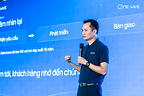
“As technology decisions become increasingly connected to business outcomes, our priority is to work alongside clients with a deep understanding of their challenges, clear accountability, and long-term commitment to the solutions we build,” said To Quang Duy, CEO of NEWWAVE.

Fifteen Years of Engineering Excellence and Global Ambition   

Founded in 2011, NEWWAVE began with a small engineering team navigating limited resources and diverse client requirements. Engineers often took on multiple responsibilities, learning new technologies while solving practical delivery challenges. 

As projects grew more complex, so did the team’s understanding of what reliable software development demands: business context, cross-functional collaboration, and accountability throughout delivery. 

Today, NEWWAVE brings together more than 300 engineers and specialists, has served over 200 clients worldwide, and has delivered more than 800 projects. Its commitment to reliable delivery is supported by ISO 9001:2015 for quality management and ISO/IEC 27001:2022 information security management certifications. These foundations have shaped a company that views technical expertise, consistent delivery, and client trust as interconnected responsibilities.

Building the Next Chapter Together 

NEWWAVE’s strategic direction brings together five core capabilities: Digital Consulting, Software Engineering, Cloud & DevOps, Data & AI, and Application Services. 

These capabilities can be combined to address different stages of a client’s technology journey, from assessing business needs and developing solutions to modernizing existing systems, integrating technologies, and supporting ongoing operations. 

Depending on business objectives and project scope, clients can engage NEWWAVE for specific technology requirements or broader initiatives involving multiple capabilities. This flexible approach reflects its commitment to delivering solutions suited to each organization’s needs rather than applying a single delivery model. 

The new identity represents both the experience NEWWAVE has built over 15 years and its ambition to deepen relationships with global clients through technical expertise, responsible delivery, and lasting partnership. 

Explore NEWWAVE’s new brand identity, the story behind its evolution, and its vision for the next chapter: https://newwavesolution.com/ 

View original content to download multimedia:https://www.prnewswire.com/news-releases/newwave-unveils-new-brand-identity-and-strategic-positioning-as-a-trusted-technology-partner-at-15-302944994.html

SOURCE NEWWAVE SOLUTIONS JOINT STOCK COMPANY

Continue Reading

Technology

GFTN and Monash University Launch Cross-Border Digital Finance Education Pathway for the Indo-Pacific

Published

on

By

New programme aims to strengthen the digital finance talent pipeline through flexible, industry-relevant education

SINGAPORE, Nov. 20, 2026 /PRNewswire/ — The Global Finance & Technology Network (GFTN) and Monash University yesterday launched a digital finance education pathway at the Singapore FinTech Festival 2026. The pathway gives professionals across the Indo-Pacific the opportunity to build specialist skills in their own countries and progress towards postgraduate qualifications in Australia and Malaysia.

The pathway begins with the Certificate in Digital Finance and Emerging Technologies, delivered locally in participating countries. Subject to admission requirements, learners can progress to an online Graduate Certificate and subsequently pursue a Master’s degree at Monash University in Australia, Malaysia or across both campuses. Professor Allie Clemans, Monash University’s Deputy Vice-Chancellor (Education) and Senior Vice-President, who leads the University’s contribution to the partnership, represented Monash at the programme’s unveiling at SFF.

The initiative builds on GFTN’s experience in financial technology education, including a government-funded programme that is training and accrediting more than 7,000 people in Odisha, India, through its collaboration with the Asian Institute of Digital Finance, National University of Singapore. It also draws on Monash University Malaysia’s Fintech Impact Lab, which brings together researchers, students and industry partners across areas including artificial intelligence, blockchain, digital payments and regulatory technology.

Mr Sopnendu Mohanty, Group CEO of GFTN, said: “The next phase of financial innovation will depend as much on talent as on technology. As emerging technologies reshape financial services, we need education models that are more accessible, responsive to industry needs and capable of reaching talent across different markets. Our partnership with Monash creates a pathway for professionals to develop specialist expertise and pursue internationally recognised qualifications, helping build the capabilities needed for the future of finance.”

Professor Sharon Pickering, Vice-Chancellor and President of Monash University, said: “Monash University is now anchored in the Indo-Pacific region as a long term partner, innovator and enabler. We welcome the opportunity to work with the Global Finance and Technology Network to lead and shape sustainable finance and technology practices for the benefit of our communities.”

GFTN is inviting governments to sponsor learner cohorts and integrate the pathway into national talent development strategies. Corporate partners can contribute industry-led capstone projects, mentorship and employment opportunities, while businesses and philanthropic institutions can fund scholarships to broaden access.

About Monash University

Monash University’s enterprising endeavours enrich its research, education and innovation environments by weaving industry and government into the fabric of the institution.

From its many local and global clusters of innovation – including the Monash Technology Precinct – Monash serves as an open door for enterprise, with its partners, staff, students and alumni leveraging their access to the pathways, support and on-hand expertise needed to turn big ideas into reality.

Monash transcends simple transactions by integrating its partners into all aspects of its core purpose. The outcomes and impact of its partnerships are effectively fed back into its research and education ecosystems.

Monash facilitates and nurtures collaboration between researchers, infrastructure and industry to drive the translation of ground-breaking research into commercial opportunities that deliver positive impact to the world.

Find out more: https://www.monash.edu/industry

About the Global Finance & Technology Network (GFTN)

Established by the Monetary Authority of Singapore (MAS) in 2024, the Global Finance & Technology Network (GFTN) is a not-for-profit organisation that connects global policy, tech and finance to build resilient, efficient and inclusive financial systems. GFTN Services convenes global forums in five continents with its network of over 140 countries, provides advisory and capacity-building services to central banks and governments in Asia, Africa and Europe, and supports investment in fintech innovation. Its flagship platforms include the Singapore FinTech Festival and Black Swan Summit. GFTN Capital is being established as a venture capital firm focused on investing in growth-stage fintech companies that combine commercial potential with positive social impact. For more information, visit (http://www.gftn.co).

Media Contacts

Global Finance & Technology Network
Preeti Dawra, Chief Communications Officer
Preeti.dawra@gftn.com 

Monash University
Leanne Strout, Director Enterprise Education
leanne.strout@monash.edu

View original content to download multimedia:https://www.prnewswire.com/apac/news-releases/gftn-and-monash-university-launch-cross-border-digital-finance-education-pathway-for-the-indo-pacific-302946519.html

SOURCE GFTN

Continue Reading

Technology

CGI and Learning Links Foundation launch Centre of Excellence for AI & Innovation at MEI Polytechnic College

Published

on

By

Initiative to provide hands-on learning opportunities in AI and emerging technologies for more than 1,250 students

BENGALURU, India, Nov. 20, 2026 /PRNewswire/ — CGI (TSX: GIB.A) (NYSE: GIB), one of the largest independent IT and business consulting services firms in the world, has inaugurated the CGI Centre of Excellence for AI & Innovation at MEI Polytechnic College in Bengaluru, in collaboration with Learning Links Foundation (LLF). Designed, funded and strategically planned by CGI, the centre creates a dedicated space where students can learn, experiment, and develop practical solutions using emerging technologies.

The centre will provide hands-on learning opportunities to more than 1,250 students in artificial intelligence (AI), the Internet of Things (IoT), robotics, 3D design and printing, electronics and digital fabrication. Students will participate in project-based learning, technical challenges and innovation activities that help connect classroom concepts with practical applications. Equipped with development boards, sensors, embedded systems, robotic platforms, and comprehensive prototyping tools, the facility empowers students to build, test, and refine solutions to real-world problems.

“Access to technology can open new paths for students when it is paired with the opportunity to experiment, build and solve real problems,” said Deepak Shenoy, Senior Vice-President and Business Unit Leader, Asia Pacific Global Delivery Center of Excellence, CGI. “Through this centre, we want students to engage with AI and emerging technologies in a practical and responsible way, and to build the confidence and skills to turn their ideas into solutions. This initiative reflects CGI’s commitment to supporting the communities where we live and work by creating more equitable opportunities for the future.”

“The CGI Centre of Excellence for AI & Innovation will give our students the opportunity to experience emerging technologies in a practical and engaging environment,” said L. N. Reddy, Principal, MEI Polytechnic College. “It will complement their technical education by allowing them to experiment, build prototypes and develop solutions, while strengthening the confidence and problem-solving skills they will need in a rapidly changing technology landscape.”

“The journey from classroom learning to real-world innovation begins with access to the right opportunities,” said Sudha Priyadarshan, Senior Vice President, Learning Links Foundation. “Through this collaboration with CGI and MEI Polytechnic College, students will be able to explore AI, IoT, robotics and 3D printing through structured, hands-on learning. We look forward to supporting them as they develop future-ready skills and learn how to transform their ideas into working solutions.”

About CGI

Founded in 1976, CGI is among the largest independent IT and business consulting services firms in the world. With 94,000 consultants and professionals across the globe, CGI delivers an end-to-end portfolio of capabilities, from strategic IT and business consulting to systems integration, managed IT and business process services and intellectual property solutions. CGI works with clients through a local relationship model complemented by a global delivery network that helps clients digitally transform their organizations and accelerate results. CGI Fiscal 2026 reported revenue is CA$16.57 billion and CGI shares are listed on the TSX (GIB.A) and the NYSE (GIB). Learn more at cgi.com. 


View original content to download multimedia:https://www.prnewswire.com/in/news-releases/cgi-and-learning-links-foundation-launch-centre-of-excellence-for-ai–innovation-at-mei-polytechnic-college-302945601.html

Continue Reading

Trending