Connect with us

Technology

Sokin Goes Fully Live in Singapore Under MAS Major Payment Institution License

Published

on

Sokin now offers regulated cross-border transfers, local Singapore dollar accounts and payment acceptance to businesses in and outside Singapore

SINGAPORE, Nov. 20, 2026 /PRNewswire/ — Sokin, the financial infrastructure global business runs on, today announced its Singapore business is fully operational. Since the Monetary Authority of Singapore (MAS) licensed it as a Major Payment Institution under the Payment Services Act in April, Sokin has been serving clients in Singapore while connecting its platform to local banking and payment infrastructure. Businesses can now use Sokin’s full range of regulated payment services from Singapore.

Obtaining its MAS license and going fully operational change what Sokin offers businesses that trade with Singapore from elsewhere. Customers outside Singapore can now hold a local Singapore dollar (SGD) account to receive and send Singapore dollar payments locally, without requiring a Singapore-incorporated entity. Singapore-based businesses get Singapore-domiciled accounts that receive funds in SGD, with other currencies planned for 2027.

Much of the demand for local payments in Asia-Pacific now comes through embedded finance, as fintechs, marketplaces and software platforms build payments and accounts into their own products. By building on Sokin, those platforms can offer their customers cross-border transfers, Singapore dollar accounts and payment acceptance, instead of securing their own license and banking relationships market by market.

Vroon Modgill, Founder and CEO of Sokin, commented: “A Major Payment Institution license is the highest bar Singapore sets, and clearing it means our customers in Asia are working with a counterparty that MAS holds to that standard. Licenses take years to earn, and no amount of money shortens that. Singapore is where much of the money between Asia and the rest of the world moves, and now we serve that flow under our own license.”

Singapore is Sokin’s regulated base for the Asia-Pacific region, and the company plans to double headcount in its Singapore office by the end of the first quarter of 2027. Its MAS license joins those the company holds across 36 countries. Holding licenses in its own name, rather than operating under third-party regulatory arrangements, gives Sokin a direct relationship with the regulators that license it.

Licensed infrastructure is also critical to stablecoins and agentic treasury. It enables stablecoins to settle in local currency and agents to act on AI-prepared payment instructions. This year, Sokin launched stablecoin accounts and settlement and introduced a range of agentic treasury capabilities, including an MCP connector that lets finance teams send payments through the AI tools they already use. The MAS license extends that infrastructure to Singapore, giving businesses across the Asia-Pacific region the licensed base these services depend on.

About Sokin

Sokin is the financial infrastructure global business runs on. Businesses move and manage money in 70+ currencies across 170+ countries while holding balances in 29 of those currencies. Balances in USD, GBP, and EUR can earn interest. Sokin also helps businesses decide what to do with their money and act on it in the same place, including through the AI tools they already use. Some businesses use the platform to manage global finance in-house. Others embed Sokin into their products to power financial experiences for their customers.

Moving money across borders is a permission problem before it’s a technology problem. Businesses move more than $11 billion a year on licenses Sokin holds across 36 countries and infrastructure Sokin owns, including its stablecoin-to-fiat settlement rails. Founded in 2019 by Vroon Modgill, Sokin operates from eight offices around the world and has raised over $100 million from investors including Morgan Stanley Expansion Capital and Prysm Capital.

About Sokin in Singapore

Sokin provides services in Singapore via Sokin Capital Singapore Pte. Ltd., authorized and regulated by the Monetary Authority of Singapore as a Major Payment Institution. Registered Number 202033347D.

View original content to download multimedia:https://www.prnewswire.com/apac/news-releases/sokin-goes-fully-live-in-singapore-under-mas-major-payment-institution-license-302946712.html

SOURCE Sokin

Continue Reading

Technology

TÜV SÜD opens its International Technology & Innovation Campus in the Guangdong-Hong Kong-Macao Greater Bay Area

Published

on

By

Building a New Global Hub for New Energy Testing and Certification

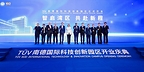
GUANGZHOU, China, Nov. 20, 2026 /PRNewswire/ — On 20 November 2026, TÜV SÜD has officially inaugurated its International Technology & Innovation Campus in the Greater Bay Area (GBA). The new campus will serve as a platform for energy technology innovation, testing, certification, and quality infrastructure services, connecting innovation in China with global markets. By combining advanced testing capabilities with TÜV SÜD’s global technical expertise, the campus will help to build trust in emerging technologies and support their safe and successful deployment in international markets. It will serve as a strategic innovation hub within the Group’s Asia-Pacific network. The launch marks an important milestone in TÜV SÜD’s continued development in the GBA and reinforces the Group’s role in supporting the safe, sustainable and trusted development of future industries worldwide.

Those in attendance at the opening ceremony included Dr. Josefine Wallat, Consul General of the Federal Republic of Germany in Guangzhou; Ishan Palit, Member of the Board of Management and Chief Operating Officer of TÜV SÜD AG; Dirk von Wahl, Chief Executive Officer of TÜV SÜD North Asia; Andrew Lee, Chief Financial Officer of TÜV SÜD North Asia; and Boris Ouyang, General Manager of TÜV SÜD Guangzhou. Together with government representatives, industry partners, customers and members of the media, they witnessed the official opening of the TÜV SÜD International Technology & Innovation Campus.

Building an International Technology & Innovation Platform in the GBA

The campus is being developed in three phases. The first phase comprises approximately 15,000 square metres, once all three phases are complete, the campus will span over 50,000 square metres. It brings together TÜV SÜD’s 160 years of technical expertise and global network with local research, development, testing and operational capabilities. This combination is designed to strengthen confidence in new energy technologies and connect innovation from the Greater Bay Area with global markets.

The new campus will collaborate with TÜV SÜD’s existing testing centre in Panyu, Guangzhou, to enhance technical capabilities, especially in future-oriented fields such as advanced energy storage, robotics, artificial intelligence data centres, and digital trust. This will further strengthen TÜV SÜD’s capacity to support manufacturers in China and international markets via a connected network of specialised testing facilities and technical expertise.

Speaking at the ceremony, Ishan Palit, Member of the Board of Management and Chief Operating Officer of TÜV SÜD AG, said: “This campus represents a strategic investment in the technologies that are shaping the future of energy and industry. It will strengthen TÜV SÜD’s ability to support customers through the energy transition and changing global supply chains. Technology is transforming the way energy is generated, stored and used. Our role is to facilitate building trust in this transformation by providing technical excellence, independent testing and certification, and solutions that enable innovative technologies to reach markets safely and efficiently. Through this campus, we aim to go beyond testing and certification, helping customers to navigate technological change, build trust and unlock opportunities in global markets.”

A Global Perspective Supporting the International Growth of the New Energy Industry

As the global drive towards carbon neutrality accelerates, international green trade rules, national energy-efficiency standards, and carbon-related trade barriers continue to evolve. This raises market access requirements across the global new energy sector. Product safety, system reliability, green and low-carbon performance, and international compliance capabilities have become essential foundations for companies competing in global markets. For new energy companies, demonstrating safety, performance and compliance across different markets is becoming an increasingly important prerequisite for international growth.

In China, policy priorities are also accelerating the development of cleaner, more resilient energy systems, including new energy storage, smart grids and greater coordination between digital infrastructure and power systems.

The International Technology & Innovation Campus is designed to connect China’s rapid development of new technologies with international standards and market requirements. Addressing the challenges that new energy companies face when entering overseas markets, the campus draws on TÜV SÜD’s global technical expertise and its international testing, certification and market access capabilities, to provide integrated support for international market access. This helps companies to shorten lead times, reduce costs, and strengthen compliance as they expand abroad.

By combining local technical capabilities with global expertise and knowledge of international standards, the campus will help manufacturers demonstrate technical performance and regulatory compliance across markets, creating value beyond compliance and supporting companies in bringing innovation to market.

Advancing the New Energy Industry through Forward-Looking Standards

In terms of service capabilities, the campus will focus on key application scenarios across the new energy industry. It will provide companies in the Greater Bay Area with integrated technical services, including R&D testing, safety validation, testing and certification, and international market access. These services will help companies to shorten time to market, reduce compliance risks, and strengthen their international competitiveness.

Specific services will include testing of source-grid-load-storage coordination and extreme operating conditions for AI data centres, as well as testing of solar and energy storage digital systems and smart grids. The campus will also provide comprehensive testing and certification services for energy storage batteries and systems. Its advanced testing infrastructure includes a 10 MW testing power supply and an 888 m³ environmental chamber, enabling high-power, large-scale, and demanding environmental testing.

The campus will also actively contribute to developing relevant technical standards by drawing on TÜV SÜD’s expertise in international standards to anticipate emerging technologies and regulatory requirements. This will support the safe, sustainable and trusted development of the new energy industry.

This year marks TÜV SÜD’s 160th anniversary and its 35th year in China. Leveraging its global technical network and local service capabilities, the TÜV SÜD International Technology & Innovation Campus will strengthen the international competitiveness of regional companies, support the development of Huangpu’s testing and certification cluster, and enhance the region’s influence in the field of new energy technical services.

With the global energy transition and shift towards a low-carbon economy creating new opportunities, TÜV SÜD will continue to collaborate with governments, industry, customers and partners worldwide, connecting innovation, technical excellence and trust across markets. In doing so, it will help to bring innovation from the Greater Bay Area to international markets while providing customers in China with access to global expertise and market capabilities, thereby helping to build trust in a safer and more sustainable energy future.

About TÜV SÜD

Founded in 1866 as a steam boiler inspection association, the TÜV SÜD Group has evolved into a global enterprise. More than 30,000 employees work at over 1,000 locations in about 50 countries to continually improve technology, systems and expertise. They contribute significantly to making technical innovations such as Industry 4.0, autonomous driving and renewable energy safe and reliable. tuvsud.com

View original content to download multimedia:https://www.prnewswire.com/apac/news-releases/tuv-sud-opens-its-international-technology–innovation-campus-in-the-guangdonghong-kongmacao-greater-bay-area-302946703.html

SOURCE TÜV SÜD

Continue Reading

Technology

ARKO AI Debuts at Singapore FinTech Festival, Unveiling Its Personal AI Vision for Smarter Spending

Published

on

By

MVP opens to users worldwide; Ask ARKO™ personal AI agent coming soon

SINGAPORE, Nov. 20, 2026 /PRNewswire/ — ARKO AI, a Personal AI brand focused on everyday spending, today made its debut at Singapore FinTech Festival 2026. With AI Agent for Smarter Spending at the heart of its vision, ARKO AI has opened registration and access to its initial MVP products for users worldwide.

Ask ARKO™: A Personal AI Agent for Smarter Spending

From everyday purchases to payment choices and money management, spending often involves more decisions than it should.

ARKO AI is developing Ask ARKO™, a personal AI agent designed to make these everyday decisions easier and help people get more out of their money, with less effort.

Ask ARKO™ is in private internal beta. Full features and launch timeline are to be announced officially.

Real Financial Capabilities

ARKO AI’s initial MVP brings together three core offerings:

Crypto Wallets: Deposit and withdraw supported crypto assets.USD Bank Account: Open a US dollar bank account.Digital Card: Virtual and physical card offerings for everyday purchases and AI subscriptions, with eligible cards supporting Apple Pay and Google Pay.

The MVP also supports Convert, enabling exchanges between USDT, USDC and US dollars.

These financial capabilities serve everyday money needs today while laying the groundwork for future AI-powered spending experiences.

Uncommon Digital Life: What’s Next

Guided by Uncommon Digital Life, ARKO AI plans to expand its bank account currency options and supported crypto assets, while exploring smarter ways to manage deals, rewards points and bills.

The brand is also exploring AI wearables, including ARKO Ring, as optional ways to interact with personal AI beyond the app.

These initiatives are part of ARKO AI’s longer-term vision and are not included in the initial MVP.

About ARKO AI

ARKO AI is a personal AI brand built around an AI agent for smarter spending. With Ask ARKO™ at its center and real financial capabilities across bank accounts, crypto wallets and digital cards, ARKO AI brings AI closer to everyday spending and money management.

Guided by Uncommon Digital Life, the brand aims to help people make more of their money, with less effort.

Learn more at arko.global.

Service Availability

ARKO AI’s products and services are available only to eligible users in supported countries and regions, subject to applicable laws and requirements of banking, card-issuing and other service partners. Availability may vary by product and feature. Users and transactions subject to applicable sanctions or other service restrictions are not supported.


View original content:https://www.prnewswire.com/apac/news-releases/arko-ai-debuts-at-singapore-fintech-festival-unveiling-its-personal-ai-vision-for-smarter-spending-302946733.html

SOURCE ARKO AI

Continue Reading

Technology

Beyond AI Adoption: Hong Kong’s Next Challenge Is Making AI Work Smarter

Published

on

By

As AI adoption becomes mainstream, LongbridgeAI explores how reducing repetitive tasks and making information more accessible can help bridge Hong Kong’s productivity gap.

HONG KONG and SINGAPORE, Nov. 20, 2026 /PRNewswire/ — Artificial intelligence (AI) has become an increasingly familiar part of everyday work in Hong Kong. Yet despite widespread adoption, translating its capabilities into meaningful improvements in how people work remains a challenge.

According to a 2026 McKinsey study, 70% of Hong Kong’s white-collar workers have adopted AI tools, with 88% of users reporting productivity improvements. However, fewer than a quarter use AI to execute complete workflows from beginning to end.

The findings highlight a gap between AI adoption and deeper integration into everyday activities. While AI has made it easier to access information and complete individual tasks, many users continue to incorporate it into existing routines rather than fundamentally changing how work is organised.

The next challenge for Hong Kong is therefore not simply getting more people to use AI, but making it work more effectively for those already using it.

The Hidden Cost of Repetitive Information Gathering

Consider how much time people spend keeping themselves informed. Whether following industry developments, checking the latest news or preparing regular reports, many activities involve gathering similar information from multiple sources. AI has made these tasks easier, but the experience often remains reactive. Users ask a question, receive a response and repeat the process whenever they need an update.

Microsoft’s 2026 Work Trend Index reinforces this challenge. In Hong Kong, 57% of surveyed AI users said it felt safer to focus on existing goals rather than redesign how they work with AI. The opportunity lies in moving beyond answering individual questions towards reducing the repetitive steps involved in accessing information.

From Reactive AI to More Proactive Assistance

One emerging approach is using AI to automate recurring information requests. Rather than manually asking the same questions every day, users can define what information they need and when they want it delivered. For instance, someone following developments across multiple industries could schedule a daily summary of relevant news. Similarly, regular information updates could be organised around weekly or monthly routines. This reflects a broader shift in conversational AI: moving beyond individual questions towards supporting more structured, user-defined workflows. The broader evolution of task-oriented AI is also gaining attention in Hong Kong. 

At Hong Kong FinTech Week 2026, the Hong Kong Monetary Authority announced Project SAGE, an initiative supporting the responsible development of agentic AI in financial services, with a focus on practical applications, interoperability and governance. While agentic AI encompasses capabilities beyond scheduled automation, both developments reflect growing interest in AI systems that can perform defined tasks rather than simply respond to individual prompts.

Why Smarter AI Still Needs Human Judgement

Greater automation does not necessarily translate into better information or decisions. An AI-generated summary may be delivered automatically, but its contents could still be inaccurate, incomplete or outdated. McKinsey’s Hong Kong findings illustrate this distinction. While more than 90% of surveyed AI users were comfortable using AI for supporting tasks, only 40% expressed comfort with full workflow automation. The contrast highlights an important principle: automating information gathering should not mean delegating judgement. As AI becomes more integrated into everyday routines, users must retain control over how tasks are defined, how outputs are reviewed and how information is ultimately used.

Turning AI’s Potential into Everyday Utility

As the conversation around AI shifts from adoption to practical application, the focus is increasingly on making technology more useful in everyday routines. This is an area that LongbridgeAI, an AI-powered conversational platform, is exploring through its Scheduled Tasks feature, introduced in October 2026.

Instead of repeatedly entering the same requests, users can configure AI tasks to run at daily, weekly or monthly intervals. Whether preparing a recurring information briefing, following developments on a topic of interest or organising regular summaries, the feature enables users to establish their information needs in advance and receive AI-generated results through the platform’s Message Center. The significance lies not simply in automating individual requests, but in making AI more adaptable to how people access and manage information.

Importantly, automation does not replace the need for human oversight. Users remain responsible for reviewing AI-generated content, verifying its accuracy and determining how the information should be used. For Hong Kong, where AI adoption is already widespread, the opportunity lies in making these technologies more relevant to everyday routines while maintaining appropriate safeguards. Ultimately, the next chapter of AI will not be defined simply by how many people use it, but by how effectively it helps people access information, reduce repetitive work and remain in control.

About LongbridgeAI

Longbridge AI Technologies Limited (“Longbridge AI”) is the artificial intelligence arm of AI-native financial technology company, Longbridge Group, dedicated to advancing the development and responsible adoption of AI technology.

Combining deep financial market expertise with cutting-edge AI capabilities, Longbridge AI develops intelligent solutions that transform how individuals and institutions access information, analyse markets, and make informed decisions. Through its AI-powered tools and strategic industry collaborations, Longbridge AI aims to make institutional-grade intelligence more actionable, intuitive, and accessible.

With a vision to pioneer the next era of AI-native solutions, Longbridge AI is committed to building a holistic ecosystem where technology empowers human judgement.

View original content to download multimedia:https://www.prnewswire.com/apac/news-releases/beyond-ai-adoption-hong-kongs-next-challenge-is-making-ai-work-smarter-302946754.html

SOURCE LongbridgeAI

Continue Reading

Trending