Connect with us

Technology

FinBox wins GXS Bank challenge at Singapore’s Global FinTech Hackcelerator 2026 for unifying credit and fraud risk in a single platform

Published

on

Chosen from 195 applications across 52 jurisdictions, the winning solution is built on FinBox DeviceConnect and Sentinel AI, and now powers a new integrated risk platform on Sentinel AI, launched at Singapore FinTech Festival 2026

SINGAPORE, Nov. 25, 2026 /PRNewswire/ — FinBox, the Bengaluru-headquartered credit infrastructure company, has won the GXS Bank challenge at the Global FinTech Hackcelerator 2026, organised by the Monetary Authority of Singapore (MAS) and the Global Finance & Technology Network (GFTN). FinBox’s solution scores credit and fraud risk in a single decision and refines its own policy as loans repay.

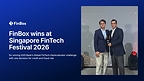
On 19 November, at the Singapore FinTech Festival (SFF), MAS and the Singapore FinTech Association (SFA) named FinBox one of three winners from 195 applications across 52 jurisdictions. Each winner received SGD 80,000.

The winning solution is built on FinBox DeviceConnect and Sentinel AI. Both now sit at the core of a new integrated risk platform on Sentinel AI, which FinBox launched at SFF 2026.

One applicant, two systems, two partial views

Sixteen finalists pitched at Demo Day on 18 November. They answered problem statements set by three Corporate Champions: GXS Bank, Julius Baer and Zurich Insurance. GXS Bank’s problem statement, Adaptive Risk Modelling Systems, asked for a solution that ‘unifies credit and fraud assessment into a single, continuously learning framework.’  

The presentation was judged by senior leaders from Citi, JPMorganChase, BNP Paribas Wealth Management, Finastra and 1982 Ventures.

Credit risk and fraud risk draw on many of the same customer signals, yet they are often assessed in separate systems. Each system sees only part of the applicant. Risks get missed in the gap between them, and that gap widens as customer behaviour shifts and fraud tactics change.

How the winning solution works

With the customer’s consent, DeviceConnect captures behavioural signals from the customer’s device and combines them with credit bureau data. Sentinel AI then scores credit and fraud risk together in one decision and explains every outcome, so the bank’s risk team can see which rules were applied and which signals drove the result.

The system also learns from what happens after disbursal. As repayment data comes in, Sentinel AI recommends policy updates and tests each one on historical applications before it goes live. The bank’s risk team decides what is deployed.

A new integrated risk platform on Sentinel AI

Sentinel AI is FinBox’s orchestration layer for lending decisions. It brings policies, rules, data, scorecards, models and AI agents together in one place. The new integrated platform built on it gives lenders real-time defence against AI-enabled fraud and sharper credit decisions through a single integration. It combines device and behaviour checks, fraud and risk scoring, cash-flow and credit analysis, and Sentinel AI’s policy and decisioning engine.

Seven risk agents handle manual work such as strategy drafting, fraud investigation and early-warning triage, while every approval and rejection stays with the lender’s team. The platform runs alongside a lender’s existing models, loan origination system, and bureau and KYC providers, so nothing needs to be replaced. Lenders can also build their own agents and deploy them.

“Every fraudulent loan application is also a credit application, yet most banks still assess it twice, in two systems that don’t share what they see,” said Srijan Nagar, Co-founder, FinBox. “Fraudsters now use AI to build applicants who look clean on paper, so the signals that catch them have to sit inside the credit decision itself. That’s what we showed the GXS Bank panel, and it’s the idea behind our new platform on Sentinel AI. Winning in Singapore is a proud moment for our team, and it sets us up to take the platform to lenders across the world.”

The win comes as FinBox expands across Asia-Pacific, Middle East, Africa and the US. The company already works with lenders in Vietnam, the Philippines and Indonesia, and is growing its presence across emerging geographies and powering lending transformation.

About FinBox

FinBox is a credit infrastructure fintech that helps banks and lenders mitigate fraud and approve more of the right borrowers. FinBox powers 50 million credit decisions a month and has facilitated more than USD 9 billion in loan applications. The company is backed by WestBridge Capital, A91 Partners and Aditya Birla Ventures, and is headquartered in Bangalore, India. Learn more at finbox.in.

About Sentinel AI

Sentinel AI is FinBox’s orchestration platform for lending decisions. It brings policies, rules, data, scorecards, models and AI agents into one governed layer, so lenders can design, simulate and deploy credit and risk decisions, and the reasons for every decision are explained and recorded. Its integrated risk platform, launched at Singapore FinTech Festival 2026, gives banks and lenders real-time defence against AI-enabled fraud and sharper credit decisions on one integration.

About the Global FinTech Hackcelerator

MAS organises the Global FinTech Hackcelerator in partnership with GFTN. Each year it invites fintech firms from around the world to build AI and technology solutions to problem statements set by Corporate Champions. Finalists pitched at Demo Day during the Singapore FinTech Festival. MAS and SFA announced the 2026 winners on 19 November 2026.

Contact
Mayank Jain
FinBox 
mayank@finbox.in 

View original content to download multimedia:https://www.prnewswire.com/apac/news-releases/finbox-wins-gxs-bank-challenge-at-singapores-global-fintech-hackcelerator-2026-for-unifying-credit-and-fraud-risk-in-a-single-platform-302949658.html

SOURCE FinBox

Continue Reading

Technology

GSMA Innovation Forum Explores How AI Is Becoming Embedded Across Devices, Robots and Industry

Published

on

By

GSMA showcases new resources on connected embodied intelligence, industrial AI deployment and mobile operator use cases

HANGZHOU, China, Nov. 26, 2026 /PRNewswire/ — The GSMA brought together mobile operators, policymakers and technology companies at its 2026 Innovation Forum to examine what it takes to deploy artificial intelligence at scale across connected devices, robotics and industrial operations.

As AI evolves beyond individual applications, devices are beginning to understand context, anticipate needs and complete tasks within the scope of user authorisation. Discussions focused on which AI tasks can run directly on devices, when cloud computing is needed, and what mobile networks must support as deployments expand.

Sihan Bo Chen, Head of Greater China, GSMA, said: “AI is rapidly moving beyond individual applications and becoming embedded across devices, networks and industries. Connectivity will be fundamental to enabling the next generation of AI-powered devices and connected embodied intelligence, while supporting industrial AI deployment. Realising these opportunities requires collaboration across the ecosystem, and China’s innovation landscape offers important insights into how AI can be applied at scale. This week discussions take place ahead of MWC27 Shanghai, where the GSMA looks forward to bringing together leaders from across connectivity, AI and 6G to turn this ambition into action.”

Three executive-led discussions explored how AI and connectivity are converging:

AI-powered devices: The development of AI-native smartphones and the collaboration and standardisation needed to support autonomous, cross-application AI agents.Connected embodied intelligence: How robots and other intelligent machines can combine on-device processing with cloud-based AI, and what these applications may require from future mobile networks.Industrial AI: How AI and intelligent connectivity can move beyond isolated trials and become embedded in core operations across manufacturing, automotive, healthcare and education.

The forum featured contributions from China Mobile, China Unicom, Huawei, ZTE, HONOR, Alibaba Cloud, Unitree Robotics, Deloitte China and Rockwell Automation China, among other organisations from across the mobile, technology and industrial ecosystems.

The GSMA also showcased three industry resources:

Connected Embodied Intelligence: A Key Path to Real-World DeploymentThe Path to Industrial Physical AI at Scale: Connectivity, Computing and Ecosystem CollaborationOperator Best Practices: AI Empowering Verticals Use Cases 2026

Media Contact:
pressoffice@gsma.com 

View original content to download multimedia:https://www.prnewswire.co.uk/news-releases/gsma-innovation-forum-explores-how-ai-is-becoming-embedded-across-devices-robots-and-industry-302950616.html

Continue Reading

Technology

Singdata and SB C&S Sign Exclusive Distribution Agreement for Japan

Published

on

By

SINGAPORE, Nov. 26, 2026 /PRNewswire/ — The agreement brings Singdata AI Lakehouse and AI agent solutions to Japanese enterprises. Delivery options include SaaS, with price-performance as the priority.

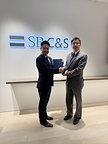
Singdata Cloud Pte. Ltd. and SB C&S Corp. have signed an exclusive distribution agreement for Japan. Under the agreement, the two companies will bring Singdata products to enterprises through the nationwide sales partner network of SB C&S. They will develop sales channels and partner support ahead of the planned product rollout in spring 2027 or later. With Singdata products, they will support enterprises from data integration, management and analytics through to the use of AI in business operations.

The partnership combines Singdata’s data and AI technology with SB C&S’s nationwide network of approximately 15,000 sales partners. Together, the companies aim to help enterprises build the data foundations they need to put AI to work. For SB C&S, the agreement also expands its portfolio of AI and data infrastructure products to address a wider range of business needs.

For enterprises moving AI projects into everyday operations, choosing a model is only part of the work. Agents also need current data, clear business definitions and controlled access to enterprise systems. At the same time, companies need to manage infrastructure costs and decide where their data platforms will run. Singdata’s offering addresses these requirements across three areas.

Better value from data infrastructure

Singdata is designed to improve price-performance by making more efficient use of compute resources. Its incremental compute technology updates results using changes in the underlying data, reducing repeated processing where incremental execution is appropriate. Separate compute and storage, together with workload isolation, help teams allocate resources to different workloads. These capabilities give enterprises ways to manage the cost of data preparation, reporting and analytics as demand grows.

Flexible delivery models including SaaS

Singdata will be offered in Japan through flexible delivery models, including software as a service (SaaS), to meet customers’ infrastructure policies and operational requirements. This gives customers flexibility in how they introduce new analytics and AI capabilities. For system integrators, it also creates opportunities to build solutions around customers’ existing IT environments.

A connected approach to enterprise AI agents

Singdata’s AI agent offering connects data engineering, analytics and business workflow orchestration. The Lakehouse provides the governed data foundation, while its open semantic layer makes business definitions explicit, reusable and portable as code. This helps people and agents work from consistent definitions of the metrics they use.

Singdata helps teams build and operate data pipelines, explore business data through natural-language questions and follow-up analysis, and coordinate agents, enterprise systems and human review within business workflows. These capabilities help enterprises connect the preparation of trusted data with its use in analysis and operational tasks, while retaining human approval where required.

“We are pleased to enter into an exclusive distribution agreement with Singdata for Japan,” said Kota Ito, Senior Vice President of SB C&S, responsible for marketing and technology promotion in its ICT business. “As adoption of generative AI and AI agents grows, companies need an environment where they can use their data securely and effectively. We expect Singdata’s products to help companies make greater use of their data, with capabilities spanning data integration and management, analytics and business process automation. By combining our nationwide sales partner network and product expertise with Singdata’s capabilities, we will help companies put AI and data to work and support their business growth.”

“Our conversations with Japanese enterprises show growing demand for cost-effective data infrastructure, flexible delivery models including SaaS, and AI agents that connect with business data and processes,” said Ethan Yu, CEO of Singdata. “By combining SB C&S’s broad sales partner network with our data and AI technology, we are confident we can address the diverse needs of Japanese enterprises. We will also focus on building local support capabilities to help customers make better use of their data and put AI to work in their operations.”

The agreement builds on the establishment of Singdata Japan and the appointment of a Japan country manager. Through the partnership, Singdata and SB C&S aim to help local system integrators develop customer solutions that combine data infrastructure, analytics and AI agents around specific business needs.

About Singdata

Singdata Japan (シングデータジャパン合同会社) is a Japan-based company that provides Singdata AI Lakehouse, a governed data and semantic foundation for enterprise analytics and AI. Its technology combines data engineering, incremental compute, an open semantic layer and AI agent capabilities to help organizations prepare data, analyze business performance and support business workflows. Learn more at https://www.singdata.com/jp.

Japan office: WeWork Nogizaka, 1-24-3 Minami-Aoyama, Minato-ku, Tokyo 107-0062, Japan.

View original content to download multimedia:https://www.prnewswire.com/apac/news-releases/singdata-and-sb-cs-sign-exclusive-distribution-agreement-for-japan-302950332.html

SOURCE Singdata

Continue Reading

Technology

Mintel predicts 2027 brand growth will shift from selling products to delivering outcomes

Published

on

By

SINGAPORE, Nov. 26, 2026 /PRNewswire/ — Mintel’s 2027 Global Predictions identify a fundamental shift in how brands can create value: future growth will depend less on launching more standalone products and more on helping consumers achieve meaningful outcomes through connected systems.

Consumers are increasingly starting with an outcome they want to achieve, rather than a particular product or category, and assembling their own mix of products, services, technologies and behaviors to get there. That is blurring traditional category boundaries and changing the competitive set for brands. Whether the goal is better sleep, sustained energy, emotional wellbeing or a simpler home routine, brands will need to earn a clear and credible role within the systems consumers build around their lives.

Diana Kelter, Director of Mintel Trends said: 

“The next phase of brand growth will not be driven by more products, formats or claims alone. Consumers don’t experience their needs within neat category boundaries, and increasingly they are combining products, services and behaviors to achieve an outcome. That creates opportunity for brands, but also new competition. A sleep brand may no longer be competing only with another sleep product, for example, but with technology, nutrition, fitness or other solutions that promise the same outcome.” 

“Across categories, the mandate for brands is consistent: stop thinking first about what product to launch and start asking what outcome your brand can credibly help consumers achieve.”

How the shift from products to connected systems will reshape consumer markets

Mintel’s analysis shows how the move from products to systems is reshaping four major consumer categories: 

1. Wellness: the recommendation engine becomes the new battleground 

As wearables and AI move from tracking consumers to recommending what they should eat, buy, take and do, competition will shift from the shelf to the recommendation engine. Half of US consumers already use or are interested in using generative AI to manage their health and wellness. For brands, growth will increasingly depend on providing the proof and data that earns a place within the systems consumers already trust. 

2. Food & Drink: brands face competitors from outside the grocery aisle 

As consumers organize purchases around outcomes such as energy, sleep and weight management, food and drink brands will compete with supplements, beauty, technology and other sectors for the same consumer need. In 2025, 58% of global product launches making stress-relief or relaxation claims came from healthcare brands, compared with 33% from drinks and just 9% from food. Food and drink’s advantage is that eating is non-negotiable, creating an opportunity to become the foundation of consumers’ outcome-led systems rather than just another component within them. 

3. Beauty & Personal Care: brands compete for a bigger share of the routine 

Beauty spending is already moving beyond topical products into supplements, devices and professional treatments as consumers build systems around outcomes such as healthy ageing, hair retention and recovery. In the US, 23% of adults took beauty supplements in 2026, up from 17% in 2022. For beauty brands, the opportunity is to connect products with treatments, diagnostics and wellness solutions around a consumer goal, either by owning more of that system or partnering into it.  

4. Household Care: control of the consumer relationship shifts upstream 

As household decisions are increasingly automated through appliances, retailers and technology platforms, the greatest competitive threat may no longer come from another cleaning brand, but from the companies deciding when and how household needs are met. Already, nearly 7 in 10 US adults see a future where their home anticipates their needs. Brands will need to secure a role within these emerging ecosystems or risk losing control of the consumer relationship. 

Diana Kelter added:  

“Brands should start by identifying the outcomes consumers are trying to achieve, then look at the products, services and behaviors already coming together around them. From there, the question is simple: what role can your brand credibly play? For some, the opportunity will be to orchestrate the wider experience; for others, it will be to provide specialist expertise, measurement, or simply make the system easier to navigate. I expect we’ll see new partnerships develop across technology, healthcare, retail and services, as traditional category boundaries continue to blur.” 

Check out Mintel’s 2027 Global Predictions here.


View original content to download multimedia:https://www.prnewswire.com/apac/news-releases/mintel-predicts-2027-brand-growth-will-shift-from-selling-products-to-delivering-outcomes-302950942.html

SOURCE Mintel

Continue Reading

Trending