Connect with us

Technology

IBM Furthers Flexibility, Sustainability and Security within the Data Center with New IBM z16 and LinuxONE 4 Single Frame and Rack Mount Options

Published

on

New IBM z16 and IBM LinuxONE Rockhopper 4 options are designed to provide a modern, flexible hybrid cloud platform to support digital transformation for a range of IT environmentsConsolidating Linux workloads on an IBM LinuxONE Rockhopper 4 instead of running them on compared x86 servers with similar conditions and location can reduce energy consumption by 75% and space by 67% and is designed to help clients reach their sustainability goals1

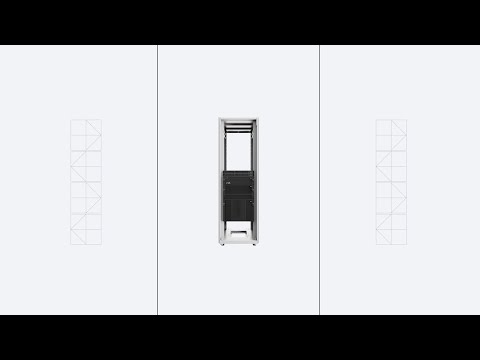
ARMONK, N.Y., April 4, 2023 /PRNewswire/ — IBM (NYSE: IBM) today unveiled new single frame and rack mount configurations of IBM z16 and IBM LinuxONE 4, expanding their capabilities to a broader range of data center environments. Based on IBM’s Telum processor, the new options are designed with sustainability in mind for highly efficient data centers, helping clients adapt to a digitized economy and ongoing global uncertainty.


Introduced in April 2022, the IBM z16 multi frame has helped transform industries with real-time AI inferencing at scale and quantum-safe cryptography. IBM LinuxONE Emperor 4, launched in September 2022, features capabilities that can reduce both energy consumption and data center floor space while delivering the scale, performance and security that clients need. The new single frame and rack mount configurations expand client infrastructure choices and help bring these benefits to data center environments where space, sustainability and standardization are paramount.

“IBM remains at the forefront of innovation to help clients weather storms generated by an ever-changing market,” said Ross Mauri, General Manager, IBM zSystems and LinuxONE. “We’re protecting clients’ investments in existing infrastructure while helping them to innovate with AI and quantum-safe technologies. These new options let companies of all sizes seamlessly co-locate IBM z16 and LinuxONE Rockhopper 4 with distributed infrastructure, bringing exciting capabilities to those environments.”

Designed for today’s changing IT environment to enable new use cases

Organizations in every industry are balancing an increasing number of challenges to deliver integrated digital services. According to a recent IBM Transformation Index report, among those surveyed, security, managing complex environments and regulatory compliance were cited as challenges to integrating workloads in a hybrid cloud. These challenges can be compounded by more stringent environmental regulations and continuously rising costs.

“We have seen immense value from utilizing the IBM z16 platform in a hybrid cloud environment,” said Bo Gebbie, president, Evolving Solutions. “Leveraging these very secure systems for high volume transactional workloads, combined with cloud-native technologies, has enabled greater levels of agility and cost optimization for both our clients’ businesses and our own.”

The new IBM z16 and LinuxONE 4 offerings are built for the modern data center to help optimize flexibility and sustainability, with capabilities for partition-level power monitoring and additional environmental metrics. For example, consolidating Linux workloads on an IBM LinuxONE Rockhopper 4 instead of running them on compared x86 servers with similar conditions and location can reduce energy consumption by 75 percent and space by 67 percent.1  These new configurations are engineered to deliver the same hallmark IBM security and transaction processing at scale.

Designed and tested to the same internal qualifications as the IBM z16 high availability portfolio2, the new rack-optimized footprint is designed for use with client-owned, standard 19-inch racks and power distribution units. This new footprint opens opportunities to include systems in distributed environments with other servers, storage, SAN and switches in one rack, designed to optimize both co-location and latency for complex computing, such as training AI models.

Installing these configurations in the data center can help create a new class of use cases, including:

Sustainable design: Easier integration into hot or cold aisle thermal management data center configurations with common data center power and coolingOptimizing AI solutions: With on-chip AI inferencing and the newest IBM z/OS 3.1, whether rack mount, single frame or multi frame configurations, clients can train or deploy AI models very close to where data resides, allowing clients to optimize AIData privacy: Support data sovereignty for regulated industries with compliance and governance restrictions on data location, routing local transactions through local data centers with optimized rack mount efficiencyEdge computing: Enable more efficient rack utilization in limited rack space near manufacturing, healthcare devices, or other edge devices

Securing data on the industry’s most available systems3

For critical industries, like healthcare, financial services, government and insurance, a secure, available IT environment is key to delivering high quality service to customers. IBM z16 and LinuxONE 4 are engineered to provide the highest levels of reliability in the industry, 99.99999% availability to support mission-critical workloads as part of a hybrid cloud strategy. These high availability levels help companies maintain consumer access to bank accounts, medical records and personal data. Emerging threats require protection, and the new configurations offer security capabilities that include confidential computing, centralized key management and quantum-safe cryptography to help thwart bad actors planning to “harvest now, decrypt later.”

“IBM z16 and LinuxONE systems are known for security, resiliency and transaction processing at scale,” said Matt Eastwood, SVP, WW Research, IDC. “Clients can now access the same security and resiliency standards in new environments with the single frame and rack mount configurations, giving them flexibility in the data center. Importantly, this also opens up more business opportunity for partners who will be able to reach an expanded audience by integrating IBM zSystems and LinuxONE capabilities to their existing footprints.”

With the IBM Ecosystem of zSystems ISV partners, IBM is working to address compliance and cybersecurity. For clients that run data serving, core banking and digital assets workloads, an optimal compliance and security posture is key to protecting sensitive personal data and existing technology investments.

“High processing speed and artificial intelligence are key to moving organizations forward,” said Adi Hazan, director of Analycat. “IBM zSystems and LinuxONE added the security and power that we needed to address new clients, use cases and business benefits. The native speed of our AI on this platform was amazing and we are excited to introduce the IBM LinuxONE offerings to our clients with large workloads to consolidate and achieve corporate sustainability goals.”

IBM Business Partners can learn more about the skills required to install, deploy, service and resell single frame and rack mount configurations in this blog.

Complementary Technology Lifecycle Support Services

With the new IBM LinuxONE Rockhopper 4 servers, IBM will offer IBM LinuxONE Expert Care. IBM Expert Care integrates and prepackages hardware and software support services into a tiered support model, helping organizations to choose the right fit of services. This support for LinuxONE Rockhopper 4 will offer enhanced value to clients with predictable maintenance costs and reduced deployment and operating risk.  

The new IBM z16 and LinuxONE 4 single frame and rack mount options, supported by LinuxONE Expert Care, will be generally available globally[4] from IBM and certified business partners beginning on May 17, 2023. To learn more:

On April 4, at 10 am ET, join IBM clients and partners for behind-the-scenes access to the new IBM z16 single frame and rack mount configurationsOn April 17, at 10 am ET, join IBM clients and partners for a deep dive on industry trends, such as sustainability and cybersecurity during the IBM LinuxONE single frame and rack mount virtual eventCheck out a preview of the newest version of z/OS, which is designed to scale the value of data and drive digital transformation powered by AI and intelligent automation

About IBM
IBM is a leading global hybrid cloud and AI, and business services provider, helping clients in more than 175 countries capitalize on insights from their data, streamline business processes, reduce costs and gain the competitive edge in their industries. Nearly 3,800 government and corporate entities in critical infrastructure areas such as financial services, telecommunications and healthcare rely on IBM’s hybrid cloud platform and Red Hat OpenShift to affect their digital transformations quickly, efficiently, and securely. IBM’s breakthrough innovations in AI, quantum computing, industry-specific cloud solutions and business services deliver open and flexible options to our clients. All of this is backed by IBM’s legendary commitment to trust, transparency, responsibility, inclusivity, and service. For more information, visit www.ibm.com

Media Contact:
Ashley Peterson
ashley.peterson@ibm.com 

1 DISCLAIMER: Compared IBM Machine Type 3932 Max 68 model consisting of a CPC drawer and an I/O drawer to support network and external storage with 68 IFLs and 7 TB of memory in 1 frame versus compared 36 x86 servers (2 Skylake Xeon Gold Chips, 40 Cores) with a total of 1440 cores. IBM Machine Type 3932 Max 68 model power consumption was measured on systems and confirmed using the IBM Power estimator for the IBM Machine Type 3932 Max 68 model configuration. x86 power values were based on Feb. 2023 IDC QPI power values and reduced to 55% based on measurements of x86 servers by IBM and observed values in the field. The x86 server compared to uses approximately .6083 KWhr, 55% of IDC QPI system watts value. Savings assumes the Worldwide Data Center Power Utilization Effectiveness (PUE) factor of 1.55 to calculate the additional power needed for cooling. PUE is based on Uptime Institute 2022 Global Data Center Survey (https://uptimeinstitute.com/resources/research-and-reports/uptime-institute-global-data-center-survey-results-2022). x86 system space calculations require 3 racks. Results may vary based on client-specific usage and location.
2DISCLAIMER: All the IBM z16 Rack Mount components are tested via same process requirements as the IBM z16 traditional Single Frame components. Comprehensive testing includes a wide range of voltage, frequency, temperature testing.
3 Source: Information Technology Intelligence Consulting Corp. (ITIC). 2022. Global Server Hardware, Server OS Reliability Survey. https://www.ibm.com/downloads/cas/BGARGJRZ
4 Check local availability for rack mount here.

View original content to download multimedia:https://www.prnewswire.com/news-releases/ibm-furthers-flexibility-sustainability-and-security-within-the-data-center-with-new-ibm-z16-and-linuxone-4-single-frame-and-rack-mount-options-301789108.html

SOURCE IBM

Continue Reading
Click to comment

Leave a Reply

Your email address will not be published. Required fields are marked *

Technology

Anamana Disrupts Micro-Serial Market with AI-Native Platform; 97% Cost Reduction Empowers Global Creators to Challenge “China-Centric” Model

Published

on

By

By empowering a culturally-native creator ecosystem with agentic AI, Anamana bypasses traditional ‘reskinning’ models to deliver high-resonance storytelling at 3% of legacy production costs

SINGAPORE, May 14, 2026 /PRNewswire/ — Anamana, the first integrated AI-native micro-serial ecosystem, today shared demographic data from its inaugural Anamana 100 Creator Incubator, revealing a globally diversified creator base poised to disrupt the non-China global micro-drama industry analysts estimate to reach $5 billion this year.

Two months into the program, the platform has successfully greenlit projects across five continents, signaling a major move away from the dominant mass-production “reskinning” model used by incumbents such as ReelShort and DramaBox.

While the market has historically relied on exporting Chinese narratives through simple translation or Western “reskinning,” Anamana utilizes agentic AI to empower culturally-native storytellers. The Anamana Studio production platform allows individual creators to produce high-fidelity serialized video with up to 97% lower capital and manpower costs than traditional live-action filming, effectively lowering the barrier to entry for independent creators worldwide.

“The current ROI-driven mass production model has hit a creative ceiling,” said Brian Xie, founder of Anamana. “We aren’t just localizing scripts; we are providing the tools for creators around the world to own their narratives and maximize their own economic results. By reducing production costs by over 90%, we are shifting the power from centralized content factories back to the original storyteller.”

Global Creator Footprint & Engagement

Internal statistics from the incubator showcase a massive shift in how global talent is embracing AI-native vertical drama:

The Americas: Represent 40% of both total applications and active production projects.Asia & Europe: Account for a combined 50% of the applicant pool and 53% of current productions.Africa & Oceania: Despite smaller total volumes, projects are nearly evenly split, showcasing high engagement from emerging creative “tribes”, particularly in the number of submissions from Africa.

“Geographic diversity is just the start—cultural authenticity is the goal,” said Kai Pan, Head of Marketing Communications. “With AI-native technology, storytellers are no longer tethered to traditional production hubs like Los Angeles, Kyiv, or Istanbul. We are democratizing the ‘addictive’ vertical format, ensuring the next global hit feels as authentic to its audience as it does to its creator.”

Anamana’s $2 million incubator fund continues to commission creators to foster the first generation of AI-native visual storytellers. Creators interested in the future of micro-serials can apply at anamana.com.

About Anamana

Founded in 2025, Anamana is an integrated AI-native micro-serial platform, production ecosystem, and global creator incubator. By leveraging agentic AI in Anamana Studio, the company enables human storytellers to produce and distribute premium vertical content with unprecedented efficiency. Micro-serials produced are distributed on Anamana’s standalone app and third-party platforms including YouTube and TikTok.

View original content to download multimedia:https://www.prnewswire.com/news-releases/anamana-disrupts-micro-serial-market-with-ai-native-platform-97-cost-reduction-empowers-global-creators-to-challenge-china-centric-model-302772154.html

SOURCE Anamana

Continue Reading

Technology

MCA inaugurates the largest off-grid solar park on the African continent and strengthens its solution for bringing electricity to remote communities

Published

on

By

The infrastructure is part of the Rural Electrification Project, which will benefit more than a million people

MCA has surpassed the previous record set at Cazombo for installed infrastructure, specifically in terms of solar capacity, battery storage and tonnes of CO2 avoided annually

The Luau Photovoltaic Park, which will supply green energy to over 90,000 people, has a production capacity of 31.85 MWp, batteries with a storage capacity of 75.26 MWh and will prevent the emission of 47 tonnes of CO2

GUIMARÃES, Portugal, May 14, 2026 /PRNewswire/ — In early May, MCA inaugurated Africa’s largest off-grid renewable energy solar park in the village of Luau, Angola. The project was designed to address a challenge faced by many countries across the continent: ensuring a supply of electricity to remote and isolated communities, for whom extending the grid is technically and economically unfeasible.

The Luau Solar Park has a generation capacity of 31.85 MWp and batteries with a storage capacity of 75.26 MWh, enough to supply more than 90,000 people, whilst preventing the emission of 47 tonnes of CO2. This is the country’s second off-grid system with a solar power source and a battery bank for night-time supply, eliminating the need for any fossil fuel. The inauguration of the facility was attended by the President of the Republic of Angola, João Lourenço, and the Minister of Energy and Water (MINEA), João Baptista Borges.

With its commissioning, the Luau Photovoltaic Park has become the largest off-grid park on the African continent, surpassing the record previously set at Cazombo. It should be noted that the Cazombo Solar Photovoltaic Park features infrastructure installed by MCA comprising 25.3 MWp of solar capacity, 59.46 MWh of battery storage, and 40,320 630 Wp photovoltaic modules.

“It is with immense pride that MCA contributes to the country’s energy transition with the delivery of yet another solar park. This is a project that goes far beyond the technical aspect: it represents a commitment to communities that, for decades, have lived without access to energy. The completion of the Cazombo and Luau parks marks just the beginning of a structural and ambitious programme, which will continue to expand in the coming months. We believe that energy transforms lives, creates opportunities and strengthens regions, and it is with this aim that we will continue to work, side by side with the communities, to ensure that electrification reaches where it makes the most difference,” says Manuel Couto Alves, Chairman of MCA.

This infrastructure, budgeted at over €87 million and comprising a total of 54,912 installed solar panels, has created more than 200 local jobs and will enable annual savings of around 18 million litres of fuel. The Luau solar farm is the second to be delivered as part of the Rural Electrification Project covering 60 communes in Angola. 

In a context where electricity plays a fundamental role in promoting local development, the Rural Electrification Project emerges as a structural solution, placing solar energy at the heart of the solution. Off-grid solar farms combine solar generation and storage, enabling clean and reliable energy to be delivered to the most remote communities, with direct benefits for quality of life and economic activity through the democratisation of essential services. The first results are already visible with the completion of the Cazombo plants in 2025, now joined by the Luau plant, in an expansion drive that will intensify until 2027.

The Rural Electrification Project, which envisages the implementation of 46 autonomous mini-grids (powered by solar photovoltaic parks) and an estimated impact on over one million people, has been recognised in the European Union’s Global Gateway strategy, which aims to promote sustainable, inclusive and high-quality connections in the fields of energy, digital technology and infrastructure, contributing to the economic and social development of partner countries. 

In the context of rural electrification, these projects seek to ensure access to clean, reliable and affordable energy for remote communities, strengthening essential services such as healthcare, education and local economic activity, whilst supporting the energy transition and climate action. Based on balanced partnerships and high environmental, social and governance standards, Global Gateway projects in the energy sector aim to generate a lasting impact on local populations, reduce regional inequalities and promote more sustainable and resilient growth. 

Designed and built by the Portuguese MCA Group, the financing for this operation was structured by the British Standard Chartered Bank with the support of the German Export Agency, Euler Hermes, which provided a guarantee of around one billion euros, reinsured by the Portuguese and Korean Export Agencies (Cosec and K Sure). The Angolan state-owned electricity production company (PRODEL Ep) is the project developer.

The Portuguese company has been making a name for itself in the Angolan market by successfully developing turnkey projects aimed at ensuring the provision of basic infrastructure, namely water supply and energy production facilities.

About MCA 
MCA is a Portuguese company founded in 1998 in Guimarães by businessman Manuel Couto Alves and currently has around 2,000 employees in various countries. The company is active in the development, engineering, procurement, construction, and operation of projects in four business verticals: Energy, Urban Development, Infrastructure and Health. MCA began its internationalisation process in 2006 in the Angolan market and is currently present in three geographical clusters including the Iberian Peninsula, Central Europe, and Africa. The company endeavours to create and share long-term value, thereby promoting the sustainable development of the communities in which it operates. https://www.mcagroup.com/en/ 

Photo – https://mma.prnewswire.com/media/2979585/May_MCA_Luau.jpg

SOURCE MCA Group

Continue Reading

Technology

ScioSense launches UFC23 ultrasonic flow converter for high-precision, ultra-low-power smart metering

Published

on

By

The new UFC23 sensor combines improved resolution and offset stability with ultra-low standby current, enabling high-end battery-powered water, heat, gas and leak detection meter designs across a wide range of smart metering applications

EINDHOVEN, Netherlands, May 14, 2026 /PRNewswire/ — ScioSense, a leading developer and manufacturer of semiconductor-based environmental and flow sensors, today launched the UFC23 – the 4th generation ultrasonic flow converter for measurement in water, heat and gas meters.


How can meter manufacturers improve measurement accuracy, extend battery life, and retain control of their preferred system architecture? In modern applications, flow calculation is increasingly handled by a central host microcontroller – requiring a converter that can deliver accurate measurement at very low flow rates and long battery life, two demands that are often difficult to achieve together. The UFC23 is designed for meter manufacturers that want very high measurement precision and extremely low power consumption, while keeping flow calculation on their own central microcontroller.

The UFC23 extends the ScioSense ultrasonic flow portfolio with a pure front-end architecture that omits the on-chip Central Processing Unit (CPU) used in previous flow converters. This gives Original Equipment Manufacturers (OEMs) the flexibility to fit the system architecture now preferred by many meter designers, while also delivering improved analogue front-end performance.

In a typical DN15 water meter setup, the UFC23 provides single-shot standard deviation of 35ps and offset stability of ±7ps with 128-sample averaging and a drift of less than 10ps over the range from 0 to 50°C. This level of precision and stability supports the signal quality needed in high-end water meter designs, including R1000-class measurement requirements. At the same time, the UFC23 is optimized for battery-powered systems, with standby current of typically 0.8µA and an operating current as low as 6.6µA at an 8Hz sample rate.

The UFC23 integrates the functions required to drive ultrasonic transducers, captures received signals, and extracts high-precision time-of-flight data. It supports both 3.3V single-ended drive for water applications and full-bridge drive for gas applications. A programmable gain amplifier with increased gain and bandwidth helps the UFC23 handle weak receive signals, while a programmable ultrasonic burst generator operating up to 4.4MHz and based on an external reference of up to 20MHz allows designers to tune operation to the transducer and application.

The UFC23 also includes features that help improve system-level efficiency and measurement robustness. Designers can monitor the amplitude of up to three received waves and use extended pulse-width measurement to improve first-hit detection. A batch mode allows the sensor to collect up to 12 measurement bundles before waking the host controller, helping to reduce total system power consumption. The UFC23 also supports temperature measurement with external platinum sensors for heat meters and hot-water systems.

Since the UFC23 supports multiple designs, manufacturers can reuse the same sensor across different product families. Typical applications include smart water and heat meters, smart gas meters, water heaters, pump control systems, and smart faucets.

“UFC23 addresses a clear requirement in the metering market for a high-precision, ultra-low-power ultrasonic flow converter that fits modern system architectures. It enables manufacturers to pair ScioSense analogue and timing performance with their chosen host microcontroller and software environment.”
– Norbert Breyer, Director of Marketing and Product Management, ScioSense

The UFC23 operates from a 2.5V to 3.6V supply, supports an operating temperature range of -40°C to 85°C, and is supplied in a QFN32 package. Samples are available now, and evaluation kits are available through key distributors at launch.

For more information, go to https://www.sciosense.com/ufc23/.

About ScioSense – Sensing tomorrow’s world

Headquartered in Eindhoven, The Netherlands, ScioSense is a leading expert in and manufacturer of semiconductor-based environmental and flow sensors. Its product portfolio consists of humidity, gas/air quality, temperature, pressure and flow sensors for building automation, home appliances, IoT, wearables, mobile devices, automotive and industrial applications.

At ScioSense, we believe that everyone deserves to understand the world around them, and we are here to help make that happen. Our sensors are designed to be small, smart and easy to use. We are a team of passionate and dedicated professionals committed to making a difference in the world. We believe that our sensors can help create a more informed and sustainable future for everyone.

Information about the company and its products can be found at www.sciosense.com.

Photo: https://mma.prnewswire.com/media/2979202/ScioSense_UFC23.jpg

View original content:https://www.prnewswire.co.uk/news-releases/sciosense-launches-ufc23-ultrasonic-flow-converter-for-high-precision-ultra-low-power-smart-metering-302771168.html

Continue Reading

Trending