
Technology
CISCO REPORTS SECOND QUARTER EARNINGS

Published
3 years agoon
By

SAN JOSE, Calif., Feb. 14, 2024 /PRNewswire/ —
News Summary:
$12.8 billion in revenue, down 6% year over year; GAAP EPS $0.65, down 3% year over year, and Non-GAAP EPS $0.87, down 1% year over year
Revenue growth in security, collaboration and observabilityProgress on business model transformation in Q2 FY 2024:Total software revenue was flat year over year and software subscription revenue up 5% year over yearTotal annualized recurring revenue (ARR) at $24.7 billion, up 6% year over year and product ARR up 9% year over yearRemaining performance obligations (RPO) at $35.7 billion, up 12% year over year and product RPO up 12% year over yearDividend increased by 3% to $0.40 per shareQ2 FY 2024 Results:Revenue: $12.8 billionDecrease of 6% year over yearEarnings per Share: GAAP: $0.65; Non-GAAP: $0.87GAAP EPS decreased 3% year over yearNon-GAAP EPS decreased 1% year over yearQ3 FY 2024 Guidance: Revenue: $12.1 billion to $12.3 billionEarnings per Share: GAAP: $0.51 to $0.56; Non-GAAP: $0.84 to $0.86FY 2024 Guidance:Revenue: $51.5 billion to $52.5 billionEarnings per Share: GAAP: $2.61 to $2.73; Non-GAAP: $3.68 to $3.74
Cisco today reported second quarter results for the period ended January 27, 2024. Cisco reported second quarter revenue of $12.8 billion, net income on a generally accepted accounting principles (GAAP) basis of $2.6 billion or $0.65 per share, and non-GAAP net income of $3.5 billion or $0.87 per share.
“We delivered a solid second quarter with strong operating leverage and capital returns,” said Chuck Robbins, chair and CEO of Cisco. “We continue to align our investments to future growth opportunities. Our innovation sits at the center of an increasingly connected ecosystem and will play a critical role as our customers adopt AI and secure their organizations.”
“Focused execution and operating discipline drove our solid top and bottom-line results and strong margins in Q2,” said Scott Herren, CFO of Cisco. “We are making good progress in our business model shift to more recurring revenue while remaining focused on financial discipline, operating leverage and shareholder returns, as evidenced by our increased dividend.”
GAAP Results
Q2 FY 2024
Q2 FY 2023
Vs. Q2 FY 2023
Revenue
$ 12.8 billion
$ 13.6 billion
(6) %
Net Income
$ 2.6 billion
$ 2.8 billion
(5) %
Diluted Earnings per Share (EPS)
$ 0.65
$ 0.67
(3) %
Non-GAAP Results
Q2 FY 2024
Q2 FY 2023
Vs. Q2 FY 2023
Net Income
$ 3.5 billion
$ 3.6 billion
(3) %
EPS
$ 0.87
$ 0.88
(1) %
Reconciliations between net income, EPS, and other measures on a GAAP and non-GAAP basis are provided in the tables located in the section entitled “Reconciliations of GAAP to non-GAAP Measures.”
Cisco Increases Quarterly Dividend
Cisco has declared a quarterly dividend of $0.40 per common share, a 1-cent increase or up 3%, over the previous quarter’s dividend, to be paid on April 24, 2024, to all stockholders of record as of the close of business on April 4, 2024. Future dividends will be subject to Board approval.
Financial Summary
All comparative percentages are on a year-over-year basis unless otherwise noted.
Q2 FY 2024 Highlights
Revenue — Total revenue was $12.8 billion, down 6%, with product revenue down 9% and service revenue up 4%. Revenue by geographic segment was: Americas down 4%, EMEA down 7%, and APJC was down 12%. Product revenue performance reflected growth in Security up 3%, Collaboration up 3% and Observability up 16%. Networking was down 12%.
Gross Margin — On a GAAP basis, total gross margin, product gross margin, and service gross margin were 64.2%, 62.7%, and 68.2%, respectively, as compared with 62.0%, 60.2%, and 67.2%, respectively, in the second quarter of fiscal 2023.
On a non-GAAP basis, total gross margin, product gross margin, and service gross margin were 66.7%, 65.2%, and 70.5%, respectively, as compared with 63.9%, 62.1%, and 69.1%, respectively, in the second quarter of fiscal 2023.
Total gross margins by geographic segment were: 65.7% for the Americas, 68.1% for EMEA and 68.2% for APJC.
Operating Expenses — On a GAAP basis, operating expenses was flat at $5.1 billion, and were 40.0% of revenue. Non-GAAP operating expenses were $4.3 billion, up 1%, and were 33.8% of revenue.
Operating Income — GAAP operating income was $3.1 billion, down 6%, with GAAP operating margin of 24.2%. Non-GAAP operating income was $4.2 billion, down 4%, with non-GAAP operating margin at 33.0%.
Provision for Income Taxes — The GAAP tax provision rate was 16.7%. The non-GAAP tax provision rate was 19.0%.
Net Income and EPS — On a GAAP basis, net income was $2.6 billion, a decrease of 5%, and EPS was $0.65, a decrease of 3%. On a non-GAAP basis, net income was $3.5 billion, a decrease of 3%, and EPS was $0.87, a decrease of 1%.
Cash Flow from Operating Activities — $0.8 billion for the second quarter of fiscal 2024, a decrease of 83% compared with $4.7 billion for the second quarter of fiscal 2023.
Balance Sheet and Other Financial Highlights
Cash and Cash Equivalents and Investments — $25.7 billion at the end of the second quarter of fiscal 2024, compared with $26.1 billion at the end of fiscal 2023.
Remaining Performance Obligations (RPO) — $35.7 billion, up 12% in total, with 50% of this amount to be recognized as revenue over the next 12 months. Product RPO and service RPO were each up 12%.
Deferred Revenue — $25.8 billion, up 8% in total, with deferred product revenue up 9%. Deferred service revenue was up 7%.
Capital Allocation — In the second quarter of fiscal 2024, we returned $2.8 billion to stockholders through share buybacks and dividends. We declared and paid a cash dividend of $0.39 per common share, or $1.6 billion, and repurchased approximately 25 million shares of common stock under our stock repurchase program at an average price of $49.54 per share for an aggregate purchase price of $1.3 billion. The remaining authorized amount for stock repurchases under the program is $8.4 billion with no termination date.
Guidance
Cisco expects to achieve the following results for the third quarter of fiscal 2024:
Q3 FY 2024
Revenue
$12.1 billion – $12.3 billion
Non-GAAP gross margin rate
66% – 67%
Non-GAAP operating margin rate
33.5% – 34.5%
Non-GAAP EPS
$0.84 – $0.86
Cisco estimates that GAAP EPS will be $0.51 to $0.56 for the third quarter of fiscal 2024.
Cisco expects to achieve the following results for fiscal 2024:
FY 2024
Revenue
$51.5 billion – $52.5 billion
Non-GAAP EPS
$3.68 – $3.74
Cisco estimates that GAAP EPS will be $2.61 to $2.73 for fiscal 2024.
Our Q3 FY 2024 and FY 2024 guidance assumes an effective tax provision rate of 18% for GAAP and 19% for non-GAAP results.
A reconciliation between the guidance on a GAAP and non-GAAP basis is provided in the tables entitled “GAAP to non-GAAP Guidance” located in the section entitled “Reconciliations of GAAP to non-GAAP Measures.”
Editor’s Notes:
Q2 fiscal year 2024 conference call to discuss Cisco’s results along with its guidance will be held on Wednesday, February 14, 2024 at 1:30 p.m. Pacific Time. Conference call number is 1-888-848-6507 (United States) or 1-212-519-0847 (international).Conference call replay will be available from 4:00 p.m. Pacific Time, February 14, 2024 to 12:00 a.m. Pacific Time, February 21, 2024 at 1-800-876-5258 (United States) or 1-203-369-3998 (international). The replay will also be available via webcast on the Cisco Investor Relations website at https://investor.cisco.com.Additional information regarding Cisco’s financials, as well as a webcast of the conference call with visuals designed to guide participants through the call, will be available at 1:30 p.m. Pacific Time, February 14, 2024. Text of the conference call’s prepared remarks will be available within 24 hours of completion of the call. The webcast will include both the prepared remarks and the question-and-answer session. This information, along with the GAAP to non-GAAP reconciliation information, will be available on the Cisco Investor Relations website at https://investor.cisco.com.
CISCO SYSTEMS, INC.
CONSOLIDATED STATEMENTS OF OPERATIONS
(In millions, except per-share amounts)
(Unaudited)
Three Months Ended
Six Months Ended
January 27, 2024
January 28, 2023
January 27, 2024
January 28, 2023
REVENUE:
Product
$ 9,232
$ 10,155
$ 20,371
$ 20,400
Service
3,559
3,437
7,088
6,824
Total revenue
12,791
13,592
27,459
27,224
COST OF SALES:
Product
3,443
4,038
7,400
8,217
Service
1,131
1,127
2,285
2,234
Total cost of sales
4,574
5,165
9,685
10,451
GROSS MARGIN
8,217
8,427
17,774
16,773
OPERATING EXPENSES:
Research and development
1,943
1,855
3,856
3,636
Sales and marketing
2,458
2,384
4,964
4,775
General and administrative
642
582
1,314
1,147
Amortization of purchased intangible assets
66
71
133
142
Restructuring and other charges
12
243
135
241
Total operating expenses
5,121
5,135
10,402
9,941
OPERATING INCOME
3,096
3,292
7,372
6,832
Interest income
324
219
684
388
Interest expense
(120)
(107)
(231)
(207)
Other income (loss), net
(139)
11
(222)
(123)
Interest and other income (loss), net
65
123
231
58
INCOME BEFORE PROVISION FOR INCOME TAXES
3,161
3,415
7,603
6,890
Provision for income taxes
527
642
1,331
1,447
NET INCOME
$ 2,634
$ 2,773
$ 6,272
$ 5,443
Net income per share:
Basic
$ 0.65
$ 0.68
$ 1.55
$ 1.33
Diluted
$ 0.65
$ 0.67
$ 1.54
$ 1.32
Shares used in per-share calculation:
Basic
4,055
4,103
4,056
4,105
Diluted
4,073
4,116
4,079
4,115
CISCO SYSTEMS, INC.
REVENUE BY SEGMENT
(In millions, except percentages)
January 27, 2024
Three Months Ended
Six Months Ended
Amount
Y/Y %
Amount
Y/Y %
Revenue:
Americas
$ 7,510
(4) %
$ 16,532
5 %
EMEA
3,484
(7) %
7,148
(3) %
APJC
1,798
(12) %
3,779
(7) %
Total
$ 12,791
(6) %
$ 27,459
1 %
Amounts may not sum and percentages may not recalculate due to rounding.
CISCO SYSTEMS, INC.
GROSS MARGIN PERCENTAGE BY SEGMENT
(In percentages)
January 27, 2024
Three Months Ended
Six Months Ended
Gross Margin Percentage:
Americas
65.7 %
65.9 %
EMEA
68.1 %
68.8 %
APJC
68.2 %
67.6 %
CISCO SYSTEMS, INC.
REVENUE FOR GROUPS OF SIMILAR PRODUCTS AND SERVICES
(In millions, except percentages)
January 27, 2024
Three Months Ended
Six Months Ended
Amount
Y/Y %
Amount
Y/Y %
Revenue:
Networking
$ 7,081
(12) %
$ 15,904
(1) %
Security
973
3 %
1,984
4 %
Collaboration
989
3 %
2,106
3 %
Observability
188
16 %
378
18 %
Total Product
9,232
(9) %
20,371
— %
Services
3,559
4 %
7,088
4 %
Total
$ 12,791
(6) %
$ 27,459
1 %
Amounts may not sum and percentages may not recalculate due to rounding.
CISCO SYSTEMS, INC.
CONDENSED CONSOLIDATED BALANCE SHEETS
(In millions)
(Unaudited)
January 27, 2024
July 29, 2023
ASSETS
Current assets:
Cash and cash equivalents
$ 13,715
$ 10,123
Investments
11,956
16,023
Accounts receivable, net of allowance of $79 at January 27, 2024 and $85 at July 29, 2023
4,884
5,854
Inventories
3,209
3,644
Financing receivables, net
3,476
3,352
Other current assets
4,887
4,352
Total current assets
42,127
43,348
Property and equipment, net
2,005
2,085
Financing receivables, net
3,364
3,483
Goodwill
39,087
38,535
Purchased intangible assets, net
1,678
1,818
Deferred tax assets
7,338
6,576
Other assets
5,575
6,007
TOTAL ASSETS
$ 101,174
$ 101,852
LIABILITIES AND EQUITY
Current liabilities:
Short-term debt
$ 4,936
$ 1,733
Accounts payable
1,848
2,313
Income taxes payable
1,876
4,235
Accrued compensation
3,216
3,984
Deferred revenue
14,011
13,908
Other current liabilities
4,964
5,136
Total current liabilities
30,851
31,309
Long-term debt
6,669
6,658
Income taxes payable
3,390
5,756
Deferred revenue
11,760
11,642
Other long-term liabilities
2,253
2,134
Total liabilities
54,923
57,499
Total equity
46,251
44,353
TOTAL LIABILITIES AND EQUITY
$ 101,174
$ 101,852
CISCO SYSTEMS, INC.
CONSOLIDATED STATEMENTS OF CASH FLOWS
(In millions)
(Unaudited)
Six Months Ended
January 27,
2024
January 28,
2023
Cash flows from operating activities:
Net income
$ 6,272
$ 5,443
Adjustments to reconcile net income to net cash provided by operating activities:
Depreciation, amortization, and other
823
853
Share-based compensation expense
1,463
1,097
Provision (benefit) for receivables
12
6
Deferred income taxes
(816)
(845)
(Gains) losses on divestitures, investments and other, net
205
109
Change in operating assets and liabilities, net of effects of acquisitions and divestitures:
Accounts receivable
941
1,393
Inventories
442
(569)
Financing receivables
(33)
834
Other assets
(403)
(210)
Accounts payable
(476)
42
Income taxes, net
(4,656)
118
Accrued compensation
(763)
(146)
Deferred revenue
293
633
Other liabilities
(125)
(57)
Net cash provided by operating activities
3,179
8,701
Cash flows from investing activities:
Purchases of investments
(2,253)
(3,797)
Proceeds from sales of investments
2,484
587
Proceeds from maturities of investments
4,044
2,316
Acquisitions, net of cash and cash equivalents acquired
(878)
(3)
Purchases of investments in privately held companies
(50)
(70)
Return of investments in privately held companies
123
39
Acquisition of property and equipment
(304)
(346)
Other
(1)
(19)
Net cash provided by (used in) provided by investing activities
3,165
(1,293)
Cash flows from financing activities:
Issuances of common stock
349
316
Repurchases of common stock – repurchase program
(2,504)
(1,760)
Shares repurchased for tax withholdings on vesting of restricted stock units
(581)
(310)
Short-term borrowings, original maturities of 90 days or less, net
1,398
(602)
Issuances of debt
2,537
—
Repayments of debt
(750)
—
Dividends paid
(3,163)
(3,120)
Other
(7)
(5)
Net cash used in financing activities
(2,721)
(5,481)
Effect of foreign currency exchange rate changes on cash, cash equivalents, restricted cash and restricted cash equivalents
(32)
3
Net increase in cash, cash equivalents, restricted cash and restricted cash equivalents
3,591
1,930
Cash, cash equivalents, restricted cash and restricted cash equivalents, beginning of period
11,627
8,579
Cash, cash equivalents, restricted cash and restricted cash equivalents, end of period
$ 15,218
$ 10,509
Supplemental cash flow information:
Cash paid for interest
$ 203
$ 178
Cash paid for income taxes, net
$ 6,804
$ 2,172
CISCO SYSTEMS, INC.
REMAINING PERFORMANCE OBLIGATIONS
(In millions, except percentages)
January 27, 2024
October 28, 2023
January 28, 2023
Amount
Y/Y%
Amount
Y/Y%
Amount
Y/Y%
Product
$ 16,249
12 %
$ 16,011
14 %
$ 14,517
7 %
Service
19,407
12 %
18,742
11 %
17,255
2 %
Total
$ 35,656
12 %
$ 34,753
12 %
$ 31,772
4 %
We expect 50% of total RPO at January 27, 2024 will be recognized as revenue over the next 12 months.
CISCO SYSTEMS, INC.
DEFERRED REVENUE
(In millions)
January 27, 2024
October 28, 2023
January 28, 2023
Deferred revenue:
Product
$ 11,640
$ 11,689
$ 10,679
Service
14,131
13,970
13,248
Total
$ 25,771
$ 25,659
$ 23,927
Reported as:
Current
$ 14,011
$ 13,812
$ 13,109
Noncurrent
11,760
11,847
10,818
Total
$ 25,771
$ 25,659
$ 23,927
CISCO SYSTEMS, INC.
DIVIDENDS PAID AND REPURCHASES OF COMMON STOCK
(In millions, except per-share amounts)
DIVIDENDS
STOCK REPURCHASE PROGRAM
TOTAL
Quarter Ended
Per Share
Amount
Shares
Weighted-
Average Price
per Share
Amount
Amount
Fiscal 2024
January 27, 2024
$ 0.39
$ 1,583
25
$ 49.54
$ 1,254
$ 2,837
October 28, 2023
$ 0.39
$ 1,580
23
$ 54.53
$ 1,252
$ 2,832
Fiscal 2023
July 29, 2023
$ 0.39
$ 1,589
25
$ 50.49
$ 1,254
$ 2,843
April 29, 2023
$ 0.39
$ 1,593
25
$ 49.45
$ 1,259
$ 2,852
January 28, 2023
$ 0.38
$ 1,560
26
$ 47.72
$ 1,256
$ 2,816
October 29, 2022
$ 0.38
$ 1,560
12
$ 43.76
$ 502
$ 2,062
CISCO SYSTEMS, INC.
RECONCILIATIONS OF GAAP TO NON-GAAP MEASURES
GAAP TO NON-GAAP NET INCOME
(In millions)
Three Months Ended
Six Months Ended
January 27,
2024
January 28,
2023
January 27,
2024
January 28,
2023
GAAP net income
$ 2,634
$ 2,773
$ 6,272
$ 5,443
Adjustments to cost of sales:
Share-based compensation expense
139
106
242
187
Amortization of acquisition-related intangible assets
175
153
356
306
Acquisition-related/divestiture costs
1
1
1
3
Total adjustments to GAAP cost of sales
315
260
599
496
Adjustments to operating expenses:
Share-based compensation expense
662
498
1,212
913
Amortization of acquisition-related intangible assets
66
71
133
142
Acquisition-related/divestiture costs
64
48
139
123
Russia-Ukraine war costs
—
2
(2)
5
Significant asset impairments and restructurings
12
243
135
241
Total adjustments to GAAP operating expenses
804
862
1,617
1,424
Adjustments to interest and other income (loss), net:
(Gains) and losses on investments
88
(44)
139
65
Total adjustments to GAAP interest and other income (loss), net
88
(44)
139
65
Total adjustments to GAAP income before provision for income taxes
1,207
1,078
2,355
1,985
Income tax effect of non-GAAP adjustments
(303)
(212)
(561)
(404)
Significant tax matters
—
—
—
164
Total adjustments to GAAP provision for income taxes
(303)
(212)
(561)
(240)
Non-GAAP net income
$ 3,538
$ 3,639
$ 8,066
$ 7,188
CISCO SYSTEMS, INC.
RECONCILIATIONS OF GAAP TO NON-GAAP MEASURES
GAAP TO NON-GAAP EPS
Three Months Ended
Six Months Ended
January 27,
2024
January 28,
2023
January 27,
2024
January 28,
2023
GAAP EPS
$ 0.65
$ 0.67
$ 1.54
$ 1.32
Adjustments to GAAP:
Share-based compensation expense
0.20
0.15
0.36
0.27
Amortization of acquisition-related intangible assets
0.06
0.05
0.12
0.11
Acquisition-related/divestiture costs
0.02
0.01
0.03
0.03
Significant asset impairments and restructurings
—
0.06
0.03
0.06
(Gains) and losses on investments
0.02
(0.01)
0.03
0.02
Income tax effect of non-GAAP adjustments
(0.07)
(0.05)
(0.14)
(0.10)
Significant tax matters
—
—
—
0.04
Non-GAAP EPS
$ 0.87
$ 0.88
$ 1.98
$ 1.75
Amounts may not sum due to rounding.
CISCO SYSTEMS, INC.
RECONCILIATIONS OF GAAP TO NON-GAAP MEASURES
GROSS MARGINS, OPERATING EXPENSES, OPERATING MARGINS, INTEREST AND OTHER INCOME (LOSS), NET,
AND NET INCOME
(In millions, except percentages)
Three Months Ended
January 27, 2024
Product
Gross
Margin
Service
Gross
Margin
Total
Gross
Margin
Operating
Expenses
Y/Y
Operating
Income
Y/Y
Interest
andother
income
(loss), net
Net
Income
Y/Y
GAAP amount
$ 5,789
$ 2,428
$ 8,217
$ 5,121
— %
$ 3,096
(6) %
$ 65
$ 2,634
(5) %
% of revenue
62.7 %
68.2 %
64.2 %
40.0 %
24.2 %
0.5 %
20.6 %
Adjustments to GAAP amounts:
Share-based compensation expense
58
81
139
662
801
—
801
Amortization of acquisition-related intangible assets
175
—
175
66
241
—
241
Acquisition/divestiture-related costs
1
—
1
64
65
—
65
Significant asset impairments and restructurings
—
—
—
12
12
—
12
(Gains) and losses on investments
—
—
—
—
—
88
88
Income tax effect/significant tax matters
—
—
—
—
—
—
(303)
Non-GAAP amount
$ 6,023
$ 2,509
$ 8,532
$ 4,317
1 %
$ 4,215
(4) %
$ 153
$ 3,538
(3) %
% of revenue
65.2 %
70.5 %
66.7 %
33.8 %
33.0 %
1.2 %
27.7 %
Three Months Ended
January 28, 2023
Product
Gross
Margin
Service
Gross
Margin
Total
Gross
Margin
Operating
Expenses
Operating
Income
Interest
and other
income
(loss), net
Net
Income
GAAP amount
$ 6,117
$ 2,310
$ 8,427
$ 5,135
$ 3,292
$ 123
$ 2,773
% of revenue
60.2 %
67.2 %
62.0 %
37.8 %
24.2 %
0.9 %
20.4 %
Adjustments to GAAP amounts:
Share-based compensation expense
40
66
106
498
604
—
604
Amortization of acquisition-related intangible assets
153
—
153
71
224
—
224
Acquisition/divestiture-related costs
1
—
1
48
49
—
49
Significant asset impairments and restructurings
—
—
—
243
243
—
243
Russia-Ukraine war costs
—
—
—
2
2
—
2
(Gains) and losses on investments
—
—
—
—
—
(44)
(44)
Income tax effect/significant tax matters
—
—
—
—
—
—
(212)
Non-GAAP amount
$ 6,311
$ 2,376
$ 8,687
$ 4,273
$ 4,414
$ 79
$ 3,639
% of revenue
62.1 %
69.1 %
63.9 %
31.4 %
32.5 %
0.6 %
26.8 %
Amounts may not sum and percentages may not recalculate due to rounding.
CISCO SYSTEMS, INC.
RECONCILIATIONS OF GAAP TO NON-GAAP MEASURES
GROSS MARGINS, OPERATING EXPENSES, OPERATING MARGINS, INTEREST AND OTHER INCOME (LOSS), NET,
AND NET INCOME
(In millions, except percentages)
Six Months Ended
January 27, 2024
Product
Gross
Margin
Service
Gross
Margin
Total
Gross
Margin
Operating
Expenses
Y/Y
Operating
Income
Y/Y
Interest
and other
income
(loss), net
Net Income
Y/Y
GAAP amount
$ 12,971
$ 4,803
$ 17,774
$ 10,402
5 %
$ 7,372
8 %
$ 231
$ 6,272
15 %
% of revenue
63.7 %
67.8 %
64.7 %
37.9 %
26.8 %
0.8 %
22.8 %
Adjustments to GAAP amounts:
Share-based compensation expense
100
142
242
1,212
1,454
—
1,454
Amortization of acquisition-related intangible assets
356
—
356
133
489
—
489
Acquisition/divestiture-related costs
1
—
1
139
140
—
140
Significant asset impairments and restructurings
—
—
—
135
135
—
135
Russia-Ukraine war costs
—
—
—
(2)
(2)
—
(2)
(Gains) and losses on investments
—
—
—
—
—
139
139
Income tax effect/significant tax matters
—
—
—
—
—
—
(561)
Non-GAAP amount
$ 13,428
$ 4,945
$ 18,373
$ 8,785
3 %
$ 9,588
10 %
$ 370
$ 8,066
12 %
% of revenue
65.9 %
69.8 %
66.9 %
32.0 %
34.9 %
1.3 %
29.4 %
Six Months Ended
January 28, 2023
Product
Gross
Margin
Service
Gross
Margin
Total
Gross
Margin
Operating
Expenses
Operating
Income
Interest
and other
income
(loss), net
Net
Income
GAAP amount
$ 12,183
$ 4,590
$ 16,773
$ 9,941
$ 6,832
$ 58
$ 5,443
% of revenue
59.7 %
67.3 %
61.6 %
36.5 %
25.1 %
0.2 %
20.0 %
Adjustments to GAAP amounts:
Share-based compensation expense
71
116
187
913
1,100
—
1,100
Amortization of acquisition-related intangible assets
306
—
306
142
448
—
448
Acquisition/divestiture-related costs
3
—
3
123
126
—
126
Significant asset impairments and restructurings
—
—
—
241
241
—
241
Russia-Ukraine war costs
—
—
—
5
5
—
5
(Gains) and losses on investments
—
—
—
—
—
65
65
Income tax effect/significant tax matters
—
—
—
—
—
—
(240)
Non-GAAP amount
$ 12,563
$ 4,706
$ 17,269
$ 8,517
$ 8,752
$ 123
$ 7,188
% of revenue
61.6 %
69.0 %
63.4 %
31.3 %
32.1 %
0.5 %
26.4 %
Amounts may not sum and percentages may not recalculate due to rounding.
CISCO SYSTEMS, INC.
RECONCILIATIONS OF GAAP TO NON-GAAP MEASURES
EFFECTIVE TAX RATE
(In percentages)
Three Months Ended
Six Months Ended
January 27,
2024
January 28,
2023
January 27,
2024
January 28,
2023
GAAP effective tax rate
16.7 %
18.8 %
17.5 %
21.0 %
Total adjustments to GAAP provision for income taxes
2.3 %
0.2 %
1.5 %
(2.0) %
Non-GAAP effective tax rate
19.0 %
19.0 %
19.0 %
19.0 %
GAAP TO NON-GAAP GUIDANCE
Q3 FY 2024
Gross Margin
Rate
Operating Margin
Rate
Earnings per
Share (2)
GAAP
63.5% – 64.5%
20.5% – 21.5%
$0.51 – $0.56
Estimated adjustments for:
Share-based compensation expense
1.0 %
6.5 %
$0.15 – $0.16
Amortization of acquisition-related intangible assets and acquisition/divestiture-related costs
1.5 %
2.0 %
$0.05 – $0.06
Significant asset impairments and restructurings (1)
—
4.5 %
$0.10 – $0.11
Non-GAAP
66% – 67%
33.5% – 34.5%
$0.84 – $0.86
FY 2024
Earnings per
Share (2)
GAAP
$2.61 – $2.73
Estimated adjustments for:
Share-based compensation expense
$0.59 – $0.61
Amortization of acquisition-related intangible assets and acquisition/divestiture-related costs
$0.23 – $0.25
Significant asset impairments and restructurings (1)
$0.16 – $0.18
(Gains) and losses on investments
$0.03
Non-GAAP
$3.68 – $3.74
(1) On February 14, 2024, Cisco announced a restructuring plan in order to realign the organization and enable further investment in key priority areas. This restructuring plan will impact approximately 5 percent of Cisco’s global workforce. Cisco currently estimates that it will recognize pre-tax charges to its GAAP financial results of approximately $800 million consisting of severance and other one-time termination benefits and other costs. These charges are primarily cash-based. Cisco expects to take the majority of these actions in the third quarter of fiscal 2024 and recognize approximately $500 million of these charges. Cisco expects approximately $150 million of these charges to be recognized in the fourth quarter of fiscal 2024, and the remaining amount of these charges primarily through the first half of fiscal 2025.
(2) Estimated adjustments to GAAP earnings per share are shown after income tax effects.
Except as noted above, this guidance does not include the effects of any future acquisitions/divestitures, asset impairments, Russia–Ukraine war costs, restructurings, (gains) and losses on investments and significant tax matters or other events, which may or may not be significant unless specifically stated.
Forward Looking Statements, Non-GAAP Information and Additional Information
This release may be deemed to contain forward-looking statements, which are subject to the safe harbor provisions of the Private Securities Litigation Reform Act of 1995. These forward-looking statements include, among other things, statements regarding future events (such as the alignment of our investments to future growth opportunities, the role that our innovation plays as our customers adopt AI and secure their organizations, the progress in our business model shift to more recurring revenue while remaining focused on financial discipline, operating leverage and shareholder returns) and the future financial performance of Cisco (including the guidance for Q3 FY 2024 and full year FY 2024) that involve risks and uncertainties. Readers are cautioned that these forward-looking statements are only predictions and may differ materially from actual future events or results due to a variety of factors, including: business and economic conditions and growth trends in the networking industry, our customer markets and various geographic regions; global economic conditions and uncertainties in the geopolitical environment; our development and use of artificial intelligence; overall information technology spending; the growth and evolution of the Internet and levels of capital spending on Internet-based systems; variations in customer demand for products and services, including sales to the service provider market and other customer markets; the return on our investments in certain priorities, key growth areas, and in certain geographical locations, as well as maintaining leadership in Networking and services; the timing of orders and manufacturing and customer lead times; supply constraints; changes in customer order patterns or customer mix; insufficient, excess or obsolete inventory; variability of component costs; variations in sales channels, product costs or mix of products sold; our ability to successfully acquire businesses and technologies and to successfully integrate and operate these acquired businesses and technologies; our ability to achieve expected benefits of our partnerships; increased competition in our product and service markets, including the data center market; dependence on the introduction and market acceptance of new product offerings and standards; rapid technological and market change; manufacturing and sourcing risks; product defects and returns; litigation involving patents, other intellectual property, antitrust, stockholder and other matters, and governmental investigations; our ability to achieve the benefits of restructurings and possible changes in the size and timing of related charges; cyber attacks, data breaches or other incidents; vulnerabilities and critical security defects; our ability to protect personal data; evolving regulatory uncertainty; terrorism; natural catastrophic events (including as a result of global climate change); any pandemic or epidemic; our ability to achieve the benefits anticipated from our investments in sales, engineering, service, marketing and manufacturing activities; our ability to recruit and retain key personnel; our ability to manage financial risk, and to manage expenses during economic downturns; risks related to the global nature of our operations, including our operations in emerging markets; currency fluctuations and other international factors; changes in provision for income taxes, including changes in tax laws and regulations or adverse outcomes resulting from examinations of our income tax returns; potential volatility in operating results; and other factors listed in Cisco’s most recent reports on Forms 10-Q and 10-K filed on November 21, 2023 and September 7, 2023, respectively. The financial information contained in this release should be read in conjunction with the consolidated financial statements and notes thereto included in Cisco’s most recent reports on Forms 10-Q and 10-K as each may be amended from time to time. Cisco’s results of operations for the three and six months ended January 27, 2024 are not necessarily indicative of Cisco’s operating results for any future periods. Any projections in this release are based on limited information currently available to Cisco, which is subject to change. Although any such projections and the factors influencing them will likely change, Cisco will not necessarily update the information, since Cisco will only provide guidance at certain points during the year. Such information speaks only as of the date of this release.
This release includes non-GAAP net income, non-GAAP gross margins, non-GAAP operating expenses, non-GAAP operating income and margin, non-GAAP effective tax rates, non-GAAP interest and other income (loss), net, and non-GAAP net income per share data for the periods presented. It also includes future estimated ranges for gross margin, operating margin, tax provision rate and EPS on a non-GAAP basis.
These non-GAAP measures are not in accordance with, or an alternative for, measures prepared in accordance with generally accepted accounting principles and may be different from non-GAAP measures used by other companies. In addition, these non-GAAP measures are not based on any comprehensive set of accounting rules or principles. Cisco believes that non-GAAP measures have limitations in that they do not reflect all of the amounts associated with Cisco’s results of operations as determined in accordance with GAAP and that these measures should only be used to evaluate Cisco’s results of operations in conjunction with the corresponding GAAP measures.
Cisco believes that the presentation of non-GAAP measures when shown in conjunction with the corresponding GAAP measures, provides useful information to investors and management regarding financial and business trends relating to its financial condition and its historical and projected results of operations.
For its internal budgeting process, Cisco’s management uses financial statements that do not include, when applicable, share-based compensation expense, amortization of acquisition-related intangible assets, acquisition-related/divestiture costs, significant asset impairments and restructurings, significant litigation settlements and other contingencies, Russia–Ukraine war costs, gains and losses on investments, the income tax effects of the foregoing and significant tax matters. Cisco’s management also uses the foregoing non-GAAP measures, in addition to the corresponding GAAP measures, in reviewing the financial results of Cisco. In prior periods, Cisco has excluded other items that it no longer excludes for purposes of its non-GAAP financial measures. From time to time in the future there may be other items that Cisco may exclude for purposes of its internal budgeting process and in reviewing its financial results. For additional information on the items excluded by Cisco from one or more of its non-GAAP financial measures, refer to the Form 8-K regarding this release furnished today to the Securities and Exchange Commission.
Annualized recurring revenue represents the annualized revenue run-rate of active subscriptions, term licenses, operating leases and maintenance contracts at the end of a reporting period, net of rebates to customers and partners as well as certain other revenue adjustments. Includes both revenue recognized ratably as well as upfront on an annualized basis.
About Cisco
Cisco (Nasdaq: CSCO) is the worldwide technology leader that securely connects everything to make anything possible. Our purpose is to power an inclusive future for all by helping our customers reimagine their applications, power hybrid work, secure their enterprise, transform their infrastructure, and meet their sustainability goals. Discover more at newsroom.cisco.com and follow us on X at @Cisco.
Copyright © 2024 Cisco and/or its affiliates. All rights reserved. Cisco and the Cisco logo are trademarks or registered trademarks of Cisco and/or its affiliates in the U.S. and other countries. To view a list of Cisco trademarks, go to: www.cisco.com/go/trademarks. Third-party trademarks mentioned in this document are the property of their respective owners. The use of the word partner does not imply a partnership relationship between Cisco and any other company. This document is Cisco Public Information.
RSS Feed for Cisco: https://newsroom.cisco.com/rss-feeds
View original content to download multimedia:https://www.prnewswire.com/news-releases/cisco-reports-second-quarter-earnings-302062280.html
SOURCE Cisco Systems, Inc.

You may like
Technology
Anrok launches MCP server, putting your tax data inside the AI tools your team already uses
Published
44 seconds agoon
October 21, 2026By
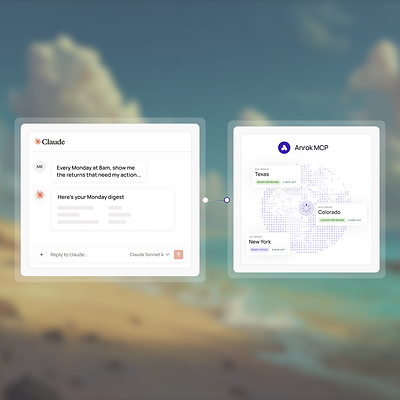
Ask in plain language, get an answer that spans your billing system and Anrok, and act on it without opening a dashboard.
SAN FRANCISCO, Oct. 21, 2026 /PRNewswire/ — Anrok, the AI-native tax infrastructure for global commerce, today launched the Anrok MCP. It is a direct connection between your Anrok account and the AI assistants your team already works in, including Claude, ChatGPT, Cursor, and VS Code. Your team can read transactions, filings, exposure, customers, exemption certificates, and products, then act on what it finds without leaving the conversation.
Finance teams adopted AI assistants faster than their finance systems. A controller can ask an assistant to draft a memo or model a scenario. But to answer, “did we collect the right tax in July?” they close the assistant, open a dashboard, run an export, and build a spreadsheet. Anrok believes your tax data shouldn’t stay behind a login.
Anrok MCP puts tax data in the same thread as everything else your assistant can reach, including your billing system, your inbox, and your spreadsheets.
“Finance teams are increasingly doing their work directly with AI agents and their tax data should be in there with them,” said Brad Silicani, CEO at Anrok. “Ask it to reconcile your billing system and Anrok, and you get the reconciliation in minutes for your close. The AI does the thinking, and Anrok MCP exposes the tools. It’s the same platform either way, and it’s accurate underneath.”
What your team can do
Anrok MCP includes 30+ tools across transactions, filings, exposure, customers, exemption certificates, and products. Your team can:
Reconcile Anrok against your billing system and find the gap before you remit.Pull a revenue or transaction answer without building a report.Review a filing before Anrok submits it and avoid the amended return.Debug a single transaction without opening a support ticket.Get a recommended tax category for a new SKU, then map it so it never falls through again.Catch exemption certificates before they lapse.
The MCP also writes. It can create a product, create a customer, create or update a transaction, and upload a certificate. Every write shows what moved, so you can check it.
One platform behind one connection
Anrok MCP is part of Headless Tax, the way into Anrok’s platform through the Anrok APIs and MCP. Behind it, one platform runs all five tax jobs: monitor and manage, register, calculate, file and remit, and reconcile and audit. That includes reconciliation, which no other tax platform has built in. One source of truth means one connection reaches your transactions, filings, exposure, customers, and certificates. The same intelligence powers Anrok across the dashboard, the API, and your agents.
“Anrok’s MCP cut our monthly Stripe-to-Anrok reconciliation from 4 hours to 30 minutes.” —Christie Perez, Indirect Tax Manager at Webflow
Availability
Anrok MCP is available now to Anrok customers. Connect from your AI tool’s connector settings, approve the scopes, and start asking. Documentation is at https://apidocs.anrok.com/mcp/.
About Anrok
Anrok is the AI-native tax infrastructure for global commerce. More than 5,500 users run sales tax and VAT/GST compliance on Anrok across 150+ countries, with more than $100B in processed volume. One platform runs all five compliance jobs, monitoring, registration, calculation, filing and remittance, and reconciliation, which no other tax platform has built in. Teams reach it however they work, in the product with Anrok Atlas, through the Anrok APIs, or by handing the job to an agent. The result is every tax dollar owed, collected, so tax becomes a pass-through instead of an expense.
Media contact
Emilie Murphy
emilie.murphy@anrok.com
View original content to download multimedia:https://www.prnewswire.com/news-releases/anrok-launches-mcp-server-putting-your-tax-data-inside-the-ai-tools-your-team-already-uses-302915878.html
SOURCE Anrok
Technology
Alternative Data Market to Reach USD 40.35 Billion by 2035 as AI Developers and Corporations Expand Data Buying, Credence Research Finds
Published
47 seconds agoon
October 21, 2026By

LONDON, Oct. 21, 2026 /PRNewswire/ — Credence Research Inc. has added a new global Alternative Data Market study to its market intelligence portfolio, examining the competitive, technological and regulatory factors shaping demand through 2035.
The global alternative data market was valued at USD 6.32 billion in 2025 and is projected to increase to USD 7.56 billion in 2026 before reaching USD 40.35 billion by 2035, according to Credence Research. The forecast represents a 20.37% compound annual growth rate from 2025 to 2035. All market sizes, segment shares and regional shares are Credence Research estimates.
Key Takeaways
Credence Research estimates 2025 revenue of USD 6.32 billion and a 2035 market value of USD 40.35 billion, equivalent to 20.37% annualized growth over 10 years.North America represented 57.3% of modeled global value in 2025.Card and receipt transactions led the data type category with a 22.4% share.Hedge funds accounted for 24.6% of the end user category.Web-scraped data is forecast to grow at 24.00% annually, while Technology and AI developers is projected at 28.50%.The analysis distinguishes market revenue from adjacent products and services to avoid treating unrelated spending as part of the addressable market.
Scope & Segmentation – Alternative Data Market
The study measures licensed nontraditional datasets used for investment research, commercial intelligence and AI applications, including card and receipt panels, web traffic, app use, web-scraped information, geolocation, satellite data and sentiment feeds. Conventional market prices, ratings, cloud storage and consulting fees are excluded. Revenue is allocated to the buyer geography and is expressed in current U.S. dollars. The report evaluates the commercial drivers, market restraints, supplier positions and technology transitions affecting this defined market.
By data type: Card and receipt transactions; Web traffic and app usage; Web-scraped data; Geolocation and foot traffic; Satellite and weather data; Social and sentiment data; Other ESG, employment and B2B data.By end user: Hedge funds; Asset managers and investment institutions; Retail and consumer companies; Technology and AI developers; Other corporates and public sector.By region: North America; Europe; Asia Pacific; Latin America; Middle East and Africa.
Explore the full report: https://www.credenceresearch.com/report/alternative-data-market
Why This Report Matters
Defines the revenue boundary around purchased information rather than bundling unrelated analytics software and financial reference data.Compares investment-firm demand with newer corporate and AI developer use cases, including the privacy and licensing requirements that shape adoption.Provides a framework for evaluating vendor quality, consent, geographic coverage and data reliability before buyers commit to long-term contracts.
Market Overview
Alternative data vendors increasingly sell the same underlying information to different buyer groups. Quantitative funds use transaction, web and location panels to estimate business performance before quarterly filings. Retailers apply those signals to site selection and competitor analysis, while AI developers license web and app information for model training and retrieval workflows.
The forecast reflects a modeled change in buyer adoption, supplier economics and product mix rather than a guarantee of future transactions. Credence Research evaluates these mechanisms alongside recent regulatory and corporate developments. Decision-makers should distinguish disclosed company announcements from estimates of total market revenue.
Market Insights
Base year: 2025; forecast horizon: 2035; modeled CAGR: 20.37%.Largest modeled geography: North America (57.3% of 2025 value).Leading categories: Card and receipt transactions (22.4%) and Hedge funds (24.6%).Fast-growth categories: Web-scraped data (24.00% CAGR) and Technology and AI developers (28.50% CAGR).Geographic and segment shares are proprietary Credence Research model outputs, not audited vendor market-share disclosures.
Key Attributes
Attribute
Details
Historical period
2018–2025, as listed in the report
Base year
2025
Forecast period
2025–2035
Market size, 2025
USD 6.32 billion
Estimated market size, 2026
USD 7.56 billion
Market size forecast, 2035
USD 40.35 billion
Revenue CAGR, 2025–2035
20.37 %
Coverage
Global
Segments covered
Data type; End user
Geographies
North America; Europe; Asia Pacific; Latin America; Middle East and Africa
Market Segmentation Analysis
By data type
Card and receipt transaction panels led data types with 22.4% of 2025 spending because they can help estimate consumer revenue before corporate reporting. Web-scraped information is the fastest-growing data type in the model, supported by price monitoring, job-posting analysis and licensed AI data feeds.
By end user
Hedge funds accounted for 24.6% of 2025 end-user spending. Technology and AI developers have the faster modeled growth rate as demand expands from trading signals into model training, retrieval systems and agent-ready data services.
Card and receipt transactions held 22.4% of the data type segment in 2025, while Hedge funds led the end user split at 24.6%. Credence Research forecasts faster growth for Web-scraped data (24.00% a year) and Technology and AI developers (28.50% a year). These figures represent market estimates and are not company-reported results.
Market Drivers and Opportunities
Faster commercial signals
Card-spending, store-visit and app-usage panels can reveal operating trends before financial results are released. Funds buy such feeds to build forecasts, while retailers use them to compare competitors and local markets. Data coverage, representativeness and historical consistency determine whether these signals justify recurring subscription fees.
AI training and agent-ready feeds
Model developers are seeking licensed and documented sources of web, app and commerce data. Vendors that deliver clean feeds through APIs and data marketplaces can reach customers outside the hedge fund sector. Contracts for model training also require clear rights to collect, transform and reuse source information.
Distribution through existing research platforms
Financial-information terminals and cloud marketplaces reduce the engineering work required to test a new dataset. Bloomberg’s 2025 integration of Similarweb traffic data is one example of this route to market. Distribution can broaden adoption, although vendors may surrender part of the economics to aggregators.
Regional Analysis
Credence Research estimates the following shares of global 2025 revenue: North America 57.3%; Europe 22.1%; Asia Pacific 14.6%; Latin America 3.1%; Middle East and Africa 2.9%. These allocations sum to 100% and reflect buyer location rather than the location of manufacturing or company headquarters.
North America led the market in 2025, supported by its established buyer base, supplier relationships and industry infrastructure. Europe and Asia Pacific are also material demand centers, although the competitive mix and procurement requirements vary by country. The smaller regions may record high percentage growth from a limited starting base, and such rates should not be mistaken for leadership in absolute spending.
North America benefits from a dense concentration of quantitative funds, financial data platforms and AI developers. European buyers must navigate stringent personal-data rules, which increases demand for licensed and aggregated feeds. Asia Pacific adds demand from financial centers and domestic digital platforms but faces varying localization requirements.
Market Challenges
Sensitive geolocation and transaction data create privacy, consent and national-security concerns. U.S. enforcement actions and cross-border data restrictions make diligence a core purchase requirement. Panel drift, incomplete histories and nonrepresentative samples can undermine the value of apparently timely signals; a faster feed is not necessarily a better forecast.
Buyers should also evaluate the total cost of adoption, interoperability with existing systems, vendor continuity and country-specific compliance obligations. Those factors can lengthen purchasing decisions even where the long-term growth thesis remains intact. The study distinguishes these commercial constraints from the market forecast itself.
Future Outlook
North America holds the largest modeled share because it hosts many hedge funds, data vendors and AI companies. Asia Pacific has the fastest forecast regional growth as investment institutions and local digital platforms expand. The strongest opportunities lie in licensed, traceable and AI-ready datasets that meet regulatory and quality standards.
Through 2035, suppliers that convert product capabilities into repeatable deployments, transparent pricing and reliable support should be better positioned than firms relying only on early demonstrations. Credence Research expects growth to vary across customer types and geographies rather than advance evenly each year.
Competitive Landscape
The market includes established multinational suppliers and specialized technology or service providers. Competition centers on product performance, customer relationships, integration capabilities, delivery reliability and the ability to meet sector-specific standards. The companies listed below participate in different parts of the value chain; their inclusion does not imply identical offerings or a verified ranking by market share.
Competitive analysis should distinguish vendors that directly sell the products or services in the defined scope from adjacent technology providers and end users. Credence Research uses supplier disclosures and industry evidence to assess participation. Comparable revenue for the narrow market definition is rarely disclosed, so this release does not assign unsupported individual company shares.
Key Players
BloombergS&P Global Market IntelligenceLSEGFactSetMoody’sSimilarwebPlacer.aiPlanet LabsYipitDataConsumer EdgeM ScienceThinknum
Recent Developments
June 2025: Bloomberg made Similarweb web-traffic analytics available through the Bloomberg Terminal ALTD function alongside other alternative datasets.
January 2025: The U.S. Federal Trade Commission finalized its order restricting Gravy Analytics and Venntel from selling sensitive location data.
Report Coverage
The full study covers market size and forecast, competitive conditions, value-chain structure, product and application segmentation, regional demand, market drivers, restraints, opportunities and regulatory developments. It provides a 2025 baseline and 2035 outlook and identifies areas where supplier disclosures support, but do not independently establish, Credence Research market estimates.
Explore the full report: https://www.credenceresearch.com/report/alternative-data-market
Chapter 1 Market Segmentation
Chapter 2 Introduction
Chapter 3 Executive Summary
Chapter 4 Global Alternative Data Market Trends and Developments
Chapter 5 Global Alternative Data Market Production, Supply and Demand Analysis
Chapter 6 Global Alternative Data Market Pricing Analysis
Chapter 7 Global Alternative Data Market Dynamics
Chapter 8 Global Alternative Data Value Chain Analysis
Chapter 9 Global Alternative Data Market Regulations and Policies
Chapter 10 Global Alternative Data Market Hotspots and Opportunities
Chapter 11 Global Alternative Data Market Outlook, 2025-2035
Chapter 12 Global Alternative Data Market Segmentation and Outlook
Chapter 13 Global Alternative Data End-Use and Application Market Outlook
Chapter 14 Global Alternative Data Geographic Market Outlook, 2025-2035
Chapter 15 Global Alternative Data Technology, Innovation and Sustainability Outlook
Chapter 16 Global Alternative Data Market Key Strategic Imperatives
Chapter 17 Competition Outlook
Chapter 18 Company Profiles
Chapter 19 Disclaimer
Related Reports
Insurtech MarketBlockchain in Media and Entertainment MarketDigital Logistics MarketArtificial Intelligence in Automotive MarketAI-Based 3D Vision System Market
About Us
Credence Research Inc. is a global market intelligence and consulting firm founded in 2015. It delivers market insights, quantitative analysis and strategic guidance to business leaders, investors, governments and nonprofit organizations. The company helps clients evaluate market opportunities, understand competitive dynamics and make informed strategic decisions.
Credence Research produces industry studies covering market size, forecasts, growth drivers, market trends and competitive landscapes. Its services also include customized research, commercial due diligence and go-to-market advisory. Findings draw on primary and secondary research, expert input and analytical modeling.
Contact Us
Credence Research Inc.
Tower C-1105, S 25, Akash Tower
Vishal Nagar, Pimple Nilakh, Haveli
Pune – 411027, India
USA: +1-888-600-6441
Email: sales@credenceresearch.com
Website: www.credenceresearch.com
View original content to download multimedia:https://www.prnewswire.co.uk/news-releases/alternative-data-market-to-reach-usd-40-35-billion-by-2035-as-ai-developers-and-corporations-expand-data-buying-credence-research-finds-302915881.html
Technology
TECHNATION Appoints New Board Leadership and Welcomes Industry Leaders to National Board
Published
50 seconds agoon
October 21, 2026By

TORONTO, Oct. 21, 2026 /CNW/ — TECHNATION, Canada’s national technology industry association, is pleased to announce the appointment of Sylvie Ouellette as Chair and Colin McIsaac as Vice Chair of its National Board of Directors.
Sylvie Ouellette is President and Co-Founder of Versatil BPI Inc., a Canadian-owned, women-led technology SME based in the National Capital Region, specializing in data, artificial intelligence, and security intelligence. She has more than 30 years of industry experience, including senior executive roles at Electronic Data Systems and Hewlett-Packard. As Chair, she brings both multinational leadership, including representing TECHNATION at the last two G7/TECH7 summits, and firsthand experience building a Canadian technology company.
Colin McIsaac is the Vice-President, North America Commercial Sales at Lenovo, responsible for strategy and performance across the NA VLB Segment and Canada’s Public Sector business. A prominent voice on the North America Senior Leadership Team, he oversees sales, operations, culture, and P&L execution to ensure Lenovo consistently delivers industry‑leading value for customers. Under his leadership, the team brings Lenovo’s complete portfolio of hardware, software, and services to market, fueling growth through innovation, customer partnership, and operational excellence.
Sylvie and Colin have been active members of TECHNATION’s Board of Directors for several years, serving on the Executive Committee and Governance Committee, respectively.
“We are pleased to welcome Sylvie as Chair and Colin as Vice Chair to TECHNATION’s National Board of Directors,” said Kevin d’Entremont, President and CEO of TECHNATION. “As seasoned members of our National Board, they have been engaged in shaping the focus of TECHNATION in supporting the full technology ecosystem in Canada. Their combined expertise, leadership, and commitment to advancing Canada’s technology ecosystem will be invaluable as we continue to advance the priorities that matter most to the sector and to Canada’s digital future.”
In addition to these appointments, TECHNATION is pleased to welcome four industry leaders to its Board of Directors:
Heather Black, Regional Vice-President, Canadian Public Sector Leader, Palo AltoPeter Kelcey, General Manager, Customer Success Lead, Microsoft CanadaErin O’Halloran, Vice President & General Manager, Oracle Health CanadaRaj Thuppal, Chief Digital Officer – Public Sector, ServiceNow Canada
These appointments come at a pivotal moment for Canada, as governments and businesses accelerate the adoption of digital technologies that are transforming how the economy operates and grows.
“I am honoured by the trust my fellow Board members have placed in me to lead TECHNATION at such a defining moment for Canada,” said Ouellette. “As technology reshapes our economy, national security, and global competitiveness, we must strengthen Canada’s capacity to innovate, advance responsible AI, and ensure Canadian businesses across the full ecosystem help shape our digital future. I look forward to working with our members and government partners to turn collaboration into action that delivers meaningful value for Canadians.”
Together, these appointments strengthen TECHNATION’s commitment to bring industry expertise to inform public policy, champion member priorities, and advance initiatives that support Canada’s digital and economic growth. Their leadership will help drive key priorities including digital transformation, procurement reform, workforce development, and Canada’s long-term competitiveness.
TECHNATION also extends its sincere thanks to outgoing Board Chair, Lloyd Switzer, retired Chief Procurement Officer at TELUS, for his leadership and dedication to the board. “Lloyd has been an invaluable leader at TECHNATION, guiding the association through a period of executive transition, while bringing a strong industry perspective through his role as Chief Procurement Officer at TELUS,” said d’Entremont. “While his retirement marks the end of an exceptional chapter, he has ensured a smooth transition and a bright future for our association and Canada’s tech sector.”
TECHNATION’s National Board is comprised of senior executives from across Canada’s technology landscape, representing both Canadian tech firms and global enterprises with significant operations and investments in Canada. A full list of TECHNATION’s National Board of Directors can be found at www.technationcanada.ca.
About TECHNATION
TECHNATION is Canada’s authoritative technology industry association, representing the full spectrum of Canada’s tech ecosystem, from agile innovators to domestic and global tech companies. Trusted by both industry and government, TECHNATION is the neutral connector, convener and catalyst powering a digital future and positioning Canada as a global tech leader. Together with our members, we shape tech policy and insights, deliver forums to drive public-private collaboration, foster inclusive workforce development, and support global expansion. Learn more at www.technationcanada.ca.
SOURCE TECHNATION Canada


Anrok launches MCP server, putting your tax data inside the AI tools your team already uses

Alternative Data Market to Reach USD 40.35 Billion by 2035 as AI Developers and Corporations Expand Data Buying, Credence Research Finds

TECHNATION Appoints New Board Leadership and Welcomes Industry Leaders to National Board

Send Rakhi to UK swiftly with UK Gifts Portal

Whiteboard Series with NEAR | Ep: 45 Joel Thorstensson from ceramic.network

Nullmax and Renesas Forge Strategic Partnership to Deliver Competitive ADAS Solutions for the Global Market

Why You Should Build on #NEAR – Co-founder Illia Polosukhin at CV Labs
Whiteboard Series with NEAR | Ep: 45 Joel Thorstensson from ceramic.network

NEAR End of Year Town Hall 2021: The Open Web World, MetaBUILD 2 Hackathon and 2021 recap
Trending
-

 Technology4 days ago
Highland and Bath Counties, Virginia Go Live on a Shared Caliber Hosted CAD Environment
-
 Technology4 days ago
JinkoSolar Unveils Tiger Neo 5.0 All-Black Residential Solar Module with 25.52% Efficiency
-

 Near Videos5 days ago
What if you could build a skyscraper with one prompt?
-

 Technology4 days ago
Bioethanol from human hair – Indian start-up’s solution to rising prices of grains and sugar
-

 Technology3 days ago
GMIF2026: AI Inference Powers the “Token Factory” and Drives System-Level Rethinking of Memory & Storage
-
 Technology3 days ago
Linktel Technologies Highlights Breakthrough 1.6T LPO Performance & Strong Market Pull at OCP 2026
-
 Technology3 days ago
Truecaller announces preliminary numbers for the third quarter 2026
-

 Coin Market2 days ago
World Liberty’s USD1 stablecoin sheds $400M in market cap in two weeks