Company will produce genetically enhanced working dogs that leverage cybernetics technology to improve health and performance while ending reliance on foreign suppliers
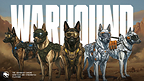
DALLAS and COSTA MESA, Calif., Oct. 23, 2026 /PRNewswire/ — Warhound, a new defense technology company conceived by American technology entrepreneurs Ben Lamm and Palmer Luckey emerged from stealth with a $200 million seed round. Warhound will rebuild America’s domestic supply of elite working dogs for U.S. military forces, law-enforcement, emergency first response teams—a critical national security resource that the U.S. has long relied on foreign countries to provide. Led by CEO David Spirk, the company will reduce dependence on a shrinking European supply chain and strengthen America’s ability to protect its own people, infrastructure, and national security interests.
Warhound is modernizing America’s working-dog program by delivering a vertically integrated program, combining Colossal’s enhanced genetics platform and secure biobanking capabilities of America’s top-performing dog arsenal, controlled delivery through cloning with best-in-class training and animal care. Through a partnership, all dogs will be equipped by Anduril’s advanced cybernetic Augments, software, and battlefield situational awareness. The company is backed by In-Q-Tel, Sequoia Capital, ARK Invest, Franklin Templeton, 8VC, USIT, Bob Nelsen, Breyer Capital, CAZ Investments, Neogenesis, Builders VC, and Lux Capital among others. Based in Texas, Warhound will operate under the guidance of the American Humane Society which will certify its training programs and support the reunification of retired military working dogs with their former handlers and adoption protocols.
“Palmer, Ben and the Warhound team are exceptional. Sequoia is proud to back them,” said Shaun Maguire, Partner at Sequoia Capital.
Warhound is bringing together Colossal’s breakthroughs in genetics, cloning, and animal biology with Anduril’s advanced defense technology to fundamentally change how America produces, trains, and protects its military working dogs. Colossal’s science will help produce healthier dogs with characteristics suited to demanding missions, while Anduril’s technology will give dogs and their handlers greater awareness and protection in the field.
“Every day, we ask dogs to put their lives on the line to protect ours. They detect explosives, protect our troops, and run toward dangers that most people are trained to run away from. Yet we’re still relying on outdated approaches to breeding and training these extraordinary animals, with too many never making it through the process. We have an opportunity to fundamentally change that. Colossal has spent years pioneering breakthroughs in genetics, cloning, and animal biology, and now we’re applying that science to give these dogs the best possible chance at a long, healthy life and a successful mission. If we’re going to ask man’s best friend to protect America, we owe it to them to use every tool at our disposal to protect them, too,” said Ben Lamm.
Since the Army established the K-9 Corps in 1942, military working dogs have served alongside America’s armed forces for more than 84 years—detecting threats, protecting service members and supporting missions worldwide. That program has evolved in The United States Department of War’s (DOW) Military Working Dog Program, which currently includes 2,200+ working dog teams that are operationally critical for detection and patrol work, and a critical part of the defense infrastructure of the country. More than 80% of U.S. military working dogs are currently acquired from Europe, creating a critical interdependency on foreign nations for an asset the Pentagon itself calls irreplaceable. That dependency is compounding: after a rigorous, roughly three-year acquisition-and-training pipeline, less than half of the dogs procured are ultimately deemed fit for service, meaning the U.S. must source and train roughly 200 dogs today to field 100 working animals tomorrow.
“Man’s best friend deserves man’s best tech,” said Palmer Luckey.
David Spirk has been named the CEO of Warhound. As a veteran of the United States Marine Corps, he worked as an intelligence specialist with multiple deployments and ultimately served as the Deputy Associate Director of National Intelligence for Afghanistan and Pakistan at the Office of the Director of National Intelligence representing the Intelligence Community at the White House and on Capital Hill. He has an extensive background in the U.S. military, intelligence community, and federal data governance, specifically focused on scaling algorithmic warfare and creating data driven advantages. More recently, he was a Senior Counselor at Palantir Technologies where he focused on expanding the company’s software footprints across the U.S. government, allied international partners, and commercial sectors. Previously, he was appointed the First Chief Data Officer (CDO) for the Department of War, where he worked on accelerating the military’s data-driven capabilities and was the first CDO for the U.S. Special Operations Command (USSOCOM).
“Our long-term goal is simple: healthier dogs, better-prepared teams, and more service members and first responders coming home safely. Leading Warhound, and strengthening America’s working-dog capabilities, is an opportunity to apply my experience to a mission I care deeply about: protecting people and helping the animals who support them,” said David Spirk. “My focus is building a team that can turn scientific advances into capabilities that work in the field.”
Building Healthier, More Capable Working Dogs to Protect Both Dogs and People
The concept of Warhound was conceived years ago by Palmer and Ben after a discussion at Peter Diamandis’ Moonshots Summit. Military working-dog programs face a costly challenge: more than half of candidate dogs fail to complete training, while reliance on overseas breeders leaves the United States dependent on a constrained foreign supply chain. Warhound was created to improve that system—producing fewer dogs with a greater likelihood of remaining healthy, completing training, and succeeding in their missions.
Warhound dog-and-handler teams will also connect Anduril’s integrated capabilities—including eye and ear protection and Eagle Eye technology—will help safeguard working dogs, their handlers and the wider unit while supporting safer, more effective missions.
“For millennia, people have selectively bred dogs to be companions and helpmates. Modern biotechnology gives us a more precise way to shape some of their traits, thus improving both the work dogs do and their own health and well-being,” said Alta Charo, Warren P. Knowles Professor Emerita of Law and Bioethics at the University of Wisconsin–Madison. “The Warhound project offers the possibility of improving working dogs’ health and welfare while supporting the lifesaving work they do. But we still must look carefully at who benefits, what risks the animals bear, and how concern for animal welfare translates into practice through careful evaluation of the evidence, meaningful oversight, and responsibility for the dogs throughout their lives, including retirement. The American Humane Society brings valuable experience through its military working dog reunification efforts and Pups4Patriots program. That experience provides a foundation, but public trust has to be earned through the care we provide and the commitments we keep.”
Animal welfare is central to the program. By improving health, durability, and training success, Warhound will significantly reduce washouts, limit the number of dogs unnecessarily entering intensive training and enable safer, more effective missions. Technologies and therapeutics developed through the program will also be made available to all dogs and ultimately improve the health of all dogs, not only those serving alongside America’s service men and women. Together, these capabilities will establish a secure domestic supply of military working dogs while giving American service members healthier, more capable canine partners.
“Working dogs are extraordinary animals whose courage and loyalty save lives,” said Dr. Robin Ganzert, President and CEO of American Humane Society. “We owe these dogs a commitment to their well-being that matches their service to us. What excites me about Warhound is the opportunity to make health, welfare, and exceptional care fundamental to a working-dog program from the very beginning. Success means helping these dogs thrive throughout their lives—from training and active service to the loving, dignified retirement every canine hero deserves.”
Warhound is built to take today’s level of performance and make it better: using cutting edge engineering and technology, on American soil, from American companies, without the wait times, price volatility, or geopolitical exposure of a foreign supply chain.
About Warhound
Warhound is a Texas-based defense technology company building a secure domestic supply of healthier, more capable working dogs for the U.S. military, law enforcement and emergency responders. Conceived by Palmer Luckey and Ben Lamm, Warhound combines biotechnology licensed from Colossal Biosciences with advanced training and Anduril’s cybernetic augments and software. The company aims to reduce reliance on foreign suppliers, improve canine health and performance, and enhance safety for dogs and their handlers. Animal welfare is central to Warhound’s mission, with a commitment to lifelong care from birth through training, service and retirement. To follow along, please visit: warhound.com.
About Anduril
Anduril Industries is a defense technology company that builds autonomous systems and a common operating layer to give the United States and its allies a persistent advantage in sensing, decision-making, and force projection.
About the American Humane Society
The American Humane Society is the country’s first national humane organization and a global leader in animal welfare. Founded in 1877, American Humane has been at the forefront of protecting animals, rescuing them from cruelty, abuse, and natural disasters, and setting the gold standard in science-based welfare certifications. The organization oversees prominent programs including the iconic “No Animals Were Harmed®” film and television certification, the American Humane Certified™ farm and zoo standards, military working dog reunifications, and the Pups4Patriots™ service dog program. Learn more at americanhumane.org.
About Colossal Biosciences
Colossal was founded by emerging technology and software entrepreneur Ben Lamm and world-renowned geneticist and serial biotech entrepreneur George Church, Ph.D., and is the first to apply CRISPR technology for the purposes of species de-extinction. Colossal creates innovative technologies for species restoration, critically endangered species protection and the repopulation of critical ecosystems that support the continuation of life on Earth. Colossal is accepting humanity’s duty to restore Earth to a healthier state, while also solving for the future economies and biological necessities of the human condition through cutting-edge science and technologies. To follow along, please visit: www.colossal.com.
View original content to download multimedia:https://www.prnewswire.com/news-releases/warhound-launches-with-200-million-to-rebuild-americas-military-working-dog-supply-using-advanced-genetics-and-defense-technology-302918435.html
SOURCE Warhound









 Technology5 days ago
 Technology5 days ago
 Technology4 days ago
 Coin Market4 days ago

 Technology5 days ago
 Technology5 days ago
 Technology4 days ago