Connect with us

Technology

Smart Lock Market size is set to grow by USD 2.31 billion from 2024-2028, Growing number of smart cities worldwide to boost the market growth, Technavio

Published

on

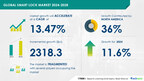
NEW YORK, June 26, 2024 /PRNewswire/ — The global smart lock market size is estimated to grow by USD 2.31 billion from 2024-2028, according to Technavio. The market is estimated to grow at a CAGR of almost 13.47% during the forecast period. Growing number of smart cities worldwide is driving market growth, with a trend towards integration with voice assistants and smart home ecosystems. However, growing security and privacy threat in smart locks poses a challenge. Key market players include Allegion Public Ltd. Co., ASSA ABLOY AB, Be Tech Asia Ltd., Carrier Global Corp., Davcor Group Pty Ltd., Dormakaba Holding AG, Dorsetindia.com, Honeywell International Inc., I Leaf Buildpro Pvt. Ltd., iF International Forum Design GmbH, iLockey, Jainson Locks, Napco Security Technologies Inc., Salto Systems SL, Samsung Electronics Co. Ltd., SOLITY Co Ltd., Spectrum Brands Holdings Inc., Tekno Electro Solutions Pvt. Ltd., Vivint Inc., and Yale India.

Get a detailed analysis on regions, market segments, customer landscape, and companies – Click for the snapshot of this report

Forecast period

2024-2028

Base Year

2023

Historic Data

2018 – 2022

Segment Covered

Technology (WiFi, Bluetooth, Zigbee, and Z-wave), End-user (Commercial and Residential), and Geography (North America, Europe, APAC, South America, and Middle East and Africa)

Region Covered

North America, Europe, APAC, South America, and Middle East and Africa

Key companies profiled

Allegion Public Ltd. Co., ASSA ABLOY AB, Be Tech Asia Ltd., Carrier Global Corp., Davcor Group Pty Ltd., Dormakaba Holding AG, Dorsetindia.com, Honeywell International Inc., I Leaf Buildpro Pvt. Ltd., iF International Forum Design GmbH, iLockey, Jainson Locks, Napco Security Technologies Inc., Salto Systems SL, Samsung Electronics Co. Ltd., SOLITY Co Ltd., Spectrum Brands Holdings Inc., Tekno Electro Solutions Pvt. Ltd., Vivint Inc., and Yale India

Key Market Trends Fueling Growth

The integration of smart locks with voice assistants and smart home ecosystems is a significant trend in the global smart lock market. This feature allows users to control their locks using basic voice commands, enhancing accessibility and convenience. Additionally, automation and synchronization with other connected devices, such as lights, thermostats, and security systems, are made possible. This trend is expected to drive market growth by creating a seamless user experience within commercial and residential buildings. 

The Smart Lock market is experiencing significant growth with homes and businesses adopting this technology for enhanced security. Smart Homes are a trend, and smart locks are an essential component. Biometric authentication, such as fingerprint recognition, is becoming popular. Google and Apple are key players in this market. Smart locks can be controlled through apps, allowing remote access and convenience. Some smart locks use Bluetooth technology for connectivity. They can also be integrated with other home automation systems. Smart locks offer convenience, security, and compatibility with various devices. The future of smart locks lies in advanced features like voice recognition and facial recognition. 

Research report provides comprehensive data on impact of trend. For more details- Download a Sample Report

Market Challenges

The global smart lock market confronts security concerns as potential vulnerabilities in these devices may allow unauthorized access or data interception. Weak encryption techniques and outdated firmware pose significant risks. To mitigate these threats, manufacturers must prioritize robust security measures and regular firmware updates, collaborating with cybersecurity experts when necessary. These efforts are crucial to safeguard customer privacy and confidence, ensuring the market’s continued growth.The Smart Lock market is experiencing significant growth due to increasing adoption in both residential and commercial sectors. However, several challenges persist. Thingness and Machine Learning are key technologies driving the market, but security concerns remain a major challenge. The need for encryption and secure communication protocols is crucial to ensure data privacy and prevent unauthorized access. Additionally, cost and compatibility issues with existing door hardware are hindering widespread adoption. Smart Home and IoT platforms are also essential for seamless integration and interoperability. Regulations and standards, such as Zigbee and Z-Wave, are necessary to ensure consistency and reliability. Overall, addressing these challenges will be vital for the continued growth and success of the Smart Lock market.

For more insights on driver and challenges – Download a Sample Report

Segment Overview 

This smart lock market report extensively covers market segmentation by

Technology 1.1 WiFi1.2 Bluetooth1.3 Zigbee1.4 Z-waveEnd-user 2.1 Commercial2.2 ResidentialGeography 3.1 North America3.2 Europe3.3 APAC3.4 South America3.5 Middle East and Africa

1.1 WiFi- The Smart Lock market is experiencing significant growth due to its convenience and security benefits. Businesses and consumers alike are adopting smart locks at an impressive rate. These locks offer keyless entry, remote access, and integration with other smart home systems. They provide enhanced security features such as automatic locking and unlocking, real-time alerts, and the ability to grant temporary access to guests. Smart locks are a cost-effective investment for businesses looking to improve security and convenience, and for individuals seeking peace of mind in their homes.

For more information on market segmentation with geographical analysis including forecast (2024-2028) and historic data (2018 – 2022) – Download a Sample Report

Research Analysis

The Smart Lock Market is experiencing significant growth due to the increasing adoption of home automation and smart homes. Biometric authentication and keyless entry systems are becoming increasingly popular, leveraging IoT technology and Wi-Fi communication protocols for seamless integration. Artificial Intelligence and Machine Learning are also being employed to enhance security features and improve user experience. The smart lock ecosystem includes various technologies such as RFID locks, IC cards, and Bluetooth. Big Data is being utilized to analyze usage patterns and provide valuable insights. Kaadas, Masterlock, Yale Home, August Home, Level, Schaub and Emtek, and Oberlo are some of the companies offering smart lock solutions. Safety concerns continue to be a priority, with 5G networks and advanced technologies like Google Assistant being integrated to address these issues.

Market Research Overview

The Smart Lock Market is a rapidly growing sector within the home automation industry. These advanced locks utilize technologies such as Bluetooth, Wi-Fi, and biometric authentication for enhanced security and convenience. Smart locks offer features like remote access, automatic locking, and integration with other home security systems. The market is driven by increasing consumer demand for smart home solutions and the ongoing digitization of home security systems. Additionally, governments and regulatory bodies are promoting the adoption of smart locks for enhanced security and energy efficiency. The market is segmented based on technology, application, and region. Smart locks are used in both residential and commercial applications, and their adoption is expected to increase significantly in the coming years.

Table of Contents:

1 Executive Summary
2 Market Landscape
3 Market Sizing
4 Historic Market Size
5 Five Forces Analysis
6 Market Segmentation

TechnologyWiFiBluetoothZigbeeZ-waveEnd-userCommercialResidentialGeographyNorth AmericaEuropeAPACSouth AmericaMiddle East And Africa

7 Customer Landscape
8 Geographic Landscape
9 Drivers, Challenges, and Trends
10 Company Landscape
11 Company Analysis
12 Appendix

About Technavio

Technavio is a leading global technology research and advisory company. Their research and analysis focuses on emerging market trends and provides actionable insights to help businesses identify market opportunities and develop effective strategies to optimize their market positions.

With over 500 specialized analysts, Technavio’s report library consists of more than 17,000 reports and counting, covering 800 technologies, spanning across 50 countries. Their client base consists of enterprises of all sizes, including more than 100 Fortune 500 companies. This growing client base relies on Technavio’s comprehensive coverage, extensive research, and actionable market insights to identify opportunities in existing and potential markets and assess their competitive positions within changing market scenarios.

Contacts

Technavio Research
Jesse Maida
Media & Marketing Executive
US: +1 844 364 1100
UK: +44 203 893 3200
Email: media@technavio.com
Website: www.technavio.com/

View original content to download multimedia:https://www.prnewswire.com/news-releases/smart-lock-market-size-is-set-to-grow-by-usd-2-31-billion-from-2024-2028–growing-number-of-smart-cities-worldwide-to-boost-the-market-growth-technavio-302182781.html

SOURCE Technavio

Continue Reading
Click to comment

Leave a Reply

Your email address will not be published. Required fields are marked *

Technology

Ampace Spotlights AI-Ready Battery Solutions for Gigascale Infrastructure at DCW Washington 2026

Published

on

By

WASHINGTON, April 21, 2026 /PRNewswire/ — Ampace, a global leader in advanced lithium-ion battery technology, is participating in Data Center World 2026 at the Walter E. Washington Convention Center (Booth 206), where active visitor engagement reflected growing industry focus on how power infrastructure must evolve for the AI era.

This year, Ampace is showcasing how battery systems are becoming an increasingly important enabler of gigascale AI infrastructure. From cell-level technologies to system-level deployment, spanning applications from commercial and industrial energy storage to UPS systems, Ampace is presenting solutions designed to help data centers manage rising power volatility, improve resilience, and scale more efficiently.

At the center of the showcase is the PU Series, Ampace’s AI-ready battery platform engineered for the increasingly dynamic conditions of modern compute environments. As AI clusters drive 100kW+ rack densities, millisecond-level load spikes, and frequent workload transitions, conventional backup systems are being asked to do far more than emergency support. Ampace’s PU Series is designed to absorb rapid fluctuations, maintain stable output, and support uninterrupted operation under highly variable AI workloads.

A key highlight of Ampace’s presence this week will be its featured TECH TALK session with Eaton on April 22, from 2:30 PM to 3:15 PM (Room 209ABC), titled Powering Gigascale AI: How Advanced Batteries Stabilize Extreme Training Loads.

The session will bring together shared industry perspectives from Aaron Schott, UPS Sales Manager at Ampace, and Jon Hymel, Product Manager at Eaton, two professionals working closely with hyperscale, colocation, enterprise, and mission-critical customers navigating the next wave of AI infrastructure growth.

Together, the speakers will explore how established UPS architectures and advanced lithium battery systems are increasingly working in tandem to meet the operational realities of AI data centers. The discussion will examine how battery technologies can support real-time load balancing, improve reliability, and help operators prepare for the transition from megawatt-scale campuses to gigawatt-scale compute ecosystems.

Their joint appearance reflects a growing alignment across the power infrastructure ecosystem: scalable AI requires not only more electricity, but smarter coordination between UPS systems, energy storage, and facility operations. As data centers evolve, battery-enabled continuity is becoming a shared priority across technology providers, operators, and infrastructure partners.

Built for demanding AI applications, Ampace’s platform is engineered to respond rapidly during ramp-up and ramp-down events, while maintaining stable operation under continuous partial-load cycling. Its semi-solid cell technology further enhances intrinsic safety by reducing leakage risk and lowering thermal runaway gas generation, while cabinet-level validation under UL 9540A standards reinforces readiness for mission-critical deployments.

At Ampace’s booth, visitors have been exploring how advanced battery systems can help reduce infrastructure oversizing, relieve pressure on grid connections, and improve continuity in facilities originally designed for steady-state demand. The strong response reflects a broader market shift: batteries are no longer viewed only as standby assets, but as active components of modern AI power architecture.

Visit Booth 206 to meet the Ampace team, experience the PU Series on site, and join in-depth discussions on how advanced battery solutions are helping build a more resilient, scalable, and efficient AI infrastructure. On-site specialists are available throughout the show for live demonstrations, technical briefings, and media inquiries.

View original content to download multimedia:https://www.prnewswire.com/news-releases/ampace-spotlights-ai-ready-battery-solutions-for-gigascale-infrastructure-at-dcw-washington-2026-302749593.html

SOURCE Ampace

Continue Reading

Technology

TÜV Rheinland Opens Advanced Automotive Component Testing Laboratory in Manesar, Haryana

Published

on

By

Empowering automotive industry capabilities through precision testing, international compliance, and innovative solutions for next-generation mobility.

MANESAR, India, April 22, 2026 /PRNewswire/ — TÜV Rheinland, a global leader in independent testing, inspection and certification services, today announced the opening of its state-of-the-art Automotive Component Testing Laboratory (ACT Lab) in Manesar, Haryana. The ACT Lab will support manufacturers in meeting evolving regulatory requirements, adopting emerging technologies, and accelerating time-to-market.

As the world’s third-largest mobility market, India is developing rapidly, and demand for trustworthy, globally recognized testing services continues to rise. TÜV Rheinland’s ACT Lab supports the development of safer and high-performance automotive products.

Strategically located in Manesar, the facility is well-positioned to unlock growth opportunities within India’s automotive and electric mobility ecosystem, while advancing next-generation transport solutions.

Technological Excellence and Advanced Capabilities

The ACT Lab is equipped with advanced testing systems from leading international manufacturers, ensuring precision, reliability, and global acceptance of results.

Its capabilities include structural testing, corrosion and durability assessments, and environmental simulation under extreme conditions. The facility also offers fatigue and lifecycle testing for critical automotive components, alongside comprehensive material analysis for metals and polymers, delivering deep insights into performance under real-world conditions.

By providing end-to-end testing, inspection, and certification solutions under one roof, the lab distinguishes itself through its ability to replicate operational environments, meet global and OEM standards, and deliver highly reliable, traceable results.

Platform for Collaboration, Innovation, and Trust

Commenting on the inauguration, Dr. Matthias Schubert, Executive Vice President Mobility at TÜV Rheinland Group, said: “Our investment in the Automotive Component Testing Laboratory in Manesar reflects TÜV Rheinland’s long-term strategic commitment to India as a key growth market. As the mobility sector undergoes rapid transformation, this facility enables us to support manufacturers with advanced testing capabilities that not only ensure compliance but also drive innovation, safety, and global competitiveness.”

Highlighting the broader strategic intent, Thomas Quernheim, Senior Vice President Mobility, TÜV Rheinland Group, said, “India represents one of the most dynamic opportunities within our global mobility portfolio. This investment reflects our vision to build resilient, future-oriented capabilities that not only respond to market evolution but also shape the standards of tomorrow’s mobility ecosystem.”

Rajendra Kisanrao Bandal, Vice President, Mobility at TÜV Rheinland India, added: “This facility goes beyond a conventional testing laboratory – it is a platform for collaboration and innovation. Combining global expertise with local insight, it enables manufacturers to enhance quality, reliability, and performance, while strengthening India’s position in the global mobility landscape.”

About TÜV Rheinland:

TÜV Rheinland is a leading provider of testing and inspection services worldwide. For over 150 years, the company has helped make the world a safer place. Today, more than 28,000 employees test, inspect and certify products, plants and processes, while also providing training for people in a wide range of professions. Operating from 500 locations in more than 50 countries, TÜV Rheinland helps safeguard key areas of business and everyday life. Headquartered in Cologne and generating annual revenue of close to €3 billion, the company plays a key role in quality assurance worldwide. TÜV Rheinland has been a member of the UN Global Compact since 2006, demonstrating its commitment to anti-corruption and sustainability.

Website: Click here

Media Contact:

Samrat Sinha
Communications & PR
TÜV Rheinland
Email: Samrat.Sinha@ind.tuv.com

Photo – https://mma.prnewswire.com/media/2961708/Manesar_Lab_Pic_Edited_Without_Barbed_Wire.jpg

View original content:https://www.prnewswire.com/in/news-releases/tuv-rheinland-opens-advanced-automotive-component-testing-laboratory-in-manesar-haryana-302748539.html

Continue Reading

Technology

EZVIZ joins the United Nations Global Compact, starting a new chapter of its unwavering journey to long-term sustainability and further expanding its contribution to key environmental issues

Published

on

By

HOOFDDORP, Netherlands, April 22, 2026 /PRNewswire/ — EZVIZ, an advocate for greener smart homes, is proud to announce its participation in the United Nations Global Compact (UNGC) in the International Year of Volunteers for Sustainable Development on this Earth Day. As a smart home pioneer joining the world’s largest corporate sustainability initiative, EZVIZ will align its award-winning EZVIZ Green initiative with the UNGC’s Ten Principles, making a transformative impact through responsible business in environmental protection.

The UN Global Compact is a call to companies to adopt ten universal principles in human rights, labour, environment and anti-corruption, and to support the Sustainable Development Goals (SDGs). With over 25,000 participants across 167 countries, the UNGC is keeping the earth green and clean with its growing influence.

Though new to the initiative, EZVIZ has been implementing SDGs in its development, operations and management, including establishing an ESG committee directed by the Board. On April 10, the company published its 2025 ESG report under its commitment “Our Planet. Our Actions” for transparency and awareness. Over the past year, EZVIZ has received international recognition like the European Green Awards, the SEAL Sustainability Business Awards, and the Indigo Design Award with the “Design for Social Change” honor.

To safeguard a green planet, EZVIZ has addressed land degradation, global warming, plastic recycling, community empowerment and more. Partnering with Treedom, EZVIZ has planted 4,190 trees with local farmers, reducing approximately 738.2 tons of CO2. Together with Plastic Bank, EZVIZ has prevented over 1,000,000 plastic bottles from polluting vulnerable environments. The partnerships are reinforced by internally recycling plastics and minimizing waste. In 2025, EZVIZ incorporated over 30 tons of recycled materials into its RE7 Edge robot vacuum’s design and reduced CO2 emissions by 73.1 tons through greener packaging.

“Becoming part of the UNGC is a significant milestone for us. It means our efforts in building a better planet, have been recognized globally,” said Jingwen Cao, EZVIZ Board Secretary and Director of the ESG Committee. “This participation provides us the confidence to further expand our environmental protection, as well as to set stricter boundaries to avoid sacrificing the environment for commercial gain.”

With green in its brand gene, the company has also developed green technology with a low carbon footprint. The AOV low-energy consumption tech, and the ColorFULL low-light night vision mode help reduce energy consumption and light pollution resulted from 24/7 home security. Firstly embedding self-patented wild animal detection in outdoor cameras, EZVIZ continues to implement responsible AI to balance human safety and wildlife protection, according to Sophie Zhang, EZVIZ Global Brand Director.

“We believe in the power of technology and always strive to benefit not only our users, but also everyone and every life,” said Zhang. “Alongside other industry leaders in the UNGC, EZVIZ is motivated to contribute to a better future for generations to come.”

View original content to download multimedia:https://www.prnewswire.com/apac/news-releases/ezviz-joins-the-united-nations-global-compact-starting-a-new-chapter-of-its-unwavering-journey-to-long-term-sustainability-and-further-expanding-its-contribution-to-key-environmental-issues-302745969.html

SOURCE EZVIZ

Continue Reading

Trending