Connect with us

Technology

Wireless Home Security Camera Market size is set to grow by USD 999.7 million from 2024-2028, Innovation and portfolio extension leading to premiumization of products to boost the market growth, Technavio

Published

on

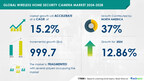
NEW YORK, June 28, 2024 /PRNewswire/ — The global wireless home security camera market  size is estimated to grow by USD 999.7 million from 2024-2028, according to Technavio. The market is estimated to grow at a CAGR of  15.2%  during the forecast period.  Innovation and portfolio extension leading to premiumization of products is driving market growth, with a trend towards distribution channel expansion strategy. However, presence of counterfeit and low-quality products  poses a challenge. Key market players include ADIANCE TECHNOLOGIES PVT. LTD., ADT Inc., Amazon.com Inc., Arlo Technologies Inc., Dahua Technology Co. Ltd., Deep Sentinel Corp., EZVIZ Inc., Frontpoint Security Solutions LLC, Godrej and Boyce Manufacturing Co. Ltd., Honeywell International Inc., LaView Eagle Eye Technology Inc., LG Electronics Inc., Panasonic Holdings Corp., Reolink, Secureye, Simplisafe Inc., TP Link Corp. Ltd., Vivint Inc., Wyze Labs Inc., and Zmodo Technology Corp. Ltd..

Get a detailed analysis on regions, market segments, customer landscape, and companies – Click for the snapshot of this report

Forecast period

2024-2028

Base Year

2023

Historic Data

2018 – 2022

Segment Covered

Distribution Channel (Offline and Online), Application (Indoor and Outdoor), and Geography (North America, APAC, Europe, South America, and Middle East and Africa)

Region Covered

North America, APAC, Europe, South America, and Middle East and Africa

Key companies profiled

ADIANCE TECHNOLOGIES PVT. LTD., ADT Inc., Amazon.com Inc., Arlo Technologies Inc., Dahua Technology Co. Ltd., Deep Sentinel Corp., EZVIZ Inc., Frontpoint Security Solutions LLC, Godrej and Boyce Manufacturing Co. Ltd., Honeywell International Inc., LaView Eagle Eye Technology Inc., LG Electronics Inc., Panasonic Holdings Corp., Reolink, Secureye, Simplisafe Inc., TP Link Corp. Ltd., Vivint Inc., Wyze Labs Inc., and Zmodo Technology Corp. Ltd.

Key Market Trends Fueling Growth

The global wireless home security camera market is experiencing growth through distribution channel expansion strategies. Vendors are adopting an omnichannel approach, selling through e-commerce platforms and physical retailers. Online distribution broadens reach and offers pricing flexibility, while retail partnerships increase visibility. Vendors also collaborate with home security service providers for bundled packages and recurring revenue. These strategies are essential for market growth during the forecast period. 

The wireless home security camera market is experiencing significant growth due to the increasing demand for smart home solutions. Components like cameras, microphones, and connectivity protocols are crucial in this industry. Access and control features, such as apps and voice commands, are trending. Secure connections and high-resolution video are essential for providing peace of mind to consumers. Motion detection and night vision are popular features, while wireless technology ensures easy installation and flexibility. Offerings like cloud storage and two-way audio add value to the market. Overall, the wireless home security camera market is thriving, driven by advancements in technology and consumer preferences. 

Research report provides comprehensive data on impact of trend. For more details- Download a Sample Report

Market Challenges

The proliferation of counterfeit and low-quality wireless home security cameras, particularly in developing countries like China, poses a significant challenge to the growth of the global market. Unregistered manufacturers offer equivalent products at lower prices, attracting customers who prefer investment in branded cameras. These players’ low operating costs impact product pricing, intensifying competition for established brands. In developing economies, counterfeit players hold a substantial market share due to their affordability. This trend may hinder the market’s expansion during the forecast period.The Wireless Home Security Camera market faces several challenges. Technology and production costs are key issues. The integration of advanced features like AI and machine learning increases complexity and cost. Additionally, ensuring reliable and secure wireless connectivity is a challenge. Compliance with data protection regulations is another hurdle. Competition from established players and new entrants intensifies the pressure to innovate and differentiate. Furthermore, consumer expectations for high-quality video and user-friendly interfaces add to the complexity. Lastly, the need for long battery life and easy installation adds to the design challenges. Addressing these challenges requires a strategic approach and continuous innovation.

For more insights on driver and challenges – Download a Sample Report

Segment Overview 

This wireless home security camera market report extensively covers market segmentation by

Distribution Channel1.1 Offline1.2 OnlineApplication 2.1 Indoor2.2 OutdoorGeography 3.1 North America3.2 APAC3.3 Europe3.4 South America3.5 Middle East and Africa

1.1 Offline- The global wireless home security camera market primarily generates revenue through offline distribution channels, including specialty stores, department stores, hypermarkets, and others. Offline strategies involve traditional media channels for product promotion, such as radio, print, telemarketing, and brick-and-mortar stores. Specialty retailers and direct-to-consumer formats are popular for selling smart home appliances, while department stores like Tesco, Lowes, and Home Depot offer a wide range of products and personal assistance. Hypermarkets and supermarkets are preferred for buying home security system products due to lower prices and expert advice. Warehouse clubs and home improvement stores also sell wireless home security cameras. Local brands contribute significantly to the market, especially in emerging APAC markets. Despite the growth of online channels, consumers still trust physical stores for purchasing decisions. Offline channels will continue to grow during the forecast period, offering cost-effective solutions to customers.

For more information on market segmentation with geographical analysis including forecast (2024-2028) and historic data (2018 – 2022)  – Download a Sample Report

Research Analysis

The Wireless Home Security Camera Market encompasses the latest advancements in residential security solutions. CCTV cameras play a pivotal role in this market, providing video surveillance for private properties. Wireless security cameras offer flexibility and ease of installation, making them a popular choice for homes. These cameras incorporate intelligent systems, such as AI-powered threat detection and false alarm reduction, enhancing security measures. Wide-angle lenses and panoramic PTZ cameras ensure comprehensive coverage, while 4K HDR video delivers high-quality recordings. Low-light environments are no longer a challenge, as these cameras are designed to function optimally in such conditions. Mobile applications enable users to monitor their properties from anywhere, providing peace of mind against burglaries and property-related crimes. Security parameters are strengthened with features like access control protocols and firewalls, ensuring data privacy. The radio band technology facilitates seamless connectivity, allowing for real-time threat detection and response. The integration of wireless security cameras into the smart home ecosystem further enhances the overall security solution. Construction sites and row houses also benefit from these advanced security solutions.

Market Research Overview

The Wireless Home Security Camera market is a growing industry that provides homeowners with the ability to monitor their properties remotely. These cameras use wireless technology to transmit footage to smartphones or computers, offering flexibility and convenience. They are equipped with features such as motion detection, night vision, and two-way audio. The market is driven by increasing home security concerns, technological advancements, and the growing popularity of smart homes. The market size is expected to expand significantly in the coming years due to these factors. The cameras are typically easy to install and can be placed both indoors and outdoors, providing comprehensive coverage. The market also offers various pricing options to cater to different budgets. Overall, wireless home security cameras provide peace of mind and an added layer of security for homeowners.

Table of Contents:

1 Executive Summary
2 Market Landscape
3 Market Sizing
4 Historic Market Size
5 Five Forces Analysis
6 Market Segmentation

Distribution ChannelOfflineOnlineApplicationIndoorOutdoorGeographyNorth AmericaAPACEuropeSouth AmericaMiddle East And Africa

7 Customer Landscape
8 Geographic Landscape
9 Drivers, Challenges, and Trends
10 Company Landscape
11 Company Analysis
12 Appendix

About Technavio

Technavio is a leading global technology research and advisory company. Their research and analysis focuses on emerging market trends and provides actionable insights to help businesses identify market opportunities and develop effective strategies to optimize their market positions.

With over 500 specialized analysts, Technavio’s report library consists of more than 17,000 reports and counting, covering 800 technologies, spanning across 50 countries. Their client base consists of enterprises of all sizes, including more than 100 Fortune 500 companies. This growing client base relies on Technavio’s comprehensive coverage, extensive research, and actionable market insights to identify opportunities in existing and potential markets and assess their competitive positions within changing market scenarios.

Contacts

Technavio Research
Jesse Maida
Media & Marketing Executive
US: +1 844 364 1100
UK: +44 203 893 3200
Email: media@technavio.com
Website: www.technavio.com/

View original content to download multimedia:https://www.prnewswire.com/news-releases/wireless-home-security-camera-market-size-is-set-to-grow-by-usd-999-7-million-from-2024-2028–innovation-and-portfolio-extension-leading-to-premiumization-of-products-to-boost-the-market-growth-technavio-302185309.html

SOURCE Technavio

Continue Reading
Click to comment

Leave a Reply

Your email address will not be published. Required fields are marked *

Technology

A Shrinking Supply of New Physical Games May Be Making Old Ones Scarcer and More Valuable

Published

on

By

Physical game spending fell to $1.5 billion in calendar year 2025, even as exceptional vintage sealed copies have reached seven-figure auction prices, according to Circana and Heritage Auctions.

MORTON GROVE, Ill., Sept. 1, 2026 /PRNewswire/ — The market for physical video games is no longer moving in a single direction. The Old School Game Vault has released an analysis of public sales and auction data showing a widening distinction between the mainstream physical-game market and the much smaller market for rare vintage collectibles.

The analysis does not conclude that falling physical-game sales automatically make older games more valuable. Rarity, condition, completeness, edition, and collector demand can make individual items behave differently from the broader retail market.

U.S. physical video game sales reached $1.5 billion in 2025

U.S. spending on new physical video games totaled $1.5 billion in calendar year 2025, according to Circana Retail Tracking Service data shared by Mat Piscatella. This was the lowest annual level since Circana began tracking the category in 1995.

Circana data show that spending peaked at $11.6 billion in calendar year 2008, illustrating the scale of the long-term contraction. The measurement period matters, however. Circana’s separate rolling 12-month series peaked at approximately $11.5 billion for the 12 months ending May 2009, while spending for the 12 months ending May 2026 was approximately $1.6 billion. These are different measurement periods, not conflicting totals.

A title released decades ago may remain inexpensive if many copies survive, while another from the same era may attract more collector interest because complete or well-preserved copies are scarce.

The condition of the game also matters. A loose cartridge, a complete copy with its original box and manual, and a factory-sealed example are not interchangeable from a collector’s perspective.

Record auction prices show the difference between ordinary and exceptional games

Heritage Auctions reported that a sealed Wata 9.8 A++ copy of Super Mario 64 sold for $1.56 million in 2021, becoming the first video game sold at auction for more than $1 million.

The sale was exceptional rather than representative. Its sealed condition, grade, title significance, and scarcity placed it outside ordinary used-game transactions.

For sellers, the practical lesson is to identify each item before accepting a broad valuation. A collection can contain common mass-market titles alongside rarer games, consoles, accessories, and editions that warrant closer examination.

Methodology

The Old School Game Vault synthesized public U.S. physical video game sales data from Circana Retail Tracking Service, shared directly by Mat Piscatella, together with Heritage Auctions’ 2021 press releases and auction records. No proprietary survey or original research was conducted. Circana figures describe mainstream physical software spending, while Heritage results represent individual collectible-market transactions.

Frequently Asked Questions

These questions summarize what the analysis means for the broader physical market and individual sellers.

Is the physical video game market growing or shrinking?

The U.S. physical video game market has undergone a major long-term contraction. Calendar-year 2025 spending was $1.5 billion, while the separate 12 months ending May 2026 reached approximately $1.6 billion. Neither figure determines the value of an individual retro title.

Why do some old games sell for so much?

Exceptional prices can occur when scarcity, condition, completeness, historical importance, and collector demand converge. The $1.56 million Super Mario 64 sale represents the extreme high end of the market, not a typical resale value.

What should sellers compare before choosing a buyer?

Sellers can compare specialization, offer transparency, condition requirements, testing procedures, shipping arrangements, and payment options.

About The Old School Game Vault

The Old School Game Vault is a nationwide retro video game buyer and seller based in Morton Grove, Illinois, and has operated since 2008. The company purchases video games, consoles, and accessories from customers across the United States and pays sellers in cash rather than store credit. The Old School Game Vault maintains an A+ rating with the Better Business Bureau, and its online pricing database includes more than 22,000 games, consoles, and accessories.

Media Contact

Contact: Brandon Perton

Email: brandon@theoldschoolgamevault.com

Location: Morton Grove, Illinois

View original content to download multimedia:https://www.prnewswire.co.uk/news-releases/a-shrinking-supply-of-new-physical-games-may-be-making-old-ones-scarcer-and-more-valuable-302866911.html

Continue Reading

Technology

Clean electricity supplied 40% of new energy demand in 2025. Faster deployment and sectoral breakthroughs can cut emissions permanently, says annual Energy Transition Monitor

Published

on

By

A progress paradox: Clean electricity is growing more than twice the speed of overall energy supply, but emissions are not yet falling as overall demand for both fossil and clean energy is simultaneously expanding – driven by data centres, higher cooling needs and heavy industry.A two-speed transition: ~60% of global emissions – primarily from power generation and road transport – are rapidly being addressed by clean electrification at little or no extra cost. Progress is slower in the remaining 40% of emissions – from aviation, shipping, heavy industry and agriculture – which require solutions that carry a green cost premium or are at early-stages of commercial scale.Four levers remain largely unaddressed: coal use, methane emissions, deforestation, and slow scale up of carbon removals.

LONDON, Sept. 2, 2026 /PRNewswire/ — Global clean energy investment hit a record $2.1 trillion in 2025. Solar, batteries and electric vehicles again outperformed every forecast. But rising energy demand means global greenhouse gas emissions are only plateauing, not falling. The world has already breached 1.5°C of global heating and remains on track for around 2.5°C, according to the Energy Transitions Commission’s (ETC) Energy Transition Monitor 2026, published today.

As wildfires and intense heatwaves cause widespread economic and human damage and energy security costs mount since the Hormuz closure, demand for clean alternatives to volatile fossil fuels has grown. The annual assessment from the ETC Secretariat — representing a global coalition of energy, industry and finance leaders – finds that renewables supplied 99% of the growth in global electricity generation in 2025, while coal-fired and oil-fired generation both contracted. Global renewable capacity has almost doubled since 2022 and is on track to double again by 2030 — around 900 GW short of the tripling pledged at COP28.

But clean power is chasing a moving target: because electricity remains only a fifth of total final energy use, this growth in clean electricity covered just 40% of the rise in global energy demand, with fossil fuels supplying the rest, as demand from buildings, heavy industry and long-distance transport kept rising.

Clean technologies must be deployed faster to meet this growing demand. The report also identifies four other key levers for global emissions reductions that remain largely unaddressed: coal use, methane emissions, deforestation, and scale up of carbon removals.

The report describes a two-speed transition. Around 60% of global emissions could be abated through clean electrification alone at little or no extra cost — primarily in power generation and road transport, where electrification is already accelerating.

But barriers remain. Grid capacity is a major bottleneck to this acceleration: around 375 GW of renewables and 455 GW of battery storage are stuck in European connection and permitting queues, roughly 2,300 GW await grid connection in the United States, and nearly 10% of China’s wind and solar outputs were curtailed due to grid constraints in the first half of 2026. Supporting low-cost renewables through long-term contracts can also accelerate electrification.

The remaining 40% of global emissions, from high-temperature industrial heat, aviation, shipping and parts of agriculture, requires solutions that carry a green cost premium or are at early-stages of commercial scale. Of roughly 1,000 clean industrial projects announced globally, fewer than 20% have reached a final investment decision. Carbon pricing is strengthening, making clean projects more financially viable, but firm offtake commitments are still a major gap.

“Clean energy is now outpacing fossil growth, but deployment speed alone won’t cut emissions. Without removing grid bottlenecks, securing buyer commitments for clean industrial products, and achieving cost breakthroughs in shipping and aviation, emissions will continue to plateau and not fall.” said Adair Turner, Co-Chair, ETC.

“Coal is not phasing down, methane emissions are not falling, forests are still being cut down, and carbon removal is nowhere near the scale required. We must act to address these. Only by doing this can we stop the rapid heating of the planet, and we are seeing the effects of this in real time.” said Jules Kortenhorst, Co-Chair, ETC.

“The Energy Transition Monitor makes clear that the challenge is no longer whether clean energy technologies can scale, but whether we can deploy them fast enough to meet growing demand and reduce emissions simultaneously. As electricity demand accelerates, we have all the resources available to design energy solutions that pair abundant clean power with efficiency, flexibility, and modernized grids. The report points out solutions to unlock permitting and connection barriers to access resources at the scale of the opportunity. By combining clean electrification with smarter energy use, we can strengthen energy security and accelerate emissions reductions while still supporting economic growth.” said Jon Creyts, CEO, RMI, a member of the Energy Transitions Commission.

The picture varies sharply by region:

China: Building clean electrification faster than anywhere on earth.Supplies 83% of the world’s renewable-energy equipment, 45% of clean industrial plant equipment.Installs more than half the world’s wind and solar. In 2025, 56% of new passenger vehicle sales were EVs, and 13 of 19 global clean heavy-industry investment decisions were made in China in first half of 2026.United States: Federal action stops the transition accelerating but doesn’t stop it entirely.Since January 2025, 21 GW of clean energy was cancelled. Fossil capacity additions surged 71% in 2025-2026. Yet renewable growth slowed by only 2%.Data centres present the sharpest contradiction: accounting for half of all new clean energy contracts, while simultaneously driving the largest increase in new fossil fuel power capacity.EU and UK: Fastest emissions reduction progress of the major economies, though momentum has recently slowed.Renewable installations are strong and around 1 in 5 new passenger cars purchased are EVs. The European Commission’s electrification action plan targets a step change in the pace of deployment.Around 375 GW of renewables and 455 GW of battery storage are stuck in permitting and grid-connection queues.India: The world’s cheapest renewables but installs 9 times slower than China.Fastest electricity demand growth for a major economy at 6.4% a year, but new clean capacity is being absorbed by rising demand rather than displacing coal.Asia (excluding China & India) & Australia: Renewables contributed 62% of new power capacity in 2024, but progress across the region is uneven.High fossil fuel prices caused by the Hormuz strait closure has pulled the need for energy security and clean energy forward in the region. Countries including South Korea and Indonesia accelerated their renewables targets.

About the Energy Transitions Commission (ETC)
The Energy Transitions Commission is a global coalition of leaders from across the energy landscape committed to achieving net-zero emissions by mid-century while supporting economic growth and development. This report was produced by the ETC Secretariat and should not be taken as members agreeing with every finding or recommendation. The ETC is hosted by SYSTEMIQ Ltd.

All data in this release is pulled from the Energy Transition Monitor 2026 which can be downloaded here: https://www.energy-transitions.org/publications/energy-transition-monitor-2026

View original content to download multimedia:https://www.prnewswire.co.uk/news-releases/clean-electricity-supplied-40-of-new-energy-demand-in-2025-faster-deployment-and-sectoral-breakthroughs-can-cut-emissions-permanently-says-annual-energy-transition-monitor-302866815.html

Continue Reading

Technology

Charter to Participate in Citi Global TMT Conference

Published

on

By

STAMFORD, Conn., Sept. 1, 2026 /PRNewswire/ — Charter Communications, Inc. (NASDAQ: CHTR) (along with its subsidiaries, “Charter”) today announced that Jessica Fischer, Chief Financial Officer, will participate in the Citi Global TMT Conference in New York, New York on Thursday, September 10, 2026. Ms. Fischer’s remarks are scheduled to begin at 10:50 a.m. ET.

A live webcast of the event can be accessed on Charter’s investor relations website, ir.charter.com. Following the live broadcast, the webcast will be archived at ir.charter.com.

About Charter 
Charter Communications, Inc. (NASDAQ: CHTR) is the leading broadband and video company in the nation and the fastest growing mobile provider in its footprint, with services available to more than 70 million homes and small to large businesses across 45 states through its Spectrum brand. Founded in 1993, Charter has evolved from providing cable TV to streaming, and from high-speed Internet to a converged broadband, WiFi and mobile experience. Over the Spectrum Fiber Broadband Network and supported by our 100% U.S.-based employees, the Company offers Seamless Connectivity and Entertainment with Spectrum Internet®, Mobile, TV and Voice products.

More information can be found at corporate.charter.com.

View original content to download multimedia:https://www.prnewswire.com/news-releases/charter-to-participate-in-citi-global-tmt-conference-302866867.html

SOURCE Charter Communications, Inc.

Continue Reading

Trending