Connect with us

Technology

BatteroTech Mercury Super-charging: Adding a Cross-provincial Range During Coffee Break

Published

on

JIAXING, China, July 3, 2024 /PRNewswire/ — “Range anxiety” and “long charging time” have compromised the driving experience of new energy vehicles for a long time, which spurred customer demands to “charge the electric vehicles within a short time”. In answer to such critical pain points, BatteroTech brought forth its Mercury super-charging batteries. A more comfortable driving journey is enabled by its capability to add a “400km range with 10min charging”. To put it simply, you can effortlessly drive your recharged vehicle to another province right after your coffee break.

01 The next-generation Mercury super-charging has emerged as a well-timed solution, adding a “cross-provincial range during a coffee break”

The super-charging battery cell will be a critical battleground for battery manufacturers in 2024. BatteroTech debuted its “Twin-star” battery portfolio designed based on the new materials systems back in 2022, being a four-pronged solution that ensures steady safety, a long driving range, efficient fast charging, and excellent overall performance. 

The updated product of “Twin-star” Super-charging, known as the Mercury Super-charging battery, was creatively launched by BatteroTech in response to diverse market demands. Specifically, it is characterized by 4C super-charging within 10min, more efficient than the previous 15min 3C fast-charging performance. The vehicle can be recharged as fast as gas-filling, balancing a long range with high safety performance, and adding a 400km range with 10-minute charging. The desirable charging experience that “ensures a cross-provincial range within a coffee break” thus unfolds with lasting satisfaction.  

Lithium ions cannot be swiftly inserted and will leach on the anode surface when regular battery cells fast charge. The majority of leached lithium ions become spent, reducing the battery capacity, compromising the cycle life, and posing safety risks. Under low-temperature environments, the lithium-ion conduction capability of such battery cells deteriorates, and the fast-charging efficiency decreases as well.   

To fast charge electric vehicles by settling the technical difficulties, BatteroTech researched and developed technical structures, namely Speedy Lithium-ion Transfer, Lightning-speed Pathway, and Rock Framework, contributing innovative outcomes in multiple materials links.

02 The “Dark horse” product delivers super-charging performance at the industry forefront with all-round innovations under low temperatures

Concerning the anode structure, BatteroTech’s Mercury polycrystalline framework and graphite coated by fast ion conductors added the paths for intercalating lithium ions into the anode smoothly and swiftly. The isomeric pole pieces and clusters of flooded batteries were employed to design correspondent anode pole piece structures based on the lithium-ion concentration levels in different areas of the anode. This helps retain more electrolytes and lithium ions and pave a better way for the speedy migration of lithium ions.

In terms of the cathode structure, core-shell particles and graded particles used by BatteroTech delivered a lean design at the nanoparticle level and reduced the threshold of lithium-ion deintercalation from the cathode. In particular, the energy barrier for lithium-ion deintercalation from the cathode in low-temperature environments was brought down, indirectly elevating the deintercalation abilities of lithium ions.   

Regarding electrolytes, high-throughput film formation and full-domain low viscosity significantly abated the resistance of movement of lithium ions from the cathode to anode and under low-temperature environments in electrolytes and thus enabled their free electrophoresis. Consequently, the Mercury battery cells can be supercharged across all ranges of use temperatures.

Besides, as massive heat is generated by battery cells in fast-charging, the Mercury Lightning-speed Pathway applied the cross-linked grid, cathode carbon coating nanotechnology, low-resistance coating, and two-directional conductive foil to the anode. The optimal pathway of structural parts and current collectors got designed using simulation. As a result, 20% of the spare parts were streamlined and the number of physical transmission paths was reduced, elevating the safety and reliability of battery cells by minimizing impedance and reducing thermal production.

The Rock Framework was researched and developed by BatteroTech to further guarantee the safety of Mercury battery cells. The coating separator of high safety, the high resistance insulation layer, and high-impedance protective films of welding imprints were used in an integrated manner. This can forestall the generation of burrs in the process and any internal short-circuits caused by the burrs piercing through the separator, making the batteries safer and more reliable on a full scale.   

BatteroTech highlights balancing product performance with manufacturing costs by introducing cooled system products at the bottom of the super-charging battery and on the battery side surface. On the system front, such super-charging thermal management technology features higher cost-effectiveness. The Mercury super-charging technology keeps the highest cell temperature during charging within 45℃ under normal temperatures, shielding the battery cycle life. Its efficiency can rival that of the large-surface cell cooling technology. Additionally, the volume integration efficiency of the battery system has increased by 5%, while the costs of thermal management and system parts have been cut by 5%, showcasing a higher mechanical strength and reliability.

BatteroTech pioneered in charging the vehicle to 80%SOC within 10min and keeping a 20-80%SOC for the vehicle within 30min charging under the -20℃ low-temperature environments, pacesetting the new energy industry with its innovative technologies. Drivers can thus be reassured when driving their electric vehicles under low-temperature and even extremely cold circumstances. Meanwhile, the riding experience for both drivers and passengers is fully elevated.

Drivers can now wait for a shorter time when charging their vehicles with lithium iron phosphate batteries whose long charging time as the pain point is settled and edges of superior safety, low cost, and long cycle life are harvested. Electric power and the well-being of the driver are recharged at the same time during a coffee break, preparing for the next journey with ease.  

03 Multifaceted Strengths Unveil the Fast-charging Trend

Battery manufacturers can grow more prudently with premium and stable supplies of lithium resources. Therefore, it is worth noting that BatteroTech enjoys the dual strength of source and cost in raw materials as a subsidiary of Tsingshan Industry.

Fueled by the synergy of demand and production capacity, BatteroTech will conclude its Phase-III 45GWh production line in 2024 and anticipate delivering a total of 79GWh production capacity. Its Mercury 4C fast-charging battery will be put into mass production by the end of 2024 by the actual capacity release pace.

“Coffee break” fast-charging marks the brand-new trend of adding a 400km range with 10min charging. New energy vehicle drivers will be no longer held back by “range anxiety” and can access the freedom of mobility once predominated by conventional gasoline cars. The emergence of BatteroTech Mercury Super-charging technology presents new business opportunities for the new energy vehicle sector. More importantly, it breathes refreshing power into the sustainable growth of global green energies.

For more information, please visit BatteroTech’s official website: https://en.batterotech.com/ 

BatteroTech Co., Ltd. is a lithium battery manufacturer dedicated in the new energy industry which is invested by Tsingshan Industry, one of the Fortune 500 companies.

BatteroTech is mainly engaged in the research and development, production and marketing of lithium batteries, battery modules, battery systems, etc. and committed to providing world-class solutions and services for new energy vehicle manufacturers and electric power investors who aim to achieve the goal of “Carbon Peaking and Carbon Neutrality”. The company has set up R&D centers and manufacturing bases respectively located in Shanghai and Jiashan.

View original content to download multimedia:https://www.prnewswire.com/news-releases/batterotech-mercury-super-charging-adding-a-cross-provincial-range-during-coffee-break-302188733.html

SOURCE BatteroTech

Continue Reading

Technology

ASPR AI Launches Private Sales Agent Studio With Forward Deployed Engineers and 50+ Language Meeting Notetakers

Published

on

By

Enterprises can run ASPR’s AI sales agents in their own cloud, build custom agents with ASPR engineers, and capture meetings in 50+ languages.

AUSTIN, Texas, Oct. 23, 2026 /PRNewswire/ — ASPR AI, an agentic sales execution platform, today launched Private Sales Agent Studio, which runs ASPR’s AI sales agents inside a customer’s own cloud on the large language model its security team already approved. ASPR also introduced Offline and Online Meeting Notetaker Agents.

Sales AI often stalls in security review because transcripts, emails, and deal notes leave the corporate network. With Private Sales Agent Studio, that data stays inside the customer’s walls: ASPR never trains models on customer data and streams audit logs to the customer’s SIEM. ASPR AI’s 11 sales agents run on a highly contextual GTM layer, which the company reports delivers high-accuracy results at one-tenth the token cost of generic AI.

Customers can also work with ASPR AI’s forward-deployed engineers (FDEs) to build custom agents, workflow automations, and system integrations. FDEs embed inside the customer’s environment with RevOps, IT, and sales teams, map high-value workflows the standard agents do not cover, and build on the same context engine and guardrails.

Both notetakers work in 50+ languages:

Offline Meeting Notetaker Agent captures in-person meetings, from site visits to executive briefings, and syncs decisions, risks and next steps to the CRM.Online Meeting Notetaker Agent joins video calls as a visible bot and produces speaker-labeled transcripts.

“Generic sales AI failed enterprises because it shipped their most sensitive conversations to someone else’s cloud,” said Ganesh Iyer, co-founder and CEO of ASPR AI. “Private Sales Agent Studio brings the agents to the data, not the data to the agents. And deals decided across a conference table now reach the CRM too.”

The studio and both notetakers are available now. Revenue and IT leaders can talk to an ASPR engineer. Click HERE

About ASPR AI

ASPR AI (Automated Sales Performance Replicator) is an Austin, Texas-based agentic sales execution platform founded in 2024. Its 11 specialized AI agents share one Resident Knowledge Engine and work inside existing CRMs to automate meeting prep, CRM updates, coaching, and seller onboarding. ASPR AI serves teams at 400+ organizations and is SOC 2 Type II and ISO 27001:2022 certified. Learn more at aspr.ai.

Media Contact: info@aspr.ai 


View original content to download multimedia:https://www.prnewswire.com/news-releases/aspr-ai-launches-private-sales-agent-studio-with-forward-deployed-engineers-and-50-language-meeting-notetakers-302917823.html

SOURCE ASPR AI Inc.

Continue Reading

Technology

Saab Q3 results 2026: Positioned to capture growing demand

Published

on

By

STOCKHOLM, Oct. 23, 2026 /PRNewswire/ — 

Saab presents the results for January-September 2026.

“We delivered a quarter marked by high organic sales growth, significantly increased cash flow and strong order bookings. The growing customer demand is reflected in major contract awards, including Gripen for Ukraine, GlobalEye and an order related to Germany’s new frigates. We continue to invest in future capabilities and expand capacity, while our strong order backlog and programme progress position us well for continued growth,” says Micael Johansson, President and CEO, Saab.

Key highlights Q3 2026

Order bookings amounted to SEK 65,825 million (20,861). This included a SEK 24.6 billion order for Gripen E to Ukraine, a SEK 10.1 billion order for GlobalEye to an undisclosed customer and a SEK 8.7 billion order for systems for German frigates.Sales amounted to SEK 20,553 million (15,871), corresponding to an organic sales growth of 30.6 per cent (18.3).EBITDA amounted to SEK 2,833 million (2,173), corresponding to an EBITDA margin of 13.8 per cent (13.7).EBIT increased 42 per cent and amounted to SEK 1,945 million (1,374), corresponding to an EBIT margin of 9.5 per cent (8.7). Net income increased to SEK 1,432 million (975) and earnings per share amounted to SEK 2.57 (1.77). Operational cash flow increased to SEK 6,785 million (142). Net liquidity amounted to SEK 8,679 million compared to SEK 3,989 million at year-end 2025. Changes to Group Management were announced, see page 14 for more information.

Presentation of Saab’s Q3 results 2026 

Saab’s CEO and President Micael Johansson and CFO Anna Wijkander will present Saab’s Q3 results 2026.

Date: Friday 23 October, 10.00 a.m. (CET). 

You are welcome to watch the live webcast or dial in to the conference call. It is possible to submit questions over the conference call and from the webcast page.

Live webcast: www.saab.com/investors/webcast/q3-2026

Registration for conference call: www.saab.com/investors/conference-call-q3

The interim report, presentation material and webcast will be published on www.saab.com/investors.

Contacts

Mattias Rådström         
Head of Media Relations        
+46 (0)734 180 018        
presscentre@saabgroup.com     

Johan Andersson
Head of Investor Relations
+46 (0)734 372 939
johan.c.andersson@saabgroup.com

Saab is a leading defence and security company with an enduring purpose, to help nations keep their people and society safe. Empowered by its 31,000 talented people, Saab constantly pushes the boundaries of technology to create a safer and more sustainable world. Saab designs, manufactures and maintains advanced systems in aeronautics, weapons, command and control, sensors and underwater systems. Saab is headquartered in Sweden. It has major operations all over the world and is part of the domestic defence capability of several nations.

The information is such that Saab AB is obliged to make public pursuant to the EU Market Abuse Regulation. The information was submitted for publication, through the agency of the contact persons set out above, on 23 October 2026 at 07:30 (CET).
 

This information was brought to you by Cision http://news.cision.com

https://news.cision.com/saab/r/saab-q3-results-2026-positioned-to-capture-growing-demand,c4413197

The following files are available for download:

https://mb.cision.com/Main/183/4413197/4335520.pdf

Saab Q3 results 2026 – Positioned to capture growing demand

https://news.cision.com/saab/i/saab-future-uncrewed-air-combat-system—a3,c3575467

Saab Future uncrewed air combat system – A3

https://news.cision.com/saab/i/micael-johansson–saab-ceo-and-president,c3574583

Micael Johansson, Saab CEO and President

https://mb.cision.com/Public/183/4413197/95c457532ddb7623.pdf

Saab Q3 results 2026 – Press release


View original content:https://www.prnewswire.com/news-releases/saab-q3-results-2026-positioned-to-capture-growing-demand-302917830.html

SOURCE Saab

Continue Reading

Technology

Artery AT32 USB Multifunction Bridge Adapter Enables Flexible and Efficient Communication

Published

on

By

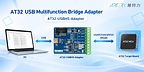
TAIPEI, Oct. 23, 2026 /PRNewswire/ — During embedded development, different devices often utilize different communication interfaces, making flexible interface conversion and efficient data transmission essential. To address these challenges, Artery Technology introduces the “AT32-USBHS-Adaptor”, a multifunction bridge adapter designed to simplify device connectivity and debugging while improving development efficiency.

The AT32-USBHS-Adaptor features a dedicated high-speed USB interface and utilizes the USB Communication Device Class (CDC) protocol to enable transparent data transmission between peripheral devices. It supports multiple communication interfaces, including UART, CAN, SPI, I2C, and RS485, providing developers with flexible connectivity options. From industrial control and smart home applications to automotive electronics and AIoT, the adapter facilitates seamless connectivity and data exchange between different devices.

The AT32-USBHS-Adaptor offers versatile interface conversion capabilities to meet various communication and debugging requirements. In USB-to-USART applications, it functions as a virtual serial port device on the USB side, enabling efficient and transparent data transmission between a PC and a target device. It supports multiple data format configurations and configurable serial communication rates ranging from 1,600 bps to 6 Mbps, accommodating diverse application requirements. In automotive networking systems, its USB-to-CAN bridging capability enables data encapsulation in accordance with the CAN protocol, supporting both 11-bit standard frame IDs and 29-bit extended frame IDs. This ensures reliable data transmission between USB and CAN buses, facilitating stable communication among vehicle modules.

The AT32 USB multifunction bridge adapter is designed for ease of use. For hardware setup, developers only need the AT32-USBHS-Adaptor board and a USB cable to establish a basic development and debugging environment. The adapter is powered through the USB interface and provides an external 3.3 V / 350 mA power output. Onboard LED indicators display the operating status, allowing users to monitor device activity easily. For software development, Artery provides example projects based on Keil v5. Developers using other compilation environments can also refer to these projects and make the necessary modifications.

To get started, developers select the required peripheral interface in the program, compile the project, and download the firmware. After connecting the USB cable, the corresponding virtual COM port can be identified in the PC’s Device Manager, allowing communication testing and debugging through host-side tools.

To accommodate different development requirements, the AT32-USBHS-Adaptor offers multiple methods for selecting peripheral interfaces. Developers can specify the target peripheral during program initialization or dynamically select it through SETUP requests on the USB control endpoint or USB HID commands, providing greater flexibility in interface switching. Additionally, the adapter supports adjusting peripheral serial communication rates or frequencies through the SET_LINE_CODING command, allowing developers to configure communication parameters according to application requirements and further streamline debugging.

Combining support for multiple interfaces, flexible configuration, and convenient debugging capabilities, the AT32 USB multifunction bridge adapter provides a practical solution for communication between embedded devices. Whether for routine development and debugging or interface conversion and data exchange across different communication protocols, the AT32-USBHS-Adaptor helps developers simplify connectivity and enhance development efficiency.

Artery Technology specializes in the research, development, and innovation of 32-bit microcontrollers, providing high-performance, highly reliable products and solutions for a wide range of applications, including industrial control, consumer electronics, IoT, and smart applications. The company is committed to advancing intelligent technologies through continuous innovation.

View original content to download multimedia:https://www.prnewswire.com/apac/news-releases/artery-at32-usb-multifunction-bridge-adapter-enables-flexible-and-efficient-communication-302917831.html

SOURCE Artery Technology

Continue Reading

Trending