Connect with us

Technology

New Study Improves Fault Diagnosis Accuracy in Machines with Deep Transfer Learning

Published

on

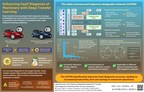
BEIJING, July 5, 2024 /PRNewswire/ — Maintaining machinery is a time-consuming, challenging task that not only causes significant downtime but is also prone to human errors. However, rather than relying solely on manual inspections, we are moving towards automated diagnosis where intelligent models can analyze vast amounts of data from sensors placed on machines to identify potential problems. This shift is made possible by advancements in deep transfer learning, reducing the need for extensive data collection and training to build diagnosis models for each machine. However, for accurate fault diagnosis, these models require high-quality labeled data from the source domain, which is challenging to obtain.

To address this issue, researchers from Xi’an Jiaotong University, Hunan University of Science and Technology in China, and Brunel University London in the United Kingdom have proposed a Label Recovery and Trajectory Designable Network (LRTDN). The paper was published in the 2024 Issue 4 of the IEEE/CAA Journal of Automatica Sinica.

“Incorrect label annotation produces two negative effects: First, the complex decision boundary of diagnosis models lowers the generalization performance on the target domain, and secondly, the distribution of target domain samples becomes misaligned with the false-labeled samples. To overcome these negative effects, we propose LRTDN,” says corresponding author Yaguo Lei, Professor at Xi’an Jiaotong University.

The LRTDN addresses the issue of incorrect labeling using three key components: a residual network with dual classifiers, an annotation check module, and adaptation trajectories. Each component tackles specific challenges of deep transfer learning to enhance fault diagnosis.

The residual network with dual classifiers captures the nuances of features between the source and target domains. By learning to distinguish these features, the model can adapt to the new patterns in the data, making it more accurate in diagnosing faults in the target domain.

The annotation check module identifies and corrects falsely labeled samples in the source domain. It uses a label anomaly factor that separates false-labeled samples from pure-labeled ones based on opposite gradient directions. Furthermore, the adaptation trajectories prioritize the fault detection model to learn from accurately labeled samples.

Using the proposed LRTDN method, researchers successfully diagnosed faults in bearings, even when the data in the source domain was incorrectly labeled. The LRTDN outperformed other methods, achieving notably higher accuracy rates.

Such a method can enhance the reliability and safety of industrial equipment. “The ability to accurately diagnose faults despite incorrect annotations will lead to more reliable preventive maintenance strategies. This can prevent unexpected machinery failures, reducing downtime and maintenance costs,” concludes Prof. Lei.

Reference

Title of original paper: Label Recovery and Trajectory Designable Network for Transfer Fault Diagnosis of Machines With Incorrect Annotation

Journal: IEEE/CAA Journal of Automatica Sinica

DOI: https://doi.org/10.1109/JAS.2023.124083

Authors: Bin Yang1,2, Yaguo Lei1, Xiang Li1, Naipeng Li1, and Asoke K. Nandi3

Affiliations:     
1 Xi’an Jiaotong University, China
2 Hunan University of Science and Technology, China
3 Brunel University London, United Kingdom

Contact:
Yan Ou
+86 10 82544459
379948@email4pr.com

View original content to download multimedia:https://www.prnewswire.com/news-releases/new-study-improves-fault-diagnosis-accuracy-in-machines-with-deep-transfer-learning-302188894.html

SOURCE IEEE/CAA Journal of Automatica Sinica

Continue Reading
Click to comment

Leave a Reply

Your email address will not be published. Required fields are marked *

Technology

GeoComm Expands Public Safety Location Intelligence Ecosystem Through Technology Partnership with Digital Twin Imaging

Published

on

By

Partnership adds interactive digital twin capabilities to support facility intelligence, emergency preparedness, and responder situational awareness.

ST. CLOUD, Minn., June 18, 2026 /PRNewswire/ — GeoComm, the nation’s leader in public safety grade location intelligence, today announced a technology partnership with Digital Twin Imaging, a provider of interactive 3D and 4D visualization and digital twin tools for public safety, government, education, and facility management environments.

The partnership brings together GeoComm’s public safety grade location intelligence, GIS mapping, and building data expertise with Digital Twin Imaging’s interactive visualization and digital twin capabilities. Together, the companies are focused on helping public safety agencies, schools, government organizations, and facility leaders improve emergency preparedness, strengthen facility awareness, and provide responders with more actionable spatial context.

GeoComm and Digital Twin Imaging both use LiDAR, GIS, and modeling to create accurate facility information. Digital Twin Imaging extends that foundation into interactive digital twin environments that can help teams visualize buildings, assets, and operational context in a more immersive way. The result is a complementary approach that supports planning, coordination, training, and response without positioning one capability as a replacement for the other.

“GeoComm has long focused on turning location and building data into actionable intelligence for public safety,” said Stacen Gross, Director of Sales, GeoComm. “Our partnership with Digital Twin Imaging adds a visualization layer to that work, helping emergency response and facility teams better understand complex spaces before and during an incident.”

“Working with GeoComm allows us to bring next-generation digital twin technology directly into the hands of those protecting our communities. It’s a meaningful step forward for the future of emergency management,” said Gabriella Schmidt-Grimminger, COO of Digital Twin Imaging.

For schools, government buildings, campuses, and public venues, the combination of GeoComm’s mapped facility intelligence and Digital Twin Imaging’s interactive visualization capabilities can support emergency response preparedness by giving teams a more complete view of building layouts, assets, and operational context. For facility leaders, these tools can also support planning, staff orientation, renovation planning, space utilization, and cross-functional collaboration.

The partnership expands GeoComm’s technology partner ecosystem by adding a digital twin visualization capability aligned with public safety workflows. Together, GeoComm and Digital Twin Imaging are focused on a practical outcome: helping organizations turn building and facility data into usable intelligence that supports safer, more coordinated operations.

About Digital Twin Imaging
Metaverse Imaging Inc., DBA Digital Twin Imaging, provides advanced 4D digital twin technology that delivers real time situational awareness and digital intelligence for first responders, schools, and community institutions. By scanning, mapping, and maintaining precise spatial and building information, Digital Twin Imaging creates immersive, asset rich models powered by a patented emergency response software platform that strengthens emergency response, security planning, facilities management, and capital planning. As a GSA MAS contract holder, SBA certified WOSB, Digital Twin Imaging serves K 12 school systems, universities, courthouses, amusement parks, and complex civic facilities nationwide, helping organizations bridge real and virtual environments to build safer, smarter, and more resilient communities. Learn more at www.dtisim.com

About GeoComm
GeoComm is the leading provider of public safety grade location data and maps that mission-critical software platforms and safety agencies depend on. From GIS data management to 9-1-1, outdoor, and indoor mapping, GeoComm helps organizations improve coordination, situational awareness, and decision-making during critical operations. For over 30 years, GeoComm has helped agencies, emergency responders, schools, and technology partners strengthen how they locate incidents, visualize critical information, and coordinate response. By bringing trusted location intelligence into the systems agencies and responders rely on every day, GeoComm helps ensure the right people have the right location context when it matters most. Learn more at www.geocomm.com

View original content to download multimedia:https://www.prnewswire.com/news-releases/geocomm-expands-public-safety-location-intelligence-ecosystem-through-technology-partnership-with-digital-twin-imaging-302804457.html

SOURCE GeoComm, Inc

Continue Reading

Technology

OX Security Named a Leader in the Inaugural Gartner® Magic Quadrant™ for Software Supply Chain Security

Published

on

By

OX Security earns a Leader position as Gartner formally maps the software supply chain security market for the first time

NEW YORK, June 18, 2026 /PRNewswire/ — OX Security today announced it has been named a Leader in the inaugural Gartner® Magic Quadrant™ for Software Supply Chain Security – the first time Gartner has published this Magic Quadrant.

Gartner formalizing software supply chain security as a distinct market reflects what the industry has signaled for years: securing the development pipeline, governing AI coding agents, and prioritizing real risk from development through runtime are now core requirements for enterprise security programs, not optional ones. The attack surface has matured, and so has the market of solutions addressing it.

OX Security’s Leader placement reflects an approach built across three principles: securing the entire application pipeline, governing AI code and the agents creating it, and context-based risk prioritization before runtime – so teams act on real exposure instead of working down endless vulnerability lists.

“This recognition belongs to every customer and partner who saw the risk in the software supply chain before the rest of the world caught up, and chose to act on it,” said Neatsun Ziv, CEO and co-founder of OX Security.

To learn more, visit ox.security.

About OX Security

OX Security is a unified application security platform that secures software from prompt to runtime. By providing full-stack visibility across the SDLC, OX enables security teams to prevent risk at the source rather than detect it after the fact.

Gartner® Magic Quadrant™ for Software Supply Chain Security, By Aaron Lord, Johnny Walters, Jason Gross, June 17, 2026, ID G00843814.

Gartner does not endorse any company, vendor, product or service depicted in its publications, and does not advise technology users to select only those vendors with the highest ratings or other designation. Gartner publications consist of the opinions of Gartner’s business and technology insights organization and should not be construed as statements of fact. Gartner disclaims all warranties, expressed or implied, with respect to this publication, including any warranties of merchantability or fitness for a particular purpose.

GARTNER and MAGIC QUADRANT are trademarks of Gartner, Inc. and/or its affiliates.

View original content:https://www.prnewswire.com/news-releases/ox-security-named-a-leader-in-the-inaugural-gartner-magic-quadrant-for-software-supply-chain-security-302804633.html

SOURCE OX Security

Continue Reading

Technology

Synergy Quantum Unveils SynQ Silicon Trust Suite, a Unified Silicon-Rooted Security Platform for the Post-Quantum Era

Published

on

By

Integrated platform combines a hardware root of trust, post-quantum security, protected key custody, secure boot, device attestation, confidential computing and enterprise HSM interoperability for mission-critical systems

NEW DELHI, June 18, 2026 /PRNewswire/ — Synergy Quantum today announced the SynQ Silicon Trust Suite, an integrated silicon-rooted security platform designed to establish trusted device identity, protect cryptographic keys, verify firmware integrity and prepare critical systems for the transition to post-quantum security.

The Suite brings together hardware-based trust, protected key lifecycle management, secure boot, attested signing, confidential-computing protection, remote device verification and enterprise HSM integration within a unified security architecture.

Unlike conventional security models that depend primarily on software-protected credentials or permanently stored root keys, SynQ Silicon Trust Suite begins with trust derived from the intrinsic characteristics of the silicon. This enables organisations to establish a hardware-bound identity and regenerate the root of trust when required, without maintaining an extractable root secret in conventional device storage.

The platform is designed for defence and military systems, telecom and 5G infrastructure, industrial and operational technology environments, cloud and data-centre platforms, edge systems, sovereign digital infrastructure and long-lived connected devices.

Establishing trust from the silicon upward

Modern computing systems depend on a chain of trust extending from the processor and firmware to the operating system, applications, networks and cloud services. If the hardware foundation is compromised, software-based security controls may no longer provide reliable protection.

SynQ Silicon Trust Suite addresses this challenge by placing the initial trust anchor within the silicon itself. The platform can then use that trust anchor to control device identity, secure boot, firmware validation, cryptographic key generation, signing operations and remote attestation.

Its zero-stored-root architecture is designed to reduce the risks associated with permanently stored root secrets. Root key material can be regenerated from the authorised silicon environment during the trusted boot process, creating a non-extractable device identity resistant to cloning, probing and unauthorised key recovery.

The resulting trust chain allows an enterprise, network operator or government authority to cryptographically verify that:

The device is genuine and operating on authorised hardware.Approved firmware and boot components have been loaded.Cryptographic keys are bound to the intended device and security policy.Signing operations have been performed by an authorised workload.The device has not entered an untrusted or non-compliant state.

A complete silicon trust architecture

The SynQ Silicon Trust Suite includes:

SynQ PQC-HRoT

A post-quantum hardware root of trust supporting secure boot, firmware measurement and an immutable hardware-to-software chain of trust.

SynQ SiliconVault

Silicon-sealed key storage for protected key blobs, key lifecycle management, rotation, backup and controlled recovery without relying on a conventionally stored root key.

SynQ SealedSign

A policy-controlled and attested signing service supporting internal and external signing workflows, trusted-workload validation and secure key zeroisation.

SynQ DeviceProof

A hardware-bound attestation capability that produces cryptographic evidence covering device identity, firmware condition, boot state and security-policy compliance.

SynQ AttestNet

A remote device and firmware trust service supporting attestation validation, policy verification and trust telemetry across distributed device fleets.

SynQ Zero-Store Root

A non-extractable root-secret architecture in which the root identity can be regenerated during trusted boot and remains bound to the authorised silicon environment.

SynQ Confidential Trust Fabric

A runtime-protection layer for enclave, trusted execution environment and confidential virtual machine deployments. It supports workload measurement, attestation and controlled key release to verified workloads, helping protect sensitive data while it is being processed.

SynQ HSMBridge

An enterprise HSM integration layer designed to connect the silicon trust architecture with centralised key-management environments. It supports key-use authorisation, policy enforcement and audit correlation between device-level and enterprise-level trust systems.

SynQ AirGap Key Fabric

A symmetric-key management capability for disconnected and highly restricted environments. It supports pre-provisioned root material, ephemeral session-key derivation and mission-, file- or device-level key lifecycles without dependence on continuous online connectivity.

Together, these capabilities provide a unified security foundation for device identity, protected key custody, secure boot, signing, runtime protection and attestation across the complete lifecycle of a device.

Designed for crypto agility and post-quantum migration

The transition to post-quantum security will not occur through a single algorithm replacement. Governments and enterprises must continue supporting existing cryptographic infrastructure while progressively introducing quantum-resistant mechanisms across devices, networks and applications.

SynQ Silicon Trust Suite therefore supports a hybrid security model, allowing classical and post-quantum mechanisms to operate within the same trust architecture. Its crypto-agile design enables algorithms and security policies to evolve as standards, regulatory requirements and threat conditions change.This allows organisations to begin their post-quantum migration without immediately replacing every connected device or redesigning their entire hardware platform.The architecture is also designed to strengthen protection against physical manipulation, firmware tampering, unauthorised key extraction, rollback attacks and selected side-channel threats.

“Trust has to begin in the hardware. If the foundation is not quantum-safe, everything built on top of it is exposed. With SynQ Silicon Trust Suite, we are putting a post-quantum root of trust into the silicon itself, so that the most sensitive systems a nation relies on can prove who they are and protect what they carry, today and in the quantum era.”- Jay Oberai, Founder, Synergy Quantum

Built for mission-critical and sovereign environments

SynQ Silicon Trust Suite is designed for environments in which device authenticity, operational continuity and long-term confidentiality are national, regulatory or commercial priorities.

Potential deployment areas include:

Defence platforms, military communication systems and mission equipment.Telecom infrastructure, 5G Core, RAN, O-RAN and edge networks.Industrial control systems, operational technology and critical infrastructure.Cloud platforms, data centres and confidential-computing environments.Secure devices, embedded systems, gateways and network appliances.Government infrastructure, sovereign digital platforms and air-gapped networks.Financial, healthcare and regulated-enterprise systems.Long-lived and security-sensitive connected products.

For device manufacturers, the Suite provides a reusable foundation for integrating identity, secure boot, key protection and post-quantum readiness directly into products.

For enterprise security teams, it creates a verifiable connection between physical hardware, cryptographic identity, software integrity and central security policy.

For governments and critical-infrastructure operators, it provides a foundation for sovereign control over device trust and cryptographic key lifecycles.

Extending trust across the complete device lifecycle

SynQ Silicon Trust Suite is designed to protect systems from manufacturing and provisioning through deployment, operation, maintenance and eventual decommissioning.

Its policy and attestation framework helps organisations maintain visibility into device identity, boot state, firmware condition, key usage and signing operations. This provides evidence for security auditing, regulatory compliance and incident investigation while supporting fine-grained authorisation and least-privilege access.

By combining silicon-derived trust, enterprise HSM integration, post-quantum readiness and runtime workload protection, Synergy Quantum aims to establish a consistent trust model extending from the chip to the data centre and from isolated mission environments to massively distributed telecom networks.

About Synergy Quantum

Synergy Quantum develops quantum-secure platforms and hardware for governments, regulated enterprises and critical-infrastructure operators.Its work spans quantum-secure connectivity, post-quantum cryptography, crypto-agile infrastructure, quantum-safe devices and silicon-rooted security. The company’s mission is to protect the data that powers civilisation and safeguard the networks and systems that connect it.

For more information, visit synergyquantum.in. 

Photo – https://mma.prnewswire.com/media/2997309/SynQ_Silicon_Trust_Suite.jpg
Logo – https://mma.prnewswire.com/media/2853890/6007617/Synergy_Quantum_LOGO.jpg

View original content to download multimedia:https://www.prnewswire.com/in/news-releases/synergy-quantum-unveils-synq-silicon-trust-suite-a-unified-silicon-rooted-security-platform-for-the-post-quantum-era-302804639.html

Continue Reading

Trending