Connect with us

Technology

Serco Group, VEV and RVS save 8,898kg of emissions and prove the case for electric recycling & refuse-vehicles in 8-week pilot

Published

on

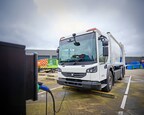
Electrification pioneers VEV and RVS, and public services provider Serco, announce the highly successful results of a pilot scheme for electric recycling and waste collection vehicles (eRCVs) in Hampshire.Two eRCVs completed live collection rounds for thousands of local residents over eight weeks.The eRCVs were converted and repowered from diesel into as-new electric vehicles by RVS, adding to the carbon emission savings.Drivers reported that the vehicles performed better than the usual diesel vehicles and they preferred the smooth and quiet driving experience.The trial delivered significant reduction in noise pollution and 8,898kg in emissions savings – the equivalent of removing two cars from the road for the entire year.Modelling within VEV-IQ demonstrated eRCV total cost of ownership (TCO) could be between 4 and 14% lower than diesel RCVs with effective optimisation.VEV has delivered a three-phase plan for Serco to roll out eRCV collection at multiple sites across the UK, with Serco maintaining the eRCVs operation in Hampshire post-pilot.The full pilot report can be downloaded here, and high-resolution imagery here.

LONDON, July 16, 2024 /PRNewswire/ — VEV, the e-fleet solutions provider backed by Vitol – a world-leader in the energy sector – reveals the results of its highly successful collaboration with public services provider, Serco, and RVS, following the conclusion of a pilot programme for electric recycling and waste collection vehicles in Hampshire.

In an eight-week pilot, VEV, Serco and RVS consolidated their expertise to support the councils’ climate emergency targets by demonstrating the powerful capabilities of electric refuse collection vehicles (eRCVs) to reduce the substantial carbon footprint created by recycling and refuse collection.

Across 69 collection rounds balancing distance, bin-quantity and weight, the two RVS-repowered eRCVs completed refuse and recycling collections for thousands of local residents. The specialised vehicles significantly reduced noise pollution and delivered 8,898kg in emissions savings, removing the equivalent of two cars from the road for an entire year just over the 8-week period. The carbon footprint was further reduced during the manufacturing process by using vehicles converted from diesel to electric.

Crucially, the drivers of the eRCVs lost their scepticism about electric vehicles early on and concluded that they preferred the new vehicles. One said, “I like how quiet it is, I can hear the crew working behind me much easier, it feels much safer.”

Building on the extensive benefits for local communities and the environment, the pilot proved the case for operational efficiency using eRCVs for fleet operators like Serco. Under different scenarios blending the impacts of energy price, vehicle efficiency, mechanical optimisations, fuel price changes and maintenance strategies, TCO savings of between 4 and 14% compared to diesel RCVs, could be achieved in the short term. These models were generated by VEV’s bespoke management platform, VEV-IQ, which is used to optimise EV fleet operations.

From increasing range by up to 20% with driver training, to managing energy consumption through smart charging schedules and vehicle performance monitoring, pilot data was utilised to showcase how an optimised eRCV operation can be a cost-effective solution for operators, without additional financial burden on the local population.

Analysing the real-world data from the daily collection operations, VEV has delivered a TCO-optimised, three-phase plan for Serco to roll out eRCV operations across multiple sites in the UK, starting with the two Hampshire depots. The plan encompasses a grid upgrade, solar power installation, optimisation stream, and the VEV-IQ analytics platform. VEV-IQ will facilitate smart charging and operations optimisation based on monitoring and trialling operational changes.

Assessing the electrification readiness of Serco’s fleets in the two Hampshire councils, VEV identified that multiple vehicles are prepared for a cost-effective switch now, with a second wave to follow.

VEV CEO, Mike Nakrani, said:

“A critical objective for VEV, Serco and RVS in this project, was to prove that electric recycling and refuse collection can be a significant step in reducing carbon emissions and improving air quality, in a way that makes commercial sense for fleet operators and local councils.

“By saving nearly nine tonnes of emissions in just eight weeks and proving that eRCV costs can meet or even improve on their diesel counterparts, this real-life project has delivered a ringing endorsement for electrifying all kinds of commercial fleets. We thank each of our partners for their commitment and rigour in this project, and we look forward to helping Serco make a cost-effective switch across even more of its eRCV fleet moving forward.”

Spencer Law, Founder & CEO of Refuse Vehicle Solutions Ltd. said:

“Repowering refuse collection vehicles enables fleet operators like Serco to reap a swathe of environmental and efficiency benefits. The converted eRCVs we delivered consistently completed their routes with enough battery charge on return to the depot to cater for unplanned, extra rounds.

“The drivers adapted well to the vehicles after the initial coaching, and reported stronger vehicle performance than their diesel equivalents, with many preferring the comfort and quietness of the electric operation. We’re delighted with the performance of the eRCVs that this pioneering project has helped us put in the spotlight.”

George Roach, Performance and Compliance Director for Serco Environmental Services said:

“Establishing the business-case for electrifying Serco’s recycling and refuse collection fleet was key for us throughout this pilot scheme. We’re maximising the huge success of the project and continuing to run the electric RCVs on their routes in both Hampshire councils.

“The operational efficiency gains that VEV and RVS have helped us achieve, have played a critical role in proving the business-case for electrifying even more of our collection contracts across the UK, allowing us to deliver cleaner air and quieter streets for local communities.”

The full pilot report can be downloaded here, and high-resolution imagery here.

VEV’s media kit is available here.

About VEV

VEV helps organisations deliver on their carbon reduction ambitions with an end-to-end fleet electrification solution that integrates across vehicles, charging infrastructure and power. VEV is owned by Vitol, a world leader in energy, which to date has committed circa $2 billion to sustainable energy initiatives worldwide. 

VEV navigates the complexities of EV transformation to design and implement cost-effective EV fleets optimised for specific fleet requirements. It supports EV fleet operations to guarantee resilience and keep mission-critical fleets running at scale. Bespoke, scalable business solutions are designed around the customer’s own fleet data analysed by a powerful assessment tool, VEV-IQ, and VEV’s experts in energy and sustainable e-mobility. VEV sets businesses up for success in an electrified future.

More information at VEV.com

About RVS

Refuse Vehicle Solutions (RVS) is the UK’s leading independent supplier of New, Quality Used, Refurbished and Electric Conversion refuse collection vehicles.

Combining over 100 years of experience, RVS possess a complete understanding of the waste sector’s demands and requirements, enabling our success in all aspects of RCV provision and maintenance.

RVS are proud to be at the forefront of the waste fleet electrification movement, helping the industry meet its sustainability goals, and evolving together towards a cleaner, greener future.

For more information, visit refusevehiclesolutions.co.uk.

About Serco

Serco brings together the right people, the right technology and the right partners to create innovative solutions that make a positive impact and address some of the most urgent and complex challenges facing the modern world. 

With a primary focus on serving governments globally, Serco’s services are powered by more 50,000 people working across defence, space, migration, justice, healthcare, mobility and customer services.

Serco’s core capabilities include service design and advisory, resourcing, complex programme management, systems integration, case management, engineering, and asset & facilities management.

Underpinned by Serco’s unique operating model, Serco drives innovation and supports customers from service discovery through to delivery.

More information can be found at www.serco.com

About Serco in Environmental Services

Serco’s Environmental Services business provides refuse and recycling collection, street cleansing, vehicle maintenance and landscapes services to UK local authorities. We also operate fully integrated waste and recycling contracts which include waste and recycling treatment, processing, recovery and disposal. The company works in long term partnership with 16 local authorities, bringing together our expert knowledge and experience to drive positive social outcomes for the environment, our customers, communities and colleagues.

Photo – https://mma.prnewswire.com/media/2461635/VEV.jpg

View original content to download multimedia:https://www.prnewswire.co.uk/news-releases/serco-group-vev-and-rvs-save-8-898kg-of-emissions-and-prove-the-case-for-electric-recycling–refuse-vehicles-in-8-week-pilot-302197272.html

Continue Reading
Click to comment

Leave a Reply

Your email address will not be published. Required fields are marked *

Technology

Hyundai Motor Group Executive Chair Euisun Chung Announces Physical AI Vision at San Francisco AI Summit

Published

on

By

Hyundai Motor Group shares roadmap for realizing its Physical AI vision and collaboration strategy with global tech leaders at the San Francisco AI SummitExecutive Chair Euisun Chung presented, “Hyundai Motor Group is evolving beyond the traditional boundaries of automotive manufacturing to become a Physical AI solution company,” adding, “The ultimate Physical AI vision we pursue is the realization of integrated intelligence at the city level”The Group to leverage manufacturing competitiveness and leading robotics capabilities centered on Boston Dynamics, while establishing a data flywheel system connecting real-world operational data with continuous AI model advancementThe Group to leverage strategic partnerships with global technology leaders, including NVIDIA and Waymo, as well as Boston Dynamics’ strategic partnership with Google DeepMindThe Group to collaborate with NVIDIA to develop a Robot Reference Platform that combines Hyundai Motor Group’s and NVIDIA’s Physical AI capabilities

… The initiative to support Korea’s Physical AI industry through an open ecosystem

The Group to cultivate strategic domestic hubs through investments in Saemangeum AI Valley and future advanced industries in Korea’s Yeongnam region

SAN FRANCISCO, July 25, 2026 /PRNewswire/ — Hyundai Motor Group (the Group) Executive Chair Euisun Chung today outlined the Group’s vision and strategy for Physical AI at the San Francisco AI Summit held in San Francisco, California.

The event brought together approximately 150 attendees, including Executive Chair Chung, business leaders from major Korean companies, executives from leading U.S. technology firms, startup representatives and students.

At the summit, Executive Chair Chung presented the Group’s roadmap for advancing Physical AI and outlined strategic collaboration plans with global technology leaders.

“Hyundai Motor Group is evolving beyond the traditional boundaries of automotive manufacturing by expanding into autonomous driving, robotics and AI Defined Factories, accelerating our transformation into a Physical AI solution company.” — Hyundai Motor Group Executive Chair Euisun Chung

Accelerating the Transition to a Physical AI Solution Company

Hyundai Motor Group’s Physical AI vision extends beyond intelligent devices such as vehicles and robots to intelligent spaces, including AI factories where AI seamlessly connects and optimizes entire operations. Ultimately, the Group envisions integrated intelligence at the city level, where urban infrastructure is organically connected and operated through AI.

A key differentiator for the Group is its ability to create a data flywheel that continuously connects real-world operations with AI advancement. Drawing on extensive experience in large-scale manufacturing, mobility, robotics and service operations, the Group is positioned to deploy, refine and scale Physical AI technologies in real industrial environments.

Executive Chair Chung also outlined strategic partnerships with leading technology companies, including NVIDIA and Waymo, as well as Boston Dynamics’ strategic partnership with Google DeepMind, to further advance Physical AI capabilities.

By combining Hyundai Motor Group’s manufacturing competitiveness, mobility and robotics technologies and extensive operational data with the AI infrastructure and algorithm capabilities of global technology leaders, the Group aims to help foster a new innovation ecosystem for the Physical AI era.

Executive Chair Chung also introduced initiatives designed to support the growth of Korea’s robotics and AI ecosystem, including the development of a Robot Reference Platform with NVIDIA that combines Hyundai Motor Group’s and NVIDIA’s Physical AI capabilities, as well as investments in initiatives such as the Saemangeum AI Valley.

Physical AI Vision: From Intelligent Devices to Integrated Intelligence at the City Level

During the summit, Executive Chair Chung presented Hyundai Motor Group’s Physical AI vision.

“The ultimate Physical AI vision Hyundai Motor Group pursues begins with intelligent devices such as vehicles and robots, expands to intelligent spaces such as AI factories, and ultimately realizes integrated intelligence at the city level, where urban infrastructure is seamlessly connected and operated.” — Hyundai Motor Group Executive Chair Chung

The Group’s vision begins with intelligent devices, where AI capabilities enhance vehicles and robots. It then expands to intelligent spaces, including AI factories where AI autonomously integrates logistics, production and quality management across entire operations.

Ultimately, Hyundai Motor Group envisions city-level intelligence, where critical infrastructure and assets — including energy, mobility and robotics systems — are connected and optimized in real time.

Executive Chair Chung also highlighted the Group’s key strengths in realizing its Physical AI vision:

World-class manufacturing competitiveness: Hyundai Motor Group has built extensive expertise through decades of operating global manufacturing facilities, managing quality systems and optimizing supply chains. This foundation enables the Group to apply AI technologies to products, processes and services while rapidly validating and scaling innovations in real-world environments.Leading robotics capabilities: Hyundai Motor Group has established robotics as a key pillar of its future business portfolio. Boston Dynamics’ quadruped robot Spot®, logistics robot Stretch®, and Hyundai Motor Group Robotics LAB’s next-generation mobile robot platform MobED are recognized for combining technological competitiveness with real-world applicability.

In particular, the humanoid robot Atlas® is emerging as a representative example of Physical AI, supporting and collaborating with people across manufacturing, logistics and mobility environments.

Establishing a data flywheel system: Hyundai Motor Group is establishing a data flywheel system that leverages data generated across manufacturing operations, vehicles, logistics systems and robotics demonstrations to continuously advance AI models. Enhanced algorithms are then reapplied to real-world operations, creating a virtuous cycle that improves performance and strengthens Physical AI capabilities.

Accelerating the Future of Physical AI Through Partnerships with Global Tech Leaders

Executive Chair Chung also outlined concrete initiatives to position Hyundai Motor Group as a leader in human-centered Physical AI through strategic collaborations with NVIDIA and Waymo, as well as Boston Dynamics’ strategic partnership with Google DeepMind.

“By combining Hyundai Motor Group’s strengths in manufacturing, robotics and data with the capabilities of global technology leaders, we can help create a new innovation ecosystem for the Physical AI era.” — Hyundai Motor Group Executive Chair Euisun Chung

NVIDIA – Advancing Physical AI infrastructure and talent development

Hyundai Motor Group is expanding collaboration with NVIDIA to strengthen Physical AI infrastructure and cultivate AI talent. Building on a supply agreement for 50,000 NVIDIA Blackwell GPUs and a memorandum of understanding signed last year to advance Korea’s Physical AI capabilities, the Group is pursuing a range of initiatives, including the establishment of Hyundai Motor Group Robot Application Center, as well as various collaborations aimed at strengthening Korea’s Physical AI infrastructure and AI talent ecosystem, including the NVIDIA’s AI Technology Center.

In manufacturing, the Group is leveraging NVIDIA’s platform to create more sophisticated digital twins of production facilities, enhancing process design, operational optimization and validation efficiency. The collaboration also includes the integration of NVIDIA’s autonomous driving solutions, including automotive semiconductors, sensors and architecture, with Hyundai Motor Group vehicle platforms.

Waymo – Strengthening autonomous driving collaboration

Hyundai Motor Group continues to strengthen its strategic partnership with Waymo in the autonomous driving sector to support the development of a safe and innovative autonomous driving ecosystem. Autonomous driving vehicles require a wide range of specialized capabilities, including redundant systems for steering, braking, power and communications, dedicated features such as power-operated doors, as well as enhanced functional safety and cybersecurity technologies.

Hyundai Motor Group plans to produce IONIQ 5 vehicles with specific autonomous-ready modifications at Hyundai Motor Group Metaplant America (HMGMA) in Georgia.

Google DeepMind – Accelerating next-generation humanoid robotics

Boston Dynamics has established a strategic partnership with Google DeepMind to accelerate the development of next-generation humanoid robots. Advanced AI models and training systems are essential for robots to perform complex tasks in real-world environments and collaborate effectively with people. Through this partnership, Boston Dynamics robots are expected to achieve greater autonomy and adapt more effectively to complex operating environments.

Hyundai Motor Group plans to establish a robot production facility in the U.S. with an annual capacity of up to 30,000 units by 2028. The Atlas humanoid robot will first be deployed at production facilities including HMGMA before broader deployment is expanded through phased validation.

Building an Open Ecosystem Through the Robot Reference Platform and Continued Investment in Korea’s Physical AI Future

Executive Chair Chung also outlined initiatives aimed at supporting the growth of Korea’s Physical AI ecosystem through open collaboration and continued investment.

“The outcomes of collaboration with global technology leaders should contribute to the growth of Korea’s Physical AI industry. To that end, Hyundai Motor Group plans to foster an open ecosystem that supports innovation in robotics and AI technologies.” — Hyundai Motor Group Executive Chair Euisun Chung

Key initiatives to build an open ecosystem for robotics and AI innovation include:

Robot Reference Platform: Hyundai Motor Group and NVIDIA are collaborating to develop a Robot Reference Platform that combines Hyundai Motor Group’s and NVIDIA’s Physical AI capabilities.

The platform will provide research robot models to universities, research institutes and startups, helping foster an open ecosystem that supports technological innovation and the development of Physical AI talent while contributing to the broader growth of Korea’s robotics and AI industries. 

Supporting universities, research institutes and startups: The Robot Reference Platform is expected to provide universities, research institutes and startups with a standardized hardware and software environment, enabling them to more easily develop and validate Physical AI technologies. The initiative aims to help address challenges faced by organizations with innovative ideas but limited access to commercialization opportunities and validation infrastructure.

Hyundai Motor Group is also continuing large-scale investments aimed at driving the next leap forward in Korea’s industrial and technology ecosystem. Continued investments in Korea’s industrial and technology ecosystem include:

Saemangeum AI Valley: In the Saemangeum region of Jeonbuk State, the Group is developing Saemangeum AI Valley, which includes an approximate KRW 9 trillion investment in AI data centers, robotics manufacturing clusters, electrolyzer plants and AI hydrogen city infrastructure. 

In particular, the robotics manufacturing cluster will serve not only as a production base for the Group’s own robotics products, but also as a robotics foundry that provides manufacturing services for small and medium-sized enterprises that lack manufacturing expertise.

Advanced industrial hubs in the Yeongnam region: Hyundai Motor Group plans to invest a total of KRW 42 trillion over the next decade to foster advanced industrial hubs focused on AI-driven manufacturing, future aerospace industries and sustainable energy infrastructure.

Through these initiatives, Hyundai Motor Group aims to strengthen key foundations for the Physical AI era, including data and energy infrastructure, robotics production capabilities and real-world validation capabilities. The Group also expects these investments to contribute to enhanced industrial competitiveness, balanced regional development, job creation and broader economic vitality in Korea.

About Hyundai Motor Group

Hyundai Motor Group is a global enterprise that has created a value chain based on mobility, steel, and construction, as well as logistics, finance, IT, and service. With about 250,000 employees worldwide, the Group’s mobility brands include Hyundai, Kia, and Genesis. Armed with creative thinking, cooperative communication, and the will to take on any challenges, we strive to create a better future for all.

More information about Hyundai Motor Group can be found at: http://www.hyundaimotorgroup.com or Newsroom: Media Hub by Hyundai, Kia Global Newsroom, Genesis Newsroom

View original content to download multimedia:https://www.prnewswire.com/news-releases/hyundai-motor-group-executive-chair-euisun-chung-announces-physical-ai-vision-at-san-francisco-ai-summit-302834557.html

SOURCE Hyundai Motor Company

Continue Reading

Technology

Tencent Brings Together AI and Games to Help Preserve and Share Cultural Heritage of New UNESCO Site in Jingdezhen

Published

on

By

Tencent applies AI and games to protect, reconstruct, and promote one of the world’s oldest porcelain traditions at newly inscribed UNESCO siteDigital initiatives create a new model for technology-driven heritage preservation globally using a multimodal AI dataset, AI-assisted artifact restoration, and interactive virtual experiences

SHENZHEN, China, July 25, 2026 /PRNewswire/ — Tencent (00700.HK) today announced the launch of Digital Jingdezhen: Porcelain Craft Adventure, an AI-powered cultural heritage game that enables users to explore Jingdezhen’s porcelain-making traditions and experience traditional craft techniques through interactive play. The launch coincides with the inscription of the Jingdezhen Handicraft Porcelain Industry Sites on the United Nations Educational, Scientific and Cultural Organization (UNESCO) World Heritage List.

Digital Jingdezhen is part of a broader cultural innovation initiative that applies Tencent’s AI and game technologies. Guided by Tencent’s vision of “Tech for Good”, the initiative leverages digital preservation to keep Jingdezhen’s thousand-year-old porcelain culture alive and relevant today, creating a living heritage with sustainable value and broad public engagement, and building a model that could be carried to heritage sites around the world.

Digital Preservation: Restoring and Unlocking Heritage with AI

Jingdezhen has a thousand years of living heritage; centuries of tradition are still active in its kilns today. To preserve this legacy, a cornerstone of the project was the Jingdezhen Porcelain Cultural Heritage Multimodal AI Dataset.

Over decades, historical records, heritage information, and craft specifications have accumulated into a massive volume of data. Tencent applied Optical Character Recognition (OCR), Natural Language Processing (NLP), and knowledge graph technologies to transform these dispersed materials into structured digital resources that can be analyzed, extracted, verified, and traced back to their original sources.

The dataset contains more than 30,000 documentary records, over 5,000 ceramic gene specimens, and data on nearly 1,000 representative ceramic artifacts in collections worldwide. It provides a digital foundation for cultural research, exhibition development, public interpretation and AI-powered heritage applications.

Building on this foundation, Tencent has developed a range of industry- and public-facing applications, including the Jingdezhen Ancient Ceramics Gene Database, the World Ceramics Interactive Map, and the Digital Jingdezhen AI Companion, providing researchers, heritage professionals, and the public with innovative AI-powered tools to explore and understand porcelain heritage.

Digital Activation: Bringing Jingdezhen’s Porcelain Heritage to Life Through AI and Games

To bring the public closer to Jingdezhen and its porcelain-making traditions, Digital Jingdezhen: Porcelain Craft Adventure utilizes AI-assisted Procedural Content Generation (PCG) to create the first large-scale digital recreation of the city’s five major porcelain heritage sites and historical production scenes. By rapidly mapping out town layouts and automatically generating architectural structures, decorative elements, and pedestrians, the technology brings Jingdezhen’s historic townscape back to life in the digital world.

The game also features high-quality AI digital humans built on large language models and the Jingdezhen Porcelain Cultural Heritage Multimodal AI Dataset. Through AI voice-driven facial expressions and Tencent Games’ proprietary animation technology, it creates warm, human-centered interactive experiences that make historical knowledge tangible and relatable. At the same time, AI-powered 3D generation allows users to quickly transform an uploaded image into a 3D porcelain form, lowering the barrier to participation and enabling anyone to turn creative inspiration into tangible ceramic forms in the digital space.

Continuing Heritage: Mobilizing the Community

Ensuring the longevity of Jingdezhen’s legacy requires active public participation. Tencent developed the Digital Heritage Guardian (Jingdezhen), a volunteer program built within the Weixin ecosystem. The program enables the public to support the upkeep and stewardship of physical heritage sites, creating a practical channel for community involvement in heritage protection.

“Our work in Jingdezhen is a testament to how ‘AI for Good’ can breathe new life into ancient traditions,” said Zhan Shu, Head of Digital Culture Lab, Tencent. “Working alongside dedicated heritage experts, we have contributed our capabilities in AI and digital technologies to unlock decades of dormant archives for this incredible new UNESCO site. We are proud to help bridge the gap between the thousand-year porcelain heritage and the digital era, creating new ways for the global public to connect with Jingdezhen’s living history, and a model for heritage sites worldwide.”

For media queries, please contact: gc@tencent.com

About Tencent

Tencent is a global technology and entertainment company focused on creating connections and experiences that matter. Founded in 1998, Tencent is driven by its mission to create “Value for Users” and apply “Tech for Good.”

Tencent’s communication and social services connect more than one billion people around the world, helping them to keep in touch with friends and family, access transportation, pay for daily necessities, and even be entertained. Tencent also develops and publishes some of the world’s most popular video games and other high-quality digital content, delivering rich and immersive interactive entertainment experiences. Tencent also offers a range of services such as cloud computing and other enterprise services to support our clients’ digital transformation and business growth. Headquartered in Shenzhen, Tencent has been listed on the Main Board of the Stock Exchange of Hong Kong since June 2004.

View original content:https://www.prnewswire.com/news-releases/tencent-brings-together-ai-and-games-to-help-preserve-and-share-cultural-heritage-of-new-unesco-site-in-jingdezhen-302834555.html

SOURCE Tencent

Continue Reading

Technology

Hyundai Motor Group Executive Chair Euisun Chung Announces Physical AI Vision at San Francisco AI Summit

Published

on

By

Hyundai Motor Group shares roadmap for realizing its Physical AI vision and collaboration strategy with global tech leaders at the San Francisco AI SummitExecutive Chair Euisun Chung presented, “Hyundai Motor Group is evolving beyond the traditional boundaries of automotive manufacturing to become a Physical AI solution company,” adding, “The ultimate Physical AI vision we pursue is the realization of integrated intelligence at the city level”The Group to leverage manufacturing competitiveness and leading robotics capabilities centered on Boston Dynamics, while establishing a data flywheel system connecting real-world operational data with continuous AI model advancementThe Group to leverage strategic partnerships with global technology leaders, including NVIDIA and Waymo, as well as Boston Dynamics’ strategic partnership with Google DeepMindThe Group to collaborate with NVIDIA to develop a Robot Reference Platform that combines Hyundai Motor Group’s and NVIDIA’s Physical AI capabilities

… The initiative to support Korea’s Physical AI industry through an open ecosystem

The Group to cultivate strategic domestic hubs through investments in Saemangeum AI Valley and future advanced industries in Korea’s Yeongnam region

SAN FRANCISCO, July 25, 2026 /PRNewswire/ — Hyundai Motor Group (the Group) Executive Chair Euisun Chung today outlined the Group’s vision and strategy for Physical AI at the San Francisco AI Summit held in San Francisco, California.

The event brought together approximately 150 attendees, including Executive Chair Chung, business leaders from major Korean companies, executives from leading U.S. technology firms, startup representatives and students.

At the summit, Executive Chair Chung presented the Group’s roadmap for advancing Physical AI and outlined strategic collaboration plans with global technology leaders.

“Hyundai Motor Group is evolving beyond the traditional boundaries of automotive manufacturing by expanding into autonomous driving, robotics and AI Defined Factories, accelerating our transformation into a Physical AI solution company.” — Hyundai Motor Group Executive Chair Euisun Chung

Accelerating the Transition to a Physical AI Solution Company

Hyundai Motor Group’s Physical AI vision extends beyond intelligent devices such as vehicles and robots to intelligent spaces, including AI factories where AI seamlessly connects and optimizes entire operations. Ultimately, the Group envisions integrated intelligence at the city level, where urban infrastructure is organically connected and operated through AI.

A key differentiator for the Group is its ability to create a data flywheel that continuously connects real-world operations with AI advancement. Drawing on extensive experience in large-scale manufacturing, mobility, robotics and service operations, the Group is positioned to deploy, refine and scale Physical AI technologies in real industrial environments.

Executive Chair Chung also outlined strategic partnerships with leading technology companies, including NVIDIA and Waymo, as well as Boston Dynamics’ strategic partnership with Google DeepMind, to further advance Physical AI capabilities.

By combining Hyundai Motor Group’s manufacturing competitiveness, mobility and robotics technologies and extensive operational data with the AI infrastructure and algorithm capabilities of global technology leaders, the Group aims to help foster a new innovation ecosystem for the Physical AI era.

Executive Chair Chung also introduced initiatives designed to support the growth of Korea’s robotics and AI ecosystem, including the development of a Robot Reference Platform with NVIDIA that combines Hyundai Motor Group’s and NVIDIA’s Physical AI capabilities, as well as investments in initiatives such as the Saemangeum AI Valley.

Physical AI Vision: From Intelligent Devices to Integrated Intelligence at the City Level

During the summit, Executive Chair Chung presented Hyundai Motor Group’s Physical AI vision.

“The ultimate Physical AI vision Hyundai Motor Group pursues begins with intelligent devices such as vehicles and robots, expands to intelligent spaces such as AI factories, and ultimately realizes integrated intelligence at the city level, where urban infrastructure is seamlessly connected and operated.” — Hyundai Motor Group Executive Chair Chung

The Group’s vision begins with intelligent devices, where AI capabilities enhance vehicles and robots. It then expands to intelligent spaces, including AI factories where AI autonomously integrates logistics, production and quality management across entire operations.

Ultimately, Hyundai Motor Group envisions city-level intelligence, where critical infrastructure and assets — including energy, mobility and robotics systems — are connected and optimized in real time.

Executive Chair Chung also highlighted the Group’s key strengths in realizing its Physical AI vision:

World-class manufacturing competitiveness: Hyundai Motor Group has built extensive expertise through decades of operating global manufacturing facilities, managing quality systems and optimizing supply chains. This foundation enables the Group to apply AI technologies to products, processes and services while rapidly validating and scaling innovations in real-world environments.Leading robotics capabilities: Hyundai Motor Group has established robotics as a key pillar of its future business portfolio. Boston Dynamics’ quadruped robot Spot®, logistics robot Stretch®, and Hyundai Motor Group Robotics LAB’s next-generation mobile robot platform MobED are recognized for combining technological competitiveness with real-world applicability.

In particular, the humanoid robot Atlas® is emerging as a representative example of Physical AI, supporting and collaborating with people across manufacturing, logistics and mobility environments.

Establishing a data flywheel system: Hyundai Motor Group is establishing a data flywheel system that leverages data generated across manufacturing operations, vehicles, logistics systems and robotics demonstrations to continuously advance AI models. Enhanced algorithms are then reapplied to real-world operations, creating a virtuous cycle that improves performance and strengthens Physical AI capabilities.

Accelerating the Future of Physical AI Through Partnerships with Global Tech Leaders

Executive Chair Chung also outlined concrete initiatives to position Hyundai Motor Group as a leader in human-centered Physical AI through strategic collaborations with NVIDIA and Waymo, as well as Boston Dynamics’ strategic partnership with Google DeepMind.

“By combining Hyundai Motor Group’s strengths in manufacturing, robotics and data with the capabilities of global technology leaders, we can help create a new innovation ecosystem for the Physical AI era.” — Hyundai Motor Group Executive Chair Euisun Chung

NVIDIA – Advancing Physical AI infrastructure and talent development

Hyundai Motor Group is expanding collaboration with NVIDIA to strengthen Physical AI infrastructure and cultivate AI talent. Building on a supply agreement for 50,000 NVIDIA Blackwell GPUs and a memorandum of understanding signed last year to advance Korea’s Physical AI capabilities, the Group is pursuing a range of initiatives, including the establishment of Hyundai Motor Group Robot Application Center, as well as various collaborations aimed at strengthening Korea’s Physical AI infrastructure and AI talent ecosystem, including the NVIDIA’s AI Technology Center.

In manufacturing, the Group is leveraging NVIDIA’s platform to create more sophisticated digital twins of production facilities, enhancing process design, operational optimization and validation efficiency. The collaboration also includes the integration of NVIDIA’s autonomous driving solutions, including automotive semiconductors, sensors and architecture, with Hyundai Motor Group vehicle platforms.

Waymo – Strengthening autonomous driving collaboration

Hyundai Motor Group continues to strengthen its strategic partnership with Waymo in the autonomous driving sector to support the development of a safe and innovative autonomous driving ecosystem. Autonomous driving vehicles require a wide range of specialized capabilities, including redundant systems for steering, braking, power and communications, dedicated features such as power-operated doors, as well as enhanced functional safety and cybersecurity technologies.

Hyundai Motor Group plans to produce IONIQ 5 vehicles with specific autonomous-ready modifications at Hyundai Motor Group Metaplant America (HMGMA) in Georgia.

Google DeepMind – Accelerating next-generation humanoid robotics

Boston Dynamics has established a strategic partnership with Google DeepMind to accelerate the development of next-generation humanoid robots. Advanced AI models and training systems are essential for robots to perform complex tasks in real-world environments and collaborate effectively with people. Through this partnership, Boston Dynamics robots are expected to achieve greater autonomy and adapt more effectively to complex operating environments.

Hyundai Motor Group plans to establish a robot production facility in the U.S. with an annual capacity of up to 30,000 units by 2028. The Atlas humanoid robot will first be deployed at production facilities including HMGMA before broader deployment is expanded through phased validation.

Building an Open Ecosystem Through the Robot Reference Platform and Continued Investment in Korea’s Physical AI Future

Executive Chair Chung also outlined initiatives aimed at supporting the growth of Korea’s Physical AI ecosystem through open collaboration and continued investment.

“The outcomes of collaboration with global technology leaders should contribute to the growth of Korea’s Physical AI industry. To that end, Hyundai Motor Group plans to foster an open ecosystem that supports innovation in robotics and AI technologies.” — Hyundai Motor Group Executive Chair Euisun Chung

Key initiatives to build an open ecosystem for robotics and AI innovation include:

Robot Reference Platform: Hyundai Motor Group and NVIDIA are collaborating to develop a Robot Reference Platform that combines Hyundai Motor Group’s and NVIDIA’s Physical AI capabilities.

The platform will provide research robot models to universities, research institutes and startups, helping foster an open ecosystem that supports technological innovation and the development of Physical AI talent while contributing to the broader growth of Korea’s robotics and AI industries. 

Supporting universities, research institutes and startups: The Robot Reference Platform is expected to provide universities, research institutes and startups with a standardized hardware and software environment, enabling them to more easily develop and validate Physical AI technologies. The initiative aims to help address challenges faced by organizations with innovative ideas but limited access to commercialization opportunities and validation infrastructure.

Hyundai Motor Group is also continuing large-scale investments aimed at driving the next leap forward in Korea’s industrial and technology ecosystem. Continued investments in Korea’s industrial and technology ecosystem include:

Saemangeum AI Valley: In the Saemangeum region of Jeonbuk State, the Group is developing Saemangeum AI Valley, which includes an approximate KRW 9 trillion investment in AI data centers, robotics manufacturing clusters, electrolyzer plants and AI hydrogen city infrastructure. 

In particular, the robotics manufacturing cluster will serve not only as a production base for the Group’s own robotics products, but also as a robotics foundry that provides manufacturing services for small and medium-sized enterprises that lack manufacturing expertise.

Advanced industrial hubs in the Yeongnam region: Hyundai Motor Group plans to invest a total of KRW 42 trillion over the next decade to foster advanced industrial hubs focused on AI-driven manufacturing, future aerospace industries and sustainable energy infrastructure.

Through these initiatives, Hyundai Motor Group aims to strengthen key foundations for the Physical AI era, including data and energy infrastructure, robotics production capabilities and real-world validation capabilities. The Group also expects these investments to contribute to enhanced industrial competitiveness, balanced regional development, job creation and broader economic vitality in Korea.

About Hyundai Motor Group

Hyundai Motor Group is a global enterprise that has created a value chain based on mobility, steel, and construction, as well as logistics, finance, IT, and service. With about 250,000 employees worldwide, the Group’s mobility brands include Hyundai, Kia, and Genesis. Armed with creative thinking, cooperative communication, and the will to take on any challenges, we strive to create a better future for all.

More information about Hyundai Motor Group can be found at: http://www.hyundaimotorgroup.com or Newsroom: Media Hub by Hyundai, Kia Global Newsroom, Genesis Newsroom

View original content to download multimedia:https://www.prnewswire.com/news-releases/hyundai-motor-group-executive-chair-euisun-chung-announces-physical-ai-vision-at-san-francisco-ai-summit-302834557.html

SOURCE Hyundai Motor Company

Continue Reading

Trending