Connect with us

Technology

BioWorld by Clarivate Celebrates Nine Wins at 2024 APEX Awards

Published

on

Recognized for excellence in writing, news, mental health, financial/investment and economics categories

LONDON, July 18, 2024 /PRNewswire/ — BioWorld™ published by Clarivate Plc (NYSE:CLVT), a leading global provider of transformative intelligence, has been honored with nine 2024 APEX Awards for Publication Excellence. This achievement underscores the BioWorld mission to deliver superior journalistic excellence, data-driven analysis and cutting-edge digital publishing.

The APEX Awards, now in their 36th year, recognize outstanding work by professional communicators in areas such as graphic design, editorial content, and overall communications excellence. With over 1,100 entries this year, the competition was fierce, making these nine wins a testament to the continued leadership and innovation in the field by BioWorld.

Lynn Yoffee, Publisher, BioWorld, said: “This recognition from the APEX Awards is a testament to our team’s unwavering dedication to journalistic excellence. In a fast-paced and ever-changing industry, BioWorld remains a leader through our insightful analysis and compelling storytelling, providing crucial insights into the development of therapeutics and devices, the companies driving these innovations, the business deals shaping the market, and the regulatory challenges that safeguard the process. We are proud to be at the forefront of delivering critical information that drives innovation and improves lives worldwide.”

Henry Levy, President, Life Science and Healthcare, Clarivate, said: “The BioWorld suite of news services delivers actionable intelligence on the most innovative therapeutics and medical technologies in development. They also make all of our products across Cortellis and our RWD solutions stronger by aligning to the key occurrences in the market.  The accolades received from the APEX Awards reflect the ongoing dedication of the BioWorld team to producing award-winning journalism that resonates with readers and the publishing industry alike.”

APEX Grand Awards honor outstanding works in each main category and Awards of Excellence recognize exceptional entries in the sub-categories. BioWorld has been recognized in the following 2024 APEX Awards categories:

Grand Award – Writing Category:
Annette Boyle, BioWorld MedTech
Cytovale gets FDA nod for 10-minute sepsis test
Cytovale Inc. received U.S. FDA 510(k) clearance for its Intellisep sepsis test, which can aid in the diagnosis of the often-fatal condition within 10 minutes. Cytovale is one of several companies and collaborations that aim to sharply reduce the time to diagnosis and the mortality rate for sepsis by providing quicker, more informative test results and standardizing protocols.

Grand Award – Writing Category:
Nuala Moran, BioWorld MedTech, BioWorld, and BioWorld Science
Let there be walk: Onward Medical sees first use of movement-restoring lead
The researchers who enabled patients with spinal cord injuries to walk independently after implanting programmable electrodes below their lesions have now taken things one step further, restoring direct communication from the brain to the spinal cord, enabling the brain rather than an external computer to direct leg movements.

Award for Publication Excellence – Writing the Entire Issue Category:
Jennifer Boggs, Karen Carey, Anette Breindl, Mari Serebrov, Marian Chu, Vinod Kamalakannan, Lee Landenberger, Harini Mathavan, Randy Osborne, Caroline Richards, Tamra Sami, Ann Marie Griffith, Amanda Lanier
BioWorld – June 6, 2023
This issue exemplifies the typical content delivered every business day, featuring nine stories and a podcast covering global industry news. Highlights include a series A financing for a gene therapy company, phase III data from the American Society of Clinical Oncology conference, an M&A that took a public company private, and a comprehensive infographic on R&D spending.

Award for Publication Excellence in Design & Illustration – Infographics Category:
Ann Marie Griffith and Amanda Lanier, BioWorld 
Top trends in 2023’s post-pandemic economy
This infographic provides a visual illustration of the impact that financial investment, licensing deals and M&As have on the biopharma industry’s ability to advance innovation. It gives a historical perspective of how 2023 fits into the bigger picture and includes expert commentary and graphics packed with data, assessing the biopharma industry’s overall health.

Awards for Publication Excellence in Writing – Series Category:
Tamra Sami and Mari Serebrov, BioWorld, Anette Breindl, BioWorld Science
Radiopharmaceuticals: The next big disrupter?
Radiopharmaceuticals have been used for a long time for diagnostics, but radiopharma therapies are entering a new era in which they are becoming widely accepted as a key tool in the oncology armamentarium potentially providing patients with a big bump in efficacy with fewer side effects and less damage to healthy tissue. In this eight-part series, BioWorld takes a deep dive into this new treatment modality to explore what the new uses or alternatives are and what the future of radiopharmaceutical therapy might look like.

Awards for Publication Excellence in Writing – News Category:
Karen Carey, BioWorld 
Wegovy wows investors, sends ripples throughout GLP-1 developer space
Investors have known for some time that the GLP-1 receptor agonist class offers tremendous promise for treating the underserved obesity population worldwide, but news from Novo Nordisk A/S on cardiovascular outcomes data sent a shiver throughout the space.

Awards for Publication Excellence in Writing – Mental Health Category:
Anette Breindl, BioWorld Science
ECNP 2023: Boosting fear unlearning is one avenue toward treating PTSD
For most psychiatric illnesses, the precipitating event is mysterious. Many conditions are thought to result from a mix of genetic risk and environmental factors, but the specific trigger remains unknown. In post-traumatic stress disorder (PTSD), the environmental trigger is usually clear. In many cases, it is all the affected individuals can think about. “Intrusive reliving” of the triggering situation is one of the core features of PTSD.

Awards for Publication Excellence in Writing – Financial and Investment Category:
Amanda Lanier, BioWorld
Larger value, fewer transactions: biopharma deals up modestly while M&As soar 80% in 2023
The landscape of biopharma deals and M&As has seen a transformative shift, with a year-over-year drop in transaction numbers while value has increased. Overall, biopharma deals saw an uptick in value of nearly 6%, and biopharma M&As concurrently soared 80% higher in value than the previous year.

Awards for Publication Excellence in Writing – Economics/The Economy Category:
Marian (YoonJee) Chu and Tamra Sami, BioWorld
Asia biotech ecosystems roaring back in 2023
If the COVID-19 pandemic shocked countries to build self-reliance in biomedical ecosystems, the re-opening of borders in 2023 kickstarted international collaborations to grow major biohubs in Asia. Countries in the Asia Pacific region – including Singapore, China, Japan, Korea and Australia – increasingly drew overseas investors and collaborators, helping each country grow national biotech capabilities and expertise.

Join the conversation and mention BioWorld on X at BioWorld, BioWorldMedTech and BioWorldScience or on LinkedIn  at BioWorld, BioWorld MedTech and BioWorld News. Connect with Clarivate for Life Sciences & Healthcare on X and LinkedIn. 

About BioWorld
With writers and editors stationed around the globe, BioWorld published by Clarivate, reports the breaking news – and provides key perspective on hundreds of therapeutics and devices in development, the companies behind those candidates, the business development transactions that evolve the markets, and the regulatory hurdles that both challenge and guard the processes. BioWorld has a long tradition of excellence in journalism. Collectively, the news services have been honored with 61 awards dating back to 1998.

About Clarivate
Clarivate™ is a leading global provider of transformative intelligence. We offer enriched data, insights & analytics, workflow solutions and expert services in the areas of Academia & Government, Intellectual Property and Life Sciences & Healthcare. For more information, please visit www.clarivate.com.

Media Contact: 
Catherine Daniel
Director, External Communications, Life Sciences & Healthcare
newsroom@clarivate.com

Logo – https://mma.prnewswire.com/media/1159266/Clarivate_Logo.jpg

View original content:https://www.prnewswire.co.uk/news-releases/bioworld-by-clarivate-celebrates-nine-wins-at-2024-apex-awards-302200201.html

Continue Reading

Technology

Asia Pacific accounts for a third of the world’s fraud networks as identity fraud grows more complex: Sumsub

Published

on

By

The Sumsub Identity Fraud Report finds that one in three fraud network connections in the region emerge only after users pass identity checks, pointing to verified accounts being sold or handed over to fraudsters after onboarding.

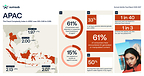
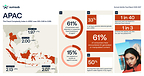
SINGAPORE, Nov. 18, 2026 /PRNewswire/ — Sumsub, the first AI-powered trust infrastructure, has released its Identity Fraud Report 2026-2027*. Now in its sixth edition, the report finds that Asia Pacific (APAC) accounted for a third (33%) of all fraud networks detected globally, more than any other region, and recorded close to a million confirmed fraud attempts, the highest of the six regions.

Fraud networks are coordinated groups of linked identities, accounts and devices run by organized fraudsters. Across APAC, around 1 in 40 approved people (2.4%) are linked to a detected fraud network, and around one-third of these links appear only after they have successfully passed identity verification. This suggests many legitimately verified accounts are later sold or handed over to fraudsters, often for use as money mules: accounts that receive and move stolen funds on a fraudster’s behalf.

Increasingly sophisticated tactics have led Sumsub to the creation of Sumsub’s new Fraud Complexity Index (FCI), which scores each confirmed case on the tooling, coordination and number of techniques behind it. This year, the report finds that the FCI rose from 2.1 to 2.2 globally.

Key APAC findings from the report include:

APAC hotspots for fraud networks: The Philippines recorded the largest number of networks in the region (17% of APAC networks), closely followed by India, while the largest single network was detected in Thailand, with 3,018 linked users.Fraud is becoming more complex: APAC’s FCI rose 14% to 2.09. Hong Kong’s FCI rose 7% to 1.97. APAC businesses also reported fraudster-operated AI agents (11%) more often than any other region.AI agents are adding new exposure: 61% of APAC businesses have detected or suspected fraud involving an AI agent, among the highest levels of any region. APAC businesses lead on limiting agent permissions and on suspending or revoking access, but these controls remain limited: only 15% can suspend or revoke an agent’s access, and 40% verify the human that authorizes one.Deepfake activity is spreading even where overall fraud is declining: Deepfakes rose sharply in Pakistan (+217%), the Philippines (+125%), India (+103%) and Hong Kong (+72%). In Indonesia, the overall fraud rate fell 64% while deepfakes increased 69%.APAC consumers are the most exposed to AI-generated content: 61% of APAC consumers have encountered AI-generated or manipulated content, the highest share of any region. Among those who experienced a fraud attempt, 44% said AI-generated content played a part.Singapore sees fewer, but more complex, attacks: Singapore’s fraud rate fell 36% year-on-year to 1.0%, while its FCI rose 9% to 2.13, above the APAC average. Deepfakes in Singapore fell 37%.Japan has the region’s highest and fastest-growing fraud rate: Japan’s fraud rate rose 219% year-on-year to 5.1%, the highest in APAC.Legitimate AI agents are being turned against businesses: Globally, among businesses that detected or suspected AI-agent fraud, 49% saw a legitimate agent manipulated by malicious instructions, and 30% saw an agent initiate a purchase, payment or transfer.

Verified accounts become building blocks for fraud networks

A single fraudulent account rarely tells the whole story. Fraud networks become visible through shared devices, contact details, payment instruments and document templates that an account-by-account review cannot show. Some of these links appear only after onboarding, as legitimately verified accounts are sold, compromised or otherwise repurposed. Passing KYC confirms an identity at a single point in time, but does not guarantee how an account will be used afterwards.

Businesses recognize the challenge, but few are equipped for it. 29% of APAC businesses say larger linked networks are making fraud harder to detect, the highest share of any region, yet only 25% use fraud network analysis.

In Southeast Asia, organized scam compounds have become highly mobile, relocating sites and reusing the same infrastructure when authorities intervene. Their human cost is significant: by April, Nepal reported that 612 of its citizens had been rescued from online scam centers across Southeast Asia and repatriated.

The impact is felt on both sides of the transaction. Among APAC businesses that experienced fraud, impersonation of a business, employee or supplier was the most commonly reported form of external fraud (42%), the highest of any region, followed by scam-induced payments (40%). Among APAC consumers, 79% experienced fraud in the past 12 months. Half of victims lost money, and 51% of those recovered none of it.

“A scam network is designed to look like a thousand ordinary people doing ordinary things. Every account is verified, and every document is real, because the person holding it was recruited, paid, or coerced into opening it, so nothing trips a wire on its own,” said Erin West, anti-scam advocate, former Deputy District Attorney and founder of Operation Shamrock, who has investigated scam compounds in Cambodia and Thailand. “Look past the person in front of you to the people behind them. The networks already cooperate beautifully with one another, and it’s time we caught up.”

Fraud grows more complex as it shifts across the region

While fraud rates fell in four of six regions globally, the FCI rose in all six. In APAC, it rose 14%, from 1.83 to 2.09.

Rather than rising everywhere at once, fraud is shifting between APAC markets and techniques. Japan’s fraud rate rose 219%, while Singapore’s fraud rate fell 36%, but its FCI rose 9%, above the regional average. In Hong Kong, fraud rate edged up 5% as deepfakes there rose 72%. APAC also leads all regions in the share of businesses saying deepfakes (31%) and synthetic identities (26%) are making fraud harder to detect while QR-code redirection (18%) and device or location manipulation (14%) were also reported more often than anywhere else.

The region also has strong foundations to respond. APAC leads every other region in digital identity wallet adoption: 50% of consumers have used a government digital identity wallet, and 65% say they would be comfortable using one. Banks and financial services remain the most trusted online category, with 74% of APAC consumers reporting high or full trust.

“Fraud in APAC isn’t rising everywhere at once. It is shifting between markets, techniques and stages of the customer lifecycle,” said Penny Chai, Vice President, APAC at Sumsub. “The region is home to some of the world’s most mature digital economies, alongside markets where digital services and organized scam operations are expanding quickly. Those markets are deeply connected, and fraud networks move easily between them. But APAC also has the tools to respond, from progressive regulation to world-leading digital identity adoption and high consumer trust in financial services. The task now is to use them together, so that trust doesn’t end at onboarding.”

Regulators and industry move towards collective action

Regulators across the region are shifting responsibility for scam payments and mule accounts towards the institutions that send, receive or facilitate them, and building new ways to share fraud intelligence. In Singapore, the Protection from Scams Act and the Scams (Countermeasures) and Other Matters Act 2026 give authorities new powers to protect people at risk of being scammed and to disrupt accounts and services linked to scams, while the National Scams List supports the exchange of information on suspicious scam accounts. Hong Kong has created a legally protected mechanism for banks to share information, and Thailand has embedded mule-account controls across banks, payment businesses and crypto operators.

The same collective approach is needed as AI agents take on more tasks. Launched in September, the Sumsub Agentic AI Council brings together cross-sector experts across APAC to develop practical guardrails for AI agents, including agent identity, delegated authority and accountability.

To explore the Sumsub Identity Fraud Report 2026-2027 in full, please download it here: http://sumsub.com/identity-fraud-report-2026/

About Sumsub

Sumsub is the first AI-powered trust infrastructure for compliance operations at scale. It connects identity and business verification, fraud prevention, transaction monitoring, and risk workflows, helping teams reduce manual work and enter new markets.

Trusted by over 4,000 clients across financial services, crypto, mobility, trading, marketplaces, education, and iGaming, including Bybit, Bitpanda, Wirex, Avis, Vodafone, Duolingo, and Kaizen Gaming.

*Methodology

The Sumsub Identity Fraud Report 2026-2027 analyzes more than 5.8 million fraud samples from Sumsub’s internal identity verification and user activity data, comparing 2025 and 2026 across multiple regions and industries. To ensure statistical reliability, only jurisdictions with more than 15,000 verification attempts during the reporting period were included. A network connection refers to a link between an applicant and a detected fraud network at any point in the applicant lifecycle, and is a risk signal rather than proof that the applicant is fraudulent.

The report also draws on Sumsub’s Fraud Exposure Survey 2026, conducted in August 2026 among more than 1,400 fraud and risk professionals and more than 1,500 end users across 21 markets, including Hong Kong, Indonesia, the Philippines, Singapore and Thailand in APAC.

View original content to download multimedia:https://www.prnewswire.com/apac/news-releases/asia-pacific-accounts-for-a-third-of-the-worlds-fraud-networks-as-identity-fraud-grows-more-complex-sumsub-302942447.html

SOURCE Sumsub

Continue Reading

Technology

Archbridge Capital Partners Appoints Mark Jones as Chief Executive Officer

Published

on

By

Former Wells Fargo Global Head of FX and Co-Head of Macro to lead the firm’s next phase of growth and international expansion

HONG KONG, Nov. 18, 2026 /PRNewswire/ — Archbridge Capital Partners (“Archbridge”), a Hong Kong-based alternative fixed income investment manager focused on private credit, today announced the appointment of Mark Jones as Chief Executive Officer and Managing Partner, effective immediately. The newly created role reflects the firm’s ambition to institutionalise its platform and expand internationally. Jones joins Anthony Leung, Chief Investment Officer, and Jenny Wong, Chief Operating Officer, in the firm’s senior leadership.

Established in 2020, Archbridge has focused on private credit since 2023, expanding its investment offerings during that period. The firm now invests predominantly in secured, short-dated private credit across Asia Pacific, with a focus on disciplined underwriting and regular income distributions, an approach that has resonated with family offices in the region.

Jones brings 28 years of global financial markets experience across London, Hong Kong and New York. He previously served as Global Head of Foreign Exchange and Global Co-Head of Macro at Wells Fargo, where he was a member of the bank’s Management Committee. Earlier, he was Head of Wells Fargo Securities Asia and a Managing Director at UBS, leading FICC Distribution across EMEA and Asia Pacific. Before joining Archbridge, he advised private credit funds and alternative asset managers through Kingswood Capital Solutions and was a Venture Partner at Volution, a UK venture capital firm investing in high-growth fintech and AI companies.

As CEO, Jones will lead Archbridge’s global strategy and international expansion, with a focus on building out the firm, strategic partnerships and technology-led innovation across the investment platform. He will work closely with the firm’s investment and operating leadership.

“Mark has led fixed income businesses at the highest level across three continents,” said Anthony Leung, Chief Investment Officer. “His appointment is consistent with our ambition to significantly broaden both our investor and borrower client base.”

“Archbridge is built on strong relationships and disciplined execution,” said Jenny Wong, Chief Operating Officer. “Mark will help us scale internationally while strengthening our institutional capabilities.”

“Over 25 years in global banking, I have seen the evolving financing needs of businesses across Asia Pacific and the growing opportunity for specialist credit managers,” said Mark Jones, Chief Executive Officer. “Archbridge is well positioned to meet that demand by combining rigorous credit underwriting with enduring investor relationships through an institutional-grade platform.”

ABOUT ARCHBRIDGE CAPITAL PARTNERS

Established in 2020, Archbridge Capital Partners is a Hong Kong-based alternative fixed income investment manager focused on private credit. The firm seeks attractive risk-adjusted returns through disciplined credit underwriting, active portfolio management and capital preservation. Archbridge Capital Partners Limited is licensed by the Hong Kong Securities and Futures Commission for Type 4 (Advising on Securities) and Type 9 (Asset Management) regulated activities. archbridgecap.com

View original content to download multimedia:https://www.prnewswire.com/apac/news-releases/archbridge-capital-partners-appoints-mark-jones-as-chief-executive-officer-302943079.html

SOURCE Archbridge Capital Partners

Continue Reading

Trending