Connect with us

Technology

Smart Ovens Market size is set to grow by USD 519.8 million from 2024-2028, Changing lifestyles in developed and developing economies boost the market, Technavio

Published

on

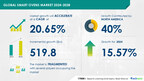
NEW YORK, July 26, 2024 /PRNewswire/ — The global smart ovens market size is estimated to grow by USD 519.8 million from 2024-2028, according to Technavio. The market is estimated to grow at a CAGR of 20.65% during the forecast period. Changing lifestyles in developed and developing economies is driving market growth, with a trend towards high demand for energy-efficient microwave ovens. However, safety issues in mobile applications poses a challenge. Key market players include Alto Shaam Inc., Brandt Group, Breville Group Ltd., Electrolux group, General Electric Co., GoWISE USA, Haier Smart Home Co. Ltd., Hitachi Ltd., JS Global Lifestyle Co. Ltd., LG Electronics Inc., Maestro Food Co., MIDEA Group Co. Ltd., Miele and Cie. KG, Panasonic Holdings Corp., Robert Bosch GmbH, Samsung Electronics Co. Ltd., Sharp Corp., Smeg S.p.a., Weber Stephen Products HK Ltd., and Whirlpool Corp..

Get a detailed analysis on regions, market segments, customer landscape, and companies- View the snapshot of this report

Smart Ovens Market Scope

Report Coverage

Details

Base year

2023

Historic period

2018 – 2022

Forecast period

2024-2028

Growth momentum & CAGR

Accelerate at a CAGR of 20.65%

Market growth 2024-2028

USD 519.8 million

Market structure

Fragmented

YoY growth 2022-2023 (%)

15.57

Regional analysis

North America, Europe, APAC, South America, and Middle East and Africa

Performing market contribution

North America at 40%

Key countries

US, China, Japan, Germany, and UK

Key companies profiled

Alto Shaam Inc., Brandt Group, Breville Group Ltd., Electrolux group, General Electric Co., GoWISE USA, Haier Smart Home Co. Ltd., Hitachi Ltd., JS Global Lifestyle Co. Ltd., LG Electronics Inc., Maestro Food Co., MIDEA Group Co. Ltd., Miele and Cie. KG, Panasonic Holdings Corp., Robert Bosch GmbH, Samsung Electronics Co. Ltd., Sharp Corp., Smeg S.p.a., Weber Stephen Products HK Ltd., and Whirlpool Corp.

Market Driver

The kitchen and home appliances sector accounts for one-quarter of a family’s energy consumption. Microwave ovens, as energy-efficient kitchen devices, have gained popularity due to their ability to cook food using less energy compared to traditional gas stoves or ovens. Vendors, such as LG Electronics Inc. And Samsung Electronics Co. Ltd., manufacture energy-efficient models like the NeoChef smart inverter microwave oven and the NV7B50TAK Series 5 Smart Oven with Cook Flex and Air Fry, which offer energy savings of up to 25%. With the increasing adoption of smart home systems, the demand for energy-efficient smart ovens is expected to rise, leading to market growth during the forecast period. 

Smart ovens are the latest trend in small kitchen appliances, offering convenience for busy lifestyles with advanced cooking processes. These ovens feature device connectivity, allowing hand-free control and distant cooking options. Their visually appealing designs make them a great addition to functional kitchen spaces. Other popular small appliances include juicers, coffee maker machines, electric kettles, microwaves, and more. Smart technology, such as Wi-Fi connectivity and smartphone apps, transforms these appliances into connected home devices. However, security concerns, data privacy, and hacking are important considerations. Manufacturers offer multiple function settings, temperature control, and additional cooking capabilities, ensuring energy efficiency and convenience. Tech-savvy consumers seek smart home devices that cater to health and wellness, including air fryers, blenders, and multi-function appliances. Online shopping, physical stores, and delivery options provide easy access to these smart appliances. Algorithms and personalized product recommendations offer nutritional information, calorie tracking, and recipes, enhancing the user experience. Innovations in single function and household/commercial manufacturing hubs continue to shape the smart oven market. Stay tuned for more updates on this exciting trend. 

Discover 360° analysis of this market. For complete information, schedule your consultation – Book Here!

Market Challenges

Smart ovens, connected through mobile applications, offer convenience and flexibility for consumers. The use of SIM cards enables remote control, but network and battery issues on smartphones can disrupt communication, leading to suboptimal oven performance. Vendors must prioritize research and development to ensure the reliability and security of these applications. Mobile application failures pose a significant challenge to the global smart oven market, potentially hindering growth during the forecast period. Consumers require smartphones with robust battery life, high-speed processors, and reliable internet connectivity to effectively manage their smart ovens.The Smart Ovens market is experiencing significant growth due to the increasing demand for convenient and healthy cooking solutions. However, businesses face challenges in this sector. Online sales present opportunities but also require managing store hours and ensuring timely delivery. Product reviews and ratings are crucial for consumer trust, but manual supervision and safety features are essential for kitchen fires. Residential consumers seek energy-efficient, healthy cooking functions, and diet-specific options. Pre-programmed cooking modes and recipe libraries are key selling points, but remote monitoring and voice controls add value. Connected home appliances and digital platforms are the future, but offline channels and consumer electronics moguls remain important players. Counter top segment growth depends on Bluetooth, Wi-Fi, and companion apps. Safety features, nutrition, and energy efficiency are top priorities, with healthy cooking functions gaining popularity.

For more insights on driver and challenges – Request a sample report!

Segment Overview 

This smart ovens market report extensively covers market segmentation by  

Distribution Channel1.1 Offline1.2 OnlineProduct 2.1 Smart microwave oven2.2 Small wall ovenGeography 3.1 North America3.2 Europe3.3 APAC3.4 South America3.5 Middle East and Africa

1.1 Offline-  The offline distribution channel for smart ovens includes hypermarkets, convenience stores, clubhouse stores, specialty stores, and department stores. However, sales through these channels have decreased due to consumers’ shifting preference towards online shopping. To boost offline sales, vendors are partnering with local retailers and household appliance retail chains, such as Haier Group’s collaboration with GOME Retail and Suning in China. Vendors also establish clubs, like Haier Smart Home Co. Ltd.’s V58 and V140 clubs, to maintain relationships with regional distributors. Offline stores offer advantages, such as in-person technology demonstrations, which reduce confusion for customers. Elderly consumers, who value safety measures, also prefer purchasing from physical stores. Despite the decline in offline sales, extensive marketing efforts will sustain sales and contribute to the smart oven market’s growth during the forecast period.

For more information on market segmentation with geographical analysis including forecast (2024-2028) and historic data (2017-2021) – Download a Sample Report

Learn and explore more about Technavio’s in-depth research reports

The global smart home appliances market is experiencing robust growth, driven by advancements in IoT technology and increasing consumer demand for convenience and energy efficiency. Concurrently, the global commercial combi ovens market is expanding as businesses seek versatile cooking solutions that offer efficiency and precision. In the residential sector, the microwave oven market is also on the rise, with innovations enhancing functionality and design. Together, these markets reflect a trend toward smart, efficient, and multifunctional kitchen appliances across both commercial and residential spaces.

Research Analysis

The Smart Ovens market is experiencing significant growth due to the increasing popularity of small kitchen appliances that offer convenience for busy lifestyles. These ovens incorporate advanced technologies such as device connectivity, hand-free control, and distant cooking options, making them a must-have for visually appealing and functional kitchen spaces. Smart Ovens are not just limited to cooking processes but also include juicers and other small appliances. Online shopping platforms and physical stores offer various options for purchasing these devices, with delivery being a convenient choice for customers. Digital platforms provide algorithms for personalized product recommendations, nutritional information, and calorie tracking, enhancing the user experience. Countertop segment smart ovens are equipped with Bluetooth, Wi-Fi, and companion apps for voice controls, cooking temperature settings, preheat functions, and safety features. These features make Smart Ovens an essential addition to modern kitchens, catering to the demands of tech-savvy consumers.

Market Research Overview

The Smart Ovens market is witnessing significant growth due to the increasing popularity of small kitchen appliances that cater to busy lifestyles. These ovens offer convenience through cooking processes made easier with smart technology, device connectivity, and hand-free control. With distant cooking options, users can monitor and adjust temperature settings from anywhere, making it a visually appealing and functional addition to modern kitchen spaces. Juicers, coffee maker machines, electric kettles, microwaves, and various other appliances are now being integrated with smart technology, allowing for Wi-Fi connectivity, smartphone apps, and connected homes. However, concerns regarding security, data privacy, and hacking continue to surface as more appliances become part of the smart home ecosystem. Tech-savvy consumers are drawn to the multiple function settings, energy efficiency, and sensor technology of these smart appliances, which also cater to health and wellness trends with air fryers, blenders, and other multi-function devices. Affordability, traditional ovens, and counter-top vs built-in options continue to be key considerations for both residential and commercial markets. Online shopping, physical stores, and delivery options offer flexibility for consumers, while algorithms, personalized product recommendations, nutritional information, calorie tracking, and recipes help make meal decisions based on dietary preferences and restrictions. Smart home technology integration and kitchen design trends further enhance the appeal of these high-quality, premium home appliances.

Table of Contents:

1 Executive Summary
2 Market Landscape
3 Market Sizing
4 Historic Market Size
5 Five Forces Analysis
6 Market Segmentation

Distribution ChannelOfflineOnlineProductSmart Microwave OvenSmall Wall OvenGeographyNorth AmericaEuropeAPACSouth AmericaMiddle East And Africa

7 Customer Landscape
8 Geographic Landscape
9 Drivers, Challenges, and Trends
10 Company Landscape
11 Company Analysis
12 Appendix

About Technavio

Technavio is a leading global technology research and advisory company. Their research and analysis focuses on emerging market trends and provides actionable insights to help businesses identify market opportunities and develop effective strategies to optimize their market positions.

With over 500 specialized analysts, Technavio’s report library consists of more than 17,000 reports and counting, covering 800 technologies, spanning across 50 countries. Their client base consists of enterprises of all sizes, including more than 100 Fortune 500 companies. This growing client base relies on Technavio’s comprehensive coverage, extensive research, and actionable market insights to identify opportunities in existing and potential markets and assess their competitive positions within changing market scenarios.

Contacts

Technavio Research
Jesse Maida
Media & Marketing Executive
US: +1 844 364 1100
UK: +44 203 893 3200
Email: media@technavio.com
Website: www.technavio.com/

View original content to download multimedia:https://www.prnewswire.com/news-releases/smart-ovens-market-size-is-set-to-grow-by-usd-519-8-million-from-2024-2028–changing-lifestyles-in-developed-and-developing-economies-boost-the-market-technavio-302206572.html

SOURCE Technavio

Continue Reading
Click to comment

Leave a Reply

Your email address will not be published. Required fields are marked *

Technology

Neusoft Showcases Full-Stack & Global Innovations at Auto China 2026

Published

on

By

BEIJING, April 26, 2026 /PRNewswire/ — At Auto China 2026, Neusoft Corporation hosted a press conference on April 25th and announced three key strategic moves: the iteration of Neusoft OneCoreGo® Global In-Vehicle Intelligent Mobility Solution 7.0, the launch of Neusoft NAGIC.AI Cockpit Software Platform, and the strategic upgrade of its subsidiary, Neusoft Smart Go. By leveraging full-stack technology and a global ecosystem to drive innovation and empowerment, Neusoft is transforming vehicles into proactive, connected and collaborative mobile intelligent spaces.

OneCoreGo® Global In-Vehicle Intelligent Mobility Solution 7.0: An Evolved AI Companion for Global Intelligent Mobility

Intelligent mobility requires proactive perception, scenario integration, and global connectivity to meet personalized user needs and complex driving scenarios. Neusoft, whose products cover over 130 countries and regions worldwide, addresses these challenges with its OneCoreGo® Global In-Vehicle Intelligent Mobility Solution 7.0 through AI-driven innovation and global ecosystem collaboration. Powered by One Mate’s cross-agent collaboration and a sub-product matrix including One Map, One Sight, One Cloud, One Pay, One Store, One Link, and One Guard, the solution delivers full-link global mobility services spanning navigation, in-cabin AR, payment, app ecosystem services, connectivity and security. By breaking down functional silos, it streamlines multi-step operations into a single “depart” command, leveraging full-stack AI technology across perception, decision-making, interaction, and execution processes.

Guan Xin, Vice President of Neusoft and General Manager of Neusoft Automotive Innovative Solutions Division, said, “Adhering to the core principles of AI and globalization, OneCoreGo® 7.0 keeps innovating, evolving into a globally intelligent mobility companion that truly understands user needs.”

To enhance driving safety and mobility efficiency, OneCoreGo® 7.0 has also comprehensively upgraded its sub-products: One Map Global Navigation newly introduces 3D city effects, 3D lane-level maps, and traffic light guidance, offering dedicated solutions for two-wheelers and commercial vehicles as well. One Sight AR For Car improves navigation display effects, reducing instances of taking wrong routes. One Pay In-Vehicle Payment achieves over 90% payment coverage for parking services across core European cities. Combined with One Cloud’s global compliance cloud monitoring platform and One Guard’s full-stack vehicle networking security services, it creates a truly comprehensive OneCoreGo® Global In-Vehicle Intelligent Mobility Solution.

Neusoft NAGIC.AI Cockpit Software Platform: Dual-track Architecture for AI Integration in Every Vehicle

Amid the AI-driven transformation of the automotive industry, the market faces two challenges: limited computing power in legacy vehicles and high adaptation difficulties for next-gen models. Neusoft’s NAGIC.AI Cockpit Software Platform adopts a flexible “distributed + centralized” dual-track architecture approach. For existing vehicle models, it introduces the AI BOX solution, rapidly boosting computing power via external AI computing units, significantly reducing upgrade costs and timelines. For new vehicle models built on next-gen central computing platforms, Neusoft provides a full-stack AI cockpit software product suite, meeting automakers’ stringent requirements for system stability, reliability, and full-domain control.

Pang Hongyan, Vice President of Neusoft and General Manager of the Automotive Intelligent Software Division, said, “Our dual-track architecture enables every vehicle to embrace AI and enjoy an intelligent future. Both existing models and new-generation vehicles can find the most suitable path to intelligentization.”

Moreover, Neusoft’s NAGIC.AI Cockpit Software Platform features scenario-based, human-centric AI Agents seamlessly integrating driving safety, occupant care services, intelligent assisted driving and in-cabin entertainment. Neusoft also collaborates with global ecosystem partners to drive intelligent upgrades of in-cabin interaction products, fostering a more open and dynamic intelligent cockpit ecosystem.

Strategic Upgrade of Neusoft Smart Go: A World-leading Provider of Full-Domain Upper-Body Electronics Solutions for Intelligent Vehicles

Aligning with the trend of E/E architecture evolution from distributed control to “central computing + zonal control”, Neusoft Smart Go, a subsidiary of Neusoft in the field of intelligent vehicle connectivity, has completed a strategic upgrade, aiming to become a global leader in full-domain upper-body electronics solutions for intelligent vehicles.

This strategic upgrade positions Neusoft Smart Go to focus on full-domain scenarios in upper-body electronics, building a product matrix covering full-category in-vehicle electronics solutions, including central computing platforms, cockpit-driving-parking integration, intelligent cockpits, intelligent communications, intelligent audio systems, and zonal control units, and pioneering the integration of large model algorithms.

Jian Guodong, Senior Vice President of Neusoft and CEO of Neusoft Smart Go, said, “This strategic upgrade represents a significant leap from partial focus to comprehensive layout. Through our dual-track strategy of high-end cutting-edge solutions and mature standardized products, we can flexibly meet the mass production needs of vehicle models across different regions and price segments worldwide.” Neusoft Smart Go will provide mass-producible, adaptable hardware-software integrated solutions, empowering global automakers in achieving intelligent transformation.

Neusoft’s President, Mr.Gai Longjia stated, “In the future, Neusoft Smart Go will create stronger synergy with Neusoft Corporation by sharing internal technologies and capabilities while responding jointly to external demands. This specialized yet collaborative model will preserve business unit’s agility and expertise while enhancing Neusoft’s full-stack technological advantages.”

As a trusted partner in a smarter world, Neusoft is committed to collaborating with global automakers and ecosystem partners to build an open and inclusive intelligent automotive community together for the future of global mobility.

For more information about Neusoft, please visit www.neusoft.com.


View original content:https://www.prnewswire.com/apac/news-releases/neusoft-showcases-full-stack–global-innovations-at-auto-china-2026-302753701.html

SOURCE Neusoft Corporation

Continue Reading

Technology

Lianlian DigiTech Returns to Money20/20 Asia to Expand Partnerships, Share Industry Trends, and Explore AI-Enabled Global Financial Infrastructure

Published

on

By

BANGKOK, April 26, 2026 /PRNewswire/ — Lianlian DigiTech, a leading global provider of digital payment services, was once again invited to participate in Money20/20 Asia, one of the world’s most influential fintech gatherings, held in Bangkok, Thailand from April 21 to 23. At the event, the company presented its latest developments in cross-border payment infrastructure, technology innovation, and ecosystem collaboration, offering a comprehensive view of its work enhancing global cross-border payment capabilities.

During the conference, Lianlian DigiTech announced a strategic partnership with UK-based fintech company USI Money to further strengthen its global cross-border payment network, delivering more efficient and reliable fund flows for merchants worldwide. Shen Enguang, Co-President of Lianlian DigiTech; Mark Ma, Head of Global Banking Partnership at LianLian Global; and Bryan Jiang, General Manager Hong Kong of LianLian Global, attended the event and engaged with representatives from international financial institutions. They shared perspectives on fintech trends and global payment innovation, offering industry insight into the continued evolution of a more integrated and interoperable cross-border payments ecosystem.

Building a Borderless Payment Network with Global Partners Including USI Money

At the event, Lianlian DigiTech formalized a strategic collaboration with London-headquartered USI Money to further develop its global payment infrastructure.

The partnership will focus on cross-border remittance and foreign exchange services, combining both companies’ technological capabilities and resources to deliver a one-stop payment and collection solution for global businesses. The offering is built to be efficient, secure, and cost-effective, improving overall fund flow efficiency and streamlining foreign exchange execution.

Syed Bukhari, Group Chief Business and Operating Officer at USI Money, said: “Our partnership with Lianlian will strengthen our remittance capabilities, creating greater value for our customers through broader network coverage and improved transaction performance.”

Bryan Jiang, General Manager Hong Kong of LianLian Global, said: “By leveraging the complementary strengths of our ecosystem partners in technology and compliance, Lianlian will continue to scale its global payment network and improve transaction efficiency. We remain committed to enhancing financial connectivity across global financial markets and delivering more efficient and reliable cross-border payment solutions for our customers.”

Founded in 2009 and listed on the Main Board of the Hong Kong Stock Exchange in 2024 (2598.HK), Lianlian DigiTech is a China-based, globally focused digital payment company with increasingly integrated AI capabilities across its platform. Guided by its mission of “Connecting the world, Empowering global commerce,” the company focuses on developing a trusted and scalable financial infrastructure. As of the end of 2025, Lianlian DigiTech has built a cross-border payment network covering more than 100 countries and regions, serving over 10.4 million customers worldwide.

USI Money is a foreign exchange and international remittance service provider offering tailored cross-border financial solutions for businesses and individuals. With competitive real-time exchange rates and efficient execution as its core strengths, the company delivers fast, secure, and reliable global fund transfers.

In addition, Lianlian DigiTech co-hosted a networking session with Unlimit during the event, providing a forum for industry dialogue. The session brought together a broad group of fintech partners to explore collaborative models and help foster a more connected ecosystem.

Industry Roundtables: Unlocking Layered Collaboration in AI-Driven Cross-Border Payments and Advancing Financial Inclusion in Emerging Markets

At the same time, Mark Ma and Bryan Jiang were invited to the themed roundtable discussions, where they shared insights drawn from industry practice and outlined new approaches to aligning fintech innovation with the global financial system.

At the roundtable on “Fintech and Banks,” Mark Ma noted that the global payment system is rapidly shifting from isolated capabilities to a layered, collaborative model. Banks continue to serve as the foundational infrastructure, responsible for clearing networks and liquidity management. Fintech firms like Lianlian, meanwhile, build on top of this foundation to deliver application-layer services for businesses, transforming complex cross-border payment channels into more accessible solutions that support a wider range of practical business scenarios. He also emphasized fintech’s growing role in compliance and value creation. By embedding risk controls and verification processes into technology workflows, fintech companies can act as compliance intermediaries, improving efficiency while filtering risk and enabling banks to operate more effectively at scale. Meanwhile, insights derived from transaction data and business flows allow for more precise evaluation of small and medium-sized businesses, shifting capital allocation from experience-based decisions to data-driven approaches and improving access to financial services.

At the roundtable titled “Different Worlds, Shared Challenges: Bridging Emerging Markets,” Bryan Jiang pointed out that the core of financial inclusion is shifting from scale of coverage to practical usability in everyday financial activity. The ability to serve underserved segments such as small and micro merchants and overseas workers in a sustained and reliable manner ultimately depends on continuous improvements in product design and operational capabilities. Using emerging markets as an example, Jiang explained that small and medium-sized businesses in these regions often face challenges such as difficult account setup, complex cross-border collections, high foreign exchange costs, and multi-layered tax requirements. Many existing solutions still follow traditional business-focused models, resulting in cumbersome KYB processes and lengthy review cycles that are misaligned with the asset-light, high-frequency, fast-turnover nature of these businesses. In response, Lianlian has lowered barriers to fund flows by offering local collection accounts, optimizing foreign exchange mechanisms, and improving settlement efficiency. The company has also restructured account architecture, streamlined review processes, and enhanced fund visibility, creating a more seamless and intuitive user experience that better aligns financial services with its clients’ business operations and day-to-day activities.

As digital technologies increasingly integrate with the real economy, innovations in AI and blockchain are reshaping the foundations of global financial services. Lianlian DigiTech has long invested in AI capabilities, global compliance, and the growth of its international service network. Its broad licensing coverage, regulatory track record, localized service capabilities, and technical reliability have earned the trust of regulators, customers, and partners worldwide.

Looking ahead, Lianlian DigiTech will continue to build on its cross-border expertise and compliance experience to further develop its AI capabilities and deepen collaboration with global partners. The company aims to extend its role beyond payment network services into more integrated financial infrastructure solutions. Lianlian DigiTech remains committed to serving as a trusted platform for global financial transactions in an increasingly digital environment, enabling businesses and individuals worldwide to access faster, more efficient, and more seamless cross-border financial services.

View original content:https://www.prnewswire.com/apac/news-releases/lianlian-digitech-returns-to-money2020-asia-to-expand-partnerships-share-industry-trends-and-explore-ai-enabled-global-financial-infrastructure-302753667.html

SOURCE LianLian Global

Continue Reading

Technology

The Building & Furniture Category Highlights Sustainable and Human‑Centric Design at the 139th Canton Fair

Published

on

By

GUANGZHOU, China, April 26, 2026 /PRNewswire/ — Phase 2 of the 139th Canton Fair has seen the Building & Furniture category emphasize green Infrastructure and human-centric design.

A major highlight of the building and decorative materials section is the introduction of photovoltaic marble-textured cladding. This innovative surfacing material bridges the gap between high-end aesthetics and renewable energy. Unlike traditional solar panels that rely on glass, this non-opaque cladding uses precise microscopic structures to guide light to internal PV cells.

This technology offers 60% higher efficiency than traditional transparent solar systems while reducing carbon emissions by over 50%. Its ability to reproduce stone, wood, or brick‑like 3D textures allows architects to integrate power generation into a wide range of building styles without the industrial appearance of traditional solar panels.

Indoor environments are also becoming smarter and safer. Manufacturers are showcasing high-efficiency antibacterial surfacing, utilizing visible light catalysis to provide 24-hour protection against mold and bacteria. These advanced decorative papers and panels are becoming the new standard for high-end interior decoration, prioritizing long-term hygiene in residential and commercial spaces.

The sanitary ware sector is increasingly focused on the aging global population and those with limited mobility. A standout innovation is the electric lift-and-rotate shower chair. Designed for the dry-wet separation bathroom layout, it allows users to sit in a dry area and be safely rotated and lifted into the shower via remote control. This waterproof, low-voltage system provides dignity and independence for the elderly while reducing the physical strain on caregivers.

Hygiene and ease of maintenance have also seen a breakthrough with wall-mounted toilets. By moving the lid connection to the tank wall and adopting a mortise‑and‑tenon structure, the design eliminates the hard‑to‑clean areas where bacteria typically accumulate. Many of these units also incorporate ergonomic grab bars directly into the frame, blending safety with a minimalist aesthetic.

In the sports and leisure industry, the shift toward sustainability is seen in non-infill synthetic turf. This next-generation football grass eliminates the need for rubber granules or sand, providing a natural touch and superior shock absorption while significantly reducing maintenance costs and microplastic pollution.

All these innovations demonstrate how the Building & Furniture sector is advancing toward greener materials, smarter functionality, and more human‑centered design, setting new benchmarks for the future of living spaces.

For pre-registration, please click: https://buyer.cantonfair.org.cn/register/buyer/email?source_type=16

Photo – https://mma.prnewswire.com/media/2965701/Image1.jpg

View original content:https://www.prnewswire.co.uk/news-releases/the-building–furniture-category-highlights-sustainable-and-humancentric-design-at-the-139th-canton-fair-302753654.html

Continue Reading

Trending