Connect with us

Technology

“8th Annual Cathay Sustainable Finance and Climate Change Summit Sets New Records and Strategies for Net Zero Transition”

Published

on

Global and Domestic Experts Unveil Solutions: Harnessing Energy and Capital for a Sustainable Future

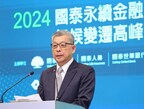
TAIPEI, July 29, 2024 /PRNewswire/ — Cathay Financial Holdings (Cathay FHC) has been hosting the “Cathay Sustainable Finance and Climate Change Summit” for eight consecutive years. This year’s (2024) theme, “Net Zero Transition Competitiveness,” focuses on the development of global climate finance, energy transition, and industrial transformation. The summit brought together prominent figures from government, industry, and academia, both domestic and international, to develop business strategies and solutions for corporate sustainability. The event was opened by Cathay FHC’s Chairman Hong-Tu Tsai, with Financial Supervisory Commission Vice Chairperson Yen-Liang Chen and Ministry of Economic Affairs Vice Minister Ching-Chang Lien delivering opening remarks. The summit also invited World Climate Foundation (WCF) founder/CEO Jens Nielsen and Climate Group Energy Director Sam Kimmins to Taiwan as keynote speakers. The event set a new participation record with approximately 4,800 attendees, representing 82% of the market value of the Taiwan Stock Exchange and 54% of Taiwan’s carbon emissions, indicating a strong corporate response to climate issues.

In his opening remarks, Chairman Tsai highlighted that since Cathay FHC first held the “Climate Change Roundtable Forum” in 2017, Cathay FHC has been striving to exert greater influence. Over the past eight years, Cathay FHC has consistently brought significant international trends into the event, covering topics from climate change to water resources, biodiversity, and natural capital, aiming to serve as a dialogue platform for industry, government, and academia to foster exchanges among all sectors. “Energy and capital are key to net-zero transition, necessitating investments from the financial ecosystem and industrial chain companies while leveraging Taiwan’s significant influence on the global stage,” stated Tsai. Taiwan’s government has also proposed the establishment of the National Climate Change Response Committee, underscoring its strong commitment to climate change countermeasures and elevating it to a significant priority. As a pioneering leader in sustainable finance, Cathay FHC has earned recognition both domestically and internationally for its initiatives in sustainable finance and climate action. Cathay FHC remains committed to supporting Taiwan through practical actions, collaborating with various sectors to drive successful industrial transformation.

Ministry of Economic Affairs Vice Minister Ching-Chang Lien, in his remarks, highlighted Cathay FHC’s proactive sustainability measures, including being the first to provide offshore wind power financing, purchasing REC-bundled green electricity, and hosting climate events for eight consecutive years. He also emphasized the expectation for enterprises to further implement ESG practices. Financial Supervisory Commission Deputy Chairman Yen-Liang Chen mentioned that green finance has entered a new phase as green supply chain finance, and Taiwan has robust industries that support green finance initiatives. The government has also approved insurance funds to invest NT$17.66 billion (approximately US$544.89 million) in green energy power plants. Additionally, there are 185 issues of sustainability-related bonds and 46 ESG-related funds. With financial and institutional support, Taiwan takes lead in responding to climate change.

The first half of the summit focused on “Sustainable Finance.” WCF founder/CEO Jens Nielsen delivered a keynote on “Grasping Global Climate Finance Development Trends,” emphasizing the significance of the upcoming COP29, known as the “Finance COP,” in addressing climate change and biodiversity loss. He noted that financial mechanisms are the driving engine in achieving climate goals, aiming to promote a global low-carbon transition and ensure that capital flows align with climate change adaptation and development paths. Taiwan Stock Exchange Chairman and CEO Sherman H.M. Lin analyzed trends in carbon pricing and climate actions. National Taipei University Professor of Finance and Cooperative Management Chi-Jui Huang explored the current status and trends of Taiwan’s sustainable finance development from an academic perspective. PwC Sustainability Service Company Chairman Eliza Li discussed the relevant financial disclosures that Taiwanese enterprises should implement to align with the IFRS Sustainability Disclosure Standards developed by the International Sustainability Standards Board (ISSB) from an accounting practice perspective.

As a participant in COP official and side events for three consecutive years, and the only Taiwanese financial institution to host a forum in the blue zone, Cathay FHC centered this year’s panel session theme on “Moving Towards COP 29: Accelerating Green Finance for Net-Zero Future.” The discussion included WCF founder/CEO Jens Nielsen, Energy Administration Ministry of Economic Affairs Director General Cheng-Wei Yu, Taiwan Institute for Sustainable Energy Chairman Eugene Chien, and Cathay Life Insurance President Shan-Chi Liu.

The second half of the summit focused on “Energy Transition,” which started with Climate Group Energy Director Sam Kimmins. He analyzed international energy transition trends and Taiwan’s renewable energy development, highlighting the challenges Taiwan faces in promoting Power Purchase Agreements (PPAs). Kimmins suggested that group PPAs for green electricity can enhance small businesses’ access to renewable energy. The comprehensive discussion on “Towards Net Zero: Strategic Planning for Energy Transition” featured Taiwan Institute of Economic Research Chairman Zhong-Shu Wu, Sam Kimmins, Taiwan Power.

Company Chairman Wen-Sheng Tseng, China Steel Corporation Acting Chairman Shyi-Chin Wang, and Delta Electronics Chief Sustainability Officer and Spokesperson Jesse Chou. They discussed promoting public-private collaboration and strategies for achieving net-zero economic goals. The “Industry Transformation Challenges and Opportunities in a Net Zero Economy” panel featured KPMG Sustainability Consulting Managing Director Niven Huang, The Center for Energy and Environmental Research Director, Je-Liang Liou, National Taiwan University Professor of Bioenvironmental Systems Engineering Ching-Pin Tung, Transcene Corporation Chairman Steven Chen, and ASUSTek Computer Inc. Chief Sustainability Officer TS Wu, who shared experiences and insights on achieving net-zero goals and how industries can respond to challenges in transitioning to a net-zero economy.

Cathay FHC is addressing global climate challenges through its commitment to “Sustainable Finance in Action.” By 2050, the company aims to achieve 100% renewable energy use across its global operations. This commitment positions Cathay FHC as a climate finance leader, promoting energy transition through three main pathways: investment and financing in renewable energy, collaboration on renewable energy innovation, and innovation in core competency services. As of the end of 2023, the group has achieved significant milestones, including using 17.95 million kWh of renewable energy, investing in 1,504 MW of solar energy installation capacity, and financing low-carbon initiatives totaling NT$330.5 billion (approximately US$9.47 billion). These efforts underscore the company’s pivotal role in advancing cross-industry energy transition.

View original content to download multimedia:https://www.prnewswire.com/apac/news-releases/8th-annual-cathay-sustainable-finance-and-climate-change-summit-sets-new-records-and-strategies-for-net-zero-transition-302208430.html

SOURCE Cathay Financial Holdings

Continue Reading
Click to comment

Leave a Reply

Your email address will not be published. Required fields are marked *

Technology

Jtibot Showcases Autonomous Outdoor Sweeping Innovation at Interclean Amsterdam 2026, Accelerating European Market Expansion

Published

on

By

AMSTERDAM, April 24, 2026 /PRNewswire/ — Jtibot, a developer of autonomous outdoor cleaning solutions, concluded a successful showcase at Interclean Amsterdam 2026, highlighting its focus on large-scale, AI-driven sweeping for industrial, municipal, and campus environments.

At Hall 8, Booth 538, Jtibot presented its autonomous outdoor sweeper designed for environments exceeding 10,000 sqm. Positioned between traditional equipment and emerging robotics, the system addresses the growing demand for more efficient and less labor-dependent outdoor cleaning operations.

During the exhibition, Jtibot attracted strong interest from European distributors and facility management professionals seeking scalable solutions for large-area maintenance. The company was also featured in an official media interview at the event, reflecting increasing attention toward autonomous technologies in the cleaning industry.

Jtibot’s approach centers on human-machine collaboration. By reducing repetitive manual work while maintaining operational flexibility, its systems support more sustainable and efficient facility management practices. This aligns with broader ESG (Environmental, Social, and Governance) priorities, including improved resource efficiency and enhanced working conditions.

Building on its presence at Interclean, Jtibot is currently advancing discussions with multiple European partners for regional distribution and deployment. The company is also in the final stage of a fleet procurement agreement valued at approximately $1.4 million, signaling early commercial traction in large-scale applications scenarios.

“As outdoor environments continue to grow in scale and complexity, automation is becoming essential,” said Steven, VP at Jtibot. “Our goal is not to replace people, but to empower them—making operations more efficient and labor more sustainable.”

Following Interclean Amsterdam 2026, Jtibot is actively expanding its European partner network and preparing for broader market deployment across key regions, as it accelerates its global commercialization strategy.

About Jtibot
Jtibot specializes in autonomous outdoor sweepers designed for large-scale environments. By combining AI-driven navigation with industrial-grade hardware, the company enables efficient, scalable, and sustainable cleaning operations worldwide.

Photo – https://mma.prnewswire.com/media/2965027/PR_image.jpg

View original content:https://www.prnewswire.co.uk/news-releases/jtibot-showcases-autonomous-outdoor-sweeping-innovation-at-interclean-amsterdam-2026-accelerating-european-market-expansion-302752777.html

Continue Reading

Technology

2U Refinances and Raises Growth Capital

Published

on

By

ARLINGTON, Va., April 24, 2026 /PRNewswire/ — Many education technology companies spent 2024 and 2025 scaling back. New university partnerships slowed as institutions built internal capacity. Against that backdrop, 2U completed a growth recapitalization, with its existing owners putting growth capital into the business alongside a refinancing of its current credit facilities.

The question worth asking is: why now, and what did they see?

2U operates edX, a global online learning platform originally co-founded by Harvard and MIT that now reaches more than 100 million people through over 5,300 programs with 250-plus institutional and enterprise partners. Employees from more than 60% of Fortune 500 companies use edX for professional development. To date, over 76,000 people have graduated from 2U-powered degree programs from leading institutions, including UC Berkeley, Howard University, and Georgetown. The company has been privately held since completing a financial reorganization in 2024, and Kees Bol has served as CEO since January 2025.

Lincoln International, which advised 2U on the transaction exclusively, described the refinancing outcome: extended credit maturities, improved capital structure, and financial flexibility to continue executing on 2U’s long-range plan. Managing Director Alex Stevenson said the deal “reflects the confidence of 2U’s owners in the long-term value of the business.”

Confidence in what, exactly? The AI workforce training market. Skills in AI-affected roles are evolving 66% faster than average according to PwC research, and IDC has estimated that unfilled AI skills gaps could cost the global economy $5.5 trillion. Universities and enterprises are both trying to solve that problem, and both are looking for platforms with the breadth and accreditation backing to do it credibly.

2U’s partnerships are designed for exactly that. IBM’s six technical microcredentials on edX train the engineers and data scientists who build AI systems. Microsoft’s CxO Edge program, launched in late 2025, targets the C-suite executives who need to move from AI pilots to enterprise-wide adoption, part of a Microsoft presence on edX that has drawn over 40,000 learners in the past six months alone.. Oxford’s Faculty of Law program addresses governance: what board members and legal advisors need to understand about AI liability, compliance, and fiduciary responsibility. UC Berkeley’s Master of Information and Data Science (MIDS) online program prepares learners to shape the future of AI and data science with human-centered values and focuses on solving the world’s most pressing data challenges. Each program exists because a specific employer community identified a specific gap.

That’s the differentiation investors are backing. Generic online courses are abundant. Programs designed in partnership with IBM, Microsoft, UC Berkeley, and Oxford’s Faculty of Law and delivered on a platform with proven Fortune 500 adoption are not.

Credentials earned on 2U’s edX platform carry the academic standing of the issuing partner institutions. Its programs span executive education, professional certificates, microcredentials, and accredited online degree programs, all powered by 2U’s infrastructure but conferred by partner universities and institutions with their own accreditation.

HolonIQ data puts the broader trend in context: microcredentials grew from 7% of global online program offerings in 2022 to 19% by 2025. The shift toward stackable, job-aligned credentials, in addition to traditional degrees,  is real and accelerating. The global online education market is projected to exceed $200 billion as that trend matures. 2U’s decision to build depth in short-form, employer-designed AI training aligns directly with where learner demand is heading.

None of this is abstract for the organizations that use edX at scale. When a company needs to certify 500 engineers on AI development, or prepare its entire C-suite for a board presentation on AI governance, the platform’s reach and credential quality both matter. A certification backed by IBM and a degree from institutions such as Berkeley carries weight with hiring managers in a way a generic online course does not.

The refinancing extends 2U’s ability to keep building that catalog and the partnerships behind it. Stevenson framed it as giving the management team “the financial foundation to keep executing on its mission.” The mission, under Bol’s leadership, is straightforward: help universities and enterprises close the AI skills gap by meeting learners where they are, at the pace the market demands.

The investors who contributed growth capital made a bet that a platform that reaches 100 million people and has 250-plus partners, including IBM, Microsoft, UC Berkeley, and Oxford in its program portfolio, is better positioned to close that gap than any platform that would need to build from scratch.

Media Contact:
Kees Bol
social@2u.com 

Logo: https://mma.prnewswire.com/media/2965091/2U_Logo.jpg


View original content:https://www.prnewswire.co.uk/news-releases/2u-refinances-and-raises-growth-capital-302752776.html

Continue Reading

Technology

Autonomous Resource Corporation and Oak Ridge National Laboratory Partner to Accelerate AI-Enabled Defense Manufacturing at National Scale

Published

on

By

Strategic partnership combines ORNL’s supercomputing and advanced manufacturing expertise with ARC’s autonomous production platform to address critical defense industrial base shortfalls

OAK RIDGE, Tenn. and NEW YORK, April 24, 2026 /PRNewswire/ — Autonomous Resource Corporation (ARC), a Delaware corporation, and Oak Ridge National Laboratory (ORNL), the U.S. Department of Energy’s largest multi-program science and energy laboratory, today announced a Memorandum of Understanding (MOU) establishing a strategic public-private partnership to accelerate the on-demand manufacture of qualified, mission-critical components for U.S. national security applications.

The partnership combines ORNL’s HPC and manufacturing capability with ARC’s ARCNet distributed AI-manufacturing platform

The partnership — known as the Exascale Foundry — will combine ORNL’s computing and manufacturing capabilities with ARC’s ARCNet distributed manufacturing platform to create a closed-loop system for AI-enabled materials and manufacturing qualification and autonomous production at defense-relevant scale.

“The United States faces an urgent need to rebuild its manufacturing capacity for critical defense components,” said Bryan Wisk, CEO of ARC. “By combining ORNL’s world-leading computational, materials science, and manufacturing capabilities with our autonomous production infrastructure, we can compress manufacturing and qualification timelines from years to months and deliver manufactured parts at the volumes the warfighter needs.”

Partnership Highlights

Under the MOU, ARC will deploy advanced manufacturing equipment organized into seven production nodes connected to ORNL via ARC’s secure ARCNet infrastructure. ARC will expand capability through ORNL’s high-performance computing (HPC) resources.

ORNL will provide access to HPC expertise for simulation-driven materials characterization and qualification, along with technologies developed at the Manufacturing Demonstration Facility (MDF), the Department of Energy’s only large-scale, open-access advanced manufacturing facility. ORNL’s Peregrine AI software, which has analyzed over 1.9 million additive manufacturing layers, will be integrated into ARC’s production nodes for real-time adaptive control and quality assurance.

This partnership also supports DOE’s Genesis Mission, a national initiative to build the world’s most powerful scientific platform to accelerate discovery science, strengthen national security and drive energy innovation. ARC and ORNL’s collective capabilities will help reenvision advanced manufacturing and industrial productivity, accelerate defense production and qualification, and secure critical supply chain elements.

“ORNL’s advanced manufacturing and computing capabilities are uniquely positioned to help accelerate the transition of laboratory-proven technologies into production-scale defense manufacturing,” said Moe Khaleel, ORNL associate laboratory director for National Security Sciences. “Partnering with ARC ensures we are transitioning our research into real production outcomes.”

The initial implementation will focus on high-temperature nickel superalloy turbine components for autonomous air vehicle engines using metal binder jetting technology, directly addressing demonstrated production bottlenecks in the U.S. defense supply chain.

ORNL Chief Manufacturing Officer Craig Blue added, “This partnership exemplifies the type of relationship necessary to build and grow domestic supply chains for our national security.”

About Autonomous Resource Corporation

ARC is a New York–headquartered corporation building and operating an AI-enabled, autonomous manufacturing platform for national security and critical infrastructure applications. ARC’s Autonomous Resource Controller Network (ARCNet) connects distributed production cells into a secure, federated manufacturing grid capable of producing qualified components at scale. ARC’s leadership team brings deep experience across defense technology, capital markets, materials science, and additive manufacturing at production scale.

About Oak Ridge National Laboratory

Oak Ridge National Laboratory is the largest U.S. Department of Energy science and energy laboratory, conducting basic and applied research to deliver transformative solutions to compelling problems in energy and security. DOE’s Manufacturing Demonstration Facility at ORNL partners with more than 300 companies, spurring over $5.5 billion in economic growth. ORNL is managed by UT-Battelle, LLC for the U.S. Department of Energy’s Office of Science.

Media Contacts:

ARC: Bryan Wisk, Chief Executive Officer | bryan@autonomousresource.com | 929-523-3953

ORNL: Eric Swanson, National Security Sciences Communications Lead | swansonej@ornl.gov | 865-206-5794

View original content to download multimedia:https://www.prnewswire.com/news-releases/autonomous-resource-corporation-and-oak-ridge-national-laboratory-partner-to-accelerate-ai-enabled-defense-manufacturing-at-national-scale-302752414.html

SOURCE Autonomous Resource Corporation

Continue Reading

Trending