Connect with us

Technology

Biobanking Market size is set to grow by USD 1.66 billion from 2024-2028, Growing demand for personalized medicine boost the market, Technavio

Published

on

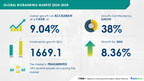
NEW YORK, July 31, 2024 /PRNewswire/ — The global biobanking market size is estimated to grow by USD 1.66 billion from 2024-2028, according to Technavio. The market is estimated to grow at a CAGR of 9.04% during the forecast period. Growing demand for personalized medicine is driving market growth, with a trend towards emergence of stem cells storage in biobanks. However, increasing ethical issues poses a challenge. Key market players include AMS Biotechnology Europe Ltd., ASKION GmbH, Azenta Inc., Bay Biosciences LLC, BioIVT LLC, Boca Biolistics LLC, CTIBiotech, Cureline Inc., Danaher Corp., Firalis SA, GENETICIST Inc., Greiner Bio One International GmbH, Hamilton Co., OraSure Technologies Inc., PHC Holdings Corp., Promega Corp., ProteoGenex Inc., Shanghai Genext Medical Technology Co. Ltd., Thermo Fisher Scientific Inc., and US Biolab Corp. Inc..

Get a detailed analysis on regions, market segments, customer landscape, and companies- View the snapshot of this report

Biobanking Market Scope

Report Coverage

Details

Base year

2023

Historic period

2018 – 2022

Forecast period

2024-2028

Growth momentum & CAGR

Accelerate at a CAGR of 9.04%

Market growth 2024-2028

USD 1669.1 million

Market structure

Fragmented

YoY growth 2022-2023 (%)

8.36

Regional analysis

Europe, North America, Asia, and Rest of World (ROW)

Performing market contribution

Europe at 38%

Key countries

US, Germany, Japan, UK, and China

Key companies profiled

AMS Biotechnology Europe Ltd., ASKION GmbH, Azenta Inc., Bay Biosciences LLC, BioIVT LLC, Boca Biolistics LLC, CTIBiotech, Cureline Inc., Danaher Corp., Firalis SA, GENETICIST Inc., Greiner Bio One International GmbH, Hamilton Co., OraSure Technologies Inc., PHC Holdings Corp., Promega Corp., ProteoGenex Inc., Shanghai Genext Medical Technology Co. Ltd., Thermo Fisher Scientific Inc., and US Biolab Corp. Inc.

Market Driver

The biobanking market is experiencing significant growth due to the increasing demand for stem cell storage. Stem cells have the potential to address various medical needs in sectors like cardiology and oncology. New biobanking facilities, such as those launched by the Global Stem Cells Group in Chile, are dedicated to stem cell research to improve access to novel therapeutic resources. Research organizations are also investing in advanced production units to enhance supply chain efficiency and increase production capacities. Technological advancements, like IT in logistics and temperature-controlled solutions, minimize errors and enable large-scale stem cell therapy product manufacturing in a sterile environment. These investments present substantial growth opportunities for the biobanking market. 

The Biobanking Market is witnessing significant growth due to the increasing demand for human samples, particularly in the areas of blood, plasma, serum, urine, tissues, and cells. Disease-oriented biobanks and population-based biobanks are major segments, with cancer, respiratory diseases, and Alzheimer’s disease being key focus areas. Sustainability and financial support from public organizations are crucial for the industry’s growth. Tissue banks, blood banks, and stem cell biobanks are key players. Biobanking plays a vital role in drug development, and the life science segment is a significant consumer. Ethical challenges, regulatory scrutiny, and informed consent are crucial considerations. Technidata Medical Software and academic institutions are important partners. Emerging countries offer opportunities, but cold chain logistics and lab processing require attention. Biobanking technologies are advancing, enabling precision/personalized medicine, genetic testing, and regenerative medicines. 

Discover 360° analysis of this market. For complete information, schedule your consultation – Book Here!

Market Challenges

Biobanking, the process of collecting, storing, and managing biological samples for research and diagnostic purposes, faces ethical concerns regarding privacy and consent. Informed consent is crucial to protect individuals’ identities. However, there are debates over the use of biobank data by private companies for their interests. Ethical issues surround the research on biological samples, particularly human embryonic stem cells, including cloning, embryo destruction, and safety concerns. These debates and disagreements may hinder the growth of the global biobanking market, as they impact research and decision-making in various countries.The biobanking market presents both challenges and opportunities for smaller companies with limited financial resources. One major barrier to entry is the high investment required for infrastructure, including automated storage systems and tissue processing facilities. Ongoing maintenance, operational costs, software updates, and repairs add to the financial burden. Training of skilled resources is also essential for effective collection, storage management, sample distribution, and administration. Developed markets offer lucrative opportunities, but high operational costs can be a challenge. New technologies and availability of biospecimens for research present opportunities, but availability and effective collection come with their own set of challenges. The long-term economic situation requires careful consideration of costs associated with in-case collection, tissue processing, and storage management. Low-cost manufacturing advantage can help smaller companies compete, but they must stay updated with the latest technologies to remain competitive.

For more insights on driver and challenges – Request a sample report!

Segment Overview 

This biobanking market report extensively covers market segmentation by

Type 1.1 Physical1.2 VirtualProduct 2.1 Equipment2.2 ConsumablesGeography 3.1 Europe3.2 North America3.3 Asia3.4 Rest of World (ROW)

1.1 Physical- The Biobanking Market is a significant industry that focuses on collecting, storing, and managing biological samples for research and diagnostic purposes. Companies in this market provide services such as sample collection, processing, and long-term storage. Key players include Thermo Fisher Scientific, Qiagen, and Corning Incorporated. Market growth is driven by increasing research and development activities in the healthcare sector and advancements in biotechnology. Biobanks play a crucial role in enabling personalized medicine and drug discovery.

For more information on market segmentation with geographical analysis including forecast (2024-2028) and historic data (2017-2021) – Download a Sample Report

Research Analysis

The biobanking market encompasses the collection, processing, storage, and distribution of human samples, including blood, plasma, serum, urine, tissues, and cells, for research and diagnostic purposes. Two main types of biobanks exist: disease-oriented and population-based. Disease-oriented biobanks focus on specific diseases, such as cancer, respiratory diseases, and Alzheimer’s disease, while population-based biobanks collect samples from large and diverse populations. Tissue banks and blood banks are specialized types of biobanks. Biobanking plays a crucial role in drug development, particularly in the fields of regenerative medicines, cancer, and personalized medicine. Sustainability, financial support from public organizations, and ethical challenges, including informed consent and sample storage, are key considerations. Technidata Medical Software and academic institutions also contribute to the biobanking landscape. Stem cell biobanks are a significant segment of the market, with potential applications in regenerative medicine. Ethical challenges, such as ensuring informed consent and maintaining sample integrity, must be addressed to ensure the success and legitimacy of biobanking initiatives.

Market Research Overview

The Biobanking Market encompasses the collection, processing, storage, and distribution of human biological samples, including blood, plasma, serum, urine, tissues, and cells. Biobanks come in various forms such as disease-oriented, population-based, tissue, blood, and stem cell biobanks. The market caters to diverse applications like drug development, cancer, respiratory diseases, Alzheimer’s disease, and regenerative medicines. Sustainability and financial support from public organizations are crucial. Technidata Medical Software and other biobanking technologies facilitate efficient operations. Ethical challenges and emerging countries pose barriers to entry for smaller biobanking companies with limited financial resources. Informed consent, sample storage, and lab processing are key considerations. The Blood segment and Cells & Tissue segment dominate the Life Science segment. Precision/personalized medicine, genetic testing, biomedical research, and genetic studies are significant applications. The Biobanking Industry faces regulatory scrutiny and high operational costs, but also offers lucrative opportunities due to new technologies and low-cost manufacturing advantages. Ongoing maintenance, software updates, repairs, and training are essential for biobanking operations. The funding scenario is dynamic, with investments and funding influencing buying behavior. Newborn biobanks and automated equipment contribute to efficiency and quality. Biobanking operations require skilled resources and adherence to regulatory guidelines. Biospecimens are vital for research, and new technologies aim to improve availability.

Table of Contents:

1 Executive Summary
2 Market Landscape
3 Market Sizing
4 Historic Market Size
5 Five Forces Analysis
6 Market Segmentation

TypePhysicalVirtualProductEquipmentConsumablesGeographyEuropeNorth AmericaAsiaRest Of World (ROW)

7 Customer Landscape
8 Geographic Landscape
9 Drivers, Challenges, and Trends
10 Company Landscape
11 Company Analysis
12 Appendix

About Technavio

Technavio is a leading global technology research and advisory company. Their research and analysis focuses on emerging market trends and provides actionable insights to help businesses identify market opportunities and develop effective strategies to optimize their market positions.

With over 500 specialized analysts, Technavio’s report library consists of more than 17,000 reports and counting, covering 800 technologies, spanning across 50 countries. Their client base consists of enterprises of all sizes, including more than 100 Fortune 500 companies. This growing client base relies on Technavio’s comprehensive coverage, extensive research, and actionable market insights to identify opportunities in existing and potential markets and assess their competitive positions within changing market scenarios.

Contacts

Technavio Research
Jesse Maida
Media & Marketing Executive
US: +1 844 364 1100
UK: +44 203 893 3200
Email: media@technavio.com
Website: www.technavio.com/

View original content to download multimedia:https://www.prnewswire.com/news-releases/biobanking-market-size-is-set-to-grow-by-usd-1-66-billion-from-2024-2028–growing-demand-for-personalized-medicine-boost-the-market-technavio-302210033.html

SOURCE Technavio

Continue Reading
Click to comment

Leave a Reply

Your email address will not be published. Required fields are marked *

Technology

Ontario Superior Court Awards Over $170 Million in Damages to Mutual Fund Investors in Landmark Class Action Decision

Published

on

By

TORONTO, July 17, 2026 /PRNewswire/ — On July 16, 2026, Justice Markus Koehnen of the Ontario Superior Court of Justice ordered CI Mutual Funds Inc. and AIC Limited to pay Class Members damages and interest in excess of $170 million.

The Market Timing class action, commenced in 2006, alleged that certain mutual fund managers permitted sophisticated offshore hedge fund investors to engage in frequent trading in their funds, that substantially diluted the investment of long-term investors, including retail unitholders, many of whom were retirees.

Rochon Genova has represented the long-term investors since the inception of this case, including before the Supreme Court of Canada, on appeal from an earlier certification motion.  The Supreme Court certified the case in 2013. A subsequent case management order divided the trial into two phases: a trial in respect of liability, and a subsequent trial in respect of damages. The liability trial was held in February, March and June 2022.

On February 13, 2023, Justice Koehnen issued reasons for judgment in respect of the liability trial.  Justice Koehnen found that both CI and AIC breached their duty of care to prevent “market timing” in their funds. The liability decision, indexed as Fischer v. IG Investment, 2023 ONSC 915, is available here.

The damages trial was heard before Justice Koehnen between March 28 and May 16, 2025. Closing submissions were heard on July 30, August 6 and August 7, 2025. In total, Class Counsel spent 41 days in trial on liability (24 days) and damages (17 days). On June 16, 2026, Justice Markus Koehnen of the Superior Court of Justice issued reasons for judgment in respect of the damages trial.

The Court accepted the evidence of the Plaintiffs’ expert, Professor Eric Zitzewitz, and determined that the “Next Day NAV method” of calculating damages was the appropriate methodology to use, as it measures the specific harm that the time zone arbitrage at issue caused, harm referred to as dilution.

Justice Koehnen determined that the “profits method”, the method of calculating damages advocated for by CI’s expert, was not appropriate as it “measures the wrong thing”. The Court determined that on a balance of probabilities, the “prerequisites of using the profits method” had not been met.

Ultimately, with respect to CI, the Court awarded the Plaintiffs $60,480,000 in damages for the harm resulting from CI’s failure to take appropriate steps to prevent market timing by certain Identified Accounts.

The Court also awarded the Plaintiffs damages caused by specific Additional Accounts at CI that were identified by the Plaintiffs’ expert, Professor Zitzewitz, as having engaged in market timing that harmed the unit holders.

With respect to AIC, the Court awarded the Plaintiffs a total of $37,900,659 in damages, which includes damages caused by the Identified Accounts, and Additional Accounts at AIC that were identified by the Plaintiffs’ expert as having engaged in market timing. 

The Court determined the Plaintiffs are also entitled to pre-judgment interest in the amount of 2.8% per annum, to be applied to the damages figures set out above, in addition to costs against both Defendants.

Peter Jervis, a senior partner at Rochon Genova who led the prosecution of this case, stated: “The damages decision sends a clear message that those who fail to safeguard investors from harmful market practices will be held accountable. That this result was achieved after two decades of hard-fought litigation, is a testament to the perseverance of the Representative Plaintiffs and Class Counsel, and to the strength of our judicial system in delivering access to justice in complex cases.”

Joel Rochon, the Managing Partner of Rochon Genova added: “The decision is an important victory not only for the Class Members, but for the integrity of Canadian capital markets. Mutual funds are a cornerstone of the retirement savings of millions of everyday Canadians, and investors are entitled to expect that fund managers will protect them from practices that unfairly dilute the value of their investments.”

The Plaintiffs in this action were represented by Peter Jervis, Joel Rochon, Sarah Fiddes and Jessica Marshall.

For further updates, please visit Rochon Genova’s website here.

View original content:https://www.prnewswire.com/news-releases/ontario-superior-court-awards-over-170-million-in-damages-to-mutual-fund-investors-in-landmark-class-action-decision-302828857.html

SOURCE Rochon Genova

Continue Reading

Technology

Global Commercial Service Robot Shipments Leader KEENON Puts Humanoids to Work at WAIC 2026

Published

on

By

SHANGHAI, July 18, 2026 /PRNewswire/ — At WAIC 2026, KEENON Robotics is bringing humanoid and specialized service robots onto the same stage—not as competing concepts, but as complementary forms of embodied intelligence working across complete commercial service workflows.

According to IDC, KEENON ranked first worldwide in commercial service robot shipments in 2025, while maintaining its leadership in the global delivery robot market. IDC also sees the industry moving toward a more diversified, multi-form future, where different robot types are deployed according to the needs of specific tasks and environments. KEENON first propose such strategy and WAIC showcase brings that trend to life.

At the booth, the newly introduced hotel laundry scenario demonstrates this approach most clearly. Humanoid robots complete operational tasks such as loading and operating washing machines, retrieving clean laundry, and folding garments, while the DINERBOT T9 supports the wider delivery workflow. Together, they show how humanoid and specialized robots can divide responsibilities and collaborate within a real hotel operation.

Beyond the hotel workflow, KEENON applies the same role-based approach to food and retail service. Drawing on years of customer insight from restaurants and stores, XMAN-R1 takes on front-of-house tasks that combine interaction with object handling—from preparing drinks with NOWWA Coffee to responding to customer requests in dessert and retail settings. Rather than presenting isolated demonstrations, these scenarios show how KEENON is extending proven commercial service workflows into new humanoid capabilities, with every task performed autonomously and without teleoperation.

Through its “general-purpose humanoid + specialized service robot” strategy, KEENON is building a practical path for embodied intelligence: humanoids take on flexible operation and interaction tasks, while specialized robots continue to handle high-frequency delivery and cleaning. At WAIC 2026, KEENON is showing not just more robot forms, but a more complete model for commercial deployment.

With more than 100,000 service robots deployed worldwide across over 70 countries and regions, KEENON has been recognized by global renown brands across various sectors and widely deployed at major brands like Burger King, Buffalo Wild Wings, Hilton, BMW, Lego etc. From 10 to 20+ robots operating in single venues like Hotel Around Pyeongchang to a mixed fleet of 8 robots across 6 types at facilities like Shangri-La’s Trader Hotel, making it world-first intelligent hotel with both humanoid and service robot, KEENON delivers proven multi-robot efficiency.

SOURCE KEENON Robotics Co., Ltd.

Continue Reading

Technology

MDT Introduces TMR1370 Ultra-Low-Power Magnetic Switch IC Enabling More Than Two Years of Standby Operation in CGM Devices

Published

on

By

— Next-Generation TMR Magnetic Switch with Ultra-Low 50nA Maximum Supply Current Expands MDT’s Proven CGM Sensor Portfolio

ZHANGJIAGANG, China, July 18, 2026 /PRNewswire/ — MultiDimension Technology Co., Ltd. (MDT), a leading supplier of magnetic sensors and a pioneer in Tunneling Magnetoresistance (TMR) technology, today introduced the TMR1370 ultra-low-power magnetic switch IC, the newest addition to MDT’s magnetic sensing portfolio for continuous glucose monitoring (CGM) devices. Building on the proven TMR1367, TMR1368, and TMR1369 family, the TMR1370 delivers significantly lower power consumption, enhanced voltage compatibility, and a smaller package to enable next-generation CGM systems with ultra-long standby life.

Optimized for battery-powered CGM devices, the TMR1370 features a maximum supply current of only 50nA, with approximately 30nA typical at a 3V supply. When combined with the magnetic wake-up mechanism widely adopted in CGM devices, the TMR1370 enables more than two years of standby operation, helping extend product shelf life while preserving battery capacity for continuous glucose monitoring after activation.

The TMR1370’s exceptional power efficiency is enabled by MDT’s proprietary TMR technology platform, which combines advanced magnetic sensor design, optimized device architecture, and proprietary wafer process technology to achieve high magnetic sensitivity together with ultra-low power consumption. Complementing MDT’s existing X-axis and Z-axis CGM magnetic switch portfolio, the TMR1370 gives system designers greater flexibility to optimize sensor orientation and mechanical layout for a wide variety of CGM architectures while enabling easy migration from previous-generation devices.

Key Features

Enables more than two years of standby operation in battery-powered CGM devices.50nA maximum supply current, approximately 30nA typical at 3V.Wide 1.8V to 4.0V operating-voltage range.Maximum operating point below 40 Gauss for reliable magnetic wake-up detection.X-axis magnetic sensing optimized for compact CGM designs.Miniature DFN5L package (1.6×1.6×0.5mm) for thinner and lighter wearable medical devices.Complements MDT’s proven X-axis and Z-axis CGM magnetic switch portfolio for flexible system design and simplified migration.

Samples of the TMR1370 are available through DigiKey and MDT’s online store at www.tmr-sensors.com. For volume pricing, delivery information, and technical specifications, contact MDT Global Sales at sales@dowayusa.com.

About MDT
MultiDimension Technology was founded in 2010 in Zhangjiagang, Jiangsu Province, China, with branch offices in Shenzhen, Chengdu, and Ningbo in China, Singapore, Tokyo, Japan, and San Jose, Calif., USA. MDT has developed a unique intellectual property portfolio, and its self-owned state-of-the-art TMR manufacturing facilities that can support volume production of high-performance, low-cost TMR magnetic sensors to satisfy the most demanding application needs. Led by its core management team of elite experts and veterans in magnetic sensor technology and engineering services, MDT is committed to creating added value for its customers and ensuring their success. For more information about MDT please visit http://www.multidimensiontech.com.

Media Contacts
MDT sales department, sales@dowayusa.com, sales@dowaytech.com
Tel: +1-650-275-2318 (US), +86-189-3612-1156 (China)

View original content to download multimedia:https://www.prnewswire.com/apac/news-releases/mdt-introduces-tmr1370-ultra-low-power-magnetic-switch-ic-enabling-more-than-two-years-of-standby-operation-in-cgm-devices-302828591.html

SOURCE MultiDimension Technology Co., Ltd.

Continue Reading

Trending