Technology
Bit Digital, Inc. Announces Monthly Production Update for July 2024
Published
2 years agoon
By
NEW YORK, Aug. 6, 2024 /PRNewswire/ — Bit Digital, Inc. (Nasdaq: BTBT) (“Bit Digital” or the “Company”), a sustainable platform for digital assets and artificial intelligence (“AI”) infrastructure headquartered in New York, announced its unaudited digital asset production and corporate updates for the month of July 2024.
Corporate Highlights for July 2024
The Company had 256 servers actively generating revenue from its initial Bit Digital AI contract, as of July 31, 2024. The Company earned an estimated $4.3 million of unaudited revenue from this contract during the month of July 2024.In July 2024, the Company produced 60.5 BTC, a 1.9% decrease compared to the prior month.The Company’s active hash rate was approximately 2.46 EH/s as of July 31, 2024.Treasury holdings of BTC and ETH were 641.8 and 27,274.4 with a fair market value of approximately $41.5 million and $88.1 million, respectively, on July 31, 2024.The BTC equivalent[1] of our digital asset holdings as of July 31, 2024, was approximately 2,009.0 or approximately $129.8 million.The Company had cash and cash equivalents of $82.1 million and total liquidity (defined as cash and cash equivalents, USDC, and the fair market value of digital assets) of approximately $211.9 million, as of July 31, 2024.
Proof-of-Stake Highlights
The Company had approximately 17,184 ETH actively staked in native staking protocols as of July 31, 2024.Bit Digital earned a blended APY of approximately 3.3% on its staked ETH position for the month of July 2024.The Company earned aggregate staking rewards of approximately 47.5 ETH during July 2024.
Upcoming Events
2024 Annual Gateway Conference, San Francisco, CA on September 4-5
About Bit Digital
Bit Digital, Inc. is a sustainable platform for digital assets and artificial intelligence (“AI”) infrastructure headquartered in New York City. Our bitcoin mining operations are located in the US, Canada, and Iceland. The Company has established a business line, Bit Digital AI, that offers specialized cloud-infrastructure services for artificial intelligence applications. For additional information, please contact ir@bit-digital.com or visit our website at www.bit-digital.com.
Investor Notice
Investing in our securities involves a high degree of risk. Before making an investment decision, you should carefully consider the risks, uncertainties and forward-looking statements described under “Risk Factors” in Item 3.D of our most recent Annual Report on Form 20-F for the fiscal year ended December 31, 2023. If any material risk was to occur, our business, financial condition or results of operations would likely suffer. In that event, the value of our securities could decline and you could lose part or all of your investment. The risks and uncertainties we describe are not the only ones facing us. Additional risks not presently known to us or that we currently deem immaterial may also impair our business operations. In addition, our past financial performance may not be a reliable indicator of future performance, and historical trends should not be used to anticipate results in the future. Future changes in the network-wide mining difficulty rate or bitcoin hash rate may also materially affect the future performance of Bit Digital’s production of bitcoin. Actual operating results will vary depending on many factors including network difficulty rate, total hash rate of the network, the operations of our facilities, the status of our miners, and other factors.
Safe Harbor Statement
This press release may contain certain “forward-looking statements” relating to the business of Bit Digital, Inc., and its subsidiary companies. All statements, other than statements of historical fact included herein are “forward-looking statements.” These forward-looking statements are often identified by the use of forward-looking terminology such as “believes,” “expects,” or similar expressions, involving known and unknown risks and uncertainties. Although the Company believes that the expectations reflected in these forward-looking statements are reasonable, they do involve assumptions, risks and uncertainties, and these expectations may prove to be incorrect. Investors should not place undue reliance on these forward-looking statements, which speak only as of the date of this press release. The Company’s actual results could differ materially from those anticipated in these forward-looking statements as a result of a variety of factors, including those discussed in the Company’s periodic reports that are filed with the Securities and Exchange Commission and available on its website at http://www.sec.gov. All forward-looking statements attributable to the Company or persons acting on its behalf are expressly qualified in their entirety by these factors. Other than as required under the securities laws, the Company does not assume a duty to update these forward-looking statements.
[1] “BTC equivalent” is a hypothetical illustration of the value of our digital asset treasury holdings in bitcoin terms. BTC equivalent is defined as if all non-BTC digital assets, comprised of ETH, and USDC, were converted into BTC as of July 31, 2024, and added to our existing BTC balance. Conversion values are found using the closing price on coinmarketcap.com. Our digital asset portfolio excludes digital assets invested in a third-party managed fund.
View original content to download multimedia:https://www.prnewswire.com/news-releases/bit-digital-inc-announces-monthly-production-update-for-july-2024-302215871.html
SOURCE Bit Digital, Inc.
You may like
Technology
Asia Pacific accounts for a third of the world’s fraud networks as identity fraud grows more complex: Sumsub
Published
4 minutes agoon
November 18, 2026By
The Sumsub Identity Fraud Report finds that one in three fraud network connections in the region emerge only after users pass identity checks, pointing to verified accounts being sold or handed over to fraudsters after onboarding.
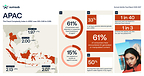
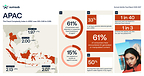
SINGAPORE, Nov. 18, 2026 /PRNewswire/ — Sumsub, the first AI-powered trust infrastructure, has released its Identity Fraud Report 2026-2027*. Now in its sixth edition, the report finds that Asia Pacific (APAC) accounted for a third (33%) of all fraud networks detected globally, more than any other region, and recorded close to a million confirmed fraud attempts, the highest of the six regions.
Fraud networks are coordinated groups of linked identities, accounts and devices run by organized fraudsters. Across APAC, around 1 in 40 approved people (2.4%) are linked to a detected fraud network, and around one-third of these links appear only after they have successfully passed identity verification. This suggests many legitimately verified accounts are later sold or handed over to fraudsters, often for use as money mules: accounts that receive and move stolen funds on a fraudster’s behalf.
Increasingly sophisticated tactics have led Sumsub to the creation of Sumsub’s new Fraud Complexity Index (FCI), which scores each confirmed case on the tooling, coordination and number of techniques behind it. This year, the report finds that the FCI rose from 2.1 to 2.2 globally.
Key APAC findings from the report include:
APAC hotspots for fraud networks: The Philippines recorded the largest number of networks in the region (17% of APAC networks), closely followed by India, while the largest single network was detected in Thailand, with 3,018 linked users.Fraud is becoming more complex: APAC’s FCI rose 14% to 2.09. Hong Kong’s FCI rose 7% to 1.97. APAC businesses also reported fraudster-operated AI agents (11%) more often than any other region.AI agents are adding new exposure: 61% of APAC businesses have detected or suspected fraud involving an AI agent, among the highest levels of any region. APAC businesses lead on limiting agent permissions and on suspending or revoking access, but these controls remain limited: only 15% can suspend or revoke an agent’s access, and 40% verify the human that authorizes one.Deepfake activity is spreading even where overall fraud is declining: Deepfakes rose sharply in Pakistan (+217%), the Philippines (+125%), India (+103%) and Hong Kong (+72%). In Indonesia, the overall fraud rate fell 64% while deepfakes increased 69%.APAC consumers are the most exposed to AI-generated content: 61% of APAC consumers have encountered AI-generated or manipulated content, the highest share of any region. Among those who experienced a fraud attempt, 44% said AI-generated content played a part.Singapore sees fewer, but more complex, attacks: Singapore’s fraud rate fell 36% year-on-year to 1.0%, while its FCI rose 9% to 2.13, above the APAC average. Deepfakes in Singapore fell 37%.Japan has the region’s highest and fastest-growing fraud rate: Japan’s fraud rate rose 219% year-on-year to 5.1%, the highest in APAC.Legitimate AI agents are being turned against businesses: Globally, among businesses that detected or suspected AI-agent fraud, 49% saw a legitimate agent manipulated by malicious instructions, and 30% saw an agent initiate a purchase, payment or transfer.
Verified accounts become building blocks for fraud networks
A single fraudulent account rarely tells the whole story. Fraud networks become visible through shared devices, contact details, payment instruments and document templates that an account-by-account review cannot show. Some of these links appear only after onboarding, as legitimately verified accounts are sold, compromised or otherwise repurposed. Passing KYC confirms an identity at a single point in time, but does not guarantee how an account will be used afterwards.
Businesses recognize the challenge, but few are equipped for it. 29% of APAC businesses say larger linked networks are making fraud harder to detect, the highest share of any region, yet only 25% use fraud network analysis.
In Southeast Asia, organized scam compounds have become highly mobile, relocating sites and reusing the same infrastructure when authorities intervene. Their human cost is significant: by April, Nepal reported that 612 of its citizens had been rescued from online scam centers across Southeast Asia and repatriated.
The impact is felt on both sides of the transaction. Among APAC businesses that experienced fraud, impersonation of a business, employee or supplier was the most commonly reported form of external fraud (42%), the highest of any region, followed by scam-induced payments (40%). Among APAC consumers, 79% experienced fraud in the past 12 months. Half of victims lost money, and 51% of those recovered none of it.
“A scam network is designed to look like a thousand ordinary people doing ordinary things. Every account is verified, and every document is real, because the person holding it was recruited, paid, or coerced into opening it, so nothing trips a wire on its own,” said Erin West, anti-scam advocate, former Deputy District Attorney and founder of Operation Shamrock, who has investigated scam compounds in Cambodia and Thailand. “Look past the person in front of you to the people behind them. The networks already cooperate beautifully with one another, and it’s time we caught up.”
Fraud grows more complex as it shifts across the region
While fraud rates fell in four of six regions globally, the FCI rose in all six. In APAC, it rose 14%, from 1.83 to 2.09.
Rather than rising everywhere at once, fraud is shifting between APAC markets and techniques. Japan’s fraud rate rose 219%, while Singapore’s fraud rate fell 36%, but its FCI rose 9%, above the regional average. In Hong Kong, fraud rate edged up 5% as deepfakes there rose 72%. APAC also leads all regions in the share of businesses saying deepfakes (31%) and synthetic identities (26%) are making fraud harder to detect while QR-code redirection (18%) and device or location manipulation (14%) were also reported more often than anywhere else.
The region also has strong foundations to respond. APAC leads every other region in digital identity wallet adoption: 50% of consumers have used a government digital identity wallet, and 65% say they would be comfortable using one. Banks and financial services remain the most trusted online category, with 74% of APAC consumers reporting high or full trust.
“Fraud in APAC isn’t rising everywhere at once. It is shifting between markets, techniques and stages of the customer lifecycle,” said Penny Chai, Vice President, APAC at Sumsub. “The region is home to some of the world’s most mature digital economies, alongside markets where digital services and organized scam operations are expanding quickly. Those markets are deeply connected, and fraud networks move easily between them. But APAC also has the tools to respond, from progressive regulation to world-leading digital identity adoption and high consumer trust in financial services. The task now is to use them together, so that trust doesn’t end at onboarding.”
Regulators and industry move towards collective action
Regulators across the region are shifting responsibility for scam payments and mule accounts towards the institutions that send, receive or facilitate them, and building new ways to share fraud intelligence. In Singapore, the Protection from Scams Act and the Scams (Countermeasures) and Other Matters Act 2026 give authorities new powers to protect people at risk of being scammed and to disrupt accounts and services linked to scams, while the National Scams List supports the exchange of information on suspicious scam accounts. Hong Kong has created a legally protected mechanism for banks to share information, and Thailand has embedded mule-account controls across banks, payment businesses and crypto operators.
The same collective approach is needed as AI agents take on more tasks. Launched in September, the Sumsub Agentic AI Council brings together cross-sector experts across APAC to develop practical guardrails for AI agents, including agent identity, delegated authority and accountability.
To explore the Sumsub Identity Fraud Report 2026-2027 in full, please download it here: http://sumsub.com/identity-fraud-report-2026/
About Sumsub
Sumsub is the first AI-powered trust infrastructure for compliance operations at scale. It connects identity and business verification, fraud prevention, transaction monitoring, and risk workflows, helping teams reduce manual work and enter new markets.
Trusted by over 4,000 clients across financial services, crypto, mobility, trading, marketplaces, education, and iGaming, including Bybit, Bitpanda, Wirex, Avis, Vodafone, Duolingo, and Kaizen Gaming.
*Methodology
The Sumsub Identity Fraud Report 2026-2027 analyzes more than 5.8 million fraud samples from Sumsub’s internal identity verification and user activity data, comparing 2025 and 2026 across multiple regions and industries. To ensure statistical reliability, only jurisdictions with more than 15,000 verification attempts during the reporting period were included. A network connection refers to a link between an applicant and a detected fraud network at any point in the applicant lifecycle, and is a risk signal rather than proof that the applicant is fraudulent.
The report also draws on Sumsub’s Fraud Exposure Survey 2026, conducted in August 2026 among more than 1,400 fraud and risk professionals and more than 1,500 end users across 21 markets, including Hong Kong, Indonesia, the Philippines, Singapore and Thailand in APAC.
View original content to download multimedia:https://www.prnewswire.com/apac/news-releases/asia-pacific-accounts-for-a-third-of-the-worlds-fraud-networks-as-identity-fraud-grows-more-complex-sumsub-302942447.html
SOURCE Sumsub
Technology
Archbridge Capital Partners Appoints Mark Jones as Chief Executive Officer
Published
4 minutes agoon
November 18, 2026By
Former Wells Fargo Global Head of FX and Co-Head of Macro to lead the firm’s next phase of growth and international expansion
HONG KONG, Nov. 18, 2026 /PRNewswire/ — Archbridge Capital Partners (“Archbridge”), a Hong Kong-based alternative fixed income investment manager focused on private credit, today announced the appointment of Mark Jones as Chief Executive Officer and Managing Partner, effective immediately. The newly created role reflects the firm’s ambition to institutionalise its platform and expand internationally. Jones joins Anthony Leung, Chief Investment Officer, and Jenny Wong, Chief Operating Officer, in the firm’s senior leadership.
Established in 2020, Archbridge has focused on private credit since 2023, expanding its investment offerings during that period. The firm now invests predominantly in secured, short-dated private credit across Asia Pacific, with a focus on disciplined underwriting and regular income distributions, an approach that has resonated with family offices in the region.
Jones brings 28 years of global financial markets experience across London, Hong Kong and New York. He previously served as Global Head of Foreign Exchange and Global Co-Head of Macro at Wells Fargo, where he was a member of the bank’s Management Committee. Earlier, he was Head of Wells Fargo Securities Asia and a Managing Director at UBS, leading FICC Distribution across EMEA and Asia Pacific. Before joining Archbridge, he advised private credit funds and alternative asset managers through Kingswood Capital Solutions and was a Venture Partner at Volution, a UK venture capital firm investing in high-growth fintech and AI companies.
As CEO, Jones will lead Archbridge’s global strategy and international expansion, with a focus on building out the firm, strategic partnerships and technology-led innovation across the investment platform. He will work closely with the firm’s investment and operating leadership.
“Mark has led fixed income businesses at the highest level across three continents,” said Anthony Leung, Chief Investment Officer. “His appointment is consistent with our ambition to significantly broaden both our investor and borrower client base.”
“Archbridge is built on strong relationships and disciplined execution,” said Jenny Wong, Chief Operating Officer. “Mark will help us scale internationally while strengthening our institutional capabilities.”
“Over 25 years in global banking, I have seen the evolving financing needs of businesses across Asia Pacific and the growing opportunity for specialist credit managers,” said Mark Jones, Chief Executive Officer. “Archbridge is well positioned to meet that demand by combining rigorous credit underwriting with enduring investor relationships through an institutional-grade platform.”
ABOUT ARCHBRIDGE CAPITAL PARTNERS
Established in 2020, Archbridge Capital Partners is a Hong Kong-based alternative fixed income investment manager focused on private credit. The firm seeks attractive risk-adjusted returns through disciplined credit underwriting, active portfolio management and capital preservation. Archbridge Capital Partners Limited is licensed by the Hong Kong Securities and Futures Commission for Type 4 (Advising on Securities) and Type 9 (Asset Management) regulated activities. archbridgecap.com
View original content to download multimedia:https://www.prnewswire.com/apac/news-releases/archbridge-capital-partners-appoints-mark-jones-as-chief-executive-officer-302943079.html
SOURCE Archbridge Capital Partners
Asia Pacific accounts for a third of the world’s fraud networks as identity fraud grows more complex: Sumsub
Archbridge Capital Partners Appoints Mark Jones as Chief Executive Officer
Send Rakhi to UK swiftly with UK Gifts Portal
Whiteboard Series with NEAR | Ep: 45 Joel Thorstensson from ceramic.network
Nullmax and Renesas Forge Strategic Partnership to Deliver Competitive ADAS Solutions for the Global Market
Why You Should Build on #NEAR – Co-founder Illia Polosukhin at CV Labs
Whiteboard Series with NEAR | Ep: 45 Joel Thorstensson from ceramic.network
NEAR End of Year Town Hall 2021: The Open Web World, MetaBUILD 2 Hackathon and 2021 recap
Trending
-
Technology5 days agoDomoAI Launches InkoAI Agent – One Sentence to Ready-to-Post Video
-
Coin Market5 days agoDOJ moves to seize $1.2B from Binance hack, disrupts FaceStealer scam
-
Near Videos4 days agoIllia Polosukhin on NEAR as encrypted Ethereum
-
Technology4 days agoInnovative Immunology Biotech Windward Bio Lists on Nasdaq
-
Technology3 days agoThe First Cartridge-Free Smart Waterless Diffuser Is Here. What Would You Fill It With?
-
Near Videos3 days agoBuilders of NEAR: Illia Polosukhin on knowing what your AI agent is running
-
Coin Market4 days agoMicrosoft confirms global outage resolved, rules out cyberattack
-
Coin Market4 days agoMegaETH parent cuts 20% of staff amid restructuring, AI push