Connect with us

Technology

Information Technology Services Market Size In Latin America is set to grow by USD 48.43 billion from 2024-2028, Rising focus on core competencies and improving efficiency to boost the market growth, Technavio

Published

on

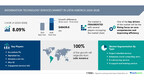
NEW YORK, Aug. 6, 2024 /PRNewswire/ — The information technology services market size in Latin America is estimated to grow by USD 48.43 billion from 2024-2028, according to Technavio. The market is estimated to grow at a CAGR of 8.09% during the forecast period. Rising focus on core competencies and improving efficiency is driving market growth, with a trend towards emergence of ai in information management. However, lack of quality standards in slas poses a challenge. Key market players include Accenture Plc, Alphabet Inc., Amazon.com Inc., Atos SE, Capgemini Service SAS, Cisco Systems Inc., Dell Technologies Inc., Deloitte Touche Tohmatsu Ltd., Ernst and Young Global Ltd., HCL Technologies Ltd., Hewlett Packard Enterprise Co., International Business Machines Corp., KPMG International Ltd., Microsoft Corp., Oracle Corp., PricewaterhouseCoopers LLP, Salesforce Inc., SAP SE, SONDA S.A., and Tata Consultancy Services Ltd..

Get a detailed analysis on regions, market segments, customer landscape, and companies – Click for the snapshot of this report

Forecast period

2024-2028

Base Year

2023

Historic Data

2018 – 2022

Segment Covered

Type (Project oriented service, Enterprise cloud computing service, IT outsourcing service, and IT support and training service), Deployment (Hosted service and Managed service), and Geography (Latin America)

Region Covered

Latin America

Key companies profiled

Accenture Plc, Alphabet Inc., Amazon.com Inc., Atos SE, Capgemini Service SAS, Cisco Systems Inc., Dell Technologies Inc., Deloitte Touche Tohmatsu Ltd., Ernst and Young Global Ltd., HCL Technologies Ltd., Hewlett Packard Enterprise Co., International Business Machines Corp., KPMG International Ltd., Microsoft Corp., Oracle Corp., PricewaterhouseCoopers LLP, Salesforce Inc., SAP SE, SONDA S.A., and Tata Consultancy Services Ltd.


Key Market Trends Fueling Growth

Several enterprises worldwide are integrating Artificial Intelligence (AI) into their information technology services to automate processes and enhance efficiency. This technology helps reduce the time spent on paperwork by half of the workforce, thereby increasing return on investment and decreasing costs. AI also brings structure to unstructured data, making it easier to find information, streamlines processes, and enhances information security. These benefits are expected to boost the growth of information technology services in Latin America, making vendors more efficient and competitive in the market. Integrating AI in information services also improves data quality and categorizes and tags information for easy access in the future. These advantages are significant trends driving the growth of the information technology services market in Latin America. 

The Information Technology Services (ITS) market in Latin America is witnessing significant trends. Key verticals like Telecommunication, Healthcare, Manufacturing, and the Finance industry are adopting IT services at an accelerated pace. Firms are exploring both on-premises deployment and cloud-based offerings, with cloud services gaining popularity due to their scalability and cost-effectiveness. However, variables such as lack of standardization, IT service performance, and security breaches pose challenges. Large Enterprises are focusing on feasibility and success rate of IT solutions, while addressing data security concerns and regulatory requirements through managed services, system integration, and consulting. Technology advancements like AI, Machine Learning (ML), IoT, Robotics, and Software-as-a-service are transforming the ITS landscape. Firms are investing in 5G, Blockchain, Augmented Reality, and Artificial Intelligence to improve efficiency and productivity. The International Trade Administration emphasizes the importance of cybersecurity solutions to mitigate risks from cyberattacks. IT infrastructure services, software robots, and Robotic Process Automation are also gaining traction. The feasibility of on-premise and cloud-based solutions will continue to be a topic of debate as firms navigate the complexities of the ITS market. 

Discover 360° analysis of this market. For complete information, schedule your consultation- Book Here!

Market Challenges

An Service Level Agreement (SLA) is a contract between an information technology service provider and an end-user, outlining the expected levels of service delivery. SLAs are output-focused and define the benefits and support the customer receives. However, they do not detail the full scope of services. End-users often lack SLA negotiation experience, leading to misunderstandings. Service providers must be transparent about SLAs to increase adoption. SLAs should include uptime, downtime, and outage frequency statistics. End-users must monitor their IT systems’ efficiency to evaluate service effectiveness. Lack of standardized SLAs may hinder the growth of Latin America’s information technology services market.The Information Technology Services Market in Latin America is experiencing significant growth, driven by the adoption of software-as-a-service and cloud-based offerings. IT services, IT infrastructure, and security solutions are in high demand, especially in sectors like finance and international trade. However, challenges such as data breaches require robust security solutions. Technological developments like 5G, blockchain, augmented reality, artificial intelligence, IT infrastructure services, software robots, and robotic process automation are transforming businesses. The professional services sector, remote working, and business plans are also leveraging these technologies. Economic expansion brings opportunities but also potential problems like resource wastage and IT costs. Precise forecasting and business intelligence (BI) tools help save costs through consumption-based pricing models and cloud-based deployments. Scalability and automatic updates are essential for businesses to stay competitive. IT specialists play a crucial role in operations, and talent recruiting and skill sets are key business strategies.

For more insights on driver and challenges – Download a Sample Report

Segment Overview 

This information technology services market in Latin America report extensively covers market segmentation by

Type 1.1 Project oriented service1.2 Enterprise cloud computing service1.3 IT outsourcing service1.4 IT support and training serviceDeployment 2.1 Hosted service2.2 Managed serviceGeography 3.1 Latin America

1.1 Project oriented service- In Latin America, the Information Technology Services Market encompasses project-oriented offerings such as system integration, information technology consulting, and application development services. System integration involves project planning, management, and detailed design and implementation of application programming interfaces, along with system deployment services like installation, interoperability testing, and other related tasks. Consulting services offer advisory assistance for businesses to enhance operational performance and technology strategies, focusing on areas like e-commerce, telecommunications, hardware system design, software development, and website design. Vendors like Cognizant in Argentina and Deloitte in Brazil provide these services, with Cognizant offering application development and value management, and Deloitte delivering innovation-driven consulting and technology strategy solutions. This market growth is attributed to the increasing demand for digital transformation and modernization initiatives among Latin American enterprises.

For more information on market segmentation with geographical analysis including forecast (2024-2028) and historic data (2018 – 2022) – Download a Sample Report

Research Analysis

The Information Technology Services market in Latin America is experiencing significant growth, driven by the adoption of advanced technologies such as Software-as-a-Service (SaaS), Cloud-based offerings, and IT infrastructure services. The region’s economic expansion is fueling the demand for IT services, including IT infrastructure services, Infrastructure-as-a-Service (IaaS), and Platform-as-a-Service (PaaS). Cloud services are becoming increasingly popular due to their scalability, automatic updates, and consumption-based pricing models. The finance industry is a major vertical driving the adoption of IT services, with a focus on security solutions, including data breach prevention and artificial intelligence-based threat detection. Technologies such as 5G, Blockchain, Augmented Reality, and Robotic Process Automation (RPA) are also gaining traction in the region. RPA, in particular, is being used to automate repetitive tasks and reduce IT costs. The International Trade Administration is playing a key role in promoting IT services exports from Latin America. The implementation of 5G networks and the increasing use of IT clusters are expected to further boost the market’s growth. IT infrastructure, including hardware and software, is also a significant component of the market, with a focus on cloud-based deployments and the integration of emerging technologies such as AI and blockchain. Overall, the Latin American IT services market is poised for continued growth, driven by the region’s economic expansion and the adoption of advanced technologies.

Market Research Overview

The Information Technology Services Market in Latin America is experiencing significant growth, driven by technological developments and the increasing adoption of IT infrastructure services, Software-as-a-Service (SaaS), and Cloud-based offerings. Businesses are seeking to improve their operations, reduce IT costs, and take advantage of scalability, automatic updates, and consumption-based pricing models. Sectors like Finance, Telecommunication, Healthcare, Manufacturing, and IoT are leading the way in IT infrastructure services, with a focus on Resource management, Talent recruiting, and Business strategies. The adoption of 5G, Blockchain, Augmented Reality, Artificial Intelligence (AI), Machine Learning (ML), and Robotic Process Automation (RPA) is also on the rise. However, there are potential problems, including data breaches, security solutions, regulatory requirements, and a lack of standardization. Firms must ensure IT service performance and address variables such as economic expansion, skill sets, and resources. The International Trade Administration is playing a role in facilitating business plans and IT service trade, while IT clusters are emerging as hubs for innovation and collaboration. The Professional services sector is also adopting managed services, system integration, consulting, and training and education to stay competitive. Remote working is becoming more common, and firms must adapt to this new reality while maintaining security and ensuring IT costs remain under control. Precise forecasting and Business Intelligence (BI) are essential for making informed decisions and identifying cost-saving opportunities. IT specialists and Operations teams must be prepared for the challenges and opportunities presented by technological advancements, including Cloud services, Data storing capacity, On-premises deployment, and the feasibility of new technologies like AI, ML, and Robotics.

Table of Contents:

1 Executive Summary
2 Market Landscape
3 Market Sizing
4 Historic Market Size
5 Five Forces Analysis
6 Market Segmentation

TypeProject Oriented ServiceEnterprise Cloud Computing ServiceIT Outsourcing ServiceIT Support And Training ServiceDeploymentHosted ServiceManaged ServiceGeographyLatin America

7 Customer Landscape
8 Geographic Landscape
9 Drivers, Challenges, and Trends
10 Company Landscape
11 Company Analysis
12 Appendix

About Technavio

Technavio is a leading global technology research and advisory company. Their research and analysis focuses on emerging market trends and provides actionable insights to help businesses identify market opportunities and develop effective strategies to optimize their market positions.

With over 500 specialized analysts, Technavio’s report library consists of more than 17,000 reports and counting, covering 800 technologies, spanning across 50 countries. Their client base consists of enterprises of all sizes, including more than 100 Fortune 500 companies. This growing client base relies on Technavio’s comprehensive coverage, extensive research, and actionable market insights to identify opportunities in existing and potential markets and assess their competitive positions within changing market scenarios.

Contacts

Technavio Research
Jesse Maida
Media & Marketing Executive
US: +1 844 364 1100
UK: +44 203 893 3200
Email: media@technavio.com
Website: www.technavio.com/

View original content to download multimedia:https://www.prnewswire.com/news-releases/information-technology-services-market-size-in-latin-america-is-set-to-grow-by-usd-48-43-billion-from-2024-2028–rising-focus-on-core-competencies-and-improving-efficiency-to-boost-the-market-growth-technavio-302214587.html

SOURCE Technavio

Continue Reading
Click to comment

Leave a Reply

Your email address will not be published. Required fields are marked *

Technology

11:11 Systems Announces Strategic Partnership with Cato Networks to Deliver SASE Solution for Distributed Enterprises

Published

on

By

New Managed Secure Access Service Edge (SASE) solution combines SD-WAN, cloud-native networking and security capabilities with 11:11’s connectivity, cyber resilience and cloud expertise

SYDNEY, July 22, 2026 /PRNewswire/ — 11:11 Systems, a leading managed infrastructure solutions provider, today announced the global availability of its 11:11 Managed Secure Access Service Edge (SASE) solution and a new strategic partnership with Cato Networks.

11:11 Managed SASE is a fully managed secure connectivity solution leveraging Cato Networks AI-native network security platform. This solution brings together intelligent SD-WAN, cloud-delivered security and global connectivity into a single offering. It enables organisations to simplify and secure access across branch offices, data centres, users and cloud environments, reducing complexity without sacrificing performance or control.

Built on the Cato Networks cloud-native SASE platform, 11:11 Managed SASE combines zero trust network access (ZTNA), firewall as a service (FWaaS), secure web gateway (SWG), cloud access security broker (CASB), advanced threat protection and centralised visibility into a unified managed experience. 11:11 also delivers 24x7x365 monitoring and support, incident management integration and operational accountability to help customers limit vendor sprawl, increase agility and free internal teams to focus on higher-value priorities.

The offering is backed by 11:11’s broader networking, cloud and cyber resilience capabilities. Through its global backbone, carrier-agnostic connectivity options and integrated portfolio spanning cloud, backup, disaster recovery and security services, 11:11 gives customers a practical path to modernise network and security architecture while strengthening resilience across the business.

“Enterprises are under pressure to support users, applications and locations that are more distributed than ever, while limiting complexity and improving security,” said Justin Giardina, CTO, 11:11 Systems. “Our Managed SASE solution provides customers with a unified approach to modernising networking and security, along with the visibility, support and flexibility they need to thrive in a rapidly changing environment.”

According to Karl Soderlund, global channel chief, Cato Networks, “As enterprises move beyond fragmented legacy networking and security stacks, they need a simpler way to gain visibility, context and control across hybrid work environments and reduce the operational burden on IT. Through our partnership, we can address these challenges head on and deliver end-to-end visibility and protection in a single service built for the reality of modern work.”

The joint offering is well suited for distributed enterprises, multi-site organisations, hybrid workforce initiatives, SD-WAN refreshes, security modernisation efforts and businesses with limited IT resources. 11:11 meets customers where they are by supporting existing environments, simplifying multi-vendor operations and serving as a single provider accountable for network, security, cloud and data integration.

This partnership expands 11:11’s Network as a Service portfolio and follows Forrester’s inclusion of 11:11 Systems in its report, “The Secure Access Service Edge Services Landscape, Q1 2026.”

About 11:11 Systems

11:11 Systems is a managed infrastructure solutions provider that empowers customers to modernise, protect and manage mission-critical applications and data, leveraging 11:11’s resilient cloud platform. Learn more at www.1111Systems.com and follow 11:11 on LinkedIn.

View original content:https://www.prnewswire.com/apac/news-releases/1111-systems-announces-strategic-partnership-with-cato-networks-to-deliver-sase-solution-for-distributed-enterprises-302830322.html

SOURCE 11:11 Systems

Continue Reading

Technology

Crowell & Moring Expands Financial Services Group with Former UBS Bank USA General Counsel Cristina Diaz

Published

on

By

NEW YORK, July 21, 2026 /PRNewswire/ — Crowell & Moring has added Cristina Diaz, former executive director and general counsel of UBS Bank USA, and most recently head of legal for UBS’s U.S. Remediation Management Office, to the firm’s Financial Services Group as senior counsel in New York. Diaz brings more than two decades of in-house counsel and law firm experience in bank regulation, compliance, and risk management.

At Crowell, Diaz will counsel banks, fintechs, and digital assets companies on a broad range of bank regulatory matters, including charters and licensing, permissible activities, capital requirements, regulatory enforcement, M&A, and corporate governance. She will also counsel clients navigating the intersection of traditional banking and emerging financial services, including digital assets companies seeking to acquire or establish national banks, and banks exploring partnerships with fintechs and digital assets firms.

At UBS, Diaz advised on the firm’s most pressing regulatory matters, including most recently UBS Bank USA’s charter conversion from a Utah industrial bank to an OCC national bank and key compliance remediations. This work gave Diaz extensive experience navigating relationships with state and federal financial regulators. Earlier in her career, Diaz spent eight years at Davis Polk & Wardwell advising U.S. and foreign banks on bank regulatory matters, M&A, and capital markets transactions.

“Cristina is a highly experienced, solution-oriented attorney who brings deep knowledge in the bank regulatory space. She will be an enormous asset to the firm’s growing regulatory and transactional offerings to banks, digital assets businesses, and fintechs,” said Carlton Greene, Co-Chair of Crowell’s Financial Services Group.

“I am delighted to join Crowell & Moring and integrate my bank regulatory experience with the firm’s nationally-recognized digital assets practice. As traditional banking and emerging financial technologies continue to evolve, clients need actionable and sophisticated legal counsel. Crowell offers the collaborative platform to help institutions successfully execute their growth and compliance strategies,” said Diaz.

Diaz received her J.D. from New York University School of Law, where she was a member of the New York University Law Review, and received her B.A., summa cum laude, from New York University. She is fluent in Spanish.

About Crowell & Moring LLP
Crowell & Moring is an international law firm with operations in the United States, Europe, and MENA. Drawing on significant government, business, industry, and legal experience, the firm helps clients capitalize on opportunities and provides creative solutions to complex regulatory and policy, litigation, transactional, and intellectual property issues. The firm is consistently recognized for its commitment to pro bono service, as well as its comprehensive programs and initiatives to advance the professional and personal development of all members of the Crowell community.

Media Contact:
Email: prteam@crowell.com

View original content to download multimedia:https://www.prnewswire.com/news-releases/crowell–moring-expands-financial-services-group-with-former-ubs-bank-usa-general-counsel-cristina-diaz-302831280.html

SOURCE Crowell & Moring LLP

Continue Reading

Technology

Quantinuum and SoftBank Corp. Publish Joint White Paper on Scaling Practical Quantum Computing Use Cases Toward the Fault-Tolerant Era

Published

on

By

The companies have published a joint white paper mapping commercially relevant quantum computing use cases in quantum chemistry and graph analytics to Quantinuum’s hardware roadmap.The paper provides a framework for assessing how advances in quantum hardware and algorithms, could affect when practical industrial applications become feasible.SoftBank Corp. and Quantinuum will use the roadmap to inform their exploration of future quantum AI data center services and related business models.

TOKYO and BROOMFIELD, Colo., July 22, 2026 /PRNewswire/ — Quantinuum (NASDAQ: QNT) and SoftBank Corp. (“SoftBank”) today announced the publication of “Quantum Computing Frontiers,” a joint white paper that maps two commercially-relevant quantum computing application areas against Quantinuum’s hardware roadmap. The analysis examines how advances in quantum hardware and algorithms could affect when these applications become practical for industrial use.

The paper focuses on two representative application domains that SoftBank is actively using Quantinuum’s systems to research: quantum chemistry for new materials discovery and energy research, and topological data analysis for large-scale graph analytics, including for telecommunications fraud detection. The authors anchor their assessment of the scalability of these two application areas against Quantinuum’s published hardware roadmap, examining how projected advances in hardware capabilities and algorithms may enable the commercial readiness of future industrial applications.

Building on this use-case roadmap, the paper also examines how quantum computing, AI, and high-performance computing could be integrated into future computing infrastructure. It considers how progress across successive hardware generations could inform future quantum AI data center services and related business models, a key focus of the Quantinuum and SoftBank partnership announced last year.

“The key takeaway of this study is that organizations do not need to wait for large-scale, fault-tolerant systems to explore where quantum computing can begin creating value,” said Duncan Jones, General Manager, Applications Group at Quantinuum. “By using today’s systems to develop, benchmark and refine applications in areas such as quantum chemistry and graph analytics, enterprises can build the technical and operational readiness needed for the next era of quantum-enabled computing.”

“The question is no longer whether quantum computing may deliver value, but rather which problem classes become executable at which stage of hardware maturity,” said Ryuji Wakikawa, Senior Vice President & CTO at SoftBank Corp. “However, we believe progress in hardware must be complemented by equally strong developments in quantum algorithms and the integration of quantum systems with AI and high-performance computing.”

The white paper discusses illustrative scenarios describing how representative applications, technology maturity, and potential market opportunities may evolve over time under stated assumptions. The analysis provided in the paper is intended to provide a conceptual framework for understanding potential market evolution and does not represent financial guidance or forecasts. These analyses are intended to support discussion of future technology development and should not be interpreted as commitments regarding commercialization, infrastructure investment, products, services, or financial performance.

The full white paper is available to download on the SoftBank and Quantinuum websites.

About SoftBank Corp.

Guided by the SoftBank Group’s corporate philosophy, “Information Revolution – Happiness for everyone,” SoftBank Corp. (TOKYO: 9434) operates telecommunications and IT businesses in Japan and globally. Building on its strong business foundation, SoftBank Corp. is aiming to activate the potential of AI across its businesses and drive implementation in line with its “Activate AI for Society” growth strategy. While further growing its telecom business, SoftBank is expanding its AI computing infrastructure and AI and Cloud service businesses with the aim of becoming a provider of Next-generation Social Infrastructure. To learn more, please visit https://www.softbank.jp/en/corp/

About Quantinuum

Quantinuum (NASDAQ: QNT) is a leading quantum computing company offering a full-stack platform designed to make quantum computing deployable in real-world environments. The company has commercially deployed multiple generations of quantum systems built on the well-established QCCD architecture, which it has implemented with novel designs and capabilities to achieve the industry’s highest accuracy levels based on average two-qubit gate fidelity.[1] Quantinuum has active engagements with market leaders across pharmaceuticals, material science, financial services, and government and industrial markets. The company has a global workforce of approximately 700 employees, including top scientists and researchers. Over 70% of its technology team holds PhDs or Master’s degrees. Quantinuum’s headquarters is in Broomfield, Colorado, with additional facilities across the United States, United Kingdom, Germany, Japan, Qatar, and Singapore.

For more information, please visit www.quantinuum.com.

Cautionary Statement Concerning Forward-Looking Statements

This press release contains certain statements that may be deemed “forward-looking statements” within the meaning of the Private Securities Litigation Reform Act of 1995. Forward-looking statements include all statements that are not historical facts. The words “anticipate,” “assume,” “believe,” “continue,” “could,” “estimate,” “expect,” “intend,” “may,” “plan,” “potential,” “predict,” “project,” “future,” “will,” “seek,” “foreseeable,” the negative version of these words, or similar terms and phrases are intended to identify forward-looking statements. Such statements are based on certain assumptions and assessments made by our management in light of their experience and their perception of historical trends, current economic and industry conditions, expected future developments and other factors they believe to be appropriate. The forward-looking statements included in this release are also subject to a number of material risks and uncertainties, including but not limited to economic, competitive, governmental, and technological factors affecting our operations, markets, products, services and prices. New factors emerge from time to time, and it is not possible for Quantinuum to predict all such factors. Any forward-looking statement speaks only as of the date on which it is made, and, except as required by law, Quantinuum does not undertake any obligation to update or revise any forward-looking statement, whether as a result of new information, future events or otherwise.


[1] As of December 31, 2025.

SOURCE Quantinuum

Continue Reading

Trending