Connect with us

Technology

Nikola Corporation Reports Second Quarter 2024 Results

Published

on

Reported strongest topline in the history of the company, Q2 2024 revenue was $31.3M, up 318% from Q1Wholesaled 72 hydrogen fuel cell electric vehicles in Q2, exceeding the high-end of guidance, up 80% from Q1Created alternative revenue streams with our initial sale of regulatory creditsBEV “2.0” recall program on track for completion by year-end 2024

PHOENIX, Aug. 9, 2024 /PRNewswire/ — Nikola Corporation (Nasdaq: NKLA), a global leader in zero-emissions transportation and energy supply and infrastructure solutions, via the HYLA brand, today reported financial results and business updates for the quarter ended June 30, 2024.

“In the last three quarters of serial production, we have demonstrated that Nikola is the offtake. We are the catalyst to disrupt Class 8 trucking to make zero-emission a reality,” said Steve Girsky, President and CEO of Nikola. “We are the only OEM with Class 8 FCEVs commercially available in North America today. Our trucks are put to the test every day by end fleet users, hauling freight and delivering to their customers. Q2 is an example of how we’re approaching the intersection of mission and reality and how Nikola is out front, charting the course.” 

Hydrogen Fuel Cell Electric Truck

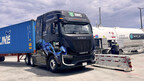
In Q2, we exceeded the high-end of the guidance range by delivering 72 hydrogen fuel cell electric vehicles (FCEVs) to our dealer network. That makes 147 wholesaled FCEVs in the first three quarters of serial production. Last quarter, we talked about the importance of expanding our reach to meet the demands of end fleet users virtually anywhere in North America. Walmart Canada is the first major retailer in Canada to introduce a hydrogen fuel cell electric semi-truck to its fleet. We also received repeat orders from two national accounts. Nikola’s Profitability Flywheel is beginning to gain momentum with these national accounts, as each of these end fleets grows its zero-emission presence to achieve decarbonization goals. 

We continue to delight fleet users with data-driven quality and performance. To date, our FCEV end fleets have traveled more than 550K miles with an average fuel economy of 7.2 mi/kg, validating our performance benchmark. We collect field data every day and the numbers bear out. On a converted basis, our FCEVs outperformed the average Class 8 truck on fuel economy and avoidance of tailpipe emissions. We estimate the average miles per gallon (mpg) diesel equivalent of our FCEV is 8.0, or 23% better, than the Class 8 fuel economy average of 6.5/diesel gallon equivalent (DGE) per the Department of Energy. Moreover, in-service FCEVs have consumed more than 77 metric tons of hydrogen dispensed at various Nikola fueling solutions. In total, we estimate our FCEV end fleet operations have avoided approximately 867 metric tons of CO2 tailpipe emissions.*

HYLA Energy

We’re delivering HYLA fueling solutions to support volume ramp up. As a strategy, we are launching stations and deploying assets where we anticipate demand. It is our objective to stay ahead of FCEV deployment so that fueling solutions are ready and available for end fleets. To that end, since the Q1 earnings call, we opened a HYLA branded station in Toronto, Ontario, Canada and completed commissioning a modular station in Santa Fe Springs in Southern Calif. We also added another modular refueler at our Ontario, Calif. station, doubling capacity. We recently had a record day in Ontario, with 28 FCEVs refueled and more than 850kg of hydrogen dispensed in one day. Likewise, through our work with Shell, our fleet customers have been able to fuel at Shell’s heavy-duty station in Ontario, CA, where density has been growing. Our stations run 24/7 to support the around-the-clock operations of our fleet users.

Constructive Green Policies

We continued to maintain our dominant share of HVIP vouchers in Calif. At quarter-end, we had 99% of FCEV and 23% of battery-electric vehicle (BEV) HVIP vouchers. We also created alternative revenue streams from the sale of regulatory credits. We recognized our first sale agreement of NOx and PM credits in the quarter. We expect this revenue stream to grow as volume increases each model year.

Battery-Electric Truck

We continued to make progress returning BEVs to our dealer network and end fleet users. We remain on track to complete the recall program by year-end 2024. Feedback on returned units has been overwhelmingly positive and over-the-air updates continue to reach customers.

Second Quarter Financial Highlights

 Three Months Ended
June 30,

 Six Months Ended
June 30,

(In thousands, except share and per share data)

2024

2023

2024

2023

Trucks produced

77

33

120

96

Trucks shipped

73

45

113

76

Total revenues

$          31,319

$          15,362

$          38,816

$          26,039

Gross profit (loss)

$         (54,726)

$         (27,631)

$       (112,301)

$         (50,328)

Gross margin

(175) %

(180) %

(289) %

(193) %

Loss from operations

$       (131,124)

$       (168,626)

$       (276,487)

$       (295,826)

Net loss from continuing operations

$       (133,674)

$       (140,010)

$       (281,396)

$       (285,261)

Net loss on discontinued operations

$                 —

$         (77,818)

$                  —

$       (101,661)

Net loss

$       (133,674)

$       (217,828)

$       (281,396)

$       (386,922)

Adjusted EBITDA (1)

$       (109,396)

$       (125,068)

$       (213,427)

$       (228,756)

Net loss from continuing operations per share, basic and diluted

$              (2.86)

$             (5.93)

$             (6.17)

$           (13.59)

Net loss from discontinued operations

$                  —

$             (3.29)

$                  —

$             (4.85)

Non-GAAP net loss per share, basic and diluted(1)

$              (2.67)

$             (5.90)

$             (5.29)

$           (12.35)

Weighted-average shares outstanding, basic and diluted

46,699,945

23,623,094

45,614,635

20,987,679

(1) A reconciliation of the non-GAAP versus GAAP information is provided below in the financial statement tables in this press release.

Webcast and Conference Call Information

Nikola will host a webcast to discuss its second quarter results and business progress at 7:30 a.m. Pacific Time (10:30 a.m. Eastern Time) on August 9, 2024. To access the webcast, parties in the United States should follow this link.

The live audio webcast, along with supplemental information, will be accessible on the Company’s Investor Relations website here. A recording of the webcast will also be available following the earnings call.

*Average emissions avoidance estimate based on total end fleet odometer mileage, avg. 6.5 mi/diesel gallon equivalent fuel economy of Class 8 trucks (per DOE), and the mobile combustion emission factor of 10.21 kg CO2 per gallon of diesel fuel (per EPA).

About Nikola Corporation

Nikola Corporation’s mission is clear: pioneering solutions for a zero-emissions world. As an integrated truck and energy company, Nikola is transforming commercial transportation, with our Class 8 vehicles, including battery-electric and hydrogen fuel cell electric trucks, and our energy brand, HYLA, driving the advancement of the complete hydrogen refueling ecosystem, covering supply, distribution and dispensing.

Nikola headquarters is based in Phoenix, Ariz. with a manufacturing facility in Coolidge, Ariz.

Experience our journey to achieve your sustainability goals at nikolamotor.com or engage with us on social media via Facebook @nikolamotorcompany, Instagram @nikolamotorcompany, YouTube @nikolamotorcompany, LinkedIn @nikolamotorcompany or X / Twitter @nikolamotor

Forward-Looking Statements

This press release contains certain forward-looking statements within the meaning of federal securities laws with respect to Nikola Corporation (the “Company”), including statements relating to: the Company’s future financial and business performance, business plan, strategy, focus, opportunities and milestones; the benefits and momentum in the Company’s profitability flywheel; customer demand for trucks; the Company’s beliefs regarding its competition and competitive position; the Company’s business outlook; the Company’s expectations regarding hydrogen refueling solutions and timelines; expectations related to the battery-electric truck recall, including timing of battery replacement and truck deliveries and sales; the Company’s beliefs regarding the benefits and attributes of its trucks, and customer experience; estimated average mileage per gallon diesel equivalent; estimated avoidance of tailpipe emissions; and government incentives including CARB credits and expectations regarding related revenue. These forward-looking statements other than statements of historical fact, and generally are identified by words such as “believe,” “project,” “expect,” “anticipate,” “estimate,” “intend,” “strategy,” “future,” “opportunity,” “plan,” “may,” “should,” “will,” “would,” and similar expressions. Forward-looking statements are predictions, projections, and other statements about future events based on current expectations and assumptions and, as a result, are subject to risks and uncertainties. Many factors could cause actual future events to differ materially from the forward-looking statements in this press release, including but not limited to: successful execution of the Company’s business plan; design and manufacturing changes and delays, including shortages of parts and materials and other supply challenges; general economic, financial, legal, regulatory, political and business conditions and changes in domestic and foreign markets; demand for and customer acceptance of the Company’s trucks and hydrogen refueling solutions; the results of customer pilot testing; the execution and terms of definitive agreements with strategic partners and customers; the failure to convert LOIs or MOUs into binding orders; the cancellation of orders; risks associated with development and testing of fuel cell power modules and hydrogen storage systems; risks related to the recall, including higher than expected costs, the discovery of additional problems, delays retrofitting the trucks and delivering such trucks to customers, supply chain and other issues that may create additional delays, order cancellations as a result of the recall, litigation, complaints and/or product liability claims, and reputational harm; risks related to the rollout of the Company’s business and milestones and the timing of expected business milestones; actual driving conditions and other factors that affect vehicle range; changes in methodology, inputs, assumptions or other factors used to estimate average mileage per gallon diesel equivalent or avoidance of tailpipe emissions; the effects of competition on the Company’s business; the Company’s capital needs ability to raise capital; the Company’s ability to achieve cost reductions and decrease its cash usage; the grant, receipt and continued availability of federal and state incentives; and the factors, risks and uncertainties regarding the Company’s business described in the “Risk Factors” section of the Company’s Quarterly Report on Form 10-Q, for the quarter ended March 31, 2024 filed with the SEC, in addition to the Company’s subsequent filings with the SEC. These filings identify and address other important risks and uncertainties that could cause the Company’s actual events and results to differ materially from those contained in the forward-looking statements. Forward-looking statements speak only as of the date they are made. Readers are cautioned not to put undue reliance on forward-looking statements, and, except as required by law, the Company assumes no obligation and does not intend to update or revise these forward-looking statements, whether as a result of new information, future events, or otherwise.

Use of Non-GAAP Financial Measures

This press release references Adjusted EBITDA and non-GAAP net loss per share, basic and diluted, all of which are non-GAAP financial measures and are presented as supplemental measures of the Company’s performance. The Company defines Adjusted EBITDA as earnings before interest expense, taxes, depreciation and amortization, stock-based compensation expense, and certain other items determined by the Company. Non-GAAP net loss is defined as net loss adjusted for stock-based compensation expense and certain other items determined by the Company. Non-GAAP net loss per share, basic and diluted is defined as non-GAAP net loss divided by weighted average basic and diluted shares outstanding. These non-GAAP measures are not substitutes for or superior to measures of financial performance prepared in accordance with generally accepted accounting principles in the United States (GAAP) and should not be considered as an alternative to any other performance measures derived in accordance with GAAP.

The Company believes that presenting these non-GAAP measures provides useful supplemental information to investors about the Company in understanding and evaluating its operating results, enhancing the overall understanding of its past performance and future prospects, and allowing for greater transparency with respect to key financial metrics used by its management in financial and operational-decision making. However, there are a number of limitations related to the use of non-GAAP measures and their nearest GAAP equivalents. For example, other companies may calculate non-GAAP measures differently or may use other measures to calculate their financial performance, and therefore any non-GAAP measures the Company uses may not be directly comparable to similarly titled measures of other companies.

CONDENSED CONSOLIDATED STATEMENTS OF OPERATIONS

(In thousands, except share and per share data)

(Unaudited)

Three Months Ended
June 30,

 Six Months Ended
June 30,

2024

2023

2024

2023

Revenues:

Truck sales

$                28,743

$                12,006

$                36,161

$                22,061

Service and other

2,576

3,356

2,655

3,978

Total revenues

31,319

15,362

38,816

26,039

Cost of revenues:

Truck sales

78,994

40,203

140,741

73,223

Service and other

7,051

2,790

10,376

3,144

Total cost of revenues

86,045

42,993

151,117

76,367

Gross loss

(54,726)

(27,631)

(112,301)

(50,328)

Operating expenses:

Research and development (1)

40,161

64,514

79,658

126,320

Selling, general, and administrative (1)

36,237

58,764

84,528

101,461

Loss on supplier deposits

17,717

17,717

Total operating expenses

76,398

140,995

164,186

245,498

Loss from operations

(131,124)

(168,626)

(276,487)

(295,826)

Other income (expense):

Interest expense, net

(3,941)

(8,749)

(6,219)

(18,582)

Gain on divestiture of affiliate

70,849

70,849

Loss on debt extinguishment

(1,529)

(20,362)

(2,313)

(20,362)

Other income (expense), net

3,893

(5,505)

4,753

(5,315)

Loss before income taxes and equity in net loss of affiliates

(132,701)

(132,393)

(280,266)

(269,236)

Income tax expense

92

92

Loss before equity in net loss of affiliates

(132,793)

(132,393)

(280,358)

(269,236)

Equity in net loss of affiliates

(881)

(7,617)

(1,038)

(16,025)

Net loss from continuing operations

(133,674)

(140,010)

(281,396)

(285,261)

Discontinued operations:

Loss from discontinued operations

(52,883)

(76,726)

Loss from deconsolidation of discontinued operations

(24,935)

(24,935)

Net loss from discontinued operations

(77,818)

(101,661)

Net loss

$             (133,674)

$             (217,828)

$             (281,396)

$             (386,922)

Basic and diluted net loss per share (2):

Net loss from continuing operations

$                   (2.86)

$                   (5.93)

$                   (6.17)

$                 (13.59)

Net loss from discontinued operations

$                        —

$                   (3.29)

$                        —

$                   (4.85)

Net loss

$                   (2.86)

$                   (9.22)

$                   (6.17)

$                 (18.44)

Weighted-average shares outstanding, basic and diluted (2)

46,699,945

23,623,094

45,614,635

20,987,679


(1) Includes stock-based compensation as follows:

Three Months Ended June 30,

Six Months Ended June 30,

2024

2023

2024

2023

Cost of revenues

$                    352

$                    668

$                    680

$                 1,399

Research and development

2,493

6,574

5,352

15,660

Selling, general, and administrative

5,105

18,467

10,704

33,198

Total stock-based compensation expense

$                 7,950

$              25,709

$              16,736

$              50,257

(2) Shares issued and outstanding have been adjusted to reflect the one-for-thirty (1-for-30) reverse stock split that became effective on June 24, 2024.


CONDENSED CONSOLIDATED BALANCE SHEETS

(In thousands, except share and per share data)

(Unaudited)

June 30,

December 31,

2024

2023

(Unaudited)

Assets

Current assets

Cash and cash equivalents

$                   256,330

$                   464,715

Restricted cash and cash equivalents

10,200

1,224

Accounts receivable, net

39,840

17,974

Inventory

62,134

62,588

Prepaid expenses and other current assets

61,599

25,911

Total current assets

430,103

572,412

Restricted cash and cash equivalents

16,086

28,026

Long-term deposits

8,887

14,954

Property, plant and equipment, net

494,023

503,416

Intangible assets, net

82,161

85,860

Investment in affiliate

56,024

57,062

Goodwill

5,238

5,238

Other assets

17,392

7,889

Total assets

$                1,109,914

$                1,274,857

Liabilities and stockholders’ equity

Current liabilities

Accounts payable

$                      55,559

$                      44,133

Accrued expenses and other current liabilities

213,980

207,022

Debt and finance lease liabilities, current

11,806

8,950

Total current liabilities

281,345

260,105

Long-term debt and finance lease liabilities, net of current portion

266,390

269,279

Operating lease liabilities

7,362

4,765

Other long-term liabilities

31,264

21,534

Total liabilities

586,361

555,683

Commitments and contingencies

Stockholders’ equity

Preferred stock

Common stock

5

4

Additional paid-in capital

3,876,034

3,790,401

Accumulated deficit

(3,352,465)

(3,071,069)

Accumulated other comprehensive loss

(21)

(162)

Total stockholders’ equity

523,553

719,174

Total liabilities and stockholders’ equity

$                1,109,914

$                1,274,857


CONDENSED CONSOLIDATED STATEMENTS OF CASH FLOWS

(In thousands)

(Unaudited)

Six Months Ended June 30,

2024

2023

Cash flows from operating activities

Net loss

$                 (281,396)

$                 (386,922)

Less: Loss from discontinued operations

(101,661)

Loss from continuing operations

(281,396)

(285,261)

Adjustments to reconcile net loss from continuing operations to net cash used in operating activities:

Depreciation and amortization

21,688

11,762

Stock-based compensation

16,736

50,257

Equity in net loss of affiliates

1,038

16,025

Revaluation of financial instruments

(2,147)

7,906

Revaluation of contingent stock consideration

(2,472)

Inventory write-downs

37,576

12,718

Non-cash interest expense

7,835

19,363

Loss on supplier deposits

17,717

Gain on divestiture of affiliate

(70,849)

Loss on debt extinguishment

2,313

20,362

Loss on disposal of assets

3,158

Other non-cash activity

3,680

1,015

Changes in operating assets and liabilities:

Accounts receivable, net

(21,866)

11,640

Inventory

(38,132)

11,725

Prepaid expenses and other current assets

(20,029)

(48,583)

Other assets

(962)

(2,041)

Accounts payable, accrued expenses and other current liabilities

6,234

(59,474)

Long-term deposits

(278)

(1,293)

Operating lease liabilities

(1,739)

(779)

Other long-term liabilities

16,135

3,097

Net cash used in operating activities

(250,156)

(287,165)

Cash flows from investing activities

Purchases and deposits of property, plant and equipment

(30,182)

(87,719)

Proceeds from the sale of assets

21,398

Divestiture of affiliate

35,000

Payments to Assignee

(2,724)

Investments in affiliate

(84)

Net cash used in investing activities

(8,784)

(55,527)

Cash flows from financing activities

Proceeds from the exercise of stock options

1,040

Proceeds from issuance of shares under the Tumim Purchase Agreements

67,587

Proceeds from registered direct offering, net of underwriter’s discount

63,806

Proceeds from public offering, net of underwriter’s discount

32,244

Proceeds from issuance of common stock under Equity Distribution Agreement, net of commissions and other fees paid

52,201

61,565

Proceeds from issuance of convertible notes, net of discount and issuance costs

52,075

Proceeds from issuance of financing obligation, net of issuance costs

49,605

Proceeds from insurance premium financing

4,598

3,909

Repayment of debt and promissory notes

(261)

(5,057)

Payment for Coupon Make-Whole Premium

(4,530)

Payments on insurance premium financing

(1,853)

(2,381)

Payments on finance lease liabilities and financing obligation

(2,564)

(255)

Net cash provided by financing activities

47,591

324,138

Net decrease in cash and cash equivalents, including restricted cash and cash equivalents

(211,349)

(18,554)

Cash and cash equivalents, including restricted cash and cash equivalents, beginning of period

493,965

313,909

Cash and cash equivalents, including restricted cash and cash equivalents, end of period

$                   282,616

$                   295,355

Cash flows from discontinued operations:

Operating activities

$                            —

$                     (4,964)

Investing activities

(1,804)

Financing activities

(572)

Net cash used in discontinued operations

$                            —

$                     (7,340)


Reconciliation of GAAP Financial Metrics to Non-GAAP

(In thousands, except share and per share data)

(Unaudited)

Reconciliation of Net Loss from continuing operations to EBITDA and Adjusted EBITDA

Three Months Ended June 30,

Six Months Ended June 30,

2024

2023

2024

2023

(in thousands)

Net loss from continuing operations

$          (133,674)

$          (140,010)

$          (281,396)

$          (285,261)

Interest expense, net

3,941

8,749

6,219

18,582

Income tax expense

92

92

Depreciation and amortization

11,092

5,524

21,688

11,762

EBITDA

(118,549)

(125,737)

(253,397)

(254,917)

Stock-based compensation

7,950

25,709

16,736

50,257

Loss on supplier deposits

17,717

17,717

Gain on divestiture of affiliate

(70,849)

(70,849)

Loss on debt extinguishment

1,529

20,362

2,313

20,362

Loss on disposal of assets

470

3,158

Equipment purchase cancellation

15,613

Revaluation of financial instruments

(2,972)

5,633

(2,147)

5,434

Regulatory and legal matters (1)

2,176

2,097

4,297

3,240

Adjusted EBITDA

$          (109,396)

$          (125,068)

$          (213,427)

$          (228,756)

(1) Regulatory and legal matters include legal, advisory, and other professional service fees incurred in connection with a short-seller article from September 2020, and investigations and litigation related thereto.


Reconciliation of GAAP to Non-GAAP Net Loss, and GAAP to Non-GAAP Net Loss per Share, basic and diluted

Three Months Ended June 30,

Six Months Ended June 30,

2024

2023

2024

2023

(in thousands, except share and per share data)

Net loss from continuing operations

$          (133,674)

$          (140,010)

$          (281,396)

$          (285,261)

Stock-based compensation

7,950

25,709

16,736

50,257

Loss on supplier deposits

17,717

17,717

Gain on divestiture of affiliate

(70,849)

(70,849)

Loss on debt extinguishment

1,529

20,362

2,313

20,362

Revaluation of financial instruments

(2,972)

5,633

(2,147)

5,434

Loss on disposal of assets

470

3,158

Equipment purchase cancellation

15,613

Regulatory and legal matters (1)

2,176

2,097

4,297

3,240

Non-GAAP net loss

$          (124,521)

$          (139,341)

$          (241,426)

$          (259,100)

Net loss from continuing operations per share, basic and diluted (2)

$                 (2.86)

$                 (5.93)

$                 (6.17)

$               (13.59)

Non-GAAP net loss per share, basic and diluted

$                 (2.67)

$                 (5.90)

$                 (5.29)

$               (12.35)

Weighted average shares outstanding, basic and diluted (2)

46,699,945

23,623,094

45,614,635

20,987,679

(1) Regulatory and legal matters include legal, advisory, and other professional service fees incurred in connection with a short-seller article from September 2020, and investigations and litigation related thereto.

(2) Shares issued and outstanding have been adjusted to reflect the one-for-thirty (1-for-30) reverse stock split that became effective on June 24, 2024.


Reconciliation of Cash flows to Adjusted Free Cash Flow

Three Months Ended June 30,

Six Months Ended June 30,

2024

2023

2024

2023

(in thousands)

Most comparable GAAP measure:

Net cash used in operating activities

$          (134,553)

$          (111,143)

$          (250,156)

$          (287,165)

Net cash used in investing activities

(13,724)

(5,010)

(8,784)

(55,527)

Net cash provided by financing activities

52,646

208,222

47,591

324,138

Non-GAAP measure:

Net cash used for operating activities

(134,553)

(111,143)

(250,156)

(287,165)

Purchases of property, plant and equipment

(13,724)

(37,202)

(30,182)

(87,719)

Adjusted free cash flow

$          (148,277)

$          (148,345)

$          (280,338)

$          (374,884)


View original content to download multimedia:https://www.prnewswire.com/news-releases/nikola-corporation-reports-second-quarter-2024-results-302218731.html

SOURCE Nikola Corporation

Continue Reading
Click to comment

Leave a Reply

Your email address will not be published. Required fields are marked *

Technology

BTQ Technologies’ QSSN Selected as Core Security Infrastructure for South Korea’s First Bank-Led KRW Stablecoin Proof-of-Concept

Published

on

By

BTQ provides strategic advisory support and QSSN as core PQC security infrastructure for the iM Bank initiative on the Kaia mainnet, advancing post-quantum migration across global financial infrastructure

BTQ has been selected as the core post-quantum cryptography security technology provider for South Korea’s first bank-led KRW stablecoin proof-of-concept, delivering its Quantum Secure Stablecoin Settlement Network (“QSSN”) for the initiative.
 BTQ is providing strategic advisory support and helping coordinate implementation across the partnership with iM Bank and Finger, supporting the integration of post-quantum protections into regulated digital money infrastructure.
 Built on the Kaia mainnet, the proof-of-concept is connected to the blockchain ecosystems originally developed by Kakao and LINE, linking the initiative to two of the largest messaging and digital platform ecosystems in Korea and Japan.

VANCOUVER, BC, May 6, 2026 /PRNewswire/ – BTQ Technologies Corp. (“BTQ” or the “Company”) (Nasdaq: BTQ) (CBOE CA: BTQ), a global quantum technology company focused on securing mission-critical networks, today announced that it it has been selected as the core PQC security technology provider through its Quantum Secure Stablecoin Settlement Network (“QSSN”) in a proof-of-concept with its Korean strategic partner, Finger Inc. (“Finger”), and iM Bank, a leading Korean commercial bank, for South Korea’s first bank-led Korean won stablecoin infrastructure incorporating post-quantum cryptography (“PQC”).

The proof-of-concept represents more than a technical pilot. It marks an important step in bringing next-generation quantum security into banking infrastructure within Korea’s regulated financial system. In addition to providing QSSN as the core PQC security framework, BTQ is contributing consulting and strategic coordination across the three-way partnership, helping align the project’s security architecture, implementation approach, and long-term post-quantum migration objectives.

“Post-quantum migration requires more than a cryptographic upgrade. It requires coordination across infrastructure, implementation, and institutional stakeholders,” said Olivier Roussy Newton, Chief Executive Officer of BTQ Technologies. “In this initiative, BTQ is providing both strategic advisory support and QSSN as the post-quantum security architecture, while helping lead coordination across the three-way partnership. We believe this proof-of-concept demonstrates how financial institutions can begin integrating quantum-resilient protections into digital money systems in a practical and operationally viable way.”

South Korea’s First Bank-Led PQC Stablecoin Infrastructure Initiative

BTQ is working alongside iM Bank and Finger on a three-way initiative to validate the issuance and distribution infrastructure for a Korean won stablecoin. In addition to supplying QSSN as the PQC security layer, BTQ is providing consulting support and helping to guide coordination across the partnership as the parties evaluate how to integrate post-quantum protections into bank-led digital asset infrastructure.

The proof-of-concept will validate several key components, including real-time reconciliation between bank reserves and blockchain-issued supply, a global-standard smart contract architecture, connectivity to global infrastructure for overseas distribution, and the integration of a PQC-based dual-signature security structure. By applying BTQ’s PQC signature architecture alongside the existing ECDSA cryptographic framework, the system is designed to preserve operational continuity for financial institutions while proactively addressing future quantum computing threats.

Built on Kaia Mainnet

A notable feature of the proof-of-concept is that it will be implemented on the Kaia mainnet, one of Korea’s leading Layer 1 blockchain networks. Kaia was created through the merger of Klaytn, the blockchain originally developed by Kakao, and Finschia, the blockchain associated with LINE. Kakao and LINE sit at the center of two of the largest messaging and digital platform ecosystems in Korea and Japan, respectively, making Kaia a significant piece of regional digital infrastructure.

Klaytn previously participated in the Bank of Korea’s CBDC pilot ecosystem, and the Bank of Korea has continued to advance CBDC testing through initiatives such as Project Hangang.

By combining BTQ’s PQC technology with blockchain infrastructure tied to the Kakao and LINE ecosystems, the proof-of-concept is intended to establish a model that aligns institutional-grade security, blockchain scalability, and evolving regulatory requirements for digital money infrastructure.

QSSN as the Security Layer

The PQC security foundation for the initiative is BTQ’s Quantum Secure Stablecoin Settlement Network, or QSSN, a quantum-secure network architecture designed for stablecoin, tokenized deposit, payment, and digital asset infrastructure. QSSN is designed to protect critical issuer functions, including stablecoin issuance, burning, transfer authority, upgrade control, and administrative permissions, by integrating PQC-based signatures while maintaining existing user experience and operational workflows.

BTQ has previously announced that QSSN was highlighted in the U.S. Post-Quantum Financial Infrastructure Framework (“PQFIF”) as a model architecture for post-quantum digital money infrastructure. The Company has also positioned QSSN as a standards-oriented initiative advanced through QuINSA and aligned with emerging post-quantum financial infrastructure requirements.

Addressing the Harvest-Now, Decrypt-Later Risk

The timing of the proof-of-concept reflects the growing urgency surrounding the “Harvest-Now, Decrypt-Later” risk, in which attackers may collect encrypted financial data today and decrypt it later once sufficiently advanced quantum capabilities emerge. Global institutions are already accelerating post-quantum migration. The U.S. National Institute of Standards and Technology (“NIST”) has finalized its first set of post-quantum cryptography standards, including ML-DSA, ML-KEM, and SLH-DSA, while major technology companies and financial institutions continue to define their own post-quantum transition timelines.

BTQ’s QSSN addresses this challenge through a dual-signature design that allows existing ECDSA-based infrastructure to operate in parallel with NIST-aligned PQC signatures such as ML-DSA. This approach enables banks and payment infrastructure providers to begin a phased transition toward quantum-safe security without disrupting existing systems.

Expanding BTQ’s Korean Ecosystem

BTQ continues to expand its Korean ecosystem across digital assets, payments, banking infrastructure, and hardware-based security. In October 2025, BTQ announced that Finger had joined Danal as an early participant in BTQ’s QSSN pilot program, with the initiative expected to progress from proof-of-concept toward commercialization under QuINSA-aligned guidelines and broader industry frameworks such as PQFIF.

The commencement of the iM Bank proof-of-concept represents an important commercial signal for BTQ, indicating that demand for post-quantum migration among Korean financial institutions is beginning to move from policy discussion toward infrastructure-level implementation. As Korea advances both quantum technology policy and stablecoin-related regulatory discussions, BTQ believes QSSN is well positioned at the intersection of regulated finance, digital asset infrastructure, and post-quantum security.

About iM Bank
iM Bank is a South Korean commercial bank and a subsidiary of DGB Financial Group. Headquartered in Daegu, iM Bank presents itself as a financial companion for customers and traces its roots to Daegu Bank, which was established in 1967 as Korea’s first regional bank. For more information, please visit https://www.imbank.co.kr/

About Finger Inc. Group
Finger supplies and develops financial IT solutions to provide optimized money management strategies for employees and corporate customers. Providing “Smartphone Financial Services”, “Corporate Cash Management Services” for businesses, “Private Wealth Management Services” for private consumers.

Since the year 2000, Finger has accumulated a number of awards and patents regarding its businesses. Based on its Mobile Enterprise Application Platform(MEAP) Orchestra and its funds management system using screen-scrapping technologies, Finger was the first company in Korea to deliver a smartphone banking banking-service. For more information, please visit http://www.finger.co.kr/

About BTQ
BTQ Technologies Corp. (Nasdaq: BTQ | Cboe CA: BTQ) is a quantum technology company focused on accelerating the transition from classical networks to the quantum internet. Backed by a broad patent portfolio and deep technical expertise, BTQ is advancing a full-stack, neutral-atom quantum computing platform spanning hardware, middleware, and post-quantum security solutions for finance, telecommunications, logistics, life sciences, and defense.

Connect with BTQ: Website | LinkedIn | X/Twitter

ON BEHALF OF THE BOARD OF DIRECTORS
Olivier Roussy Newton
CEO, Chairman
Neither Cboe Canada nor its Regulation Services Provider accepts responsibility for the adequacy or accuracy of this release.

Forward Looking Information

Certain statements herein contain forward-looking statements and forward-looking information within the meaning of applicable securities laws. Such forward-looking statements or information include but are not limited to statements or information with respect to the business plans of the Company, including with respect to its research partnerships, and anticipated markets in which the Company may be listing its common shares. Forward-looking statements or information often can be identified by the use of words such as “anticipate”, “intend”, “expect”, “plan” or “may” and the variations of these words are intended to identify forward-looking statements and information.

The Company has made numerous assumptions including among other things, assumptions about general business and economic conditions, the development of post-quantum algorithms and quantum vulnerabilities, and the quantum computing industry generally. The foregoing list of assumptions is not exhaustive.

Although management of the Company believes that the assumptions made and the expectations represented by such statements or information are reasonable, there can be no assurance that forward-looking statements or information herein will prove to be accurate. Forward-looking statements and information are based on assumptions and involve known and unknown risks which may cause actual results to be materially different from any future results, expressed or implied, by such forward-looking statements or information. These factors include risks relating to: the availability of financing for the Company; business and economic conditions in the post-quantum and encryption computing industries generally; the speculative nature of the Company’s research and development programs; the supply and demand for labour and technological post-quantum and encryption technology; unanticipated events related to regulatory and licensing matters and environmental matters; changes in general economic conditions or conditions in the financial markets; changes in laws (including regulations respecting blockchains); risks related to the direct and indirect impact of COVID-19 including, but not limited to, its impact on general economic conditions, the ability to obtain financing as required, and causing potential delays to research and development activities; and other risk factors as detailed from time to time. The Company does not undertake to update any forward-looking information, except in accordance with applicable securities laws.

View original content to download multimedia:https://www.prnewswire.com/news-releases/btq-technologies-qssn-selected-as-core-security-infrastructure-for-south-koreas-first-bank-led-krw-stablecoin-proof-of-concept-302763840.html

SOURCE BTQ Technologies Corp.

Continue Reading

Technology

Zimmer Biomet to Present at the BofA Securities 2026 Health Care Conference

Published

on

By

WARSAW, Ind., May 6, 2026 /PRNewswire/ — Zimmer Biomet Holdings, Inc. (NYSE and SIX: ZBH), a global medical technology leader, today announced that members of the Zimmer Biomet management team will participate in the Bank of America Securities Health Care Conference on Wednesday, May 13, 2026, with a fireside chat at 8:40 a.m. PT (11:40 a.m. ET).

A live audio webcast can be accessed via Zimmer Biomet’s Investor Relations website at https://investor.zimmerbiomet.com. It will be available for replay following the fireside chat.

About Zimmer Biomet 
Zimmer Biomet is a global medical technology leader with a comprehensive portfolio designed to maximize mobility and improve health. We seamlessly transform the patient experience through our innovative products and suite of integrated digital and robotic technologies that leverage data, data analytics and artificial intelligence.

With 90+ years of trusted leadership and proven expertise, Zimmer Biomet is positioned to deliver the highest quality solutions to patients and providers. Our legacy continues to come to life today through our progressive culture of evolution and innovation. 

For more information about our product portfolio, our operations in 25+ countries and sales in 100+ countries or about joining our team, visit www.zimmerbiomet.com or follow on LinkedIn at www.linkedin.com/company/zimmerbiomet or X at www.x.com/zimmerbiomet.

Contacts:


Media

Investors

Troy Kirkpatrick

David DeMartino

614-284-1926

646-531-6115

troy.kirkpatrick@zimmerbiomet.com

david.demartino@zimmerbiomet.com

Kirsten Fallon

Zach Weiner

781-779-5561

908-591-6955

kirsten.fallon@zimmerbiomet.com

zach.weiner@zimmerbiomet.com

View original content to download multimedia:https://www.prnewswire.com/news-releases/zimmer-biomet-to-present-at-the-bofa-securities-2026-health-care-conference-302763299.html

SOURCE Zimmer Biomet Holdings, Inc.

Continue Reading

Technology

NextLadder Ventures Announces Co-Founder Leadership Team, Investment Focus Areas For Over $1 Billion Initiative Empowering Americans with Personalized, Tech-Enabled Support Tools

Published

on

By

New senior hires from Google and The Collaborative Fund to lead product strategy and venture investing

Fund unveils first investment focus areas to catalyze new ‘Navigation Technology’ market, equipping Americans with cutting-edge tools to achieve economic security, opportunity and empowerment

ST. LOUIS, May 6, 2026 /PRNewswire/ — NextLadder Ventures, a new fund backed by more than $1 billion in capital, today announced its priority investment areas for building a new market for “Navigation Technology” (NavTech) — tools that provide Americans with personalized solutions to navigate life’s challenges and achieve greater economic mobility — and announced its co-founding team, including two new senior hires.

The fund’s active focus areas are based on extensive research identifying the key experiences and high-stakes decision points that have an outsized impact on American families’ economic mobility. Launched investment areas include financial health, career navigation, and benefits and social services access, with further exploration underway around housing, legal aid, justice and re-entry, and mental and physical health. 

The organization is also today welcoming two senior leaders: Lauren Loktev is joining NextLadder as Managing Director of Investments and Brigitte Hoyer Gosselink as Managing Director of Product. Loktev was most recently a partner at the Collaborative Fund, where she backed several breakout companies in early child development, education, and sustainability. Gosselink comes to NextLadder from Google, where she led the company’s AI and social impact portfolio. They join a growing team which has deep expertise at the intersection of economic mobility, technology, public policy, and philanthropy.

NextLadder’s Focus Areas for Investment

Today, the fund is kicking off a plan to deploy $1 billion over the next seven years to accelerate the design, development, and deployment of accessible NavTech tools that aim to help families more successfully navigate the major life experiences that determine whether they get ahead or fall behind. As NextLadder’s inaugural frontier AI lab partner, Anthropic is supporting the build-out of the organization’s AI-native capabilities and is offering technical assistance to NextLadder’s portfolio organizations. 

As an increasing proportion of Americans across income levels find themselves overextended and overwhelmed, NavTech tools are designed to help individuals and families understand their options, connect to information and resources, and take action to recover from a setback or take advantage of an opportunity and reclaim their economic futures.

“Life is getting harder, and too many Americans are stuck facing some of the most complex and consequential moments of their lives without much support,” said Ryan Rippel, CEO of NextLadder Ventures. “Every day, millions in this country face fork-in-the-road decisions that have major implications on whether they climb up the economic ladder or fall farther behind. AI has understandably intensified many Americans’ anxieties about their jobs and their security in the economy. But these technologies are now also making it possible to deliver highly personalized, affordable tools to meet the needs of tens of millions of Americans in a way that has never been practically achievable or financially viable before. With NavTech tools, built for the reality of families’ everyday experiences, we can empower Americans to overcome setbacks, navigate life’s toughest financial decisions, and build more secure futures.”

NavTech tools, built with the needs of individuals, families, and trusted community partners at the center of their design, have the potential to ease burdens most acutely faced by 90 million Americans who live in households that have difficulty in paying for usual home expenses, and turbocharge the capacity of the 1.6 million community workers in non-profit or local, state, and federal government roles who serve them. This growing category of digital technologies includes tools that help families access opportunities such as personalized financial advice and legal aid, get connected with available resources and programs, and manage unexpected hurdles like losing a job or facing an eviction – while freeing social workers and service providers to spend more time on people and less time on red tape and paperwork.

The fund’s active investment areas include:

Financial Health: Developing highly personalized, AI-powered financial health tools that can provide tailored, sustained counsel to help users build savings and protect and recover from financial shocks;
Career Navigation: Building tools to support career navigation, manage and support career transitions, and help workers, case managers, and employers identify pathways to living wage work — all designed to help people successfully find the right jobs for them.
Benefits & Social Services Access: Helping eligible Americans seamlessly identify and enroll in all the benefits and social services available to them, particularly those that support career navigation and transitions, help them navigate critical life moments, and achieve stability toward economic opportunity.

NextLadder is exploring additional focus areas, including housing, legal aid, justice and re-entry, caregiving, and mental and physical health. More on the organization’s vision of these focus areas is available HERE.

In addition to backing direct NavTech solutions, NextLadder is investing in the developers, partners, and standards required to build a durable, self-sustaining market. Across all focus areas, the fund is prioritizing efforts to ensure NavTech tools are reliable, protect users’ privacy, and are trusted by the families who depend on them.

NextLadder’s Co-Founder Leadership Team

NextLadder’s five co-founders will be CEO Ryan Rippel, Chief Strategy and Operations Officer Rhett Dornbach-Bender, Chief of Staff Callie Schwartz, and the two new senior hires: Managing Director of Investments Lauren Loktev and Managing Director of Product Brigitte Hoyer Gosselink, rounding out the fund’s expertise in investing, technology, and impact.

“We’re thrilled to welcome Lauren and Brigitte to the NextLadder team,” said Rippel. “Brigitte has spent her career proving that when applied purposefully, AI and technology can deliver meaningful benefits for communities, and she’ll set the bar for what NavTech tools can deliver for American families today and in the years to come. And with her deep experience backing mission-driven founders, Lauren is the perfect leader to build our venture practice from the ground up and accelerate the growth of the NavTech field. With this team in place, we’re positioned to make NavTech tools easier to build, fund, and access so they reach the people who need them most.”

Loktev brings 15 years of venture capital experience investing at the intersection of for-profit and for-good. Most recently at Collaborative Fund, she backed several companies to significant scale and launched Collab+Sesame, a first-of-its-kind thematic seed fund in partnership with Sesame Workshop focused on early childhood education. At NextLadder, she will build and lead the fund’s venture practice, sourcing and scaling investments in the founders building the next generation of NavTech tools.

“We have a once in a generation opportunity to help steer AI solutions toward those who need them most,” said Loktev. “Many amazing, accomplished founders see this too, and they are on a mission to build scalable, transformative businesses in the critical verticals that help people navigate life-changing moments. I couldn’t be more excited to join NextLadder and to support the most inspiring leaders building this market from the ground up. Thanks to our unique, long-term mandate, we can be creative and flexible in investing across stage and check size to partner with the entrepreneurs and leaders we believe will change the world.”

Prior to her role at NextLadder, Gosselink spent over a decade at Google in several roles including Director of AI and Social Impact, directing more than $500 million in funding for organizations applying AI to address challenges including crisis response, education, and economic opportunity. At NextLadder, she will lead AI and product strategy across the fund’s portfolio, backing solutions and setting market-wide standards for how NavTech tools are designed, evaluated, and improved over time.

“If we collectively harness the AI transformation strategically and purposefully, we can transform the way Americans are empowered to access greater economic mobility,” said Gosselink. “We believe that people-centered products, combined with shifts in the market and the services available to families, can fundamentally reshape how millions of Americans navigate critical moments and achieve prosperity on their own terms.”

To request interviews from the NextLadder Ventures leadership team, contact media@nextladder.com.

About NextLadder Ventures

NextLadder Ventures is a time-bound venture with one goal: empower millions of Americans to reach their potential by 2040. Backed by over $1 billion in capital, the organization invests in breakthrough technologies that remove barriers to economic success and put people in control of their futures. NextLadder Ventures is trailblazing a new market for tech-enabled Navigation Technology tools that help people access the resources they need to navigate pivotal moments — offering flexible, risk-tolerant capital to entrepreneurs building these transformative tools today, while creating a pipeline of tech, talent, and capital for the long run.

View original content:https://www.prnewswire.com/news-releases/nextladder-ventures-announces-co-founder-leadership-team-investment-focus-areas-for-over-1-billion-initiative-empowering-americans-with-personalized-tech-enabled-support-tools-302764095.html

SOURCE NextLadder Ventures

Continue Reading

Trending