Connect with us

Technology

Tellurium Market to Expand by USD 315 Million from 2024-2028, Driven by Rising Demand in Consumer Electronics, AI’s Impact on Market Dynamics – Technavio Report

Published

on

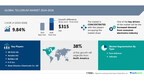
NEW YORK, Aug. 27, 2024 /PRNewswire/ — The global tellurium market  size is estimated to grow by USD 315 million from 2024-2028, according to Technavio. The market is estimated to grow at a CAGR of  9.84%  during the forecast period.  Increased demand from consumer electronics industry is driving market growth, with a trend towards green bonds fueling demand for tellurium. However, stringent environmental and safety regulations on tellurium  poses a challenge. Key market players include 5N PLUS Ltd., Aurubis AG, Boliden AB, II VI Inc., Kisan Kinzoku Chemicals Co. Ltd, Pan Pacific Copper Co. Ltd., PJSC MMC Norilsk Nickel, Rio Tinto Ltd., Sino Santech Materials Technology Co. Ltd., Shinko Chemical Co. Ltd., Umicore SA, and UMMC Holding Corp..

Get a detailed analysis on regions, market segments, customer landscape, and companies – Click for the snapshot of this report

Forecast period

2024-2028

Base Year

2023

Historic Data

2018 – 2022

Segment Covered

Type (Pure tellurium and Telluride), Application (Solar panels, Thermoelectric production, Metallurgy, and Others), and Geography (North America, Europe, APAC, Middle East and Africa, and South America)

Region Covered

North America, Europe, APAC, Middle East and Africa, and South America

Key companies profiled

5N PLUS Ltd., Aurubis AG, Boliden AB, II VI Inc., Kisan Kinzoku Chemicals Co. Ltd, Pan Pacific Copper Co. Ltd., PJSC MMC Norilsk Nickel, Rio Tinto Ltd., Sino Santech Materials Technology Co. Ltd., Shinko Chemical Co. Ltd., Umicore SA, and UMMC Holding Corp.

Key Market Trends Fueling Growth

Green bonds, which are used for investments in environmentally-friendly projects and certified as such by issuing authorities, have gained traction among banks. For instance, the Korean Development Bank issued a USD300 million green corporate bond for renewable energy projects in July 2022. These bonds contribute to the demand for tellurium by funding the installation of solar photovoltaic (PV) systems. The liquid nature of green bonds makes them an attractive investment option for companies, enabling entry into the broader investor base and reducing their cost of capital. This trend is expected to fuel the growth of the global tellurium market in the solar energy industry during the forecast period. 

Tellurium, a metalloid element, is gaining attention in the energy and tech industries due to its role in energy-efficient solutions. In solar technology, tellurium is used as an alloying agent in cadmium telluride (CdTe) for manufacturing thin-film solar cells, contributing to sustainable energy production. In next-gen electronics, tellurium-based compounds are utilized in phase-change memory devices and data storage. However, challenges persist. Supply chain disruptions and environmental impacts, including toxic byproducts and worker safety concerns, are pressing issues in tellurium extraction. The metallurgy industry is advancing to address these concerns, exploring more sustainable and efficient methods for sourcing and utilization. Tellurium’s use in alloys, such as steel and copper, also offers benefits in machinability and strength. Overall, tellurium’s role in clean energy technologies and next-gen electronics makes it a crucial component in the shift towards carbon emissions reduction. 

Discover a Comprehensive 360° Market Analysis: Understand the Impact of AI. For detailed information- Request Sample!

Market Challenges

Tellurium is a radioactive metalloid with cyanogenic properties that can negatively impact human health and the environment. Exposure to tellurium through air, water, or food can lead to respiratory issues, such as lung impairment and hard metal disease, as well as carcinogenic health concerns. Continuous exposure to tellurium at a concentration of 0.01 mg/m2 can cause tellurium breath, dry mouth, headache, nausea, and drowsiness. Tellurium can also pose fire hazards and emit toxic fumes when heated. To protect public health and the environment, federal regulations limit the permissible levels of tellurium in air, water, and food. Strict environmental and safety regulations will likely restrict demand for tellurium during the forecast period.Tellurium is a metalloid element with significant applications in electronics, metallurgy, and solar technology. In electronics, it is used as an alloying agent in steel and copper for improved machinability and strength. In solar technology, Tellurium is a crucial component of cadmium telluride (CdTe) used in thin-film solar cells. In thermoelectric materials, Tellurium’s unique properties make it ideal for use in phase-change memory devices and data storage with excellent retrieval capabilities. The demand for Tellurium is driven by the renewable energy sector, particularly in solar energy and power generation. The use of Tellurium in CdTe solar cells is essential for converting sunlight into electricity. However, the limited availability of Tellurium poses challenges for the industry. Umicore is one of the leading suppliers of Tellurium and its compounds, but supply chain constraints can impact production. Tellurium’s dominance in semiconductors and photovoltaic solar cells is due to its high efficiency in thermoelectric applications, energy efficiency improvements, and thermoelectric devices. Its use in optoelectronic devices and thin-film solar panels is also increasing. Despite its importance, Tellurium’s limited availability and high production costs remain significant challenges for the industry.

For more insights on driver and challenges – Download a Sample Report

Segment Overview 

This tellurium market report extensively covers market segmentation by

Type 1.1 Pure tellurium1.2 TellurideApplication 2.1 Solar panels2.2 Thermoelectric production2.3 Metallurgy2.4 OthersGeography 3.1 North America3.2 Europe3.3 APAC3.4 Middle East and Africa3.5 South America

1.1 Pure tellurium-  Tellurium, represented by the chemical symbol Te and having an atomic number of 52, is a fragile, silver-white metalloid. It is naturally found as a dark grey powder with both metallic and non-metallic properties. Tellurium forms numerous compounds similar to those of sulfur and selenium. When burnt in air, it produces tellurium dioxide, resulting in a greenish-blue flame. While water and hydrochloric acid do not affect tellurium, nitric acid causes it to disintegrate. The demand for tellurium is increasing due to its applications in semiconductors and solar cells. As a result, the market for tellurium is projected to expand significantly over the forecast period.

For more information on market segmentation with geographical analysis including forecast (2024-2028) and historic data (2018 – 2022)  – Download a Sample Report

Research Analysis

Tellurium is a metalloid element with unique properties, making it an essential component in various industries, including electronics, metallurgy, and renewable energy. In metallurgy, Tellurium functions as an alloying agent, enhancing the strength and machinability of steel and copper. In electronics and semiconductors, it plays a crucial role in the production of thermoelectric materials, which convert waste heat into electricity. Tellurium is also a vital ingredient in CdTe solar cells, contributing to the dominance of this technology in solar energy. The demand for Tellurium is driven by the renewable energy sector and the electronics industry, leading to supply chain constraints. Pure Tellurium and its compounds, such as Telluride, are used in chemical processes and the automotive industry. The semi-metal element’s versatility in alloys and semiconductors makes it an indispensable component in data storage and retrieval capabilities. The future of Tellurium lies in its potential to revolutionize power generation and solar energy, offering a sustainable solution to meet the world’s increasing energy demands. Umicore, a leading global materials technology and recycling group, is a significant player in the Tellurium market, contributing to its production and application in various industries.

Market Research Overview

Tellurium is a metalloid element with unique properties, making it an essential component in various industries, including electronics, metallurgy, and solar technology. As a key element in alloying agents for steel and copper, Tellurium enhances machinability and strength. In solar technology, Tellurium is a dominating element in thermoelectric materials, used in the production of cadmium telluride (CdTe) for thin-film solar cells and phase-change memory devices in data storage. Tellurium’s role in solar energy is significant, with CdTe solar cells being a popular choice due to their efficiency and energy efficiency improvements. However, the supply chain for Tellurium is limited, leading to constraints in the renewable energy sector. Pure Tellurium and its compounds, such as Telluride, are used in various applications, including semiconductors, photovoltaic solar cells, and thermoelectric devices. The demand for Tellurium is driven by the renewable energy sector, particularly in solar energy, as well as in next-gen electronics and clean energy technologies. However, the extraction of Tellurium comes with challenges, including environmental impacts, toxic byproducts, and worker safety concerns. Advancements in metal extraction and sourcing are essential to meet the growing demand while minimizing these issues. Tellurium’s role in energy efficiency and sustainable energy solutions is significant, with potential applications in waste heat recovery, automotive power generation, and optoelectronic devices. Despite its importance, the limited availability and supply chain disruptions can pose challenges to its widespread adoption.

Table of Contents:

1 Executive Summary
2 Market Landscape
3 Market Sizing
4 Historic Market Size
5 Five Forces Analysis
6 Market Segmentation

TypePure TelluriumTellurideApplicationSolar PanelsThermoelectric ProductionMetallurgyOthersGeographyNorth AmericaEuropeAPACMiddle East And AfricaSouth America

7 Customer Landscape
8 Geographic Landscape
9 Drivers, Challenges, and Trends
10 Company Landscape
11 Company Analysis
12 Appendix

About Technavio

Technavio is a leading global technology research and advisory company. Their research and analysis focuses on emerging market trends and provides actionable insights to help businesses identify market opportunities and develop effective strategies to optimize their market positions.

With over 500 specialized analysts, Technavio’s report library consists of more than 17,000 reports and counting, covering 800 technologies, spanning across 50 countries. Their client base consists of enterprises of all sizes, including more than 100 Fortune 500 companies. This growing client base relies on Technavio’s comprehensive coverage, extensive research, and actionable market insights to identify opportunities in existing and potential markets and assess their competitive positions within changing market scenarios.

Contacts

Technavio Research
Jesse Maida
Media & Marketing Executive
US: +1 844 364 1100
UK: +44 203 893 3200
Email: media@technavio.com
Website: www.technavio.com/

View original content to download multimedia:https://www.prnewswire.com/news-releases/tellurium-market-to-expand-by-usd-315-million-from-2024-2028-driven-by-rising-demand-in-consumer-electronics-ais-impact-on-market-dynamics—technavio-report-302231571.html

SOURCE Technavio

Continue Reading

Technology

Hearing Aids Market to Reach US$ 15.3 Bn by 2031, Driven by AI and Growing Accessibility | Wissen Research

Published

on

By

SHERIDAN, Wyo., Oct. 22, 2026 /PRNewswire/ — 

Hearing Aids Market Outlook: Innovation and Accessibility Drive Growth

“The hearing aids market is evolving rapidly as advances in AI, rechargeable technology, and over-the-counter devices make hearing care more accessible. With the global market projected to reach USD 15.3 billion by 2031, innovation and growing awareness of untreated hearing loss are expected to play a key role in shaping the industry,” said Mayur Jain, Research Expert at Wissen Research.

The need is large. The World Health Organization (WHO) estimates that more than 1.5 billion people worldwide live with hearing loss and about 430 million need rehabilitation for disabling hearing loss, and the report notes the number of people with hearing disorders could reach 2.5 billion by 2050. Aging populations are expanding the pool of users, while noise at work and in leisure activities is adding younger people to it. WHO calls untreated hearing loss a serious public health issue because it limits communication, education, work, and social life.

The report also points to a wide gap between the number of people with hearing loss and the number who use appropriate devices and treatment. That gap is where the industry is competing. Hearing aids have moved from simple sound amplifiers to connected, rechargeable, AI-enabled hearing aids, and a new over-the-counter category in the United States is changing how some adults buy them.

Get a Free Sample of This Report to Explore Key Findings and Data: https://www.wissenresearch.com/request-a-sample/?report=hearing-aids-market 

From Amplifiers to AI: Hearing Aids Now Process Speech, Noise, and Context in Real Time

Modern hearing aids are built from microphones, digital signal processors, amplifiers, receivers, and batteries, and the technology has moved from plain sound amplification to personalized, automatically adjusting listening. Directional microphones prioritize sound coming from certain directions, feedback cancellation and adaptive noise reduction clean up the signal, and processing can now tell speech from background noise and adjust amplification to the acoustic setting.

The hardest test is a crowded room, where background conversation and ambient noise make speech difficult to follow. The report notes that how well hearing aids cope with that depends on factors such as device design, which is why manufacturers keep working on speech enhancement. The race is visible in recent launches. In August 2026, three of the five companies the report names as top players, Sonova, Demant, and WS Audiology, each introduced a new platform built around AI that processes speech and surrounding sound in real time.

Over-the-Counter, Rechargeable, and Connected: Hearing Aids Become a Consumer Product

The second shift is about access. The U.S. Food and Drug Administration (FDA) has defined a category of over-the-counter (OTC) hearing aids for adults over 18 with mild to moderate hearing impairment, who can buy them in a store or online without a prescription or fitting appointment. The report sees this opening the door to self-fitting technology, easier-to-use devices, lower-priced products, and more consumer-oriented distribution. OTC devices are not right for every case, however, and children and people who need specialized assessment still require professional fitting.

Convenience features are changing expectations as well. Rechargeable hearing aids remove the need for frequent battery purchases, Bluetooth lets users stream calls and audio from compatible devices, and smartphone apps handle volume, listening preferences, and device settings. Remote fitting and teleaudiology services add support without a clinic visit. These features are especially helpful for older users and anyone who wants a simpler device.

What’s Fueling Growth in the Hearing Aids Market

Rising prevalence of hearing loss: Aging populations and noise exposure at work and in leisure activities are expanding the number of potential users.Greater awareness of hearing care: Consumers and health professionals increasingly recognize how hearing loss affects communication, social life, and quality of life, which encourages earlier evaluation and treatment.Better sound technology: Improvements in personalization, directionality, noise reduction, feedback control, and adaptability make it easier for users to follow sound in different listening environments.Rechargeable and smart devices: Rechargeable batteries, smartphone compatibility, wireless audio streaming, and easy pairing of devices remove daily frustrations.More ways to buy: Audiology clinics, specialty shops, online stores, and OTC devices, where regulations allow, are widening access.Demand for customized products: Manufacturers are offering more styles, form factors, and technologies to match individual needs.

Challenges Facing the Hearing Aids Market

The biggest challenge is the gap between those who have hearing loss and those who use appropriate devices and care. High costs of devices and fitting, limited coverage from public programs, low awareness, stigma, and limited access to hearing specialists can all slow adoption.

Results also vary from person to person, depending on the type and degree of hearing loss, the device chosen, the fitting method, and the listening environment. Even advanced devices can struggle in noise, and some users have discomfort, trouble handling small devices, or difficulty adapting to amplification. Manufacturers must also balance reliability and pricing with battery life, wireless technology, cybersecurity, safety, and regulatory compliance.

Recent Strategic Developments in the Hearing Aids Market

In August 2026, Sonova launched its Phonak EON hearing aid platform, featuring real-time artificial intelligence to improve speech understanding and reduce listening effort. The company positioned the smaller, lighter device in the premium segment, launching first in the United States, followed by Australia and key European markets.

In August 2026, Demant A/S of Denmark introduced Oticon Reveal, a platform with Dual AI technology that processes speech and contextual sounds simultaneously in real time. The platform also adds improved feedback control and enhanced wireless connectivity, aiming to improve speech understanding and deliver a more natural listening experience.

In August 2026, WS Audiology A/S of Denmark introduced Signia’s Multi-adaptive Xperience (MaX) platform, which integrates four deep neural networks to process speech, background noise, environmental sounds, and the wearer’s own voice simultaneously. It also offers enhanced group-conversation processing, improved computing power, rechargeable functionality, and expanded Bluetooth and Auracast connectivity.

All three launches lean on AI to separate speech from everything else, and all three add connectivity.

Key Insights from Hearing Aids Market Analysis

Hearing aid devices held a leading position by product type in 2025. The category covers behind-the-ear, receiver-in-canal, in-the-ear, in-the-canal, and completely-in-canal devices. Hearing implants, including cochlear implants and bone-anchored hearing systems, are the other category, serving patients who do not get enough benefit from conventional hearing aids, and their use depends on qualification, medical assessment, surgery, rehabilitation, and reimbursement.Digital hearing aids held a leading position by technology type in 2025, because digital signal processing allows personalized amplification across different frequencies and makes features such as feedback cancellation, directional microphones, and adaptive noise reduction possible. Analog devices are used less often today.North America is the leading region, supported by developed hearing care infrastructure, specialized distribution channels, advanced hearing technologies, and the U.S. OTC category.Asia Pacific is the fastest-growing region, supported by large and aging populations, rising awareness of hearing impairment, and gradually expanding hearing care facilities. China, India, and Japan are the most important national markets, each with a different level of healthcare access, purchasing power, device adoption, and audiology infrastructure.The market is moderately consolidated, with a small group of established manufacturers holding significant competitive positions, supported by established brands, extensive distribution networks, proprietary hearing technologies, and relationships with hearing care professionals. Smaller manufacturers and emerging consumer-focused companies compete in specialized and price-sensitive segments.

Key Players in the Hearing Aids Market

Leading companies in the hearing aids market are focusing on digital signal processing, rechargeable devices, wireless connectivity, personalized fitting, speech enhancement, and expansion across professional and consumer-oriented distribution channels.

The report names Sonova AG (Switzerland), Demant A/S (Denmark), WS Audiology A/S (Denmark), GN Store Nord A/S (Denmark), and Starkey Laboratories, Inc. (US) as the top five players, participating through hearing aid devices, digital sound-processing technologies, connectivity features, and hearing care solutions. Competition turns on sound quality, comfort, battery duration, connectivity, fitting accuracy, price, availability through distribution channels, and consumer support.

Other companies profiled in the report include Cochlear Limited (Australia), MED-EL Elektromedizinische Geräte Gesellschaft m.b.H. (Austria), RION Co., Ltd. (Japan), Eargo, Inc. (US), and Audina Hearing Instruments, Inc. (US). The report also covers Amplifon S.p.A., Audicus, Inc., Nuheara Limited, Earlens Corporation, Etymotic Research, Inc., IntriCon Corporation, hearX Group, and Sound World Solutions, LLC, among others.

Regional Analysis and Growth Opportunities

North America leads the hearing aids market. The report points to developed hearing care infrastructure, specialized distribution channels, and advanced hearing technologies in North America and Europe, and to the FDA’s OTC category, which created a prescription-free route to hearing aids for adults with mild to moderate hearing loss.

Asia Pacific is the fastest-growing region. Its large and aging population, rising awareness of hearing health, and gradually expanding healthcare infrastructure support demand, with China, India, and Japan the most important national markets because of their population size and rising need for hearing care services. WHO stresses that hearing loss should be treated as an important public health issue and that access to diagnosis, treatment, and assistive technologies should improve. Growth in specialized hearing clinics, hospitals, retailers, and online channels, along with improvements in digital, wireless, and rechargeable devices, is helping make hearing aids more accessible in the region, although high costs, low awareness, limited access to specialists, and differences in reimbursement continue to limit adoption.

Europe, Latin America, and the Middle East & Africa complete the report’s regional coverage.

Get a Custom Briefing on This Market for Your Business

Wissen Research’s healthcare technology analysts are available to walk through findings specific to your market, region, or competitive set.

Need Insights Specific to Your Business? Request a Customized Version of This Report: https://www.wissenresearch.com/request-customization/?report=hearing-aids-market 

Market Segmentation Snapshot

The global hearing aids market is segmented across product type, patient type, technology type, hearing loss type, distribution type, and region:

By Product Type:Hearing Aid Devices (Receiver-in-the-Ear/RIC Hearing Aids, Behind-the-Ear/BTE Hearing Aids, Canal Hearing Aids, In-the-Ear/ITE Hearing Aids, Other Hearing Aid Devices)Hearing Implants (Cochlear Implants, Bone-Anchored Hearing Systems)By Patient Type:AdultsPaediatricsBy Technology Type:DigitalAnalogBy Hearing Loss Type:Sensorineural Hearing LossConductive Hearing LossBy Distribution Type:Audiology and ENT Hospitals & ClinicsRetail & Pharmacy StoresOnline SalesBy Region:North AmericaEuropeAsia-PacificLatin AmericaMiddle East & Africa

Frequently Asked Questions

Q: What is the size of the hearing aids market? 
A: The global hearing aids market is estimated at USD 10.9 billion in 2026 and is projected to reach USD 15.3 billion by 2031.

Q: What is the growth rate of the hearing aids market? 
A: The hearing aids market is projected to grow at a CAGR of 7% between 2026 and 2031.

Q: What are hearing aids? 
A: Hearing aids are electronic devices that capture, process, amplify, and transmit sound, making it audible to people with different degrees and types of hearing loss. The main styles are behind-the-ear, receiver-in-canal, in-the-ear, in-the-canal, and completely-in-canal devices, and many now include digital processing, rechargeable batteries, Bluetooth connectivity, and AI-assisted sound processing.

Q: How many people have hearing loss? 
A: According to the World Health Organization, more than 1.5 billion people worldwide live with hearing loss, and about 430 million need rehabilitation for disabling hearing loss.

Q: What are over-the-counter hearing aids? 
A: In the United States, the FDA has defined a category of over-the-counter hearing aids for adults over 18 with mild to moderate hearing impairment, who can buy them in a store or online without a prescription. They are not suitable for all types and degrees of hearing loss, and children and people who need specialized assessment still require professional diagnosis and fitting.

Q: Which technology leads the hearing aids market? 
A: Digital hearing aids held a leading position by technology type in 2025, because digital signal processing allows personalized amplification and features such as feedback cancellation, directional microphones, and adaptive noise reduction.

Q: Which product type leads the hearing aids market? 
A: Hearing aid devices, which include behind-the-ear, receiver-in-canal, in-the-ear, in-the-canal, and completely-in-canal styles, held a leading position by product type in 2025, ahead of hearing implants such as cochlear implants.

Q: Which region leads the hearing aids market? 
A: North America is the leading region in the hearing aids market, while Asia Pacific is the fastest-growing region through 2031.

Q: Who are the top players in the hearing aids market? 
A: Leading companies in the hearing aids market include Sonova AG, Demant A/S, WS Audiology A/S, GN Store Nord A/S, and Starkey Laboratories, Inc.

The report describes a shift from amplifying sound to understanding it, and from a product sold through clinics to one that can also be bought off the shelf. For manufacturers, the work ahead is delivering hearing aids that perform in noisy real-world settings, stay affordable, and reach the many people who have hearing loss but do not yet use a device.

Get the Complete Hearing Aids Market Report – Forecasts, Insights & Growth Opportunities: https://www.wissenresearch.com/market-research-reports-pricings/hearing-aids-market

Expert Profile | Mayur Jain, Wissen Research 

Mayur Jain is a Research Expert at Wissen Research with multidomain expertise with more than 12+ years of experience in market research industry. 

Email: mayur@wissenresearch.com
LinkedIn:  https://www.linkedin.com/in/mayur-jain-0190542a/ 

About Wissen Research

Wissen Research is a global market intelligence and consulting firm specializing in healthcare, life sciences, technology, and emerging industries. The company provides data-driven insights, strategic market analysis, and industry forecasts to help organizations make informed business decisions and identify new growth opportunities across global markets

Company Contact:

Wissen Research LLC,
Gould St, Ste R,
Sheridan, WY 82801,
Phone: (+1) 510 240 9853
Email: info@wissenresearch.com
Website: https://www.wissenresearch.com/
Blog: https://www.wissenresearch.com/insights/
LinkedIn: https://www.linkedin.com/company/wissen-research 

View original content to download multimedia:https://www.prnewswire.co.uk/news-releases/hearing-aids-market-to-reach-us-15-3-bn-by-2031–driven-by-ai-and-growing-accessibility–wissen-research-302917351.html

Continue Reading

Technology

AHN Cancer Center Expands Successful Screening Initiative with New Workplace Program for Regional Employers

Published

on

By

Dollar Bank becomes first participating employer as AHN brings life-saving cancer screenings directly to the workplace

PITTSBURGH, Oct. 22, 2026 /PRNewswire/ — Building on the success of its longstanding cancer screening program, Allegheny Health Network (AHN) Cancer Center is launching a new workplace cancer screening initiative designed to bring convenient, potentially life-saving cancer screenings directly to employees across western Pennsylvania.

The new program, part of the AHN Cancer Center’s S.T.O.P. Cancer initiative, will partner with large employer groups to offer on-site cancer screening events that remove barriers to preventive care and help identify cancer at its earliest, most treatable stages. S.T.O.P. Cancer stands for Screen, Test, Outsmart and Prevent Cancer.

Dollar Bank is the first employer to participate in the initiative. On Oct. 29, AHN Cancer Center clinicians will host an exclusive cancer screening event for eligible Dollar Bank employees, offering convenient access to screenings and educational resources focused on cancer prevention and early detection. AHN Cancer Center leaders are also working with the Pittsburgh Firefighters Union to schedule a workplace screening event in early 2027.

The new effort expands on AHN’s successful comprehensive cancer screening program, which has provided thousands of screenings across western Pennsylvania through dedicated screening clinics, community events and partnerships designed to increase access to preventive care. AHN has hosted large-scale screening events throughout the region, including programs with community organizations and professional sports partners, helping connect residents with screenings they might otherwise delay or forgo.

“Early detection remains one of the most powerful tools we have in the fight against cancer,” said David Bartlett, MD, director of the AHN Cancer Center. “By bringing screening services directly to workplaces, we are making it easier for people to prioritize their health, access recommended screenings and identify concerns before symptoms develop. This initiative reflects our commitment to meeting people where they are and helping more individuals take proactive steps to prevent cancer or detect it early.”

Workplace screening events will be customized based on employee demographics, screening eligibility guidelines and organizational needs. In addition to screening opportunities, participants will receive education about cancer prevention, risk factors and follow-up care resources.

“At Dollar Bank, we are committed to supporting the health and well-being of our employees,” said Jim McQuade, president and CEO of Dollar Bank. “Partnering with AHN Cancer Center to bring cancer screenings directly to our workplace makes preventive care more convenient and accessible for our team members. We are proud to be the first employer participating in this innovative program and to help raise awareness about the importance of early detection.”

Dollar Bank and AHN officials hope the event will serve as a model for future employer partnerships aimed at increasing access to cancer screenings throughout the region.

Cancer remains one of the leading causes of death in the United States, yet many recommended screenings continue to be underutilized due to challenges related to transportation, scheduling and awareness. AHN’s workplace model aims to eliminate many of those barriers by offering screening opportunities in convenient, familiar settings.

“Our S.T.O.P. Cancer initiative is focused on reducing the burden of cancer through prevention and early detection,” said Dr. Bartlett. “Expanding access through employer partnerships is a natural next step in that mission and an important opportunity to improve health outcomes across our communities.”

AHN expects to add additional employer partners throughout 2027 as the program grows.

About the Allegheny Health Network – and the AHN Cancer Center
Allegheny Health Network is a western Pennsylvania-based integrated healthcare system that serves patients from across a five-state region that includes western Pennsylvania and the adjacent regions of Ohio, West Virginia, Maryland, and New York. The Network’s Cancer Center employs more than 200 physicians and 500 oncology professionals who provide a complete spectrum of oncology care at 24 affiliated oncology clinics, including access to state-of-the-art technologies and new therapies being explored in hundreds of clinical cancer trials. The Cancer Center has the only cancer program in the Pittsburgh region accredited as an Integrated Network Cancer Program by the American College of Surgeons Commission on Cancer, and its radiation oncology program is the largest in the country accredited by the American Society for Radiation Oncology. AHN Cancer Center is a Quality Oncology Practice Initiative certified practice, and is accredited by the Foundation for Accreditation of Cellular Therapy, National Accreditation Program for Breast Centers and the National Accreditation Program for Rectal Cancer.

View original content to download multimedia:https://www.prnewswire.com/news-releases/ahn-cancer-center-expands-successful-screening-initiative-with-new-workplace-program-for-regional-employers-302917237.html

SOURCE Allegheny Health Network

Continue Reading

Technology

BRG Communications Adds Four Senior Leaders Amid Continued Agency Growth in Healthcare Communications

Published

on

By

New appointments expand client leadership and deepen expertise in research, insights and digital strategy

ALEXANDRIA, Va., Oct. 22, 2026 /PRNewswire/ — BRG Communications (BRG), an award-winning healthcare public relations agency based in the Washington, D.C. area, announced four senior appointments: Caitlin Chase and Leanne Stone as vice president, managing directors, Brandon Kenah as director of research, insights and measurement, and Vijaya Singh as director of digital strategy and integrated visibility. The hires add experienced client leadership, deepen the agency’s research, insights and digital expertise, and support its continued growth.

These appointments come as BRG Communications celebrates its 25th anniversary, following six consecutive years of double-digit revenue growth and a 38% increase in team size over the past year. These investments reflect the agency’s commitment to building on its established strengths, creating opportunities for its tenured team members and bringing deeper expertise to the organizations it serves.

“One of the most rewarding parts of our growth is the opportunity it creates — for our people to expand their careers, for our clients to benefit from greater depth of expertise and for BRG to take on increasingly complex challenges,” said Jane Barwis, president and CEO of BRG Communications. “We’re intentionally bringing in experienced leaders who add new perspectives and capabilities while creating room for our long-standing team members to grow into expanded roles. It’s about building on the strengths that got us here while continually raising what we’re able to deliver.”

Expanding Senior Client Leadership

Caitlin Chase, Vice President, Managing Director, brings extensive experience guiding strategic communications, reputation and stakeholder engagement for organizations working at the intersection of healthcare, innovation and social impact. Her background includes leadership roles at XPRIZE Foundation and the American Heart Association, where she helped translate complex issues into compelling narratives and integrate communications programs. Chase brings expertise in strategic positioning, thought leadership and mission-driven communications, strengthening BRG’s counsel to organizations navigating complex challenges and working to advance meaningful change.

Leanne Stone, Vice President, Managing Director, brings deep experience leading integrated marketing and communications programs for global healthcare and consumer brands. Most recently with Burson, Stone has led multidisciplinary teams and large-scale campaigns for clients including Novo Nordisk on drugs including Ozempic and Wegovy. Her expertise in brand strategy, creative development, earned and paid media, and integrated communications strengthens BRG Communications’ ability to develop programs that connect audience insights, compelling storytelling, and measurable business outcomes.

Together, Chase and Stone strengthen BRG’s senior client leadership, providing additional strategic counsel, cross-disciplinary expertise and capacity to support the agency’s expanding portfolio of clients.

Deepening Research, Insights and Digital Expertise

Brandon Kenah, Director of Research, Insights and Measurement, brings more than a decade of experience using research, analytics and measurement to inform communications strategy across healthcare, life sciences and consumer industries. Previously with Lippe Taylor and Burson, Kenah has led research and audience intelligence programs that shape brand positioning, messaging and campaign development. At BRG, he will help deepen the integration of research and insights across client work, strengthening the foundation for strategic recommendations, identifying new opportunities and advancing the agency’s ability to measure communications effectiveness.

Vijaya Singh, Director of Digital Strategy, brings more than 10 years of experience developing data-driven digital communications and integrated campaigns for healthcare, technology and emerging brands. Her background includes roles with Mount Sinai, Zeno Group, and D2 Creative, where she developed digital strategies, audience engagement programs, and performance-driven campaigns. At BRG, Singh will deepen the agency’s digital strategy expertise, helping clients connect audience intelligence, creative content and emerging technologies to build engagement and deliver measurable results.

The additions of Kenah and Singh build on BRG Communications’ established research and digital offerings, bringing added leadership, specialized expertise and new approaches that can be applied across the agency’s client portfolio.

As BRG marks 25 years of Communications for Better Living, these investments underscore the agency’s commitment to growing with intention, bringing together the talent, experience and capabilities to support its people, strengthen client partnerships and deliver work that makes a difference.

About BRG Communications

Founded in 2001, BRG Communications is a top-ranked PR agency, delivering award-winning communications dedicated to Communications for Better Living. Specializing in healthcare, wellness and organizations advancing better living, BRG partners with corporations, associations and nonprofit organizations to build reputations, inspire action and create meaningful impact. Recognized as PRWeek’s 2026 Outstanding Small Agency, BRG combines deep sector knowledge, strategic creativity and a commitment to its clients and people. Learn more at www.brgcommunications.com.

Media Contact:
Maureen Higgins, Vice President
BRG Communications
mhiggins@brgcommunications.com
703-739-8366

View original content:https://www.prnewswire.com/news-releases/brg-communications-adds-four-senior-leaders-amid-continued-agency-growth-in-healthcare-communications-302917356.html

SOURCE BRG COMMUNICATIONS

Continue Reading

Trending