Technology
SIHL’s Core Businesses Achieve Robust Growth
Published
2 years agoon
By
Consumer Products Business Rebounds Rapidly
Infrastructure and Environmental Protection Business Accounts for the Largest Share of the Group’s Revenue and Profit
HONG KONG, Aug. 29, 2024 /PRNewswire/ — Shanghai Industrial Holdings Limited (“SIHL” or the “Company”, together with its subsidiaries collectively referred to the “Group”; HKSE stock code: 363) has announced its unaudited interim results for the six months ending on 30 June 2024. Revenue amounted to HK$10.37 billion, a decrease of 18.9% year-on-year. Profit attributable to owners of the Company amounted to HK$1.201 billion, a decrease of 12.7% year-on-year. The decrease in revenue and profit was mainly driven by a relatively large one-off gain recorded by SI Development over the same period last year. The Board of Directors has recommended an interim dividend of HK42 cents per share with the payout ratio of 38% to reciprocate our shareholders’ long-term support.
2024 Interim Results Highlights
For six months ended 30 June
(Unaudited)
2024
2023
Change
Revenue (HK$ million)
10,369
12,791
-18.9 %
Profit attributable to owners of the
Company (HK$ million)
1,201
1,376
-12.7 %
Earnings per share – Basic (HK$)
1.105
1.265
-12.6 %
Interim dividend per share (HK cents)
42
42
Payout ratio
38 %
33.2 %
As at 30 June
(Unaudited)
As at 31 December
(Audited)
2024
2023
Change
Total assets (HK$ million)
174,887
179,312
-2.5 %
Equity attributable to owners of the
Company (HK$ million)
46,280
46,603
-0.7 %
Cash and cash equivalents (HK$ million)
27,071
34,639
-2.6 %
Revenue and Profit Contributions by Business:
For the six months ended 30 June
(Unaudited)
Segment Revenue (HK$ million)
2024
2023
Change
Infrastructure and Environmental
Protection
4,571
5,550
-17.6 %
Real Estate
4,092
5,926
-31.0 %
Consumer Products
1,706
1,315
+29.7 %
Total
10,369
12,791
-18.9 %
Segment Net Profit (HK$ million)
2024
2023
Change
Infrastructure and Environmental
Protection
1,056
1,195
-11.6 %
Comprehensive Healthcare Operations
65
69
-6.4 %
Real Estate
-131
102
N/A
Consumer Products
320
128
+150.4 %
Total
1,311
1,494
-12.2 %
In the first half of 2024, the Group adhered to reform and innovation; accelerated the upgrading and restructuring of its main businesses; promoted the integration of financing and industries and revitalization of assets to further optimize its business layout; and strengthened its internal management in order to steadily promote the healthy development of its business.
For the six months ended 30 June 2024, the Group recorded unaudited revenue of HK$10.369 billion, representing a decrease of 18.9% compared to the same period last year. Profit attributable to owners of the Company was HK$1.201billion, representing a decrease of 12.7% year-on-year. The decline in revenue and profit was primarily due to a significant decrease in sales recognized from completed property projects and a decrease in construction revenue at SIIC Environment. That said, new project construction is expected to gradually commence in the second half of the year. The decline was also partially offset by a significant rebound in the consumer products business.
Over the period, profits from the infrastructure and environmental protection segment decreased by 11.6% year-on-year to HK$1.056 billion, accounting for around 80.6% of the Group’s net profit. This decline was primarily due to a 20.4% drop in profit contributions from the water services and clean energy business. The Group continued to leverage national strategies and policy opportunities; boosted its expansion in the Guangdong-Hong Kong-Macao Greater Bay Area (“GBA”) and the Yangtze River Economic Belt; and strengthened its leading position in China’s water services and environmental protection industries.
During the first half of 2024, the comprehensive healthcare operations business contributed a profit of HK$64.77 million, representing a decrease of 6.4% over the previous year and accounting for approximately 5.0% of the Group’s net profit.
The real estate business reported a loss of HK$131 million, marking a shift from profit to loss compared to the same period last year and accounting for a negative 10% of the Group’s net profit. The loss was mainly driven by a decrease in property sales from completed property and a high base from a significant one-time gain last year from the sale of the land parcel No.89, North Bund by SI Development.
The consumer products business made a profit contribution of HK$320 million to the Group, representing a significant increase of 150.4% over the previous year and accounting for 24.4% of the Group’s net profits. Nanyang Tobacco and Wing Fat Printing both saw significant rebounds in revenue and profit in the past half a year, reversing the downturn experienced during the pandemic. Notably, Wing Fat Printing experienced a strong performance rebound driven by the recovery in tobacco packaging and a significant rise in the moulded-fibre business.
Business review:
Infrastructure and Environmental Protection
For the Group’s three toll roads and Hangzhou Bay Bridge, overall traffic volume grew steadily during the period, mainly due to the increase in travel during festival and holidays after the pandemic. During the first half of the year, traffic volume increased by 1.9% year-on-year to 85.96 million and toll revenue amounted to HK$2.1 billion, decreased by 2.2% year-on-year. Profit to the Group amounted to HK$651 million, contributing stable cash flow.SIIC Environment (BHK SGX, 807 HKSE) reported revenue of RMB3.324 billion, a 17.3% year-on-year decrease, with profit attributable to shareholders at RMB321 million, down 14.8% year-on-year. The decline was mainly due to a significant reduction in construction revenue after the completion of the Baoshan project in 2023, resulting in a corresponding drop in profit. However, the gross profit margin increased by 2.6 percentage points to 38.4%, and major new projects are expected to begin construction in the second half of 2024.SIIC Environment’s operational business experienced stable growth in the first half of the year. Wastewater treatment volume increased by 3.1% year-on-year to approximately 1.278 billion tons, while water supply volume grew by 4.7% to 163 million tons. The average wastewater treatment fee also rose by 4.4% year-on-year to RMB1.88 per ton.During the period, General Water of China recorded revenue of HK$956 million, a year-on-year decrease of 10.3%. Net profit was HK$130 million, down 26.5% from the same period last year. General Water of China was also recognized as one of the “Top 10 Most Influential Water Companies in China” for the 21st consecutive year and ranked among the top three for the sixth consecutive year.SIHL has a 19.48% equity stake in Canvest Environmental Protection Group Company Limited (“Canvest”), which recorded a revenue of HK$2.13 billion in the first half of the year. Canvest currently operates 36 projects, covering 12 provinces and 26 cities. The combined daily processing capacity of these projects reached 54,540 tons, with the operational capacity amounting to 43,690 tons per day. During the period, the volume of harmlessly treated solid waste was 8.699 million tons, and electricity generation reached 3.225 billion kWh, representing a year-on-year increase of 7.6% and 4.7% respectively.Shanghai SUS Environment Co., Ltd (“SUS Environment”) – which is 28.34% owned by the Group’s 50% stake joint-venture – had a total daily capacity of 45,625 tons of waste incineration operations during the period. It achieved an on-grid electricity generation of 3.139 billion kWh, representing a year-on-year increase of 3.3%. During the year, three new waste-to-energy projects were acquired and 13 waste-to-energy projects were being developed, with a total amount of RMB74 million in newly signed contracts.With respect to the new business arena, the photovoltaic assets capacity of Shanghai Galaxy Investment Co., Ltd. and its subsidiary, SIIC Aerospace Galaxy Energy (Shanghai) Co., Ltd., reached 740 MW as of 30 June 2024. The total amount of on-grid electricity sold during the period from the 15 photovoltaic power stations was approximately 519 million kWh, representing a year-on-year decrease of 6.76%. This was primarily driven by a surge in solar and wind power installations across various provinces, leading to a significantly higher-than-expected level of power rationing.
Comprehensive Healthcare Operations
Comprehensive Healthcare Operations achieved a profit of HK$64.77 million for the first half of the year, representing a decrease of 6.4% year-on-year and accounting for 5.0% of the Group’s net profit. The Group’s 20%-owned Shanghai Pharmaceuticals Group recorded revenue of RMB139.658 billion, representing a year-on-year increase of 5.17%. Net profit amounted to RMB598 million, representing an increase of 6.3% over the previous year. Although the Group’s share of profit from Shanghai Pharmaceuticals Group increased, the depreciation of the RMB was less significant compared to the same period last year, resulting in a decrease in exchange gains from RMB loans invested in Shanghai Pharmaceuticals Group.
Real Estate
SI Development (600748 SSE) recorded revenue of RMB1.029 billion, representing a decrease of 70.2% year-on-year, which was primarily attributed to a significant decline in revenue recognized from completed projects and a high base due to a substantial one-off gain recorded in the same period last year. The net loss amounted to RMB177 million, turning from a profit to a loss. In the first half of the year, the contract sales of real estate projects reached RMB240 million.While the real estate industry witnessed a downward environment in the first half of the year, SI Development has made steady progress in the construction of key projects. At the same time, SI Development implemented rectification measures for major risk issues, comprehensively reviewed the existing corporate governance structure, and focused on core commercial and office projects, with 317 projects currently under management. Rental income for the period was approximately HK$234million.SI Urban Development (563 HKSE) recorded a revenue of HK$2.981 billion, a year-on-year increase of 65.8%, and a loss attribute to shareholders of HK$232 million, primarily due to the devaluation of investment properties. During the period, the contract sales amounted to RMB2.284 billion with projects mainly including Originally in Xi’an, Summitopia in Tianjin , with nine projects under construction. Rental income for the half-year amounted to approximately HK$381 million.
Consumer Products
In the first half of the year, Nanyang Tobacco recorded a revenue of HK$1.093 billion, a year-on-year increase of 68.7%. Net profit reached HK$281 million, a year-on-year increase of 173.5%. Sales volume was 569,000 cases, a year-on-year increase of 185.1%. Nanyang Tobacco has been steadily advancing projects such as the upgrade of the QR code application platform and the premium can production line, while striving to expand both domestic and international markets.Hong Kong has significantly increased tobacco taxes for two consecutive years, and smoking control measures are becoming increasingly stringent. In response, Nanyang Tobacco has closely collaborated with duty-free companies to gradually adjust its marketing strategy, focusing on mid- to high-end products while phasing out low-end products. This approach resulted in a satisfactory increase in sales during the period. Facing stricter compliance requirements in the domestic specialist market, Nanyang Tobacco has continuously introduced new products, expanding the number of product specifications to nine. In the second half of the year, new products are planned to be launched in Shanghai, Hubei, and Shenzhen.Since the commencement of production last year, Nanyang Tobacco’s Malaysia plant has completed its annual order fulfillment by this year, marking a solid step forward in its internationalization efforts. Meanwhile, under the strategic cooperation framework with large cigarette companies, Nanyang Tobacco has successfully advanced projects such as the implementation of tobacco primary processing. They are set to embark on a new round of deep collaboration, continually injecting vitality into the full industry chain cooperation model, including overseas tobacco leaf procurement, process technology, and market collaboration.During the period, Wing Fat Printing recorded a revenue of HK$751 million, a year-on-year increase of 3.7%, mainly driven by the tobacco and alcohol packaging and molding businesses. Net profit for the period reached HK$47.66 million, a sharp increase of 63.8% year-on-year, primarily due to structural optimization of revenue and comprehensive contributions from cost reduction and efficiency improvements. Throughout the period, Wing Fat Printing fully optimized its delivery capabilities and service levels for core customer groups, ensuring the healthy development of its revenue structure.
SIHL Chairlady Leng Wei Qing stated, “At present, the business development of enterprises is still in the complicated environment of sailing against the current and either making no progress or retreating. In the second half of the year, the Group will continue to prioritize stability while enhancing market expansion capabilities and focusing on value creation, to achieve sustainable green development and healthy growth . In the infrastructure and environmental protection sectors, SIIC Environment will continue to optimize its business layout, expand market share, and solidify its leading position in China’s water services and environmental protection industries. We will actively respond to national policies, keeping pace with the times and unwaveringly pursuing green development. The toll road business will continue to improve operational efficiency and maintain stable development. The Group’s investments in the health and new business arena, particularly in the pharmaceutical, healthcare, and green energy sectors will contribute further to the growth. In real estate, we will closely monitor changes in industry policies and strategically position ourselves in key areas, such as the Yangtze River Delta Economic Zone centered on Shanghai, to continue advancing existing projects. Nanyang Tobacco will accelerate the cultivation of the existing innovative tobacco market and the launch of new products, while also focusing on the Malaysia project to enhance our digital application capabilities. Wing Fat Printing will leverage technological innovation to advance its sustainable development in the green, healthy, and environmentally friendly packaging market. Overall, the Group will accelerate the upgrading of its core businesses and selectively increase holdings in high-quality projects to create greater value for shareholders.”
About SIHL
Shanghai Industrial Holdings Limited (“SIHL”, HKSE Stock Code: 363) is the largest overseas conglomerate under Shanghai Industrial Investments (Holdings) Co., Ltd (“SIIC”). As the flagship of the SIIC group of companies, SIHL has been successful in leveraging its Shanghai advantage since listing, in terms of securing the best investment opportunities in mainland China with full support from the parent company. With over 20 years’ development, SIHL has become a conglomerate company with four core businesses: infrastructure and environmental protection (including toll roads/bridges, sewage treatment and solid waste treatment, etc.), comprehensive healthcare operations, real estate and consumer products (including Nanyang Tobacco and Wing Fat Printing). SIIC will continue to enhance its corporate governance and strive to create greater value for its shareholders.
For more information about SIHL, please visit the company website at www.sihl.com.hk.
View original content:https://www.prnewswire.com/apac/news-releases/sihls-core-businesses-achieve-robust-growth-302234010.html
SOURCE Shanghai Industrial Holdings Limited
You may like
Technology
Silicon Valley Investors Urge Taiwan Startups to Find Niches as AI Competition Intensifies
Published
5 minutes agoon
October 20, 2026By
OAKLAND, Calif., Oct. 19, 2026 /PRNewswire/ — Taiwanese startups seeking to compete in artificial intelligence must develop specialized expertise, strengthen distribution networks and identify markets overlooked by larger technology companies, investors said at a Silicon Valley gathering on Monday.
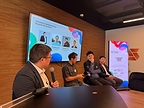
The discussion took place during Taiwan × Silicon Valley: Founders, Capital & the Next Wave of Innovation, organized by Startup Island TAIWAN Silicon Valley Hub and Taiwan Global Angels in partnership with Google Cloud as part of SF Tech Week.
Opening the event, Uly Su, director and head of Startup Island TAIWAN Silicon Valley Hub, emphasized the hub’s role in connecting Taiwanese startups with U.S. investors, corporations and business opportunities, strengthening ties between Taiwan’s technology ecosystem and Silicon Valley.
The Shrinking AI Advantage
Timothy Chen, managing partner at Essence VC, said the rapid evolution of AI models has made technological advantages increasingly short-lived, forcing investors to reassess how they identify promising startups.
Rather than focusing exclusively on technologies that could dominate over the next five years, Chen said investors are examining founders’ specialized knowledge, distribution capabilities and ability to execute. Even a three- to six-month advantage could prove valuable in a rapidly changing market.
The panelists also discussed how startups could compete against larger technology companies. They emphasized identifying underserved markets, developing specialized capabilities and moving quickly before established players enter emerging sectors.
Beyond Software: Space, Robotics and Physical AI
Poseidon Ho, founding partner and CEO of Outliers Fund, highlighted opportunities beyond conventional AI applications, particularly in space and defense, where government contracts and expanding infrastructure investment are creating markets for emerging companies.
Ho said the sector offers a different investment model from software, with longer development cycles and substantial technical requirements. He encouraged Taiwanese entrepreneurs to explore opportunities within the space industry’s supply chains, including government contracting.
Austin Hwang, principal at ADVentures, identified physical AI, robotics and medical technology as areas of interest, particularly where startups combine specialized hardware with software and proprietary technical capabilities.
Hwang said Taiwan’s experience in semiconductors, electronics and manufacturing could provide an advantage as AI increasingly moves beyond software into physical applications.
From Technology to Commercial Success
A second panel featuring experienced entrepreneurs shifted the discussion toward commercialization, acquisitions and the challenges of building companies across Taiwan and the United States.
Paul Hung, CEO of Taudia, emphasized that startups must begin with a clearly defined customer problem rather than technology development alone.
Hung said founders need to understand why customers would pay for their products and build teams and investor networks capable of supporting commercialization.
Terry Hsiao, managing partner at BonHope Capital, drew on his experience building and selling companies to discuss the decisions founders face when considering acquisitions.
He noted that venture capital firms can spread their risks across multiple investments, while first-time founders often have most of their financial interests tied to a single company. Securing an initial successful exit could therefore be an important consideration.
Medical technology entrepreneur Steve Wu discussed the challenges of developing regulated healthcare products, including lengthy development cycles, regulatory requirements and the importance of understanding the commercial potential of new technologies.
The speakers also highlighted cultural differences between Taiwan and Silicon Valley, where entrepreneurship and risk-taking are more widely encouraged and founders have greater exposure to experienced investors and business leaders.
For Taiwanese startups, the discussions underscored the importance of combining the island’s engineering and manufacturing capabilities with stronger commercialization strategies, international market access and the ability to compete in rapidly changing industries.
View original content to download multimedia:https://www.prnewswire.com/news-releases/silicon-valley-investors-urge-taiwan-startups-to-find-niches-as-ai-competition-intensifies-302913355.html
SOURCE Startup Island TAIWAN Silicon Valley Hub
Technology
Flexxon Partners with Tech4Biz Solutions to co-develop server infrastructure that is secure by default
Published
5 minutes agoon
October 20, 2026By
As organisations increasingly look to build their own servers to run AI systems, the two companies are working to ensure purpose-built infrastructure and security go hand-in-hand
SINGAPORE and BENGALURU, India, Oct. 20, 2026 /PRNewswire/ — Flexxon, a pioneer in secure memory storage and hardware-based cybersecurity solutions, today announced its strategic investment in Tech4Biz Solutions. The partnership will see the companies co-develop solutions that enable efficient and reliable deployment of secure server and data centre operations – a heightened need as enterprises move Artificial Intelligence (AI) workloads on-premises, onto infrastructure they own and must secure themselves.
The investment formalises the ongoing relationship between the two companies, and deepens joint development across the parties’ product lines: Flexxon’s X-PHY hardware security, and Tech4Biz’s Cloudtopiaa, its sovereign cloud and AI infrastructure platform.
X-PHY is Flexxon’s hardware-based cybersecurity brand. It puts AI-powered threat detection inside the drive’s own firmware and hardware, below the operating system. X-PHY’s hardware-based protection is designed to keep working even when the software above it has been compromised.
Cloudtopiaa designs, builds and operates public cloud, private cloud, HPC, GPU inference and AI data centre environments for organisations that want full control of their data, models and AI agents, in the jurisdiction they choose.
Ms Camellia Chan, Co-founder and CEO of Flexxon, said: “Having worked with Tech4Biz for several years, I am glad to take this next step and deepen the partnership as we continue building towards more secure, more reliable standards together. We are building hardware that is secure by default, carrying that protection from devices into the servers and data centres enterprises now run themselves – the part of the stack where traditional security leaves the widest gaps.”
Ms Yasha Khandelwal, Co-founder and CEO of Tech4Biz Solutions, said, “When a company owns its whole AI stack, there is no hyperscaler behind it to absorb a mistake, so the design and the security have to be right from day one. We have spent years building and running sovereign infrastructure in production for enterprises and institutions, and bringing X-PHY into that design means every server we deliver will ship with protection built into the hardware itself.”
Where AI capability outruns protection
AI has quickly moved from pilots into systems that run on a company’s own data every hour of the day, and the data, models and agent memory involved are now among the most sensitive assets a company holds. More organisations want that capability on infrastructure they own, in the jurisdiction they choose. Accordingly, Gartner forecasts worldwide sovereign cloud infrastructure-as-a-service spending will reach US$80 billion in 2026, a 35.6 per cent increase on 2025, with mature Asia-Pacific markets among the fastest growing and governments the largest buyers. That shift moves the responsibility for securing the infrastructure back to the organisations running it.
These AI systems now work across enterprise data with valid credentials, often without a user approving each action. Software defences remain necessary, but they run on the same layers an attacker is trying to take over – and when those safeguards fail, there must be an immutable layer that protects the data.
What X-PHY and Cloudtopiaa will deliver
The parties will collaborate specifically on integrating Flexxon’s X-PHY hardware security expertise with Tech4Biz’s existing infrastructure capability through Cloudtopiaa, its cloud platform and infrastructure offering.
On the immediate horizon is the integration of X-PHY’s hardware security solutions into Cloudtopiaa environments, so that server estates are secured by default and protection arrives with the machine rather than being bolted on after. For enterprises, that means the security work no longer grows with every server added.
This includes the design, build and deployment of secure infrastructure that organisations can own and run outright. Development is already under way, with commercial deployment expected in 2027.
Cloudtopiaa already runs production workloads for customers including L&T Technology Services, which runs two production engineering platforms on it – a quality management platform for GxP-regulated industries and a multi-agent enterprise AI platform – and Cognitive PRISM. It is also building a three-year private cloud lab ecosystem for Vidyavardhaka College of Engineering, Mysuru.
The partnership will focus first on governments, regulated enterprises, research institutions and data centre operators in Singapore, India and North America.
View original content:https://www.prnewswire.com/in/news-releases/flexxon-partners-with-tech4biz-solutions-to-co-develop-server-infrastructure-that-is-secure-by-default-302913354.html
Technology
SIEW 2026 Brings Together Global Energy Leaders to “Connect Energy Systems, Power Tomorrow”
Published
5 minutes agoon
October 20, 2026By
SINGAPORE, Oct. 20, 2026 /PRNewswire/ — The 19th Singapore International Energy Week (SIEW) will open on 26 October, bringing together global policymakers, industry leaders and innovators to navigate energy challenges and shape a more secure, connected and sustainable energy future.
Highlights of SIEW 2026
I. Opening: The Singapore Energy Lecture will be delivered by H.E. Dr Tan See Leng, Minister for Energy, Trade and Industry (Energy and Industry). YAB Datuk Amar Haji Fadillah bin Haji Yusof, Deputy Prime Minister and Minister of Energy Transition and Water Transformation, Malaysia, will deliver the Ministerial Keynote Address. Bernard Fontana, Chairman and Chief Executive Officer of Électricité de France (EDF), will share his perspectives at the SIEW Opening Keynote.
II. Ministerial and VIPs: Ministers from Australia, Bhutan, Brunei Darussalam, Finland, Lao People’s Democratic Republic, Oman, Philippines, and United States will be joined by H.E. Dr Kao Kim Hourn, Secretary-General of the ASEAN Secretariat, Dr Fatih Birol, Executive Director of the International Energy Agency, and Francesco La Camera, Director General of the International Renewable Energy Agency. Global industry leaders from Baker Hughes, China Huaneng Group, GE Vernova, Hitachi Energy, Petronas, Siemens Energy, State Grid Corporation of China, Tenaga Nasional Berhad, and Univers will share their insights impacting the energy landscape.
SIEW 2026 will host prominent decision-makers and visionaries from across government, international bodies, regulatory agencies, and industry. The list of speakers attending SIEW 2026 is available here.
Government
H.E. Dr Tan See Leng, Minister for Energy, Trade and Industry (Energy and Industry), Republic of SingaporeH.E. Gan Siow Huang, Minister of State, Ministry of Foreign Affairs & Ministry of Energy, Trade and Industry, Republic of SingaporeYAB Datuk Amar Haji Fadillah bin Haji Yusof, Deputy Prime Minister and Minister of Energy Transition and Water Transformation, MalaysiaH.E. Sonam Tashi, Minister for Energy and Natural Resources, BhutanDato Seri Setia Awang Haji Mohamad Azmi Bin Haji Mohd Hanifah, Minister at the Prime Minister’s Office (Energy, Upstream and Downstream), Brunei DarussalamH.E. Sakari Puisto, Minister of Economic Affairs, Republic of FinlandH.E. Malaithong Kommasith, Minister of Industry and Commerce, Lao People’s Democratic RepublicH.E. Eng. Salim Bin Nasser Al Aufi, Minister of Energy and Minerals, Vice Chairman of the Board of the Oman Investment Authority, OmanThe Honourable Sharon S. Garin, Secretary, Department of Energy, Republic of the PhilippinesH.E. Jean Barroca, Deputy Minister of State for Energy, PortugalDr Majid Al-Qwaiz, Deputy Minister of Development and Project Management, Kingdom of Saudi ArabiaThe Rt Hon Miatta Fahnbulleh MP, Secretary of State for Energy Security and Net Zero, United Kingdom of Great Britain and Northern IrelandChris Stark, Head of UK’s Mission for Clean Power, UK Department for Energy Security and Net Zero
International Organisations
Rafael Mariano Grossi, Director General, International Atomic Energy AgencyLin Yang, Deputy Executive Secretary for Programme, United Nations Economic and Social Commission for Asia and the Pacific (ESCAP)Hideaki Iwasaki, Director General, Sectors Department 1 (Energy and Transport Sectors), Asian Development Bank (ADB)Kim-See Lim, Chief Investment Officer, Public Sector (Region 1) & Financial Institutions and Funds (Global) Clients, Asian Infrastructure Investment Bank (AIIB)Stéphanie Guénot Bresson, Commissioner, Nuclear Safety and Radiation Protection Authority Dr Sama Bilbao y León, Director General, World Nuclear Association
Regulators and Utilities
Anna Collyer, Chair, Australian Energy Market CommissionClare Savage, Chair, Australian Energy RegulatorNarumi Hosokawa, Secretary General, Electricity and Gas Market Surveillance Commission, JapanErik Westergaard, Deputy Chair, Electricity Authority, New ZealandDato’ Sri Ir. Ts. Shamsul Bin Ahmad, President and Chief Executive Officer, Tenaga Nasional BerhadHon. Francis Saturnino C. Juan, Chairperson and Chief Executive Officer, Energy Regulatory Commission, PhilippinesTheodore J. Garrish, Assistant Secretary for Nuclear Energy, U.S. Department of EnergyJudy Chang, Commissioner, Federal Energy Regulatory Commission, United StatesEmmanuelle Wargon, Chair, French Energy Regulatory CommissionDr Narin Phoawanich, Governor, Electricity Generating Authority of Thailand Shao Guoyong, Board Director, State Grid Corporation of China
Industry
Gary Rose, Executive Vice President, Nuclear, Canada, AtkinsRéalis, and President, CANDU International, Candu Energy Inc.Allyson Anderson Book, Chief Sustainability Officer, Government Affairs & Public Policy Officer, Baker HughesYingying Zhou, Vice President, Organisation and Head of Asia, Cheniere EnergyJoseph Law, Managing Director, CLP Power Hong KongLi Rui, Vice President, China Southern Power GridLim Wee Seng, Group Head of Energy, Renewables & Infrastructure, Project Finance Strategic Advisory and Sustainability, Institutional Banking Group, DBS BankTham Chee Aun, Chief Executive Officer, Ditrolic EnergyEric Gray, Chief Executive Officer, Power, GE VernovaJames O’Reilly, Chief Executive Officer, Greenlink InterconnectorN Venu, MD and CEO, India and APAC Region, Member of Global Executive Team, Hitachi Energy, MD, Hitachi IndiaZhong Guodong, President, China Huaneng Group Co., Ltd.Dr Han-Gon Kim, President, Innovative SMR Development AgencyTadashi Maeda, Chairman of the Board, Japan Bank for International CooperationIzumi Kai, Managing Executive Officer, CEO of JERA AsiaStephanie McGregor, Chief Executive Officer, Marinus LinkEmmanuel V. Rubio, President and CEO, Meralco PowerGen Corporation (MGEN)Yasuhiro Kawabe, President & CEO of Mitsubishi Power, Ltd.Elaine Lam, Group Managing Director and Head of Global Corporate Banking, OCBCYM Tan Sri Tengku Muhammad Taufik Tengku Aziz, CEO, Petronas Thorbjörn Fors, Group Senior Vice President and President Asia Pacific, Siemens EnergyStanley Huang, Group Chief Executive Officer, SP GroupJeanne Soh, Managing Director, Head, Structured Finance, Asia, SMBC
The SIEW week will feature high-level expert discussions across SIEW Summit, SIEW Energy Insights, SIEW TechTable and SIEW Thinktank Roundtables. Topics will include energy security, regional connectivity, system resilience and decarbonisation, including leading technologies and industrial capabilities on AI and digital grids, power interconnections, geothermal energy, and nuclear energy. More details can be found at siew.gov.sg.
Register now at https://register.siew.gov.sg.
PR Newswire is the Official Press Release Distribution Partner of Singapore International Energy Week 2026.
About SIEW
The Singapore International Energy Week (SIEW) is an official trademarked event by the Energy Market Authority (EMA). It is an annual platform for energy professionals, policymakers and commentators to discuss and share best practices and solutions within the global energy space.
The SIEW logo is an officially registered trademark, a symbol of credibility and prestige as the world’s leading energy event.
About the Energy Market Authority
The Energy Market Authority (EMA) is a statutory board under the Singapore Ministry of Energy, Trade and Industry. Through our work, we seek to build a clean energy future that is resilient, sustainable, and competitive. We aim to ensure a reliable and secure energy supply, promote effective competition in the energy market and develop a dynamic energy sector in Singapore. Visit www.ema.gov.sg for more information.
For media queries, please contact:
Ms Mahima Kathuria
FINN Partners for Singapore International Energy Week
Tel: +65 8022 6364
Email: SIEWMedia@finnpartners.com
View original content to download multimedia:https://www.prnewswire.com/apac/news-releases/siew-2026-brings-together-global-energy-leaders-to-connect-energy-systems-power-tomorrow-302912520.html
SOURCE Energy Market Authority
Silicon Valley Investors Urge Taiwan Startups to Find Niches as AI Competition Intensifies
Flexxon Partners with Tech4Biz Solutions to co-develop server infrastructure that is secure by default
SIEW 2026 Brings Together Global Energy Leaders to “Connect Energy Systems, Power Tomorrow”
Send Rakhi to UK swiftly with UK Gifts Portal
Whiteboard Series with NEAR | Ep: 45 Joel Thorstensson from ceramic.network
Nullmax and Renesas Forge Strategic Partnership to Deliver Competitive ADAS Solutions for the Global Market
Why You Should Build on #NEAR – Co-founder Illia Polosukhin at CV Labs
Whiteboard Series with NEAR | Ep: 45 Joel Thorstensson from ceramic.network
NEAR End of Year Town Hall 2021: The Open Web World, MetaBUILD 2 Hackathon and 2021 recap
Trending
-
Technology5 days agoHow The Mobile Robot Company is Upending Logistics by Stopping at 80% Automation
-
Coin Market4 days agoOpenAI model helped itself to testnet crypto, then kept quiet about it
-
Technology4 days agoBorn to Be Open: RoboParty Launches RP1, a Full-Stack Open-Source Humanoid
-
Coin Market4 days agoMSCI adopts index exclusion rules that could oust Strategy
-
Coin Market5 days agoBitcoin dips to $80.1K as KOSPI closes at its lowest since April
-
Technology4 days agoTucuvi joins the Microsoft Pegasus Program to scale clinically governed AI Care Management across health systems
-
Technology4 days agoFF EAI Robotics (FFR) and FF Jointly Launch FF Nova, First Embodied AI Humanoid Robot Priced Below $2,500 in U.S., FF Nova Mini, Physical AI Spark Program Curriculum, Nova Reinforcement Learning Developer Program and Developer Community Recruitment
-
Technology5 days agoLRQA and K-Frontiers strengthen local inspection capabilities in Malaysia through strategic partnership