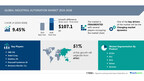
NEW YORK, Sept. 5, 2024 /PRNewswire/ — Report with the AI impact on market trends- The global industrial automation market size is estimated to grow by USD 107.1 billion from 2024-2028, according to Technavio. The market is estimated to grow at a CAGR of almost 9.45% during the forecast period. Changing market dynamics is driving market growth, with a trend towards increasing need for open platform architecture for automation software. However, technical challenges poses a challenge. Key market players include ABB Ltd., Azbil Corp., Danfoss AS, Dassault Systemes SE, Emerson Electric Co., Endress Hauser Group Services AG, FANUC Corp., Fuji Electric Co. Ltd., General Electric Co., Hitachi Ltd., Honeywell International Inc., KROHNE Messtechnik GmbH, OmniVision Technologies Inc., OMRON Corp., Robert Bosch GmbH, Rockwell Automation Inc., Schneider Electric SE, Siemens AG, WIKA Alexander Wiegand SE and Co. KG, and Yokogawa Electric Corp..
AI-Powered Market Evolution Insights. Our comprehensive market report ready with the latest trends, growth opportunities, and strategic analysis- View your snapshot now
Forecast period
2024-2028
Base Year
2023
Historic Data
2018 – 2022
Segment Covered
Product (SCDA, PLC, DCS, Drives, and Sensors), End-user (Process industry and Discrete industry), and Geography (APAC, North America, Europe, South America, and Middle East and Africa)
Region Covered
APAC, North America, Europe, South America, and Middle East and Africa
Key companies profiled
ABB Ltd., Azbil Corp., Danfoss AS, Dassault Systemes SE, Emerson Electric Co., Endress Hauser Group Services AG, FANUC Corp., Fuji Electric Co. Ltd., General Electric Co., Hitachi Ltd., Honeywell International Inc., KROHNE Messtechnik GmbH, OmniVision Technologies Inc., OMRON Corp., Robert Bosch GmbH, Rockwell Automation Inc., Schneider Electric SE, Siemens AG, WIKA Alexander Wiegand SE and Co. KG, and Yokogawa Electric Corp.
Key Market Trends Fueling Growth
Industrial automation solutions play a crucial role in managing manufacturing plant functions. Open-platform automation software enables users to customize and modify its functionality, benefiting Original Equipment Manufacturers (OEMs) by enhancing product operational capabilities and connectivity options. This architecture offers flexibility through the use of various runtime platforms and third-party tools, ensuring interoperability and reducing project costs. Open-source SCADA systems, such as WinCC Open Architecture by Siemens and Open Enterprise V3 by Emerson Electric, are examples of this technology, providing operational efficiency and cost savings.
The industrial sector is embracing automation and technology to boost productivity and reduce labor costs. Automation processes in manufacturing are trending with the integration of robotics, artificial intelligence, and machine learning. Material handling is being transformed through the use of sensors like temperature, humidity, and torque sensors. Networking architectures, analytics, cloud, mobility, and IoT technology are revolutionizing industrial automation. Strategic partnerships and the adoption of 5G wireless technology and IIoT are driving growth in sectors like healthcare, transportation, mining and metal, aerospace and defense. Automation technologies like AC motors, labeling equipment, Human Machine Interface, Programmable Logic Controllers, and Input/Output Sensors are essential components. Technological advancements in AI, machine learning, and automation processes are enhancing safety compliance and real-time data analysis. Augmented reality (AR) and Virtual reality (VR) are also gaining traction in the industry. Computer software solutions for quality control and automation technologies are essential for businesses to stay competitive. Efficiency and productivity are the key benefits of these technological advancements.
Insights on how AI is driving innovation, efficiency, and market growth- Request Sample!
Market Challenges
In the realm of industrial controls and factory automation, the integration of the Industrial Internet of Things (IIoT) or Industry 4.0 brings about numerous advantages, such as real-time communication and heightened reliability. However, these benefits come with intricate design challenges, particularly at the control level. The control level, consisting of Programmable Logic Controllers (PLCs), Supervisory Control and Data Acquisition (SCADA) systems, motor drives, controllers, and Distributed Control Systems (DCS), faces complexities due to the need for real-time data communication and an escalating number of nodes. Moreover, continuous product development and advanced machinery adoption in Industry 4.0 further complicate industrial automation design, specifically in factory automation and smart factories. Despite vendors’ efforts to create flexible machine designs by collaborating with OEMs, manufacturers, and system integrators, the dynamic nature of the automation solutions industry influences the investment landscape and raises Capital Expenditures (CAPEX) for industrial operators. These factors may hinder the market growth in the forecast period.The Industrial Controls and Factory Automation market is experiencing significant growth due to the increasing adoption of digital technologies. Key challenges include integrating AI and machine learning for predictive maintenance, ensuring temperature, humidity, torque sensors’ accuracy in healthcare, transportation, mining and metal, aerospace and defense sectors. AC motors and labeling equipment require advanced automation technologies for efficiency and productivity. Human Machine Interface, Programmable Logic Controllers, and Input/Output Sensors need real-time data and safety compliance. Robotics, Computer Software, and Quality Control benefit from technological advancements, strategic partnerships, and digital technologies like 5G wireless, IoT, AR, and VR. AI and machine learning training programs are crucial for workforce development. DC motors also require automation for optimal performance. Overall, the market focuses on improving efficiency, productivity, and ensuring technological compliance.
Insights into how AI is reshaping industries and driving growth- Download a Sample Report
Segment Overview
This industrial automation market report extensively covers market segmentation by
Product 1.1 SCDA1.2 PLC1.3 DCS1.4 Drives1.5 SensorsEnd-user 2.1 Process industry2.2 Discrete industryGeography 3.1 APAC3.2 North America3.3 Europe3.4 South America3.5 Middle East and Africa
1.1 SCDA- SCADA (Supervisory Control and Data Acquisition) systems play a crucial role in monitoring and optimizing industrial processes in various sectors. The primary functions of SCADA include real-time data acquisition, device interaction, and event logging. In manufacturing, diverse field instruments such as valves, drives, relays, switches, and sensors are used across different locations. Real-time analysis of data from these devices is essential for data-driven decision-making, enhancing operational efficiency and cost optimization. Cloud computing and cloud-based Software-as-a-Service (SaaS) have revolutionized SCADA systems, offering benefits such as scalable server space, off-site IT support, low cost, and easy accessibility from remote locations. Cloud-based SCADA systems store and maintain software and data in the cloud, providing users with benefits like flexibility and ease of upgrading applications. However, storing mission and process safety-related data on a cloud-platform comes with risks, such as dependency on communication network reliability and potential productivity losses. Despite these risks, the benefits of cloud-based SCADA systems outweigh the challenges, making them an attractive option for manufacturers. This trend is expected to drive growth in the SCADA market, particularly in end-user industries, providing opportunities for vendors.
Download complimentary Sample Report to gain insights into AI’s impact on market dynamics, emerging trends, and future opportunities- including forecast (2024-2028) and historic data (2018 – 2022)
Research Analysis
The Industrial Controls and Factory Automation market is experiencing significant growth due to the increasing demand for automation in various industries, including manufacturing and healthcare. Robotics and artificial intelligence are key technologies driving automation processes, enabling increased productivity and efficiency while reducing labor costs. Networking architectures, analytics, cloud, mobility, and the Internet of Things (IIoT) are also playing crucial roles in enhancing industrial automation. Sensors, such as temperature, humidity, torque, and others, are essential components of industrial automation systems, providing real-time data for monitoring and control. The market spans various sectors, including transportation, mining and metal, aerospace and defense, and healthcare, with 5G wireless technology set to revolutionize communication and data transfer in industrial automation applications. Automation in manufacturing is a major focus, with AI and machine learning enabling predictive maintenance and optimizing production lines. The integration of IIoT and cloud technologies is enabling remote monitoring and control, providing real-time insights and reducing downtime. The future of industrial automation is bright, with continued innovation and advancements expected to drive growth and efficiency in various industries.
Market Research Overview
The Industrial Controls and Factory Automation market is witnessing significant growth due to the increasing demand for automation in various industries, including manufacturing, healthcare, transportation, mining and metal, aerospace and defense, and more. Robotics, artificial intelligence (AI), and machine learning are key technologies driving automation processes in this sector. Productivity enhancement, labor cost reduction, and safety compliance are primary factors fueling the market’s growth. Networking architectures, IoT technology, 5G wireless technology, and digital technologies are essential components of modern industrial automation systems. Advanced sensors, such as temperature sensors, humidity sensors, torque sensors, and others, play a crucial role in real-time data collection and analysis. Automation technologies, including computer software, human-machine interface, programmable logic controllers, input/output sensors, and robotics, are essential for optimizing manufacturing processes and improving efficiency. Quality control and safety compliance are also critical aspects of industrial automation, ensuring the production of high-quality goods and adherence to regulatory standards. Strategic partnerships, technological advancement, and training programs are essential for companies to stay competitive in this rapidly evolving market. The use of AI, machine learning, and other digital technologies is transforming the way industries operate, from predictive maintenance to remote monitoring and control. Labeling equipment, AC and DC motors, and various automation components are essential parts of the industrial automation ecosystem. The integration of augmented reality (AR) and virtual reality (VR) technologies is also gaining popularity, offering new possibilities for remote training and maintenance. In conclusion, the Industrial Controls and Factory Automation market is a dynamic and innovative sector, driven by the need for productivity, efficiency, and safety in various industries. The integration of advanced technologies, such as AI, machine learning, IoT, and digital technologies, is transforming the way industries operate and compete in today’s global economy.
Table of Contents:
1 Executive Summary
2 Market Landscape
3 Market Sizing
4 Historic Market Size
5 Five Forces Analysis
6 Market Segmentation
ProductSCDAPLCDCSDrivesSensorsEnd-userProcess IndustryDiscrete IndustryGeographyAPACNorth AmericaEuropeSouth AmericaMiddle East And Africa
7 Customer Landscape
8 Geographic Landscape
9 Drivers, Challenges, and Trends
10 Company Landscape
11 Company Analysis
12 Appendix
About Technavio
Technavio is a leading global technology research and advisory company. Their research and analysis focuses on emerging market trends and provides actionable insights to help businesses identify market opportunities and develop effective strategies to optimize their market positions.
With over 500 specialized analysts, Technavio’s report library consists of more than 17,000 reports and counting, covering 800 technologies, spanning across 50 countries. Their client base consists of enterprises of all sizes, including more than 100 Fortune 500 companies. This growing client base relies on Technavio’s comprehensive coverage, extensive research, and actionable market insights to identify opportunities in existing and potential markets and assess their competitive positions within changing market scenarios.
Contacts
Technavio Research
Jesse Maida
Media & Marketing Executive
US: +1 844 364 1100
UK: +44 203 893 3200
Email: media@technavio.com
Website: www.technavio.com/
View original content to download multimedia:https://www.prnewswire.com/news-releases/industrial-automation-market-to-grow-by-usd-107-1-billion-2024-2028-as-ai-drives-market-transformation–technavio-report-302239698.html
SOURCE Technavio










 Technology5 days ago
 Technology4 days ago

 Coin Market4 days ago


 Technology4 days ago

 Technology4 days ago

 Technology4 days ago

 Technology4 days ago