Connect with us

Technology

LMS Market to Grow by USD 79.05 Billion (2024-2028), Driven by NGDLE Adoption in Academia, AI Transforming the Market Landscape – Technavio Report

Published

on

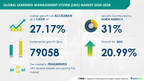
NEW YORK, Sept. 10, 2024 /PRNewswire/ — Report with market evolution powered by AI- The global learning management system (LMS) market size is estimated to grow by USD 79.05 billion from 2024-2028, according to Technavio. The market is estimated to grow at a CAGR of  27.17%  during the forecast period. Adoption of ngdle in academic sector is driving market growth, with a trend towards increasing popularity of cloud-based LMS. However, interoperability issues  poses a challenge. Key market players include Adrenalin eSystems Ltd., Blackboard Inc., Sprout On Web Pty. Ltd., Clearlake Capital Group L.P., D2L Inc., Degreed Inc., Docebo Inc., Epignosis LLC, GENTLAB S.R.L, Instructure Holdings Inc., Looop Online Ltd., Oracle Corp., Pearson Plc, PowerSchool Holdings Inc., SAP SE, Skillsoft Corp., Tovuti Inc., Violet InfoSystems Pvt. Ltd., Workday Inc., and Xperiencify.

Key insights into market evolution with AI-powered analysis. Explore trends, segmentation, and growth drivers- View the snapshot of this report

Learning Management System (Lms) Market Scope

Report Coverage

Details

Base year

2023

Historic period

2018 – 2022

Forecast period

2024-2028

Growth momentum & CAGR

Accelerate at a CAGR of 27.17%

Market growth 2024-2028

USD 79058 million

Market structure

Fragmented

YoY growth 2022-2023 (%)

20.99

Regional analysis

North America, Europe, APAC, South America, and Middle East and Africa

Performing market contribution

North America at 31%

Key countries

US, China, UK, Germany, and Canada

Key companies profiled

Adrenalin eSystems Ltd., Blackboard Inc., Sprout On Web Pty. Ltd., Clearlake Capital Group L.P., D2L Inc., Degreed Inc., Docebo Inc., Epignosis LLC, GENTLAB S.R.L, Instructure Holdings Inc., Looop Online Ltd., Oracle Corp., Pearson Plc, PowerSchool Holdings Inc., SAP SE, Skillsoft Corp., Tovuti Inc., Violet InfoSystems Pvt. Ltd., Workday Inc., and Xperiencify

Market Driver

In today’s business environment, cloud-based Learning Management Systems (LMS) have gained significant popularity due to their numerous advantages over traditional LMS. These advantages include eliminating the need for on-premises servers, reducing implementation costs, and offering faster setup times. Cloud-based LMS is typically subscription-based, resulting in a lower initial investment for organizations. The implementation process is also less time-consuming and resource-intensive, as there is no need for installing programs. Furthermore, the cost of cloud-based e-learning is generally lower than traditional LMS, making it an affordable option for schools of all sizes. Traditional LMS vendors are responding to this trend by offering competitive pricing, allowing more businesses and educational institutions to access this valuable technology. 

The Learning Management System (LMS) market is experiencing significant growth due to the trend towards online education. With budget constraints and reduced spending, cost-effective solutions like cloud-based LMS platforms are increasingly popular. Digital transformation and remote work have accelerated the adoption of LMS platforms for education and corporate users. These versatile platforms offer digital content such as eBooks, multimedia resources, and online learning activities to enhance learning outcomes. Blended learning, which combines face-to-face instruction with online methods, is a key segment. AI-driven personalized learning, gamification, social learning capabilities, and interactive platforms are product innovations that engage learners and provide real-time interaction and feedback. Key vendors prioritize developed infrastructure, quality services, and user-friendly interfaces to meet the demands of the corporate users segment. 5G technology and mobile education are future trends. Smartphones and communication devices are essential tools for accessing digital learning solutions. 

Request Sample of our comprehensive report now to stay ahead in the AI-driven market evolution!

 Market Challenges

•         Integrating a Learning Management System (LMS) with an existing Content Management Solution (CMS) or Academic Management System (AMS) can present interoperability challenges. Although LMS allows for integration, connecting it to an unsupported system can be difficult due to differences in eLearning standards. For instance, content structure variations between vendors make it challenging to reuse courses developed by one vendor with an LMS from another. To address this issue, organizations often rely on system-specific application programming interfaces (APIs) for successful LMS-CMS integration. However, the academic management system, which is often in-house and built on less-used standards, poses additional difficulties. The maturity of content management standards significantly impacts LMS cost, leading many organizations to opt for customized LMS services, which can be expensive. Effective LMS integration requires addressing these challenges to ensure a seamless teaching-learning process and enhance end-user satisfaction and learning success.

•         In today’s digital age, the Learning Management System (LMS) market is booming. Universities and businesses alike are adopting LMS platforms to deliver academic and corporate training in flexible, engaging ways. Challenges include supporting rich media formats like videos and interactive modules, virtual reality, and mobile learning. Microlearning and personalized instruction are key to student engagement. Content providers offer educational materials in various formats, from e-books to simulations. Assessments and assessments are essential for measuring progress. Advanced technologies like blended learning models, remote learning, and digital learning are expanding offerings. Internet penetration and digitalization of industries drive demand for LMS solutions. Strategic partnerships help LMS providers meet the needs of the digital age, offering upskill training programs and advanced technologies like simulations and assessments. User experience is crucial for success. As LMS platforms continue to evolve, they will become even more integral to lifelong learning and the future of education and training.

Discover how AI is revolutionizing market trends- Get your access now!

Segment Overview 

This learning management system (lms) market report extensively covers market segmentation by  

End-user 1.1 Academic1.2 CorporateDeployment 2.1 On-premises2.2 On-cloudGeography 3.1 North America3.2 Europe3.3 APAC3.4 South America3.5 Middle East and Africa

1.1 Academic-  The Learning Management System (LMS) market is experiencing significant growth due to the increasing popularity of online learning and the expansion of higher education institutions offering digital courses. In the academic sector, the higher education segment dominates, contributing the most to market revenue. Universities are hiring IT staff, including course designers and app developers, to increase their online course offerings. Additionally, the rise of m-learning in schools and colleges necessitates LMS solutions compatible with mobile devices. However, challenges exist in ensuring accessibility on various mobile architectures and operating systems. Students and teachers seek online certificate programs and vocational courses to gain a competitive edge in their respective fields. Institutions are integrating technologies like classroom management systems, analytics, and Learning Content Management Systems (LCMS) with LMS to design, develop, and launch online courses. Teachers can use analytics and reporting features to monitor student progress and create personalized learning paths. Universities providing online courses rely on LMS to manage students, distribute reading materials, and administer assignments. LMS is also extensively used for training and performance administrations in universities. Open-source LMS solutions like Moodle are gaining popularity in the market, capturing significant revenue. In the K-12 sector, blended learning methods are being adopted, requiring online course materials developed using LMS solutions. However, challenges persist, including the lack of operating knowledge for handling LMS among teachers and students and difficulty in using LMS in emerging economies. Despite these challenges, the integration of advanced technologies and the growing demand for online learning are expected to drive market growth during the forecast period.

Download a Sample of our comprehensive report today to discover how AI-driven innovations are reshaping competitive dynamics

Research Analysis

The Learning Management System (LMS) market is experiencing significant growth due to the digitalization of industries and the shift towards remote work. With the rise of digital learning, LMS platforms have become essential tools for delivering online courses, training programs, and interactive educational content to individual learners and educational institutions. These platforms offer flexible learning options, blended learning models, and smart learning capabilities, making education more accessible and convenient than ever before. Mobile education, open online courses, and online tutorials are also gaining popularity, allowing learners to access educational content on their smartphones and communication devices. The business landscape is continually evolving, and upskilling and reskilling have become crucial for employees to stay competitive. LMS platforms enable progress tracking, certifications, and communication between learners and instructors, making them an essential component of the modern educational ecosystem. Internet connectivity is a key requirement for accessing these platforms, making them an essential tool for schools and educational institutions as well.

Market Research Overview

The Learning Management System (LMS) market is experiencing significant growth due to the digitalization of industries and the shift towards remote work. LMS platforms have become essential tools for delivering digital learning, online courses, and training programs to upskill employees. Advanced technologies like artificial intelligence (AI), 5G technology, and mobile learning solutions are expanding offerings and enhancing learning outcomes. Flexible learning options, strategic partnerships, and lifelong learning are key trends in this market. Corporate users are seeking cost-effective solutions, while educational institutions are adopting cloud-based LMS platforms for on-premises alternatives. Blended learning models, which combine face-to-face instruction with online learning activities, are popular. User experience, real-time interaction, feedback, and engagement are crucial factors for learners. Millennials prefer interactive platforms, gamification, social learning capabilities, and AI-driven personalized learning. Key vendors are innovating with user-friendly interfaces, AI-based LMS platforms, and content accessibility features. Virtual assistants, chatbots, and AI-powered avatars are also being integrated to provide a more personalized learning experience. Analyst surveys indicate that the market for digital learning solutions will continue to grow, driven by the need for upskilling and reskilling in a rapidly changing business landscape.

Table of Contents:

1 Executive Summary
2 Market Landscape
3 Market Sizing
4 Historic Market Size
5 Five Forces Analysis
6 Market Segmentation

End-userAcademicCorporateDeploymentOn-premisesOn-cloudGeographyNorth AmericaEuropeAPACSouth AmericaMiddle East And Africa

7 Customer Landscape
8 Geographic Landscape
9 Drivers, Challenges, and Trends
10 Company Landscape
11 Company Analysis
12 Appendix

About Technavio

Technavio is a leading global technology research and advisory company. Their research and analysis focuses on emerging market trends and provides actionable insights to help businesses identify market opportunities and develop effective strategies to optimize their market positions.

With over 500 specialized analysts, Technavio’s report library consists of more than 17,000 reports and counting, covering 800 technologies, spanning across 50 countries. Their client base consists of enterprises of all sizes, including more than 100 Fortune 500 companies. This growing client base relies on Technavio’s comprehensive coverage, extensive research, and actionable market insights to identify opportunities in existing and potential markets and assess their competitive positions within changing market scenarios.

Contacts

Technavio Research
Jesse Maida
Media & Marketing Executive
US: +1 844 364 1100
UK: +44 203 893 3200
Email: media@technavio.com
Website: www.technavio.com/

View original content to download multimedia:https://www.prnewswire.com/news-releases/lms-market-to-grow-by-usd-79-05-billion-2024-2028-driven-by-ngdle-adoption-in-academia-ai-transforming-the-market-landscape—technavio-report-302243353.html

SOURCE Technavio

Continue Reading
Click to comment

Leave a Reply

Your email address will not be published. Required fields are marked *

Technology

ASUS Accelerates Enterprise AI at Scale with 6th-Gen AMD EPYC Server CPUs

Published

on

By

 ASUS leverages 6th-gen AMD EPYC Server CPUs to deliver scalable, efficient compute for enterprise AI, cloud, virtualization and business-critical workloads

SAN FRANCISCO, July 24, 2026 /PRNewswire/ — ASUS today announced its groundbreaking new server lineup powered by the AMD EPYC™ 9006 processors, engineered to deliver unmatched performance for the most demanding intensive enterprise workloads. This advanced portfolio introduces two highly optimized series with efficiency-optimized AMD EPYC SP8 server CPU, the flagship dual-socket ASUS RS700A/720A for extreme compute density and the single-socket ASUS RS500A/520A for superior space efficiency and deployment flexibility.

Both series integrate full PCIe® 6.0, leading memory support, and high-density E3.S storage, all underpinned by proprietary ASUS innovations for superior thermal management and operational efficiency to meet and exceed the rigorous demands of enterprise AI, virtualization, storage and cloud environments.

“The new ASUS server series, powered by 6th-gen AMD EPYC server CPUs, is engineered to power every enterprise workload with flexible, scalable infrastructure,” Paul Ju, Senior Vice President of ASUS, commented, “This launch marks a significant milestone for ASUS and our clients. The new series empowers businesses with a resilient foundation to achieve unprecedented computing efficiency and accelerating AI innovation with inference.”

ASUS expands 6th-gen AMD EPYC server portfolio with dual optimized series

ASUS has introduced a new server lineup segmented into two distinct series, each precisely engineered to meet diverse enterprise demands.

The flagship RS700A/720A series (dual-socket) delivers extreme compute density, making it ideal for AI inferencing, and complex simulations. It offers exceptional bandwidth with PCIe 6.0, memory leadership via 32 DIMM slots supporting ultrafast MRDIMM, and high-density storage with up to 32 E3.S bays in a compact 2U form factor.

Complementing this is the RS500A/520A series (single-socket), a highly efficient and space-optimized solution with depth under 800mm, perfect for mainstream enterprise workloads and rack-constrained environments. Featuring full PCIe 6.0 capabilities, E3.S storage support, and modular scalability through shared components with the RS700A and RS720A series, it provides uncompromised performance in a streamlined, deployment-friendly design.

ASUS elevates the AMD EPYC platform with cutting-edge proprietary innovations

ASUS has significantly advanced the AMD EPYC 9006 platform with a series of proprietary engineering breakthroughs focused on superior reliability, thermal management, and operational efficiency.

The DC-MHS modular architecture features a zone-partitioned chassis that separates I/O, HPM, fan, and storage modules to accelerate development, reduce capital costs, and enable rapid serviceability. The patented ASUS DIMM.2 Innovation repositions M.2 storage to the cooler DIMM region, eliminating thermal throttling without extra heatsinks and unlocking greater scalability. Thermal Radar 3.0 with PID Control delivers precise real-time fan regulation via advanced algorithms, reducing energy use and maintaining peak performance under heavy enterprise-level workload.

Completing the suite is the optimized tool-less operational-velocity design, which boosts maintenance efficiency, maximizing uptime and lowering TCO and sustaining peak performance even under volatile, high-load AI/HPC workloads.

AVAILABILITY & PRICING

ASUS RS700A/720A series and RS500A/520A series servers will be available soon. Please contact your local ASUS representative for further information.

View original content to download multimedia:https://www.prnewswire.co.uk/news-releases/asus-accelerates-enterprise-ai-at-scale-with-6th-gen-amd-epyc-server-cpus-302833931.html

Continue Reading

Technology

Fractal posts 20% revenue growth and 92% net income growth in Q1 FY27

Published

on

By

Adjusted EBITDA Grows at 35% YoYGross Margin up 29 bps1 to 46%; Adjusted EBITDA Margin up 189 bps to 17%

NEW YORK, July 24, 2026 /PRNewswire/ — Fractal Analytics Ltd (BSE: 544700) (NSE: FRACTAL) announced its consolidated financial results for Q1 FY27, ending June 30, 2026.

In Q1 FY27, the Company reported consolidated operating revenue of INR 9,125 m, a growth of 20% year on year (YoY). Revenue growth was led by the company’s Healthcare and Life Sciences (HLS) industry, which clocked 69% growth YoY. Strong sustained growth in HLS over the last several quarters has resulted in it becoming the second largest industry in the portfolio. Banking, Financial Services and Insurance (BFSI) also performed very well, growing 36% YoY in Q1. Fractal’s largest industry, Consumer Packaged Goods and Retail (CPGR), continued to gather momentum, growing 19% YoY. On the other hand, TMT declined 22% YoY.

Fractal’s focus on deepening customer relationships continues to yield good outcomes. Its clients collectively increased their spending with the company, as reflected in the Net Revenue Retention2 of 117% in Q1. Further, its Net Promoter Score (NPS) during the period stood at 77.

The company reported improved profit margins at all levels. Gross Margin in Q1 was at 46%, while Adjusted EBITDA Margin expanded by 189 bps YoY to 17%. Net Income grew 92% YoY to INR 723 m.

Commenting on the performance, Srikanth Velamakanni, Group CEO and Executive Vice-Chairman, said:

“Enterprises are putting real transformation budgets behind AI now and we’re seeing it directly in the size of the deals coming to us. TMT was the drag on our headline growth this quarter. Excluding TMT, our business grew 35% year on year, which is a better read on the underlying demand we’re seeing.

As data sovereignty becomes a bigger priority for governments and enterprises, and as open-weight models keep improving, clients need a partner who can work across models and infrastructure. We have invested heavily in our people, our research, and our own intellectual property to be that partner.”

1 Basis points = 1/100th of 1%
2 Net Revenue Retention in our Fractal.ai segment measures how effectively we retain and expand revenue from our existing clients over a defined period and is calculated by comparing the current period’s revenue from the clients who existed at the start of the period, with their revenue in the previous period – including the effects of upsells, cross-sells and contractions

About Fractal 

Fractal Analytics Ltd (BSE: 544700) (NSE: FRACTAL) is a globally recognized pure-play enterprise AI company trusted by Fortune 500®-sized enterprises to power decision-making through AI services, solutions, and products, anchored by Cogentiq, its flagship agentic AI platform. With over 6,000 professionals across North America, EMEA, and Asia-Pacific, Fractal partners with business leaders to drive competitive differentiation for their organizations by embedding AI into critical decisions across business functions and industry verticals.

Fractal invests more than 6% of its revenue in AI R&D, supporting foundational AI research, product development, and IP creation that address both immediate client needs and long-term technological advancement. Fractal’s track record includes developing proprietary models and products such as Cogentiq Health – Vaidya.ai and Cogentiq Data Science – PiEvolve, as well as incubating and spinning out Qure.ai, a global healthcare AI leader focused on the rapid identification and management of tuberculosis, lung cancer, and stroke (or critical health conditions). Fractal’s suite of businesses consists of Asper.ai (a Revenue Growth Management product for CPG companies) and Analytics Vidhya (an Ed-tech platform).

For more information, go to www.fractal.ai.

Logo: https://mma.prnewswire.com/media/2931510/5858548/Fractal_Logo.jpg


View original content:https://www.prnewswire.com/news-releases/fractal-posts-20-revenue-growth-and-92-net-income-growth-in-q1-fy27-302833932.html

SOURCE Fractal Analytics Limited

Continue Reading

Technology

Xryma Plc : Pre-Listing Liquidity Facility and Price Discovery Process

Published

on

By

NICOSIA, Cyprus, July 24, 2026 /PRNewswire/ — Xryma Plc (“Xryma”)  announces its intention to reapply within the next twelve months for admission to list on Euronext Paris (“Euronext”), with such admission being subject to Euronext’s approval. Before submitting its application, Xryma intends to launch a pre-listing liquidity facility and price discovery process, comprising a private placement to institutional and qualified investors alongside a secondary market offer to Xryma existing shareholders (“shareholders”) wishing to exit prior to listing.  

The admission referred to above that is subject to the approval of Euronext may also be subject to approval by relevant regulatory authorities, and no assurance can be given that approval will be granted or as to the timing of any admission.

The pre-listing liquidity facility and price discovery process is designed to:

Enable shareholders seeking an exit to participate without the need to open an EU brokerage account,Provide a clear and orderly opportunity for existing shareholders to sell all or part of their holdings ahead of any potential admission to trading on Euronext Paris,Enable shareholders to sell all or part of their holdings at the same price at which qualified and institutional investors subscribe for shares in the Company,Establish, through a bookbuild with qualified and institutional investors, a market-validated referenced price for Xryma shares ahead of any potential admission on Euronext Paris (the “Primary Market Placement Price”),Support orderly trading upon potential admission.

Individual shareholder mailouts explaining the details of the pre-listing liquidity facility scheme with instructions and necessary documentation will be conducted during August 2026.

As the Primary Market Placement Price is to be determined by the subsequent bookbuild, shareholders will be given the opportunity to set a floor price which will result in the sale of their shares if the Primary Market Placement Price is higher.  Shareholders will receive the Primary Market Placement Price minus applicable fees.

Shareholders and Investors may be scaled back to match corresponding demand from the other party, with partial fulfilment a possibility if the Company cannot match supply to demand.

Completion of the process is subject to achieving a level of institutional and qualified investor demand that the Board considers appropriate to support an orderly market should Xryma subsequently be admitted to trading on Euronext Paris.

Participation is entirely voluntary. Shareholders who do not wish to sell will simply retain their shares. Shareholders that do not intend to participate should continue to onboard with a Euronext participating broker, or a Euroclear ESES custodian, per previous communications.

The major shareholders, SCP Select All Enterprise (Monaco) and SCP Red 5 Solutions (Monaco) will not participate in the offer and will be subject to lock up arrangements.

Mr Nikogiannis (John) Karantzis, CEO of Xryma Plc comments: “Our shareholders have told us they would value a straightforward way to realise their holdings without the time and cost of opening an EU brokerage account. This process is our response to that feedback. We are structuring the placement to be large enough to establish a credible reference price whilst limiting dilution, with demand directed first towards meeting shareholder sell interest. We look forward to updating the market on the revised timetable in due course.”

Shareholders seeking a more detailed explanation of the pre-listing liquidity facility and price discovery process, should refer to the guide available at https://www.xryma.com/investors

Important Information & Disclaimers

This press release may contain inside information within the meaning of Article 7(1) of Regulation (EU) 596/2014 (Market Abuse Regulation).

This publication is not for publication or distribution or release, directly or indirectly, in or into the United States of America (including its territories and possessions, any state of the United States and the District of Columbia), Canada, Australia, South Africa, Japan or any other jurisdiction where such an announcement would be unlawful. The distribution of this publication may be restricted by law in certain jurisdictions and persons into whose possession this document or other information referred to herein comes should inform themselves about and observe any such restriction. Any failure to comply with these restrictions may constitute a violation of the securities laws of any such jurisdiction. No action has been taken that would permit an offering of the treasury shares or possession or distribution of this publication in any jurisdiction where action for that purpose is required.

This publication does not constitute or form part of an offer for sale or solicitation of an offer to purchase or subscribe for securities in the United States, Canada, Australia, South Africa, Japan or any other jurisdiction and the securities referred to herein have not been registered under the securities laws of any such jurisdiction. Any New Shares (if such are issued) will not be registered under the United States Securities Act of 1933, as amended (the “Securities Act”), or under the securities laws of any State or any other jurisdiction of the United States, and may not be offered or sold, directly or indirectly, in the United States except pursuant to an exemption from, or in a transaction not subject to, the registration requirements of, the Securities Act and in compliance with all applicable securities laws of any State or any other jurisdiction of the United States. No public offering of securities is being made in the United States or in any other jurisdiction.

The information set forth herein must not be distributed in any jurisdiction where such distribution is unlawful, and any recipients are requested to inform themselves about and to observe such restrictions.

The Offering referred to herein by Xryma Plc will only be made in accordance with all applicable corporate and securities laws. Any shares referred to herein will exclusively be offered or sold in reliance on any applicable exemptions from prospectus or registration requirements in any jurisdiction. In member states of the European Economic Area, this publication is only addressed to and directed at persons who are ‘qualified investors’ within the meaning of Article 2(e) of Regulation (EU) 2017/1129 (as amended and including any relevant delegated regulations, the “Prospectus Regulation”) or in any other circumstances falling within exemptions available in the relevant member state under Article 1(4) and/or 1(5) of the Prospectus Regulation. In the United Kingdom, this publication is only addressed to and directed at qualified investors within the meaning of the Prospectus Regulation, as it forms part of domestic law by virtue of the European Union (Withdrawal) Act 2018, as amended (“EUWA”), who are persons (i) who have professional experience in matters relating to investments falling within Article 19(5) (investment professionals) of the Financial Services and Markets Act 2000 (Financial Promotion) Order 2005 (as amended, the “Order”), (ii) falling within article 49(2)(a) to (d) (high net worth companies, incorporated associations, etc.) of the Order, or (iii) to whom it may otherwise be lawfully communicated; any other persons in the United Kingdom should not take any action on the basis of this publication and should not act on or rely on it.

This publication does not constitute a recommendation concerning the prospective Offering. This announcement does not constitute an Offer or invitation to subscribe.

This announcement includes statements that are, or may be deemed to be, ‘forward looking statements’. These forward-looking statements can be identified by the use of forward looking terminology, including the terms ‘believes’, ‘estimates’, ‘anticipates’, ‘expects’, ‘intends’, ‘may’, ‘will’, or ‘should’ or, in each case, their negative or other variations or comparable terminology, or by discussions of strategy, plans, objectives, goals, future events or intentions. By their nature, forward looking statements involve risk and uncertainty because they relate to future events and circumstances which may or may not occur. Many of these factors are beyond the control of the Company. Should one or more of these risks or uncertainties materialise, or should underlying assumptions prove incorrect, actual results and circumstances may vary materially from those described in this announcement as anticipated, believed, estimated or expected.

View original content to download multimedia:https://www.prnewswire.co.uk/news-releases/xryma-plc–pre-listing-liquidity-facility-and-price-discovery-process-302833658.html

Continue Reading

Trending