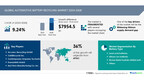
NEW YORK, Sept. 12, 2024 /PRNewswire/ — Report on how AI is redefining market landscape- The global automotive battery recycling market size is estimated to grow by USD 7.95 trillion from 2024-2028, according to Technavio. The market is estimated to grow at a CAGR of 9.24% during the forecast period. Widening lithium supply demand gap is driving market growth, with a trend towards increasing demand for electric vehicles. However, involvement of high costs in automotive battery recycling poses a challenge. Key market players include Accurec Recycling GmbH, Call2Recycle Inc., Contemporary Amperex Technology Co. Ltd., Duesenfeld GmbH, East Penn Manufacturing Co. Inc., Ecobat LLC, ENGITEC TECHNOLOGIES SPA, Exide Industries Ltd., Fortum Oyj, Glencore Plc, Li Cycle Holdings Corp., Redwood Materials Inc., SK Inc., SNAM Groupe, SungEel Hi Tech Co. Ltd., and Umicore SA.
AI-Powered Market Evolution Insights. Our comprehensive market report ready with the latest trends, growth opportunities, and strategic analysis- View your snapshot now
Forecast period
2024-2028
Base Year
2023
Historic Data
2018 – 2022
Segment Covered
Battery Type (Lead acid batteries, Lithium-ion batteries, Nickel-Metal Hydride (NiMH) batteries, and Others), Vehicle Type (Passenger cars, Commercial vehicles, and Electic vehicles (EV)), and Geography (APAC, Europe, North America, South America, and Middle East and Africa)
Region Covered
APAC, Europe, North America, South America, and Middle East and Africa
Key companies profiled
Accurec Recycling GmbH, Call2Recycle Inc., Contemporary Amperex Technology Co. Ltd., Duesenfeld GmbH, East Penn Manufacturing Co. Inc., Ecobat LLC, ENGITEC TECHNOLOGIES SPA, Exide Industries Ltd., Fortum Oyj, Glencore Plc, Li Cycle Holdings Corp., Redwood Materials Inc., SK Inc., SNAM Groupe, SungEel Hi Tech Co. Ltd., and Umicore SA
Key Market Trends Fueling Growth
The automotive battery recycling market is experiencing significant growth due to the increasing adoption of electric vehicles (EVs). By 2024, EVs are projected to represent a substantial percentage of new car sales globally, with companies like Tesla, Nissan, and BMW driving this trend. This shift results in an increasing volume of used lithium-ion batteries, which are vital components in EVs. The circular economy principle is shaping market dynamics, as recycling EV batteries enables the recovery and reuse of valuable materials such as lithium, cobalt, and nickel. This process reduces the need for new raw materials and minimizes waste, promoting environmental sustainability and addressing supply chain vulnerabilities. China, a major player in the EV market, has seen rapid growth in EV sales, leading to a rising demand for battery recycling solutions. European countries, including Germany, are also investing heavily in battery recycling infrastructure to support their push towards electric mobility. These factors are expected to fuel the expansion of the global automotive battery recycling market during the forecast period.
The automotive battery recycling market is experiencing significant growth due to the increasing adoption of electric vehicles (EVs) and the need to address e-waste and climate change. Traditional Nickel-cadmium (Ni-Cd) batteries, which contain hazardous materials, are being replaced by advanced battery technologies in EVs. Battery recycling facilities play a crucial role in recovering heavy metals from spent batteries, reducing pollution and the need for gasoline production. Hydrometallurgy and pyrometallurgy are key processes used in battery recycling. The circular economy is driving the demand for recycling capacity, with a focus on recovering graphite, nickel, cobalt, and other valuable materials. The recycling of batteries from passenger vehicles and commercial vehicles is essential for sustainable transportation and reducing greenhouse gas emissions. Renewable energy storage, such as solar and wind power, also benefit from battery recycling. The battery recycling market is expected to continue growing as EV sales increase and battery technology advances, with a focus on energy density, charging capabilities, and pollution control.
Insights on how AI is driving innovation, efficiency, and market growth- Request Sample!
Market Challenges
Setting up an automotive battery recycling plant involves significant initial investment. Advanced technologies are essential for efficient and safe handling of battery materials, increasing operational costs. Strict adherence to environmental and safety regulations, particularly in Europe, drives up operational expenses. Transportation and logistics are also critical factors due to batteries being classified as hazardous waste. Specialized handling and transportation methods increase costs and complicate logistics, especially for cross-border transportation. Furthermore, fluctuating prices of raw materials like lithium, cobalt, and nickel impact profitability, discouraging investment in this sector. These factors may hinder the growth of the automotive battery recycling market during the forecast period.The automotive battery recycling market is gaining significance due to the increasing adoption of electric vehicles (EVs) for sustainable transportation. However, the recycling of spent batteries from EVs and other electronic gadgets presents several challenges. These batteries contain valuable materials like nickel, cobalt, and rare earth metals, which can be reused in advanced battery technologies. However, they also contain hazardous materials like toxic chemicals, heavy metals, and flammable, corrosive, or radioactive substances. The collection and sorting of spent batteries is crucial for the battery recycling industry. Renewable energy storage, such as solar and wind power, also relies on batteries, increasing the demand for recycling. Lithium-ion batteries (LIB), lead-acid batteries, and sodium-sulfur batteries are common types requiring recycling. Recycling technologies include hydrometallurgical and pyrometallurgical processes. Despite the benefits, challenges remain, including the safe handling of hazardous materials and the prevention of chemical leakage. Environmental risks, such as soil pollution and landfill issues, must be addressed. Investment in R&D for safer and more efficient recycling processes is essential to minimize risks and maximize value. The battery recycling ecosystem must collaborate to ensure a circular economy for batteries, reducing waste and promoting sustainability.
Insights into how AI is reshaping industries and driving growth- Download a Sample Report
Segment Overview
This automotive battery recycling market report extensively covers market segmentation by
Battery Type1.1 Lead acid batteries1.2 Lithium-ion batteries1.3 Nickel-Metal Hydride (NiMH) batteries1.4 OthersVehicle Type2.1 Passenger cars2.2 Commercial vehicles2.3 Electic vehicles (EV)Geography 3.1 APAC3.2 Europe3.3 North America3.4 South America3.5 Middle East and Africa
1.1 Lead acid batteries- The automotive battery recycling market is growing due to increasing demand for recycled batteries and stringent regulations on battery disposal. Companies are investing in advanced technologies to recover valuable materials like lead, cadmium, and nickel. Recycling reduces environmental impact and saves resources, making it a profitable business opportunity for market participants. The market is expected to expand at a steady pace in the coming years.
Download complimentary Sample Report to gain insights into AI’s impact on market dynamics, emerging trends, and future opportunities- including forecast (2024-2028) and historic data (2018 – 2022)
Research Analysis
The Automotive Battery Recycling Market is gaining significant attention due to the increasing adoption of sustainable transportation, particularly Electric Vehicles (EVs), and the need for energy efficiency and pollution control. Lithium-ion batteries (LIB), the most common type used in EVs, contain hazardous materials such as toxic chemicals, heavy metals, flammable, corrosive materials, and even radioactive materials. When these batteries reach the end of their life cycle and become spent, they pose a risk of chemical leakage, soil pollution, and landfill contamination. The battery recycling industry plays a crucial role in mitigating these environmental concerns by recovering valuable materials like cobalt, reducing greenhouse gas emissions, and minimizing the need for gasoline production. As EV sales continue to rise, the demand for advanced battery technologies with higher energy density and charging capabilities is increasing, making battery recycling an essential component of the circular economy and a critical step towards reducing climate change.
Market Research Overview
The Automotive Battery Recycling Market is a critical component of sustainable transportation as it focuses on the recycling of spent batteries from electric vehicles (EVs) and other applications. With the increasing adoption of EVs and advanced battery technologies, there is a growing need for energy efficiency, pollution control, and the sustainable management of hazardous materials. Spent batteries contain valuable materials such as nickel, cobalt, and rare earth metals, which can be recovered and reused in renewable energy storage systems, solar power, and wind power. The Battery Recycling Market encompasses various recycling technologies, including hydrometallurgical and pyrometallurgical processes, for the collection and sorting of spent batteries. The industry aims to mitigate environmental risks associated with hazardous waste, toxic chemicals, heavy metals, and flammable, corrosive, or radioactive materials. Lithium-ion batteries (LIB), lead-acid batteries, sodium-sulfur batteries, and nickel-cadmium (Ni-Cd) batteries are among the batteries targeted for recycling. The battery recycling ecosystem is essential for reducing the environmental impact of e-waste and minimizing the need for primary resource extraction. The Automotive Battery Recycling Market is driven by the increasing demand for electric vehicles, climate change mitigation, and the circular economy. The market also faces challenges related to battery disposal, battery recycling facilities, and the complex recycling process. Investment in R&D for advanced recycling technologies and the expansion of recycling capacity are crucial for the growth of the Automotive Battery Recycling Market. The market also plays a significant role in reducing greenhouse gas emissions from gasoline production and promoting the adoption of sustainable fuels.
Table of Contents:
1 Executive Summary
2 Market Landscape
3 Market Sizing
4 Historic Market Size
5 Five Forces Analysis
6 Market Segmentation
Battery TypeLead Acid BatteriesLithium-ion BatteriesNickel-Metal Hydride (NiMH) BatteriesOthersVehicle TypePassenger CarsCommercial VehiclesElectic Vehicles (EV)GeographyAPACEuropeNorth AmericaSouth AmericaMiddle East And Africa
7 Customer Landscape
8 Geographic Landscape
9 Drivers, Challenges, and Trends
10 Company Landscape
11 Company Analysis
12 Appendix
About Technavio
Technavio is a leading global technology research and advisory company. Their research and analysis focuses on emerging market trends and provides actionable insights to help businesses identify market opportunities and develop effective strategies to optimize their market positions.
With over 500 specialized analysts, Technavio’s report library consists of more than 17,000 reports and counting, covering 800 technologies, spanning across 50 countries. Their client base consists of enterprises of all sizes, including more than 100 Fortune 500 companies. This growing client base relies on Technavio’s comprehensive coverage, extensive research, and actionable market insights to identify opportunities in existing and potential markets and assess their competitive positions within changing market scenarios.
Contacts
Technavio Research
Jesse Maida
Media & Marketing Executive
US: +1 844 364 1100
UK: +44 203 893 3200
Email: media@technavio.com
Website: www.technavio.com/
View original content to download multimedia:https://www.prnewswire.com/news-releases/automotive-battery-recycling-market-to-grow-by-usd-7-95-trillion-2024-2028-driven-by-lithium-supply-demand-gap-and-ais-influence-on-market-trends–technavio-302245097.html
SOURCE Technavio









 Technology4 days ago
 Coin Market5 days ago
 Coin Market5 days ago
 Coin Market5 days ago
 Coin Market5 days ago
 Technology4 days ago
 Technology4 days ago
 Coin Market4 days ago