Connect with us

Technology

Wireless Router Market to Grow by USD 8.09 Billion from 2024-2028, Driven by Rising Adoption of Smart Home Systems, AI Powered Report by Technavio

Published

on

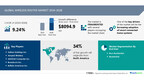
NEW YORK, Sept. 24, 2024 /PRNewswire/ — Report on how AI is driving market transformation- The global wireless router market size is estimated to grow by USD 8.09 billion from 2024-2028, according to Technavio. The market is estimated to grow at a CAGR of over 9.24%  during the forecast period. Increasing adoption of smart connected home systems is driving market growth, with a trend towards increasing use of wireless router in retail industry. However, inferior communication network infrastructure in developing regions poses a challenge. Key market players include Adtran Holdings Inc., Amped Wireless, ASUSTeK Computer Inc., Broadcom Inc., Buffalo Americas Inc., China Huaxin Post and Telecom Technologies Co. Ltd., Cisco Systems Inc., D Link Corp., DrayTek Corp., EDIMAX Technology Co. Ltd., Extreme Networks Inc., Hon Hai Precision Industry Co. Ltd., Huawei Investment & Holding Co., Ltd., Juniper Networks Inc., MERCUSYS Technologies Co. Ltd., Netgear Inc., Shenzhen Tenda Technology Co. Ltd., SIA Mikrotikls, TP Link Corp. Ltd., and Xiaomi Communications Co. Ltd..

AI-Powered Market Evolution Insights. Our comprehensive market report ready with the latest trends, growth opportunities, and strategic analysis- View your snapshot now

Forecast period

2024-2028

Base Year

2023

Historic Data

2018 – 2022

Segment Covered

End-user (Non-Residential and Residential), Type (Fixed and Mobile), and Geography (North America, Europe, APAC, South America, and Middle East and Africa)

Region Covered

North America, Europe, APAC, South America, and Middle East and Africa

Key companies profiled

Adtran Holdings Inc., Amped Wireless, ASUSTeK Computer Inc., Broadcom Inc., Buffalo Americas Inc., China Huaxin Post and Telecom Technologies Co. Ltd., Cisco Systems Inc., D Link Corp., DrayTek Corp., EDIMAX Technology Co. Ltd., Extreme Networks Inc., Hon Hai Precision Industry Co. Ltd., Huawei Investment & Holding Co., Ltd., Juniper Networks Inc., MERCUSYS Technologies Co. Ltd., Netgear Inc., Shenzhen Tenda Technology Co. Ltd., SIA Mikrotikls, TP Link Corp. Ltd., and Xiaomi Communications Co. Ltd.

Key Market Trends Fueling Growth

In the retail industry, providing a cost-effective and optimal customer experience is crucial in a highly competitive market. Wireless connected solutions, including point-of-sale (POS) systems, vending machines, radio frequency identification systems, and kiosks, help retailers streamline processes and enhance the shopping experience. POS systems enable flexible payment options and improved queue management, creating a better customer experience. Retail businesses face numerous risks related to security, safety, communications, and building automation. Remote monitoring and security systems, such as machine-to-machine (M2M) security systems, play a vital role in mitigating these risks. These systems detect intrusion and shoplifting, handle fire and explosion incidents, and manage access authorizations. Retail security devices, like security alarms and mechanical security, are cost-effective solutions to protect merchandise. Technologies like electronic article surveillance are adopted to prevent shoplifting. M2M security systems, with declining installation costs and tariff rates, offer retailers real-time alerts and remote monitoring capabilities. Wireless routers are essential for the functioning of POS systems and security systems, enabling seamless information exchange among multiple devices in the retail sector. These factors contribute to the growth of the global wireless router market during the forecast period. 

The Wireless Router market is experiencing significant growth due to the increasing trend of Smart City Initiatives and the need for connectivity in various infrastructure projects. With the expansion of intelligent surveillance networks, public Wi-Fi hotspots, and smart transportation systems, the demand for high-performance wireless routers is on the rise. Consumer electronics such as gaming consoles, cellphones, and streaming devices also contribute to the market’s growth. Mesh networking is a popular trend, with mesh networking systems offering improved coverage and next-generation connectivity. However, the market faces challenges such as security worries, cybersecurity risks, and technological fragmentation due to the proliferation of ransomware, malware, and unauthorized access. High-end wireless routers are in demand for both residential and business settings, but their limited coverage necessitates the use of range extenders. Broadband connectivity and internet infrastructure investments are crucial for regulatory compliance requirements, especially in rural areas where digital services are essential. The market is witnessing the emergence of 5G, but privacy concerns persist, leading to the development of privacy-enhancing features and transparent data practices. Wi-Fi standards, including Wi-Fi 4 (802.11n), Wi-Fi 5 (802.11ac), and Wi-Fi 6 (802.11ax), continue to evolve to meet the demands of consumers and businesses alike. 

Insights on how AI is driving innovation, efficiency, and market growth- Request Sample!

Market Challenges

 A  network infrastructure is essential for efficient Internet communication and multimedia streaming, which involves Voice over Internet Protocol (VoIP) calls and live streaming of music and videos. However, several developing countries, including Bangladesh, Central African Republic, Nepal, and Haiti, lack the necessary Internet network and telecom infrastructure to support high-speed Internet networks. In many Asian countries, 4G technology is still in its initial stages, with Pakistan being one of the countries yet to witness significant adoption. The absence of 4G technology can hinder the growth of the wireless router market, as it is a crucial component of reliable and uninterrupted telecom services. Moreover, many rural areas in the Asia-Pacific and Middle East and Africa regions are still without 4G connections, and several developing countries lack geographically extensive telecom networks. These challenges will restrict the growth of the global wireless router market during the forecast period.The wireless router market faces challenges in providing reliable products that support interoperable single-band, dual-band, and tri-band devices. Interference from frequency bands can affect dependable internet access, especially during simultaneous connections. Dual-band routers are popular in industries like financial services, information technology, telecommunications, retail, and healthcare for connected devices such as heart-rate monitoring equipment and patient-centric care delivery. With the rise of high-speed internet, Wi-Fi 6 standards, smart homes, and 5G infrastructure, businesses need routers that can handle bandwidth-intensive apps, smart home gadgets, and network traffic. D-Link’s AI-powered Wi-Fi router and Wi-Fi 6E routers offer solutions for high-speed connectivity, security features, and seamless integration with smart devices. Companies like D-Link are addressing these challenges to meet the demands of distant work, online learning, and 5G networks for higher bandwidths and internet penetration.

Insights into how AI is reshaping industries and driving growth- Download a Sample Report

Segment Overview

This wireless router market report extensively covers market segmentation by

End-user 1.1 Non-Residential1.2 ResidentialType 2.1 Fixed2.2 MobileGeography 3.1 North America3.2 Europe3.3 APAC3.4 South America3.5 Middle East and Africa

1.1 Non-Residential-  The Wireless Router Market is experiencing significant growth due to the increasing demand for reliable and high-speed internet connections. Companies are investing in advanced technologies like MU-MIMO and beamforming to enhance network performance. Additionally, the rise of IoT devices and work-from-home culture is driving the market forward. Major players include Netgear, D-Link, and TP-Link, who are continuously innovating to meet consumer needs. Overall, the Wireless Router Market is poised for continued expansion in the coming years.

Download complimentary Sample Report to gain insights into AI’s impact on market dynamics, emerging trends, and future opportunities- including forecast (2024-2028) and historic data (2018 – 2022) 

Research Analysis

The wireless router market is a dynamic and growing industry that provides high-speed internet access for private computer networks, enabling wireless-only LAN connections for various devices such as laptops, smart home devices, Smart TVs, speakers, security cameras, and more. With the increasing number of connected devices and bandwidth-intensive apps, the demand for wireless routers and wireless access points is on the rise. The wireless router industry caters to both residential and commercial sectors, offering single-band, dual-band, and tri-band options to meet diverse network traffic needs. The advent of 5G infrastructure and Wi-Fi 6 technology, including Wi-Fi 6E routers, has further boosted the market’s growth. Mobile broadband and M2M communication are also driving new opportunities in the wireless router market, particularly for home offices and other remote work environments.

Market Research Overview

The wireless router market is a dynamic and growing industry that provides high-speed internet access for both residential and business settings. Wireless routers and wireless access points enable the creation of private computer networks, allowing connected devices such as laptops, smart home devices, and IoT gadgets to access the internet. The industry caters to various sectors including financial services, information technology, telecommunications, retail, and healthcare, among others. Wi-Fi technology, with its superior performance and interoperability, is a key driver for the market. Single-band, dual-band, and tri-band wireless routers cater to different needs, with dual-band and tri-band routers offering better performance in high-density areas and simultaneous connections. The wireless router industry is witnessing significant growth due to the increasing number of connected devices, the rise of high-speed internet markets, and the adoption of Wi-Fi 6 standards. The market is also being influenced by the proliferation of 5G networks and the higher bandwidths they offer, as well as the trend towards mesh networking systems. Security features are becoming increasingly important, with consumers and businesses demanding secure and reliable products. The market is also witnessing the emergence of AI-powered Wi-Fi routers and the integration of Wi-Fi technology into smart homes and cities. The market is expected to continue growing, driven by the increasing demand for next-generation connectivity and the increasing number of bandwidth-intensive apps and smart home gadgets. However, security worries remain a concern, and manufacturers must address these concerns to ensure customer trust.

Table of Contents:

1 Executive Summary
2 Market Landscape
3 Market Sizing
4 Historic Market Size
5 Five Forces Analysis
6 Market Segmentation

End-userNon-ResidentialResidentialTypeFixedMobileGeographyNorth AmericaEuropeAPACSouth AmericaMiddle East And Africa

7 Customer Landscape
8 Geographic Landscape
9 Drivers, Challenges, and Trends
10 Company Landscape
11 Company Analysis
12 Appendix

About Technavio

Technavio is a leading global technology research and advisory company. Their research and analysis focuses on emerging market trends and provides actionable insights to help businesses identify market opportunities and develop effective strategies to optimize their market positions.

With over 500 specialized analysts, Technavio’s report library consists of more than 17,000 reports and counting, covering 800 technologies, spanning across 50 countries. Their client base consists of enterprises of all sizes, including more than 100 Fortune 500 companies. This growing client base relies on Technavio’s comprehensive coverage, extensive research, and actionable market insights to identify opportunities in existing and potential markets and assess their competitive positions within changing market scenarios.

Contacts

Technavio Research
Jesse Maida
Media & Marketing Executive
US: +1 844 364 1100
UK: +44 203 893 3200
Email: media@technavio.com
Website: www.technavio.com/

View original content to download multimedia:https://www.prnewswire.com/news-releases/wireless-router-market-to-grow-by-usd-8-09-billion-from-2024-2028–driven-by-rising-adoption-of-smart-home-systems-ai-powered-report-by-technavio-302256627.html

SOURCE Technavio

Continue Reading
Click to comment

Leave a Reply

Your email address will not be published. Required fields are marked *

Technology

Wistron Celebrates Grand Opening of First U.S. Smart Factory Marking Milestone in Global Smart Manufacturing Strategy

Published

on

By

FORT WORTH, Texas, July 21, 2026 /PRNewswire/ — Wistron Corporation (“Wistron”) celebrated the grand opening of its D1 AI smart facility in Fort Worth, Texas, the site where the first NVIDIA GB300 Grace Blackwell Ultra Superchip was built and mass-produced in the United States. The US$ 700 million facility, spanning approximately 324,000 square foot, was officially unveiled during a ceremony led by Wistron Chairman Simon Lin and NVIDIA Founder and CEO Jensen Huang. Jessica Rogers, Director of the Economic Development Department for the City of Fort Worth, and Alexander Tah-ray Yui, Taiwan’s Representative to the United States, were among the government officials and business leaders who attended, marking a milestone in the expansion of Wistron’s global footprint and advanced manufacturing capabilities.

This is a key hub in Wistron’s global AI infrastructure manufacturing network. The facility runs on NVIDIA accelerated computing and integrates NVIDIA’s Nemotron and Cosmos open frontier models and Omniverse and Metropolis libraries, using digital twin technology to optimize factory design, production workflows, and operational efficiency. It is Wistron’s first U.S.-based manufacturing facility, established to serve customers locally and produce NVIDIA’s most advanced and cutting-edge products. Wistron Chairman Simon Lin said “The operation here is not typical manufacturing. It is new, very comprehensive, and high-tech. Right now we produce the NVIDIA GB300 Grace Blackwell Ultra Superchip, and beyond, we are also going to produce the NVIDIA Vera Rubin Superchip here. In the next couple of years, this location will be one of the most important, as we build AI infrastructure here in the United States. I think this is the reason we say that there will be the next chapter, and we are going to empower AI from Texas.”

Responding to Customer Needs: Texas, the Newest Global Manufacturing Hub
At this pivotal moment for global AI infrastructure, Wistron is drawing on decades of global manufacturing experience to expand its footprint in Texas, a state with a well-established ecosystem for logistics, talent recruitment, and advanced manufacturing. The new D1 facility produces the NVIDIA GB300 Grace Blackwell Ultra Superchip and soon, the NVIDIA Vera Rubin Superchip — critical to powering the next generation of AI computing. The new Fort Worth facility strengthens a critical upstream layer of the AI infrastructure supply chain by expanding domestic capacity to assemble and test NVIDIA AI systems. These servers can be integrated into NVIDIA DSX infrastructure, with DSX providing the common architecture and technologies needed to deploy and operate energy-efficient AI factories at scale.

One-Stop Operational Ecosystem Strengthens U.S. AI Supply Chain Resilience
Behind every breakthrough in AI computing lies the manufacturing capability to scale it. Wistron is expanding its AI server production capabilities from Taiwan to the United States, guided by a vision of precision, efficiency, and sustainability. This reflects a broader industry shift: AI leadership is determined not only by technological breakthroughs, but also by the operational capability to transform innovation into high-volume production with consistent quality, supply chain resilience, and predictable delivery. By establishing AI infrastructure manufacturing capacity in the United States, Wistron is building a one-stop operational ecosystem spanning manufacturing and after-sales service — shortening delivery timelines and customer support cycles, strengthening supply chain resilience, and laying the foundation for long-term competitive advantage as AI infrastructure continues to scale.

Partnering with NVIDIA to Pioneer a New Model for Smart Manufacturing and Energy Optimization
As the era of physical AI begins, Wistron is extending its smart manufacturing capabilities to the United States, creating a new model for AI infrastructure production built on digital manufacturing, energy optimization, and local operations. Jensen Huang said: “The largest infrastructure buildout in history is underway. Demand for AI factories—the engine of this next industrial revolution—is incredible, and they must be produced everywhere. Together, NVIDIA and Wistron are restoring US advanced manufacturing capacity in Texas, creating skilled jobs and strengthening America’s AI supply chain.” As demand for advanced manufacturing grows in Texas, smarter planning of production loads and energy use will give the plant greater control and flexibility over its electricity needs.

Turning Global Experience into Scalable AI Infrastructure
Simon Lin stressed that the speed the AI era demands comes with its own responsibility. “In the AI era, the pressure of speed is also a form of responsibility,” Lin said. “We don’t just need to build fast; we need to build right.”

The Fort Worth plant will serve as the core engine of Wistron’s U.S. manufacturing operations, the company said, connecting its global production network with ecosystem partners as it scales advanced AI manufacturing. Wistron said that the investment reflects efforts to deepen its technical capabilities, strengthen the resilience and efficiency of global supply chains, and support the next phase of AI infrastructure development.

About Wistron:
Wistron Corporation is a leading global technology service provider delivering advanced ICT products, AI infrastructure, and manufacturing solutions to technology brands worldwide. With more than 63,000 employees across North America, Europe, and Asia, Wistron continues to expand its AI, cloud, and advanced manufacturing capabilities to support the next generation of intelligent computing. For more information about Wistron, please visit the official website at www.wistron.com. Additional information about the event is available on the event website.

Media Contact:
Joyce WL Chou
joyce_wl_chou@wistron.com

View original content to download multimedia:https://www.prnewswire.com/news-releases/wistron-celebrates-grand-opening-of-first-us-smart-factory-marking-milestone-in-global-smart-manufacturing-strategy-302831439.html

SOURCE Wistron Corporation

Continue Reading

Technology

NSG Bio Accelerates Breakthrough Biotech Innovation in Singapore

Published

on

By

New initiative under NSG Bio Tomorrow will support promising startups developing next-generation approaches in respiratory and neonatal care

SINGAPORE, July 22, 2026 /PRNewswire/ — The NSG Bio Tomorrow initiative aims at supporting emerging life sciences startups working on complex challenges in respiratory and neonatal care.

Launched through the support of Chiesi Group, The Impulse initiative will provide a selected startup with one year of NSG Bio membership and access to a dedicated laboratory bench at NSG Bio Singapore. The initiative is designed to help early-stage biotech companies move from promising science toward stronger proof-of-concept work in a fully equipped research environment.

The initiative comes at a time when the biotech industry is increasingly looking for faster, more connected ways to move high-potential science from the lab toward real-world patient impact. For startups, access to infrastructure is only one part of the challenge. Equally important are the right networks, industry visibility, technical environment, and opportunities to engage with partners who understand the path from early discovery to clinical relevance.

The programme will focus on startups developing innovative biotechnological solutions with potential relevance to chronic respiratory diseases and neonatal conditions. Areas of interest include cell therapies, gene therapies, gene-editing technologies, regenerative tissue engineering, engineered or programmable living systems, lung-targeted delivery platforms, preventive approaches, and small-molecule-based approaches.

The selected startup will gain access to NSG Bio’s laboratory infrastructure, shared workspaces, meeting facilities, and wider community of biotech entrepreneurs, researchers, scientific leaders, and industry partners. The support is intended to help the company advance key research milestones while becoming part of Singapore’s growing life-science innovation ecosystem.

For NSG Bio, the initiative is part of NSG Bio Tomorrow, its ecosystem-building arm created to expand the company’s role beyond facilities and real estate. While NSG Bio is known for providing high-quality laboratory and office infrastructure for biotech companies, NSG Bio Tomorrow focuses on building the programmes, partnerships, and opportunities that help startups grow.

“Biotech companies need more than lab space. They need access, momentum, and the right ecosystem around them,” said Hasyim Sim, Co-Founder and Chief Operating Officer, NSG Bio. “Through NSG Bio Tomorrow, we are building initiatives that help promising startups connect with partners, unlock opportunities, and move their science forward. This initiative reflects exactly the kind of role we want to play in the biotech ecosystem.”

“Chiesi is committed to supporting innovation that can make a meaningful difference for patients, and we work with entrepreneurs, researchers and partners to advance meaningful ideas,” said Fabrizio Conicella, Vice President, Center of Open Innovation & Competence at Chiesi Group. “By supporting this NSG Bio Tomorrow initiative, we want to create an opportunity for early-stage innovators to access the infrastructure and ecosystem support needed to develop impactful science in respiratory and neonatal care.”

NSG Bio Tomorrow programme also reinforces Singapore’s position as a growing hub for biotech innovation in Asia, where startups, research institutions, investors, and industry partners are increasingly coming together to support the next generation of healthcare companies.

Applications open on 22 July 2026 at 09:00 a.m. SGT. Finalists will be invited to present at a virtual pitch event, after which the selected startup will be announced.

About NSG Bio

NSG Bio is Singapore’s leading provider of BSL-2 certified co-working laboratory and office spaces, supporting life-science companies from early research through growth. Through its facilities, community, and ecosystem initiatives, NSG Bio enables biotech innovators to accelerate research, access networks, and build companies that address critical healthcare challenges.

About NSG Bio Tomorrow

NSG Bio Tomorrow is NSG Bio’s ecosystem-building arm, created to support the next generation of biotech innovation through partnerships, programmes, community initiatives, and opportunities that extend beyond physical laboratory infrastructure. Its mission is to strengthen the biotech industry by connecting startups with the resources, expertise, and networks they need to thrive.

About Chiesi Group 

Chiesi is a research-oriented international biopharmaceutical group that develops and markets innovative therapeutic solutions in respiratory health, rare diseases, and specialty care. The company’s mission is to improve people’s quality of life and act responsibly towards both the community and the environment. As a certified B Corp since 2019, Chiesi is part of a global community of businesses that meet high standards of social and environmental impact. 

With 90 years of experience, Chiesi is headquartered in Parma (Italy), with 31 affiliates worldwide, and counts more than 7,900 employees. The Group’s research and development centre in Parma works alongside 6 other important R&D hubs in France, the US, Canada, China, the UK, and Sweden. For further information please visit https://www.chiesi.com/en/home 

Media Contact
Giridharan
Laboratory Manager
NSG Bio
giridharan@nsgbio.com
87797175

View original content to download multimedia:https://www.prnewswire.com/apac/news-releases/nsg-bio-accelerates-breakthrough-biotech-innovation-in-singapore-302830494.html

SOURCE NSG Bio

Continue Reading

Technology

House Judiciary Committee Passes Bill that Would Prevent Future Immigration Crises: Swift Action Needed by Full House, Says FAIR

Published

on

By

WASHINGTON, July 21, 2026 /PRNewswire/ — Today, the House Judiciary Committee passed an updated version of H.R. 2, the landmark border security bill from last congressional session. The bill now awaits consideration by the full House of Representatives. The Federation for American Immigration Reform (FAIR) urges Speaker Mike Johnson to schedule a final floor vote as soon as possible.

The Secure Border Act systematically closes the loopholes that allowed the Biden administration to unleash the largest and most damaging wave of illegal immigration in American history. Enactment of this legislation would prevent future anti-borders administrations from shirking their responsibilities to secure our borders and enforce our immigration laws; asserting unlimited discretion to parole inadmissible aliens to enter the country; or releasing millions of illegal aliens into the country, rather than detaining them or returning them to the country from which they entered.

“We congratulate the Judiciary Committee for its swift action on this critical legislation,” said Dale Wilcox, executive director and general counsel of FAIR. “Ending border chaos and rampant illegal immigration was a key reason that Republicans regained control of the White House and both chambers of Congress in the last election. The clock is ticking on the 119th Congress, and Republicans only have a short time to deliver on the promises they made to voters in 2024, before the midterms.

“Right now, our immigration laws are being enforced in the interests of the American people. As the last administration demonstrated, enforcement of those laws is not guaranteed unless Congress acts to prevent similar abuse in the future. Now is the time for decisive action in the House, where this bill can be passed with a simple majority vote, and an opportunity for Senate Majority Leader John Thune to put every member of that body on record before voters go to the polls in the fall,” Wilcox concluded.

Hayley Hill, hhill@fairus.org 202-328-7004

View original content to download multimedia:https://www.prnewswire.com/news-releases/house-judiciary-committee-passes-bill-that-would-prevent-future-immigration-crises-swift-action-needed-by-full-house-says-fair-302831443.html

SOURCE Federation for American Immigration Reform (FAIR)

Continue Reading

Trending